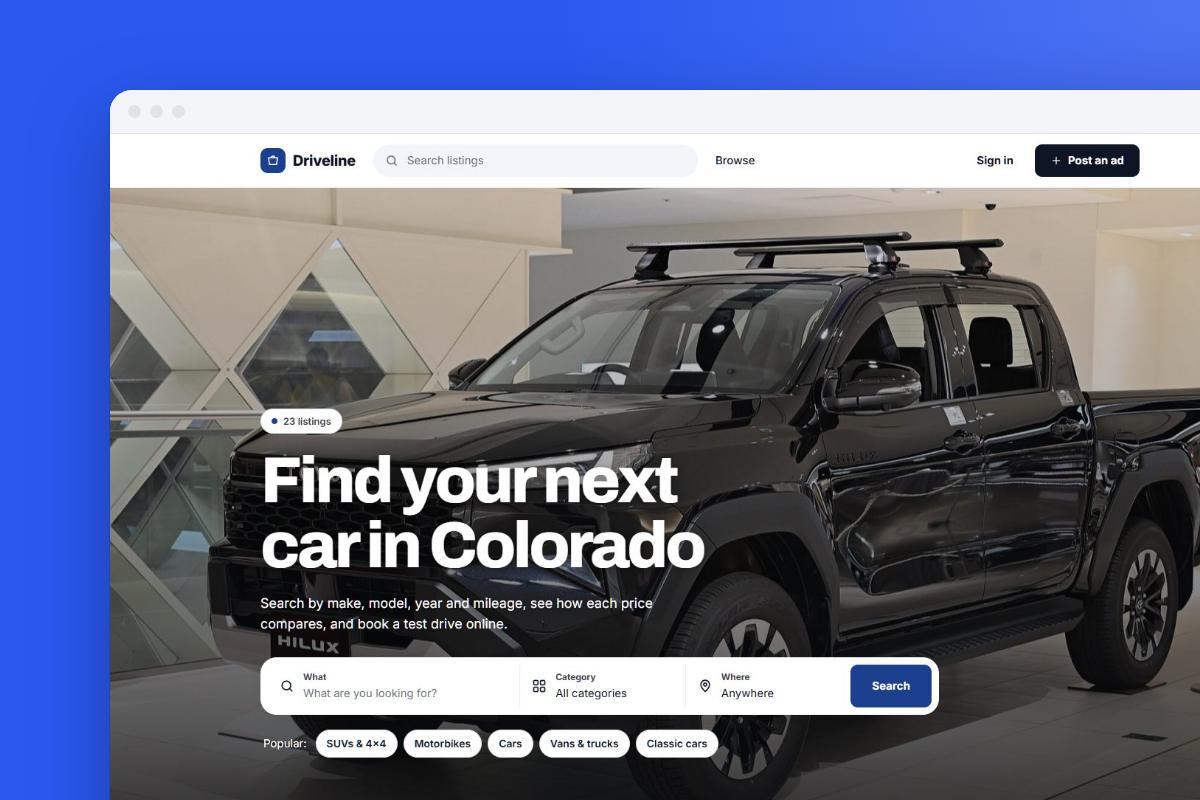
A car classifieds website lets users post their cars for sale or for rent and show them to other users who might want to buy or rent them.
Get a Domain Name for Your Car Classified Online Marketplace
When you think of a good name for your website, book it as soon as possible. You never know when someone else will think of the same name or idea.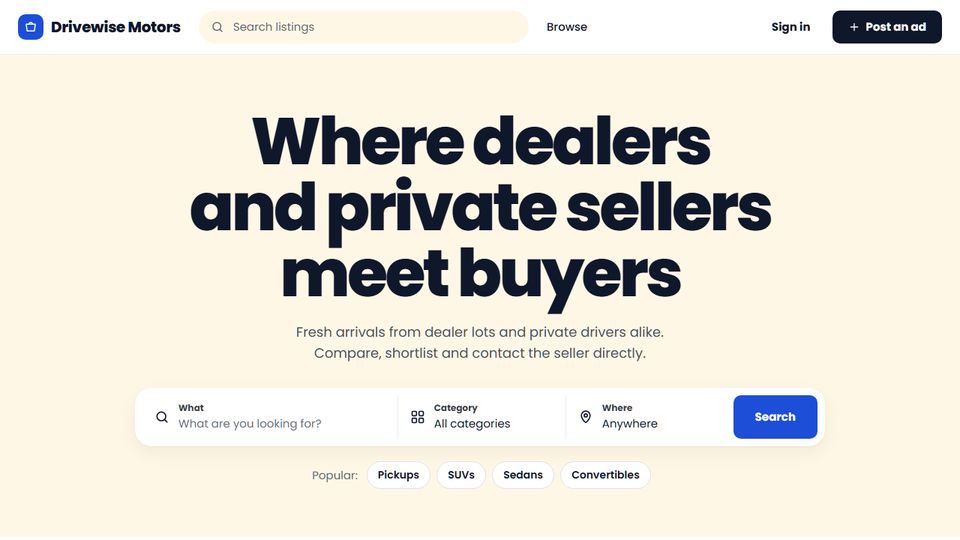
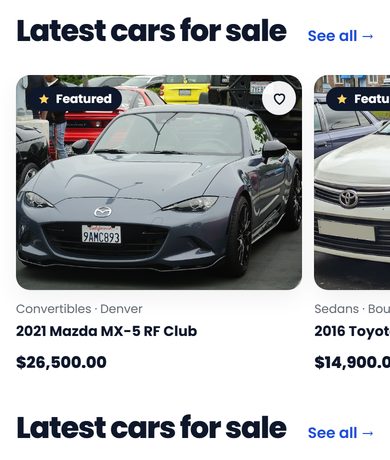
Register a Marketplace Website with Yclas
Go to the Yclas homepage and register your free domain there. The name you choose here doesn't matter since we will be using the domain name you picked in step one later.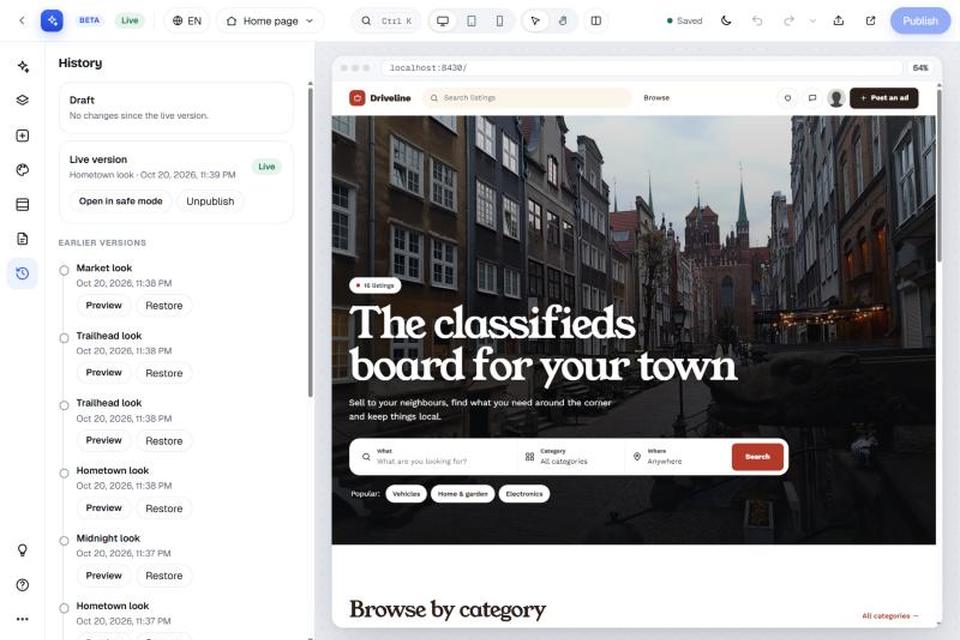
To be able to link your custom domain name, you need a paid Yclas plan, such as Starter or Professional.
Once you're at this stage, you can go to your domain, and you will find the basic starting view of a Yclas website.
Pick Your Preferred Car Marketplace Template
Yclas offers many templates you can choose from. You can also change the colors, fonts, and look and feel, depending on the template you're using.
My favorite template for car classifieds is CZSale. It shows the car in a big photo in the middle, which gets users' attention. The picture in the slider might stretch some cars.
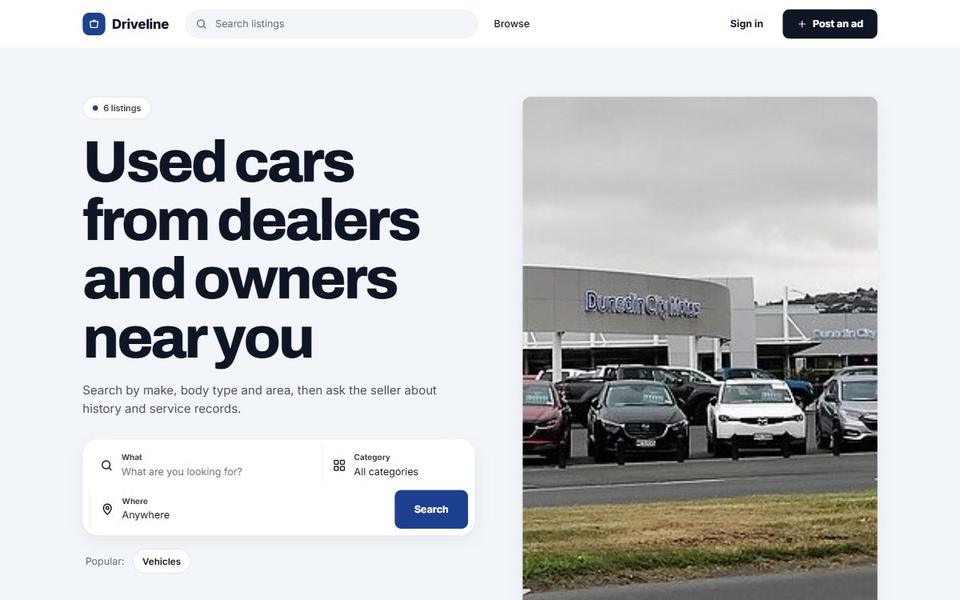
My second choice would be the Kamaleon theme due to its customization potential. Since you already have a paid plan with Yclas, you have access to all themes.
Set Up Categories and Locations for Your Online Marketplace
Right now, you can go to your website administration panel and add any locations depending on the area your website is focusing on.Adding Custom Fields in Your Online Marketplace
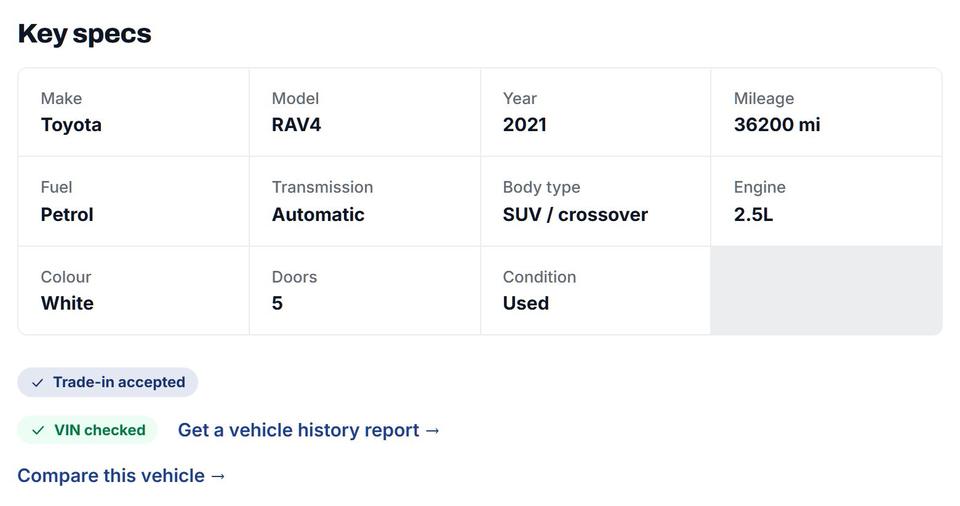
On most platforms, setting up the fields for a car website takes a lot of time and effort. But with Yclas you get a pre-defined set of custom fields that you can add in less than two minutes.Follow these steps:
- Log in to your admin panel
- Go to settings > custom fields
- From custom fields templates pick "cars"
- Click on create
Those fields will show up as soon as you add them, and the process is that simple. If you prefer adding those custom fields into your "motors" category, then you need to put that category in its field before you create the fields as shown in the screenshot below.
Add Icons, Logos and Images
Any user coming to your website now won't recognize that it is a car classifieds website until you show them that it is. You can do that by adding some images related to cars or automobiles as banners on your sidebar or homepage. It's all up to you and how you want your website to look when your users come and visit.Once you're done with all the steps, your website is ready for the big launch. Depending on the idea you have in mind, you might want to set up how you receive payments now or leave it until later. To know more, you can read the guide we prepared on how to set up payments for your website.
Before You Launch: The Car Marketplace in 2026, in Numbers
The big car portals publish their numbers every quarter, and they make a good benchmark for anyone starting a car classifieds site. Here is the US market as of 2026:
| Metric | Figure | Source |
|---|---|---|
| Used vehicles in dealer inventory (1 January 2026) | 2.20 million, 49 days' supply | Cox Automotive, January 2026 |
| Average used-vehicle listing price | $26,043 | |
| Used retail sales, December 2025 | 1.34 million (+2.9% year over year) | |
| Cars.com dealer customers (Q2 2026) | 19,343 | Cars.com Q2 2026 results, 6 August 2026 |
| Cars.com average revenue per dealer | $2,500 per month | |
| Cars.com average monthly unique visitors | 22.8 million (down 14% year over year) | |
| CarGurus paying dealers (Q2 2026) | 34,629 (26,151 in the US) | CarGurus Q2 2026 results, August 2026 |
| CarGurus quarterly revenue | $251.0 million (+13%) |
What this means for a new car site:
- The money comes from dealers. The leaders earn from dealer subscriptions, and Cars.com averages $2,500 a month per dealer. A local or niche site can't charge that, but even a small monthly package for local dealers makes the site sustainable. Plan dealer packages (more listings, featured placement) from the start, and keep listing free for private sellers so you build up inventory.
- Lead quality matters more than raw traffic. Cars.com says its 14% drop in unique visitors reflects a deliberate shift toward delivering value to dealers, and its lead volume still grew. A niche site for classic cars, EVs, 4x4s, commercial vans or one region can deliver serious buyers even with modest traffic.
- Cheaper cars are scarce. In Cox Automotive's January 2026 report, vehicles under $15,000 had only 38 days' supply against 49 for the market overall. A site focused on affordable private-party cars serves the buyers the portals struggle to supply.
Dealer rules still apply. In the US, dealers who sell more than five used vehicles in 12 months must display the FTC's Buyers Guide on each vehicle, saying whether it is sold "as is" or with a warranty (FTC). Adding a "warranty / as is" custom field helps dealers stay consistent. The newer FTC CARS Rule on dealer advertising will not take effect: the Fifth Circuit vacated it 2-1 on 27 January 2025 because the FTC skipped a required procedural step, without ruling on the rule's substance (Holland & Knight, February 2025).
On Yclas, dealer packages map onto monthly membership plans and featured listings. You can try them with a 15-day free trial, and the Starter plan costs $19/month for the first 3 months, then $69/month (see pricing).
In short
- Register a domain, sign up on Yclas and link the domain on a paid plan, which can take 24 to 48 hours to take effect.
- Use the built-in Cars custom-field template and add VIN, warranty, title status and inspection fields, keeping year, make and model as dropdowns.
- Car portals earn from dealers, with Cars.com averaging $2,500 a month per dealer, so keep private listings free and sell dealer packages and featured placement.
- US dealers selling more than five used cars in 12 months must show the FTC Buyers Guide, and buyers can check titles via NMVTIS and recalls via NHTSA.
- A niche site for classic cars, EVs, vans or one region can deliver serious buyers even with modest traffic.
Part of the guide Starting a marketplace
Seller fees, required listing fields and buyer protections for car sites
This page also replaces our older posts on building a car dealer marketplace and on starting a classifieds site for cars, trucks and RVs.
What private sellers pay on the big sites
Before you set your own prices, look at what sellers already pay, because that is what you compete with. We checked these on 8 October 2026:
| Site | Cost for a private seller | What is included |
|---|---|---|
| Craigslist | $5 per post for cars/trucks, RVs and motorcycles by owner in the US (cars/trucks by dealer are also $5) | A plain text-and-photo ad and no buyer verification |
| Cars.com | Free: the site says there are no costs or hidden fees to sell your car yourself | Listings usually go live within 24 hours, with ad performance stats in the seller's account |
| Kelley Blue Book / Autotrader | The Instant Cash Offer is free. The page doesn't give a price for a private listing | Private listings come with a free vehicle history report and verified buyer/seller protections |
For a niche site, such as RVs, classic trucks or one region, basic private listings must be free or nearly free to attract inventory. Earn your money from dealers, featured placements and add-ons, and win buyers with better data and trust than a general site offers.
More on the FTC Used Car Rule
- Where and how much. According to the FTC's Dealer's Guide to the Used Car Rule (edited January 2025), the rule applies everywhere in the US except Maine and Wisconsin. The Buyers Guide also says what share of repair costs the dealer will pay, and the FTC says violations can cost up to $53,088 per violation.
- Which vehicles. The Buyers Guide covers every used car a dealer offers for sale, including vans and trucks. Motorcycles and most recreational vehicles are not covered, so for RV dealers ask for the warranty terms in the ad itself. Ask dealer accounts to upload the Buyers Guide with the photos.
- Online sales too. The FTC's consumer advice Buying a Used Car From a Dealer (April 2024) says buyers are also entitled to a Buyers Guide when they buy a used car online. It tells shoppers to get out-the-door prices in writing before they visit, and to make sure spoken promises are written on the Buyers Guide. Show the full price clearly, and give buyers a messaging channel so the seller's answers are kept in writing.
Point buyers to history, title and recall checks
The US government's National Motor Vehicle Title Information System (NMVTIS) sells reports that show a vehicle's current title and brand history (such as junk, salvage or flood), its latest odometer readings, insurance total-loss determinations and transfers to salvage yards. Asking sellers for the same facts up front and linking buyers to an NMVTIS report reduces "title washing", where a damaged car is re-registered in another state to lose its brand. With the VIN, buyers can also run a free open-recall check on NHTSA's recall lookup.
The FTC adds that a history report "is not a substitute for an independent vehicle inspection", because it usually won't show mechanical problems. A short "Before you buy" page that links to both, and a safety tip next to the contact form, is one of the cheapest ways to cut scams and disputes.
Template
Stay-safe tips page for buyers and sellers
Publish this as your safety page and link it from every listing and message screen; add your own payment and reporting details.
Fields to add next to the Cars template
The Cars custom-field template already creates fields for For sale by (Owner / Dealer), ad type, year, make, model, kilometers, body type, transmission, drivetrain, color and fuel type. Add a few of your own so every ad answers what buyers ask most:
- VIN (text): lets buyers run their own history, title and recall checks.
- Warranty (select: As is / Dealer warranty / Manufacturer warranty): matches the Buyers Guide wording.
- Title status (select: Clean / Salvage / Rebuilt): the facts NMVTIS reports on.
- Inspection available (yes/no): signals sellers who accept an independent mechanic.
Keep year, make and model as dropdowns, because free-text spelling breaks your search filters. NHTSA's free vPIC vehicle database is a reliable reference for make and model names. It returned 12,383 make records when we queried it on 8 October 2026. Mark the fields required and searchable, and buyers can filter out salvage titles or as-is sales in one click.
Good luck with your online business idea.
Want to run a car marketplace yourself? Our car classifieds website software has make and model search, dealer pages and stock feeds, or start an Autotrader-style car site for your region.