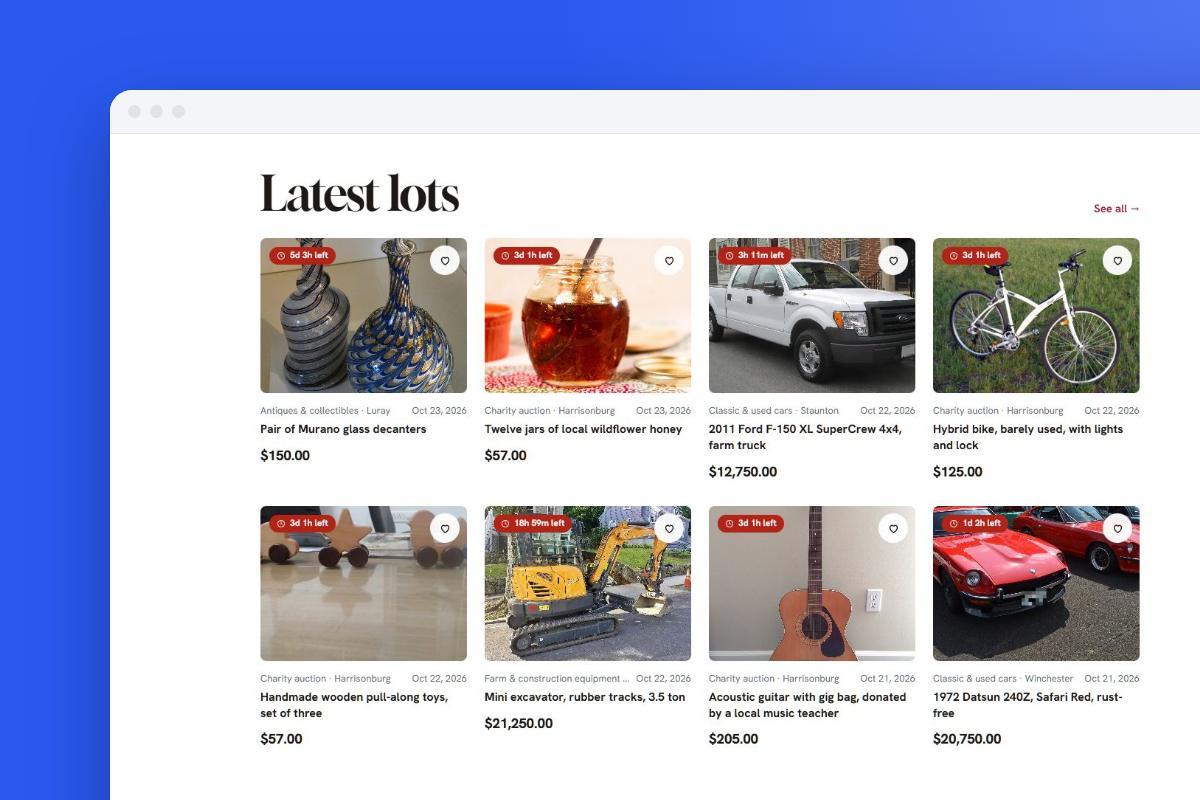
We have some exciting news for you: we just created a new template for you! This one is called Auction. Keep reading to find out what makes it so amazing!
Remember that you can change the template whenever you want without extra cost. So, if a different look is what you're looking for, then click here to see what the Auction Template can do for you and your business.
Auction has a fresh design that will make your classified website look like a professional e-Commerce. But a great design isn’t the best part of it. This new theme comes with useful tools you wouldn’t want to miss. Check them out!
- Run your auction website similar to eBay!
- It allows displaying any amount of ads on the home page. Each slide includes 6 ads.
- You can choose among three different colors for the template: orange, red, green, blue, and orange-blue.
- Layout options for the header, footer, sidebar, toolbar, and breadcrumb.
- Homepage slogan and site description.
- Infinite scroll, display listing slider on mobile devices, and display slider in linting.
In short
- The Yclas Auction template runs an eBay-style auction site, and since new sites start on Nova, you switch to Auction from the admin panel.
- eBay charges sellers 13.6% on most categories, while Catawiki charges buyers about 9% plus a fixed fee and sellers about 12.5%.
- Copy proven bidding rules: bids are binding, sellers can set a hidden reserve price, and shill bidding is banned.
- The US INFORM Act and the EU DSA require verified details for high-volume or professional sellers, though small EU marketplaces are exempt from the trader duties.
- Online horse auctions take about 10 to 16% in total, use a soft close that extends the clock on late bids, and collect health documents at listing.
Part of the guide Starting a marketplace
Before You Launch an Auction Site: Fees, Bidding Rules and Seller Checks in 2026
A good design is only part of running an auction website. Bidders need clear rules, sellers need to know what you charge, and in many countries the operator now has legal duties. Here is what the established players do in 2026, and what that means for a new auction site.
What the big auction platforms charge
| Platform | Who pays | Fee (2026) |
|---|---|---|
| eBay (US) | Seller | 13.6% final value fee on most categories up to $7,500 per item (2.35% above that), plus $0.30 or $0.40 per order; 250 free listings a month, then $0.35 each |
| Catawiki (Europe) | Buyer and seller | Buyers pay a Buyer Protection fee, usually 9% of the purchase price plus a fixed amount (usually €/$/£3), added at checkout. Sellers pay a commission, usually 12.5% of the purchase price plus a fixed amount that depends on the price |
Sources: eBay selling fees (checked October 2026), Catawiki Buyer Terms, valid from 1 April 2026 and Catawiki Seller Terms, valid from 31 October 2025. eBay charges only the seller; Catawiki adds a fee on top of the winning bid and also takes a commission from the seller. Whichever model you pick, state it on every listing so the final price never comes as a surprise.
Calculator
One sale: what the seller gets and what you keep
Enter an item price, your commission and your payment provider's rate (Stripe's standard US card rate is 2.9% + $0.30).
Taxes, refunds, chargebacks and currency conversion are not included.
Bidding rules worth copying
- Bids are binding. Catawiki's terms say a bid can't be amended, retracted or revoked, and the winner must pay within 3 days of the end of the auction.
- Reserve prices. Both eBay and Catawiki let sellers set a hidden minimum. On eBay, bidders can see whether the reserve has been met, and the seller doesn't have to sell below it.
- No shill bidding. eBay's shill bidding policy bans bids that artificially raise a price, including bids from family, friends, roommates or employees, and notes that shill bidding is illegal in many places. Put the same rule in your terms and act on it.
Seller checks are now a legal duty in the US and EU
- United States: under the INFORM Consumers Act (in force since June 27, 2023), marketplaces must collect and verify bank, tax ID and contact details from "high-volume" sellers of new or unused consumer products. That means 200 or more sales and $5,000 or more in revenue in a 12-month period. Sellers with $20,000 or more a year must have their name and contact details shown to buyers. The FTC lists penalties of $53,088 per violation.
- European Union: the Digital Services Act has applied since 17 February 2024. It requires online marketplaces to trace the traders who sell on them ("know your business customer"). Under Article 29, marketplaces run by micro or small enterprises are exempt from these duties, unless they are very large online platforms.
For a new auction site, that means three things: publish your fee model, write binding-bid and anti-shill rules into your terms, and keep verified contact details for your professional sellers from day one.
Template
Seller terms for your classifieds site or marketplace
Use this as the terms every seller accepts when they sign up or post; replace the bracketed parts and delete any section (such as fees or commission) that does not apply to your site.
A starting point, not legal advice: have it checked for your country.
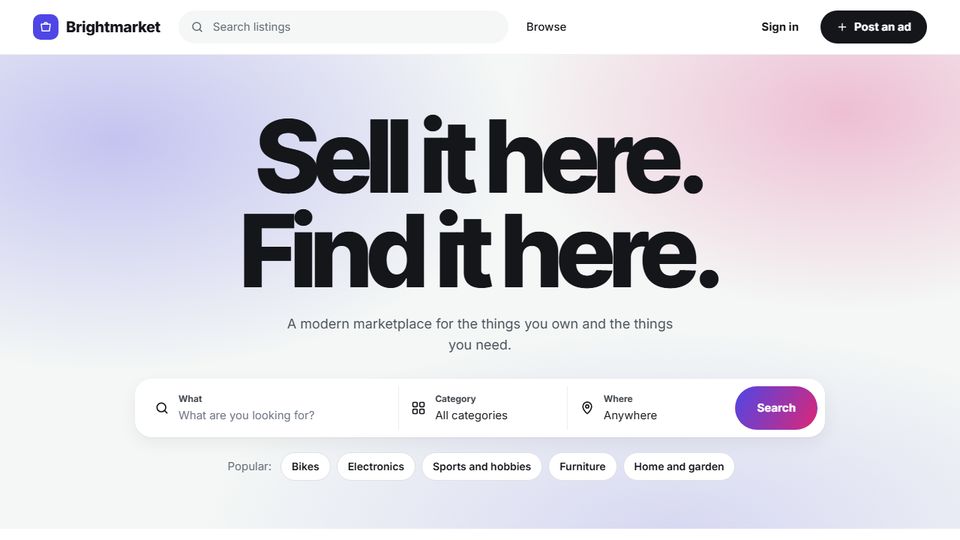
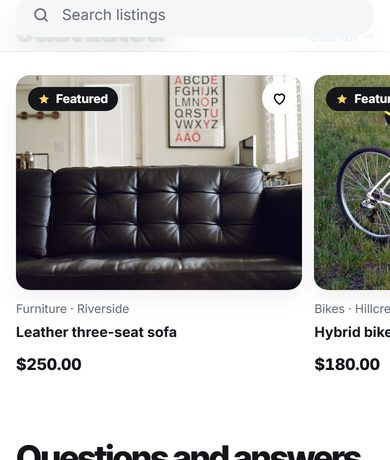
If you build on Yclas, the Auction theme is still available. New sites start on the Nova theme, so switch to Auction from your admin panel.
A niche example: what online horse auctions charge and require
This page also replaces our older post on the steps to create an online horse auction. Horse auctions are a good example of a niche auction site, and the fees, closing rules and document checks from that post are collected here.
Fees and rules at established online horse auctions (checked October 2026)
These figures come from the published conditions of sale of established online horse auctions:
| Platform | Seller pays | Buyer pays | Closing rule | Documents and checks |
|---|---|---|---|---|
| HorseBid | 13% sale commission, owed even when the owner's own bid meets the reserve | 3% buyer's premium, plus 3.5% for card payments | In the last 10 minutes, each bid adds 2 minutes | Vet exams only before close, with the owner's permission; buyer arranges transport with the seller within 48 hours |
| My Horse Connection | $250 consignment fee per horse plus 10% of the sale price or reserve, whichever is greater | Not stated in seller terms | A bid in the last 3 minutes resets all lots to 3 minutes | Negative Coggins and a vet exam within 30 days; $5,000 fee plus 10% commission if the horse is sold privately |
| Classic Horse Auction | $250 listing fee plus 10% of the final price | Not stated in seller terms | Not stated | Vet soundness exam; negative Coggins drawn within 11 months of the auction start; no cross-posting while listed, and 10% is owed if the horse sells elsewhere |
| EquineAuction.com | Not stated in general conditions | 2% purchaser's premium, plus 3.5% for card payments | A bid in the final 180 seconds adds 3 minutes; auctions run 10-14 days | Payment within 48 hours; sold "as is" |
| Fasig-Tipton Digital (Thoroughbreds) | Entry fees from $300 | Not stated on the seller page | Not stated on the seller page | No EVA testing required; 80% clearance rate in 2025 |
Lessons for any auction site
- The platform's total cut is usually 10-16% of the price, split between a seller commission (10-13%) and a buyer's premium (0-3%), often on top of a flat listing fee of about $250. Card fees are usually passed on to the buyer.
- A soft close is standard. Every platform that publishes its closing rules extends the clock when late bids arrive, so plan for it from day one.
- Protect against deals going off the platform. Some platforms charge their commission even when a listed horse sells privately, and ban cross-posting during the auction.
- Collect health and condition documents at listing, not after the sale. Post-sale vet exams are commonly ruled out, so the evidence has to be in the listing.
- Help bidders follow the auction: alerts when they have been outbid, and auto-bid up to a maximum they set.
- Consider escrow to hold payment until the item, or the horse, is delivered and inspected, and offer mediation for disputes.
- Let buyers and sellers rate each other after a sale: sellers on quality and communication, buyers on prompt payment.
Listing fields for a horse auction
Ask for breed, age, sex, health status, registration papers, photos and videos, and veterinary records, and let buyers filter by breed, age, price range, location and discipline. Transport and ID rules belong in the listing too. In the US, every state requires a negative Coggins (EIA) test before a horse crosses state lines. Depending on the state, it must be dated within 6 or 12 months or within the calendar year, and most states also require a Certificate of Veterinary Inspection issued within 30 days of travel (US Equestrian). In England, the seller must give the passport to the buyer, the new owner must contact the passport issuing organisation within 30 days, and horses must be microchipped, with fines for non-compliance (GOV.UK). Make Coggins date, passport number and microchip number required listing fields for any region you serve.
Shipping horses internationally may involve legal, quarantine and insurance requirements, so decide early which countries or regions you serve, and whether you will partner with horse transport companies or let users arrange transport themselves.
Already loving it? If you want to know about all the features that the Auction includes, check the overview of the theme HERE.