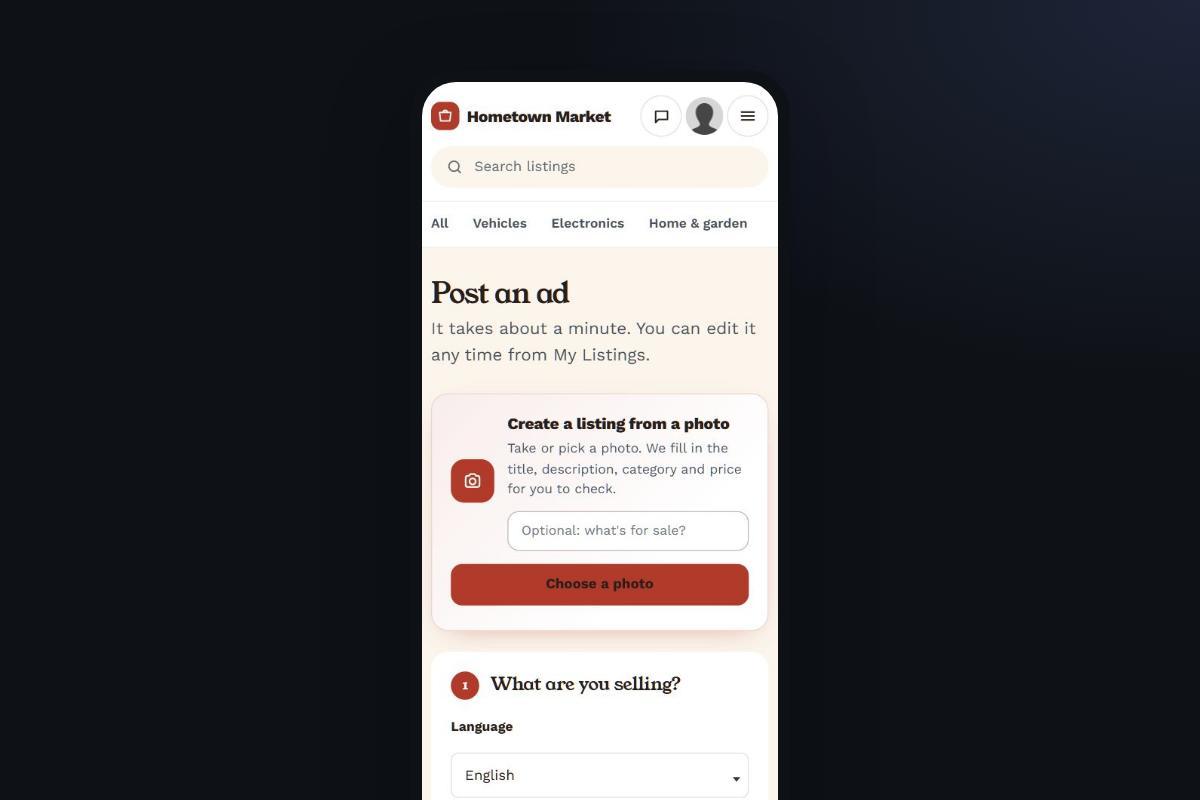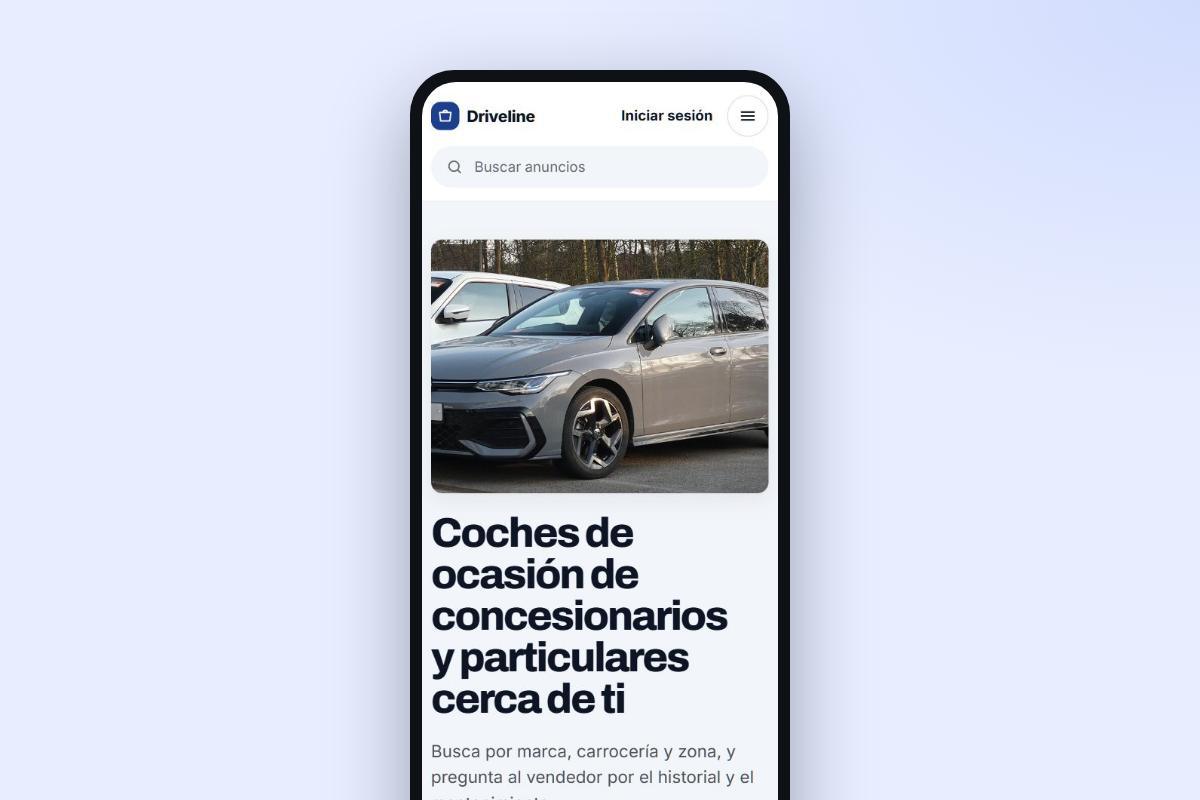
Depending on the type of products or services you offer on your classifieds website, it is important that you consider localizing your website for international audiences. If you sell cars, this option may not be necessary because you can only sell them in your area. But if, on the other hand, you are selling clothes, then we recommend that you appeal to an international audience.
If you're looking to expand your audience, the first thing you need to do is make sure your website is multilingual. Why? Most shoppers feel more comfortable buying in their own language (the 2026 figures are below).
Besides allowing you to expand your audience and reach international buyers, a multilingual classifieds website brings other benefits:
Sales increase
Each language you add opens your listings to buyers who would not use a site in a language they don't read. Which languages to add first is covered below.
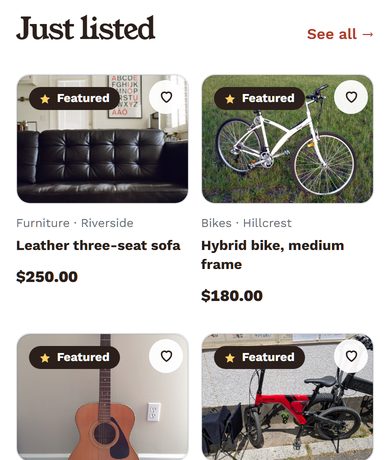
People can find you in their language
Search engines can show each language version to people searching in that language. A site does not rank higher just because it has more languages, though: see Google's rules below.
Users will be able to browse more comfortably
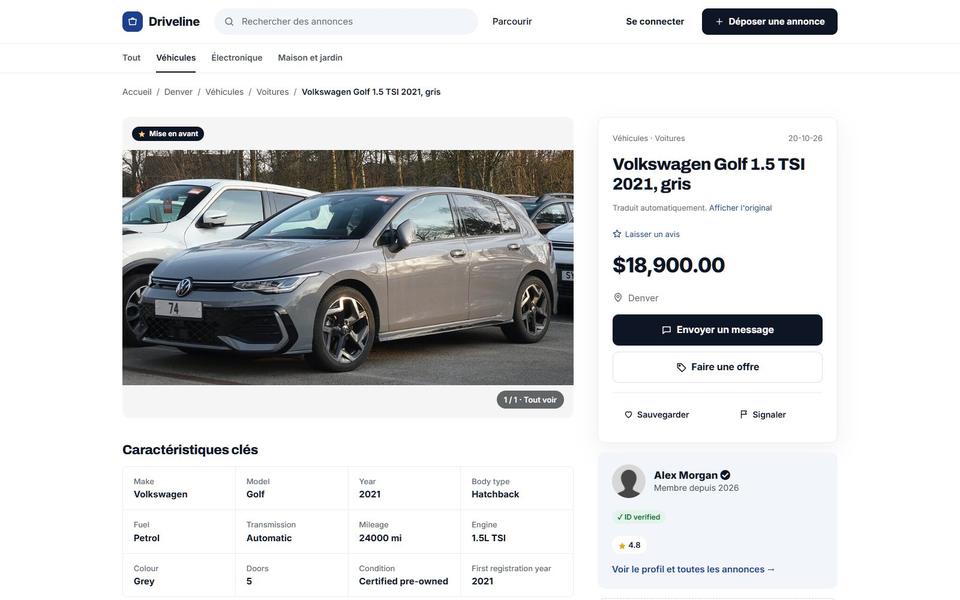
Translated pages are not enough on their own: a well-localized classifieds website offers a better experience for your users and greater satisfaction for your customers. If you allow customers to browse your classifieds website without finding error messages in a language they don't know, a currency they don't know or images they don't like, the user experience improves dramatically.
In short
- Compare speakers with web content: Arabic, Indonesian, Chinese and Hindi have hundreds of millions of speakers but about 1% of websites or less, so listings face less competition.
- CSA Research found 76% of shoppers prefer buying with information in their own language and 40% never buy from sites in other languages.
- Start with your own market's languages (Arabic and French for Morocco, English and Spanish for Miami) and translate categories, the posting form, filters and emails first.
- Google rewards a separate URL per language, full translations and no automatic language redirects, not simply having more languages.
- In Yclas multilingual mode listings are split by language, so if sellers mostly post in one language a single-language site with a translated interface looks fuller.
Part of the guide Growing your marketplace
Which languages and markets to add next
This page also replaces our older posts on the top languages to use in an online business or marketplace and on building marketplaces in emerging economies. Going multilingual is often the first step towards new countries, so this section covers which languages to add first and what the leading marketplaces in emerging markets have learned.
Which language to add first: speakers vs. web content
Compare two numbers for each language: how many people speak it, and how much of the web is already written in it. A language with many speakers but little web content means less competition for your listings in search results.
| Language | Total speakers (native + second language) | Share of websites |
|---|---|---|
| English | 1,493 million | 49.5% |
| Chinese (Mandarin) | 1,183 million | 1.3% |
| Hindi | 611 million | less than 0.1% |
| Spanish | 561 million | 6.0% |
| Arabic (Modern Standard) | 335 million | 0.6% |
| French | 334 million | 4.5% |
| Indonesian | 255 million | 1.2% |
Speaker counts are Ethnologue figures as listed in Wikipedia's list of languages by total speakers (checked October 2026). Website shares come from W3Techs' content-language survey, October 2026, among sites whose language it can identify. Arabic, Indonesian, Chinese and Hindi each have hundreds of millions of speakers but around 1% of websites or less, so a well-built local marketplace in those languages has far less to compete with. CSA Research's 2020 "Can't Read, Won't Buy" survey of 8,709 consumers in 29 countries also found that 66% used online machine translation.
A practical order for a marketplace
- Start with your market, not the global ranking. A classifieds site for Morocco needs Arabic and French before English; one for Miami needs English and Spanish. Liquidity in one city beats thin coverage in five languages.
- Translate what makes people post and buy. Category names, the posting form, search filters, and the emails sellers and buyers receive matter more than your About page.
- Plan for right-to-left. Arabic, Hebrew and Urdu need a layout that mirrors, not just translated text.
- Let listings stay in the seller's language. Ads and reviews are written by your users. A clear language setting per ad or per site helps buyers filter what they can read.
- Use machine translation as a draft. Two-thirds of shoppers already use it, but have a native speaker check the interface text people see on every page.
On Yclas, the feature list covers 40+ interface languages, right-to-left support, editable translations and running one site in several languages.
Emerging markets: most people are still coming online
According to the ITU's Facts and Figures 2025 (15 October 2025), 74% of the world's population is online. That share is 94% in high-income countries but only 23% in low-income countries, and Africa is the least connected region, at 36%. Most of the 2.2 billion people still offline live in low- and middle-income countries. Payments differ too: cash, mobile wallets and cash on delivery are common where credit cards are not, and in many of these markets people go online mainly on a phone.
| Marketplace | Latest figures | What changed |
|---|---|---|
| Jumia (Africa) | Q2 2026: revenue $52.0M (+14% YoY), GMV $216.3M, 2.6M quarterly active customers, 6.3M physical-goods orders | Left South Africa and Tunisia (October 2024) and Algeria (February 2026). Its stated target is Adjusted EBITDA breakeven in Q4 2026. |
| MercadoLibre (Latin America) | Q2 2026: net revenues and financial income $10.2bn (+50% YoY), GMV $21.9bn, 89M unique active buyers, 88M fintech monthly active users | Mercado Pago and credit are now as central as the marketplace. Its credit portfolio grew 75% YoY. |
| Tokopedia (Indonesia) | 75% owned by TikTok since December 2023 (US$1.5bn deal). GoTo keeps 25%. | No longer an independent local champion. TikTok bought it to expand TikTok Shop in Indonesia. |
Sources: Jumia Q2 2026 earnings release (12 August 2026), Jumia market exits, MercadoLibre Q2 2026 shareholder letter (SEC filing, 5 August 2026), Tokopedia ownership.
Four lessons for founders
- Pickup points beat doorstep delivery where logistics are expensive. Jumia fulfilled 75% of its shipped packages through pickup stations in Q2 2026, up from 71% a year earlier, and says this limits its exposure to fuel-price swings. On a local classifieds site, agreed meeting points or partner drop-off shops do the same job.
- Payments are a growth engine, not just plumbing. MercadoLibre's fintech user base (88M monthly active users) is almost as large as its buyer base, and users of both its marketplace and Mercado Pago generated 70% more GMV per user than marketplace-only users.
- Fewer, profitable markets beat many thin ones. Jumia's exits from South Africa, Tunisia and Algeria show the cost of spreading too wide. Win one city or country, in its own language, before you add another.
- Big platforms can reshape a market quickly. Tokopedia's sale to TikTok shows that a large social platform can become a major e-commerce player in a country almost overnight. Niche, local and trust-based communities are harder for them to copy.
Before you switch on multilingual mode: 2026 data and a checklist
The case for speaking your users' language is better documented now than when this post was first written. In its July 2020 survey of 8,709 online shoppers in 29 countries, CSA Research found that 76% prefer to buy products with information in their own language, 40% will never buy from websites in other languages, and 73% want product reviews in their language. The pull is strongest in Asia-Pacific: 94% in Taiwan, 92% in Korea and China, and 90% in Japan.
At the same time, the web is still lopsided. W3Techs (data for October 2026) reports these shares of websites by content language:
| Content language | Share of websites (W3Techs, Oct 2026) |
|---|---|
| English | 49.5% |
| Spanish | 6.0% |
| German | 5.9% |
| Japanese | 4.9% |
| French | 4.5% |
| Portuguese | 4.1% |
| Russian | 3.4% |
| Italian | 2.8% |
With 6.12 billion people online at the start of April 2026 (DataReportal), roughly half of all websites are written for English readers. A well-run marketplace in Spanish, German or Portuguese competes with far fewer websites in its language than an English one does.
What Google actually rewards
A multilingual site does not rank higher just because it has more languages. According to Google Search Central (updated December 2025), what helps is:
- A separate URL for each language version, not content that changes by cookie or browser setting.
- Language in the visible text. Google works out the language from what is on the page, not from
langattributes or the URL. - No automatic redirects from one language version to another based on the language a visitor seems to prefer. Let people (and search engines) reach every version.
- Full translations. A page that translates only the menus and footer while the listings stay in another language gives searchers a poor experience.
Is a multilingual classifieds site right for you?
- Yes if your users really post in different languages: a bilingual region (Catalonia, Quebec, Belgium), an expat or tourist community, or a cross-border niche such as collectibles or equipment that ships.
- Probably not if almost all of your sellers and buyers share one language. Translate the interface into that language and keep a single listing pool.
- Plan the categories and pages in each language before launch, and check which currency, units and date format your audience expects.
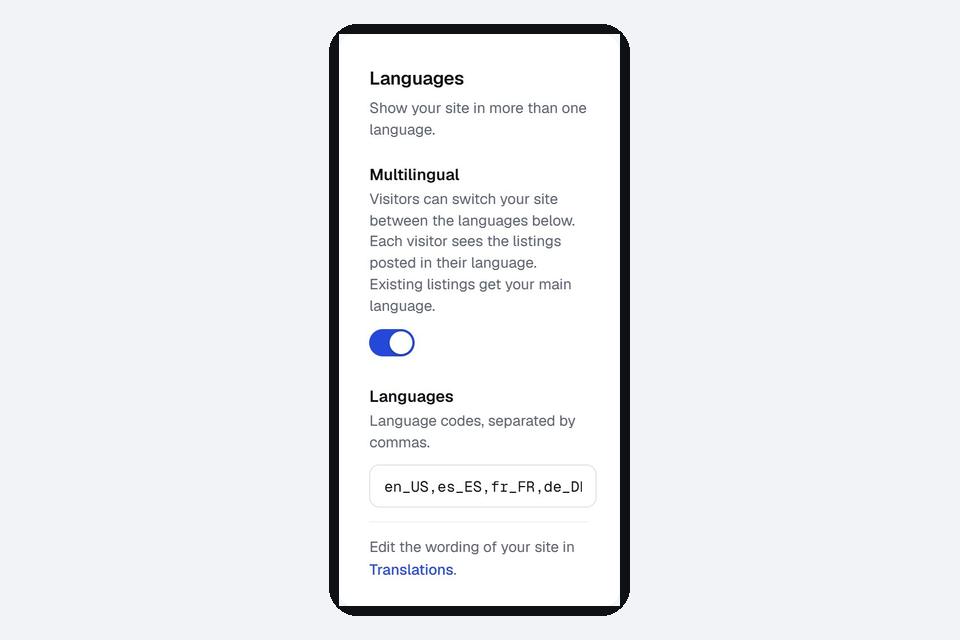
One Yclas detail to know before you turn it on: in multilingual mode, listings are split by language. Someone browsing in Spanish sees the Spanish listings and someone browsing in English sees the English ones, and existing listings are assigned your main language. If your sellers mostly post in one language, a single-language site with a translated interface will look fuller to everyone.
With Yclas, it's easy to turn your classifieds website into a multilingual website. To learn how, read how to activate multilingual mode.
Want to run a classifieds site for your own town, region or niche instead? Our classified website builder sets one up in minutes, this guide shows how to create a classifieds website, and our classifieds software page compares the options.