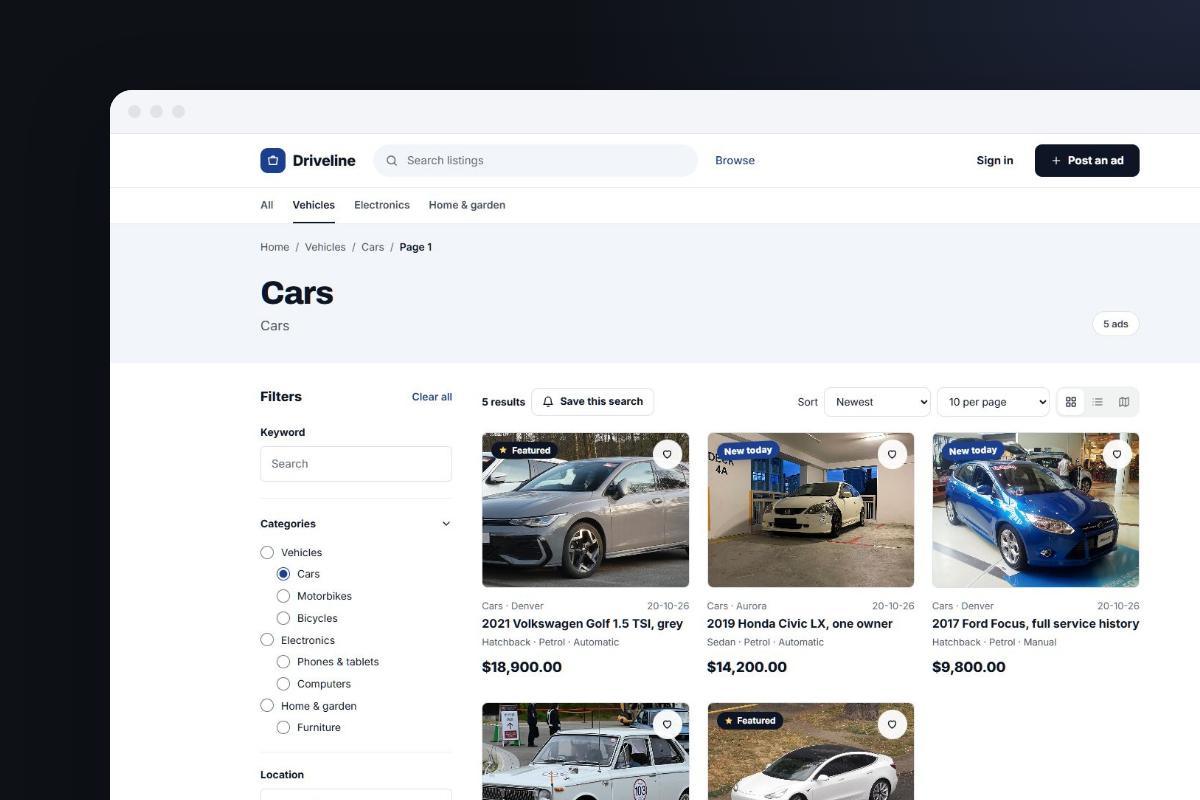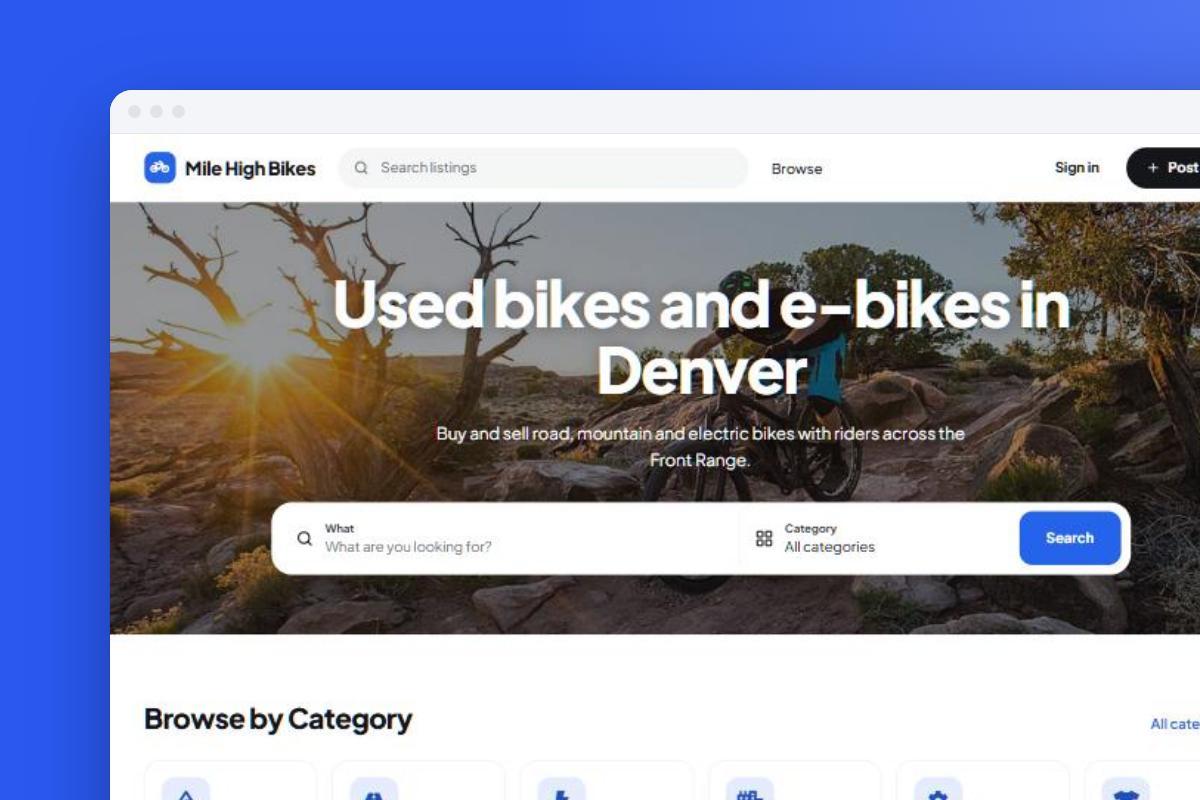
To build an online marketplace from scratch, pick a narrow niche, check the demand, choose how you will earn (commission, listing fees or subscriptions), launch a simple version on a ready-made platform, and recruit sellers before buyers. This guide covers why a marketplace is worth starting, the steps, the legal checks and the common challenges, with what each costs in 2026.
Online marketplaces have become central to modern commerce, providing a digital space where sellers and buyers connect almost effortlessly. Rather than visiting multiple sites or physical stores, users can explore numerous products or services in a single, convenient platform.
This streamlined experience has made marketplaces a very large share of online retail: Digital Commerce 360 projected that the world's 100 largest online marketplaces would handle $3.832 trillion in gross merchandise value in 2024 (Digital Commerce 360).
Yet, not all marketplaces follow the same blueprint. While some platforms embrace broad categories, others concentrate on specific niches or regions.
Understanding the right marketplace approach is pivotal before you begin, and so is designing a multi-vendor platform that balances the needs of both sellers and buyers.
In short
- A marketplace needs little or no inventory, and sellers do most of the selling: third-party sellers sold 61% of Amazon's paid units in Q2 2026.
- Start with a narrow niche, choose commission only if payment happens on your site, and use listing fees, featured listings or memberships where people meet in person.
- Test demand cheaply with a soft launch on a ready-made platform; in a 2026 CB Insights study, 70% of failed startups ran out of capital.
- The common challenges are keeping users, a slow mobile site, unclear rules for disputes and fraud, charging too early and expecting results too soon.
Part of the guide Starting a marketplace
Why Start an Online Marketplace?
- Massive Market Potential: By tapping into the vast pool of online shoppers, you open the door to exponential growth, particularly if you refine your target niche.
- Scalability: Online marketplaces leverage network effects. The more users you have, the more valuable the platform becomes. Incorporating essential classified marketplace features ensures a seamless experience that encourages repeat visits.
- Lower Operational Costs: Unlike traditional retail, you’re not tied to warehousing or extensive inventory. This allows you to invest more in platform innovation, marketing, or thriving marketplace strategies that make your site stand out.
- Examples of Success:
- Airbnb: Began as an idea to rent out spare space and soared to a billion-dollar valuation.
- Amazon & Etsy: Started in specialized categories (books and handmade crafts), then scaled.
What the numbers say in 2026
- Online sales keep growing faster than retail. US e-commerce reached $340.2 billion in Q2 2026, 17.1% of all retail sales and 12.2% more than a year earlier (US Census Bureau). It is still about one dollar in six of US retail spending, so stores have not gone away.
- Sellers do most of the selling. At Amazon, third-party sellers sold 61% of paid units in Q2 2026 (Amazon Q2 2026 results). A marketplace grows by bringing in sellers, not by buying stock.
- Resale is a fast-growing niche. The US second-hand apparel market is forecast to reach $78.8 billion by 2030 (ThredUp Resale Report, April 2026).
- You choose how you earn. Commissions, listing fees, subscriptions, featured listings or a freemium mix, and you can change the mix as you grow (see step 3).
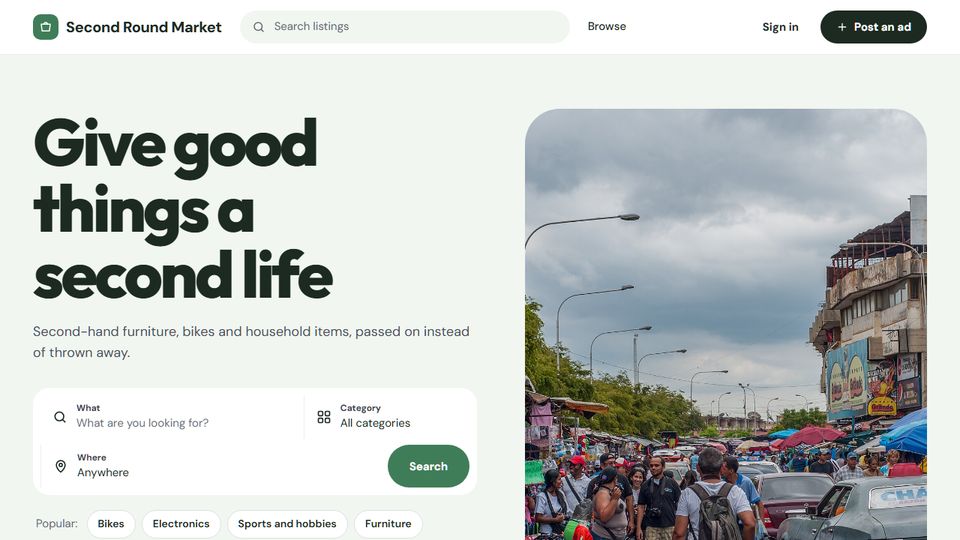
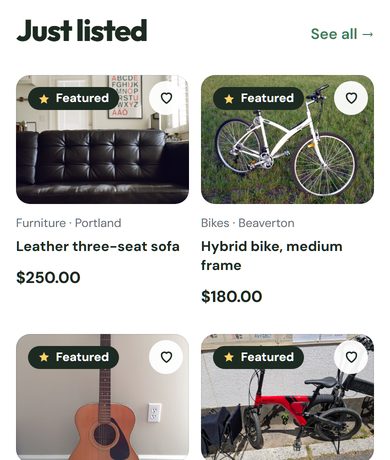
Step-by-Step Guide to Building an Online Marketplace
1. Identify Your Niche
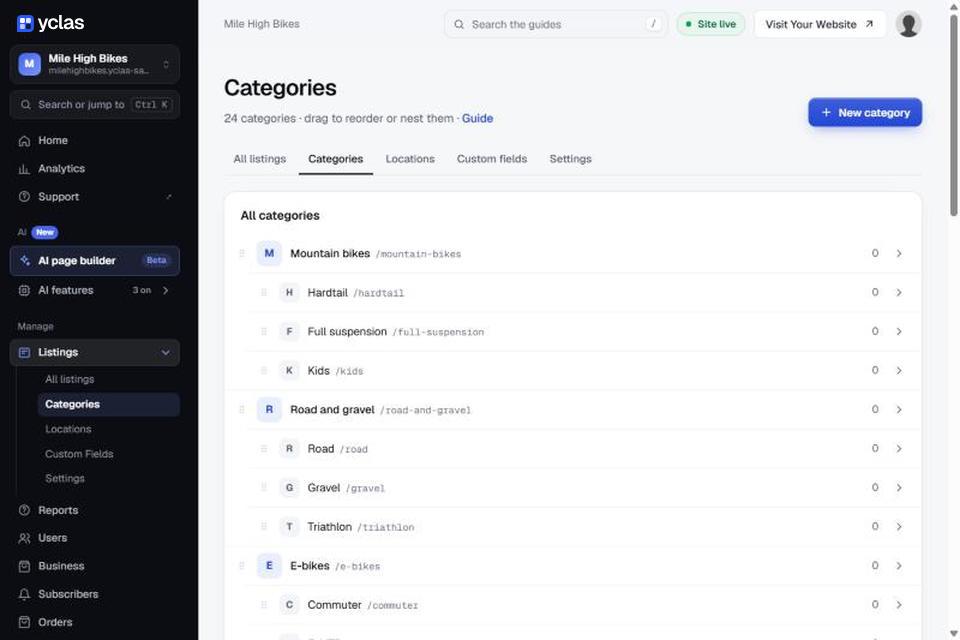
Competing with established giants can be challenging if you go too broad. Instead, zero in on a specific audience or product category. Whether you plan on launching a winning local classified site or specializing in handmade crafts, a precise niche can help you build a loyal, engaged community.
2. Conduct Market and Competitive Research
Tools and Tactics: Check forums and social media communities to gauge user pain points. Investigate competitor features: are they offering interactive product demos or letting users use augmented reality solutions to view items in 3D?
Data-Driven Insights: Google Trends or SEMrush can pinpoint rising search terms and market gaps ripe for entry.
3. Define Your Business Model
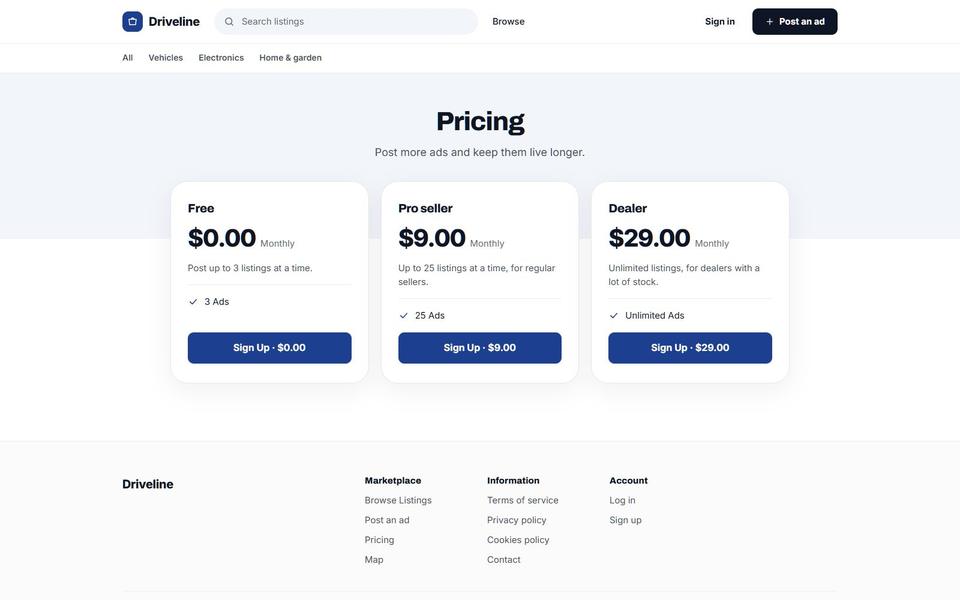
Popular approaches include commission fees, subscriptions, or freemium plans that add premium features for an extra charge. Tailor your model to fit your audience and operational capabilities:
- Commission-Based: You earn a percentage from each sale.
- Subscription: Vendors pay monthly or annually for unlimited listings.
- Freemium: Basic listings are free, and advanced listings cost extra.
What established platforms charge today shows the range:
| Model | Example | What it charges (2026) |
|---|---|---|
| Commission | Fiverr | 20% from the seller on every order, plus a 5.5% buyer fee and $2.50 on orders under $50 (Vaultleap, July 2026) |
| Listing fee + commission | Etsy | $0.20 per listing, a 6.5% transaction fee and 3% + $0.25 payment processing in the US (Voolist, 2026) |
| Freemium (paid categories) | Craigslist | Most posts free; $5 for cars and trucks in the US, $10-75 for jobs, $5 for services (Craigslist posting fees) |
| Pay per lead | Thumbtack | Pros pay for each lead, whether or not they win the job (Thumbtack help) |
- Charge commission only if the payment happens on your site. Commission needs checkout, payouts and some protection for the buyer. Without them, people arrange the sale off the platform.
- Use per-post or paid-category fees where buyers and sellers meet in person, as Craigslist does: free posting keeps listings growing, and fees apply where sellers make real money, such as cars, jobs and property.
- Add featured listings early. They cost buyers nothing and test whether sellers see value in your site.
- Offer memberships to regular sellers. Dealers, agents and service pros who post every week usually prefer a predictable monthly fee.
For more detail, compare the five marketplace business models and what marketplaces charge sellers.
4. Prioritize Mobile Optimization
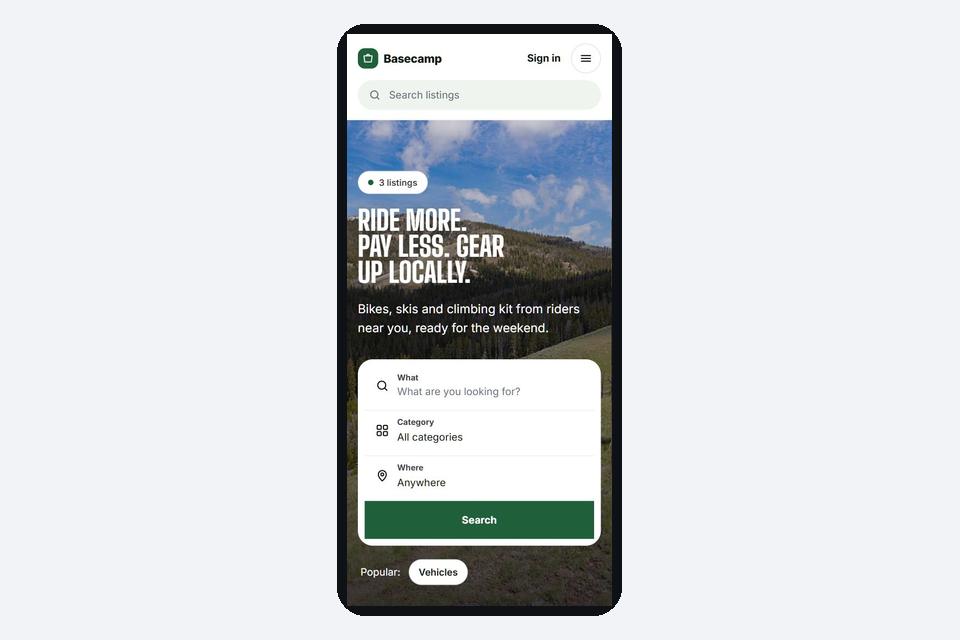
With users increasingly shopping on phones, a mobile-first strategy is non-negotiable. Focus on driving growth in mobile through responsive design, streamlined navigation, and optimized load times. You should also create a seamless mobile experience that includes features such as swipe-enabled browsing, easy in-app chat, and convenient payment gateways.
5. Integrate Modern Web Technologies

Progressive Web Apps (PWAs): Adopting progressive web apps can enhance performance, enable offline browsing, and provide app-like user experiences without requiring a traditional app download.
Security and Fraud Prevention: Fraudulent activity is a major concern for new users. Deploy robust enhanced fraud detection methods, including identity verification, AI-driven risk scoring, and real-time monitoring.
6. Attract and Retain Users
Vendor Onboarding: Offer incentives for early sellers, such as discounted listing fees or special placement. Provide them with tools to automate customer interactions, like chatbots, to handle routine queries.
Template
Outreach message to recruit your first sellers
Use this to contact people already selling on other sites, in groups or in shops; personalise the first line every time and offer what you can really deliver.
Send no more than one follow-up to people who did not reply, and keep a list of who asked not to be contacted. More free tools →
Customer Engagement: Modern consumers value transparency and corporate responsibility. Show commitment to sustainability or highlight eco-friendly products to resonate with a growing green-conscious user base.
7. Innovate for Social and Environmental Impact
Forward-thinking marketplaces are going beyond mere transactions. Many are embracing the rise of circular practices, where goods are reused, repaired, or recycled to reduce waste. Additionally, transforming marketplaces into robust communities, through reviews, social sharing or influencer collaborations, can spark viral growth:
- Community Building: Foster user interaction by transforming into social ecosystems, such as discussion boards, integrated social media, and referral programs that reward both buyers and sellers.
8. Technical Considerations and Platform Selection
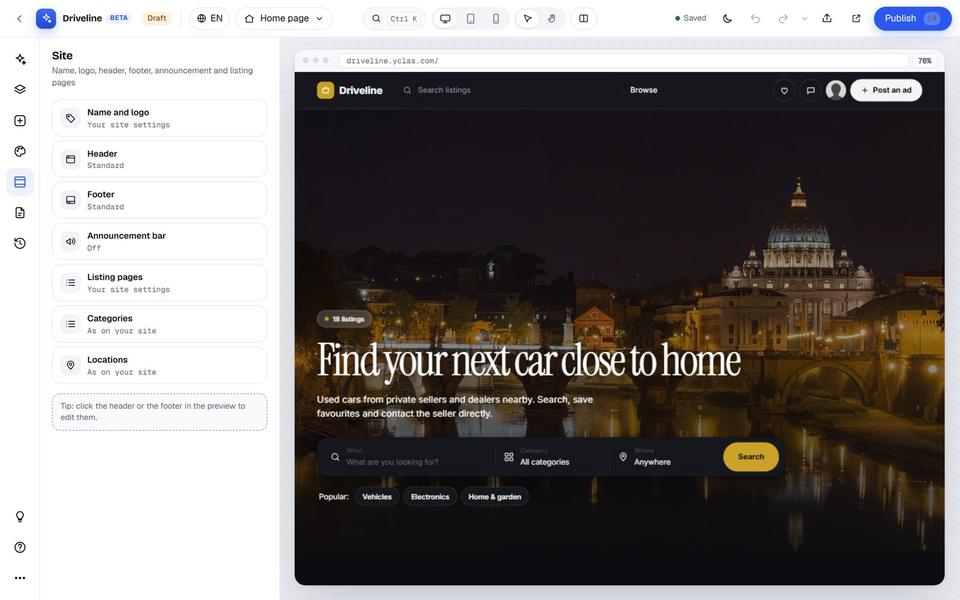
DIY vs. Third-Party Solutions: If you’d rather not build from scratch, you can quickly create a website with platforms that offer turnkey marketplace features.
Advanced Customization: If you have unique needs, consider tapping into a software development marketplace to find specialized developers who can tailor solutions to your business model.
The Legal Checklist Most Marketplace Guides Skip (2026)
Rules for online marketplaces have tightened considerably since 2023, and several of them change how you design sign-up, payments and seller pages. Which rules apply depends heavily on one decision: whether money passes through your platform or buyers and sellers pay each other directly. Here are the main ones to check before launch. This is a starting point, not legal advice.
| Rule | Where | Who it catches | What the platform must do |
|---|---|---|---|
| INFORM Consumers Act (since 27 June 2023) | US | "High-volume" third-party sellers: 200+ sales of new or unused consumer products and $5,000+ gross revenue on your marketplace in any 12 months | Collect bank, tax ID and contact details within 10 days, verify them and recertify yearly. For sellers with $20,000+ a year, show name, address and contact details to buyers. FTC civil penalties are $53,088 per violation. |
| Form 1099-K | US | Applies only if you process payments as a third-party settlement organization | The IRS confirmed in October 2025 that the threshold is back to more than $20,000 and more than 200 transactions per payee, replacing the lower thresholds planned earlier. |
| DAC7 | EU | Sellers of goods, personal services, property rental and transport rental. Goods sellers with fewer than 30 sales and no more than EUR 2,000 a year are excluded. | Collect seller identity and tax data and report it to the tax authority every year. It mainly affects platforms that know what sellers are paid, usually because payments run through them. |
| Digital Services Act (applies to all platforms since 17 February 2024) | EU | Online marketplaces. Micro and small companies have lighter obligations. | Provide an easy way to report illegal listings, verify and display seller contact details, and make reasonable efforts to spot-check products. |
| European Accessibility Act (enforceable since 28 June 2025) | EU | E-commerce services. Microenterprises providing services (under 10 staff and EUR 2 million turnover) are exempt from some requirements. | Make the buying and selling journey accessible, with WCAG 2.2 AA as the usual benchmark (Travers Smith, June 2025). |
How this shapes your build
- Listings first, payments later. A classifieds-style marketplace where buyers contact sellers and pay them directly avoids most payment-reporting duties (1099-K, and in practice much of DAC7) at launch. Once you take a commission on transactions, budget for seller verification and tax reporting, often through your payment provider.
- Design seller onboarding for verification. Even small platforms benefit from collecting a verified email, phone number and business status at sign-up. Adding these later means re-contacting every active seller.
- Build reporting in from day one. A "report this listing" button and a documented review process meet the DSA's notice-and-action expectation and also deal with the fraud risk covered in step 5.
- Track volumes per seller. The thresholds above (200 sales/$5,000, 30 sales/EUR 2,000) are counted per seller, so your admin reports should show sales count and value per seller.
9. Marketing, SEO, and Pricing

To gain traction, you need to stand out in search results and offer competitive pricing structures:
- Search Optimization: It’s crucial to optimize for seo services so potential users can find your marketplace when searching for related products or services.
- Monetization: Make sure vendors and buyers understand your fee structure. If you need guidance, take time to understand marketplace pricing models, both fixed and variable, to determine what best suits your audience.
10. Continuous Improvement and Growth
Feedback Loops: Encourage customers and vendors to review your platform and provide suggestions. This not only builds trust but helps you refine product offerings.
Analytics & Data: Track user engagement, transaction volumes, and any drop-off points in the purchase journey.
Scaling Up: As your marketplace grows, you might expand to new categories, partner with logistics providers, or invest in AR/VR integrations to stay ahead.
11. Conclusion: Launch and Evolve
Building a marketplace is an ongoing journey that involves market research, tech upgrades, community building, and brand storytelling. Whether you’re focusing on a niche or aiming for a broader reach, meticulous planning and adaptability are key.
If you need expert guidance or a tailored solution, you can contact the marketplace team dedicated to helping new marketplaces get off the ground. Remember: success in this rapidly evolving space hinges on offering real value, staying user-focused, and continuously innovating.
Common challenges and how to avoid them
Most new marketplaces run into the same few problems. Knowing them in advance lets you plan for them instead of discovering them after launch.
1. Keeping buyers and sellers coming back
Retention is hard even at the top. The core Etsy marketplace ended 2025 with 86.5 million active buyers, 3.4% fewer than a year earlier, and 5.6 million active sellers, down 1.5% (Etsy FY2025 results). When buyers drift away, sellers follow. Give people a reason to return between purchases: saved-search alerts, new listings in categories they follow and quick replies from sellers. Our guide to user retention goes further.
2. A slow or confusing site, especially on phones
Mobile devices made up 58.99% of worldwide web traffic in September 2026 (StatCounter), and Google indexes the mobile version of your site. Aim for Google's Core Web Vitals targets: Largest Contentful Paint of 2.5 seconds or less, Interaction to Next Paint of 200 ms or less and Cumulative Layout Shift of 0.1 or less. On a listings site the usual culprits are uncompressed photos, heavy search filters, too many third-party scripts and banners without reserved space. Keep search, posting and contacting a seller to as few steps as possible.
3. Unclear rules for disputes, refunds and fraud
Even without inventory, you set the rules sellers work by. Write them down before launch: how disputes and refunds work, what you expect for delivery or pickup, which items are prohibited and how you handle fraud reports. Publish them in your terms and apply them the same way every time. See our guides to refunds and returns and marketplace disputes. The legal checklist above covers seller verification and reporting.
4. Mistakes we see most often in the first months
- Charging too early. A "Featured" ad or "Bring to Top" makes no sense when you have only 10 ads. Focus on traffic and users first.
- Not analyzing traffic. Install analytics and check where visitors come from. If almost all of them use phones, improve the mobile version first.
- Too few payment options, or the wrong ones. Cards through Stripe, then PayPal, then one option popular in your target country (for example Mercado Pago in South America) covers most visitors.
- Social accounts with no plan. No Facebook page is better than one with 36 fans and no post since last year. Open only the channels you can keep posting on.
- Waiting for a finished product. Launch a minimum viable version and label it "beta" while you improve it.
5. Expecting results too soon
Yclas's founder says it took 2 years for yclas.com to become profitable. Google's SEO Starter Guide says some changes take several months to show, and advises waiting a few weeks before judging one. Before revenue moves, track a few of Andreessen Horowitz's 13 metrics for marketplace companies:
- Time to match: how long a new listing waits for its first buyer message.
- Market depth: enough listings in each category and city for buyers to compare. One full niche beats ten empty ones.
- Retention cohorts: whether users come back to post or buy again.
- Concentration: if one seller leaving would empty a category, find more sellers before you charge them.
If these stay flat after a few months, change the niche, the location or the way you find sellers.
Launching fast and on budget: platforms, tool costs and more seller rules
This page also replaces our older posts on how to start creating an online marketplace, how to launch a marketplace as soon as possible, how to build a multi-vendor marketplace step by step, and the essential tools for launching a classifieds marketplace.
Why speed matters
In March 2026 CB Insights studied 431 venture-backed startups that shut down since 2023 and found the reasons for 385 of them: 70% ran out of capital, 43% had poor product-market fit, 29% blamed bad timing or the economy, and 19% had unit economics that didn't work. The median company failed 22 months after its last fundraise.
Well-known marketplaces tested demand cheaply first. UberCab launched in 2010 with a few cars in San Francisco and an iPhone-only app. Airbnb's first site, airbedandbreakfast.com, was tested with friends and acquaintances in San Francisco before it expanded to other cities. Canva built a waitlist of 50,000 people and gave blogs, podcasts and events early access in return for feedback. A small marketplace can soft launch the same way: invite an exclusive pre-launch group, gather feedback and fix bugs before the official launch.
Template
Launch checklist for a new marketplace
Work through it in the weeks before you open to the public; change the dates and owners, and strike out any item that does not fit your site.
Do not announce to buyers until there are enough listings for a first visit to feel worthwhile; set your own minimum and stick to it. More free tools →
Ready-made platforms and their prices (October 2026)
| Option | Price | Trial | Good to know |
|---|---|---|---|
| Yclas | Starter $69/month ($19/month for the first 3 months on new sites), Professional $99/month, Marketplace $149/month, custom plans from $299/month | 15 days, no credit card | Own domain and SSL, Stripe and PayPal payments, reviews and backups on every plan, and no commission listed on the pricing page |
| Sharetribe | Build $39/month, Live $199/month billed yearly or $259/month billed monthly | 14 days, no credit card | No Sharetribe transaction fee; Stripe charges around 1.5-3% per payment |
| Magento Open Source | Free software | Not applicable | You pay for hosting, development and a multi-vendor extension yourself |
| Shopify | Prices vary by country | Short free trial | A store builder for a single merchant: letting independent sellers list needs a third-party app |
When you compare, add up the whole monthly cost (plan, payment processing, extra usage and apps), check that you can use your own domain from day one, and use the free trial as your soft launch with real listings.
Calculator
How many paying sellers do you need to break even?
Add up what the marketplace costs you a month, and what one paying seller brings in.
Raising what a paying seller spends or the share who pay lowers the count more than cutting small costs. More free tools →
Calculator
When will your marketplace start to pay for itself?
Enter the paying sellers you have now, how many you win and lose each month, and what the site costs you. We count it month by month for 5 years.
The same number of new sellers joins and the same share leaves every month, which real life never does: try a better and a worse case. A dash means it does not happen within 5 years. If the lowest your money gets is below zero, that is what you need to find first. Keeping sellers longer changes the picture most. More free tools →
What the everyday tools cost (October 2026)
| Tool | Price or free limit |
|---|---|
| Stripe | 2.9% plus a fixed fee per successful domestic card payment in the US and Canada. International cards and currency conversion cost extra (in Canada +0.8% and +2%; check Stripe's pricing page for your country). No monthly fee. |
| PayPal (US, effective October 1, 2026) | PayPal Checkout 3.49% + $0.49; standard card payments 2.99% + $0.49; +1.50% when buyer and seller are in different markets. |
| Google reCAPTCHA | Free up to 10,000 assessments per month (Search Engine Journal, January 30, 2025). |
| Cloudflare | The Free plan includes unmetered DDoS protection and a Universal SSL certificate. |
| Buffer | Free for 3 channels with 10 scheduled posts per channel. (Hootsuite has no free plan and starts at $99 per user per month billed annually.) |
| Mailchimp | The free plan is limited to 250 contacts and 500 emails per month. |
| Hotjar | Now part of Contentsquare. The free plan includes 200k sessions per month with heatmaps and session replay. |
Two lessons from these numbers. Fixed fees hit small payments hard: a $10 featured-listing fee paid through PayPal Checkout costs $0.35 + $0.49 = $0.84, or 8.4% of the sale, so sell credit bundles or longer promotion periods instead of many tiny payments. And a busy site that protects sign-up, posting and contact forms can pass 10,000 reCAPTCHA checks a month, after which Google bills the extra assessments.
More seller rules to plan for
- US sales tax: marketplace facilitator laws require marketplaces that process sales for third-party sellers to collect and remit sales tax for them. The Sales Tax Institute's chart (as of February 1, 2025) shows such laws in every state with a statewide sales tax, plus Puerto Rico.
- UK: under HMRC's reporting rules for digital platforms (since January 1, 2024), platforms report seller details and earnings. Sellers of goods with fewer than 30 sales and €2,000 (about £1,700) or less a year are excluded, but there is no exemption for services or rentals.
- EU DAC7 deadlines: seller reports are due by January 31 each year, and non-EU operators must also register in one EU country (European Commission).
- Once you outgrow the DSA's small-company exemption: besides checking traders, you must tell buyers if an item they bought turns out to be illegal, and label ads and say who paid for them (EU overview).
Marketplace payment products such as Stripe Connect run identity checks (KYC) and tax-form workflows, which covers much of this verification work once money passes through your site.
Frequently Asked Questions
What is an online marketplace?
- An online marketplace is a digital platform where various sellers list products or services, and buyers can make purchases in one centralized location. It streamlines the buying process by offering convenience, diverse product options, and secure payment methods.
How do I choose the right niche?
- Begin by researching areas where consumer demand is high but competition is manageable. Focus on a specific customer segment or product category so you can tailor offerings and differentiate your platform from broader competitors.
How can I stand out against established competitors?
- You can stand out by offering unique features, exceptional customer support, or specialized products that appeal to a specific audience. Building trust, providing personalized experiences, and keeping your platform user-friendly are also key differentiators.
Which monetization model is best for my marketplace?
- Consider your target audience and platform focus when choosing among commissions, subscriptions, or freemium services. Each model has pros and cons, so weigh the revenue potential against how sellers and buyers prefer to interact with your site.
Why is mobile optimization so crucial?
- A large portion of online shoppers now make purchases via smartphones, so a mobile-friendly site ensures smoother navigation and higher conversions. By optimizing load times and interfaces, you cater to the modern user’s preference for quick, on-the-go transactions.
How do I build trust with new customers?
- Incorporate secure payment gateways, encourage user reviews, and maintain transparent policies on returns or refunds. Verification processes for sellers and clear dispute resolution channels further help establish credibility and user confidence.
Is advanced technology necessary for a successful marketplace?
- While features like AI-driven personalization or AR product visualization can enhance user experience, they are not mandatory in the early stages. Focus first on a solid user interface, reliable payment system, and streamlined listing processes to establish a strong foundation.
How do I attract both vendors and buyers simultaneously?
- Start by incentivizing one side of the market—often the sellers—through reduced fees or promotional tools, then use compelling inventory to attract buyers. As you achieve balance, consistently engage both groups with loyalty programs, community features, and responsive support.
What role does marketing play in my marketplace’s growth?
- Marketing amplifies brand visibility and helps you reach target customers through channels like social media, search engines, and influencer partnerships. Effective promotions, content marketing, and targeted ads can drive user acquisition and cultivate a loyal community.
When should I consider scaling my marketplace?
- Look for steady user engagement, reliable revenue, and a solid vendor base before expanding categories or entering new markets. Scaling prematurely can stretch resources thin, while a strong foundation ensures you can handle increased demand without compromising quality.
Thinking of starting a buy-and-sell site of your own? See our marketplace website builder, software for a second-hand marketplace and how to start an online marketplace.