
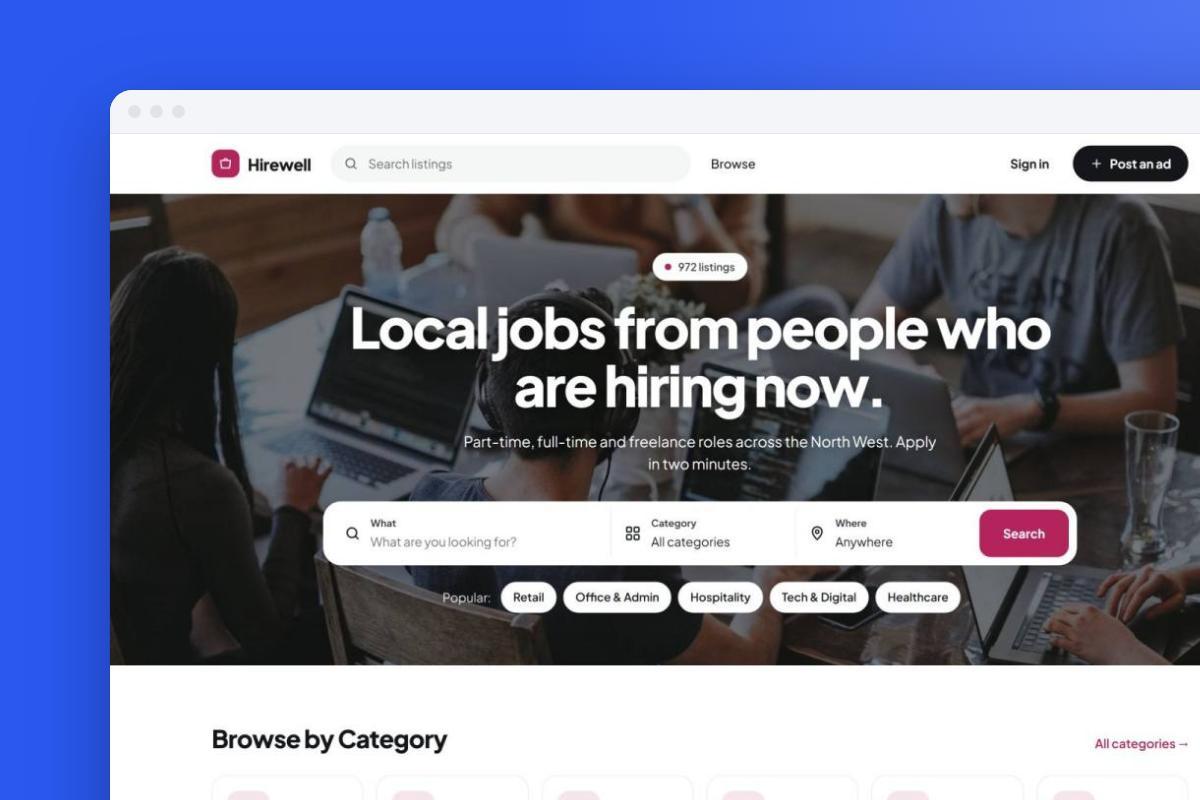
Here is the 2nd episode of our Class series of articles on how to create a classifieds website. We started with the first one, 6 steps to create an automobile classifieds website. This article is focused on creating a job board, a job portal, or simply a website to get people hired and offer job opportunities.
- Pick a domain name
- Register a website with Yclas
- Get a Starter or a Professional plan
Once you're done with those steps, you can start on what makes your website a fully functional job board.
In short
- A job board is a regular Yclas classifieds site: pick a domain, register, choose a plan, then rename 'Post new ad' to something like 'Post a job opportunity'.
- Turn on the Jobs custom fields (Settings > Custom fields > Jobs) to get salary, salary type, job type and experience fields, and make salary required where pay transparency laws apply.
- Pay transparency laws now cover the EU (transposed by 7 June 2026) and US states such as California, Colorado, Illinois, New York and Washington.
- Job scams are rising fast, with FTC-reported losses growing from $90 million in 2020 to $501 million in 2024, so moderate new jobs and ban any job that asks applicants to pay.
- Set ads to expire (30 days is common) because Google for Jobs does not allow expired postings, and organize categories as full-time and part-time with industry subcategories.
Part of the guide Starting a marketplace
The main goal
Your goal with this website is to let companies post their job opportunities and let job seekers either post their C.V.s or apply for posted opportunities. Let's go over it one step at a time: Yclas has all the features you need for this and makes it easy to build an interface that serves this purpose.
Setting up the company interface
Companies will want to come to your website and find an easy way to post a job opportunity, so your first task is to change the text "Post new ad" to something more relevant to your website. You could pick something as simple as "post a job opportunity" or "post your offer"; the latter can work as a call to action for both companies and job seekers. Next, add the fields that companies will have to fill in. This is easy with the custom fields template that is already on your website: you just need to activate it. To activate those extra fields like salary, working hours, job type, and others, follow these steps:
- Log into your website administration panel
- Go to settings > custom fields
- Pick jobs
- Click save
These steps are also shown in the screenshot below.
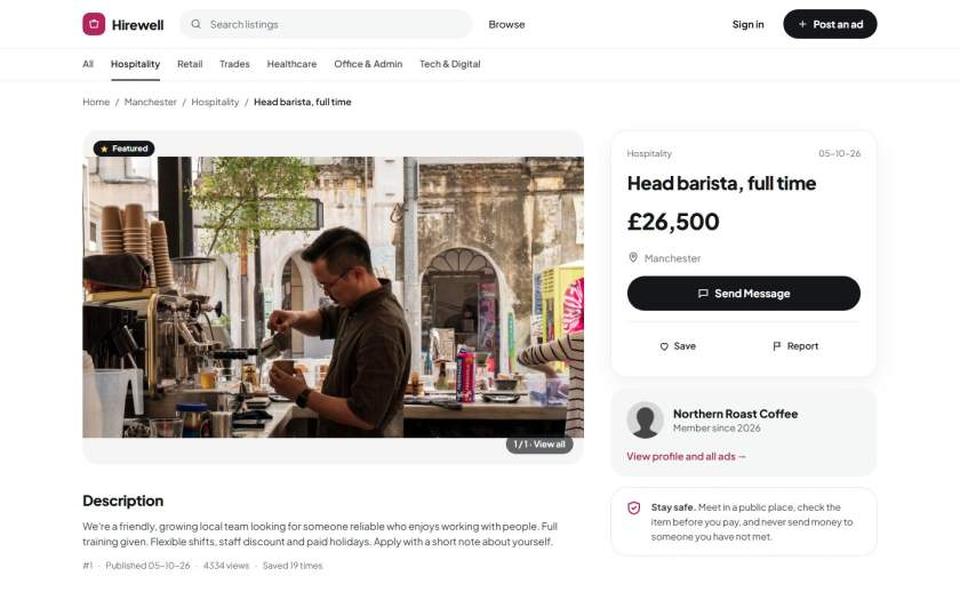
Once you click save, you will see that a list of custom fields is created, and if you now post a new job opportunity, you will find those fields in your ad. Remember that you can edit those fields, make them required or searchable, and have them show up in the ad listing view. Once you've configured them, you can move to the next step.
Job board rules you need to know in 2026: pay transparency and job scams
Two things have changed a lot since this guide was first written, and both affect how you set up the job posting form: employers increasingly have to publish pay, and job scams have become one of the fastest-growing kinds of fraud.
Pay transparency is becoming the law. In the EU, the Pay Transparency Directive (EU) 2023/970 had to be transposed into national law by 7 June 2026. According to the European Commission, it gives job seekers a right to information on pay before employment, bans employers from asking about salary history and bans non-disclosure agreements on salaries. In the US, New York State's pay transparency law requires businesses with four or more employees to include in job advertisements the minimum and maximum annual salary or hourly pay they believe is accurate at the time of posting, and to state clearly if the job is commission-based.
The legal duty falls on the employer, but a job board that makes pay easy to publish is more useful to employers and job seekers alike. In your custom fields:
- Add Salary from and Salary to as number fields, plus a select field for the pay period (hourly, monthly, yearly). Make them required if most of your employers are in a region with a pay transparency law, and searchable so job seekers can filter by pay.
- Add a checkbox for commission-based roles.
- Do not add a "current salary" field to your C.V. category: the EU Directive bans employers from asking candidates about their salary history.
Job scams are rising fast. The US Federal Trade Commission reported in March 2025 that reports of job and employment agency scams tripled between 2020 and 2024, and that reported losses grew from $90 million to $501 million. Losses in the wider business and job opportunities category reached $750.6 million in 2024. The FTC's warning signs make a useful moderation checklist: honest employers never ask candidates to pay to get a job or to deposit a check and send part of the money on, and "reshipping" jobs that forward packages are a known scam.
For a job board this means turning on ad moderation so every new job is checked before it goes live, using the blacklist for repeat offenders, and publishing a short "How to spot a fake job" page in your footer. Settings that would add friction on a general classifieds site, like requiring registration before posting, are usually worth it on a job board.
Template
Stay-safe tips page for buyers and sellers
Publish this as your safety page and link it from every listing and message screen; add your own payment and reporting details.
More job board rules for 2026: US pay laws, task scams, expired jobs and Google for Jobs
This page also replaces our older posts on creating a job listing website, on starting a job posting site with classifieds software, and on how the job search has changed.
Pay transparency in more places
- US states. A growing number of states require pay information in job postings, including California, Colorado, Illinois, New York and Washington, as well as the District of Columbia (see SixFifty's state tracker, updated September 2026). Three more took effect in 2026: Virginia (1 July 2026, employers with at least one Virginia employee), Maine (29 July 2026, employers with 10 or more employees) and Connecticut (1 October 2026). Thresholds and details differ by state. In California, employers with 15 or more employees must also give their pay ranges to the third parties, such as job boards, that post their ads.
- EU. According to the European Commission (5 June 2026), employers must tell job seekers the starting salary or pay range in the vacancy notice or before the interview.
Many job seekers now pass over ads that show no pay. The Yclas Jobs custom-field template already includes Salary, Salary type, Job type and Experience in Years, and you can make the salary field required. Add a line to your posting rules and FAQ saying that ads must show pay, or a pay range, where the law requires it.
Template
Posting rules for your classifieds site
Publish this as your posting rules page and link it from the post-an-ad form; adjust the prohibited list to your country's laws and your niche.
Check your country's rules on items such as weapons, animals, alcohol and medicines before publishing. More free tools →
Task scams and how to screen employers
In December 2024 the FTC reported that losses to job scams grew from $90 million in 2020 to $286 million in 2023, and reached $223 million in just the first half of 2024. "Task scams" grew from about 5,000 reports in all of 2023 to about 20,000 in the first half of 2024. In these fake jobs, people are paid small amounts to like videos or rate products, then asked to deposit money to unlock their supposed earnings. Rules that help:
- Ban any job that asks applicants to pay to start, to unlock earnings or to buy equipment, or to pay for training or a "background check". Say so in your Terms of Service.
- Treat vague offers ("earn $500/day, no experience, contact on WhatsApp") and employers who move the conversation to a private chat app before any real interview as warning signs.
- Screen the employers, not just the jobs: charging a small fee to post a job and approving new employers by hand filter out most scams. Turn on the built-in spam protection (reCAPTCHA, Akismet, blocklists, blocked email domains).
- Require a real company name and a way to apply in every post.
Expired jobs and Google for Jobs
Google's job posting guidelines (updated 8 September 2026) do not allow expired job postings. They also exclude jobs that require payment from applicants, fake or non-existent jobs, postings that misrepresent the employer, listings with too little detail, and listings with no way to apply. The markup requires datePosted, description, hiringOrganization, jobLocation (with addressCountry) and a clean title with no job codes, addresses, dates, salaries or company names in it. Once a job is filled, Google asks you to set validThrough to a past date, remove the page so it returns a 404 or 410, or remove the markup.
Set an expiry period for ads (30 days is common for jobs) so filled positions drop off automatically, and ask employers to deactivate a job as soon as it is filled. For more on getting job pages indexed and ranking, see our guide to SEO for classified websites. If you allow it, employers can reactivate an expired listing from their account.
A practical setup
- Extra fields: contract type (list), remote work (yes/no) and closing date (date).
- Revenue: charge per posting with paid categories, sell featured listings that appear first, or offer monthly memberships to recruiters and agencies that post often.
- Candidates: job seekers can create accounts, save listings as favorites, get email alerts about new ones, and message employers through the site.
Why a niche board still wins
The big platforms report huge scale in 2026:
| Platform | Scale it reports (2026) |
|---|---|
| Indeed | 685M job seeker profiles, 3.5M+ employers, 31 hires per minute (March 2026), over 60 countries (Indeed About page) |
| 1.3B+ members, about 8.2K job applications submitted every minute, $19.8B revenue in its latest fiscal year (LinkedIn Pressroom) | |
| Freelancer | Over 90 million registered employers and freelancers, over 247 countries, regions and territories (Freelancer About page) |
A general site gets thousands of applicants for each post, and a local or specialist employer gets lost among them. A focused board (nurses in one region, kitchen staff, remote developers in one language) gives a smaller and better-matched audience.
Configuring the job seekers' interface
On your website, there is practically no difference between job seekers and job posters except for the way they look at and use it.
The main focus for job seekers is to find a relevant job opportunity that suits their specific industry expertise, salary expectations, and availability. Also, they need to be able to contact those job posters directly and apply for the opportunity without any barriers.
To make it simpler for job seekers, you need a proper setup for your categories: categories are the first thing that shows up after the featured or latest job opportunities slider. To add categories, follow these steps:
- Log in to your Yclas website admin panel
- Go to classifieds > categories
- Type in the name of the category that you want to add and hit enter
- Type in more categories the same way, then click save
If you want job seekers to be able to post information about themselves then you should create a third category and call it whatever you see fit, for example "Post your C.V.".
Then you will need to create custom fields specific to that category, depending on what you want job seekers to fill in, e.g. salary expectation, years of experience, industry field and so on.
Remember that you can also set up locations and sub-locations depending on where your website is focused.
Setting up the overall job-board appearance
Now that the core information is done, we can move on to picking the best appearance for your site. As you may already know, Yclas plans all give you access to every theme for free, so you might want to spend some time picking the best theme for your site.
I recommend getting some nice icons for your categories and uploading them before making your final choice of theme. Keep in mind that you can change your selected theme at any time without affecting any content on your job-board classifieds.
Interactive map
This part is optional and can be done later on, but I'm mentioning it because it adds a nice touch to your website's appearance and you can change any of the map's colors.
The interactive map is part of your job-board landing page. You can pick any country, continent, or group of countries (EU) to be displayed with the colors you choose for the active region, inactive region, border color, and the whole map borders settings.
Some settings you might want to consider
Some other settings are optional but useful for a job board:
Register before contact:
When this is on, job seekers and companies will need to register before sending a message to anyone on your site. Although I recommend keeping barriers to a minimum, I have seen sites that use it and keep it on, so it seems to work for them.
Register before posting:
Forcing users to register before posting is not one of my favorite features, but I've seen many job board owners turn it on.
ReCAPTCHA:
For better security and less hassle for users on your site, activating reCAPTCHA will make it easier to post an ad and it could give your user some sense of security.
Blacklist:
The blacklist feature stops spammers from posting on your website once you have marked them as spam. It is useful on almost any classifieds website, but job boards attract so many scammers that it is essential there.
I could keep listing features, but your time is better spent testing your website and learning by practice how to create a job board with Yclas.
I hope this was useful. Let me know your thoughts and ideas by leaving a comment in the section below.