How to build a sports club directory that helps families find the right team.
This guide covers building a directory of sports clubs and teams in one area: the parents and adults who search it, the details they filter on such as sport, age group and level, how it earns money, where the first clubs come from, how to handle child safety and club claims, the searches to target, and a launch timed to registration season.
Free for 15 days · No credit card · Plans from $19 a month
Answer one question well: where can my child, or I, play this sport nearby?
Two groups search for sports clubs. Parents want a soccer, swimming or gymnastics club for a child of a certain age, close to home, at a level that fits, with training on days they can manage. Adults want a recreational league, a running club, a pickleball group or a masters swim team after moving to a new town. Both face the same mess: club websites that have not been updated since last season, league pages that list teams but not how to join, a parks department brochure, and neighborhood Facebook groups where the same question gets asked every August.
Choose your scope
- All sports in one town or county. The clearest choice for a local directory, because families often compare several sports for the same child.
- One sport across a region. Youth soccer clubs in a state, or every rowing club in a country. Good if you know that sport's world well.
- One kind of player. Adult beginner leagues, adaptive and inclusive sport for players with disabilities, or girls' teams.
Clubs are a good fit for a directory because they want new members every season and rarely have the time or budget to market themselves. A volunteer secretary who can point families to one clear page will thank you for it.
Parents search by age and day of the week as much as by sport. Build for that.
Use sport as the category and let age, level and schedule do the filtering.
Make each sport a category, and group the long tail under a few headings such as racket sports, water sports, combat sports and outdoor sports. Two levels are plenty. The fields carry what a parent or player really decides on.
Age groups should be ranges the sport itself uses, such as under 8, under 10 and under 12, not free text. Level needs simple words: recreational, competitive, elite or development squad. Schedule fields like training days and season dates let a parent rule out clubs that clash with work or other activities. Add whether the club accepts beginners and whether it offers a free trial session, because those two facts decide whether a family makes contact.
Keep fees as a range or a short text such as "about $150 a season plus uniform" rather than a precise price, since clubs change fees yearly and a wrong number causes arguments.
Venue is worth its own field too, since a club may train at a school gym in winter and a park in summer.
| Category | Example listings | Fields people filter on |
|---|---|---|
| Team sports | A youth soccer club, an adult softball league, a basketball academy | Age groups, gender, level, training days, season, beginners welcome |
| Racket sports | A tennis club, a pickleball group, a badminton club | Ages, level, courts indoor or outdoor, coaching for beginners |
| Water sports | A swim team, a rowing club, a sailing school | Ages, swimming ability required, season, venue |
| Combat sports and martial arts | A judo club, a boxing gym, a karate school | Ages, style, competition or fitness, trial session offered |
| Running and cycling | A running club, a triathlon club, a mountain bike group | Pace groups, meeting days, distance, adults or juniors |
| Adaptive and inclusive sport | Wheelchair basketball, a para swimming group | Disability groups catered for, ages, accessible venue |
Make age groups checkboxes, so a club that takes under 8 to under 14 shows up for every one of those searches.
Clubs have small budgets, so earn mostly from businesses around the sport.
Most clubs are run by volunteers with little money, so charging them to be listed would leave the directory half empty. Keep basic club listings free. The money is in timing and in the businesses that serve players and parents.
- Featured places before registration. Clubs that need to fill teams will pay a modest amount to be first on their sport's page in the weeks before signups close.
- Club memberships. A yearly package for bigger clubs and private academies: a featured place, a verified badge, and inclusion in a seasonal email to families.
- Trial and join requests. A family sends one request to several clubs asking about a trial session or a place on a team. Private coaches and academies value these leads most. The club replies and arranges the trial itself; the directory does not take bookings.
- Banner spaces. Sports stores, physical therapists, sports camps, uniform suppliers and local businesses that sponsor youth teams.
- Pay to post for camps. Holiday camps and clinics are run commercially and can pay to post in a camps category.
| Model | Works when | Switch it on |
|---|---|---|
| Featured places | Clubs compete for signups in popular sports | Before the registration season, once each popular sport has several clubs |
| Club and academy memberships | Larger clubs and private academies want more members | After your first full season |
| Trial and join requests | Families contact clubs through the site | When requests start arriving through messages |
| Banner spaces | Sports businesses want to reach local families | When you can show visitor numbers in registration months |
| Pay to post in a camps category | Camps and clinics are commercial | Before spring for summer camps |
Get the first clubs from the leagues and bodies that already list them.
Clubs are easier to find than most businesses, because nearly every organized club belongs to something larger.
- League and association lists. Regional leagues, state associations and national governing bodies usually publish their member clubs with contact details. These are public, but message each club before you add details beyond the basics.
- Parks and recreation departments. They know which clubs use public fields, pools and gyms, and often publish program guides each season.
- Schools and athletic directors. They know which outside clubs their students join.
- Google Places import. Gyms, martial arts schools, swim schools and tennis clubs are usually on Google Maps. In Yclas, an import from Google Places with your own Google key brings their name, address, phone, website and opening hours, though not photos. Teams that train on public fields often have no map entry, so add those by hand.
- CSV import. If a league sends a spreadsheet of its clubs, import it in one go.
- Club secretaries claiming pages. Send each club an invitation to claim its page and add age groups, training days, photos and its registration dates.
Plan to update listings every season. A club page with last year's registration date is worse than none, so send each claimed club a reminder a month before its season starts.
Keep children safe and listings accurate.
A sports club directory sends parents to people who will coach their children, so child safety comes first even though you do not run the clubs.
Child safety
- No photos of identifiable children without consent. Ask clubs to use team photos only when parents have agreed, or action shots where faces are not clear.
- No children's names or personal details on listings. Contacts should be club officials or a club email, never a player.
- Safeguarding information. Add a field where clubs can state whether coaches have background checks and whether the club has a safeguarding or child protection policy. Show it, and tell parents to ask about it directly.
- Contact through the site. Messages go through the directory, so club volunteers do not have to publish personal phone numbers.
Accuracy and fake listings
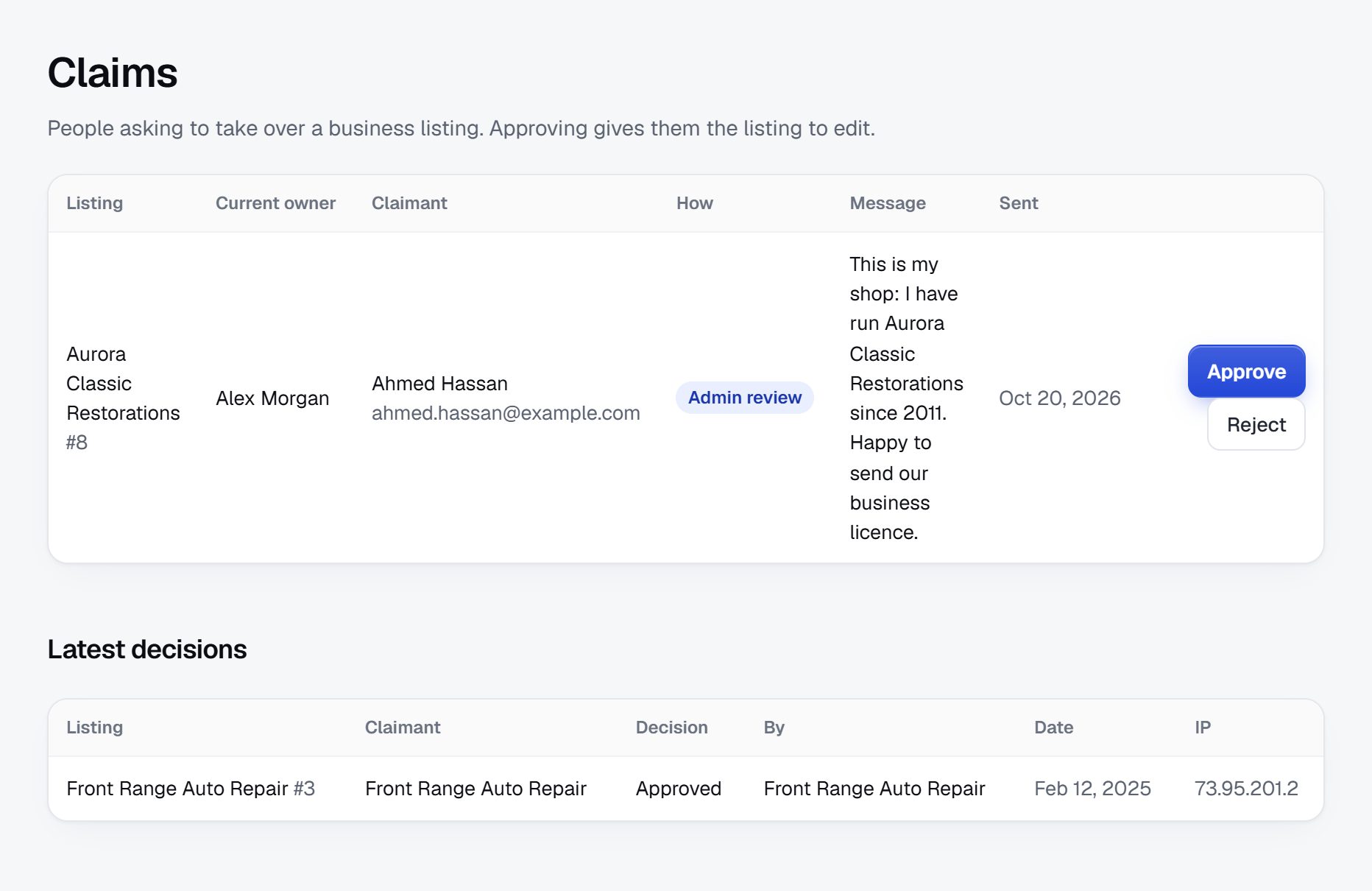
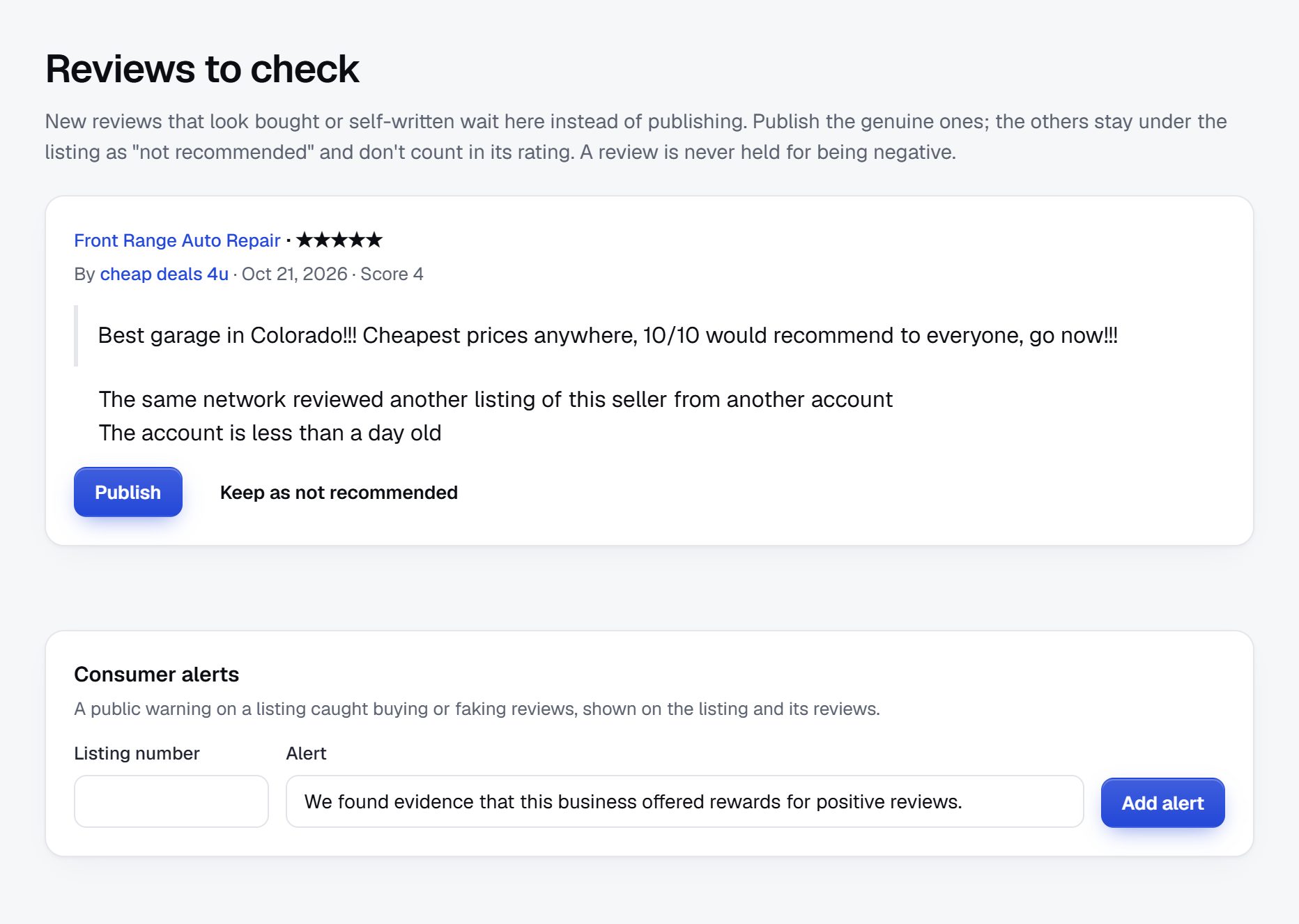
Some listings will be private coaches presenting themselves as a club, or a club claiming affiliations it does not have. Approve every new listing and every claim, check affiliation against the governing body's own list, and remove listings that misrepresent themselves. Hold reviews from new accounts, because disputes over team selection sometimes turn into angry reviews. Let clubs reply.
Safety advice for families
Tell parents to visit a session before signing up, meet the coach, ask about background checks, and never pay a large fee upfront to someone they have only met online. Rules on child protection, background checks and youth sport differ by country and state, so check the rules where you operate.
Rank for sport plus age plus town.
Searches for clubs are local and specific, and many include the age or level:
- "youth soccer clubs near me"
- "swim team for 8 year olds in Plano"
- "adult beginner volleyball league Seattle"
- "gymnastics classes for toddlers"
- "pickleball club near me"
- "when does fall soccer registration open"
Pages to build
- Sport plus town pages. "Youth soccer clubs in Plano" and "swim teams in Plano" each answer a search directly.
- Age guides. "Sports for 5 year olds in your town", listing every club that takes that age, are pages parents share in group chats.
- Registration calendars. A page per season listing signup deadlines by sport. Families search for these dates every year.
- Beginner and adult pages. Adults new to a sport search for leagues that welcome beginners, and few sites serve them.
- Explainers. The difference between recreational and travel soccer, what to expect at a swim team tryout, and what equipment a beginner really needs.
Keep the registration calendar current. It is the page most likely to bring families back each season and the one clubs most want to appear on.
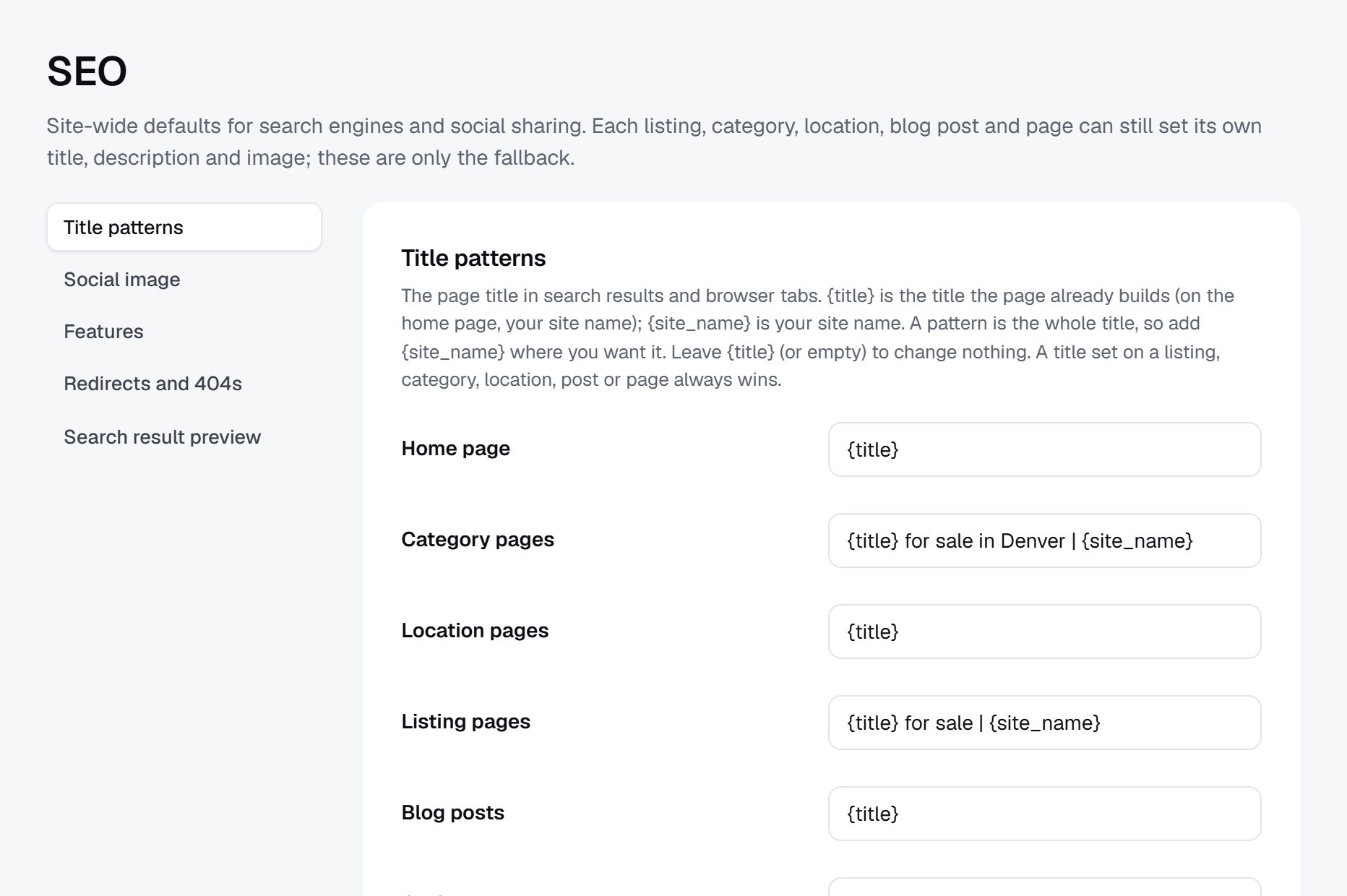
Launch a month before registration opens in your area.
Timing matters more here than in most directories. Families look for clubs in short bursts before each season, and a directory that launches after signups close waits months for its next chance.
Seasons to plan around
- Late summer. Fall registration for soccer, football, volleyball and swimming, often in July and August.
- Winter. Spring sports such as baseball, softball, lacrosse and track register in the winter months.
- Early spring. Summer camps and clinics fill early, so camp listings need to be live by March.
- January. Adults look for new leagues and running clubs at the start of the year.
Partners
The parks and recreation department, local leagues, school athletic directors, sports stores that see every family before the season, and parent groups in local social media.
Checklist
- Choose your town or county and the sports to cover first.
- Set up age group checkboxes, level, training days and safeguarding fields.
- List 100 clubs from league lists, the parks department and your own searches.
- Invite every club secretary to claim and update their page.
- Publish a registration calendar for the coming season.
- Launch four weeks before the main registration window.
- Ask clubs to link to their page from their own site.
A worked example: a club finder for the Brazos Valley in Texas.
Picture a fictional directory called Brazos Valley Club Finder, covering Bryan, College Station and the small towns around them in central Texas. The area has a large university, many young families and a steady flow of newcomers who arrive in August with children to sign up and no idea where to start. It also has hot summers, so training times and indoor venues matter more than in cooler places, and many outdoor teams train in the early evening from late spring to September.
Categories
- Youth team sports
- Soccer
- Baseball and softball
- Volleyball and basketball
- Individual sports
- Swimming and diving
- Gymnastics and cheer
- Martial arts
- Adults
- Recreational leagues
- Running and cycling groups
- Camps and clinics
Age groups are checkboxes from under 6 to adult, level is a dropdown from recreational to competitive, and every club page shows its next registration window and whether coaches have background checks, as stated by the club.
Who it serves
Parents new to the area who want a soccer or swim club near their school, families comparing two sports for one child on the same weekday evenings, graduate students looking for an adult league, and grandparents searching for a summer camp to give as a present.
How it started
The founder coached an under 10 soccer team and answered the same question in neighborhood groups every August: where can my child play, and is it too late to sign up. He gathered club details from the parks department program guide and the regional soccer and swimming associations, messaged each club secretary, and opened with 90 clubs four weeks before fall registration closed. About a dozen clubs never replied, so he listed them with basic details and an "unconfirmed" note until they did.
How it makes money
Basic club listings stay free. In July and December, private academies and larger clubs pay for featured places on their sport's page, a sports store and a physical therapy clinic buy banners shown to parents, and summer camps pay to post in the camps category from February. The directory never handles registration or payments for clubs; families contact the club through the site and sign up with the club itself.
| Club | Ages and level | Key details |
|---|---|---|
| Recreational youth soccer association | Under 6 to under 14, recreational | Fall and spring seasons, beginners welcome, registration closes mid-August |
| Competitive swim team | Ages 7 to 18, tryout required | Indoor pool, practice five evenings a week, coaches background-checked as stated by the club |
| Judo club at a community center | Ages 6 and up, adults welcome | Free first session, competition optional, Tuesday and Thursday evenings |
| Adult coed kickball league | 18 and up, social | Wednesday nights, sign up as a team or a free agent |
| Summer volleyball clinic | Ages 10 to 15, all levels | Camps category, one week in June, indoor gym |
The first 90 days, counted back from registration week.
A sports club directory runs on the registration calendar. Find out when the main sports in your area open and close signups, usually in summer for fall sports and in winter for spring ones, and make sure the directory is live and complete at least four weeks before the busiest window closes. A directory that launches the week after signups end waits half a year for its next real test.
The early weeks are about data, not design. Club details come from leagues, associations and the parks department, but they go out of date every season, so treat those lists as leads and confirm each club's age groups, training days and registration dates with a club official. Club secretaries are volunteers with day jobs: a short message with the details you already have and a request to correct them gets far more replies than a blank form.
Safety fields belong in the first version, not a later one. Parents will look for background checks and safeguarding policies from day one, and clubs that see the field early learn to fill it in. Keep its wording neutral, such as "club states that coaches are background-checked", so it never reads as your guarantee.
| Weeks | Focus | Done when |
|---|---|---|
| 1-2 | Choose the area and sports, and collect registration dates for each sport's main season | A calendar shows when each popular sport opens and closes signups |
| 3-4 | Set categories, age group checkboxes, level, training days and the safeguarding field | Two parents have used a sample page to rule a club in or out |
| 5-6 | Gather clubs from league lists, the parks department guide and associations | 150 candidate clubs are listed in a sheet with a contact for each |
| 7-8 | Message club secretaries to confirm details and claim their pages | 90 clubs are published with current registration dates |
| 9-10 | Build sport plus town pages, an age guide and the registration calendar page | Each popular sport has a page answering its main local search |
| 11-12 | Launch with the parks department, sports stores and school newsletters ahead of signups | Flyers are up in stores and the first family messages have reached clubs |
Ways to build a sports club directory, and what families need from it.
Families decide on a handful of facts, so the software has to filter on them well: sport, age group as checkboxes rather than text, level, training days, distance from home and the next registration window. Clubs must be able to claim their pages and update dates themselves each season, messages need to reach a club email rather than a volunteer's phone, and reviews need approval because team selection disputes can spill over. What the directory should not do is take signups or payments, which clubs already handle through their own systems.
Building with developers fits a league or association that wants the directory tied to its own registration system or to live team data. That is useful and expensive, and it only makes sense if the organization will maintain it for years.
A directory script or WordPress plugin on your own server suits a parent or coach who already runs a local sports blog. Expect to spend evenings on spam, updates and the age filter, which plugins often handle as plain text.
A hosted builder such as Yclas fits one person or a small team covering a town or county, since custom fields, claims, messages and featured places are ready and the time goes into confirming clubs before each season.
Test whichever route you pick with a real question: can a parent find every club that takes a 9 year old on Tuesday evenings within a short drive, in under a minute.
| Route | Fits when | Watch out for |
|---|---|---|
| Custom build with developers | An association wants links to its own registration or team data | Ongoing costs, and a system that depends on the association's volunteers |
| Plugin or script on your own hosting | A coach or parent already runs a local sports site | Age groups stored as text, spam and plugin updates |
| Hosted builder | One person or a small team covers a town or county | Set up age group checkboxes and the safeguarding field before adding clubs |
| Pinned post in a parents' group | You want to test interest before a season | Answers get buried and nothing can be filtered |
What a sports club directory costs to run.
The software is the smallest part of the bill. Most of the cost is your time in the first months: finding the first listings, answering questions and checking what gets posted.
Running costs stay low: your own Google key if you import from Google Places, some flyers for sports stores and school notice boards, and perhaps a booth at a youth sports fair. The ongoing cost is the time to refresh club details every season.
| Cost | Typical range | On Yclas |
|---|---|---|
| Domain | $10 to $20 a year | Your own, with SSL included |
| Software and hosting | $0 to $100+ a month, plus plugins and updates | Starter $19 a month, Professional $99 |
| Design | $0 to $100 for a theme, or a designer | 109 looks included |
| Payment fees | About 3% per payment | Your Stripe or PayPal fees; Yclas takes nothing |
| Business data | Free if you collect it, or a few cents per page of Google results | Paid to Google, with your key |
| Your time | 5 to 10 hours a week at the start | Finding listings, moderation, support |
Mistakes that send families back to the Facebook group.
- Launching after signups close. Families look for clubs in short bursts before each season. Launch a week after the window shuts and your first visitors find that every club is full, and they do not come back.
- Showing last season's registration dates. A wrong deadline costs a family a season, and they will blame you, not the club. Show the date each page was last updated, and remind every club a month before its window opens. A club that does not answer twice should be marked as unconfirmed rather than left looking current.
- Publishing photos of identifiable children. Team photos uploaded by an enthusiastic volunteer may include children whose parents never agreed. Ask clubs for venue photos or action shots without clear faces unless they confirm consent.
- Charging volunteer clubs to be listed. Most clubs will simply not pay, and a directory with half the clubs missing is no help to parents. Keep listings free and earn from academies, camps and local sports businesses.
- Free text for ages. "Kids 8-12", "U9 to U13" and "ages eight and up" cannot be filtered together. Use checkboxes for age groups so a search for one age finds every club that takes it.
- Mixing tryout clubs and open programs without saying so. A parent of a beginner who contacts a competitive club with tryouts wastes everyone's time. Make "beginners welcome" and "tryout required" visible on every listing, and include tryout dates where clubs hold them.
- Forgetting adults. Adult leagues, masters swimming and running clubs have fewer options to search and keen members who share links. A small adults section brings steady visitors outside the youth registration peaks.
- Taking sides in club disputes. Reviews written after a child was left off a team can turn personal. Hold reviews for approval, set a written rule that reviews describe the club rather than individuals, remove posts about named children or coaches' private lives, and let clubs reply.
- Ignoring the off-season. A directory that only wakes up in August and January looks abandoned in between. Use quiet months for camp listings, adult leagues, beginner explainers and the registration calendar for the next season.
- Accepting safety claims without a source. If a club says its coaches are background-checked, show it as the club's own statement, and tell parents to ask. Never present it as something you verified unless you did, and remove the claim if a club cannot say who ran the checks.
Youth and club sports terms a directory founder should know.
Parents, coaches and league officials use these terms constantly, and the meaning can differ by sport.
| Term | What it means |
|---|---|
| Rec | Short for recreational, a program open to all players with an emphasis on taking part rather than winning. |
| Travel team | A competitive team that plays against clubs from other towns, usually with tryouts and higher costs. |
| Select or club team | A term many sports use for a competitive team chosen by tryout, often run by a private club. |
| Tryout | A session where coaches assess players before choosing who joins a team. |
| U10, U12 | Age group labels meaning under 10, under 12 and so on, usually based on a birth year or cutoff date. |
| Age cutoff | The date that decides which age group a player belongs to, which varies by sport and organization. |
| Governing body | The organization that sets rules for a sport and often registers or sanctions clubs. |
| Sanctioned | Approved by a governing body or league, usually meaning the club follows its rules and insurance requirements. |
| Background check | A screening of a coach's or volunteer's records before they work with children. |
| SafeSport | In the US, the training and rules from the U.S. Center for SafeSport that apply in many Olympic and Paralympic sport organizations. |
| Free agent | An adult who signs up for a league alone and is placed on a team. |
| Registration window | The period when a club or league accepts signups for a season. |
| Pay to play | The fees families pay for a child to take part, covering coaching, fields, uniforms and travel. |
| Adaptive sport | A sport modified so people with disabilities can take part, such as wheelchair basketball. |
The same steps for a sports club directory on Yclas.
- Describe your directoryThe setup wizard writes the categories, an About page and example listings from one sentence.
- Add fieldsHours, services, areas served, prices: the details people search by, as filters.
- Fill itImport businesses from a spreadsheet or Google Places, then check them.
- Bring owners inOwners claim their page, update it and answer reviews.
- EarnSwitch on featured places, banners or memberships when visits arrive.
How much does it take to launch a sports club directory?
A modest amount: the site, a domain, flyers for sports stores and schools, and a few weeks of contacting clubs before registration season. Most of the work is gathering accurate club details.
Will clubs pay to be listed?
Most volunteer clubs will not, so keep basic listings free. Private academies, camps and larger clubs will pay for featured places before registration, and sports businesses buy banners.
Can families sign up for a club through the directory?
No. The directory helps families find and contact clubs. Clubs handle registration and trial sessions themselves, through messages or their own signup forms.
What should I do about child safety?
Do not publish children's names or identifiable photos without consent, show whether clubs say they run background checks, and advise parents to meet coaches before signing up. Check the rules where you operate on youth sport.
Where do I find the first clubs?
League and governing body club lists, the parks and recreation department, schools and a Google Places import for clubs with their own venues. Then ask each club to claim its page.
How do I keep club details up to date?
Invite each club to claim its page and send a reminder a month before its season. Remove or mark listings that have not been updated for a year.
Why would parents use this instead of a local Facebook group?
A group answers the same question over and over and the answers get buried. A directory lets parents filter by sport, age and training day in seconds and shows registration dates in one place.
Should I cover school teams as well as clubs?
School teams are usually open only to students at that school and are found through the school itself, so most directories leave them out. Listing outside clubs that school athletes join is more useful to families.
How do I handle clubs with several venues?
Create one listing for the club and put each venue in a field or the description, with which age groups train where. If the venues are in different towns, a second listing for the other town helps families searching there.
What if two clubs dispute which one is affiliated with a league?
Check the league's or governing body's own published list and show only what it confirms. Stay out of the argument, and update the listing as soon as the official list changes.
Can I include private coaches and personal trainers?
You can, in a separate category so families do not confuse a one-person business with a club. Apply the same safeguarding field and approval, and be clear that you do not vet coaches yourself.
Is it worth covering adult sports at all?
Yes, especially if your area has many newcomers. Adults looking for a league after a move search often, share links with friends, and give the directory steady visitors outside the youth registration peaks. January, when people look for new routines, is a good time to promote that section.
Related pages.
The parts of Yclas this leans on.
You have the plan. Now get your clubs listed before registration opens.
Describe your site in a sentence and the setup wizard writes the categories, example listings and a look. Free for 15 days, no credit card.
Start my directory