How to build a Black-owned business directory your community relies on.
This guide walks through building a directory of Black-owned businesses in one city or region: who searches it, the details people filter on, how it earns money, how to find and confirm the first businesses, how to word ownership claims and stop fake ones, the searches to target, and a launch plan built around local events.
Free for 15 days · No credit card · Plans from $19 a month
Serve the people who choose where their money goes.
People search for Black-owned businesses for clear reasons: to support owners in their own community, to find a barber or stylist who knows their hair, to hire a caterer, accountant or contractor they feel understood by, or to buy gifts from Black makers. Businesses want to be found by those customers. The tools they use today do this badly. Map apps carry an owner-chosen attribute in some regions, but it is easy to miss and impossible to browse by neighborhood and trade. National lists go viral for a week and then go stale. Instagram lists and city Facebook groups are full of recommendations that nobody can search a month later.
Pick your angle
- One metro area. A city and its suburbs is the right size: big enough for hundreds of businesses, small enough that you can know the owners.
- One kind of business across a wider area. Black-owned restaurants in a state, Black-owned beauty brands nationally, Black professionals such as lawyers and therapists.
- Shopping and services, kept apart. Product makers who ship nationally and local service businesses attract different searches, so give each its own section.
Ask local business associations, Black chambers of commerce and the people already running list accounts on social media what they wish existed. Some of them may become partners rather than competitors.
Organize by trade and neighborhood, filter on what customers ask.
Categories describe the trade; fields describe what a customer needs before they call. Keep the category tree shallow: food and drink, beauty and grooming, professional services, home services, health and wellness, shopping, arts and events. Within each, fields do the sorting.
One field matters more than the rest: how the ownership was confirmed. Show it on every listing as a plain choice, for example "Owner statement" or "Certified by an outside body", so visitors know exactly what the label means. Add hours, services and service area as usual. Avoid fields that ask about anything beyond the business, such as the owner's background, religion or family: the listing is about the business and who owns it, nothing more.
Neighborhood deserves its own dropdown rather than a free address field, because customers often want to spend in a specific part of town, such as the area where they grew up or the historic district their family came from. A field for languages spoken helps too, for example French or Haitian Creole in some cities, and a checkbox for catering or bulk orders brings in office and event buyers who would otherwise never browse a restaurant list.
| Category | Example listings | Fields people filter on |
|---|---|---|
| Food and drink | A soul food restaurant, a Caribbean bakery, a coffee roaster | Cuisine, dine-in or takeout, catering, neighborhood, opening hours |
| Beauty and grooming | A barbershop, a natural hair salon, a braiding studio | Services, walk-ins, hair types, price range, neighborhood |
| Professional services | An accountant, an immigration lawyer, a marketing agency | Service, languages, remote or in person, takes new clients |
| Home services | An electrician, a cleaning company, a landscaper | Trade, service area, licensed and insured, free estimates |
| Health and wellness | A therapist, a dental office, a fitness studio | Specialty, insurance accepted, telehealth, accepting new patients |
| Shopping and makers | A bookstore, a skincare brand, a clothing label | Product type, ships nationally, in-store or online only |
| Ownership confirmation | Shown on every listing | Owner statement, certified, verified by the directory |
Set the ownership confirmation yourself after checking, so a business never upgrades its own label.
Earn from visibility and leads, never from the label itself.
Being listed should always be free. If the label "Black-owned" appears to be something a business can buy, the directory loses its meaning. Charge for visibility, extras and leads instead, and only after customers are using the site.
- Featured places. A restaurant that wants to be first on the food page during a holiday weekend, or a salon that wants to be seen in its neighborhood.
- Business memberships. A yearly membership can bundle a featured place, a verified badge after you have checked documents, and a spot in a monthly roundup.
- Quote requests. Customers looking for a caterer, a contractor or a photographer can send one request to several businesses. Owners value real inquiries more than page views.
- Banner spaces. Corporate supplier programs, credit unions and community banks often want to reach Black business owners and their customers.
- Sponsored guides. A holiday gift guide or a restaurant week guide with a clearly marked sponsor.
Keep the free listing and the ownership label completely separate from anything that costs money.
| Model | Works when | Switch it on |
|---|---|---|
| Featured places | Popular categories have more listings than fit on one screen | Once a category passes about 40 businesses |
| Business memberships | Owners want more than a listing | When owners ask how to stand out |
| Quote requests | Customers hire services, not just visit shops | Once home and professional services are well stocked |
| Banner spaces | Sponsors want to reach owners and shoppers | When you can show visitor numbers |
| Sponsored seasonal guides | Holiday shopping or local events bring traffic | Six weeks before the event |
Start with the lists your community already made.
The first hundred businesses are usually already known to someone. Your job is to bring them into one searchable place, with each owner's agreement to the label.
- Black chambers of commerce and business associations. Many keep member lists and want more visibility for members. Ask whether they will share theirs or send your invitation.
- Social media lists. Recommendation threads and Instagram roundups name hundreds of places. Use them as a contact list, then ask each business to confirm.
- Markets and pop-ups. Black-owned makers markets, Juneteenth festivals and holiday markets put dozens of owners in one room. Bring a tablet and sign them up on the spot.
- Public data. Some cities and states publish lists of certified minority-owned suppliers. These can be a starting point, but ask before adding the label.
- Map import. In Yclas you can import businesses from Google Places with your own Google key: it brings name, address, phone, website and opening hours, but no photos. Google does not know who owns a business, so import only businesses you have already confirmed, and let owners claim their page and add photos.
Owners who claim their page keep it up to date. That is how a directory stays accurate after launch week.
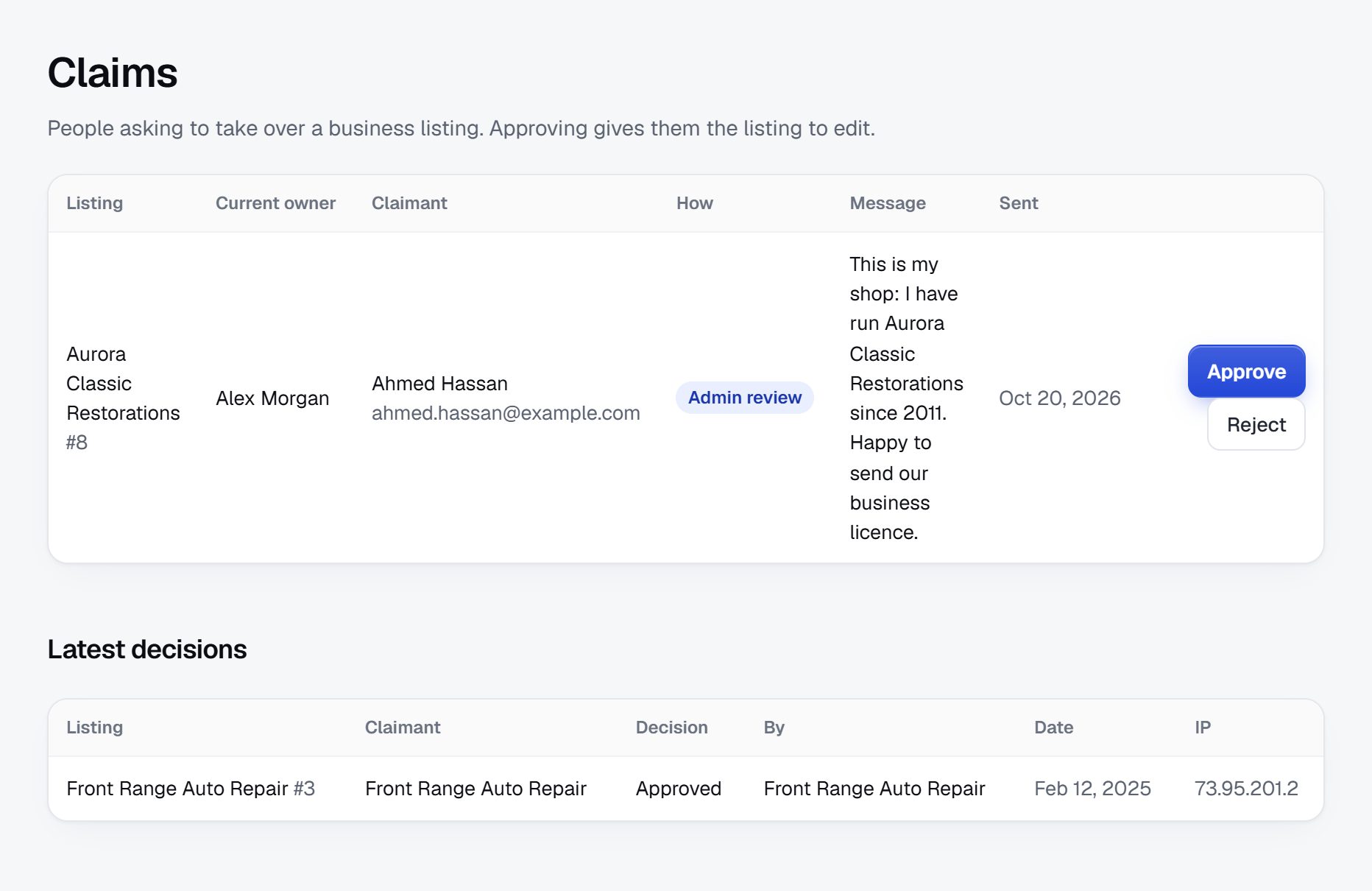
Say clearly what Black-owned means on your site, and check it.
The whole value of the directory is that the label is true. Write down a definition and publish it. A common one, used by supplier certification programs, is that Black owners hold at least 51 percent of the business and run it day to day. You can use a lighter rule, but say what it is.
Three levels of confirmation
- Owner statement. The owner confirms the ownership when submitting. Quick, and fine for most small businesses.
- Checked by you. A short call or video chat, or a link to an article or chamber membership. Worth a verified badge.
- Certified. The business holds a minority business certification from an outside body. Show the certifier's name and the date.
Fake and outdated claims
Some businesses add themselves to gain customers they have not earned, and some change hands after a sale. Ask owners to confirm the label once a year, act on reports, and remove the label rather than arguing in public. Separate "Black-owned" from "Black-founded" or "Black-led" if your community cares about the difference.
Reviews and harassment
Identity-based directories attract hostile reviews and comment spam. Hold reviews from new accounts for approval, let owners reply, and remove abuse quickly. Use respectful wording throughout: capitalize Black, describe businesses by what they do, and never ask for an owner's photo to prove anything.
Rules on certification and fair advertising differ by place, so check the rules where you operate.
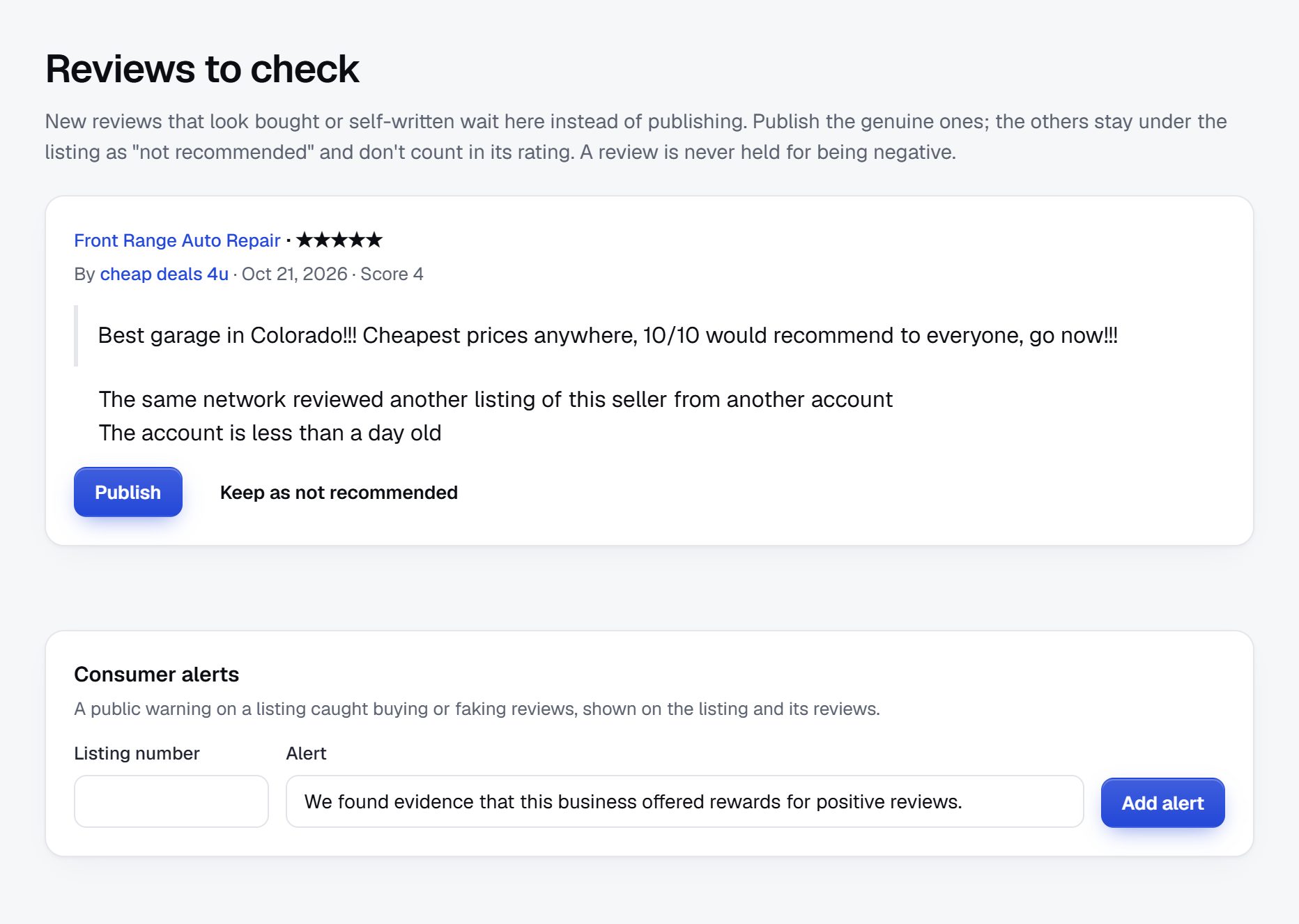
Rank for "Black-owned" plus a trade and a place.
Searches here are very specific and very local. Examples people really type:
- "Black-owned restaurants in Atlanta"
- "Black-owned barbershop near me"
- "Black-owned hair salon Houston natural hair"
- "Black-owned accountant Chicago"
- "Black-owned gift ideas"
- "Black-owned brunch spots this weekend"
Pages to build
- Trade plus city pages. "Black-owned restaurants in Oakland" is a page, and so is each neighborhood once it has ten or more listings.
- Guides. Short, current lists people share: the best brunch spots, plumbers who answer on weekends, bookstores with author events.
- Seasonal pages. Black History Month, Juneteenth, small business shopping days and holiday gift guides. Update the same page every year so it builds rank.
- Owner stories. Interviews with founders are good content and owners share them widely.
Each business page should state its ownership confirmation in plain text near the top, so a search engine and a reader see the same fact. In Yclas, SEO title patterns are set once and every listing, category and location has its own page, which is what these city and trade searches need.
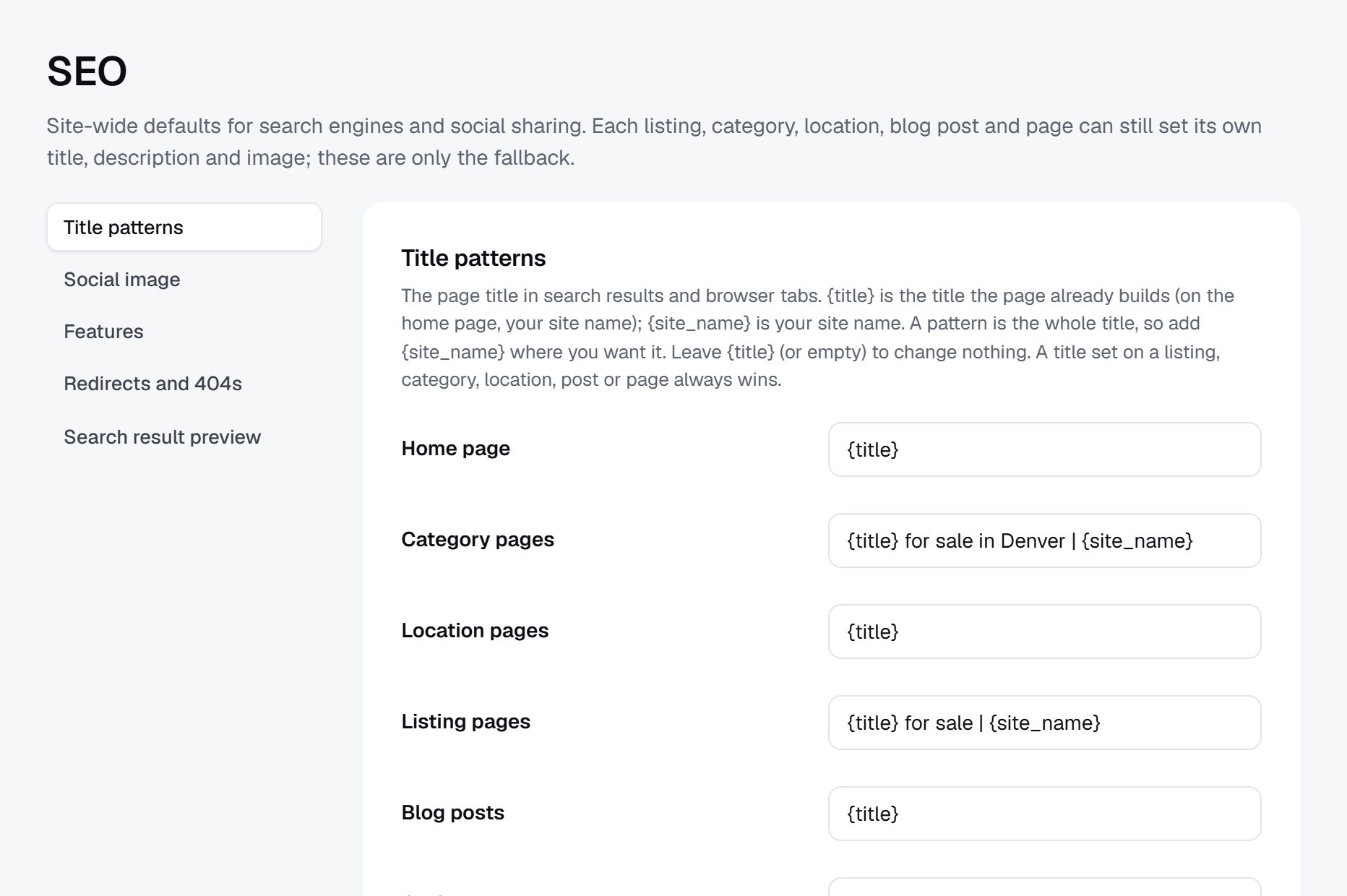
Launch in one city, timed to a moment your community already celebrates.
Pick one metro area and fill four categories well before you go wide: food, beauty, professional services and shopping usually draw the first visitors.
Dates that matter
- February. Black History Month brings the highest search interest of the year in many places. Launch before it, not during it.
- June. Juneteenth festivals and markets are ideal for signing up owners in person.
- November and December. Holiday gift guides send shoppers to makers and stores.
Partners
A Black chamber of commerce, a local business incubator, a popular list account on social media, a community newspaper or radio show, and churches and community centers that already promote members' businesses.
Checklist
- Publish your definition of Black-owned and how you confirm it.
- Add the ownership confirmation field and decide who sets each level.
- Sign up 100 confirmed businesses in four categories.
- Ask the first owners to claim their pages and add photos.
- Write three trade plus city guides.
- Launch with a partner announcement before the next key date.
- Ask every owner to share their listing with customers.
A worked example: a Black-owned business guide for Columbus, Ohio.
Take a fictional directory called Near East Owners Guide, covering Black-owned businesses across Columbus, Ohio, with its roots on the city's Near East Side, the historic King-Lincoln Bronzeville area. The founder chose one metro area on purpose: big enough to fill every category, small enough to visit the owners, and with neighborhoods that residents feel strongly about. Columbus also has a busy calendar of markets and festivals in summer, which made signing up owners in person realistic.
Categories
- Eat and drink
- Restaurants and food trucks
- Bakeries and coffee
- Look and feel good
- Barbers, salons and braiders
- Wellness and fitness
- Hire
- Home trades
- Professional services
- Shop
- Stores and makers
Neighborhood is a dropdown with the names residents actually use, and every page shows one of three ownership levels, set only by the directory: owner statement, checked by us, or certified, with the certifier named. A checkbox for catering and another for weekend hours turned out to be the two most used filters in the first months, ahead of cuisine.
Who it serves
Residents who want to spend close to home, office managers ordering catering for a team lunch, newcomers to the city looking for a barber or a braider who knows their hair, and couples planning weddings who want a Black-owned photographer, florist and caterer in one search.
How it started
The founder ran an Instagram account posting weekend picks, and the same questions kept arriving in her messages: who caters for 80, which electrician answers on a Saturday. Old posts were impossible to search. A neighborhood business association offered its member list, she called each owner to ask permission, and the guide opened with 140 businesses a few weeks before Black History Month. Two owners declined the label, and she left them out without argument.
How it makes money
Listings and the ownership label are free. Restaurants pay for featured places in February and in the weeks before the holidays, home trades and caterers receive quote requests and some take a yearly membership, a community bank pays for a banner aimed at business owners, and a sponsored holiday gift guide runs each December with the sponsor clearly named. None of these touch the ownership level, which the founder checks herself.
| Listing | Category and area | Key details |
|---|---|---|
| Family-run Southern kitchen | Food and drink, Near East Side | Dine-in and takeout, catering up to 50, owner statement |
| Barbershop with Saturday walk-ins | Beauty and grooming, Linden | Kids' cuts, open Sundays, checked by the directory |
| Licensed residential electrician | Home services, Columbus metro | Free estimates, licensed and insured, quote requests on |
| Bookkeeping firm for small businesses | Professional services, remote | Taking new clients, certified, certifier and date shown |
| Shea butter skincare maker | Shopping and makers, ships nationally | Sold online and at two local markets, owner statement |
The first 90 days, counted back from February.
For most Black-owned directories, the plan writes itself backward from one date: the start of Black History Month, when searches, press interest and corporate buying all rise. Launching on the first of February is already late, because the roundup articles are written in January. Aim to be live and well stocked by mid-January. If your 90 days end at another point in the year, aim at Juneteenth or the holiday shopping season instead.
The first weeks are policy, not pages. Your published definition of Black-owned, your three confirmation levels and the rule that nobody can buy the label must exist before a single business is listed, because those are the questions owners and reporters ask first. After that, the work is phone calls and in-person visits. Owners who have seen their business on viral lists they never agreed to will want to know who you are, so explain the project in two sentences and ask before you add them.
Keep a simple sheet of every owner you contact, the date and their answer, so nobody is called twice or listed by mistake. Count only confirmed businesses toward your targets. A long list of unchecked names is easy to build and hard to defend.
| Weeks | Focus | Done when |
|---|---|---|
| 1-2 | Publish the definition, the three confirmation levels and the no-paid-label rule | The policy page is live and a business owner you trust has read it |
| 3-4 | Set categories, neighborhood names and the ownership field that only admins can change | Ten sample listings show every field correctly on a phone |
| 5-6 | Meet the Black chamber or business association and two popular list accounts | At least one partner has agreed to share an invitation with its members |
| 7-8 | Call and confirm owners from member lists and community recommendations | 100 confirmed businesses across food, beauty, services and shopping |
| 9-10 | Send claim invitations and write three trade plus city guides | 40 owners have claimed their pages and added photos |
| 11-12 | Line up the launch with partners before your key date, and prepare window stickers | The announcement date is fixed and every listed owner has a share link |
Ways to build a Black-owned business directory, and what the label demands.
The software questions here follow from the label. You need an ownership field that only you can set, so no business upgrades itself. You need claims, so owners keep hours and photos current. You need reviews that can be held for approval, because identity-based directories draw coordinated hostile reviews. And you need neighborhood and trade pages that search engines can find, plus quote requests for caterers and contractors.
Building with developers fits a national project tied to supplier certification, where you might pull certificate data from an outside body or run a vetting workflow with documents and staff notes. It is the most flexible route and the slowest to launch, and someone has to keep paying for upkeep after the first wave of attention fades.
A directory script or WordPress plugin on your own server suits a writer or list account that already runs a blog and wants the directory beside it. The drawback is that spam, harassment and security updates become your evening job just when the site gets noticed.
A hosted builder such as Yclas fits a city directory run by one founder or a small team, because claims, reviews with owner replies, quote requests and featured places are already there, and the hours go into calling owners.
Avoid running it only as a social media account or a shared spreadsheet beyond the first few months. Both go viral easily and become impossible to correct once copies spread. A real directory gives every business one page that you can fix the moment something changes.
| Route | Fits when | Watch out for |
|---|---|---|
| Custom build with developers | A national directory needs a certification or document vetting workflow | Long build time and upkeep costs after the launch attention fades |
| Directory script or WordPress plugin you host | You already publish on WordPress and have technical help | Spam, hostile reviews and security updates landing on you |
| Hosted builder | One founder or a small team runs a city or regional directory | Make sure only admins can set the ownership label |
| Social media list or shared spreadsheet | You are testing interest for a few weeks | Copies spread, errors cannot be fixed, and nothing is searchable later |
What a black-owned business directory costs to run.
The software is the smallest part of the bill. Most of the cost is your time in the first months: finding the first listings, answering questions and checking what gets posted.
Beyond the site, budget for a table at markets and festivals, small printed window stickers for listed businesses, and your own Google key if you import businesses from Google Places. Checking documents for a verified badge takes time rather than money.
| Cost | Typical range | On Yclas |
|---|---|---|
| Domain | $10 to $20 a year | Your own, with SSL included |
| Software and hosting | $0 to $100+ a month, plus plugins and updates | Starter $19 a month, Professional $99 |
| Design | $0 to $100 for a theme, or a designer | 109 looks included |
| Payment fees | About 3% per payment | Your Stripe or PayPal fees; Yclas takes nothing |
| Business data | Free if you collect it, or a few cents per page of Google results | Paid to Google, with your key |
| Your time | 5 to 10 hours a week at the start | Finding listings, moderation, support |
Mistakes that cost a Black-owned directory its credibility.
- Letting businesses set their own badge. If the ownership level is a field the owner fills in, someone will choose "certified" without being certified, and the label stops meaning anything. Keep that field admin-only and record how each business was checked, with the date, so you can answer anyone who asks.
- Making the label something you can buy. A paid "verified Black-owned" package, even a well-meant one, invites the question of who was left out for not paying. Charge for visibility and leads only, and say so on your policy page.
- Copying viral lists without asking. Some owners never agreed to appear on those lists, and a few prefer not to be labeled at all because of past harassment. Contact every owner first, and respect a no. Treat a viral thread as a list of people to call, never as permission.
- Launching in the middle of February. The articles, guides and corporate purchases for Black History Month are planned in January. A directory that appears halfway through the month misses most of that interest. Go live in early January, then use February to grow.
- Letting the list go stale after the spike. Attention peaks, then fades, and closed restaurants and changed hours pile up. Ask owners to confirm their details twice a year and remove closures promptly, or visitors will remember the wasted trip.
- Leaving reviews open with no plan. A post about the directory can bring a wave of hostile reviews from people who have never visited. Hold reviews from new accounts, remove abuse fast and let owners reply calmly. Write the review rules down before launch so removals never look personal.
- Writing it as charity. Copy that asks people to support owners out of duty undersells good businesses. Describe what each place does well, its best dish or its specialty, and let quality make the case.
- Listing only restaurants and salons. Food and beauty bring visitors, but accountants, contractors, therapists and caterers bring repeat use and the quote requests that pay for the site. Recruit them from the start, through professional associations and the chamber, not only through social media.
- Asking owners to prove who they are. Requests for an owner photo or personal background feel invasive and are not proof of ownership anyway. Ask for what a certifier would look at, such as business registration or a chamber membership, or simply take a phone call.
- Going national before the city is full. A thin list across fifty cities helps nobody. Finish one metro area, then add the next only where you have a partner who knows the owners there.
Terms a Black-owned directory founder should know.
These terms come up with owners, chambers of commerce and corporate buyers.
| Term | What it means |
|---|---|
| Black-owned | A business whose owners are Black, usually defined by an ownership share such as a majority. |
| Black-founded | A business started by a Black founder, which may have since sold or raised outside ownership. |
| Black-led | A business or nonprofit run day to day by Black leadership, whoever owns it. |
| MBE | Minority Business Enterprise, a certification for businesses majority-owned and run by members of minority groups. |
| NMSDC | The National Minority Supplier Development Council, a US body whose regional councils certify MBEs. |
| DBE | Disadvantaged Business Enterprise, a US Department of Transportation certification used on many public contracts. |
| Supplier diversity | A program in which companies or agencies set out to buy from minority-owned and other underrepresented suppliers. |
| 51 percent rule | The common certification test that qualifying owners hold at least 51 percent of the business and control it. |
| Buy Black | A widely used phrase for choosing to spend with Black-owned businesses. |
| Owner attribute | An identity label such as Black-owned that owners can add to their profile on some map apps in some regions. |
| Claimed listing | A directory page an owner has taken control of so they can update its details. |
| Verified badge | A mark you add to a listing after checking ownership yourself or seeing an outside certificate. |
| Recertification | The regular renewal a certified business must complete to keep its certification current. |
| Pop-up market | A temporary market where many small businesses sell together, often tied to a holiday or festival. |
The same steps for a black-owned business directory on Yclas.
- Describe your directoryThe setup wizard writes the categories, an About page and example listings from one sentence.
- Add fieldsHours, services, areas served, prices: the details people search by, as filters.
- Fill itImport businesses from a spreadsheet or Google Places, then check them.
- Bring owners inOwners claim their page, update it and answer reviews.
- EarnSwitch on featured places, banners or memberships when visits arrive.
How much money do I need to launch a Black-owned business directory?
Very little upfront. A domain, the site, a stack of business cards for markets and a few weekends of your time will carry you to the first hundred businesses.
How do I prove a business is really Black-owned?
Most directories start with the owner's own statement and add a verified badge after a short check or an outside certification. Publish which level each listing has so visitors know what the label means.
Is it legal to run a directory limited to Black-owned businesses?
Directories like this exist in many places, but rules on equal treatment and advertising differ, especially if you charge for listings or run a program for others. Check the rules where you operate and keep the free listing open to every business that meets your published definition.
Where do I find the first businesses?
Black chambers of commerce, business associations, markets, festivals and the recommendation lists your community already shares on social media. Contact each owner and get their agreement before listing them.
How does the directory make money if listings are free?
Featured places, business memberships, quote requests from customers, sponsor banners and sponsored seasonal guides. None of them should affect who gets the label.
What if a business stops being Black-owned?
Ask owners to confirm their status every year, act on reports from customers, and remove the label quietly when ownership changes. Keep the business listed if it still fits your other categories.
Why would people use this instead of a map app filter?
A dedicated directory can be browsed by neighborhood and trade, shows how ownership was confirmed, and includes owner stories and guides. Map app filters depend on owners finding a setting.
Should I list businesses that do not want the Black-owned label?
No. Some owners prefer not to be labeled, often after past harassment or because they want to be found for their trade alone. Respect that choice, and do not add them to the directory without it.
Can non-Black people use or advertise on the directory?
Anyone should be welcome to browse and hire from it, and the ownership label is the only part limited by your definition. For banners and sponsored guides, decide which advertisers fit your audience and check the rules where you operate on advertising.
How do I handle a business that was sold to new owners?
Ask the new owners how the business is now owned and apply your definition again. If it no longer qualifies, remove the label but keep the listing in its normal category if it still fits.
What should I do if the directory gets attacked online?
Hold new reviews and comments for approval, remove abuse without debate, and tell listed owners what you are doing. Keep a record of what happened in case you need to report it to the platforms involved.
Should I cover one city or the whole country?
Start with one city or region where you can meet owners and keep details current. A national section for product makers who ship can work alongside it, but local service listings need someone close by who can check them and visit markets.
Related pages.
The parts of Yclas this leans on.
You have the plan. Now gather your first hundred owners.
Describe your site in a sentence and the setup wizard writes the categories, example listings and a look. Free for 15 days, no credit card.
Start my directory