How to build a campground directory that campers check before they hitch up.
This guide is for founders who want to run a directory of campgrounds and RV parks for one region or one style of camping. It covers who searches it and why the big booking sites leave gaps, the amenity fields campers filter on, how featured places and memberships pay, seeding the first parks, honest listings, search pages and a launch timed to the season.
Free for 15 days · No credit card · Plans from $19 a month
Campers search by hookups, rig length and season, not by star ratings.
A family with a 34-foot fifth wheel and a couple with a rooftop tent are both looking for a campground, but they need completely different things. The first needs a pull-through site with 50-amp power and a dump station. The second wants a quiet tent pad near water and does not care about sewer hookups at all. A good campground directory answers those questions before anyone has to phone the office.
General map apps show a pin and some photos. The large reservation platforms cover the parks that pay to be on them, and public land campgrounds sit on separate government systems. Small private parks, county parks and seasonal sites often have a basic website, a phone number and nothing else, so campers piece the picture together from forum threads.
Who searches it
- RV owners planning routes and checking whether their rig fits.
- Tent campers and car campers looking for walk-in or primitive sites.
- Seasonal campers who park a trailer at one site for the whole summer.
- Groups: scouts, church groups and family reunions looking for group sites.
Choose an angle
Pick a region campers actually plan around: a state, a lake district, a national park gateway or a stretch of coast. Or pick a camping style, such as RV parks for big rigs, primitive and free sites, or campgrounds with horse facilities. A narrow angle lets you fill in every detail for every park, which is the reason anyone would use you over a map.
Win on detail: the directory that says whether a 40-foot rig fits gets bookmarked.
Keep categories to camping types and put the detail in amenity filters.
Categories should be the kind of place, not the amenities. Amenities belong in fields, so a camper can tick what they need and see every park that has it. Use dropdowns and checkboxes rather than free text, because "full hookups" written five different ways cannot be filtered.
- Hookups: none, water and electric, full hookups (water, electric, sewer).
- Power: 20, 30 or 50 amp, as checkboxes because many parks offer more than one.
- Max rig length in feet, as a number, and pull-through sites as a checkbox.
- Season: open dates, or year-round, plus opening hours for the office and quiet hours.
- Pets allowed, Wi-Fi, showers, dump station, laundry, camp store, firewood sold.
- Reservations: first come first served, reservations recommended, reservations required.
Add a nightly rate range as text, so owners can write "from $35, holiday weekends more" without you promising a price. With Yclas you set these up as custom fields (numbers, dropdowns, checkboxes or dates) and they appear as search filters next to a map of every park.
| Category | Example places | Fields campers filter on |
|---|---|---|
| RV parks and resorts | Big-rig resort near the interstate, lakeside RV park | Full hookups, 50 amp, max rig length, pull-through, Wi-Fi |
| Tent and primitive camping | Walk-in sites, hike-in sites, county park tent loops | Water nearby, fire rings allowed, vault or flush toilets |
| State, county and public campgrounds | State park loops, forest service campgrounds | Reservations, season dates, generator hours, pets allowed |
| Cabins, yurts and glamping | Camping cabins, safari tents, yurt villages | Sleeps, electricity, bedding provided, heated |
| Group and seasonal sites | Scout group areas, seasonal trailer lots | Group size, seasonal rate, storage, shelter pavilion |
| Horse and off-road camping | Equestrian camps, ATV-access campgrounds | Corrals, trailer parking, trail access |
Public campgrounds book through their own systems, so list them for the details and point campers to the agency for booking.
Campground owners pay for visibility in the weeks before the season.
Private campground and RV park owners already spend money to be found: on booking platforms, on state campground guides and on printed maps handed out at welcome centers. A directory that sends them campers who fit their park is worth paying for, but only once campers are actually using it. Keep basic listings free for every park at the start, including the ones you add yourself, because a directory with gaps is useless for planning a trip.
What pays
- Featured places: a park pays to appear at the top of its area or category, and the best time to sell this is late winter, when families plan summer trips.
- Memberships for owners who want more photos, a longer description, special offers and a highlighted listing all year.
- Banner spaces sold to RV dealers, RV repair shops, outfitters, propane suppliers and storage yards, who all want campers.
- Leads: group camping and reunion requests sent to parks with group sites. A single family reunion can fill a whole loop, so owners value these.
Do not try to take bookings yourself. Point campers to each park's own reservation link or phone number and earn from visibility instead.
| Model | Works when | Switch it on |
|---|---|---|
| Free basic listing | Always, for every park in the area | From day one |
| Featured places | Campers find you through search for the area | Before the spring planning rush |
| Owner memberships | Owners have claimed their pages and watch them | After the first season |
| Banner spaces | RV dealers and outfitters want local campers | Once traffic is steady |
| Group camping requests | Reunions and clubs ask you for group sites | When requests start arriving |
Seed every park in your region before you ask a single owner for anything.
A campground directory is only useful when it is complete, so you build the first hundred listings yourself from public sources, then invite owners to take over their pages.
Where the data is
- State park and public land agencies publish lists of their campgrounds with season dates and facilities.
- State campground owners associations often publish member directories of private parks.
- Tourism offices and welcome centers hand out regional camping guides.
- Google Places: Yclas can import businesses from Google Places with your own Google key, which gives you names, addresses and opening hours. No photos are imported, so ask owners for their own.
After the import, go through each park and fill in the amenity fields from its website. This is slow work, but it is the part competitors skip. A spreadsheet works well here: one row per park, one column per field, then import it as a CSV.
Getting owners on board
When the listings are live, email or phone each private park and tell them their page exists and they can claim it for free to add photos, correct details and reply to reviews. Owners respond well when you call during the slow months, from November to February, not in July when they are cleaning bathhouses and checking in rigs.
Fill in the hookups and rig length for every park yourself: that detail is the product.
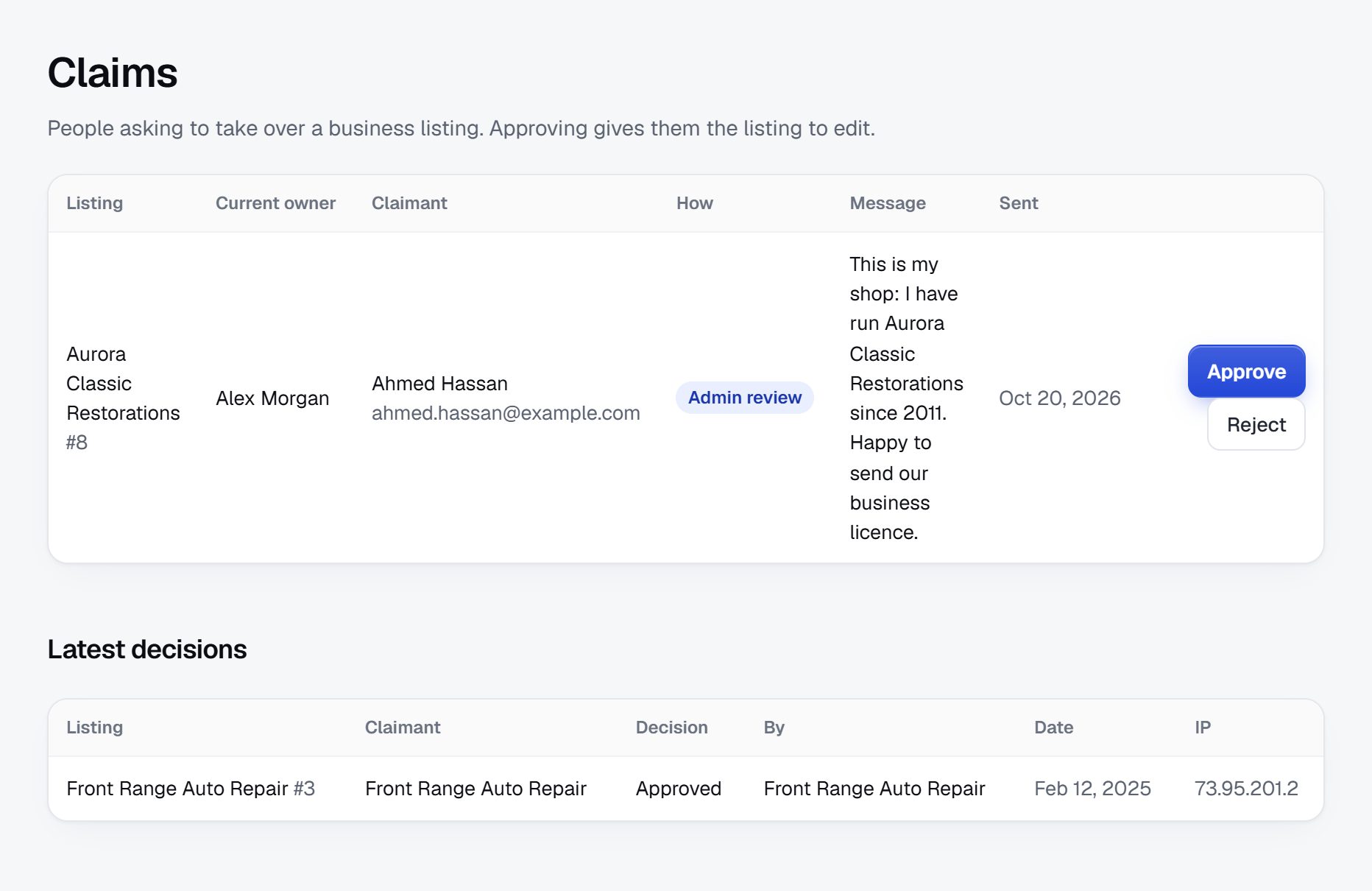
Stale details and fake reviews are the real risks in camping listings.
The biggest problem in a campground directory is not scams, it is wrong information. A camper who drives four hours to a park listed as open, only to find it closed for the season or unable to take their rig, will not trust you again.
- Show when each listing was last checked, and ask owners to confirm their season dates and rates every winter.
- Let campers report wrong details with a reports button, and fix them quickly.
- Mark claimed pages with a verified badge so campers know the owner has confirmed the information.
Reviews
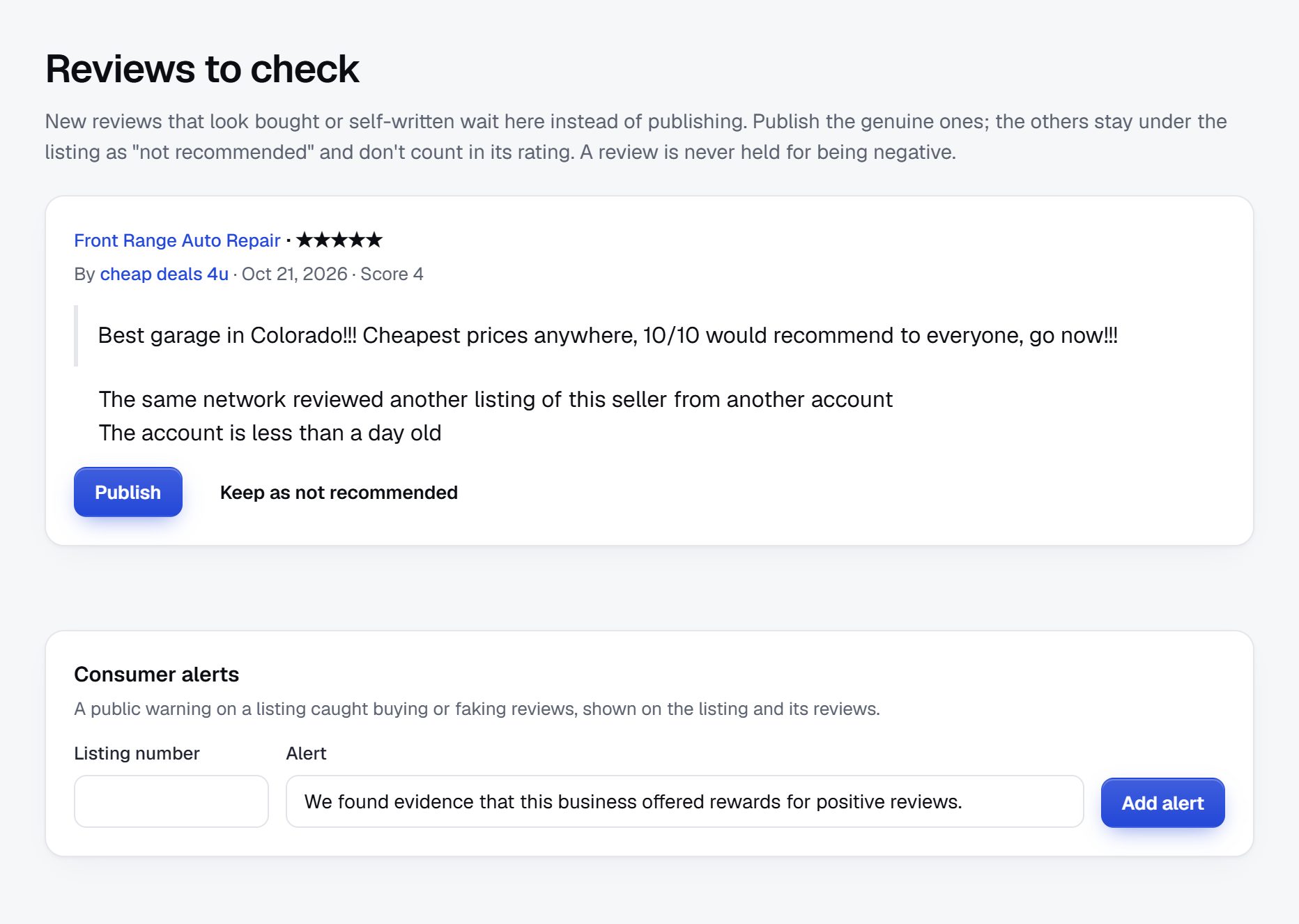
Reviews help, but campground reviews attract fakes from both sides: owners praising themselves and rivals posting complaints. Hold reviews from new accounts for moderation, and let owners reply publicly to criticism. A calm owner reply to a complaint about noise or a muddy site often reassures readers more than five stars do.
Rules and safety notes
Campgrounds have rules about pets, campfires, firewood transport, generators and quiet hours. Fire bans and firewood rules change with the season and differ by state and county, so tell campers to check current rules with the park and local authorities rather than relying on your page. Do not publish booking or cancellation terms on behalf of a park: link to theirs. Check the rules where you operate about reviews and advertising disclosure, and label featured places clearly as paid.
Build a page for every way campers search: place, rig and amenity.
Campers search in specific, practical phrases, and each phrase is a page you can build. The searches look like "RV parks near Yellowstone with full hookups", "campgrounds open year round in Michigan", "tent camping near Asheville", "big rig friendly campgrounds Texas" and "pet friendly cabins Lake Tahoe".
Pages to build
- Location pages: one for each county, lake, park gateway town and highway corridor you cover. Every location in your directory gets its own page automatically, so write a short intro for the important ones.
- Category plus location: RV parks in a county, tent camping near a lake, cabins near a park.
- Amenity lists: campgrounds with 50-amp sites, parks open in winter, campgrounds with laundry, sites that fit 40-foot rigs.
Content that earns links and visits
- A season calendar for your region: when parks open, when they fill, which weekends sell out.
- A first-timer guide to hookups and amperage, and what a dump station is.
- Route guides for RV travelers: overnight stops every few hours along a major highway.
- A free and low-cost camping guide for your area, covering public land rules.
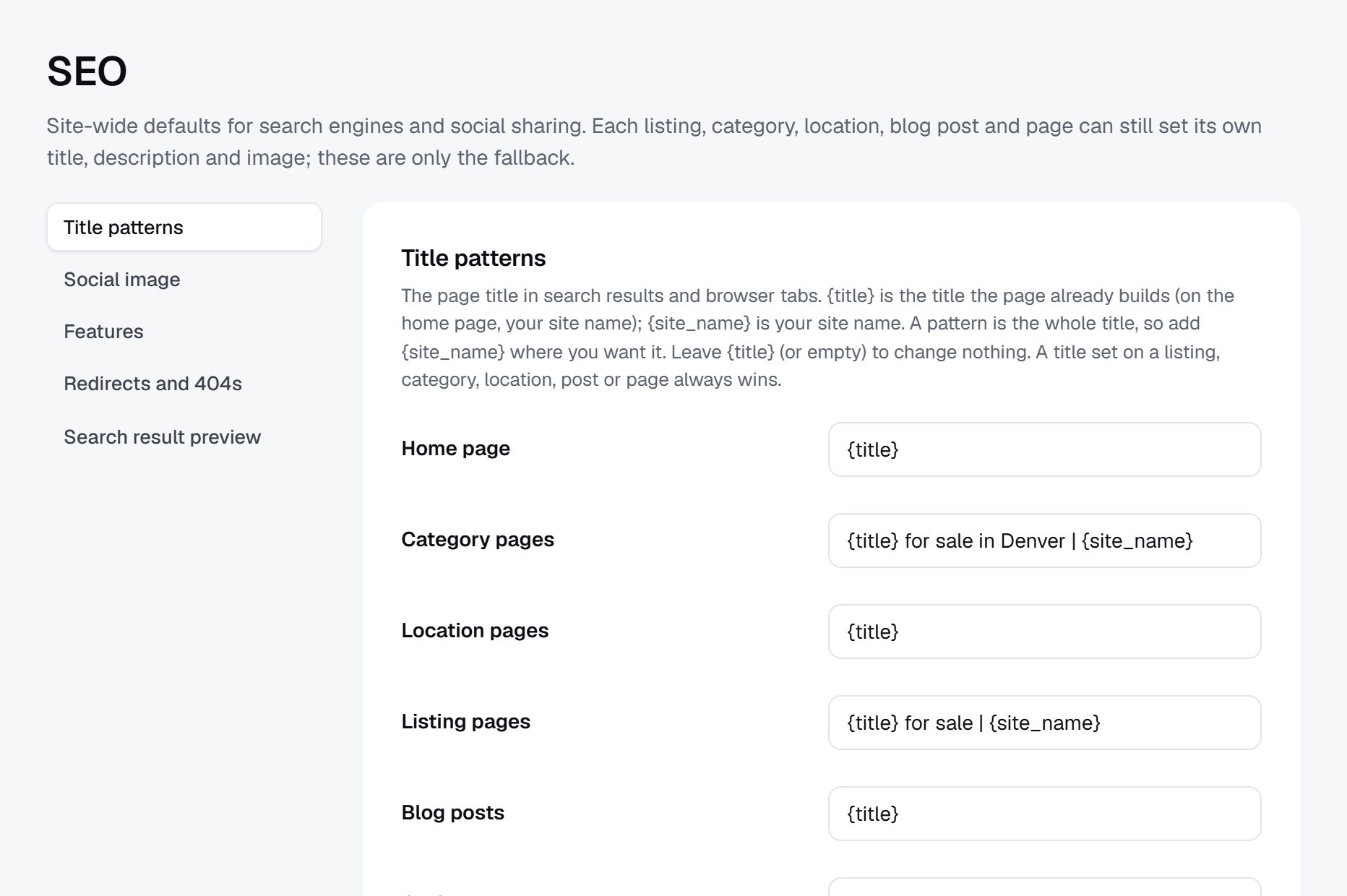
Set the SEO title pattern once, for example "park name, town: RV and tent sites", so every listing page gets a clear title.
Launch in winter, so the directory is complete when families plan summer.
Camping is seasonal almost everywhere, and the planning happens months ahead. Popular parks book out for summer holiday weekends well in advance, so campers start searching in January and February. Build and seed the directory in the fall, have owners claim pages over the winter, and be complete by early spring.
First area
Start with one region you can cover completely, ideally one you camp in yourself. Completeness in one area beats thin coverage across a whole country. Expand to the next region only when the first one has every park and most of the amenity details filled in.
Partners
- RV clubs and owners groups: share your big-rig lists with them.
- RV dealers and repair shops: they meet new owners who need somewhere to go first.
- RV shows and outdoor expos in late winter, where both campers and park owners attend.
- Camping and RV groups online, where you answer questions with links to useful lists rather than ads.
Checklist
- Choose the region and the camping styles you cover.
- Set up categories and amenity fields.
- Import parks, then fill in the amenity details by hand.
- Write location pages and one season calendar.
- Contact owners in winter to claim pages.
- Collect the first reviews from campers you know.
- Sell featured places before spring planning starts.
A worked example: Ozark Pull-Through Guide, in the Arkansas and Missouri Ozarks.
Ozark Pull-Through Guide is a made-up directory used here to show how the pieces fit together. It covers private campgrounds, RV parks and public campgrounds across the Ozark plateau of northern Arkansas and southern Missouri, from the big reservoirs near Branson down to the river country around the Buffalo.
Categories
- RV parks
- Big-rig and pull-through parks
- Lakeside RV resorts
- Tent and primitive
- River float campgrounds
- Walk-in and hike-in sites
- Public campgrounds
- Lake parks run by federal agencies
- State park loops
- Cabins and glamping
Who it serves
Three groups use it most. Retired couples in large motorhomes plan spring and fall loops through the hills and need to know which lake parks can take a 40-foot coach with a car behind it. Families from Little Rock, Tulsa, Springfield and Kansas City look for long summer weekends near the water. Canoe and kayak paddlers want riverside campgrounds with gravel-bar access and an outfitter that runs shuttles. A smaller fourth group, seasonal campers who leave a trailer at one lake from April to October, reads the pages every winter while choosing next year's spot.
How it started
The founder towed a fifth wheel around the Ozark lakes for three summers and kept a spreadsheet of which parks had 50-amp service, steep gravel entrances or oak limbs hanging low over the sites. That spreadsheet became the first listings, imported as a CSV and then checked one park at a time against each park's own website and a phone call. Public campgrounds came from agency lists. During the first winter, about a third of the private owners claimed their pages after a friendly call in January, and several sent photos of their newly graded sites.
How it makes money
Every listing is free. Income comes from featured places on the lake and river pages, sold in February and March, owner memberships that add photos and seasonal specials, and banner spaces bought by an RV repair shop, a canoe outfitter and a propane dealer. Requests from family reunions and church retreats go to the parks with group shelters, and those parks were the first to take a membership. The guide never takes reservations: every page sends campers to the park's own booking link or phone line.
| Listing | Nightly rate | Key details |
|---|---|---|
| Bluff Shadow RV Park, near Harrison, Arkansas | $42 to $55 | Full hookups, 50 amp, pull-throughs up to 45 feet, open year round |
| Cedar Hollow Float Camp, on the Buffalo River | $18 tent, $30 camping cabin | Gravel-bar access, canoe shuttle, no sewer, closed December to February |
| Lakeview Point Campground, Table Rock Lake | $26 to $34 | Water and electric, boat ramp, booked through the managing agency |
| Possum Trot Hike-In Sites, national forest land | Free | Vault toilet, no water, stay limit set by the forest service |
| Sugar Maple Glamping Domes, near Eureka Springs | $145 to $190 | Heated domes, linens provided, two-night minimum on weekends |
All five listings are fictional and only illustrate the fields.
The first 90 days: from an empty map to a directory campers bookmark.
Ninety days is enough to cover one region properly if you start in the off season. The order matters: data first, owners second, campers third. A camper who lands on a half-filled map leaves and rarely returns, while a park owner shown a complete, accurate page for their own campground is far easier to win over than one shown an empty site.
The plan below assumes you begin in October or November and want to be ready for the late-winter planning rush. Shift it if your region camps year round, as in the desert Southwest, Texas or Florida, where the busy months are the cold ones up north. Keep one rule the whole way through: no park goes live without its hookups, power, maximum rig length and season dates, even if that slows the count.
Each Friday, write down three numbers: parks with every field complete, pages claimed by owners, and campers arriving from search. Together they tell you whether the directory is becoming useful or only getting bigger.
| Weeks | Focus | Done when |
|---|---|---|
| Weeks 1-2 | Region, categories and amenity fields | Every amenity is a dropdown, checkbox or number, and ten test parks are entered by hand |
| Weeks 3-4 | Public campgrounds and the Google Places import | Every state, county and federal campground in the region is listed with season dates |
| Weeks 5-6 | Private parks filled in from websites and calls | Most private parks show hookups, amperage and maximum rig length |
| Weeks 7-8 | Owner calls and claim invitations | Every private owner has had one call and the first 20 pages are claimed |
| Weeks 9-10 | Location pages, season calendar and big-rig list | Each county and lake page has an intro, and the season calendar is published |
| Weeks 11-12 | Campers: RV clubs, camping forums and first reviews | Two RV clubs have shared the directory and 25 camper reviews are live |
Three ways to build it, and what a campground directory needs from each.
Whatever you build on, a campground directory needs a few specific things: filters that combine several amenities at once (50 amp, pull-through and pets allowed, all together), a map with every park pinned, a way for owners to claim and correct their own page, reviews with owner replies, and an import path for a few hundred parks at a time. Booking is not on the list, because parks already run their own reservation systems and campers expect to book there.
Building it yourself
A custom build with developers gives you exactly the filters you picture, including unusual ones such as a slope rating for each site or a warning about low clearance on the access road. It also means paying for every change, plus hosting, security updates and spam control, long before you know whether campers will come.
A script or plugin on your own server
Directory plugins for WordPress and self-hosted directory scripts are common and cheap to start. The catch is the stack: a maps add-on, a reviews add-on and a claim-listing add-on, often from different authors, all needing updates in the middle of camping season. Filtering on several amenities at once may need yet another extension.
A hosted builder
A hosted builder such as Yclas gives you custom fields shown as search filters, maps, claimed pages, reviews and CSV import without running a server, so your hours go into the amenity research that makes the directory worth using. The trade-off is working within the features on offer rather than designing every screen.
| Route | Fits when | Watch out for |
|---|---|---|
| Custom build with developers | You need unusual data, such as site-by-site slope or a trip route planner | The cost of every change, and months before the first camper sees anything |
| WordPress plugin or self-hosted script | You already run WordPress and enjoy maintaining it | Separate add-ons for maps, reviews and claims that must stay compatible |
| Hosted builder | Your time should go into park research, not servers | Fitting your ideas to the features that already exist |
What a campground directory costs to run.
The software is the smallest part of the bill. Most of the cost is your time in the first months: finding the first listings, answering questions and checking what gets posted.
The extra costs for a campground directory are mostly your time filling in amenity details, Google API usage if you import parks from Google Places, and a stand or printed cards at an RV show. Budget some fuel money too, because visiting parks in person is the fastest way to get owners to claim their pages.
| Cost | Typical range | On Yclas |
|---|---|---|
| Domain | $10 to $20 a year | Your own, with SSL included |
| Software and hosting | $0 to $100+ a month, plus plugins and updates | Starter $19 a month, Professional $99 |
| Design | $0 to $100 for a theme, or a designer | 109 looks included |
| Payment fees | About 3% per payment | Your Stripe or PayPal fees; Yclas takes nothing |
| Business data | Free if you collect it, or a few cents per page of Google results | Paid to Google, with your key |
| Your time | 5 to 10 hours a week at the start | Finding listings, moderation, support |
Mistakes that sink campground directories.
- Listing parks without amenity details. A name, a pin and a phone number is what every map app already shows. If a camper still has to call to ask about 50-amp service, the directory has given them nothing. Hold a listing back until its hookups, power and rig length are known, or mark a missing field plainly as not yet confirmed.
- Treating tent campers and RV owners as one audience. Mixing quiet walk-in sites with resorts of three hundred pads in the same results frustrates both groups. Make camping style the first choice on the home page, and keep big-rig resorts out of tent results.
- Ignoring the off season. A park shown as open in January when its water is shut off loses that camper for good. Store opening and closing dates as dates, and say plainly which parks stay open in winter with water off or limited sites.
- Calling owners in July. In peak season owners are mowing, cleaning bathhouses and parking rigs, and your call is forgotten by lunch. Do owner outreach between November and February, when they plan the year and have time to talk.
- Copying photos from park websites. Filling empty pages with a park's own pictures is tempting, but those photos belong to someone. Use photos you took on visits, or leave the page with its map until the owner claims it and uploads their own.
- Selling featured spots before campers arrive. An owner who pays in your first month and sees no extra calls will tell the owners down the road. Wait until your area pages bring steady visits, then sell with real numbers in hand.
- Skipping public campgrounds because they never pay. State, county and federal campgrounds will not buy a featured spot, but campers expect to see them, and they draw a large share of searches. List them in full and point campers to the agency for booking.
- Writing vague rig advice. "Big rigs welcome" means little to someone driving a 42-foot coach with a car in tow. Record the longest site in feet, whether it is a pull-through, and any tight turns or low branches the owner mentions.
- Letting reviews describe the wrong season. A review written after a muddy April weekend tells a July camper very little. Ask reviewers for the month of their stay and show it next to every review, so readers can weigh a complaint about mud or mosquitoes against the time of year they plan to come.
Campground terms every founder should know.
Campers and park owners use these words every day, so your fields and pages should use them the same way.
| Term | What it means |
|---|---|
| Full hookups | Water, electric and sewer connections at the site itself. |
| Partial hookups | Usually water and electric only, with a dump station somewhere else in the park. |
| Pull-through site | A site the rig drives into and out of without reversing, prized by anyone towing or driving a long rig. |
| Back-in site | A site the rig reverses into, which takes more room and more skill. |
| 30 amp and 50 amp | The two common RV power services; bigger rigs running two air conditioners usually want 50 amp. |
| Dump station | A shared drain where RVs empty their gray and black water tanks. |
| Boondocking or dry camping | Camping with no hookups at all, relying on the rig's own tanks, batteries or solar panels. |
| Dispersed camping | Camping outside a developed campground on public land, under rules set by the managing agency. |
| Seasonal site | A site rented for a whole season, usually with the trailer left in place between visits. |
| Big rig friendly | A park whose roads, turns and sites can take long motorhomes and fifth wheels, ideally with a stated maximum length. |
| Fifth wheel | A towable trailer that hitches into the bed of a pickup truck. |
| Toad | Camper slang for a car towed behind a motorhome. |
| Generator hours | The times of day a campground lets generators run. |
| First come, first served | Sites that cannot be reserved and go to whoever arrives first. |
The same steps for a campground directory on Yclas.
- Describe your directoryThe setup wizard writes the categories, an About page and example listings from one sentence.
- Add fieldsHours, services, areas served, prices: the details people search by, as filters.
- Fill itImport businesses from a spreadsheet or Google Places, then check them.
- Bring owners inOwners claim their page, update it and answer reviews.
- EarnSwitch on featured places, banners or memberships when visits arrive.
How much money do I need to start a campground directory?
Very little cash: the real cost is the hours spent researching each park's hookups, rig limits and season dates. Many founders run the first season on a few hundred dollars plus their own evenings and weekends.
Can I list a campground without the owner's permission?
Directories commonly list businesses using public information such as name, address and phone, and let owners claim and correct their page. Use only facts and your own descriptions, do not copy photos or text from their website, and check the rules where you operate.
Should I take campground bookings on my site?
Not at first. Reservations involve deposits, cancellations and availability that the park already manages, so link to each park's own booking page and earn from featured places and memberships.
How do I compete with the big campground booking platforms?
Go deeper in one region than they ever will: every small private park, every county campground, accurate rig lengths and amp ratings, and honest season dates. The big platforms favor parks that pay them, while you list everyone.
When will campground owners pay for a featured spot?
Usually once they can see campers arriving from your site, so expect to spend the first season building traffic. Approach them in late winter, when they set their marketing budget for the year.
How do I keep the information up to date?
Ask every owner to confirm details each winter, show the date each listing was last checked, and let campers report errors. Claimed pages stay current far better than ones you maintain yourself.
Should I include free public land camping?
Yes, if your audience wants it: free and dispersed camping pages attract a lot of searches. Be careful to say that rules and stay limits are set by the managing agency and should be checked before going.
How many campgrounds should be listed before I launch?
Enough that a camper planning a trip in your region finds nothing missing. In practice that means every public campground and most private parks in the area with their amenity fields filled in, whether that turns out to be sixty parks or three hundred.
Is it worth visiting parks in person?
Visit as many as you can, starting with the ones whose rig limits or access roads are unclear. A visit gets you your own photos, a face-to-face chance to explain claimed pages, and details no park website mentions.
Can campers add their own campsite tips?
Yes, through reviews and error reports, and tips such as which loop is quietest or which sites flood are some of the most useful content you can have. Moderate them like any review and ask for the month of the stay.
What should I do when a park closes or changes hands?
Mark it as closed rather than deleting it straight away, so campers searching for it learn it is gone, then remove it after a season. For a new owner, move the claim over once you have confirmed they run the business.
Should I aim for national coverage from the start?
Only after one region works. A national directory means tens of thousands of parks, and without amenity details for each one you become another thin map. Grow region by region, reusing the same fields and the same research routine.
Related pages.
The parts of Yclas this leans on.
You know the parks. Now build the directory campers plan their trips with.
Describe your site in a sentence and the setup wizard writes the categories, example listings and a look. Free for 15 days, no credit card.
Start my directory