How to build a dog-friendly places directory that dog owners trust before they leave home.
This guide is for founders who want to run a directory of cafés, stays, parks and shops that welcome dogs, for one city or one travel region. It covers why dog owners struggle with general review sites, the policy details they filter on, how featured places and pet business banners pay, seeding the first places, keeping policies accurate, search pages and a launch built around patio season.
Free for 15 days · No credit card · Plans from $19 a month
Dog owners need to know the exact policy, not just that dogs are welcome.
"Dog friendly" means very different things. One café lets dogs inside, another only on the patio, a third only on the patio when it is not busy. One hotel takes any dog with no fee, another takes one dog under 25 pounds for a nightly charge. A dog owner with a 70-pound shepherd learns the difference at the front desk, which is exactly the moment they did not want to learn it.
General review sites have a pet-friendly tag at best, set once by someone and rarely checked. Travel booking sites list pet policies for hotels but not for the café down the street or the trail behind it. Dog owners end up asking in local groups, where the same questions come up every week and the answers scroll away.
Who searches it
- Local dog owners looking for a patio, a brewery or a new trail for the weekend.
- Traveling dog owners planning a road trip with stays, stops and walks that all accept the dog.
- New owners and people who just adopted, looking for parks, trainers and places to socialize a young dog.
Choose an angle
Start with one city or one travel region where dogs are part of daily life: a beach town, a mountain area, a city with a strong patio and brewery culture. A road-trip angle also works, covering dog-friendly stops along a popular route. Large dogs, which are refused more often, are a good angle on their own.
Record the real policy for each place: inside or patio, size limits, fees.
Sort by type of place and let owners filter on the dog policy.
Categories describe what the place is. The value of the directory is in the policy fields, so make them dropdowns and checkboxes that can be filtered, not a sentence in the description.
- Where dogs can go: indoors, patio or outdoor area only, rooms only, grounds only.
- Size limit: any size, under a weight in pounds, as a number field so owners of big dogs can filter.
- Number of dogs allowed, as a number.
- Pet fee: none, per night, per stay, as text so a hotel can describe its own rule.
- Leash rules: leash required, off-leash allowed, off-leash hours only.
- Fenced, water bowls provided, dog menu or treats, shade, water access for swimming.
- Seasonal limits, for beaches that ban dogs in summer, as dates.
In Yclas these are custom fields shown as search filters, and every place sits on a map with its opening hours, so an owner can look for patios near them that take large dogs today.
| Category | Example places | Fields owners filter on |
|---|---|---|
| Cafés, restaurants and breweries | Coffee shop with a patio, taproom with dogs inside | Indoors or patio, water bowls, dog menu, shade |
| Stays | Pet-friendly hotel, cabin rental, campground | Pet fee, size limit, number of dogs, dogs left alone in room |
| Dog parks and off-leash areas | Fenced city dog park, off-leash beach section | Fenced, small-dog area, water, off-leash hours |
| Trails and beaches | Leashed hiking trail, dog beach | Leash rules, seasonal dates, water access, distance |
| Shops that welcome dogs | Hardware store, bookstore, garden center | Dogs inside, treats at the counter, size limit |
| Dog services | Daycare, groomer, trainer, dog walker | Services offered, area covered, opening hours |
Service animals are a separate legal question from pet policies, so keep this directory about pets and say so.
Pet businesses want dog owners, and dog-friendly places want to be found.
A dog-friendly directory has two groups who pay. Places that welcome dogs, such as cafés, breweries and hotels, see dog owners as loyal regulars and want to reach them. Pet businesses, such as vets, groomers, trainers and pet stores, want the same audience and are used to paying for local advertising. Keep every listing free at first, because the directory must be complete before owners rely on it.
What pays
- Banner spaces for vets, pet stores, groomers, trainers, daycares and pet insurance agents. This is often the first income, because pet businesses buy local ads already.
- Featured places: a brewery or hotel pays to appear first for its area, especially before summer.
- Memberships for places that want photos of dogs on their patio, event listings and a highlighted profile all year.
- Quote requests for dog services: an owner asks for daycare or training, and the request goes to the providers in that area.
- Sponsored guides, such as a summer guide to dog beaches presented by a local pet store, labeled clearly as sponsored.
| Model | Works when | Switch it on |
|---|---|---|
| Free place listing | Always, for every place and park | From launch |
| Pet business banners | Local dog owners visit weekly | After a few months of traffic |
| Featured places | Places see customers arriving with dogs from you | Before patio season |
| Place memberships | Owners have claimed pages and post events | Second season |
| Dog service quote requests | Owners search for daycare or trainers | When service categories fill up |
Seed the parks and the obvious places, then let dog owners add the rest.
Dog-friendly places are scattered across every kind of business, so no single list exists. Build the first hundred from several sources, and confirm the policy for each one before it goes live.
Where to find them
- City and county parks departments publish dog parks and off-leash areas with rules and hours.
- Hotel and rental pet policies are published on their own sites; record the fee, size limit and number of dogs.
- Breweries, cafés and garden centers often say on their social pages that dogs are welcome; confirm by phone.
- Local dog groups, rescues and breed clubs know the places members already go.
- Google Places: Yclas can import businesses from Google Places with your own Google key, bringing in names, addresses and opening hours, but no photos. You still have to check each policy, because Google does not record it.
Turning owners into contributors
Dog owners love sharing places where their dog was welcomed. Let them suggest places through a simple form, then verify the policy before publishing. Invite rescues and dog walkers to send their lists. Then contact each business: tell them they are listed and that they can claim the page to add photos of dogs on the patio, update the policy and reply to reviews.
A photo of a real dog at the place convinces owners more than any description.
Outdated policies, dog safety and the service animal question.
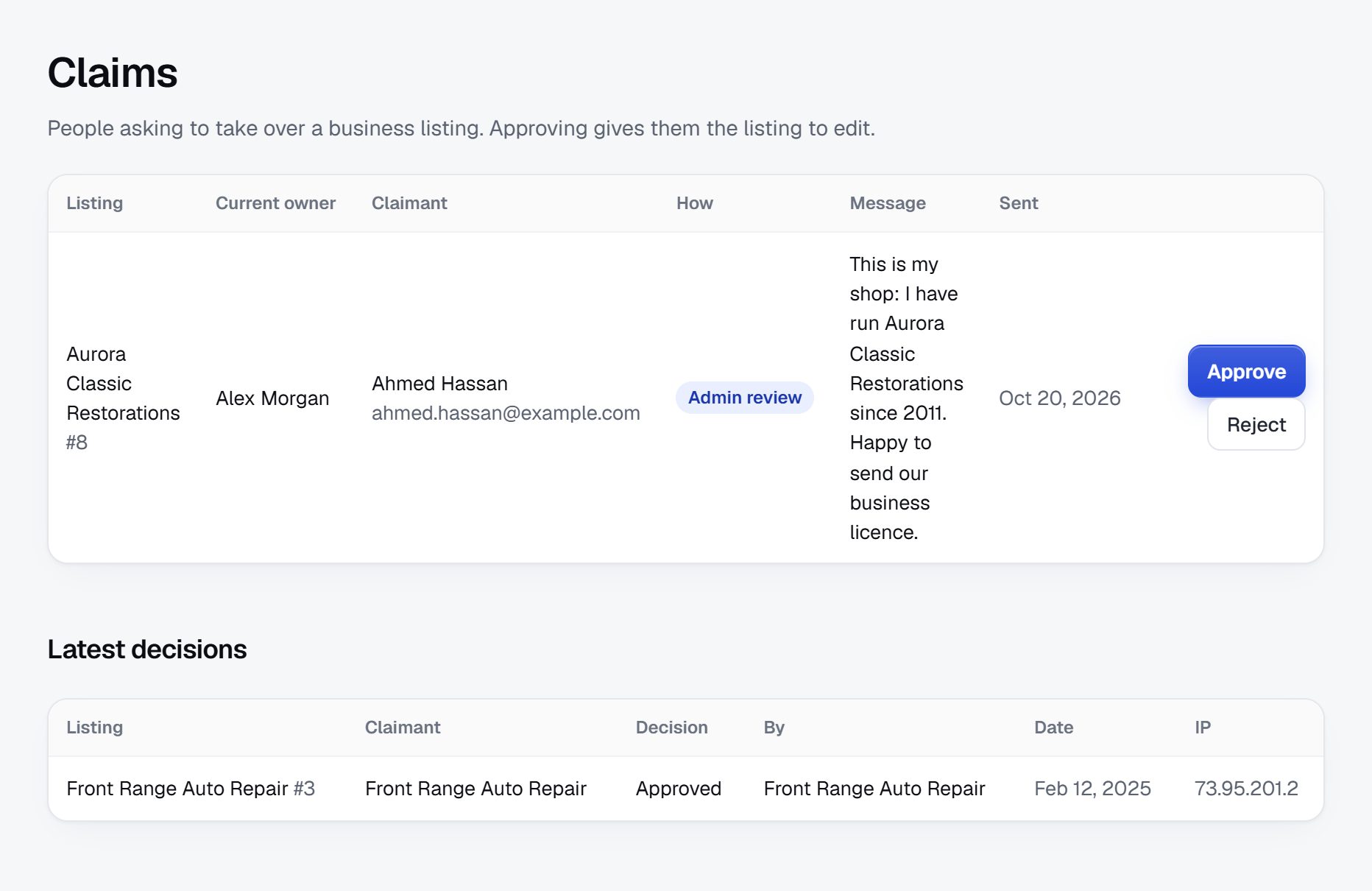
A wrong policy is the main way a dog-friendly directory fails people. Places change owners, managers change rules, and a patio that welcomed dogs last summer may not this year. Some health rules restrict dogs in places that serve food, and they vary from one city or state to the next.
- Show the date each policy was last confirmed, and recheck every place at least once a year.
- Mark claimed pages as verified, so owners know the business itself stated the policy.
- Let users report a change, such as being turned away, and act on it quickly.
- Tell users to call ahead for stays and restaurants, especially with large or several dogs.
Service animals
Service animal rules are set by law and differ from pet policies. Do not describe any place as accepting or refusing service animals, and do not give legal advice about them. Say that the directory covers pet policies, and that owners should check the rules where they live.
Dog safety
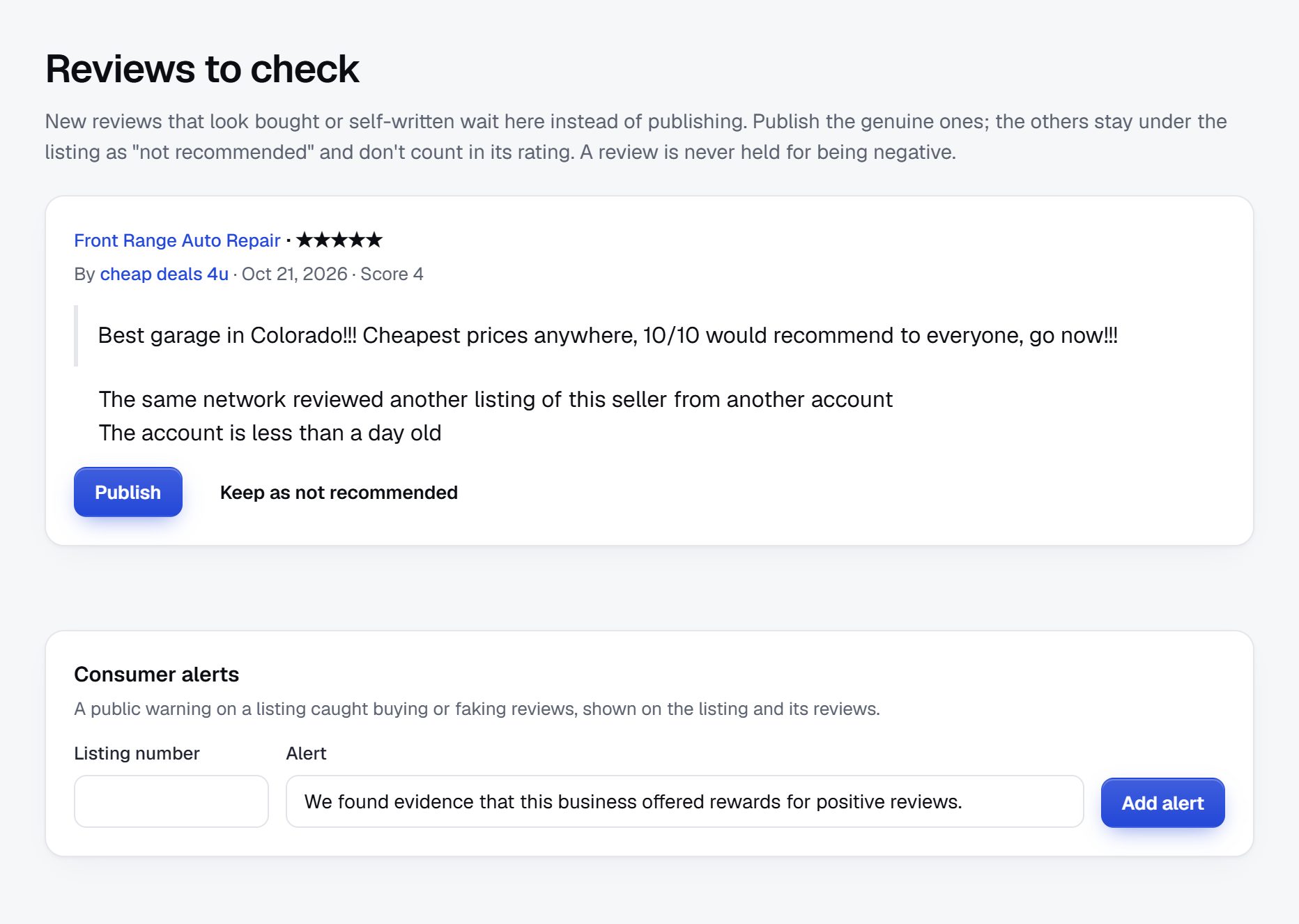
Some places carry risks: beaches with toxic algae warnings, trails with hot pavement or rattlesnakes, dog parks with no separate small-dog area. Add a short safety note to park and trail pages, and remove reviews that report a dog bite or fight in a way that names or accuses a person. Hold reviews from new accounts for moderation, and let businesses reply.
Dog owners search with the dog in the query.
Searches in this niche almost always include the place type and the city. Expect phrases like "dog friendly restaurants near me", "dog friendly patios Austin", "pet friendly hotels with no pet fee Nashville", "off leash dog parks Denver", "dog friendly beaches San Diego", "dog friendly breweries Portland" and "hotels that allow large dogs". Each one is a page to own.
Pages to build
- Category plus location pages for every neighborhood and town: dog-friendly cafés, breweries, hotels, parks and trails.
- Filter pages for the questions owners ask most: no pet fee, large dogs welcome, dogs allowed indoors, fenced off-leash areas.
- Road-trip pages: dog-friendly stops, stays and walks along major routes out of your city.
Content ideas
- A summer guide to dog beaches, with the seasonal dates when dogs are banned.
- A hot-weather guide: shaded patios, paw-safe walks and water spots.
- A guide to dog park etiquette and which parks suit shy or small dogs.
- Holiday guides: where to stay with a dog over Thanksgiving, and pet-friendly winter cabins.
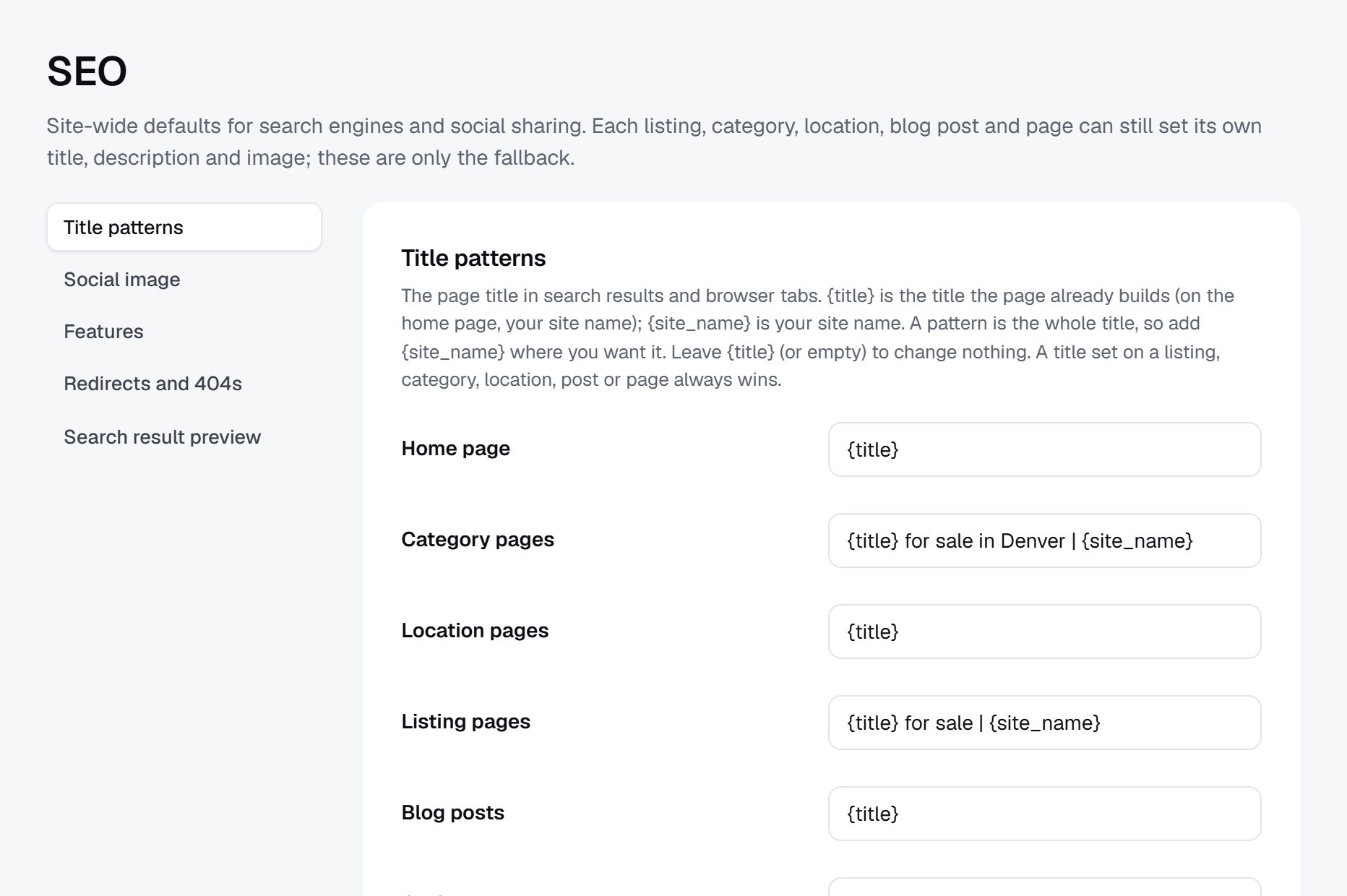
Set the SEO title pattern once, for example "place name, neighborhood: dog policy", so each place page states what owners search for.
Launch in spring, when patios open and dogs go out again.
Dog-friendly searches rise when the weather warms and patios reopen, and again before summer travel. Have the directory seeded in early spring, with your city's parks, patios and stays checked and live.
First area
Start with one city or one travel region and cover it well: every dog park, the main trails and beaches, and as many cafés, breweries and stays as you can confirm. A city where dog owners already gather in groups and at breweries gives you a fast start.
Partners and events
- Rescues and shelters: a guide for new adopters links to your directory, and you promote their adoption events.
- Vets, groomers and pet stores: they meet dog owners every day and can hand out cards.
- Dog events: brewery dog nights, pet adoption days, dog-friendly markets and charity dog walks.
- Local dog groups online, where you answer the weekly question about a patio or a hotel with a link to a list.
Checklist
- Pick the city or region and the place types you cover.
- Set up categories and policy fields.
- Seed parks, trails and beaches from public lists.
- Import businesses, then confirm each dog policy.
- Open a form for owners to suggest places.
- Invite businesses to claim pages and add dog photos.
- Sell the first banners to pet businesses.
A worked example: Wag Route Puget Sound, from Seattle to Tacoma.
Wag Route Puget Sound is a fictional directory, sketched here to show how a dog-friendly places site fits together in one real region. It covers Seattle, its suburbs and the towns south to Tacoma and Gig Harbor, a part of the country where many people live in apartments, own dogs, and spend nine months of the year looking for somewhere dry to sit with them.
Categories
- Eat and drink
- Cafés with dogs inside
- Breweries and taprooms
- Covered patios
- Stays
- Hotels
- Cabins and rentals
- Outdoors
- Off-leash areas
- Leashed trails
- Beaches
- Dog services
Who it serves
Apartment dwellers in Seattle use it every week to find a café or taproom that lets the dog come in out of the rain. Owners of large dogs, who are turned away more often than anyone, filter by weight limit before they book a weekend away. Road-trippers heading to the Olympic Peninsula or the coast plan stops and stays with it, and people who have just adopted look up fenced off-leash areas and trainers. Visitors staying in Seattle for a conference or a family visit with a dog are a smaller group, but they read the hotel and park pages closely and often email to thank the founder.
How it started
The founder ran a small dog-walking business and kept notes on which patios had water bowls, which had heaters and roofs, and which managers quietly let dogs inside in January. Those notes became the first listings. A covered-seating field was added in week one, because in this region it matters as much as the dog policy itself. The parks department list of off-leash areas filled the outdoors category, and weekend afternoons visiting breweries confirmed dozens of policies in person, with a photo of the founder's own dog at each one.
How it makes money
All listings are free. The first income came from banners: a veterinary clinic group, a mobile grooming van and an independent pet supply store. Featured places sell in March and April as patio season starts, and a sponsored rainy-day guide is presented each fall by a dog daycare. Quote requests for daycare, training and walking go to providers in the owner's neighborhood. The site books nothing itself: hotel and rental pages link to the place's own reservations.
| Place | Dog policy | Key details |
|---|---|---|
| Fogline Coffee, Ballard | Dogs inside, any size | Water bowl at the door, treats at the counter, covered bench outside |
| Low Tide Taproom, Tacoma | Dogs inside on leash, two per table | Covered heated patio, no dogs at the bar seats |
| Cedar Run Off-Leash Area, Snohomish County | Off-leash inside the fence only | Separate small-dog yard, double gate, muddy in winter |
| Harbor Inn Suites, Gig Harbor | Two dogs up to 60 pounds, $35 per night | Ground-floor rooms, dogs may not be left alone in the room |
| Madrona Bluff Beach Trail | Leashed only, dogs off the beach in summer | Steep stairs to the shore, no water source, check the tide |
Places and policies in this table are invented for the example.
The first 90 days: confirmed policies first, then owners, then businesses.
For this kind of directory, the slow part is not finding places but confirming what each one actually allows. Plan for that from the start. Begin about three months before patio season in your city, which in most of the country means starting in January for an April launch, and give the confirmation work the most weeks.
Every listing should carry the date its policy was last confirmed and how: a phone call, a visit, or the business's own published policy. That record keeps you honest when a place changes its rules, and it makes the weekly progress easy to measure. Count confirmed policies, claimed pages, and suggestions from dog owners. When owners start suggesting places faster than you can check them, the directory has caught on.
The weeks below fit one city or one travel region. A larger area needs more time in weeks 5 to 8, not a shortcut on confirmation. If you can only confirm a few places a day, start with the neighborhoods where dog owners already gather.
| Weeks | Focus | Done when |
|---|---|---|
| Weeks 1-2 | City, place types and policy fields | Indoors or patio, weight limit, pet fee and leash rules all work as filters |
| Weeks 3-4 | Parks, trails and beaches from public lists | Every off-leash area and dog beach is listed with its rules and seasonal dates |
| Weeks 5-6 | Business import and policy calls | At least 150 cafés, breweries and stays have a policy confirmed and dated |
| Weeks 7-8 | Suggestion form and rescue partners | Two rescues and a group of dog walkers have sent lists, and the suggestion form is open |
| Weeks 9-10 | Claims, dog photos and window stickers | The first 25 businesses have claimed pages and sent a photo of a dog on site |
| Weeks 11-12 | Patio guide, large-dog page and first banner | Both guides are published and one pet business has bought a banner |
Building a dog-friendly directory: three routes and what each costs you.
The software has to handle a few things well. Policy details must be filterable, including a weight limit stored as a number so the owner of a 70-pound dog can rule places out. Every place needs a map pin and opening hours, because the usual question is where can I take the dog right now. Dog owners must be able to suggest places, with every suggestion held until you confirm it. Businesses need to claim pages, upload their own dog photos and reply to reviews. And a policy change has to be easy to fix the same day someone reports it.
Your own developers
A custom build can do anything, such as live check-ins or a road-trip planner that strings stops together. It is also the slowest and most expensive way to find out whether local dog owners will use a directory at all.
A plugin or script on your server
WordPress directory plugins and self-hosted scripts cover listings and maps. Moderated user submissions, claims and number-range filters are often separate add-ons, and keeping them compatible becomes a second job.
A hosted builder
A hosted builder such as Yclas includes custom fields as search filters, maps with opening hours, claimed pages, reviews with owner replies and the option to approve every listing before it appears, which suits a directory where accuracy is the whole product.
| Route | Fits when | Watch out for |
|---|---|---|
| Custom development | You want features no directory offers, such as live check-ins | High cost before you know if owners will come |
| Self-hosted plugin or script | You like running WordPress and its add-ons | Submissions, claims and weight filters spread across several add-ons |
| Hosted builder | Your time should go into confirming policies and meeting owners | Accepting the features offered instead of designing your own |
What a dog-friendly places directory costs to run.
The software is the smallest part of the bill. Most of the cost is your time in the first months: finding the first listings, answering questions and checking what gets posted.
The main extra costs are your time confirming each place's dog policy by phone or visit, Google API usage if you import businesses, and printed cards or stickers for participating places to show in their window. A stand at a local adoption day or dog walk is usually cheap or free.
| Cost | Typical range | On Yclas |
|---|---|---|
| Domain | $10 to $20 a year | Your own, with SSL included |
| Software and hosting | $0 to $100+ a month, plus plugins and updates | Starter $19 a month, Professional $99 |
| Design | $0 to $100 for a theme, or a designer | 109 looks included |
| Payment fees | About 3% per payment | Your Stripe or PayPal fees; Yclas takes nothing |
| Business data | Free if you collect it, or a few cents per page of Google results | Paid to Google, with your key |
| Your time | 5 to 10 hours a week at the start | Finding listings, moderation, support |
Mistakes that make dog owners stop trusting a directory.
- Copying pet-friendly tags from other sites. A tag on a review site or a booking site was often set years ago by someone who never asked. Importing those tags fills the directory with wrong answers. Confirm each policy yourself, and date it. Where you could not confirm a place, leave it out rather than guessing, because an owner turned away at the door blames the directory, not the café.
- Using one yes-or-no field for dogs allowed. Owners need to know where the dog can go, how big it can be, how many dogs, and what it costs. A single checkbox hides all of that. Split the policy into separate fields from the start, since changing field structure after a few hundred listings means calling every place again.
- Ignoring weather and season. A patio that welcomes dogs is no use in a downpour without a roof, and a beach that allows dogs in October may ban them in July. Record covered seating, shade and seasonal dates, and show them on the page.
- Wandering into service animal advice. Telling readers what a business must accept for service animals is a legal question that varies by place. Keep the directory about pet policies and send readers to official sources.
- Publishing user suggestions unchecked. A dog owner who was let in once by a kind barista may report a café as dog friendly when its policy says otherwise. Hold every suggestion until you or the business confirms it.
- Neglecting dog parks and trails. Parks and off-leash areas never pay, but they are searched constantly and they bring owners back week after week. Treat them as core listings with full rules, not as filler: fencing, a separate small-dog area, water, shade, surface and the hours when off-leash use is allowed.
- Posting customers' dog photos from social media. A charming photo of someone's dog on a patio belongs to whoever took it. Use photos the business uploads or your own, and ask before featuring an owner's picture.
- Letting reviews become dog-fight disputes. A review describing a scuffle at a dog park can turn into an argument naming people and breeds. Moderate reviews, remove accusations against individuals, and keep reviews about the place itself: the fencing, the crowd at busy hours, the water and the shade.
- Never rechecking policies. Managers change and rules change with them. Set a yearly recheck for every place, and sooner for any page that gets a report of a dog being turned away.
Dog-friendly terms to get right on every listing.
These terms appear in pet policies, park rules and owner questions, so use them precisely.
| Term | What it means |
|---|---|
| Off-leash area | A designated place, often fenced, where dogs may run free under their owner's control. |
| Leash law | A local rule requiring dogs to be leashed in public places, usually with a maximum leash length. |
| Pet fee | A charge a hotel or rental adds for a dog, per night or per stay, and usually not refunded. |
| Pet deposit | Money held against damage by a pet and returned if nothing is damaged. |
| Weight limit | The largest dog a place accepts, stated in pounds, and the most common reason big dogs are refused. |
| Breed restrictions | Rules some properties or insurers apply that exclude certain breeds regardless of the dog's size. |
| Patio only | Dogs are welcome in the outdoor seating area but not inside the building. |
| Double-gated entry | Two gates with a small pen between them, so dogs cannot slip out when someone enters a dog park. |
| Small-dog area | A separate fenced section of a dog park for dogs under a set weight. |
| Service animal | A legally defined category of working animal, treated differently from pets under rules that vary by place. |
| Emotional support animal | An animal that comforts its owner, which many rules treat differently from service animals. |
| Dog daycare | A business that looks after dogs during the day, usually in supervised play groups. |
| Boarding | Overnight care for a dog at a kennel or facility while the owner is away. |
| Algae bloom warning | A notice that a lake or river may contain toxic algae, which can be dangerous for dogs that swim or drink. |
The same steps for a dog-friendly places directory on Yclas.
- Describe your directoryThe setup wizard writes the categories, an About page and example listings from one sentence.
- Add fieldsHours, services, areas served, prices: the details people search by, as filters.
- Fill itImport businesses from a spreadsheet or Google Places, then check them.
- Bring owners inOwners claim their page, update it and answer reviews.
- EarnSwitch on featured places, banners or memberships when visits arrive.
How cheaply can I start a dog-friendly places directory?
Cheaply in cash, but plan for many hours checking policies, because each place needs a phone call or a visit. A single city with a few hundred places is a realistic first target.
Can I list a business as dog friendly without asking them?
Only list a policy you have confirmed, ideally from the business itself or its own published policy. Let owners claim and correct their page, and remove a place quickly if it no longer allows dogs.
What about service animals?
Keep the directory about pet policies and do not advise on service animal rights, which are set by law and differ by place. Point users to official sources and check the rules where you operate.
How does a dog-friendly directory make money?
Banners for pet businesses such as vets, groomers and pet stores usually come first, then featured places and memberships for cafés, breweries and stays, and quote requests for dog services.
How do I compete with big review and travel sites?
Record the details they skip: indoors or patio, size limits, pet fees, leash rules and seasonal beach bans, all confirmed recently. Owners of large dogs especially will choose you for that.
Should users be able to add places?
Yes, dog owners are your best source of new places. Use a suggestion form and verify each policy before it goes live, so the directory stays accurate.
What happens if a dog gets hurt somewhere listed?
Your page describes policies, not safety guarantees, so say clearly that owners are responsible for their dogs and should check conditions. Add safety notes where risks are known and take advice on your terms of use.
Should I list breed or weight restrictions?
Yes, because they are the details that cause the most disappointment at the door. Record what the place states, word for word where possible, and let owners filter on weight. Avoid adding your own judgment about breeds; report the policy and let readers decide.
What if staff give me different answers about the dog policy?
Ask for the manager or the owner, or look for the policy in writing on their website or door. Until you have a clear answer, list the more cautious version, such as patio only, and note that the policy is unconfirmed.
Can chain stores and national hotel brands be listed?
Yes, but list each location separately, because policies at chains often differ by store or by franchise owner. Confirm the specific location rather than relying on a brand-wide statement. Hotel brands in particular often publish a general pet policy that individual properties narrow with their own size limits and fees.
How do I handle a business that asks to be removed?
Find out why first: often they want a policy corrected, not removal. If they no longer allow dogs, mark the listing as no longer dog friendly for a while so owners learn about the change, then remove it.
Should the directory cover dog events?
Yes, if you can keep up with them. Adoption days, brewery dog nights and charity walks bring owners to the site regularly, and the businesses hosting them are the ones most likely to claim pages and buy visibility.
Related pages.
The parts of Yclas this leans on.
You know where dogs are welcome. Now put it all in one place for every owner in town.
Describe your site in a sentence and the setup wizard writes the categories, example listings and a look. Free for 15 days, no credit card.
Start my directory