How to build a nonprofit directory that turns goodwill into volunteers.
This guide covers how to build a nonprofit directory for one community or one cause: who looks for charities and volunteer roles, how to sort organizations by cause and by the kind of help they need, where the first hundred nonprofits come from, how to keep fake charities out, and when to launch so you catch the giving season.
Free for 15 days · No credit card · Plans from $19 a month
Serve the person who wants to help but does not know where.
Two kinds of people search a nonprofit directory. The first wants to give time: a retiree with free mornings, a student who needs service hours, a company planning a team volunteer day. The second wants help: a family looking for a food pantry, a tenant looking for free legal advice, a parent looking for an after-school program. Both end up on search results full of national brands, outdated volunteer boards and pages from organizations that closed years ago.
Small local nonprofits are the ones most often missed. A tenants' rights clinic run by three volunteers has no marketing budget, and its only web presence may be a Facebook page.
Pick your angle
- One community, every cause. A county guide to charities, food banks, shelters, youth programs and volunteer roles.
- One cause across a wider area: animal rescues in a state, literacy programs in a region, veterans' organizations nationwide.
- One audience: volunteer roles for teenagers, skilled volunteering for professionals, or bilingual services for recent immigrants.
Today this trade in goodwill happens through volunteer centers, United Way offices, library bulletin boards, church announcements, school counselors handing out photocopied lists, and Facebook posts asking "who needs volunteers this Saturday?"
Your directory wins when a small charity with no website gets found as easily as a national one.
Sort by cause, then by the help each organization needs or gives.
Use causes as categories and keep them to one level: most people think "I want to help animals" before they think "I want a foster-based rescue". Put the useful detail in fields.
- Area served matters more than the office address. A food bank in one town may serve three counties.
- Ways to help as checkboxes: volunteer, donate goods, donate money, foster, pro bono skills, board service.
- Volunteer details: minimum age, time commitment, one-off or ongoing, group-friendly, background check required, remote possible.
- Services offered for people seeking help: free or sliding scale, languages spoken, eligibility, walk-in or by appointment.
- Registration status as a plain field, such as registered charity or fiscally sponsored, so donors can see it at a glance.
Students needing service hours filter by age and "counts for school hours" more than by anything else. A dedicated checkbox for that saves counselors a lot of phone calls. It also brings back the same students every term.
| Cause | Example organizations | Details people filter on |
|---|---|---|
| Hunger and housing | Food pantries, shelters, meal programs | Area served, walk-in, volunteer shifts, donations accepted |
| Animals | Rescues, shelters, wildlife rehab | Fostering, adoption days, minimum volunteer age |
| Youth and education | Tutoring, mentoring, after-school clubs | Age group, background check, weekly commitment |
| Health and disability | Support groups, hospice, patient transport | Languages, eligibility, remote volunteering |
| Environment | Trail crews, river cleanups, community gardens | One-off or ongoing, group-friendly, season |
| Arts and community | Theaters, festivals, neighborhood associations | Skills needed, event dates, board roles |
Each of these details can be a custom field in Yclas: a dropdown, a checkbox, a number or a date, required or optional, and shown as a filter on search.
Charge the businesses that want to be seen doing good.
Charging charities to appear in a charity directory feels wrong to most people, and it leaves gaps. Keep the basic organization page free. The money comes from visibility, sponsorship and organizations that want more than a page.
- Featured places work for nonprofits running a campaign: a capital appeal, a volunteer drive before a big event, a toy drive in December.
- Memberships for larger nonprofits that manage several programs and want to post volunteer roles every month.
- Local business sponsors are the strongest source. Banks, credit unions, hospitals and law firms often have community budgets and like being shown next to local causes.
- Sponsored pages for days of service, such as a Giving Tuesday guide or a holiday volunteering page, can carry a sponsor's name.
Never let payment change whether a charity is listed or how it is described. Label featured places clearly and keep the free listing complete. Sponsors want to be associated with trust, so protecting it protects your income too.
| Model | Works when | Switch it on |
|---|---|---|
| Free organization pages | You need every local charity listed | From day one |
| Featured places | A nonprofit runs a time-limited campaign or drive | When category pages get regular visits |
| Business sponsor banners | Banks, hospitals and firms want community visibility | Once you can show visitor numbers and a list of charities |
| Memberships for larger nonprofits | An organization posts new volunteer roles every month | After a few have asked for more than one page |
| Sponsored seasonal guides | Giving Tuesday, the holidays or a local day of service | Two months before the date |
Find the first hundred nonprofits where they already gather.
Nonprofits are easier to find than most businesses, because many are registered and many belong to local networks. The work is in finding the small ones and getting each to describe what help it needs.
Sources worth using
- Public charity registers. National tax and charity registers list registered organizations by location. Use them to build your list and confirm each charity exists, then write the description with the organization.
- Google Places import. Searches for food banks, animal shelters or community centers bring in name, address, phone, website and opening hours. No photos come with it, so ask each organization for one.
- Volunteer centers, United Way offices and community foundations. They often keep partner lists and may share a spreadsheet you can import as a CSV.
- Libraries, schools and faith communities. Their notice boards and newsletters name the small groups no register shows.
Then ask each organization to claim its page. The executive director is busy; the volunteer coordinator is the person who benefits most and keeps the page current. Offer to write the first volunteer role for them from a short phone call.
A page that lists one specific volunteer shift gets far more responses than a general "we need help".
Keep fake charities out and volunteers safe.
Charity fraud follows the news. After a hurricane, a wildfire or a tragedy in the community, pages appear asking for donations to causes that do not exist or to names that copy a real charity with one letter changed. A nonprofit directory is a natural place for these to try to appear.
Rules to set early
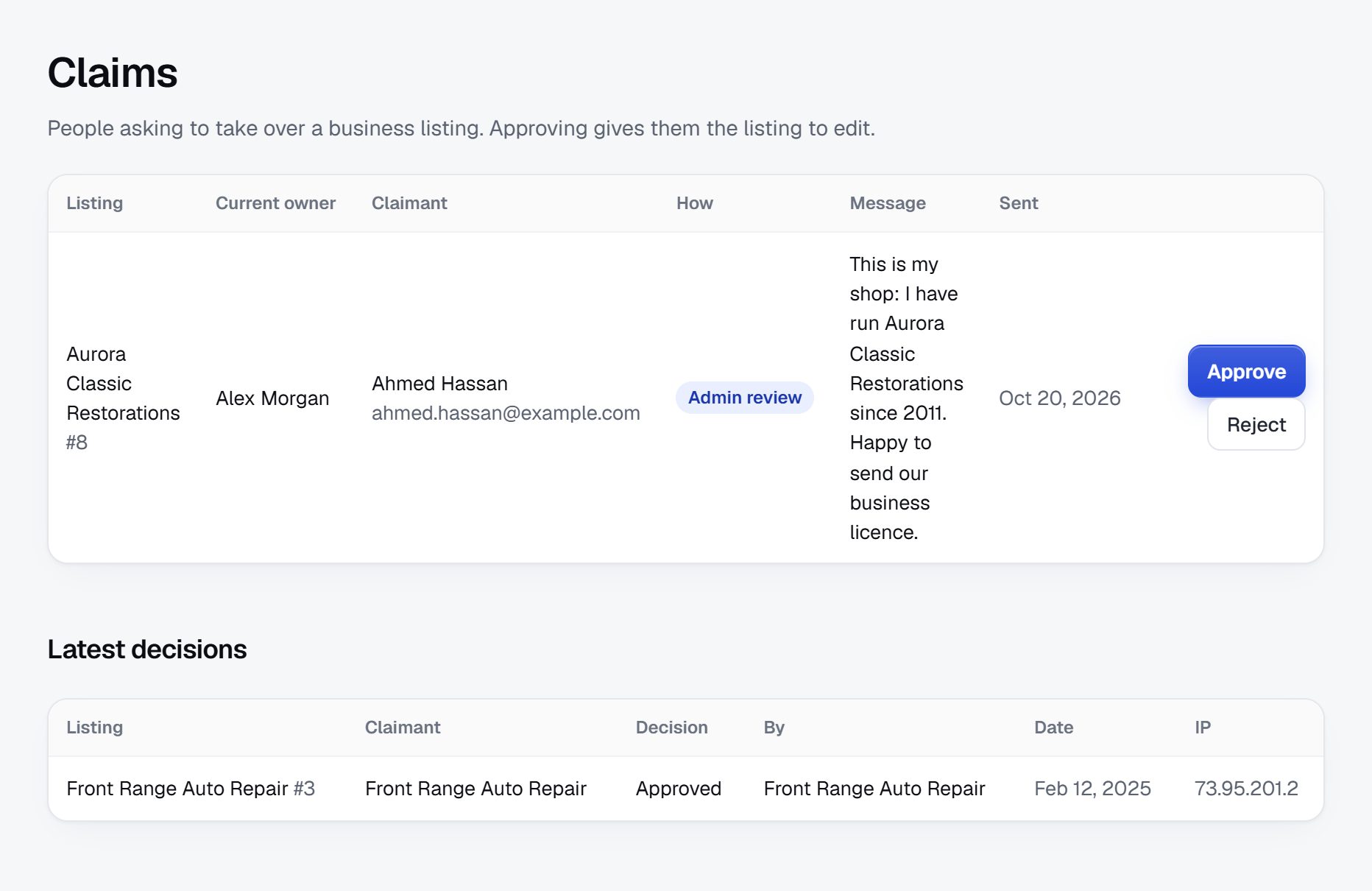
- Check registration against the public register before approving any organization that asks for money, and show its status on the page. Groups that are not registered, like many mutual aid networks, can be listed but should say so plainly.
- Approve new listings by hand, especially in the weeks after a disaster.
- Verify claims by contacting the organization through its published phone or email, not the details the claimer gives you.
- Watch donation links. A charity page whose donation link points to a personal payment account deserves a second look.
Volunteer safety
Background checks, supervision and safeguarding for work with children or vulnerable adults are the nonprofit's responsibility, but your directory can make them visible. Add a field that shows whether a role requires a check, and advise volunteers never to pay to volunteer locally. On tax deductibility, data about people seeking help and anything else legal, check the rules where you operate rather than promising anything on the page.
Rank for the searches of people who want to help today.
Volunteer and charity searches are local, often urgent and very seasonal. Examples: "volunteer opportunities near me", "volunteer for teens Columbus", "food pantry open Saturday Sacramento", "where to donate furniture in Austin", "animal shelter volunteer Denver", "volunteer on Thanksgiving Day", "community service hours for high school students".
Pages to build
- Cause plus city: animal rescues in Denver, literacy charities in Denver.
- Audience pages: volunteering for teens, for families with young kids, for retirees, for corporate groups.
- Donation pages by item: where to give furniture, clothing, books, baby gear or a used car.
- Seasonal pages for Thanksgiving, the December holidays, Giving Tuesday and the Martin Luther King Jr. Day of Service.
Content ideas
- How to check a charity before you give.
- How students can find and record service hours.
- A short profile each month of a small local nonprofit and the volunteer it needs most.
The donation pages often bring more visitors than anything else, because people search for them at the moment they are clearing out a house.
Launch in the fall, ahead of the giving season.
Interest in volunteering and giving climbs from October to the end of December, with peaks around Thanksgiving, Giving Tuesday and the last week of the year. A second, smaller rush comes in January with New Year resolutions and the Day of Service. Launching in early fall gives your pages time to be found.
First community and partners
- Pick one county where you know the volunteer center or the community foundation.
- High school counselors and college service offices need a list of places where students can earn hours, and will share yours every term.
- Employers planning volunteer days want a list of group-friendly roles.
- Local news covers new ways to help, especially in November.
Launch checklist
- At least a hundred organizations listed, every cause covered.
- Thirty with at least one specific volunteer role.
- Registration checked for every organization that takes donations.
- Teen, family and corporate volunteering pages built.
- A holiday volunteering page ready by early November.
- Counselors and the volunteer center sent the link before the term starts.
In January, email every organization to ask what help it needs for spring, and update the volunteer roles.
A worked example: Clear Fork Volunteer Hub, north-central Ohio.
Picture a fictional site called Clear Fork Volunteer Hub, serving Richland County in north-central Ohio, with Mansfield at its center and smaller towns such as Shelby, Ontario and Bellville around it. It is invented, but its choices are the ones a founder of any local nonprofit directory has to make.
How the causes are arranged
- Hunger and housing
- Food pantries
- Shelters and warming centers
- Animals
- Kids and schools
- Tutoring and mentoring
- Summer meal sites
- Older adults
- Meal delivery
- Rides to appointments
- Parks, rivers and trails
Who uses it
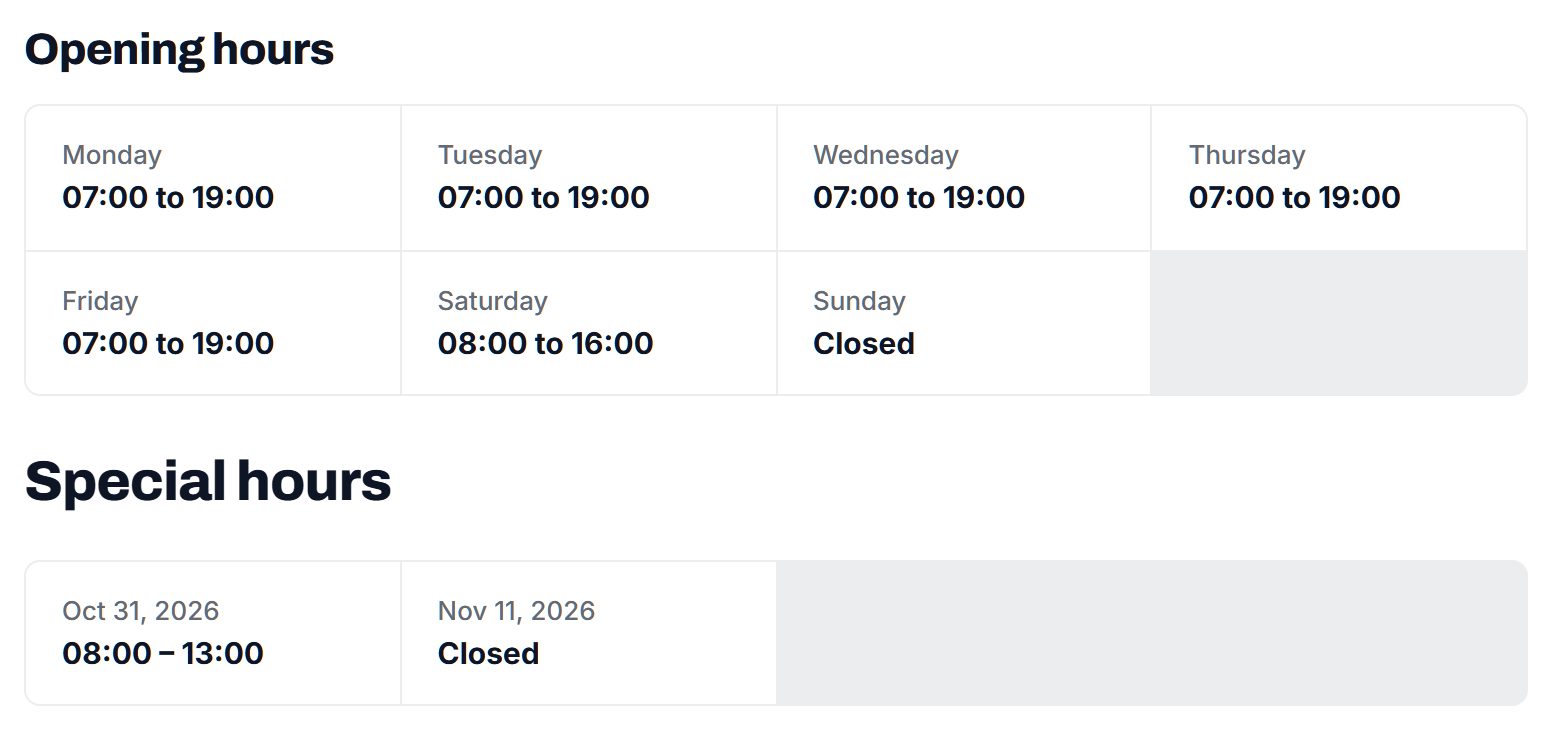
Three groups arrive every week. High school students hunt for roles that count toward graduation service hours and accept fifteen-year-olds. Retirees, many of them former factory and hospital staff, look for a regular weekday shift. And households under strain look up which pantry is open on a Thursday evening, which is why every pantry page shows its distribution hours at the very top. Eligibility comes right after, written as a plain sentence rather than a list of program codes.
How it got going
The founder managed volunteers for a youth soccer league and kept hearing the same question from parents: where can my teenager help out? She pulled the registered charities in the county from the public register, added the pantries, church ministries and mutual aid groups she knew personally, and ended up with around a hundred and forty organizations. The coordinator of a hospital auxiliary and the county's community foundation each sent her a partner list. Counselors at three high schools agreed to share the link at the start of the spring term, and student visits arrived within a week.
The hardest part was not finding organizations but getting specific roles out of them. She solved it by asking every coordinator the same question on the phone: what is one shift you could fill next month? Most answered on the spot, and she wrote the role while they talked.
How it makes money
No organization pays to be listed. A credit union sponsors the teen volunteering page, a regional hospital sponsors the older adults section, and a law firm and an insurance agency hold banner spaces on the donation pages. During the December food drive, the largest pantry bought a featured place on the hunger page for three weeks, labeled as featured, and asked to repeat it for the summer meals campaign. The founder turns down any sponsor that wants a say in which organizations appear, and says so on the About page.
| Organization | Role or service | Key details |
|---|---|---|
| Shelby Community Food Cupboard | Saturday sorting shift, 9 am to noon | Ages 14 and up with an adult, group-friendly, walk-in pantry Thursday 4 to 7 pm |
| Ontario Paws Foster Network | Foster homes for cats and kittens | Fiscally sponsored, supplies provided, two-week minimum |
| Richland Reading Buddies | Weekly reading partner at an elementary school | Background check required, one hour a week, school year only |
| Clear Fork Trail Crew | Monthly trail cleanup on Saturday mornings | One-off or ongoing, families welcome, tools supplied |
| Bellville Senior Rides | Volunteer driver to medical appointments | Own car and insurance, weekday mornings, mileage logged |
Every organization here is fictional.
The first 90 days, from a list of charities to a list of ways to help.
The first three months of a nonprofit directory are about one change: turning a list of organizations into a list of specific ways to help. A page that says volunteers are welcome gets ignored. A page that says Thursday pantry shift, 4 to 7 pm, ages 16 and up, gets a phone call. Most of your weeks should go into collecting those roles from coordinators.
Time the plan against the school calendar and the giving season. Counselors share resources at the start of each term, and charities plan holiday drives in early fall, so a twelve-week run that ends in late October or mid-January lands at the right moment. Save sponsor conversations for the last two weeks, when you can show real pages and real visits.
Check registration as you go rather than at the end. Any organization asking for donations needs its status confirmed before launch, and finding a problem in week eleven is far more awkward than finding it in week two, when nobody has shared the page yet. Keep one list of every organization with its status, the date you checked it and where you checked, so you can answer a sponsor or a journalist in minutes.
| Weeks | Focus | Done when |
|---|---|---|
| 1-2 | Choose the county and causes; pull registered charities from the public register; import pantries and shelters from map data | 100 organizations listed, each with its area served |
| 3-4 | Add small groups from library boards, church bulletins and mutual aid pages; check status for every group seeking money | Each donation-seeking group shows a checked status |
| 5-6 | Call volunteer coordinators; write roles with age, time and screening details | 30 organizations with at least one specific role |
| 7-8 | Build teen, family, retiree and corporate pages, plus donation-by-item pages | Each audience page lists ten or more roles |
| 9-10 | Brief school counselors, the volunteer center and two large employers | The link in at least three school newsletters or counselor pages |
| 11-12 | Prepare the giving season page; approach a local bank or hospital as sponsor | Holiday page live and one sponsor signed |
Ways to build a nonprofit directory, compared.
A nonprofit directory serves two audiences on the same pages: people who want to help, and people who need help. Fields for volunteer age, background checks and time commitment sit beside fields for eligibility, languages and walk-in hours. It also holds many small organizations that will never log in, so you need an easy way to build and update pages on their behalf, and to import partner lists in bulk.
Custom development
Paying developers makes sense if you plan something specific to the sector, such as volunteer hour records that schools accept, or a shift sign-up tool. Be honest about whether that is your project or a different one; plenty of founders build the tracker and never finish the directory. If you do go this way, start with the directory anyway, because it tells you which features coordinators actually ask for.
Your own server with a script or plugin
WordPress directory plugins and standalone scripts handle the listing side well, and some founders get donated hosting from a local firm. The cost is your time on updates and on blocking spam registrations, which charity sites attract in volume.
A hosted builder
A hosted builder such as Yclas keeps the software running, so your time goes to coordinators and counselors. Before choosing any builder, test checkbox filters for ways to help, claiming by organizations, a spreadsheet import for partner lists, and moderation that holds new listings for approval. Those four decide whether you can keep a hundred small organizations accurate on your own.
| Route | Fits when | Watch out for |
|---|---|---|
| Custom development | You need shift sign-ups or hour records that schools will accept | The tool can swallow the budget meant for the directory |
| WordPress plugin or script | You have technical volunteers and donated hosting | Spam sign-ups, plugin updates, nobody on call when it breaks |
| Hosted builder | Your time is better spent with coordinators than servers | Test filters, claiming, imports and listing approval first |
| A volunteer center's own system | Your local volunteer center already runs one and invites you in | It covers that center's partners, not every group in town |
What a nonprofit directory costs to run.
The software is the smallest part of the bill. Most of the cost is your time in the first months: finding the first listings, answering questions and checking what gets posted.
Public charity registers are generally free to search, while Google Places imports run on your own key and cost depends on volume. If you want to verify organizations more thoroughly, some paid charity data services exist, but most founders start with the free registers and a phone call.
| Cost | Typical range | On Yclas |
|---|---|---|
| Domain | $10 to $20 a year | Your own, with SSL included |
| Software and hosting | $0 to $100+ a month, plus plugins and updates | Starter $19 a month, Professional $99 |
| Design | $0 to $100 for a theme, or a designer | 109 looks included |
| Payment fees | About 3% per payment | Your Stripe or PayPal fees; Yclas takes nothing |
| Business data | Free if you collect it, or a few cents per page of Google results | Paid to Google, with your key |
| Your time | 5 to 10 hours a week at the start | Finding listings, moderation, support |
Mistakes that stall nonprofit directories.
- Listing causes instead of roles. A page full of mission statements reads like a donor brochure. Volunteers want a task, a time and an age limit. Ask every coordinator for one concrete role before you call the page finished.
- Leaving out unregistered groups. Mutual aid networks, tenant groups and neighborhood associations often do the most hands-on work. Without them the directory looks like a copy of the charity register. List them with their status shown plainly and a note that donors should check before giving.
- Approving everything after a disaster. Fake appeals surge in the days after a flood or fire, often under names one letter away from a real charity. Hold anything that mentions the event for review and check each group against the register before it goes live. Point donors to the established relief groups already on your site, which is a better service than an empty page.
- Letting roles go stale. A volunteer who calls about a shift that was filled last spring may not try again. Put a review date on every role and remove those nobody has confirmed in three months. Summer and holiday roles need their own dates, since they vanish the week the season ends.
- Forgetting the people who need help. Many founders build for volunteers and overlook that pantries and clinics are searched by families in trouble. Put hours, eligibility and walk-in rules at the top of service pages, in plain words and in the languages spoken locally. Someone looking for food tonight will not scroll past a history of the organization to find the opening time.
- Promising tax deductions. Whether a gift is deductible depends on the organization's status and the giver's situation. Show registration as a fact and leave deduction advice to the organizations and to tax professionals.
- Pitching only executive directors. They are short of time and wary of new platforms. Volunteer coordinators, development staff and active board members gain most from more volunteers, and they are the ones who keep pages current. Ask the director for a name, then build the relationship with that person.
- Making students do the detective work. Teens need roles that accept under-18s, count for school hours and come with a signed record of time. A clear field for each spares counselors from repeating the same answer all term, and keeps students coming back. Ask coordinators whether they sign hour sheets before you tick the box for them.
- Charging charities for basic pages. Fees leave gaps, and gaps make the directory look incomplete to sponsors and visitors alike. Keep the page free and earn from sponsors and campaigns instead.
Glossary for nonprofit directory founders.
Coordinators, funders and counselors use these terms, so learn them before your first round of calls.
| Term | What it means |
|---|---|
| Registered charity | An organization recognized by the national tax or charity authority, often able to give receipts for gifts. |
| 501(c)(3) | The US tax status of most public charities, under which donors can usually deduct qualifying gifts. |
| Fiscal sponsor | An established charity that receives funds on behalf of a smaller project without its own status. |
| Mutual aid group | Neighbors who share resources directly, usually without registration or paid staff. |
| Volunteer coordinator | The person who recruits, schedules and supports an organization's volunteers. |
| Pro bono or skilled volunteering | Unpaid professional work, such as legal, accounting or design help, given to a nonprofit. |
| Service hours | Volunteer time students record to meet a school, scholarship or graduation requirement. |
| Background check | A screening of a volunteer's records, often required for work with children or vulnerable adults. |
| Day of service | A set date when many people volunteer together, such as Martin Luther King Jr. Day. |
| Giving Tuesday | A day of giving held on the Tuesday after Thanksgiving in the United States. |
| Community foundation | A local charity that pools donations and makes grants to other local nonprofits. |
| In-kind donation | A gift of goods or services rather than money. |
| Capital campaign | A fundraising drive for a building or another large one-time cost. |
| Sliding scale | Fees for a service that go down with the client's income, sometimes to zero. |
The same steps for a nonprofit directory on Yclas.
- Describe your directoryThe setup wizard writes the categories, an About page and example listings from one sentence.
- Add fieldsHours, services, areas served, prices: the details people search by, as filters.
- Fill itImport businesses from a spreadsheet or Google Places, then check them.
- Bring owners inOwners claim their page, update it and answer reviews.
- EarnSwitch on featured places, banners or memberships when visits arrive.
How much money do I need to start a nonprofit directory?
Very little beyond the site: your time to collect and check organizations, some Google Places usage on your own key and perhaps printed flyers for libraries and schools. Most of the work is phone calls and emails to volunteer coordinators.
Do I need to be a nonprofit myself to run one?
No, many directories are run as small businesses or community projects. Whether a nonprofit structure would help you with grants or sponsors is a question to check with a local adviser.
Can I list organizations that are not registered charities?
Yes, if you say so clearly. Mutual aid groups, neighborhood associations and informal clubs often do the most local good, so show their status on the page and ask donors to check before giving money.
How do I stop scam charities from listing?
Approve every new organization by hand, check registration on the public register, contact claimers through published details and be extra careful after disasters, when fake appeals spike.
How does a nonprofit directory make money?
Keep listings free and earn from business sponsors, featured places for campaigns, memberships for larger nonprofits and sponsored seasonal pages such as a Giving Tuesday guide.
Why would a charity bother with my directory?
Because volunteers find them through it. Show a coordinator the page already built, with a specific role filled in, and the value is obvious.
Can I compete with the big national volunteer sites?
National sites are strong for large charities and remote roles. A local directory wins with the small organizations they miss, accurate opening times for services and roles that fit students and families in your town.
Should I list public services like libraries and senior centers?
Yes, if your visitors look for them. A family searching for help does not care whether a service is run by a charity or by the county. Put them in the same causes and show who runs them in a field. Public agencies are also good partners, since librarians and senior center staff answer the same questions all day.
How do I handle organizations with a religious affiliation?
List them by what they do, such as a food pantry or a shelter, and mention the affiliation as a fact. Some volunteers and clients want to know, and some services include a faith element, so a short note helps both sides. Never sort them into a separate faith category unless they ask, because the people searching want the service first.
What should I do when a charity closes or merges?
Mark it closed or point to the merged organization within a few days, and keep the old page briefly with a note so returning volunteers are not confused. Then take it out of category and search pages. If the work moved to another group, say where, because volunteers often want to follow the program rather than the name.
Can volunteers sign up for shifts on the directory itself?
Keep sign-ups with the organization. Your page describes the role and the volunteer contacts the coordinator by on-site message or the details shown; coordinators already have their own screening and scheduling and will not want a second system.
How do I know whether the directory is working?
Ask coordinators each month how many new volunteers mentioned your site, and count the messages sent through pages. A short note from a pantry saying it filled its holiday shifts persuades sponsors more than any traffic chart. Keep those notes in one place and quote them, with permission, when you renew a sponsor.
Related pages.
The parts of Yclas this leans on.
You have the plan. Now build the place where your community finds a way to help.
Describe your site in a sentence and the setup wizard writes the categories, example listings and a look. Free for 15 days, no credit card.
Start my directory