How to build a car dealer directory that buyers check before they visit.
This guide covers how to build a car dealer directory for one region: the buyers who compare dealerships before they drive over, the details they filter on (brands, used stock, financing, languages, service), how dealers pay you for featured places and leads, how to list every licensed lot, how to keep out fake dealers, and how to rank.
Free for 15 days · No credit card · Plans from $19 a month
Serve the buyer who is choosing a dealer, not just a car.
Inventory sites such as Autotrader and Cars.com answer "which car". They say little about "which dealer": how the lot treats trade-ins, whether a salesperson speaks Spanish or Vietnamese, whether the service department is any good, whether a small independent lot even has a website. Manufacturer dealer locators show one brand at a time and say nothing about the used car lots, which in many towns sell most of the cars.
Your directory is the page a buyer checks before getting in the car to visit: who sells this brand near me, who has a good reputation, what are their hours on Sunday, and do they take my old car.
Pick an angle
- A region. One metro, or a rural area where buyers drive an hour to the nearest franchise store and want to know the options first.
- A dealer type. Independent used car lots, commercial truck and van dealers, RV dealers, powersports dealers, classic and collector car dealers, or EV-focused stores.
- A buyer. First-time buyers, buyers with thin credit looking at in-house financing, fleet buyers, or a language community that wants to be served in its own language.
Today these buyers ask in local Facebook groups, read scattered reviews and drive along the auto row to see who is there. Dealers, meanwhile, already spend on lead sites and classified ads, so the business side of this niche understands paying for attention.
Inventory sites list cars. Your site helps a buyer pick the lot to visit.
Describe each dealership the way buyers compare them.
The category is the kind of dealer; the fields carry the comparison. Resist the urge to list cars: dealers already manage stock on their own sites and on inventory platforms, and a directory that tries to mirror inventory goes stale in days. Instead, collect what stays true for months.
- Brands sold new as checkboxes, plus used makes they focus on.
- Certified pre-owned programs offered.
- Financing: bank and credit union financing, in-house financing, lease offers.
- Trade-ins accepted, and whether they buy cars outright.
- Languages spoken on the sales floor.
- Service department: yes or no, its own hours, loaners.
- Home delivery and test drives at home.
- Dealer license number, shown on the page once checked.
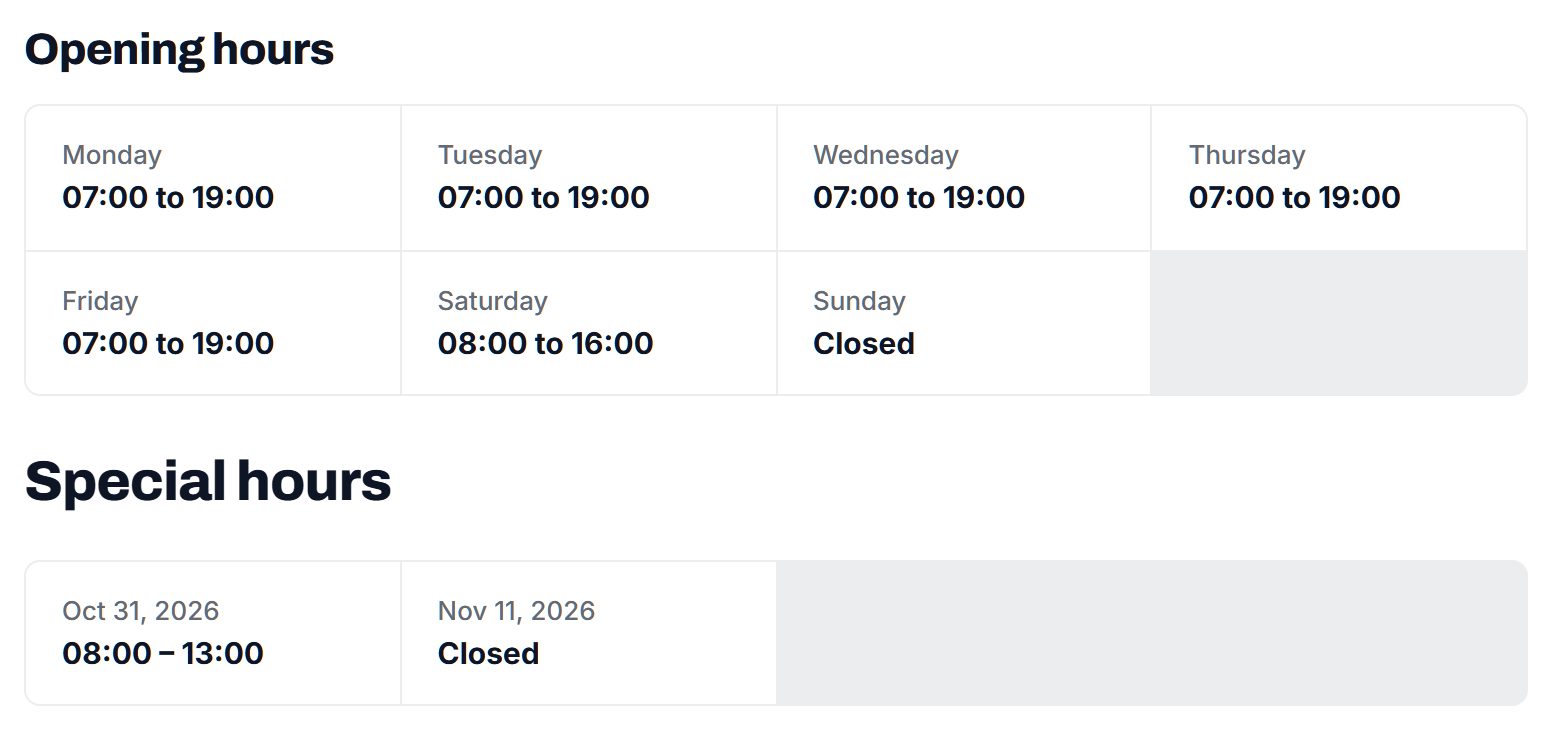
Sales and service often keep different hours, so show both. Sunday sales are not allowed in some states, which buyers moving in from elsewhere do not expect. A plain "Open Sunday" checkbox answers that before anyone makes a wasted trip.
| Category | Example listings | Details buyers filter on |
|---|---|---|
| Franchise dealers | Toyota, Ford, Hyundai and other brand stores | Brands sold, certified pre-owned, service department |
| Independent used car lots | Family-run lots, budget and mid-range used stores | Price band of stock, financing, trade-ins, warranty offered |
| Trucks and commercial vehicles | Work truck, van and box truck dealers | Upfitting, fleet accounts, commercial financing |
| RV and powersports | Motorhome, trailer, motorcycle and ATV dealers | Brands, consignment, storage, service bays |
| Classic and specialty | Collector car dealers, consignment showrooms | Eras and makes, indoor showroom, shipping arranged |
| Car buyers | Stores that buy cars for cash | Makes bought, same-day offer, title help |
Each field can be required or optional and appears as a search filter, so "Spanish spoken, in-house financing, trucks" is one search.
Dealers already pay for leads. Give them better ones.
Car dealers are among the most willing advertisers in any local market. They pay inventory sites, lead brokers and local media every month. That makes money easier here than in most directories, but it also means dealers judge you quickly: if your leads are thin, they cancel.
Start with every dealer listed free and quote requests sent free. A good request names the model, the budget, the trade-in and how the buyer wants to be contacted. Track where each request went, and after two or three months show each dealer what they received. Then offer a membership that includes featured placement and requests, or charge per request for dealers who prefer that.
Banner space suits businesses around the car purchase: credit unions, insurance agents, detailers, window tinting and accessory shops. Avoid letting a lender buy a position that looks like a recommendation.
Keep paid placement labeled, and never let it change ratings or remove reviews. In this niche buyers already assume someone is being paid; showing them exactly who is the fastest way to earn trust.
| Model | Works when | Switch it on |
|---|---|---|
| Quote requests sent to dealers | Buyers ask several dealers for a price on the same model | Free for a few months, then per request or in a membership |
| Featured places | Buyers browse "Ford dealers" or "used car lots" in a town | When those pages get regular visits |
| Dealer memberships | Groups with several stores want all pages featured | Once a dealer group asks for a package |
| Banner spaces | Credit unions, insurers and detailers want buyers | When you can show monthly visitors |
| Pay to post in a category | A for-sale-by-dealer or trade-in classified section | Only if you add a classifieds side later |
Start from the licensed dealer list, then fill in the detail.
Car dealers are one of the easiest niches to seed, because in the US selling cars as a business generally requires a state dealer license, and many states let the public look licensees up. That list is the backbone of your directory, and it also helps you spot lots that are not licensed at all.
- Import the businesses. Google Places, on your own Google key, gives each dealer's name, address, phone, website and opening hours. It does not bring photos. You can also bring in a spreadsheet (CSV) built from public license lists.
- Cross-check against the license lookup. Mark which pages you have matched to a license, and look closer at any lot that does not appear.
- Fill in brands and services. Franchise brands are easy to confirm from the dealer's own site. Financing, languages and trade-in policy usually need a phone call.
- Visit the auto row. Independent lots cluster on one or two roads in most towns. A few hours on foot with printed cards reaches a dozen owners.
- Work with the associations. Many states have an independent auto dealers association. Its members want visibility, and a mention in its newsletter brings claims.
When owners claim their page, ask them for photos of the lot and the team, the languages they speak, and their sales and service hours.
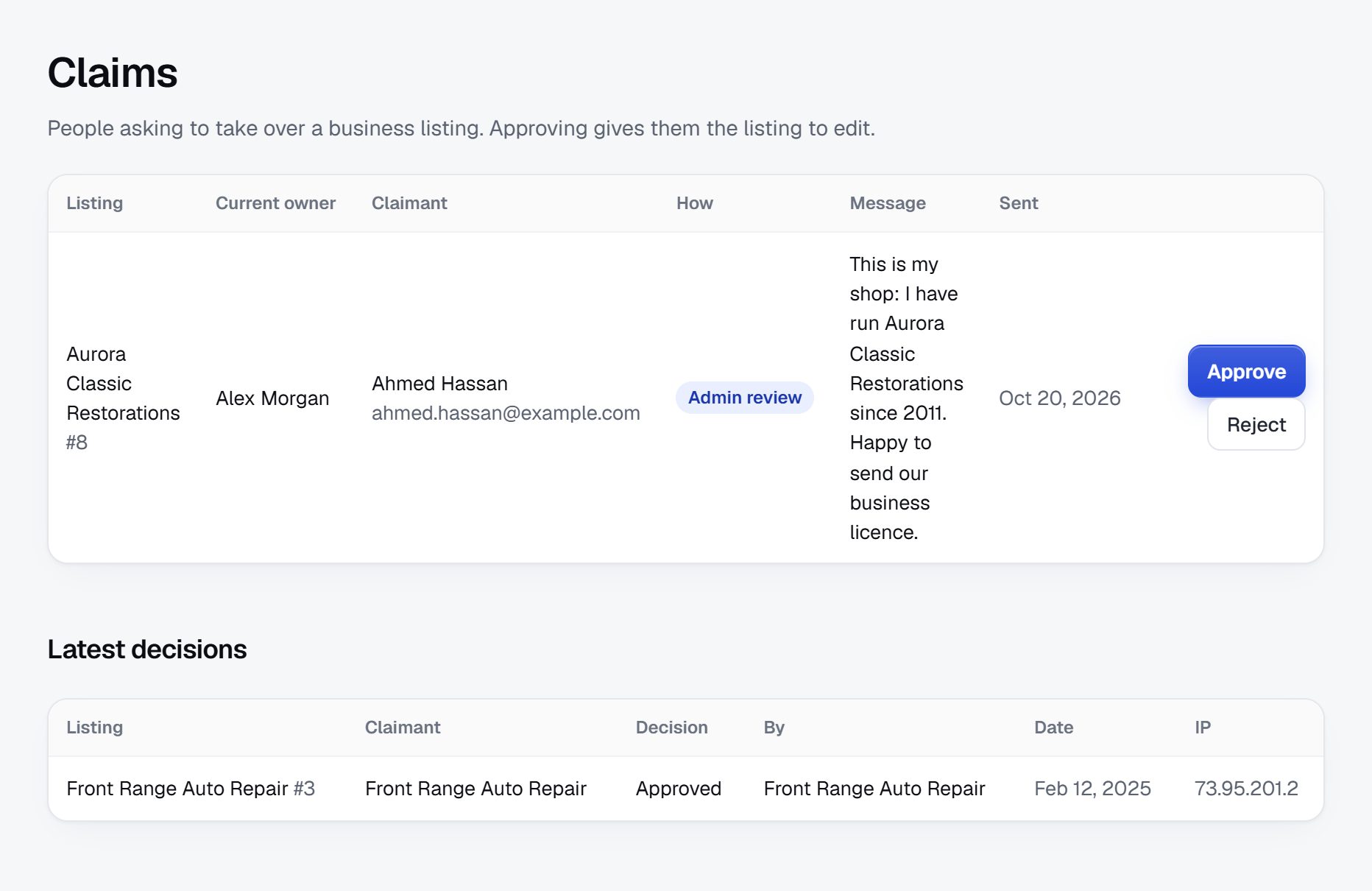
Keep fake dealers out and real dealers honest.
The car trade has well-known problems, and some of them will try to reach your directory.
- Unlicensed sellers. Curbstoners sell many cars a year while posing as private sellers, often with salvage or flood-damaged cars. Do not list a business you cannot match to a license or a real lot.
- Fake dealer pages. Scammers create dealer listings with stolen photos to collect deposits for cars that do not exist. Verify new claims by calling the number on the license record, not the one in the claim.
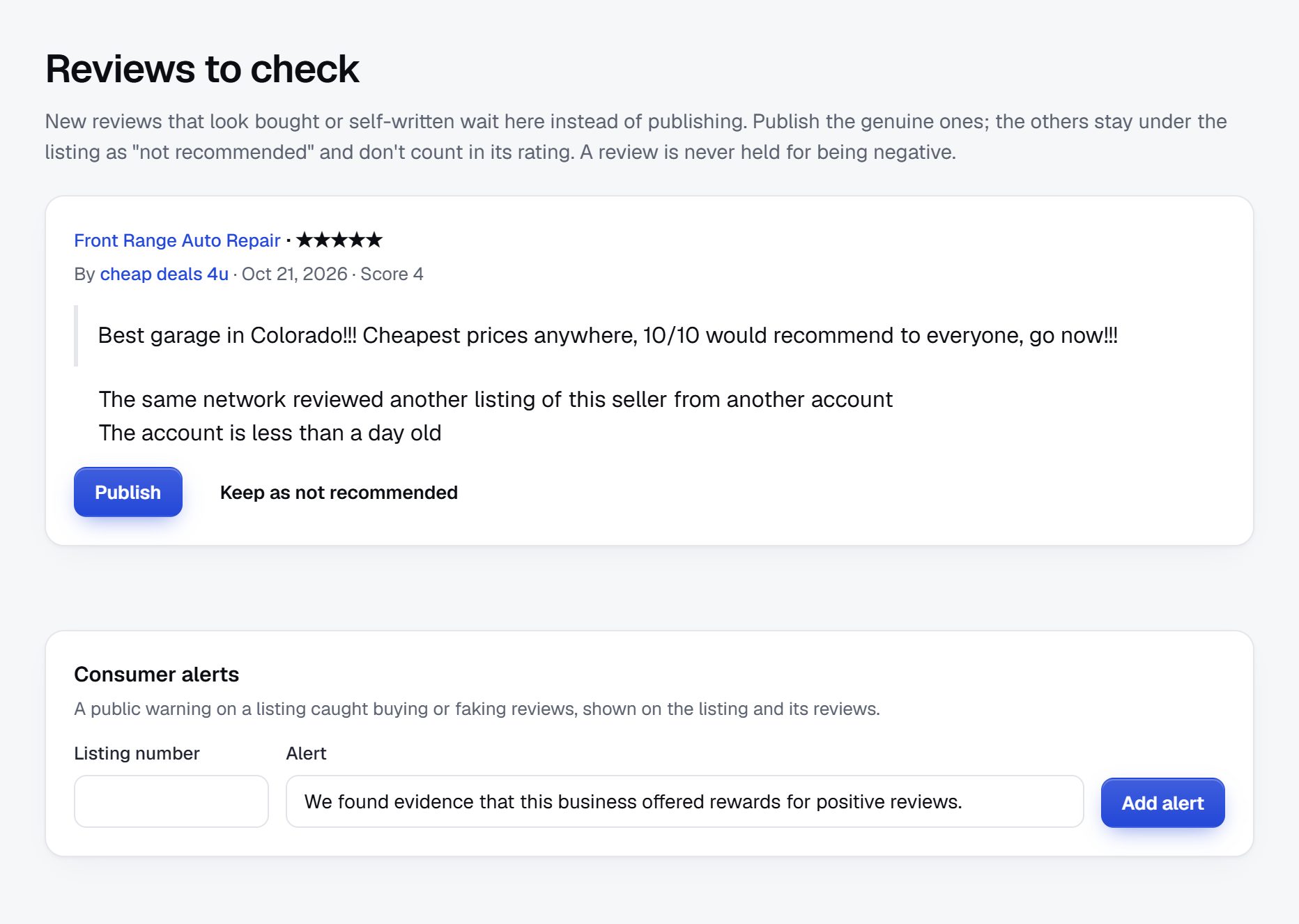
- Review manipulation. Sales staff reviewing their own store, and review gating where only happy buyers are asked. Hold new reviews for moderation and remove clusters from new accounts.
- Bait-and-switch complaints. An advertised price that changes at the desk is a common review topic. Allow these reviews and let the dealer reply in public.
Show a verified badge only after you have checked the license and the address yourself, and record the date you checked.
What to tell buyers
Check the dealer's license, get the full out-the-door price in writing, run a vehicle history report, and never wire a deposit for a car you have not seen. Advertising, financing and warranty rules for dealers vary by state and country, so check the rules where you operate before you write about them.
Match the brand, the dealer type and the town.
Dealer searches are short and local. Build a page for each realistic combination and let the dealer pages fill them.
- "Toyota dealer near Tampa" and "Honda dealership Fresno": one page per brand per city.
- "used car lots in Dayton" and "cars under 10000 Dayton": independent lot pages per town, with price band as a filter.
- "in house financing car lots Memphis": a financing filter page, written carefully and without promises.
- "Spanish speaking car dealer Houston": language pages, rarely served well by anyone.
- "RV dealers near Boise" and "motorcycle dealers Phoenix": one page per specialty and area.
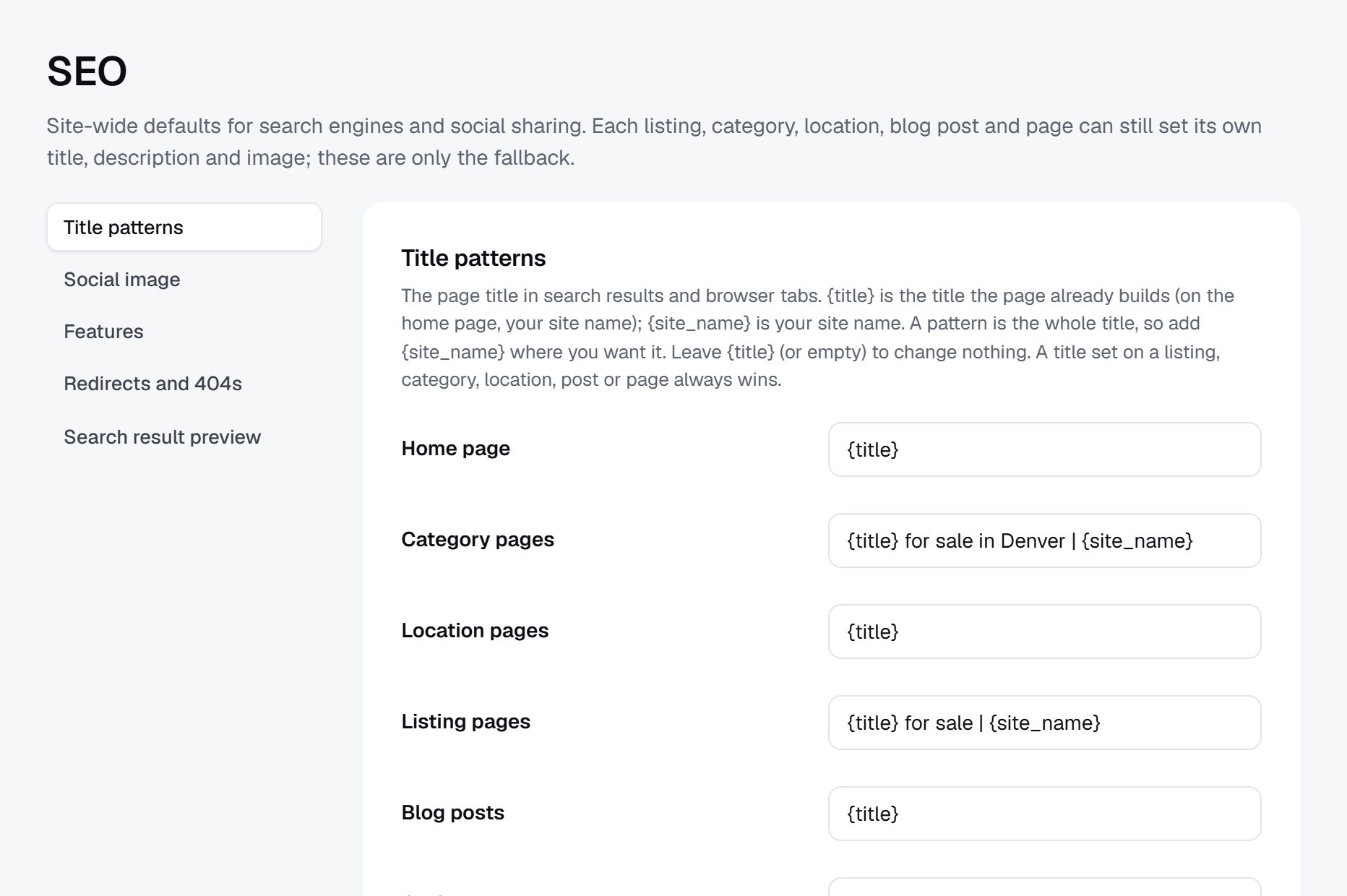
Every dealer, category and location already has its own page, and you set the SEO title pattern once for all of them.
Guides that buyers search for
- How to compare dealer fees and what an out-the-door price includes.
- Franchise dealer or independent lot: what changes for the buyer.
- How trade-in offers work and how to get more than one.
- Questions to ask before signing a financing agreement.
- What certified pre-owned means at each brand in your area.
Keep these guides general and send readers to quote requests for real numbers.
Launch in one market before the buying seasons.
Pick one metro or one cluster of rural counties. A region with one long auto row is easiest: you can meet most dealers in two or three days.
Timing matters. Used car buying in the US often picks up in late winter and early spring when tax refunds arrive, and new car stores push hard around model-year changeover in late summer and fall and at year end. Being live and indexed a month before either period gives dealers a reason to care.
Partners
- Credit unions run auto loan promotions and want a neutral place to send members.
- Independent dealer associations can introduce you to members.
- Insurance agents, detailers and inspection shops meet buyers right after a purchase and can share your site.
- Community groups for newcomers and language communities, where "which dealer is fair?" is a common question.
Checklist
- Every licensed dealer in the area listed and matched to a license.
- Brands and financing filled in for the top fifty dealers.
- Brand and city pages live for the most common brands.
- Quote requests tested end to end with two friendly dealers.
- Fifteen claimed pages with photos and hours.
- A short printed card for the auto row visits.
A worked example: Sandia Auto Row Guide, central New Mexico.
To make the steps concrete, here is a fictional site. Sandia Auto Row Guide covers Albuquerque, Rio Rancho, Los Lunas and Santa Fe, plus the rural counties whose buyers drive in to shop. The founder spent eight years selling at a used car lot and watched families arrive after a two-hour drive, only to find the truck they wanted was gone and the next lot on their list was closed on Sunday. She built the page those families needed before leaving home.
How the categories are arranged
- Franchise dealers
- Japanese and Korean brands
- Domestic trucks and SUVs
- Independent used lots
- Budget lots
- Lots with in-house financing
- Trucks and work vehicles
- RV and powersports
- Car buyers
Who uses it
The largest group is rural buyers planning one trip to the city who want to visit three lots in a single afternoon. Close behind are Spanish-speaking families who want a salesperson and a finance office that will explain the contract in Spanish, which is the filter they use more than any other. A smaller group are buyers looking for a work truck or a cargo van for a new business, who want to know which dealers arrange upfitting. First-time buyers, many of them students and young workers, make up the third group, and they read the guides on out-the-door prices and trade-ins before they visit anyone.
How it got going
She imported every dealership in the area, removed rental counters and auto auctions closed to the public, and matched each lot against state dealer license records where she could find them. Lots she could not match stayed hidden until she had checked them in person. A credit union that runs auto loan promotions linked to the site from its member newsletter, and a regional association of independent dealers mentioned it at a members' meeting, which brought the first wave of claims. The Spanish-language page, with every lot where the finance office could explain a contract in Spanish, became the page most shared in local groups.
How it makes money
Every dealer page is free. Quote requests went out free for three months, and each dealer got a short monthly note with the number received and the models asked about. After that, a dealer group with four stores bought a package that features each store on its brand page, and several independent lots pay a monthly membership for a featured spot on the financing and language pages. The credit union and an insurance agency rent the banner spaces. Paid spots are labeled, and reviews stay as written whoever pays.
| Dealer | Type | Key details |
|---|---|---|
| Sandia Foothills Honda | Franchise dealer | New and certified pre-owned Honda; Spanish spoken; service open Saturday |
| Los Ranchos Auto Sales | Independent used lot | Most stock under $15,000; in-house financing; trade-ins accepted |
| High Desert Work Trucks | Trucks and work vehicles | Cargo vans and box trucks; upfitting arranged; fleet accounts |
| Rio Abajo RV Center | RV and powersports | Travel trailers and toy haulers; consignment; winter storage |
| Turquoise Mesa Car Buyers | Car buyers | Same-day offers; buys cars that still have a loan; title help in Spanish |
The site and every dealer in this table are invented for the example.
Your first 90 days, laid out by week.
A dealer directory is quicker to seed than most, because license records and brand websites do a lot of the work. What takes time is the detail dealers do not publish: financing types, languages on the floor, trade-in policy and separate service hours. Spread that work over the first two months and do it in order of the pages buyers will use most.
Treat license matching as the first job, not a later cleanup. Every page you show before it is matched is a page a curbstoner could hide behind, and buyers will hold you responsible for who you list.
Hold back on selling until you can show each dealer real requests. Dealers buy leads every month and cancel quickly when a source disappoints, so your first pitch has to rest on numbers. By week twelve, aim for a complete region, dealers matched to licenses, brand and language pages live, and three months of request counts ready for each store. If tax refund season or model-year changeover is near, time the launch posts for a month ahead of it.
Visit dealers on weekday mornings. Saturdays and month ends are when lots are busiest and managers are chasing sales targets, so a pitch at those times rarely gets a fair hearing.
| Weeks | Focus | Done when |
|---|---|---|
| 1-2 | Pick the region; import dealerships; remove rental counters and dealer-only auctions | One page per rooftop, sorted into the right dealer type |
| 3-4 | Match every lot to state license records; visit any lot you cannot match | Each visible page is matched to a license or hidden until checked |
| 5-6 | Phone dealers about financing, languages, trade-ins and service hours | Those four fields are filled in for the top fifty dealers |
| 7-8 | Walk the auto row with claim cards; contact the independent dealer association | Fifteen dealers have claimed their page with photos and both sets of hours |
| 9-10 | Build brand, city and language pages and the out-the-door price guide | Pages live for the ten most common brands and every language you cover |
| 11-12 | Switch on quote requests; send each dealer a count; line up a credit union partner | Requests reach dealers the same day and every dealer has its first count |
Ways to build a car dealer directory, compared.
A dealer directory has its own needs. It must hold a license number and a verified date for each dealer, filter on several checkbox lists at once (brands, financing types, languages), let dealers claim and edit their page, show reviews with dealer replies, send quote requests to several stores, and produce a page for every brand and town without hand work.
Custom development
Paying developers makes sense if you want something unusual, such as pulling live stock from dealers' inventory feeds onto each page. That brings feed formats, daily syncing and stale cars into your life, which is exactly the burden this guide suggests avoiding at the start.
A script or WordPress plugin on your own server
Directory scripts and WordPress plugins handle the basics and give you the code. They fit a founder who already runs servers. In this niche the extra risk is security and fake dealer sign-ups: you own the spam filters, the updates and the backups, and a hacked dealer page that collects deposits would be a serious problem.
A hosted builder
A hosted builder such as Yclas takes the server and software off your hands so you can spend time on license checks and lot visits. Whatever you pick, check for multi-select filters, claiming, owner replies to reviews, quote requests and moderation that holds new claims for review. Look at how the license number and the date you checked it will appear on each page, because buyers in this niche read that line before anything else.
| Route | Fits when | Watch out for |
|---|---|---|
| Custom development | You want live inventory feeds or a pricing tool nobody sells | Feed syncing, stale stock and a long build before the first visitor |
| Script or WordPress plugin | You run servers already and want to own the code | Fake dealer sign-ups, security patches and backups are your job |
| Hosted builder | You want your time on license checks, calls and lot visits | Confirm filters, claiming, review replies and quote requests first |
What a car dealer directory costs to run.
The software is the smallest part of the bill. Most of the cost is your time in the first months: finding the first listings, answering questions and checking what gets posted.
Expect a modest Google Places bill on your own key, and time spent matching dealers to state license lookups. If you show history report links or financing calculators later, those come from paid providers with their own terms.
| Cost | Typical range | On Yclas |
|---|---|---|
| Domain | $10 to $20 a year | Your own, with SSL included |
| Software and hosting | $0 to $100+ a month, plus plugins and updates | Starter $19 a month, Professional $99 |
| Design | $0 to $100 for a theme, or a designer | 109 looks included |
| Payment fees | About 3% per payment | Your Stripe or PayPal fees; Yclas takes nothing |
| Business data | Free if you collect it, or a few cents per page of Google results | Paid to Google, with your key |
| Your time | 5 to 10 hours a week at the start | Finding listings, moderation, support |
Mistakes that sink car dealer directories.
- Trying to mirror inventory. Copying stock from dealer websites feels like added value, but cars sell daily and the copies go stale in hours. A buyer who drives to see a car that sold yesterday stops trusting the whole site. Describe the dealership and send buyers to the dealer's own stock.
- Showing lots before checking the license. Curbstoners and fake dealer pages are the worst thing your directory can host. Keep every new or claimed page hidden until it matches a license record or a lot you have seen with your own eyes.
- Covering only franchise stores. Brand locators already list them. In many towns the independent lots sell most of the used cars, and buyers know least about them. Give independents full pages and their own filters.
- Writing approval promises. Words like "everyone approved" or "no credit check" on a financing page can break advertising and lending rules and attract the wrong lenders. Describe what in-house financing is, list the questions to ask, and check the rules where you operate.
- One set of hours for sales and service. A buyer who arrives at 7 p.m. for a test drive and a driver who arrives at 7 a.m. for an oil change need different answers. Show both, and mark which days each is closed.
- Charging per lead before measuring lead quality. Dealers track every lead source and drop the weak ones within a month or two. If your requests lack the model, budget and trade-in, they will look weak. Make those fields required before you charge anyone.
- Missing dealer groups. One owner may run six rooftops and buy or sell stores every year. Keep a page per store, link the stores to the group, and recheck names and brands after every sale.
- Letting a lender look like a recommendation. A banner from a lender placed beside a financing guide reads as advice. Keep ads visually separate from guides and label every paid spot.
- Forgetting languages. In many regions, a large share of buyers would rather negotiate and sign in Spanish, Vietnamese, Korean or another language. Few sites tell them which lots can do that. Ask every dealer which languages their sales and finance staff speak, and build a page for each one.
- Badges with no date. A verified badge from two years ago says nothing about a lot that changed owners last month. Record the date of every license check, show it on the page, and recheck the busiest dealers at least once a year.
Glossary of car dealer directory terms.
Dealers and their staff use this vocabulary constantly, and buyers search for some of it too.
| Term | What it means |
|---|---|
| Franchise dealer | A dealership with an agreement to sell new cars of one or more brands, usually with a service department. |
| Independent dealer | A licensed dealer that sells used vehicles without a manufacturer agreement. |
| Rooftop | Trade shorthand for one dealership location, used when counting the stores a group owns. |
| Buy here pay here | A used lot that lends to its own buyers and takes payments directly, often for buyers with weak credit. |
| Curbstoning | Selling cars as a business while posing as a private seller, usually to avoid dealer licensing rules. |
| Certified pre-owned | A used car inspected under a manufacturer's program and sold with an added warranty, usually at franchise stores. |
| Out-the-door price | The full amount a buyer pays, including taxes, registration and dealer fees. |
| Doc fee | A dealer's charge for processing paperwork, which some states cap and others leave to the dealer. |
| F&I office | The finance and insurance desk where the loan is arranged and extended warranties and add-ons are offered. |
| Negative equity | Owing more on a trade-in than it is worth, a balance that is often rolled into the next loan. |
| Floor plan | A credit line dealers use to buy the vehicles on their lot, repaid as each one sells. |
| Dealer-only auction | A wholesale auction where licensed dealers buy and sell used vehicles, closed to the public. |
| Upfitting | Adding shelving, racks, lift gates or other equipment to a work truck or van for its job. |
The same steps for a car dealer directory on Yclas.
- Describe your directoryThe setup wizard writes the categories, an About page and example listings from one sentence.
- Add fieldsHours, services, areas served, prices: the details people search by, as filters.
- Fill itImport businesses from a spreadsheet or Google Places, then check them.
- Bring owners inOwners claim their page, update it and answer reviews.
- EarnSwitch on featured places, banners or memberships when visits arrive.
What do I need to spend before the first dealer pays?
Very little beyond software, a domain and Google's charge for the business import. Plan instead for a few weeks of calls and lot visits to fill in brands, financing and languages.
Do I need permission to list a dealership?
Public business details are commonly listed by directories, but check the rules where you operate. Let dealers claim, correct or remove their page, and act quickly on removal requests.
Should my directory show cars for sale?
Not at first. Inventory changes daily and dealers already manage it elsewhere. A directory that helps buyers choose the dealer is easier to keep accurate and still sends dealers real customers.
How do I prove leads are worth paying for?
Send quote requests free for a few months and keep a record of each one. Share the count and examples with each dealer before you ask for a membership.
How do I keep curbstoners and scam lots off the site?
Match every business to a state dealer license and a real address before showing it, verify claims through the phone number on the license record, and remove pages that cannot be matched.
Can a local directory compete with manufacturer locators and inventory sites?
Yes, by covering what they skip: independent lots, languages, financing types, trade-in policy and honest reviews of the dealership itself.
Can I write about financing for buyers with poor credit?
Carefully. Describe what in-house financing is and what to ask, avoid promises of approval, and check the advertising and lending rules where you operate.
Should buy here pay here lots be listed?
Yes, if they hold a dealer license and a real lot, in a clearly labeled financing category. Buyers with poor credit search for them anyway, and a page with honest reviews and the right questions to ask serves those buyers better than silence.
How do I handle a dealer group with several stores?
Give each store its own page with its own brands, hours and reviews, and link them to one group profile. Sell the group a package if it asks, but keep reviews attached to the store where the visit happened.
Can private sellers post cars on a dealer directory?
Keep the directory for licensed businesses at first, or curbstoners will slip in as private sellers. If you add a classifieds section later, keep it separate and make the difference obvious to buyers.
What do I say when a dealer asks me to delete bad reviews?
Explain your review rules, remove anything that breaks them, and offer the dealer a public reply on the rest. Deleting honest reviews for a paying dealer is the quickest way to lose every buyer who reads the site. Put the policy in writing before the first membership is sold, so the conversation is about rules, not favors.
Does a dealer directory work in a rural area?
Often better than in a city. Rural buyers drive long distances and want to plan the trip, and the dealers there get less attention from big lead sites, so a regional page covering several counties can become the place everyone checks.
Related pages.
The parts of Yclas this leans on.
Buyers want a dealer they can trust. Build the list that shows them one.
Describe your site in a sentence and the setup wizard writes the categories, example listings and a look. Free for 15 days, no credit card.
Start my directory