How to build a salon and barber directory that finds the right chair.
This guide covers how to build a salon and barber directory for one city: the people who cannot find a stylist for their hair type, the details they filter on, how salons and barbershops pay you through featured places, memberships and event quote requests, how to list independents in salon suites, and how to deal with stolen portfolio photos and licensing.
Free for 15 days · No credit card · Plans from $19 a month
Serve the person who needs a specific skill, not any salon.
Finding a haircut is easy. Finding someone who is good with your hair is not. A woman with tightly coiled hair moves to a new city and spends months asking strangers where they go. A parent needs a barber patient with a child who hates clippers. A bride needs hair and makeup for six people on a Saturday in June. Someone wants a fade like the one they had back home.
Map results show the nearest salons, sorted by stars that mostly measure friendliness. Booking apps list only the salons that pay for their software. Neither lets you filter by curly hair, textured hair, braids, locs, balayage, men's color, or a stylist who speaks Portuguese.
Pick an angle
- One city, covered down to the independents renting a suite or a chair.
- A specialty: textured and curly hair, braiding and locs, barbers, color specialists, bridal hair, kids' cuts, or nails and lashes.
- A community: a language group, students near a university, or people moving to the area.
Today the answers live in Instagram hashtags, TikTok videos of before and after, city subreddits and Facebook groups where someone asks "who does good silk presses around here?" every week. Many of the best stylists only exist on Instagram, with no website and no map listing. Getting them onto one searchable page is the value you add.
People do not need more salons. They need the one stylist who knows their hair.
Let people filter by hair, service and how they book.
Use categories for the kind of business and fields for skills. The most valuable field, and the one nobody else collects well, is hair types and textures the stylist works with. Ask it as checkboxes on every salon and barber page.
- Services: cuts, color, highlights, keratin and silk press, braids, locs, extensions, beard trims, hot towel shaves.
- Hair types: straight, wavy, curly, coily, textured, fine, thick.
- Clients welcome: women, men, kids, everyone, with any gender-neutral pricing noted.
- How to book: walk-ins welcome, phone, the salon's own website or app. Your directory points to it and does not take bookings itself.
- Languages spoken and accessibility.
- Price band as a dropdown, set by the owner, not exact prices that go stale.
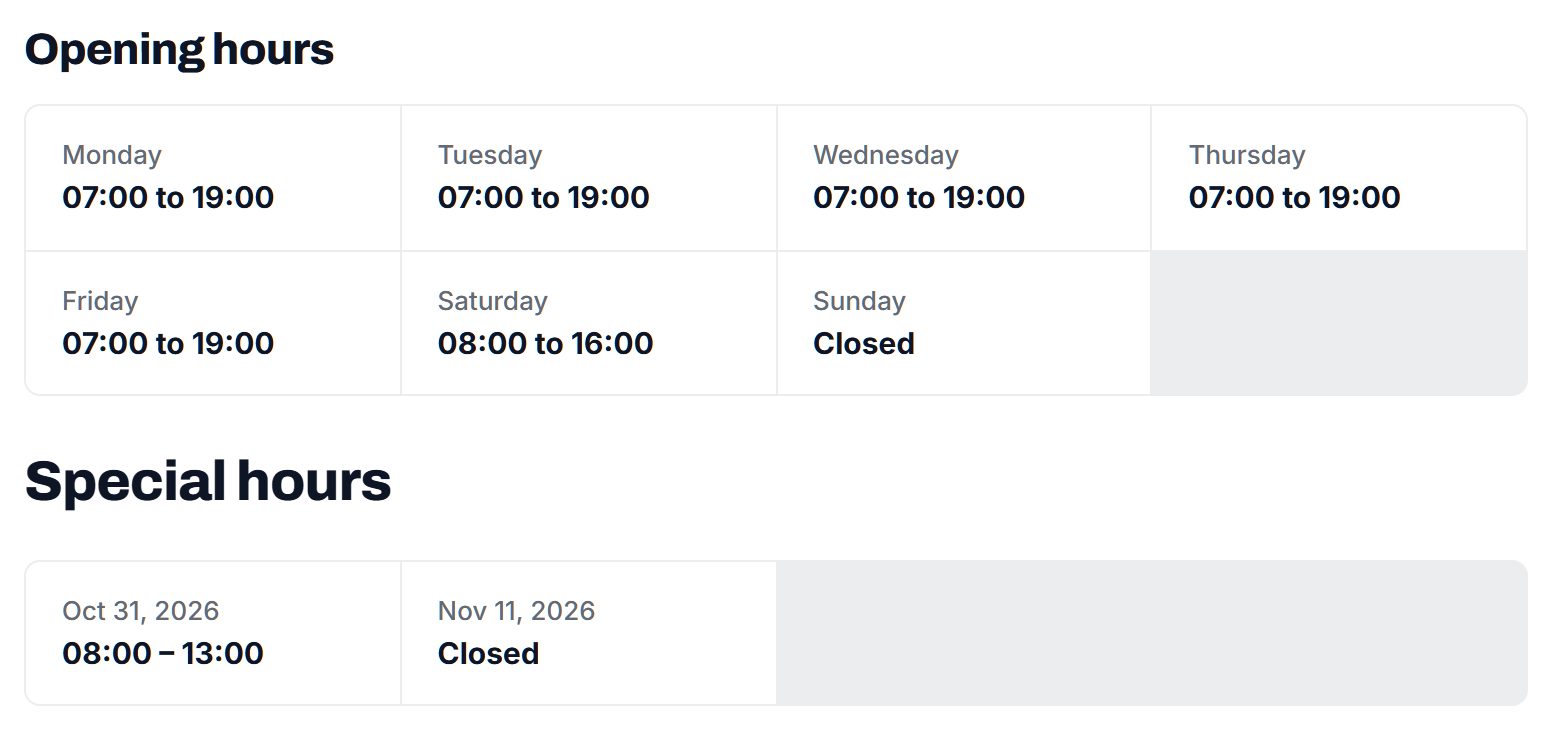
Opening hours carry real weight here: "barber open Sunday" and "salon open late" are common searches. For a barbershop with several chairs, list each barber's specialty in the description so clients can ask for the right person by name.
| Category | Example listings | Details people filter on |
|---|---|---|
| Hair salons | Full-service salons, color studios, curly hair specialists | Hair types, services, price band, walk-ins |
| Barbershops | Classic and modern barbers, kids' barbers | Fades, beard work, hot towel shave, open Sunday |
| Braiding and natural hair | Braiders, loctitians, natural hair studios | Styles offered, hair supplied or not, home studio or salon |
| Nails | Nail salons, nail artists | Gel, acrylic, nail art, pedicure chairs, non-toxic products |
| Lashes and brows | Lash studios, brow bars, threading | Extensions, lifts, threading, waxing |
| Bridal and events | Mobile stylists, bridal hair and makeup teams | Travel area, group size, trial session offered |
In Yclas, hair types and services work as checkbox fields that show up as search filters.
Charge for being found by the right client.
Salons and barbers watch every dollar, and many independents pay rent for a chair or suite every week. They will pay for new clients, but only once they see them. List every business free, keep it free for good, and sell extra visibility once people use the site.
Featured places work well because beauty is visual: a featured salon on the "curly hair" page with good photos gets noticed. Memberships suit salon suite owners and stylists who want a badge, a gallery and a top spot in two or three specialties.
Quote requests fit events better than haircuts. A bride, a prom group or a photo shoot wants prices from several stylists for a date and a group size; send the request to the matching businesses. Everyday haircuts do not need quotes.
Beauty schools, supply stores and product brands want your audience for banners. A board for chair and booth rentals and stylist jobs is also useful: salon owners post there, and it brings stylists to the site, who then claim their own pages.
Never let payment change the order of reviews or the rating shown.
| Model | Works when | Switch it on |
|---|---|---|
| Featured places | People browse specialty pages such as "braiders" or "kids' barbers" | Once those pages have steady visits |
| Stylist and salon memberships | Independents want a badge, a gallery and a top spot | When suite renters start asking |
| Event quote requests | Weddings, proms and shoots need group prices | Before wedding and prom season |
| Banner spaces | Beauty schools, supply stores and brands want local clients | When you can share monthly visitors |
| Paid booth rental and job posts | Salons look for stylists and renters | After the directory has stylists visiting |
Seed salons from public data, then find the independents.
Your first few hundred pages come from two very different sources.
The storefronts
Import salons, barbershops and nail salons from Google Places with your own Google key. Each page arrives with name, address, phone, website and opening hours, but no photos. Remove closed businesses and the supply stores that slip into the results. You can add more in bulk from a spreadsheet (CSV).
The independents
This is where you beat everyone else. Many skilled stylists work alone:
- Salon suite buildings house dozens of independent stylists under one roof. One visit to the building manager can bring a whole floor onto your site.
- Instagram and TikTok: search local hashtags for braids, fades and color in your city and message stylists directly.
- Beauty and barber schools know their recent graduates and where they work.
- Barbershops often have several barbers with their own followings. Ask whether each barber wants a page or the shop wants one page listing them all.
In the US, cosmetologists and barbers are licensed by state boards, many of which offer a public license lookup. It is a useful way to check that a business or stylist is real.
Owners claiming their page is what makes the site good: they add their own photos, real services and the hair types they love working with.
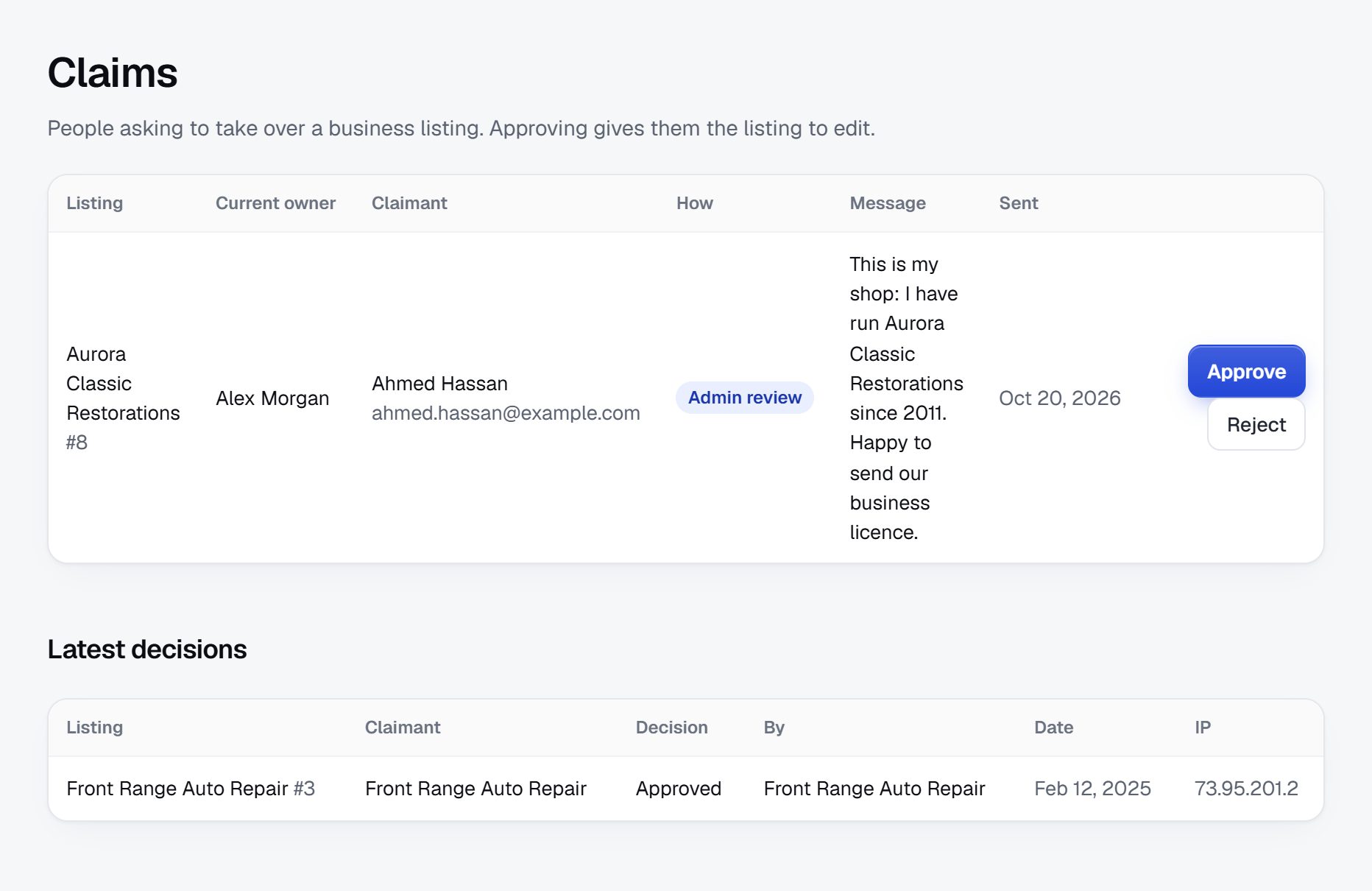
Protect clients from stolen photos and unlicensed work.
The risks in a beauty directory are less about money stolen and more about misleading pages and bad experiences.
- Stolen portfolio photos. Stylists copying other stylists' work from Instagram is a constant complaint in the trade. Ask that photos are the stylist's own work, remove reported copies quickly, and let the original stylist report them.
- Licensing. Some services require a license in some places and not in others, and the rules differ widely, especially for braiding and threading. Check the rules where you operate before you label anyone licensed or unlicensed. Show a license badge only when you have checked the license yourself.
- Hygiene and injury complaints. Nail infections, chemical burns from relaxers or lightener, lash reactions. Allow factual reviews, let owners reply in public, and avoid publishing health accusations you cannot judge.
- Review fights. A haircut someone hates can bring a harsh review. Owner replies let the stylist explain without you taking sides.
- Fake reviews and review swaps between salons. Hold reviews for moderation and watch for bursts.
Advice for clients
Look at recent work, ask about a patch test for color and lashes, and ask what is included in the price before the appointment.
Rank for the hair type, the service and the neighborhood.
Beauty searches are very specific and very local, which suits a directory perfectly.
- "curly hair salon Atlanta" and "curly cut near me": hair type pages per city.
- "box braids Charlotte" and "loctician Baltimore": braiding and natural hair pages per city and neighborhood.
- "barber open Sunday Queens" and "kids haircut Minneapolis": barber pages filtered by hours and clients.
- "bridal hair and makeup Savannah": an events page per city, with the quote request form.
- "gel nails near me" and "eyebrow threading Plano": nail and brow pages per area.
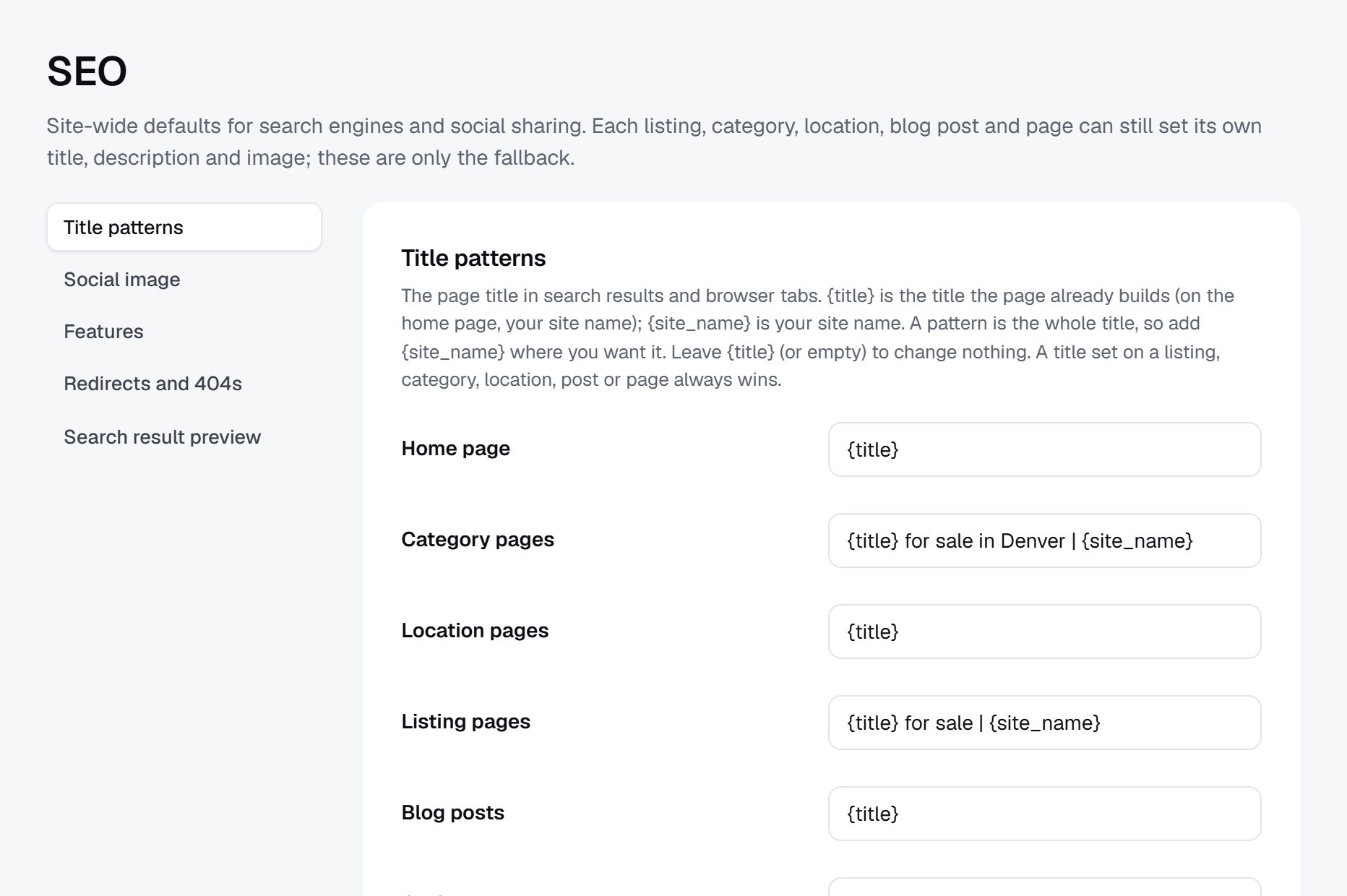
Each business, category and location has its own page; set the SEO title pattern once so pages read like "Braiders in Midtown Atlanta".
Content ideas
- How to find a stylist for your hair type in a new city.
- What to ask before a first color appointment.
- Silk press, relaxer or keratin: what each does.
- Fade names explained, with which barbers in town are known for each.
- A wedding hair timeline: when to book, when to do a trial.
Short stylist interviews with their own photos make strong pages and get shared by the stylists themselves.
Launch with one city and one specialty that is underserved.
Start with one city and lead with the specialty that is hardest to find there. In many cities that is textured hair or braiding; in others it is men's barbers who do kids' cuts or color specialists. One strong specialty page gives you something worth sharing.
Beauty has clear seasons. Prom season in spring and wedding season from late spring into fall drive event requests. Back to school brings kids' cuts. December is the busiest month for many salons and barbers. Launch six weeks before the season you lead with.
Partners
- Salon suite buildings: one manager can introduce you to every renter.
- Beauty and barber schools: graduates need clients right away.
- Wedding venues and photographers: they get asked for stylist names every week.
- Local creators who post hair content for your city.
Checklist
- Every storefront in the city imported and cleaned.
- Fifty independents added from suites and Instagram.
- Hair type and services filled in on the top hundred pages.
- Specialty pages live for at least five services.
- Event quote requests tested with two stylists.
- A post in each city group where people ask for stylist recommendations.
A worked example: Northstar Chair Guide, Minneapolis and Saint Paul.
One invented site shows how the pieces come together. Northstar Chair Guide is a fictional directory for Minneapolis, Saint Paul and the inner suburbs. Its founder rents a salon suite and does curly cuts. For two years she answered direct messages from strangers asking who else in town could handle curls, braids or a clean fade for a six-year-old, and she kept a note on her phone with the names. The directory began as that note.
How the categories are arranged
- Hair salons
- Curly and textured hair specialists
- Color studios
- Barbershops
- Kids' cuts
- Beard work and hot towel shaves
- Braiding and natural hair
- Braiders
- Loctitians
- Nails, lashes and brows
- Bridal and events
Who uses it
The biggest group is people with curly, coily or textured hair, many of them new to the Twin Cities for a job or a degree, who want someone skilled with their hair before their first big work event. Parents looking for a patient barber for a child come next, including parents of children with sensory needs who want a quiet chair at a quiet hour. In spring and summer, brides and wedding planners arrive looking for a hair and makeup team that will travel to a venue an hour away.
How it got going
She imported every salon, barbershop and nail studio in both cities, removed beauty supply stores and closed shops, and then spent her days off in three salon suite buildings, where the managers let her leave a flyer on every door. Within a month, sixty independent stylists had claimed pages and added photos of their own work. Local hashtags for braids and fades found another forty who worked only from Instagram. The first piece that got shared widely was a page of stylists who do curly cuts, with each stylist's own photos. The braiding page took the longest, because she asked every braider which styles they do, whether they supply hair and how long a typical appointment runs.
How it makes money
Pages are free for every business. Featured places on the curly, braiding and kids' cut pages are the main income, bought mostly by suite renters building a client list. Event quote requests run through wedding season, and a booth rental and job board brings in salon owners looking for stylists. A local beauty school rents a banner each spring before its new class starts. Ratings are never for sale.
| Business | Category | Key details |
|---|---|---|
| Loop and Coil Studio | Hair salons: curly specialists | Curly and coily cuts, dry cutting; mid price band; suite in Uptown |
| Lake Street Fade House | Barbershops | Fades, beard work, kids welcome; walk-ins on Sunday; Spanish spoken |
| Crowned by Amina | Braiding and natural hair | Knotless braids and loc retwists; hair supplied; home studio in Saint Paul |
| Prairie Color Bar | Hair salons: color studios | Balayage and gray blending; patch test before first color; open late Thursday |
| Twin Lakes Bridal Hair | Bridal and events | Groups up to eight; trial session offered; travels up to 50 miles |
The site and every business in this table are invented for the example.
The first 90 days, one stage at a time.
In a salon and barber directory, the storefronts are the easy half. Map data brings them in within a day. The independents, renting suites, booths or working from home studios, are the half that makes people choose your site, and they take weeks of visits and messages. Plan the first three months around that second half.
Choose a lead specialty before week one, the one that is hardest to find in your city, and fill it completely before you widen. A full curly hair page or braiding page gives you something to share; a thin page for everything gives you nothing.
Keep a list of every stylist you contact, where they work and how they prefer to be reached. Stylists move between salons and suites often, and that list is how you keep pages correct later. By week twelve, aim for every storefront listed, a strong independent count, specialty pages that people pass around, and event quote requests tested before the next wedding or prom season.
Respect the stylist's working day. Most cannot answer during appointments, so message in the evening or on their day off, keep it to two lines, and show them their draft page instead of describing it.
| Weeks | Focus | Done when |
|---|---|---|
| 1-2 | Pick the city and lead specialty; import salons, barbers and nail studios; remove supply stores | Every storefront has one clean page in the right category |
| 3-4 | Visit salon suite buildings and leave claim cards on every door | Three buildings covered and thirty suite renters have claimed pages |
| 5-6 | Search local hashtags; message home studios and mobile stylists | Forty independents added, each with their own photos |
| 7-8 | Fill in hair types, services and how to book on the busiest pages | The top hundred pages have hair types and services checked |
| 9-10 | Publish specialty and neighborhood pages and two client guides | Five specialty pages live, with the lead specialty complete |
| 11-12 | Test event quote requests; post in city groups; contact beauty and barber schools | Two stylists answer test requests and one school shares the site |
Ways to build a salon and barber directory, compared.
This niche asks for a few things that rule some options in or out. Each page needs a photo gallery the stylist can manage, checkbox fields for hair types and services that work as filters, opening hours, a clear line on how to book that points to the stylist's own system, claiming, and reviews with owner replies. You also need many small pages, such as braiders in one neighborhood, without writing each by hand.
Hiring developers
A custom build fits if you want something no directory product does, such as one page per stylist that follows them automatically when they move salons. It is a long project, and features that depend on another platform's data, such as pulling posts from social media, rely on access terms you do not control.
Installing a script or WordPress plugin
A directory script or WordPress plugin on your own hosting covers galleries and listings and gives you the code. Galleries are where the work shows up: image storage, resizing, spam uploads and copied photos all land on you, alongside updates and backups.
A hosted builder
A hosted builder such as Yclas looks after the server and software, leaving your time for suite visits and stylist messages. Check for checkbox filters, owner galleries, claiming and owner replies before you choose any builder. Also see how a page tells people to book, since every stylist uses something different, from a phone number to a booking app link to walk-ins only, and the page should make that obvious at a glance.
| Route | Fits when | Watch out for |
|---|---|---|
| Custom development | You want stylist pages that move with the stylist, or another feature nobody sells | Long build time and dependence on other platforms' data access |
| Script or WordPress plugin | You already host sites and want the code in your hands | Image storage, copied photos, spam and updates are all yours to handle |
| Hosted builder | You want your hours on suite visits and stylist outreach | Check hair type filters, galleries, claiming and owner replies first |
| A shared spreadsheet or social page | You want to test interest with one specialty before building | No search filters and no way for stylists to update their own entry |
What a salon and barber directory costs to run.
The software is the smallest part of the bill. Most of the cost is your time in the first months: finding the first listings, answering questions and checking what gets posted.
Costs here are small: the Google Places import on your own key, a few visits to salon suite buildings, and possibly some paid posts on Instagram aimed at your city. Photo galleries add storage as stylists claim pages.
| Cost | Typical range | On Yclas |
|---|---|---|
| Domain | $10 to $20 a year | Your own, with SSL included |
| Software and hosting | $0 to $100+ a month, plus plugins and updates | Starter $19 a month, Professional $99 |
| Design | $0 to $100 for a theme, or a designer | 109 looks included |
| Payment fees | About 3% per payment | Your Stripe or PayPal fees; Yclas takes nothing |
| Business data | Free if you collect it, or a few cents per page of Google results | Paid to Google, with your key |
| Your time | 5 to 10 hours a week at the start | Finding listings, moderation, support |
Mistakes that sink salon and barber directories.
- Listing only storefronts. The stylists people struggle to find are in suites, rented booths and home studios. A directory built from map data alone is a worse copy of the map. Budget most of your early time for the independents.
- One page per shop when clients follow the barber. In many barbershops each barber has a following, and when a barber leaves, the clients go too. Ask each shop whether its barbers want their own pages, and name barbers and their specialties on the shop page if not.
- Trying to take bookings. Salons already use booking apps, phones or walk-ins, and they will not switch systems for a directory. Show how each business books and send people there. Your value is helping them choose, not holding the appointment.
- Vague hair type labels. A tag like "all hair types" tells a person with tightly coiled hair nothing. Use specific checkboxes for wavy, curly, coily and textured hair, and ask stylists to tick only what they do every week.
- Photos nobody checked. Copied portfolio photos are common, and one exposed case makes every gallery look suspect. Ask for the stylist's own work, act fast on reports from the original artist, and remove repeat offenders.
- Labeling braiders as licensed or unlicensed without checking. Rules for braiding, threading and lashes vary widely, and some places exempt natural hair braiding from cosmetology licensing. Leave the label off unless you have checked it yourself, and check the rules where you operate.
- Exact prices on every page. Salon prices depend on hair length, thickness and time, and an exact figure goes out of date with the next price change. Use a price band set by the owner and a starting price where the stylist wants one.
- Pages that never get rechecked. Stylists change salons, open suites and go on leave more often than most businesses move. Ask claimed owners to confirm their page each season, and hide pages that stay silent and cannot be reached.
- Forgetting men's and kids' grooming beyond barbers. Men looking for color or long-hair cuts, and parents of children with sensory needs, are poorly served by both salon and barber listings. A checkbox for sensory-friendly cuts and one for men's color give these people a reason to use your site and tell others.
- Seeding with the trade, not the clients. It is easy to spend all your effort on stylists and forget that someone has to search. Post your specialty pages where people already ask, such as city groups and campus boards, as soon as each one is complete.
Glossary of salon and barber directory terms.
Stylists, barbers and clients use these words in searches and reviews, so your pages should too.
| Term | What it means |
|---|---|
| Booth rental | An arrangement where a stylist pays the salon a set rent for a chair and keeps their own clients and income. |
| Commission salon | A salon where stylists are paid a share of the services they perform and the salon owns the client list. |
| Salon suite | A small private room rented by one stylist inside a building of many such suites. |
| Balayage | A hand-painted highlighting technique that gives a soft, graduated color. |
| Silk press | A method of straightening natural hair with heat for a smooth, glossy finish without chemicals. |
| Loctician | A stylist who starts, maintains and repairs locs. |
| Knotless braids | Braids started with the person's own hair and extensions fed in gradually, putting less tension on the scalp. |
| Fade | A haircut where the hair shortens gradually down the sides and back, named by where it starts, such as low, mid or high. |
| Lineup | Sharp edging along the hairline and beard with clippers or a razor, also called an edge-up. |
| Patch test | A small skin test with a color or lash product a day or two before the service to check for a reaction. |
| Taper | A haircut that shortens around the ears and neckline but keeps more length than a fade. |
| Toner | A product applied after lightening to adjust or neutralize the shade of the hair. |
| Keratin treatment | A smoothing treatment that reduces frizz and makes hair easier to style for several weeks or months. |
| Cosmetology license | The state license that covers hair, skin and nail services in the US, with separate barber licenses in many states. |
The same steps for a salon and barber directory on Yclas.
- Describe your directoryThe setup wizard writes the categories, an About page and example listings from one sentence.
- Add fieldsHours, services, areas served, prices: the details people search by, as filters.
- Fill itImport businesses from a spreadsheet or Google Places, then check them.
- Bring owners inOwners claim their page, update it and answer reviews.
- EarnSwitch on featured places, banners or memberships when visits arrive.
What does it really cost to start a salon directory for one city?
The money side is small: software, a domain and Google's fee for the business import. Most of the cost is time spent finding independent stylists in suites and on Instagram.
Do salons need a license to be listed?
Licensing rules for hair, nails, lashes and braiding differ by state and country, so check the rules where you operate. Only label a business licensed when you have checked it yourself.
Should I take bookings for salons?
No. Show how each salon takes bookings, whether walk-ins, phone or their own booking site, and let them keep their system.
How do I get independent stylists to join?
Visit salon suite buildings, message stylists whose work you find on local hashtags, and offer them a free page that shows the hair types and services they want more of.
How do I make money from salons and barbers?
Featured places on specialty pages, memberships for independents, event quote requests for weddings and proms, and banners for beauty schools and supply stores.
What if a stylist uses someone else's photos?
Remove them when reported and ask the stylist for their own work. Repeated copying should lose the page.
Can I compete with booking apps and Google Maps?
Yes, by listing everyone, including stylists with no booking app, and letting people filter by hair type and specialty, which those platforms do not do well.
Should every barber in a shop get their own page?
Ask the shop. Barbers with their own following often want a page so clients can find them by name, while some shops prefer one page that lists every chair. Either way, name each barber's specialties so people can ask for the right person.
What happens to a page when a stylist moves salons?
Update the address and keep the stylist's reviews and photos with them, since clients follow the person. Remove the stylist from the old salon's page and ask the old salon to confirm who still works there.
Can home-based stylists be listed safely?
Yes. Show the neighborhood or a nearby cross street rather than a home address, and let the stylist share the exact location after a client books with them directly. Ask each home stylist how much they want shown before the page goes live, and respect the answer.
Do nail and lash studios belong in the same directory?
They fit well as their own categories, because the same people often look for hair, nails and brows. Keep their fields separate so nail filters such as gel or acrylic do not clutter the hair pages. Nail salons also bring frequent visitors, since many people go every two or three weeks.
Do stylists need client permission to post before and after photos?
Many stylists ask clients before posting, and it is good practice to require it in your photo rules. Privacy and image rules differ by place, so check the rules where you operate and remove any photo a client asks you to take down.
Related pages.
The parts of Yclas this leans on.
Every city has great stylists nobody can find. Put them on the map.
Describe your site in a sentence and the setup wizard writes the categories, example listings and a look. Free for 15 days, no credit card.
Start my directory