How to build a yoga studio directory that helps people find the right class.
This guide covers a yoga studio directory from the first decision to launch: which city and which students to serve, the styles, levels and studio details people filter on, how featured places and memberships pay for it, where the first studios come from, how to keep listings honest, the searches worth ranking for, and the seasons that matter.
Free for 15 days · No credit card · Plans from $19 a month
Decide which students you serve and in which city.
People looking for yoga rarely search for "a gym". They want a specific thing: a heated Vinyasa class before work, a gentle Hatha class for a stiff back, prenatal yoga in the third trimester, an Iyengar teacher who uses props, a drop-in class while visiting for a week. A map search gives them names and star ratings, but not style, level, room temperature or what a first class costs.
The class booking apps fill part of that gap, but they show only the studios that use or partner with them. Small studios, teachers who rent a church hall, community center classes and outdoor sessions in the park are often missing. A directory that lists every place to practice in one area, booking app or not, is the complete picture students cannot get anywhere else.
Pick your angle
- One city or metro area, split into neighborhoods. This is the usual starting point and the easiest to fill.
- A style or audience across a wider region: hot yoga, prenatal and postnatal, adaptive and chair yoga, yoga for seniors.
- Teacher training: people researching a 200-hour or 300-hour course compare schools across a whole state or country.
- Travelers in a tourist city who want drop-in classes and English-speaking teachers.
Before you choose, look at where students ask today: local Facebook groups ("any good beginner yoga near downtown?"), Reddit city threads, studio noticeboards and the front desks of physical therapy clinics. The questions people repeat there are the filters your directory needs.
Your edge is completeness: every studio and teacher in one area, with the details a booking app leaves out.
Describe each studio with the details students filter on.
Keep categories few and broad, then put the real decision points in fields. A student choosing a studio asks three things first: which style, is it right for my level, and how much is a first class. After that come the practical details: heated room or not, showers, mat rental, parking, a class at 6:30 in the morning.
Write style names exactly as studios use them (Vinyasa, Hatha, Ashtanga, Iyengar, Yin, Kundalini, restorative, Bikram-style hot) and let a studio tick several. Levels work best as a fixed list: beginner friendly, all levels, intermediate, advanced. Ask for an intro offer as a separate field, because it is the number new students compare most.
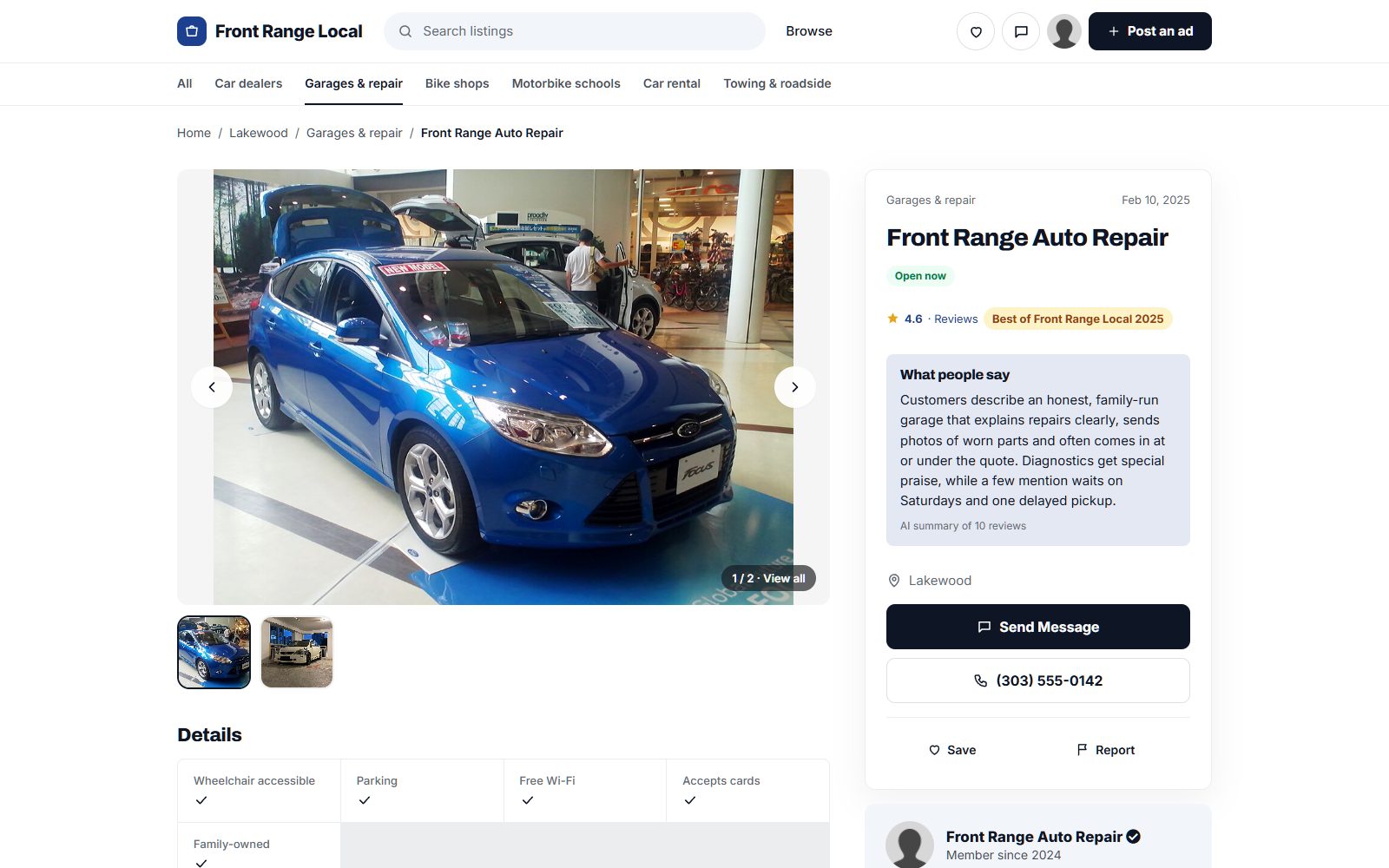
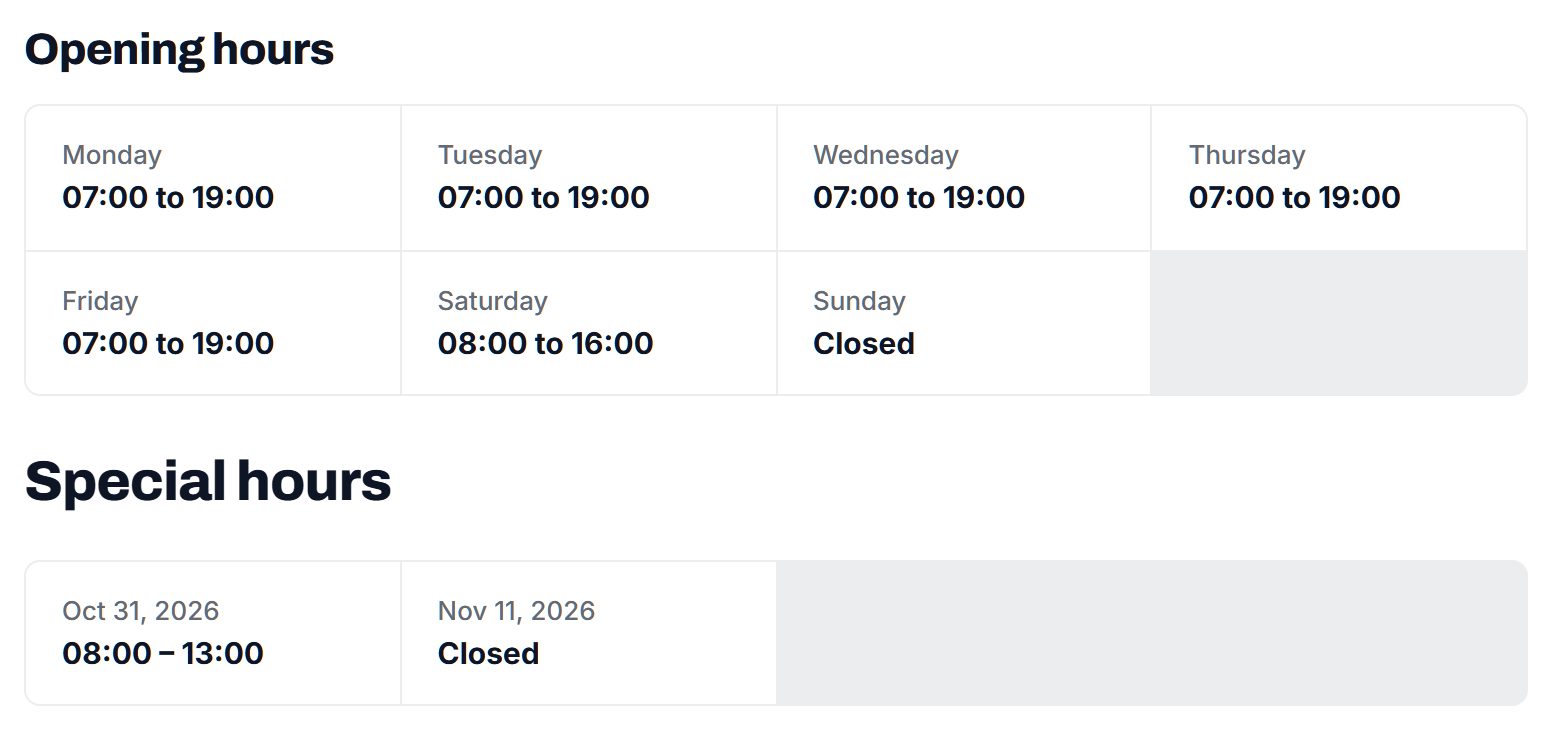
Opening hours show when the front desk or studio is open; for the weekly timetable, ask studios for a short text summary such as "weekday classes at 6:30, 12:15 and 6 pm" and remind them to update it each season. In Yclas, custom fields can be text, numbers, dropdowns, checkboxes or dates, required or optional, and each one becomes a search filter.
| Category | Example listings | Fields students filter on |
|---|---|---|
| Yoga studios | Neighborhood Vinyasa studio, Iyengar institute | Styles taught, levels, drop-in price, intro offer, mat rental, showers |
| Hot yoga | Heated studios, infrared rooms | Room temperature range, class length, towel rental, beginner classes |
| Independent teachers | Private sessions, classes in halls and parks | Styles, private session price, travels to clients, online sessions |
| Prenatal, kids and adaptive | Prenatal series, chair yoga, teen classes | Audience, trimester or age range, accessible entrance, class size |
| Teacher training | 200-hour and 300-hour courses | Hours, format (intensive or weekends), registered school, start dates, tuition |
| Retreats and workshops | Weekend workshops, retreat centers | Dates, length, accommodation included, level, language |
Add class languages, parking and wheelchair access as checkboxes: they are quick to fill and travelers use them.
Earn from studios once students are visiting.
Studios are small businesses with tight margins, and most already pay for a booking system, a website and some local ads. They will pay you when you can show that students find them through your directory, not before. List every studio free at the start, including the ones you will later sell to.
What studios pay for
- Featured places at the top of a style or neighborhood page. Hot yoga and teacher training are the categories where one new student or trainee is worth the most to the studio.
- Studio memberships: a yearly fee for a richer page with more photos, teacher bios, a workshop section and a badge. Sell it as an alternative to paying for ads.
- Quote requests for corporate wellness classes, private group sessions and wedding morning yoga. These are real leads for teachers and are easy to price per request or include in a membership.
- Banner spaces for yoga wear shops, mat brands, physical therapists, massage clinics and retreat organizers.
Keep featured places clearly labeled. Students trust a directory less once they suspect the top results are simply the ones that paid.
| Model | Works when | Switch it on |
|---|---|---|
| Featured places | Style and neighborhood pages get steady visits | When studios ask how to appear higher |
| Studio memberships | Studios update their pages and answer reviews | After a few dozen claimed pages |
| Quote requests | Companies and groups ask for private classes | Once requests arrive without promotion |
| Featured teacher training | People compare courses across the region | Before the January and summer course intakes |
| Banner spaces | Local wellness businesses want your visitors | When you can share monthly visitor numbers |
Fill the map with studios before you promote it.
A yoga directory is easier to seed than most, because studios are public businesses with storefronts, websites and posted timetables. The aim is to list every place to practice in your first area before telling students about it.
- Import the studios. Search Google Places for yoga studios, hot yoga and Pilates and yoga studios in your city. With your own Google key, Yclas imports each one's name, address, phone, website and opening hours (no photos come across). Then add styles, levels and prices by hand from each studio's own site.
- Add the places a map search misses. Gyms and YMCAs with yoga on the timetable, community centers, library classes, parks department programs, university recreation centers and churches that rent rooms to teachers. Collect these in a spreadsheet and import it as a CSV.
- Find independent teachers. Ask studios who teaches there, look at local yoga Instagram accounts, and check teacher training schools' graduate lists where they are public. Invite teachers to create their own pages.
- Ask owners to claim their page. Email each studio a short note: "your studio is listed, claim it to add your timetable and intro offer". Claimed pages are the ones that stay current.
Public registries such as Yoga Alliance's school directory are useful to check that a training school exists. Use them to check, not to copy their text.
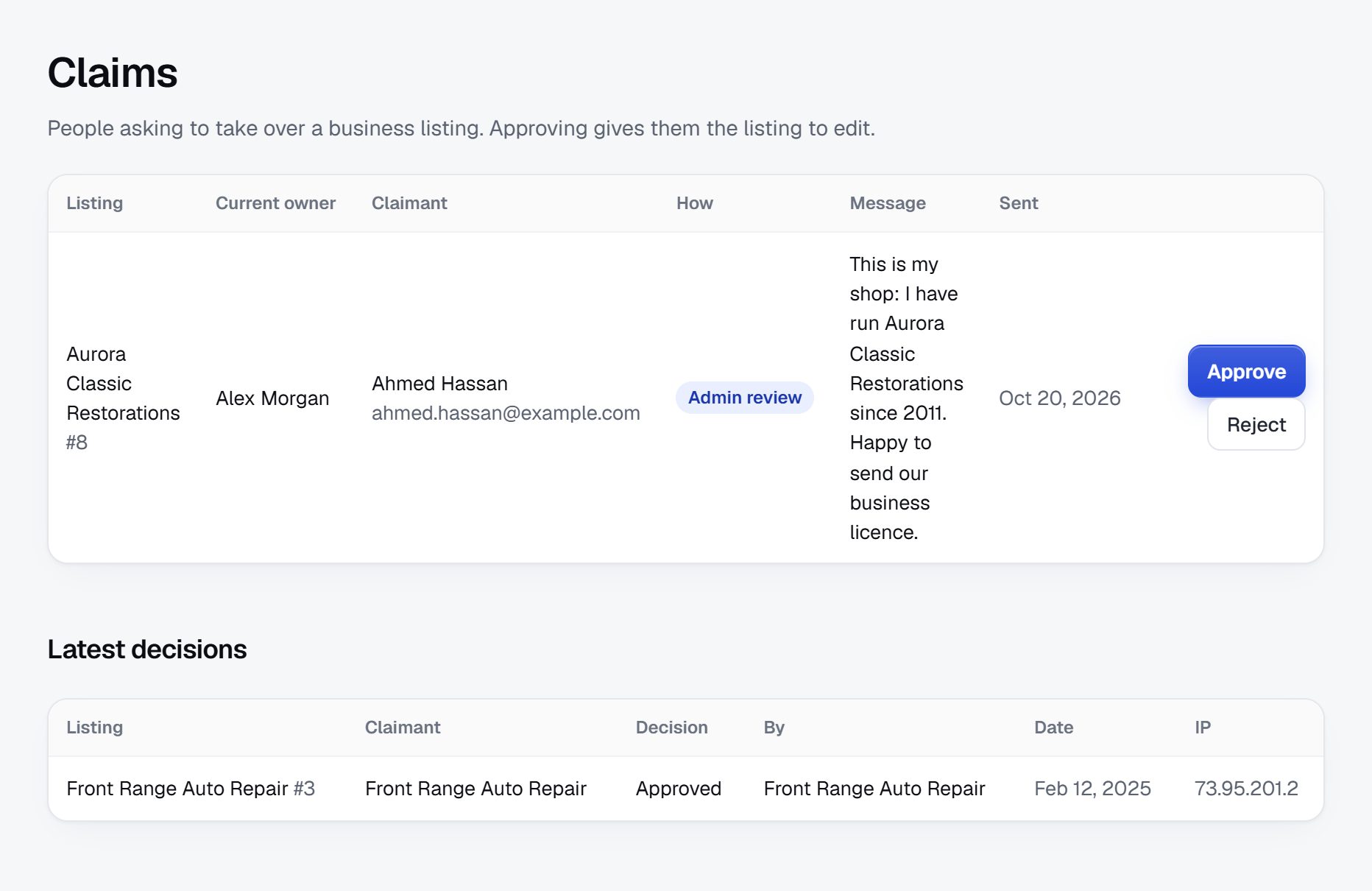
Keep listings current and reviews fair.
The most common problem on a yoga directory is not fraud, it is stale information. Studios change timetables every season, raise drop-in prices, move, and close. A student who turns up for a 7 am class that ended last spring will not trust your site again.
Rules worth writing down
- Date every page. Show when the studio last updated its details, and email owners every few months to confirm.
- Mark closures fast. Let visitors report a closed studio and check reports within a few days.
- Reviews from students only. Watch for a burst of five-star reviews written the same week, or one-star reviews from a rival studio nearby. Studios can reply, which matters when a review is about a single bad class.
- No medical claims. Do not let pages promise that yoga cures back pain, anxiety or other conditions. Ask hot yoga studios to state the room temperature so students with health concerns can decide.
- Credentials as stated. Teacher registration with bodies such as Yoga Alliance is a voluntary credential in most places. Show it as "stated by the studio" and check the rules where you operate before calling anyone certified or licensed.
Reports about a teacher's conduct are serious and do not belong in public reviews. Remove the review, ask the person to contact the studio or the authorities, and keep a record of what you did.
A directory that is right about Tuesday's 6 am class earns more trust than one with twice the studios.
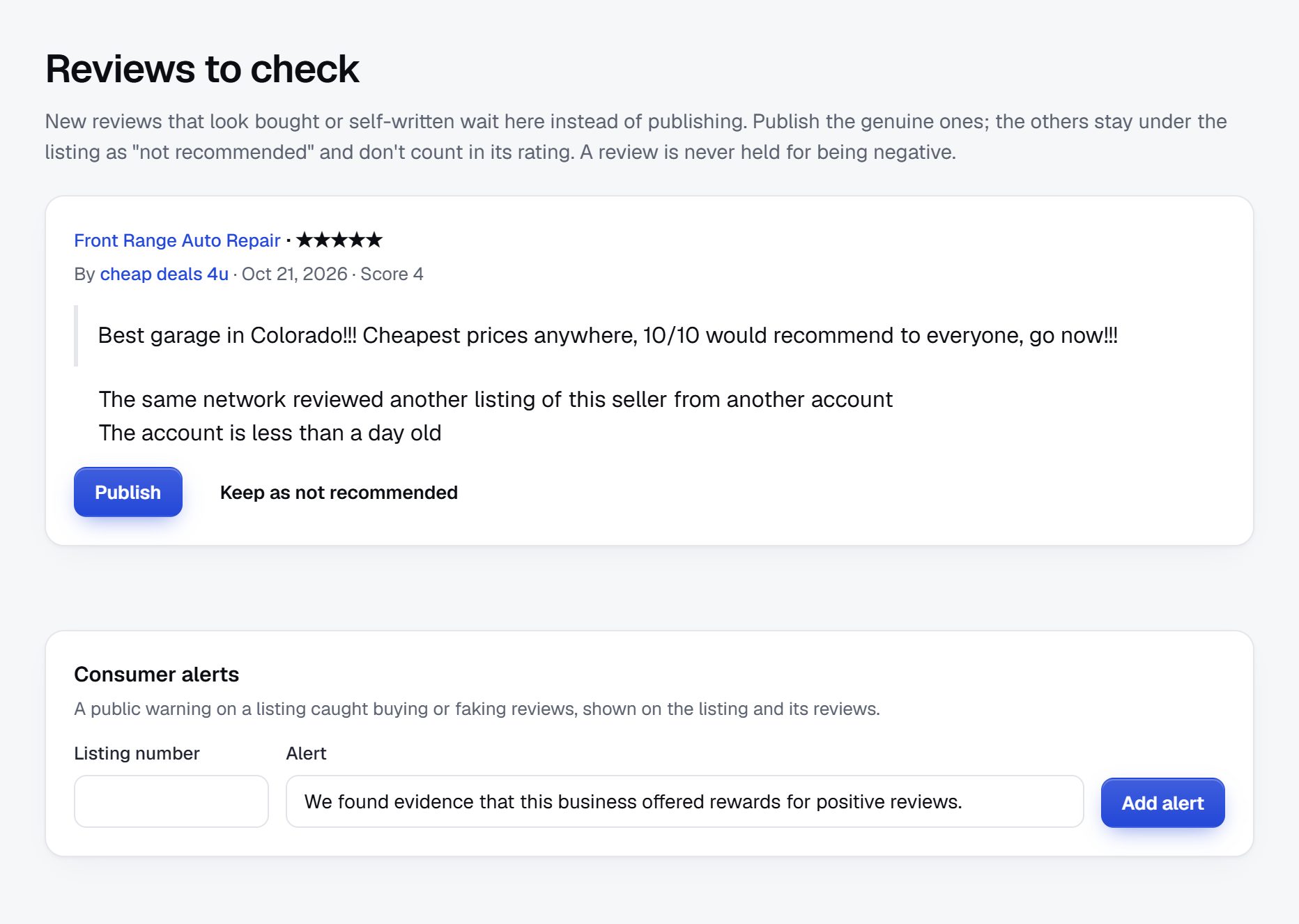
Rank for the way students search for classes.
Yoga searches are local and specific. People search "yoga studios near me", "hot yoga in Austin", "beginner yoga classes Denver", "prenatal yoga Brooklyn", "yin yoga Saturday morning" and "200 hour yoga teacher training Colorado". Each of those should land on a page that already answers it.
Pages to build
- City and neighborhood pages, each listing every studio in the area with a short introduction you write yourself.
- Style pages per city: hot yoga in the city, Iyengar in the city, yin in the city. These are the searches the big sites answer worst.
- Audience pages: prenatal, seniors, beginners, men's classes, yoga in Spanish.
- Teacher training pages by state, with format, hours and start dates.
Content students read
- "Vinyasa or Hatha: which to try first", written for nervous beginners.
- A drop-in price guide for your city, built from the prices studios list.
- "What to bring to your first hot yoga class."
- A seasonal round-up of new student offers each January and September.
Every studio page should carry the studio name, neighborhood and main styles in its title. Set the title pattern once so new pages follow it without extra work.
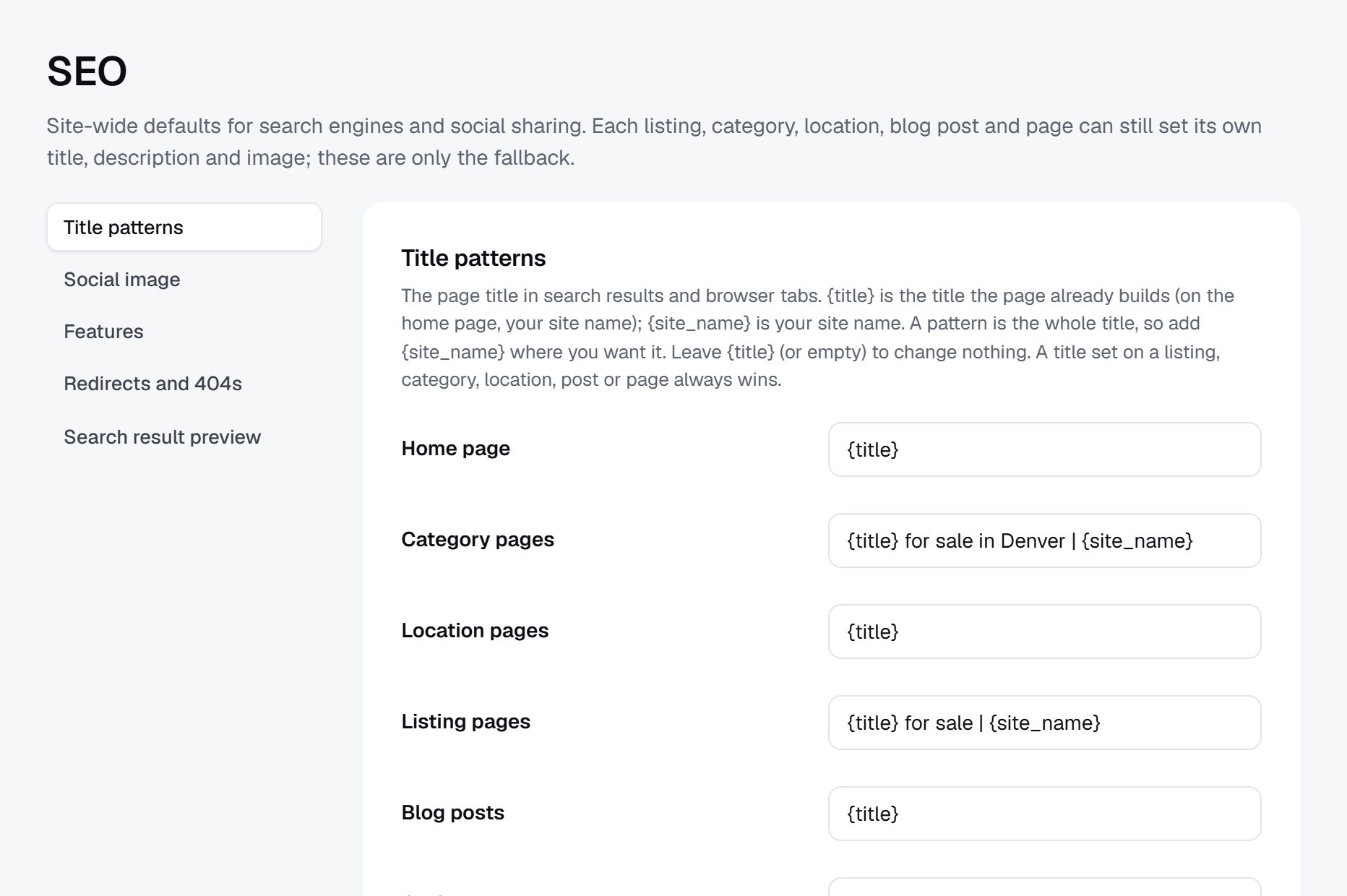
Launch in one city when people start new routines.
Yoga has two clear moments when people look for a new studio: the first weeks of January, and September when routines restart after summer. International Day of Yoga on June 21 brings free outdoor classes in many cities and a lot of local press. Time your launch so the directory is full a few weeks before one of these.
Partners who send students
- Physical therapists and chiropractors, who are asked about gentle classes every week.
- Prenatal care providers and parent groups, for prenatal and postnatal yoga.
- Running clubs and climbing gyms, whose members want mobility classes.
- Relocation agents and coworking spaces, for people new to the city.
Launch checklist
- Every studio in your first area listed, with style, level and drop-in price filled in.
- At least a third of studio pages claimed and confirmed by owners.
- City, neighborhood and style pages written, with a short introduction on each.
- A clear way to report a closed studio or wrong timetable.
- A short email to every studio on launch day, asking them to share their page with students.
- A New Year or September guide to intro offers, ready to share in local groups.
Once the first city works, add the next one nearby and repeat the same steps, starting with the import and the claim emails.
A worked example: a yoga guide for Chicago's North Side.
Picture a fictional directory called Lakeshore Mat Guide, covering yoga on the North Side of Chicago, from the Loop up to Evanston. The area has large branded studios along the main streets, a handful of heated rooms, and dozens of teachers who rent park district fieldhouses, church basements and the back rooms of dance schools. From May to September, students also practice outdoors along the lakefront, which no booking app shows.
Categories
- Studios
- Heated and hot yoga
- Unheated studios
- Community and donation classes
- Teachers
- Private sessions
- Classes in halls and parks
- Special audiences
- Prenatal and postnatal
- Seniors and chair yoga
- Training and retreats
Who it serves
New residents who moved for work and want a studio near their train stop, office workers hunting for a lunchtime class in the Loop, pregnant students searching for a prenatal series that starts next month, and older adults who want a gentle chair class close to home. A smaller group compares 200-hour teacher trainings, and those visitors stay on the site the longest. Conference visitors staying in downtown hotels turn up as well, almost always looking for an early class within walking distance.
How it started
The founder taught evening classes in a park fieldhouse for six years and noticed that her students found her through a paper flyer, never through a search. Over one winter she put every studio and hall class between the Loop and Evanston into a spreadsheet, imported it, and spent January walking into studios with a printed copy of each owner's page. About a third claimed their pages within two months, most of them the small, independent rooms.
How it makes money
In its second year the guide sells featured places on the hot yoga and teacher training pages, where one new student is worth the most to a studio. A handful of studios pay a yearly membership for a fuller page with teacher bios and a workshop list. Corporate wellness requests for lunchtime classes go to the teachers who opt in, and a physical therapy clinic and a mat shop take banner spaces on the neighborhood pages. Basic listings stay free for every studio and teacher. The founder still teaches two classes a week, so she hears about studio closures and new teachers well before anyone files a report.
| Listing | Drop-in or intro price | Key details |
|---|---|---|
| Clark Street Heated Vinyasa | $22 drop-in, two weeks unlimited for $40 | Room heated to the high 90s, mat and towel rental, showers, 6:15 am weekday classes |
| Fieldhouse Hatha with Mara | $12 drop-in, cash or app payment | Beginner friendly, park district fieldhouse, bring your own mat, Tuesday and Thursday evenings |
| Lakeview Iyengar Center | $25 drop-in, $30 first class with orientation | Props provided, classes capped at 14, levels 1 to 3, teacher training information evenings |
| Bump and Breathe Prenatal Series | $120 for six weeks | Second and third trimester, Saturday mornings, partner class in week five |
| Evanston Library Chair Yoga | Free, sign up at the front desk | Seniors, wheelchair accessible room, Wednesdays at 10 am |
The studios, teachers and prices in this table are made up for the example.
The first 90 days, counted back from January or September.
Yoga has two natural deadlines, the first week of January and the week after Labor Day, so count 12 weeks back from whichever comes next and work toward that date. A launch in late September means starting in early July, when studios run lighter summer timetables and owners have time to talk.
The first month is desk work: choosing the area, setting the fields, building the list. The second month is about people: walking into studios, tracking down the teachers in halls and parks, and getting owners to claim their pages. The third month turns the list into pages students read, and puts the directory in front of the people who already field questions about classes.
Keep one number in view the whole time: the share of studio pages with a current timetable summary and intro offer. Students judge the site by the first two or three pages they open, and a page showing last season's schedule does more harm than a page with no schedule at all.
| Weeks | Focus | Done when |
|---|---|---|
| 1-2 | Pick the neighborhoods; set the style list, levels, heated or not and the intro offer field | Two studio owners and one independent teacher have checked a sample page |
| 3-4 | Import studios from Google Places; add gyms, community centers and park classes from a spreadsheet | Every place to practice in the first area is on the map, even if details are thin |
| 5-6 | Fill in styles, levels and drop-in prices from each studio's own site | Nine out of ten pages show a style, a level and a price |
| 7-8 | Visit studios and send claim invitations; find teachers through studio staff and local yoga accounts | A third of studios have claimed their page and confirmed the timetable |
| 9-10 | Write neighborhood, style and audience pages, plus a first-class guide for beginners | Each page has its own introduction and no empty category appears in the menu |
| 11 | Brief physical therapists, prenatal providers and running clubs; prepare the intro offer round-up | Five partners have agreed to share the directory in launch week |
| 12 | Launch, email every studio a link to its page, post the round-up in local groups | Students are contacting studios through the site and closure reports are checked within days |
Ways to build a yoga directory, and what students need from it.
A yoga directory needs a particular mix: a map split by neighborhood, filters for style, level and heat, opening hours, claims so studios can keep timetables current, reviews with owner replies, a quote request form for corporate and private classes, and proper pages for teachers who have no address at all. It does not need class booking. Studios already run their own booking systems, and students expect to book there.
Building with developers makes sense if your idea depends on something unusual, such as reading live class schedules from each studio's booking software. That means agreements with each booking provider, and repair work every time one of them changes how it shares data.
A directory script or WordPress plugin on your own server suits a teacher or wellness writer who already runs a WordPress site with readers. You get full control, and you also take on updates, fake sign-ups, backups and the speed of pages full of studio photos.
A hosted builder such as Yclas covers claims, hours, maps, reviews, quote requests and featured places without a server to maintain, so your hours go into visiting studios and keeping details right.
Whichever route you take, test one thing early: can a teacher who rents a church hall on Tuesdays get a proper page without a storefront? Many directory tools assume every listing is a shop with a door, and that shuts out the teachers students find hardest to locate.
| Route | Fits when | Watch out for |
|---|---|---|
| Custom build with developers | Live class schedules or a feature no directory tool offers is the core idea | Connections to booking systems that break, and months of building before the first student visits |
| A WordPress plugin or script on a server you rent | You already publish a yoga blog with steady readers | Plugin conflicts, security updates and slow pages heavy with studio photos |
| Hosted directory builder | You would rather spend your time on studios and teachers than on servers | Check that teachers without a storefront and multi-select style fields are both supported |
What a yoga studio directory costs to run.
The software is the smallest part of the bill. Most of the cost is your time in the first months: finding the first listings, answering questions and checking what gets posted.
Beyond the site itself, budget for Google Places usage on your own key during the import, and for your time checking timetables each season. Some founders also pay for a small local ad push in January.
| Cost | Typical range | On Yclas |
|---|---|---|
| Domain | $10 to $20 a year | Your own, with SSL included |
| Software and hosting | $0 to $100+ a month, plus plugins and updates | Starter $19 a month, Professional $99 |
| Design | $0 to $100 for a theme, or a designer | 109 looks included |
| Payment fees | About 3% per payment | Your Stripe or PayPal fees; Yclas takes nothing |
| Business data | Free if you collect it, or a few cents per page of Google results | Paid to Google, with your key |
| Your time | 5 to 10 hours a week at the start | Finding listings, moderation, support |
Mistakes that send students back to the map app.
- Listing only studios with storefronts. The teachers in church halls, park fieldhouses and library rooms are the reason a student would use you instead of a map search. Add them from the start, even with fewer details, and invite them to complete their pages. Outdoor summer classes deserve a seasonal note, so nobody turns up at the lakefront in January.
- Treating style names loosely. Lumping Yin, restorative and gentle Hatha together, or calling every heated class Bikram, sends students into the wrong room. Use the names studios use, let them pick several, and avoid trademarked style names unless the studio uses them itself.
- Showing a full weekly timetable you cannot keep current. Timetables change every season and sometimes every month. A short summary of typical class times, with a last updated date and a note to confirm with the studio, is more honest than a detailed grid that goes stale by March.
- Burying the intro offer. New students compare the price of a first class or first month more than anything else. If it sits inside a paragraph, they leave to find it on the studio's own site. Give it a field of its own and show it near the top of the page.
- Letting health claims onto pages. Descriptions that promise to cure anxiety, detox the body or fix a herniated disc invite complaints and make the whole directory look careless. Edit them out when you approve a page, and keep descriptions to what happens in the class.
- Selling featured spots before students arrive. Studio owners talk to each other. If the first studios pay for a top spot and see nothing, the story spreads through the local yoga community fast. Wait until you can show each studio the visits and contacts its page received.
- Writing only for experienced students. Many visitors have never taken a class and are nervous about the first one. A directory full of Sanskrit names and no guidance loses them. Add a beginner filter, a first-class guide and a plain explanation of each style.
- Hiding teacher training among the studios. People comparing 200-hour courses read longer, travel further and spend far more than drop-in students. Mixed into the studio list, training schools disappear. They also ask different questions, about hours of contact time, lead trainers and payment plans. Give training its own category, fields and pages by state.
- Launching in midsummer. July and early August are quiet for studios, with regulars away and owners on lighter timetables. A launch then lands on an empty audience. Aim for the weeks before September or January instead.
Yoga terms a directory founder should know.
Studio owners, teachers and students use these words, and your fields should use them correctly.
| Term | What it means |
|---|---|
| Vinyasa | A flowing style where poses are linked with the breath, often sold as flow yoga. |
| Hatha | A broad name for physical yoga that studios often use for slower classes holding each pose. |
| Ashtanga | A demanding style built on a fixed sequence of poses practiced in the same order every time. |
| Iyengar | A style focused on precise alignment that makes heavy use of blocks, straps and other props. |
| Yin | A slow style in which floor poses are held for several minutes each. |
| Restorative | A very gentle class where props fully support the body so students can rest in each pose. |
| Hot yoga | Classes taught in a heated room, at a temperature each studio sets and often well above 90 degrees. |
| Mysore | An Ashtanga format where each student works through the sequence at their own pace while the teacher helps one by one. |
| Drop-in | A single class paid for on the day, with no membership or class pack. |
| Class pack | A bundle of classes bought in advance, usually cheaper per class than paying for drop-ins. |
| Intro offer | A discounted first class, week or month for students who are new to the studio. |
| RYT-200 | A Yoga Alliance designation for a teacher who has finished a registered 200-hour training. |
| RYS | Registered Yoga School, a Yoga Alliance listing for a school whose training meets its standards. |
| Props | Blocks, straps, bolsters and blankets that support students in poses. |
The same steps for a yoga studio directory on Yclas.
- Describe your directoryThe setup wizard writes the categories, an About page and example listings from one sentence.
- Add fieldsHours, services, areas served, prices: the details people search by, as filters.
- Fill itImport businesses from a spreadsheet or Google Places, then check them.
- Bring owners inOwners claim their page, update it and answer reviews.
- EarnSwitch on featured places, banners or memberships when visits arrive.
What does it cost to start a yoga studio directory?
Mostly time. Apart from the site and a domain, the main expense is the hours spent adding styles, prices and timetables for each studio, plus small Google Places charges during the import.
Do I need permission to list a studio?
Studio names, addresses and opening hours are public business information, and most directories list them without asking. Write your own descriptions, do not copy studio photos or text, and remove a page if an owner asks. Check the rules where you operate.
Can students book classes through the directory?
No, and they do not need to. The directory helps them choose; they then contact the studio or use the studio's own booking system, which most studios already have.
How do I compete with the class booking apps?
Those apps show only studios that work with them. List every studio, teacher and community class in your area, and add the details they leave out, such as room temperature, prop use and beginner friendliness.
When will studios pay me?
When they can see students coming from your pages. Share visit and contact numbers with each studio, and offer featured places or memberships once a few owners ask how to stand out.
Should I list independent teachers or only studios?
List both. Teachers who rent halls or teach in parks are the hardest to find anywhere else, and they are often the first to claim their pages and share them.
How do I keep timetables up to date?
Ask owners to claim their pages, show a last updated date, and email every studio at the start of each season. Pages that go a long time without an update can carry a gentle note to check with the studio.
Should I include online and livestream classes?
Include the studios and teachers that offer them, but as a field or a separate category, not mixed in with classes in a room. Someone searching by neighborhood wants a studio nearby, while someone looking for online classes does not care about the map.
How do I list a studio that also teaches Pilates, barre or fitness?
List it under yoga if yoga is a real part of its timetable, and mention the other classes in the description. A general fitness directory is a different site with different filters, so keep your focus.
Can I review studios myself?
Your own notes from a visit work well as an editorial introduction, clearly labeled as yours. Reviews should come from students, and keeping the two apart lets readers tell which is which.
Should I list studios that belong to national chains?
Yes. Chain locations are part of what students choose between, and leaving them out makes the directory look incomplete. Give them the same fields as everyone else so the comparison stays fair.
How many studios does a city need before launch?
There is no set number: what matters is that the area you name is complete. Three neighborhoods covered well make a better launch than a whole metro area with half its studios missing.
Related pages.
The parts of Yclas this leans on.
You have the plan. Now put every studio in your city on one map.
Describe your site in a sentence and the setup wizard writes the categories, example listings and a look. Free for 15 days, no credit card.
Start my directory