How to build a private school directory that parents trust with a big decision.
This guide walks through a private school directory for parents: picking the area and kind of school, the grade, tuition and approach details families filter on, how featured schools, memberships and admissions inquiries pay for it, where to find every school, how to handle claims and reviews carefully, the searches to rank for, and the admissions calendar.
Free for 15 days · No credit card · Plans from $19 a month
Serve parents who are choosing, not just browsing.
Choosing a private school is one of the most researched decisions a family makes, and the information is scattered. School rating sites focus mainly on public schools. Private schools each have their own website, written to sell, with tuition often buried in a PDF. Parents end up building their own spreadsheet from open house notes and other parents' opinions.
A directory that puts every private school in one area side by side, with grades, tuition, approach and class size in the same format, saves families weeks. It also helps schools that are small, new or far from the city center, which parents may never hear about otherwise.
Who searches
- Local parents looking at kindergarten, middle school or high school entry.
- Relocating families: corporate transfers, military families, diplomats and expats who need a school before they choose where to live.
- Parents of children with specific needs: learning differences, giftedness, a particular language or faith.
- Families switching mid-year after a bad experience, who need to know which schools have places now.
Angles
- One metro area, all private schools from preschool to grade 12.
- One approach across a region: Montessori, Waldorf, faith-based, classical.
- International schools in one country, for relocating families.
- Boarding schools, or schools for students with learning differences, nationally.
Where do parents ask today? Neighborhood parent groups, school-choice forums, relocation agents and expat groups, where the same "which school would you choose" thread appears every spring.
Compare schools on grades, tuition, approach and support.
Parents start with three filters: the grades a school serves, the tuition they can afford, and the approach or affiliation they want. Everything else narrows the shortlist: class size, before and after care, transport, languages, and support for learning differences.
Keep categories to the big stages of schooling, and put approach and affiliation in fields, because many schools span several stages. A K-8 Montessori school should appear for both elementary and middle school searches. Add a checkbox for schools that accept students mid-year, because families switching schools in October or February filter on nothing else first.
Tuition is sensitive. Ask schools for the published range per year and whether financial aid or sibling discounts exist, and show the year the figure applies to. Application deadlines and open house dates are worth date fields: parents set reminders around them. Yclas custom fields can be dropdowns, checkboxes, numbers or dates, and each one can be used as a search filter.
| Category | Example listings | Fields parents filter on |
|---|---|---|
| Preschool and pre-K | Montessori preschools, play-based programs | Ages accepted, half or full day, approach, tuition per year, before and after care |
| Elementary and K-8 | Independent day schools, parish schools | Grades served, class size, approach, religious affiliation, tuition range, bus service |
| Middle and high schools | College preparatory schools | Grades, curriculum (AP, IB), admission test, sports, financial aid offered |
| Boarding schools | Seven-day and five-day boarding | Boarding or day, grades, share of international students, tuition with board |
| International schools | Bilingual and IB schools | Languages of instruction, curriculum, start of school year, visa support |
| Learning differences and special education | Schools for dyslexia, ADHD or autism | Needs supported, student to teacher ratio, therapies on site, tuition |
Show the school year next to tuition, so parents know how current the figure is.
Earn from schools during admissions season.
A single enrolled student is worth a year or more of tuition to a school, so private schools spend real money on admissions marketing every year. They also care about how they appear. That makes this directory one where you must keep paid features clearly separate from the facts parents rely on.
What schools pay for
- Featured schools at the top of a grade, approach or area page, labeled as featured. Demand peaks in the months before application deadlines.
- School memberships: a yearly fee for a full profile with more photos, open house dates, a message from the head of school and an admissions contact.
- Admissions inquiries: parents send one request (child's age, entry year, needs) to several schools they chose. Each inquiry is a qualified lead.
- Banner spaces for tutoring centers, test preparation, summer camps, uniform shops and educational consultants.
Never sell a better rating, a removed review or a place on a "best schools" list. Parents will notice, and the directory stops being useful to anyone.
| Model | Works when | Switch it on |
|---|---|---|
| Featured schools | Area and grade pages get steady visits from parents | Before the fall open house season |
| School memberships | Schools keep their pages current | After a good share of schools have claimed pages |
| Admissions inquiries | Parents compare several schools at once | From the first season, free at first to show value |
| Pay to post in boarding or international | Schools recruit from far away | When those pages draw visitors from other regions |
| Banner spaces | Tutors, camps and consultants want parents' attention | When you can share visitor numbers |
List every school in the area, including the small ones.
Private schools are easier to find than many directory niches, because governments usually keep lists of them.
- Start with public data. In the United States, the National Center for Education Statistics publishes the Private School Universe Survey, a list of private schools with addresses, grades and affiliation. Many other countries publish registers of independent or private schools through the education ministry. Clean the list into a spreadsheet and import it as a CSV.
- Fill gaps with Google Places. Search for private school, Montessori school, academy and preschool in each town. The import brings the name, address, phone, website and opening hours of each school, with no photos, so use it to catch new schools the public list has not recorded yet.
- Check membership lists. Associations of independent schools, Montessori and Waldorf organizations, and diocesan school offices publish member schools. Use these to confirm and categorize, not to copy text.
- Ask schools to claim their pages. Write to the admissions office, not the general inbox, with a short note: "your school is listed, claim the page to add tuition, open house dates and photos". Admissions teams answer quickly before deadlines.
Fill grades, approach and affiliation for every school before launch, even where tuition is still missing. A parent can work with a complete list and a few gaps.
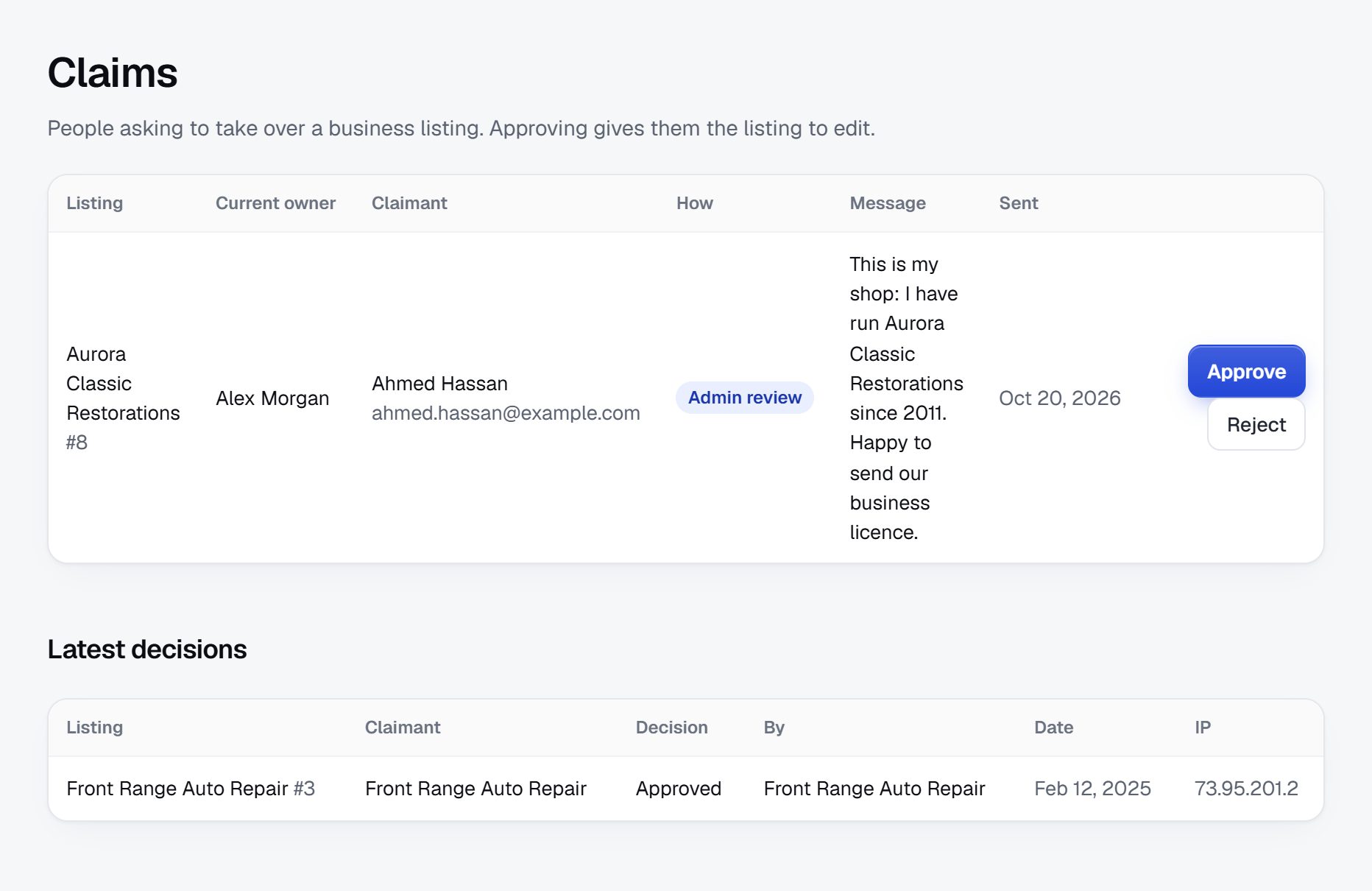
Handle claims, reviews and children's privacy with care.
Parents use a school directory to make a choice about their child, so mistakes here cost more than in most niches. Plan your rules before the first review.
Claims and facts
- Accreditation as stated. Show accreditation and memberships as "stated by the school" unless you have checked them against the accrediting body's own list. Check the rules where you operate before using words such as approved, licensed or accredited yourself.
- Unaccredited online schools. Be careful with online high schools offering fast diplomas. Ask for evidence of recognition before listing them.
- Tuition dated. Every tuition figure carries the school year it applies to.
Reviews
- Only from parents, students or former students, approved before they go live.
- No names of children or staff, and no photos of students.
- Schools can reply, and should be told when a review appears.
- A review that describes abuse or a safety issue is not a review. Do not publish it; tell the writer how to reach the school and the relevant authorities, and keep a record.
Admissions inquiries contain details about children. Collect only what schools need to reply, send each inquiry only to the schools the parent chose, and check the privacy rules for children's data where you operate.
Parents forgive a missing tuition figure. They do not forgive a directory that sells its opinions.
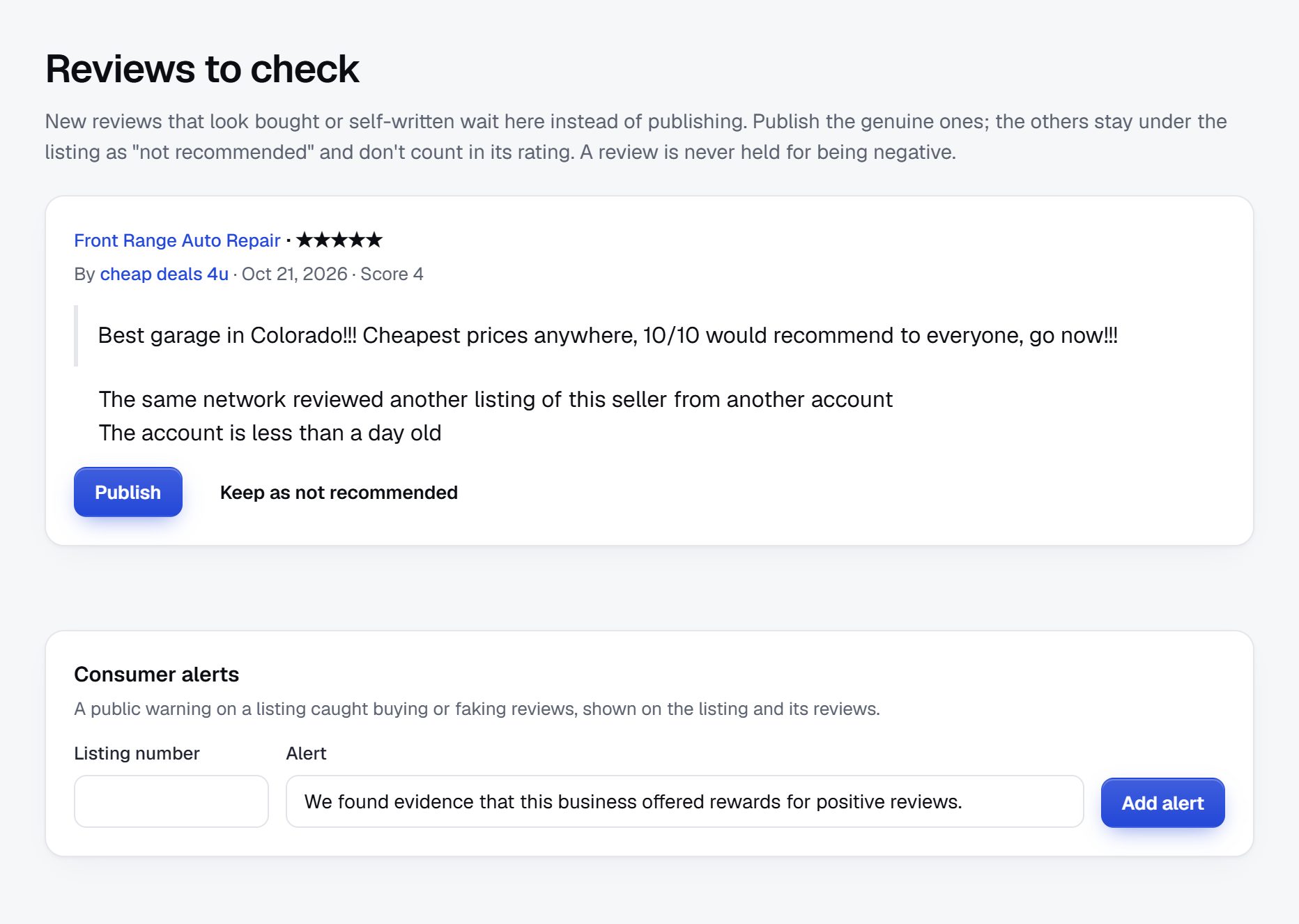
Rank for the searches parents make before deadlines.
Parents search by place, stage and approach: "private schools in Charlotte", "Montessori school near me", "Catholic high schools Philadelphia", "IB schools in Dubai", "boarding schools in New England", "schools for dyslexia Houston" and "private school tuition Atlanta". Relocating families add the neighborhood they are considering.
Pages to build
- Area pages for each city and suburb, listing every school with grades and tuition range.
- Approach pages: Montessori, Waldorf, faith-based, IB and classical schools in each city.
- Stage pages: preschools, elementary, high schools, so a parent with a four-year-old sees only what fits.
- Needs pages for learning differences, gifted programs and language immersion.
Content parents read
- "How to choose a private school: questions to ask at an open house."
- A tuition guide for your area, built from the ranges schools list and dated by school year.
- "Montessori and Waldorf: how the classrooms differ."
- An admissions calendar with open house dates and application deadlines from claimed pages.
- A relocation guide that matches neighborhoods to nearby schools.
Put the area, the grades and the approach into each school's page title, using a pattern you set once.
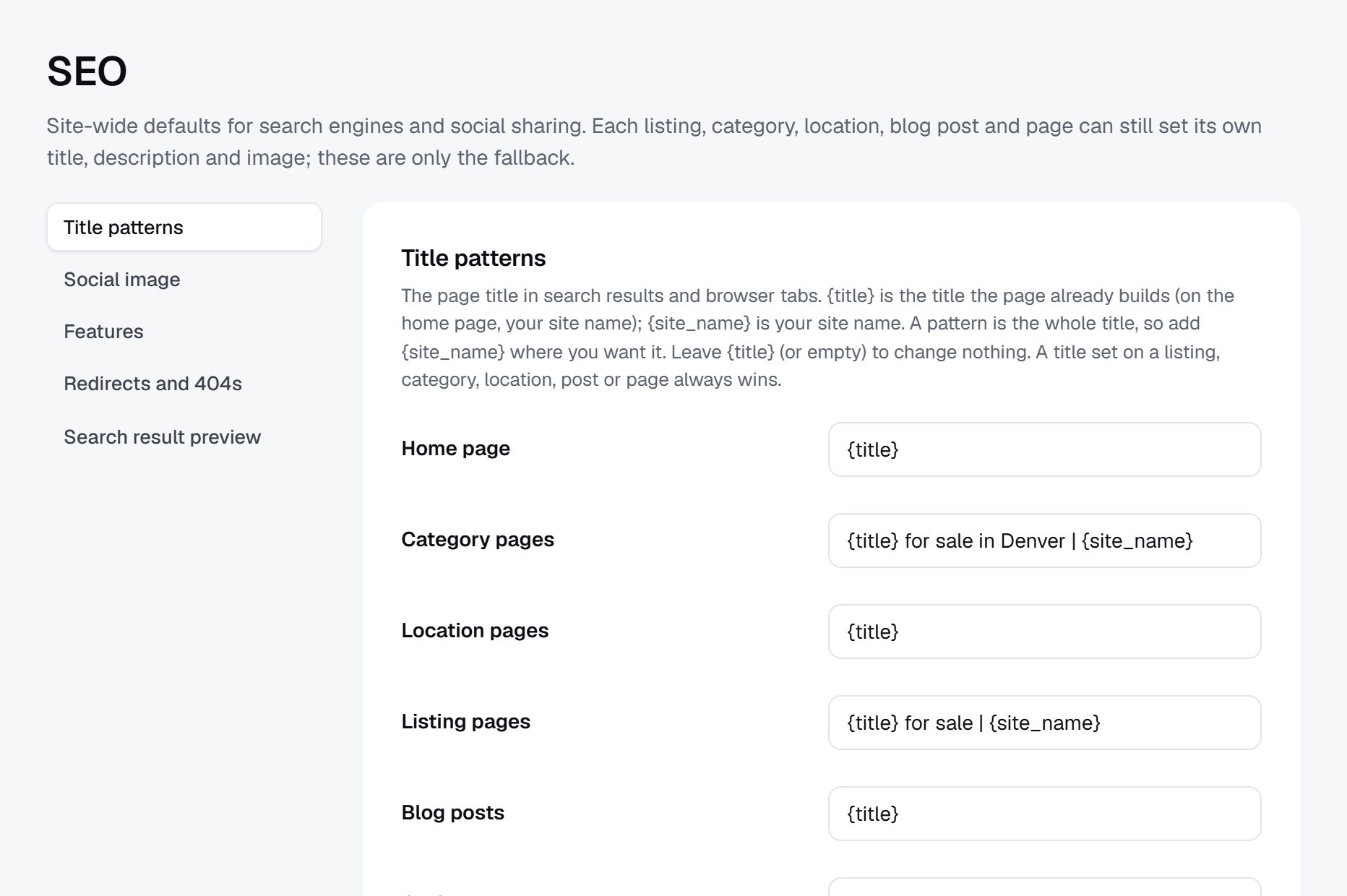
Launch before open house season.
Private school admissions run on a calendar. In much of the United States, open houses fill the fall, many applications close in the winter, and decisions come in early spring for entry the following fall. Families relocating with a job usually search in late spring and summer. Have your first area complete by the end of summer so it is ready when parents start visiting schools.
Partners
- Relocation agents and corporate HR teams, who are asked about schools by every family they move.
- Real estate agents selling family homes, for whom schools are a constant question.
- Educational consultants and tutors, who can point families to the directory and may want a banner.
- Parent groups and expat associations, where a full comparison list is shared and saved.
Launch checklist
- Every private school in the first area listed, with grades, approach and affiliation filled in.
- Tuition ranges, with the school year, for as many schools as publish them.
- An email to every admissions office asking them to claim and complete their page.
- Review rules written and visible before the first review arrives.
- The admissions inquiry form tested with a willing school.
- An open house calendar post ready for parent groups in early fall.
Expand to the next metro area once most schools in the first one have claimed their pages.
A worked example: a school guide for the Twin Cities.
Consider a fictional directory called Twin Cities School Compass, covering private schools in Minneapolis, Saint Paul and their suburbs. The area has long-established independent day schools, many Catholic and Lutheran parish schools, a strong Montessori community, several language immersion schools and a few schools for students with learning differences. Families who move in for jobs at large employers often have weeks, not months, to choose.
Categories
- Early years
- Montessori preschools
- Play-based and church preschools
- Elementary and K-8
- High schools
- College preparatory
- Faith-based
- Language immersion
- Learning differences
Who it serves
Parents of three- and four-year-olds facing their first school decision, families moving to Minnesota on a job transfer who want a school before they sign a lease, parents of a child with dyslexia comparing support across the metro area, and families who want their child to keep speaking Spanish, Mandarin or German. Relocation consultants use it with nearly every family they move. Grandparents who help with tuition read it too, often printing the comparison for a family meeting.
How it started
The founder is a parent who toured eleven schools in one fall and kept her notes in a spreadsheet that other parents kept asking to borrow. She started from the federal private school list, cleaned it for the seven-county area, imported it, and spent a summer adding grades, approach and published tuition from each school's own site. Admissions directors at the smaller schools claimed their pages first, because few other sites showed them at all. The larger schools came later, once parents mentioned the site on their open house sign-in forms.
How it makes money
Featured school placements on area and approach pages sell from September through January, while open houses and application deadlines fall. About twenty schools pay a yearly membership for a full profile with open house dates and an admissions contact. Admissions inquiries reach schools free of charge, to keep parents' requests flowing, while tutoring centers, summer camps and an educational consultant take banner spaces. There are no rankings and no paid ratings, and every area page says so. The founder also refuses requests from schools to hide accurate tuition figures, and parents mention that when they recommend the site to friends.
| School | Tuition per year | Key details |
|---|---|---|
| Cedar Lake Montessori | $14,500 full day, 2026-27 | Ages 3 to 6, before and after care, Montessori-trained guides, open house in November |
| St. Brendan Parish School | $7,800 with a parish discount, 2026-27 | K-8, classes of about 22, bus from two suburbs, accepts mid-year transfers |
| Riverside Preparatory Academy | $31,000, financial aid offered, 2026-27 | Grades 6-12, AP courses, admission test in January, applications close February 1 |
| Saint Paul German Immersion | $12,200, sibling discount, 2026-27 | K-5, taught in German from kindergarten, no German needed at entry |
| Northfield Learning Academy | $29,500, 2026-27 | Grades 2-8, dyslexia and ADHD support, six students per teacher, tutoring on site |
These schools and figures are invented to show the format, not taken from real schools.
The first 90 days, timed to open house season.
The admissions calendar sets your 90 days. In much of the United States, open houses begin in September and October, so a launch in late August puts the directory in parents' hands just as they start visiting schools. That places week 1 in early June, as school offices slow down for summer, which helps: admissions staff have time to answer email before the fall rush.
The first month is data work on public lists, and most of the effort goes into cleaning duplicates, closed schools and wrong grade ranges. The second month belongs to admissions offices: claim invitations, tuition confirmation and open house dates. The third month builds the pages parents read, puts your review rules in writing and tests the inquiry form with a real school.
Track one measure above the rest: how many schools show grades, approach and a dated tuition figure. Those three facts are what parents came for, and they are what a relocating family copies into its own comparison spreadsheet. Tuition gaps can wait for claims; grades and approach cannot.
| Weeks | Focus | Done when |
|---|---|---|
| 1-2 | Choose the metro area; set stage categories and fields for grades, approach, affiliation and tuition year | Two parents and one admissions director have reviewed a sample school page |
| 3-4 | Clean the public private school list, import it, and fill gaps from Google Places | Every school in the area appears once, with closed schools removed |
| 5-6 | Add grades, approach, affiliation and published tuition from each school's own site | Nine in ten pages show grades and approach, and most show a dated tuition range |
| 7-8 | Write to admissions offices with claim invitations; collect open house dates | A quarter of schools have claimed and confirmed their pages |
| 9-10 | Publish review rules, test the admissions inquiry form, write area, approach and needs pages | A willing school has received and answered a test inquiry |
| 11 | Brief relocation agents, real estate agents and parent groups; build the open house calendar | Five partners have agreed to share the directory in September |
| 12 | Launch with the open house calendar and email every admissions office | Parents are sending inquiries and schools are asking how to update their pages |
Ways to build a school directory parents can rely on.
A private school directory lives on comparison: grades, approach, affiliation and tuition held in the same fields for every school, with filters across all of them. It also needs claims for admissions offices, reviews that are approved before they appear, inquiry forms that send a parent's request only to the schools that parent chose, and date fields for open houses and deadlines. Applications and enrollment stay with the schools.
Building with developers is worth it if your idea is a comparison tool parents cannot find anywhere else, such as a questionnaire that matches a child's needs to schools. Budget for careful handling of children's data, which raises the cost of every feature that touches it.
A directory script or WordPress plugin on your own server fits an education consultant or parenting writer who already has an audience. Control is complete, but so is responsibility for securing inquiry data, moderating reviews and keeping the software patched.
A hosted builder such as Yclas provides custom fields as filters, claims, reviews with owner replies and quote requests without running a server, leaving your time for school data and admissions offices.
Whatever you pick, find out where inquiry data is stored and who can see it before launch. Parents trust a school directory with details about their children, and that is the one part of the build you cannot get wrong. Read the privacy rules on children's data where you operate, and put a short plain notice beside every inquiry form.
| Route | Fits when | Watch out for |
|---|---|---|
| Custom build | A needs-matching questionnaire or an unusual comparison is the heart of the site | Higher cost for every feature that touches children's data, and a slow start |
| Plugin or script you host yourself | Parents already read your blog or newsletter | Securing inquiry data, the review moderation load and keeping plugins updated |
| Hosted directory builder | Complete, dated school data is your edge | Check that review approval, date fields and inquiry privacy work the way your rules need |
What a private school directory costs to run.
The software is the smallest part of the bill. Most of the cost is your time in the first months: finding the first listings, answering questions and checking what gets posted.
The public school lists are free, but cleaning them takes time. Budget for Google Places charges on your own key to catch new schools, and for a careful read of the privacy rules on data about children where you operate.
| Cost | Typical range | On Yclas |
|---|---|---|
| Domain | $10 to $20 a year | Your own, with SSL included |
| Software and hosting | $0 to $100+ a month, plus plugins and updates | Starter $19 a month, Professional $99 |
| Design | $0 to $100 for a theme, or a designer | 109 looks included |
| Payment fees | About 3% per payment | Your Stripe or PayPal fees; Yclas takes nothing |
| Business data | Free if you collect it, or a few cents per page of Google results | Paid to Google, with your key |
| Your time | 5 to 10 hours a week at the start | Finding listings, moderation, support |
Mistakes that cost a school directory its credibility with parents.
- Showing undated tuition. A figure from two years ago can be thousands of dollars off, and parents budget on it. Attach the school year to every tuition figure and refresh them each spring, when schools publish next year's rates.
- Publishing a "best schools" ranking too early. A ranking built on thin data draws angry calls from schools and suspicion from parents. Earn trust with filters and facts first, and rank only once you have a method you can explain and defend in public.
- Letting reviews name children or teachers. One review that identifies a child or accuses a named staff member can hurt real people and bring legal trouble. Approve every review before it goes live and remove names on sight.
- Leaving out the faith and parish schools. Diocesan and congregational schools are often a large share of the private schools in an area, yet many have simple websites and little marketing. Without them the directory looks like a list of expensive schools only, and families on a modest budget leave. Parish schools also tend to answer claim emails quickly once a parish secretary sees the page.
- Blurring preschools and child care. Parents of three-year-olds need to know whether a program is a school with a curriculum, a care center, or both, and whether it covers a full working day. Make that a field rather than a guess from the name. State licensing for child care is a separate matter from school status, so check the rules where you operate before describing either.
- Treating accreditation as a yes or no. There are many accrediting bodies and memberships, and they mean very different things. Name the body, show it as stated by the school, and never call a school accredited on your own authority. Where an accrediting body publishes its member list, check against it once a year.
- Selling to schools in spring. By April most admissions decisions are made and next year's marketing budgets are not yet set. Pitch featured places and memberships in late summer, before open house season.
- Collecting more about children than schools need. An inquiry form that asks for diagnoses, birth dates and report cards creates risk with no benefit. Ask for the child's age, entry year and broad needs, and let the school ask for the rest directly.
- Ignoring families who need a place now. Parents switching schools in October or March are the most urgent visitors you have, and the least served. Without an open places or mid-year entry field, they phone every school one by one. Ask schools to keep that field current each term.
Admissions terms a school directory founder should know.
Admissions offices and parents use these terms, and a few of them mean different things in other countries.
| Term | What it means |
|---|---|
| Independent school | A private school governed by its own board rather than by a church or a company. |
| Parochial school | A school run by a church parish or diocese, often with lower tuition than independent schools. |
| Day school | A school where students go home each evening, as opposed to boarding. |
| K-8 | A school covering kindergarten through eighth grade on one campus. |
| Rolling admissions | Applications are reviewed as they arrive, with no single deadline, until places are filled. |
| Open house | A scheduled event where families tour the school and meet staff before applying. |
| Shadow day | A day when an applicant attends classes alongside current students. |
| Financial aid | Tuition help based on family income, usually requested on a separate application. |
| Merit scholarship | A tuition discount given for academic, artistic or athletic achievement rather than need. |
| SSAT and ISEE | Admission tests used by many independent middle and high schools in the United States. |
| IB | International Baccalaureate, a curriculum and diploma recognized by universities in many countries. |
| AP | Advanced Placement, college-level courses with exams that some universities count for credit. |
| Accreditation | A review of a school by an outside body that checks it against a set of standards. |
| Waitlist | Applicants who were not offered a place at first but may receive one if a place opens. |
The same steps for a private school directory on Yclas.
- Describe your directoryThe setup wizard writes the categories, an About page and example listings from one sentence.
- Add fieldsHours, services, areas served, prices: the details people search by, as filters.
- Fill itImport businesses from a spreadsheet or Google Places, then check them.
- Bring owners inOwners claim their page, update it and answer reviews.
- EarnSwitch on featured places, banners or memberships when visits arrive.
What should I budget to launch a private school directory?
The main cost is the time spent cleaning public school lists and adding tuition and approach details. Software, a domain and small Google Places charges come on top of that.
Can I list a school without its permission?
School names, addresses, grades and published tuition are public information, and directories list them routinely. Write your own descriptions, avoid copying photos and marketing text, and check the rules where you operate.
Should I rank schools?
Rankings bring traffic but also complaints and disputes about methods. Most new directories do better with clear filters, dated facts and parent reviews, and leave rankings until they have reliable data.
How do I handle a school that wants a bad review removed?
Remove reviews only when they break your published rules, for example by naming a child or making a claim of a crime. Otherwise invite the school to reply publicly.
How does a school directory make money?
Featured schools and full profile memberships in the months before deadlines, admissions inquiries sent to the schools a parent picks, and banners for tutors, camps and consultants.
Can parents apply to schools through the directory?
No. Parents compare schools and send inquiries; applications, visits and enrollment are handled by each school's admissions office.
How do I compete with the big school rating sites?
Most of them are built around public schools. A complete, current list of private schools in one area, with tuition, approach and open house dates, answers questions they leave open.
Should I include charter and magnet schools?
Only if your angle is school choice in general. A private school directory is clearer when it sticks to schools that charge tuition, and you can cover public options in a separate guide written in your own words.
How do I get tuition from schools that do not publish it?
Ask the admissions office when you invite it to claim the page, and mark the field as on request until it answers. Many schools publish a figure once they see their neighbors do. A range is fine where the school prefers not to give one number.
Should I list microschools and homeschool co-ops?
Parents in many areas do search for them, so they can be worth including. Put them in their own category with fields for days per week and teaching model, so nobody mistakes them for full-time schools. Check how your state treats them before using the word school, since homeschool rules and private school rules often differ.
What should I do when a school closes or merges?
Mark the page closed rather than deleting it at once, so parents who saved it understand what happened, then remove it after a season. Small private schools sometimes close mid-year, so check reports quickly.
Can families moving from abroad use the directory?
Yes, and they are some of its most motivated readers. Add fields for language support, visa letters and the start of the school year, and write a relocation guide that explains how local admissions work.
Related pages.
The parts of Yclas this leans on.
You have the plan. Now give parents every school in one place.
Describe your site in a sentence and the setup wizard writes the categories, example listings and a look. Free for 15 days, no credit card.
Start my directory