How to build a musician directory that gets local players hired.
A guide to building a directory of bands, music teachers and session players in one scene: choosing who to serve, the genre, lineup and teaching details people filter on, how featured acts, memberships and gig requests pay for it, where to find musicians, how to protect them from fake gig offers, the searches to rank for, and the seasons to launch around.
Free for 15 days · No credit card · Plans from $19 a month
Connect the people who need music with the musicians nearby.
Every town is full of musicians, and every week someone struggles to find one. A couple planning a wedding wants a string quartet for the ceremony and a band for the evening. A restaurant wants a jazz duo on Friday nights. A parent wants a guitar teacher who comes to the house. A singer recording an album needs a session drummer for two days. A band lost its bass player.
The options today are uneven. Wedding vendor sites cover only wedding acts, and the acts often pay heavily to appear. Booking agencies take a cut and represent a small roster. Community boards and the musicians section of classified sites are crowded with old posts. Social media works only if you already know the right group.
Pick your angle
- Event music: bands, DJs, soloists and ensembles for weddings, parties, corporate events and venues, in one city or region.
- Music teachers: lessons by instrument, level and age, at home, in a studio or online.
- Session players and producers in a recording city, for other musicians.
- A genre or community: mariachi, Celtic, gospel, Bollywood, jazz, worship musicians.
- Musicians looking for each other: bands seeking members, with places to rehearse.
Look at where the asking happens now: wedding planning groups, parent groups ("anyone know a piano teacher who takes adults?"), local musician Facebook groups and the noticeboard at the music shop. The questions repeat, and so do the gaps.
A scene where every working musician has a page is worth more to hirers than any national list.
Describe acts and teachers by what hirers and students ask first.
Someone hiring an act asks: what does it sound like, how many people, how far will they travel, and roughly what does it cost. A parent looking for lessons asks: which instrument, what age and level, where do lessons happen, and what is the price per lesson. Build your fields around those questions and keep categories to the kind of musician.
Sound is the first filter people apply, and it cannot be a checkbox. Ask every act for their own audio or video samples, which they own and can share, and show them high on the page. Genre and mood fields ("background dinner music", "dance floor") help hirers who cannot name a genre.
Event acts also need practical fields: own sound system or not, set length, how many sets, learns a first dance song on request, and travel range in miles. For teachers, add a field for background checks completed, as stated by the teacher. Yclas fields can be dropdowns, numbers, checkboxes, text or dates, and every field can become a search filter.
| Category | Example listings | Fields hirers filter on |
|---|---|---|
| Bands and live acts | Cover bands, jazz trios, tribute acts | Genre, lineup size, own PA, set length, travel range, price per event from |
| Soloists and DJs | Acoustic singers, pianists, wedding DJs | Genre, instruments, indoor or outdoor, own equipment, languages sung |
| Ceremony and classical | String quartets, harpists, church organ players | Ensemble size, repertoire, ceremony and reception, learns requests |
| Music teachers | Piano, guitar, voice and drum teachers | Instruments, ages taught, levels, lessons at home, studio or online, price per lesson |
| Session players and producers | Session drummers, mixing engineers | Instruments or services, remote recording, credits, day rate from |
| Studios and rehearsal rooms | Recording studios, rehearsal spaces | Hourly rate, backline included, room size, 24-hour access |
Ask teachers to list the methods or exams they prepare students for, such as Suzuki or graded exams: parents filter on it.
Earn from hirers' requests, not from musicians' pockets.
Musicians are used to paying for listings that bring nothing, and many distrust any site that charges first. Keep basic pages free and make your directory the place that sends real requests. Once it does, the money options are clear.
How a musician directory earns
- Gig and lesson requests: a hirer fills in the date, place, type of event and budget, or a parent the instrument and age, and the request goes to the acts or teachers they choose. Musicians will pay for a steady flow of these.
- Featured acts at the top of wedding, party and venue pages, in the months when couples are booking.
- Memberships for acts and teachers: more audio and video, a calendar of public gigs written on the page, reviews highlighted and a badge.
- Pay to post in wedding music, where a single booking is worth a lot to an act.
- Banner spaces for music shops, instrument repair, rehearsal studios, sound equipment rental and wedding venues.
The directory never handles the booking itself. Hirers contact musicians through the site, and the date, contract and deposit are agreed between them.
| Model | Works when | Switch it on |
|---|---|---|
| Gig and lesson requests | Hirers and parents ask through your pages | From launch, free at first to prove the flow |
| Featured acts | Wedding and party pages draw steady visits | Ahead of the engagement and booking season |
| Memberships | Acts and teachers get regular requests | After a few months of requests in each category |
| Pay to post in wedding music | Wedding acts compete for the same dates | When the wedding category has more acts than visitors can scan |
| Banner spaces | Music shops and venues want your audience | When you can share visitor numbers |
Fill every category from the local scene.
Musicians are easy to find once you go where they play, teach and shop. The work is personal: a message that shows you have heard someone play gets far more replies than a general invitation.
- Venues and their lineups. Bars, restaurants with live music, wineries, hotel lounges and small concert halls post who played each week. That list is your first set of acts.
- Music shops and schools. Shops keep teacher noticeboards and know every session player in town. Community music schools and college music departments know the teachers and advanced students.
- Wedding fairs and planners. Couples' fairs bring together the event acts in one room, and planners keep a list of acts they trust.
- Community ensembles. Community orchestras, choirs, church music directors, big bands and folk sessions all know players who take paid work.
- Import the places. Google Places finds recording studios, rehearsal rooms, music schools and shops, with their name, address, phone, website and opening hours, though not photos. Acts without an address join by creating their own page or by a CSV you put together with them.
Ask every act and teacher to claim their page and add their samples. In Yclas, owners claim their page and can then reply to reviews. A page with a good recording does more for them than anything you write.
Protect musicians from fake gigs and hirers from no-shows.
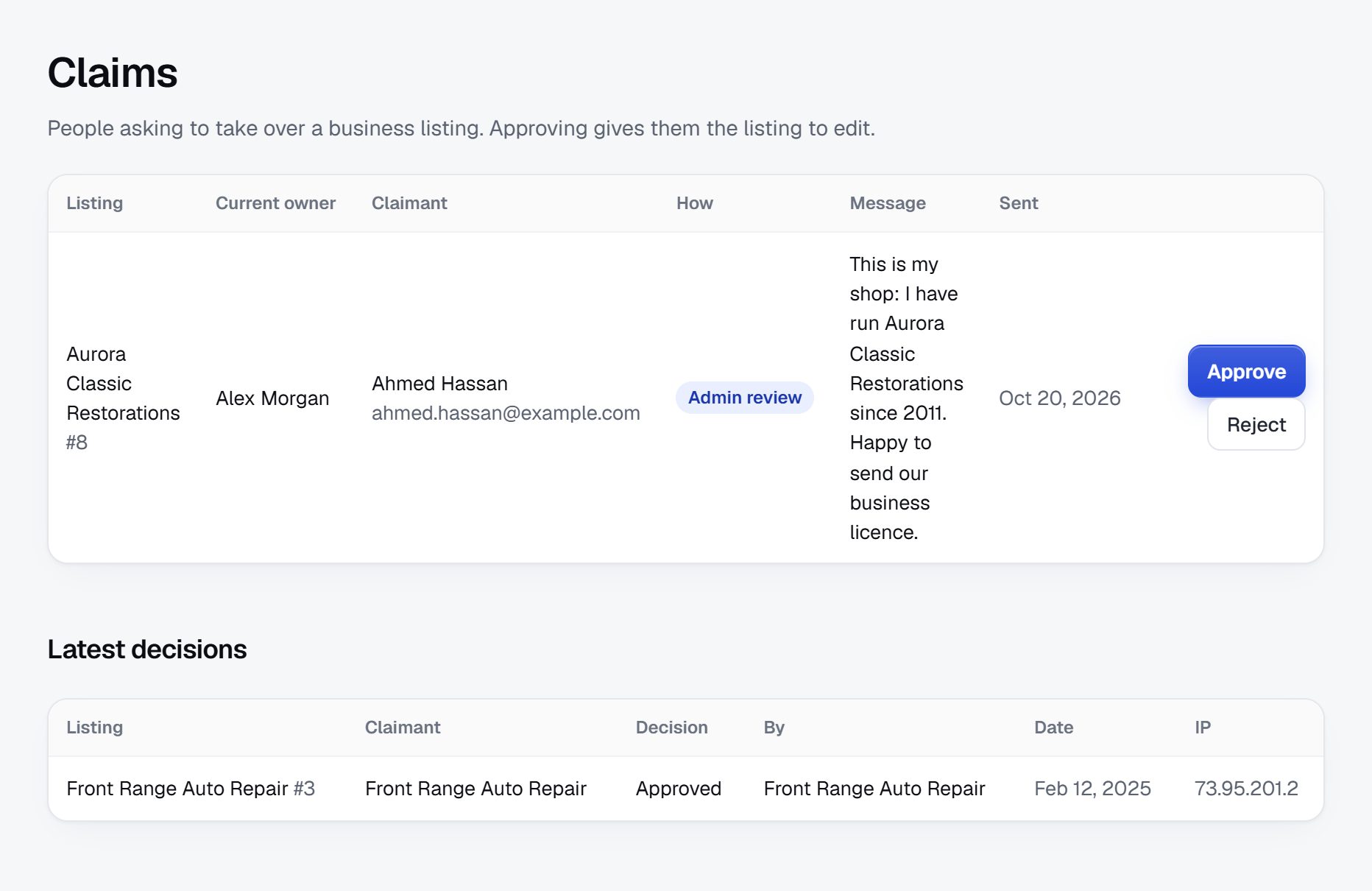
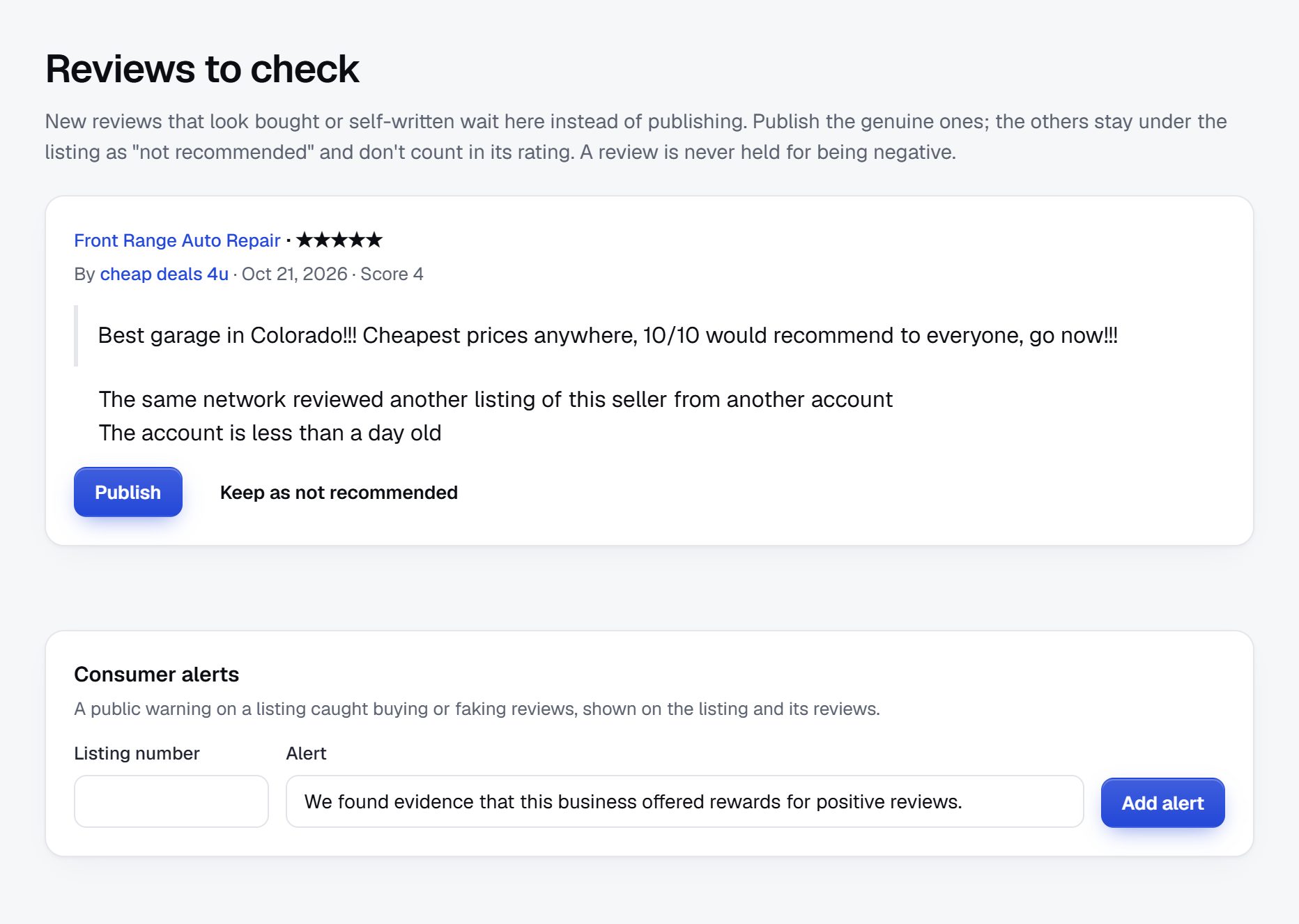
Musicians are among the most targeted groups for one particular fraud: a message offering a well-paid gig, often a wedding or private party far away, paid by a check for more than the fee, with a request to pass the difference to a "planner" or sound company. The check bounces after the money has gone. Publish a short guide for musicians on fake gig offers and remind them in every request email.
Directory rules
- Real acts only. Some acts post videos of other bands, or tribute acts copy promotional material. Ask for samples the act owns and act on reports.
- Requests screened. Watch for the same request sent to many acts with a vague venue and payment by check, and block the sender.
- Clear agreements. Encourage acts and hirers to agree in writing on date, times, sets, equipment, travel, deposit and what happens if either side cancels.
- Reviews from real events. Reviews should come from people who hired the act or took lessons. Acts and teachers can reply.
- Teachers and children. Background checks for people teaching children differ by place. Show any checks as stated by the teacher, advise parents to ask about them, and check the rules where you operate.
Recordings with copyrighted songs are common in cover band samples. Ask acts to upload only material they have the right to share, and remove anything when a rights holder asks.
Rank for hiring and lesson searches in your area.
Searches for musicians are almost always local and often urgent: "wedding band Nashville", "string quartet for wedding ceremony Charleston", "jazz trio for hire Chicago", "DJ for quinceanera Houston", "piano lessons near me", "guitar lessons for adults Denver", "session drummer Los Angeles" and "how much does a wedding band cost".
Pages to build
- Event pages by city: wedding bands, ceremony musicians, party DJs, corporate event acts.
- Genre pages: jazz, country, mariachi, Celtic, classical, each in your main cities.
- Lesson pages by instrument and city, with filters for age and lessons at home.
- Session and studio pages for musicians hiring other musicians.
Content ideas
- "How much does live music cost for a wedding", built from the price ranges acts choose to share.
- "Band, DJ or both: choosing music for your reception."
- "Questions to ask before hiring a band", covering equipment, breaks and overtime.
- "How to choose a first instrument for a child."
- A weekly page of public gigs from members, which gives regular visitors a reason to return.
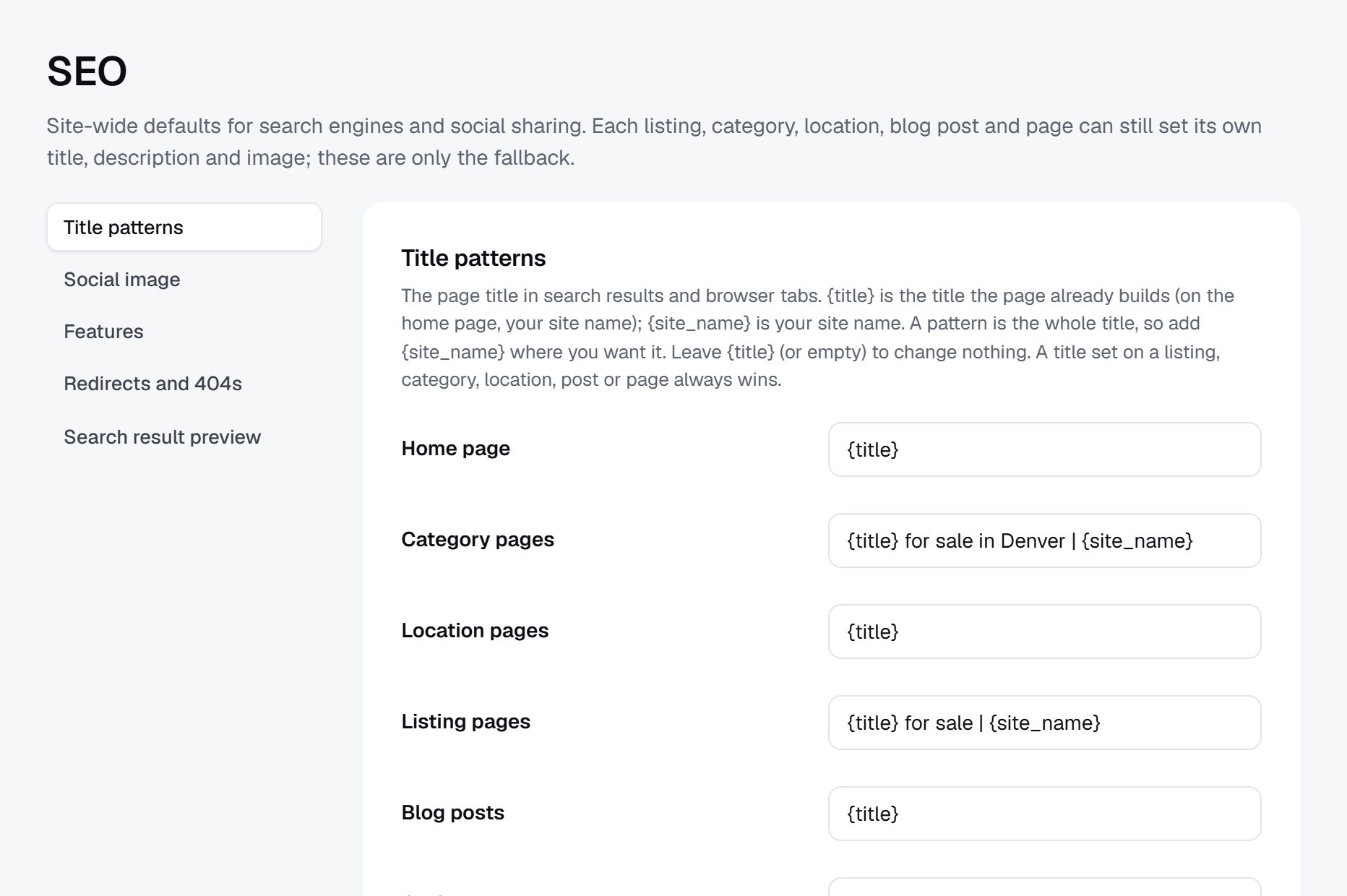
Each act's page title should carry the act name, kind of act and city. Set that title pattern once, and every new page follows it.
Launch with one scene, ahead of its busy season.
Music hiring has seasons. Many couples get engaged over the winter holidays and start booking music in the first months of the year for summer and fall weddings. Lesson demand rises in September with the school year and again in January with new year plans. Corporate and holiday parties fill November and December. Pick one of these and have your first city full before it starts.
Partners
- Wedding planners and venues, who are asked for music recommendations at every meeting.
- Music shops, whose staff send students to teachers and players to bands every day.
- Local venues and promoters, who want their acts found and their nights promoted.
- Schools and parent groups, for the teacher side of the directory.
Launch checklist
- Pages for the working acts, teachers and session players in your first city, most with a sample.
- The gig and lesson request forms tested with a few willing musicians.
- A short guide for musicians about fake gig offers and check scams.
- Event, genre and lesson pages written for the main searches.
- A table or stand at the next couples' fair, with a card pointing to the directory.
- A message for venues and music shops to share with their players.
After the first season, ask musicians how many requests became paid work. That number is what persuades the next scene.
A worked example: a players guide for Louisville.
Take a fictional directory called Riverbend Players Guide, covering musicians in Louisville, Kentucky, and the towns across the Ohio River in southern Indiana. The scene has distillery event spaces that hire acoustic acts, a busy wedding season, church musicians who take paid work, bluegrass and jazz players, and a large group of private teachers serving school band students. Hirers ask the same questions in local groups every week, and the answers disappear from view within a day.
Categories
- Event music
- Wedding bands and DJs
- Ceremony ensembles
- Acoustic and background acts
- Lessons
- Piano, guitar and voice
- Band and orchestra instruments
- For musicians
- Session players
- Rehearsal and recording rooms
Who it serves
Couples booking ceremony and reception music, event planners at distilleries and hotels who need a trio by Friday, parents of middle school band students looking for a trumpet or clarinet teacher before auditions, and bandleaders hunting for a fill-in bass player for one night. Venues use it to find a new act when a regular cancels, and church music directors use it when they need extra strings at Easter.
How it started
The founder played bass in three cover bands and was the person everyone texted when a gig needed a sub. His phone contacts became the first spreadsheet. He added the teachers pinned to the noticeboards of two music shops and the acts from a summer of venue calendars, imported them, then messaged each musician with a link to their page and a request to add a sample. The working players claimed first, because they already knew him, and the teachers followed when school started.
How it makes money
Gig and lesson requests are free to musicians, which keeps the pages complete. Featured acts on the wedding pages sell in January and February, when couples start booking, and about sixty acts and teachers pay a yearly membership for extra video and a badge. Posting in the wedding music category became paid once it grew crowded, while every other category stays free. A music shop and an instrument repair bench take banner spaces, and a regional wedding fair sponsors the ceremony music page each winter.
| Act or teacher | Price from | Key details |
|---|---|---|
| The Ohio Falls Quartet | $900 for a ceremony | String quartet, classical and pop arrangements, learns one request song, needs shade outdoors |
| Derby Night Revue | $3,500 for a four-hour reception | Eight-piece soul and Motown band, own PA and lights, travels up to 100 miles |
| Dana Pruitt, trumpet teacher | $35 per 30-minute lesson | Ages 10 and up, audition preparation, lessons at home or in her studio |
| Banjo and Barrel Duo | $500 for two hours | Bluegrass, background or dance sets, plays unamplified for small rooms |
| Highland Avenue Rehearsal Rooms | $20 an hour | Drum kit and amps included, 24-hour access for monthly renters, small recording room |
None of these acts, teachers or rooms exist; they illustrate the format.
The first 90 days, set by the wedding or lesson season.
Music hiring runs on two calendars at once: couples who book months ahead, and parents who look for a teacher in the weeks before school starts. Pick the season you care about most and count back 12 weeks. For wedding acts that usually means launching in early January; for teachers, in mid-August.
The first weeks build the categories and the request forms, which matter more here than in most directories because requests are what musicians value. The middle weeks are spent in venues, music shops and rehearsal rooms, collecting acts and teachers one conversation at a time. The last weeks put the directory where hirers already ask for help: wedding planners, venue coordinators and parent groups.
Measure progress by pages with a playable sample. A hirer who cannot hear an act moves on within seconds, so a page without audio or video counts as half a listing. Chase samples as hard as you chase sign-ups.
| Weeks | Focus | Done when |
|---|---|---|
| 1-2 | Choose the scene and categories; set fields for genre, lineup, own PA, travel range and lesson details | Two working acts and one teacher say the sample page asks what hirers ask |
| 3-4 | Collect acts from venue calendars and teachers from shop noticeboards; import studios and schools from Google Places | A spreadsheet holds every working act and teacher you can name, with category and contact |
| 5-6 | Invite musicians personally and ask each for a sample they own | Eighty pages are claimed and half of them carry a sample |
| 7-8 | Build the gig and lesson request forms and the fake gig warning page | Three musicians have received and answered test requests |
| 9-10 | Write event, genre and lesson pages and the wedding music cost guide | Every main category page has an introduction and at least ten acts or teachers |
| 11 | Meet wedding planners, venue coordinators and music shops; book a wedding fair table | Five partners have agreed to recommend the directory |
| 12 | Launch at the fair or with a back-to-school lesson push | Real requests are arriving and musicians report replying within a day |
Ways to build a musician directory that hirers use.
A musician directory needs things a plain business directory misses. Pages must play audio and video, many acts have no address, travel range matters more than location, and the most important feature is a request form that sends a date, venue and budget to the acts a hirer picks. Booking, contracts and deposits stay between the hirer and the act; taking payment for gigs would make you answerable for cancellations and no-shows.
Building with developers suits a founder who wants something specific, such as availability calendars synced with each act's diary, or matching hirers to free acts by date. Musicians rarely keep shared calendars current, so expect features that depend on them to work only part of the time.
A directory script or WordPress plugin on your own server fits a music blogger or venue promoter with an audience already. Embedding samples is easy on WordPress, but you also own spam, fake gig senders, updates and backups.
A hosted builder such as Yclas gives you claimed pages, quote requests, reviews with replies and featured places without a server, so your time goes into venues and music shops.
On any route, check that a page can carry video or audio samples without slowing to a crawl, and that you can block a sender who sends the same fake gig to every act in town.
| Route | Fits when | Watch out for |
|---|---|---|
| Custom build | Availability matching or a gig platform with contracts is the whole idea | Musicians do not keep shared calendars current, and handling contracts brings liability |
| Script or plugin hosted by you | You run a music blog, podcast or promoter site with local readers | Spam requests, fake gig senders and slow pages full of embedded video |
| Hosted directory builder | Your edge is knowing the scene and getting every act listed | Check how samples are shown and how quickly you can block a bad sender |
What a musician directory costs to run.
The software is the smallest part of the bill. Most of the cost is your time in the first months: finding the first listings, answering questions and checking what gets posted.
Expect small Google Places charges for studios, schools and shops, and perhaps a stand at a couples' fair. Most of your budget is time spent in venues and music shops meeting musicians.
| Cost | Typical range | On Yclas |
|---|---|---|
| Domain | $10 to $20 a year | Your own, with SSL included |
| Software and hosting | $0 to $100+ a month, plus plugins and updates | Starter $19 a month, Professional $99 |
| Design | $0 to $100 for a theme, or a designer | 109 looks included |
| Payment fees | About 3% per payment | Your Stripe or PayPal fees; Yclas takes nothing |
| Business data | Free if you collect it, or a few cents per page of Google results | Paid to Google, with your key |
| Your time | 5 to 10 hours a week at the start | Finding listings, moderation, support |
Mistakes that leave musicians without requests.
- Pages without samples. No hirer books a band from a paragraph of text. Ask every act for a recording they own, show it at the top of the page, and keep reminding those without one until they add it.
- Letting agencies list acts they do not represent. Some agencies post dozens of acts to capture requests, then add a fee or send a different band on the night. Ask who manages each act, label agency pages, and let acts claim their own. Where an agency truly represents an act, show both names, so the hirer knows who will answer.
- Mixing teachers into event pages. A parent looking for a cello teacher should never scroll past wedding DJs. Keep lessons in their own section, with fields for age, level and where lessons happen.
- Forgetting travel range. A wedding two hours away is a different job from one across town, with a long drive and a late night. An act's home town is a weak filter; travel range in miles, plus any travel fee, is what hirers need.
- Passing on suspicious requests. The same overpayment message can reach every musician on a site within hours. Screen requests for the pattern, look closely at first messages from new senders, and block repeat offenders. Remind musicians in every request email that a real client never overpays and asks for change.
- Treating every genre the same. A mariachi band, a string quartet and a metal band are hired by different people for different reasons. Genre pages with their own introductions rank better and help hirers who are not sure what to search for. Someone planning a quinceanera or a Diwali party searches very differently from a couple planning a barn wedding.
- Implying teachers are vetted. A badge that looks as if the directory vouches for a teacher's background is a promise you cannot keep. Show checks as stated by the teacher, say plainly that you have not verified them, and advise parents to ask.
- Charging musicians in the first season. Musicians have paid for gig sites and lead services that sent nothing. Free pages and free requests until the flow is proven are what win the working players, and the working players bring everyone else.
- Letting old pages pile up. Bands split, change names and lose members constantly. A request sent to an act that broke up last year frustrates a hirer and wastes a date. Ask acts to confirm they are active every few months, and hide pages that stay silent. Keep the old page reachable for a while with a note, since past hirers may still be looking for the players.
Gig and lesson terms a musician directory founder should know.
Musicians, planners and venue staff use these terms whenever hiring comes up.
| Term | What it means |
|---|---|
| Set | One block of continuous playing, often 45 minutes to an hour, followed by a break. |
| Lineup | The number of players in an act and the instruments they play. |
| PA | Public address system: the speakers, mixer and microphones that make an act heard. |
| Backline | Amplifiers and drums supplied by a venue or studio so acts do not bring their own. |
| Rider | An act's list of needs for a gig, such as power, stage space, meals and parking. |
| Load-in | The time an act arrives to carry in and set up equipment before playing. |
| Sub | A substitute player who covers for a regular band member for one or more gigs. |
| First dance | The couple's opening song at a wedding reception, often learned on request. |
| Cocktail hour | The stretch between ceremony and dinner, usually filled with background music. |
| Overtime | Extra playing time beyond the agreed hours, charged at a rate set in advance. |
| Session player | A musician hired to play on other artists' recordings, usually by the day or the song. |
| Graded exams | Structured music exams by level, offered by boards such as ABRSM in many countries. |
| Suzuki method | A teaching approach for young children that begins with listening and playing by ear. |
| EPK | Electronic press kit: a page or file with an act's bio, photos, samples and contact details. |
The same steps for a musician directory on Yclas.
- Describe your directoryThe setup wizard writes the categories, an About page and example listings from one sentence.
- Add fieldsHours, services, areas served, prices: the details people search by, as filters.
- Fill itImport businesses from a spreadsheet or Google Places, then check them.
- Bring owners inOwners claim their page, update it and answer reviews.
- EarnSwitch on featured places, banners or memberships when visits arrive.
What does it really take to get a musician directory going?
A modest amount of money for the site, a domain, a few Google Places charges and perhaps a wedding fair stand. The larger cost is the evenings spent meeting musicians where they play.
Do musicians pay to be listed?
Basic pages should be free. Charge for memberships, featured spots and wedding category posting once acts can see real requests coming from the directory.
Can hirers book and pay a band through the directory?
No. Hirers send requests and messages through the site, and the act agrees the date, contract and deposit directly with them.
How do I compete with the big wedding vendor sites?
Cover the music those sites leave out: teachers, session players, venue acts, community and genre ensembles, all in one local scene, with free basic pages that attract every act.
Can musicians post recordings of cover songs?
Copyright rules for recordings of other people's songs vary. Ask acts to upload only material they have the right to share, remove anything a rights holder objects to, and check the rules where you operate.
What about background checks for teachers?
Requirements for people who teach children vary by place and setting. Show checks as stated by the teacher, encourage parents to ask, and check the rules where you operate before making any claim.
How do I protect musicians from scams?
Screen gig requests for the classic overpayment pattern, block repeat senders, and remind musicians never to refund the difference on a check or payment.
Should DJs be listed alongside live musicians?
Yes, in their own category. Many hirers compare a band with a DJ or book both, and leaving DJs out sends those visitors elsewhere.
How do I handle acts that work in several cities?
Give each act one page with a home city and a travel range, rather than a page in every city. Duplicate pages confuse hirers and look like spam to search engines.
Can bands use the directory to find new members?
They can, through a small section for musicians wanted and available. It keeps working players coming back between gigs, but moderate it, since these posts go out of date quickly.
What should a gig request form ask?
The date, start and end times, venue or town, type of event, rough budget and the music wanted. Requests with those details get faster and more useful replies, and fewer acts ignore them. Add a box for special requests, such as a first dance song or a ceremony entrance piece.
How do acts get their first reviews?
Ask acts to send their page to hirers after each event, and send a short follow-up yourself after requests that led to a booking. Reviews from real events count for more than a pile of praise from friends.
Related pages.
The parts of Yclas this leans on.
You have the plan. Now get your local musicians hired.
Describe your site in a sentence and the setup wizard writes the categories, example listings and a look. Free for 15 days, no credit card.
Start my directory