How to build a supplier directory that buyers in one trade actually trust.
This guide covers how to build a supplier directory for one trade or industry: why buyers give up on the general sourcing sites, the details they filter on such as minimum order and lead time, how the directory earns from featured suppliers and quote requests, where the first suppliers come from, fake factories and invoice fraud, the searches to rank for, and a launch tied to trade show season.
Free for 15 days · No credit card · Plans from $19 a month
Serve buyers in one trade who are tired of sorting real makers from middlemen.
A small coffee brand looking for a co-packer, a fashion startup looking for a cut-and-sew factory, a brewery looking for a can printer: each of them faces the same problem. The large sourcing sites list millions of companies across every industry, many results are trading companies presenting themselves as factories, and the most visible suppliers are often the ones paying for placement. The answer to "will you make 300 units" is buried or missing.
Who searches a supplier directory
- Small brands and startups looking for their first manufacturer and needing low minimum orders.
- Procurement and purchasing staff at established companies who want a second source.
- Makers and product designers looking for prototyping, tooling or a specific process.
- Distributors and retailers looking for private label products.
Choosing the trade
Pick one trade where you know the vocabulary and the people: packaging, apparel manufacturing, cosmetics contract manufacturing, food co-packing, metal fabrication, brewing supplies, sign making. Add a geographic angle if it matters to buyers, such as US-made or within one region for shorter shipping.
Today buyers in these trades rely on trade show exhibitor lists, industry forums, LinkedIn requests and spreadsheets passed between founders.
One trade, described in its own words, beats a sourcing site that lists everything from screws to sofas.
Filter on what decides a supplier: capability, minimum order, lead time and certification.
Buyers rule suppliers out fast. They need to know whether a supplier makes the thing, in the quantity they need, in time, with the right paperwork. Make capabilities the categories and put the deal-breakers in fields.
Details buyers filter on
- Supplier type: manufacturer, contract manufacturer, distributor, importer, trading company. This one field saves buyers more time than any other.
- Minimum order quantity (MOQ) as ranges, because small brands search for low MOQ first.
- Typical lead time for samples and for production runs.
- Certifications: ISO 9001, food safety schemes, organic, FSC for paper, as checkboxes the supplier fills in.
- Services: private label, custom design, sampling, warehousing, drop shipping.
- Location and export markets, for buyers who care about shipping time or origin.
Ask each supplier for a list of materials or processes in plain words and a short note on the kind of customer they are best for. "Runs from 500 units, small brands welcome" is the sentence a buyer wants to read.
| Category | Example suppliers | Fields buyers filter on |
|---|---|---|
| Packaging | Box makers, label printers, pouch and can suppliers | MOQ, print method, recyclable materials, lead time |
| Apparel and textiles | Cut-and-sew factories, knitting mills, screen printers | MOQ per style, fabrics, sampling, private label |
| Food and beverage | Co-packers, co-manufacturers, ingredient suppliers | Food safety certification, organic, allergen handling, MOQ |
| Cosmetics and personal care | Contract labs, filling lines, private label skincare | Formulation service, MOQ, certifications, packaging included |
| Metal and plastics | CNC shops, injection molders, sheet metal fabricators | Materials, tolerances, prototyping, production volume |
| Equipment and supplies | Machinery distributors, spare parts, consumables | Brands carried, stock held, delivery area |
Supplier type, MOQ ranges and certifications work as dropdown and checkbox fields that show as search filters.
Earn from the leads you send, not from hiding suppliers who do not pay.
Suppliers in most trades already pay for leads: trade show booths, sales reps, paid listings on sourcing sites. They will pay you when your directory sends them buyers with real projects. Until then, list suppliers free so buyers find a complete picture of the trade.
What suppliers pay for
- Quote requests: a buyer describes the product, quantity and deadline once, and the request goes to matching suppliers. This is the core of a supplier directory, and suppliers can pay per request or receive them as part of a membership.
- Supplier memberships with a verified badge, more photos, a longer capabilities section and priority in quote matching.
- Featured places at the top of a capability page, labeled as featured.
- Banner spaces for trade shows, freight forwarders, testing labs and software sold to the trade.
A B2B site where buyers order and pay online is a different product with its own setup. For most trades, sending qualified quote requests is the simpler and more trusted model.
Keep ranking honest. Buyers who find that paid suppliers always come first stop using the search.
| Model | Works when | Switch it on |
|---|---|---|
| Quote requests to suppliers | Buyers send real projects with quantities | Once requests arrive every week |
| Supplier memberships | Suppliers want a badge and more leads | After the first suppliers win work through you |
| Featured places | Several suppliers compete in a capability | When buyers search those pages daily |
| Banner spaces | Trade shows and service firms want buyer reach | When you can show monthly visitors |
Start with the suppliers who already show up at trade shows and in member lists.
Suppliers in a trade are not hard to find; they are hard to describe well. The work is in collecting them and then getting each one to fill in capabilities and minimum orders.
Where the suppliers are
- Trade show exhibitor lists, usually published by the organizer before each show.
- Industry association member lists, often public and sorted by specialty.
- Supplier lists in trade magazines and buyer's guides published once a year.
- Founder communities where small brands share who made their product.
- Map search: for manufacturers with a site you can visit, a Google Places import brings in name, address, phone, website and opening hours, though no photos.
Getting them on the site
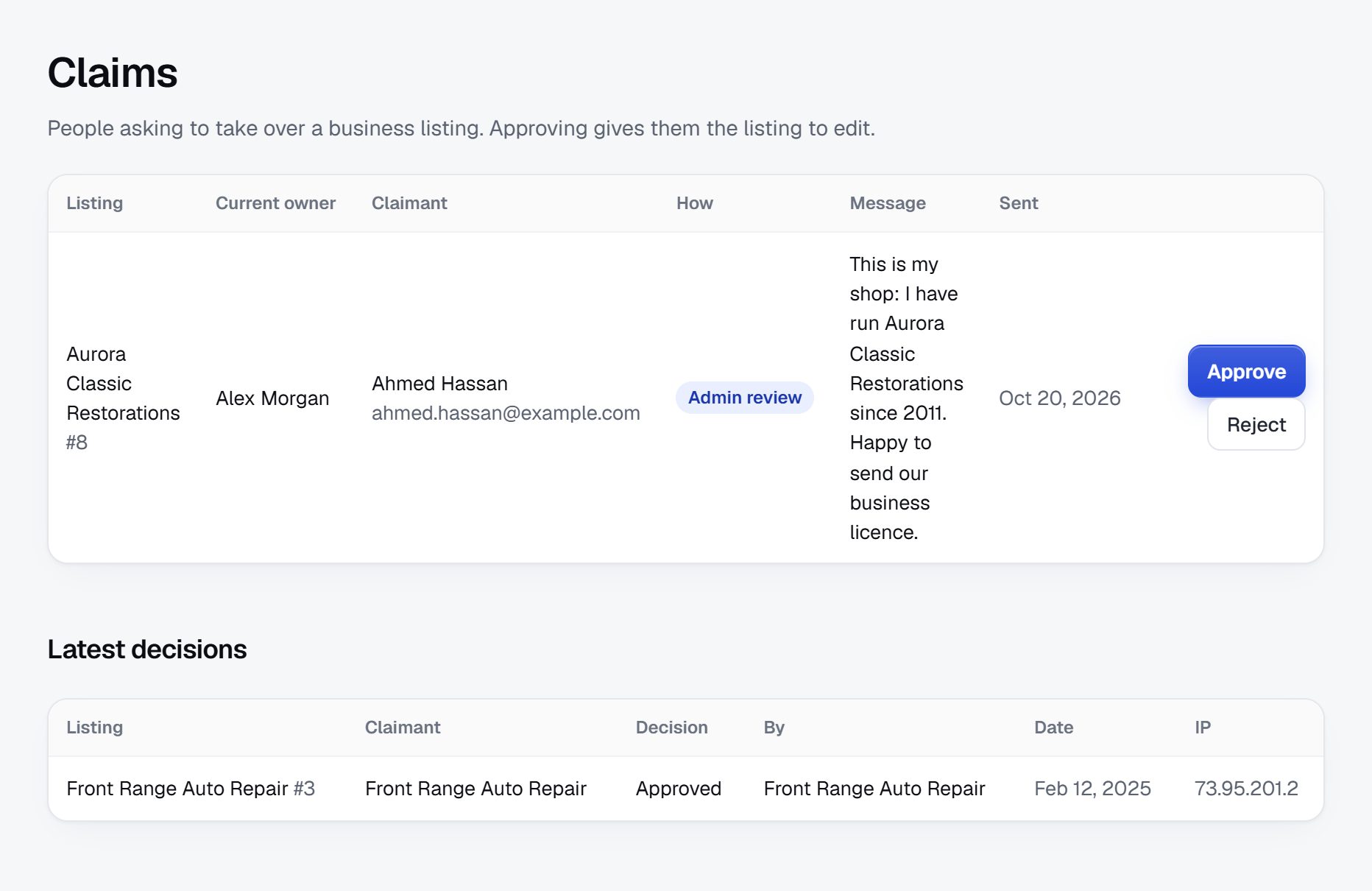
Build your list in a spreadsheet with the fields from step 2 and import it as a CSV file. Then contact each supplier with their own page: "Buyers are searching for low-MOQ packaging suppliers. Claim your page to add your minimum orders and lead times." In Yclas, owners claim their page and can reply to reviews. Sales managers usually respond within days, because their job is to find new buyers.
A supplier with MOQ and lead time filled in is worth five with only a name and a phone number.
Check who is a real manufacturer, and warn buyers about payment fraud.
Sourcing has well-known traps, and buyers will hold you partly responsible if your directory sends them into one.
Risks typical of a supplier directory
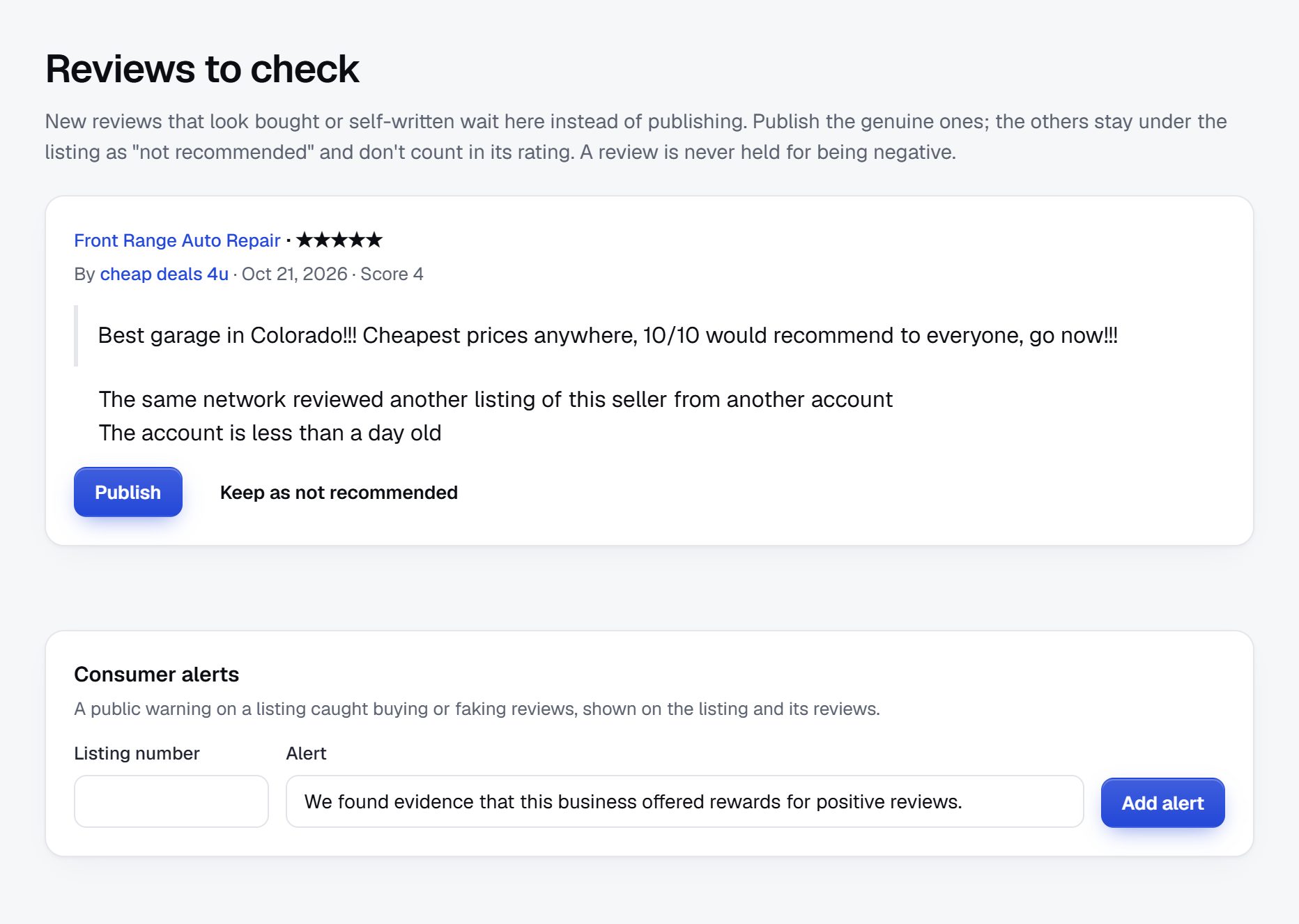
- Middlemen presented as factories: a trading company with photos of someone else's production line. Ask for the factory address, check it on a map and in public company records, and label supplier type clearly.
- Fake or expired certifications: a logo on a website without a valid certificate. Ask for the certificate number and issuing body, and check it with the issuer before showing a certified badge.
- Invoice and bank detail fraud: a buyer receives an email that looks like their supplier's, asking them to pay a new bank account. Publish advice to confirm any change of payment details by phone.
- Counterfeits and intellectual property: suppliers offering branded goods they have no right to make. Ban them and remove listings that copy known brands.
- Unpaid samples and deposits: buyers paying for samples that never ship. Encourage small first orders and written quotes.
Reviews help here, but only from buyers who worked with the supplier. Hold reviews from new accounts and let suppliers reply in public. For anything involving product safety, labeling or import rules, tell buyers to check the rules where they operate.
A verified badge should mean you checked something specific. Write down what, and show it on the page.
Rank for the long, specific searches buyers make before they send a request.
Supplier searches are long and precise because buyers know exactly what they need. That is good news: big sourcing sites rank for the short terms, and you can win the specific ones.
Searches to target
- "low MOQ cosmetics manufacturer USA"
- "custom printed mailer boxes small quantity"
- "cut and sew factory Los Angeles"
- "co packer for hot sauce"
- "CNC machining prototype one off"
- "organic certified private label coffee roaster"
Pages to build
- Capability pages for each process or product type, with a short introduction to what buyers should ask.
- Capability plus location pages, such as packaging suppliers in Ohio, once there are enough suppliers.
- Low MOQ pages, which small brands search for constantly.
Content ideas
- A guide to writing a request for quote in your trade.
- Explainers of the certifications buyers see, what they cover and how to check them.
- A sampling checklist and a list of questions to ask a new supplier.
- A trade show calendar for your industry with notes on which shows suit small buyers.
Launch around the trade show calendar of your industry.
Most trades have one or two shows each year where suppliers and buyers meet. Buyers prepare for them weeks ahead by researching suppliers, and suppliers are focused on new leads. Launch a month or two before the main show, and use the show itself to meet the suppliers who have not claimed their pages.
Partners to line up
- A trade association whose members get a free membership for the first year.
- A founder community or incubator for brands in your trade, which sends the first buyers.
- A trade magazine or newsletter that will mention the directory.
- Service firms around the trade, such as testing labs and freight forwarders, as first advertisers.
Launch checklist
- The main suppliers in each capability listed, with supplier type filled in.
- MOQ and lead time filled in for at least half of the listings.
- A quote request tested end to end with a friendly supplier.
- Your badge rules written down: what you check before showing verified or certified.
- A buyer safety page covering bank detail changes, samples and deposits.
- Terms of use and a privacy policy that cover quote requests and supplier data.
A worked example: a packaging supplier directory for the Great Lakes.
Picture a fictional directory called Lakeshore Pack Source, listing packaging suppliers across Michigan, Ohio, Indiana, Illinois and Wisconsin for small food, beverage and personal care brands. The region has a deep base of printers, converters and box plants, many of them family firms that have never paid for a listing on a sourcing site. Small brands in the area want packaging made within a day's drive, so samples arrive quickly and freight stays affordable.
Categories
- Boxes and cartons
- Folding cartons
- Corrugated shipping boxes
- Rigid gift boxes
- Labels and printing
- Digital label printers
- Shrink sleeves
- Flexible packaging
- Stand-up pouches
- Roll stock for co-packers
- Bottles, jars and cans
- Glass and plastic containers
- Can suppliers and mobile canners
Who it serves
Founders of hot sauce, granola, coffee, candle and skincare brands launching their first retail products; co-packers who need a printer they can send their clients to; and purchasing managers at mid-size food companies looking for a second source closer to their plant. Packaging designers use it too, to check which printers can handle a finish or material before they promise it to a client.
How it started
The founder spent ten years as a sales rep for a label printer and noticed that half the inquiries his company turned away came from brands needing fewer than 1,000 units. He started a list of suppliers who welcomed small runs, called each one to confirm minimums and lead times, and published the list with both numbers on every page. The first eighty suppliers came from two regional packaging shows and his own contact book. Supplier type was required from the start, because the most common question from founders was whether a company printed in house or sent the job elsewhere. He also added a field for sample cost, after hearing the same complaint from several founders who had paid for samples they did not expect to be charged for.
How it makes money
Supplier pages are free. Quote requests are the main product: a brand describes the pack, the quantity and the deadline once, and the request goes to up to five matching suppliers. Suppliers who want more requests and a verified badge, given after a phone call and a check of their address, pay a yearly membership. A freight broker and a packaging design studio rent the banner spaces, and the low-MOQ category pages carry clearly labeled featured places.
| Supplier | MOQ and lead time | Key details |
|---|---|---|
| Kettle Creek Carton Works, Grand Rapids, Michigan | From 1,000 cartons, 3 to 4 weeks | Manufacturer of folding cartons, food-safe inks, FSC-certified board on request |
| Bright Lot Labels, Toledo, Ohio | From 250 labels, 5 to 7 days | Digital roll labels printed in house, many versions in one short run |
| Upland Pouch Supply, Fort Wayne, Indiana | From 500 pouches, 2 to 3 weeks | Distributor of stock and printed stand-up pouches with zippers |
| Harbor Glass and Jar, Milwaukee, Wisconsin | One case, ships in 2 days | Stock jars, bottles and closures from a local warehouse |
| North Shore Mobile Canning, Chicago area | From one batch, scheduled 2 to 4 weeks out | Brings a canning line to breweries and drink makers, supplies cans and lids |
The first 90 days: minimums, lead times and real quote requests.
A supplier directory lives or dies on two numbers per supplier: minimum order and lead time. Buyers forgive a short profile that has both; they leave a polished one that has neither. Your first 90 days are about getting those numbers for as many suppliers as possible, by phone where needed, and proving that a quote request turns into a real conversation between a buyer and a supplier.
Choose a trade show or buying season about three months out and plan backward from it. The early weeks go into the vocabulary of your trade: capability categories, supplier types and the certifications buyers ask about. The middle weeks are collection and calls. Suppliers are busy, but sales managers answer quickly when the first message mentions a buyer looking for their exact capability.
Recruit five friendly buyers, such as founders you know, to send real requests before launch. Their experience tells you whether requests reach the right suppliers, whether suppliers reply, and whether the replies are useful. Fix what they find before strangers arrive, and ask each of them for one sentence you can quote on the home page. Keep notes on every request: which suppliers replied, how fast, and whether the quote matched the brief. Those notes become your first matching rules and your argument when you sell memberships.
| Weeks | Focus | Done when |
|---|---|---|
| 1-2 | Pick the trade and region, write capability categories, supplier types and certification checkboxes | Two buyers and two suppliers agree the categories use their own words |
| 3-4 | Merge exhibitor lists, association member lists and buyer's guides into one spreadsheet | At least 150 suppliers with website, address and supplier type |
| 5-6 | Call or email for MOQ, lead time and certificates, and check factory addresses | MOQ and lead time filled for half the list, and badge rules written down |
| 7-8 | Import, send claim emails, write the request for quote guide and the buyer safety page | Forty suppliers have claimed their pages and both guides are published |
| 9-10 | Run real quote requests with five friendly buyers and fix the matching | Every test request got at least two supplier replies within a week |
| 11-12 | Launch before the show, then meet unclaimed suppliers on the show floor | A hundred claimed suppliers and the first membership sold |
Ways to build a supplier directory, and what B2B buyers expect of it.
A supplier directory needs deep, structured profiles more than it needs design. Each supplier has a type, a list of capabilities, MOQ ranges, lead times and certifications, and buyers must be able to combine those as filters. The other key part is the quote request: one form a buyer fills in once, sent to several matching suppliers, with replies that do not expose either side to spam. Online ordering and payment are rarely needed, because B2B orders run on quotes, samples and agreed terms.
Building it yourself with developers fits when matching is the product, for example scoring suppliers against a detailed spec sheet with materials and tolerances. Expect months of work and ongoing tuning as buyers find the cases the matching gets wrong.
A directory script or WordPress plugin on your own server fits a trade publisher who already runs a magazine site and wants the directory next to its articles. Check carefully how it handles quote requests and attachments, since buyers often want to send drawings and specs, and how it deals with spam aimed at sales inboxes. Supplier sales teams will judge you by the quality of what lands in their inbox.
A hosted builder such as Yclas provides custom fields shown as search filters, quote requests sent to businesses, owner claims, verified badges and spreadsheet import without servers to run. It suits a founder from the trade whose advantage is knowing the suppliers, not writing software.
| Route | Fits when | Watch out for |
|---|---|---|
| Custom build with developers | Matching on detailed specs is your main value | Long build time and a matching engine that needs constant tuning |
| Script or plugin on your server | A trade magazine wants the directory beside its articles | Handling of drawings and spec files, spam requests and updates |
| Hosted directory builder | You know the trade and need filters and quote requests working soon | Plan your fields with care, since buyers judge you on MOQ and lead time |
| B2B ordering platform | Suppliers sell standard stock at listed prices | A different product with payments and credit terms, beyond a directory |
What a supplier directory costs to run.
The software is the smallest part of the bill. Most of the cost is your time in the first months: finding the first listings, answering questions and checking what gets posted.
Checking factory addresses and certificates costs time, and some company registries charge a small fee per lookup. Attending your trade's main show, even as a visitor, is the main launch cost and usually the best spent.
| Cost | Typical range | On Yclas |
|---|---|---|
| Domain | $10 to $20 a year | Your own, with SSL included |
| Software and hosting | $0 to $100+ a month, plus plugins and updates | Starter $19 a month, Professional $99 |
| Design | $0 to $100 for a theme, or a designer | 109 looks included |
| Payment fees | About 3% per payment | Your Stripe or PayPal fees; Yclas takes nothing |
| Business data | Free if you collect it, or a few cents per page of Google results | Paid to Google, with your key |
| Your time | 5 to 10 hours a week at the start | Finding listings, moderation, support |
Mistakes that send buyers back to the big sourcing sites.
- Calling everyone a manufacturer. Suppliers like the word, and trading companies use it freely. Buyers who find a middleman behind a "factory" page stop trusting the whole directory. Make supplier type a required field and check it before publishing, using the factory address and a recent photo of the production floor.
- Leaving MOQ blank. The first question from a small brand is whether you will make their quantity, and a blank field means another email and a likely no. Fill it from a phone call if the supplier will not, and show a range rather than one figure.
- Covering every industry. A supplier directory for all of manufacturing competes with the largest sourcing sites on their own ground. Stay inside one trade until buyers in it treat you as the first place to look, then add a neighboring trade whose buyers overlap with yours, such as labels after boxes.
- Sending quote requests to everyone. Suppliers who receive requests they cannot fill, such as the wrong process, volume or region, stop reading them. Match on capability, MOQ and region, and cap the number of suppliers per request so each one is worth answering.
- Badges with no checks behind them. A certified badge shown because a supplier ticked a box can send a buyer into a failed retailer audit. Ask for the certificate number, confirm it with the issuing body and record the expiry date.
- Letting paid suppliers bury the rest. If members always rank first, buyers learn that search results are ads. Keep the default order neutral, label featured places, and sell membership as more leads and a badge, not as hiding competitors.
- No warning about payment fraud. Fake invoices and changed bank details hit buyers who found suppliers anywhere, including through you. A plain safety page and a reminder in every quote request email cost little and can save a buyer a large sum.
- Never updating lead times. Lead times swing with seasons, material shortages and holiday shutdowns. Ask suppliers to update them each quarter, show the date they were last confirmed, and nudge anyone whose figures are more than six months old.
- Ignoring samples and setup charges. Small brands are often surprised by sample fees, plate or tooling charges, and a sample round that takes nearly as long as production. Add fields for sample cost and sample lead time, explain both in your request for quote guide, and buyers will plan their launch dates around what really happens rather than what they hoped.
Sourcing terms a supplier directory founder should know.
Buyers and sales managers use these words in every quote, so use them in your fields and guides.
| Term | What it means |
|---|---|
| MOQ | Minimum order quantity, the smallest order a supplier accepts for a product or run. |
| Lead time | The time from a confirmed order or approved sample to goods ready to ship. |
| RFQ | Request for quote, a written description of what a buyer needs, sent to suppliers for pricing. |
| OEM | Original equipment manufacturer; in sourcing, a factory that makes products to the buyer's design. |
| ODM | Original design manufacturer, a factory that sells its own designs for buyers to put their brand on. |
| Private label | Products made by a supplier and sold under the buyer's brand. |
| Co-packer | A company that makes or packs food and drink products for other brands. |
| Trading company | A business that sells goods made by others, sometimes presented as the factory. |
| Tooling | Molds, dies or printing plates made for one product, often paid for by the buyer up front. |
| Pre-production sample | A sample made with final materials and methods, approved before the full run starts. |
| Incoterms | Standard trade terms, such as FOB or EXW, that set who pays for shipping and carries risk at each point. |
| Certificate of analysis | A document from a supplier or lab showing a batch meets its specifications. |
| Proof | A printed or digital sample of the artwork that the buyer approves before printing starts. |
| Second source | An additional supplier for the same part, used to avoid relying on only one. |
The same steps for a supplier directory on Yclas.
- Describe your directoryThe setup wizard writes the categories, an About page and example listings from one sentence.
- Add fieldsHours, services, areas served, prices: the details people search by, as filters.
- Fill itImport businesses from a spreadsheet or Google Places, then check them.
- Bring owners inOwners claim their page, update it and answer reviews.
- EarnSwitch on featured places, banners or memberships when visits arrive.
What should I budget to launch a supplier directory?
Your time collecting and checking suppliers, a ticket or small booth at your trade's main show, a domain and the software. Paid supplier data is rarely needed for one trade.
Can I list suppliers that have not signed up?
Listing public business information is common practice for directories, but remove any supplier that asks and let others claim and correct their pages. Check the rules where you operate.
How do I make money from a supplier directory?
Quote requests sent to suppliers, supplier memberships with a verified badge, featured places and banner spaces for companies that serve the trade.
How do I tell a factory from a trading company?
Ask for the factory address, look it up in public company records and on a map, ask for photos with that day's date, and label supplier type on every page.
Should buyers pay suppliers through my site?
For most trades, no. Orders involve quotes, samples and custom terms. Sending buyers to suppliers through quote requests is simpler and keeps you out of disputes over production.
How can I compete with the big sourcing sites?
Stay inside one trade, describe suppliers in the details buyers really need, and check who is real. Specific searches in your trade are where you can rank.
Do I need reviews on a supplier directory?
They help if they come from real buyers. Hold reviews from new accounts, let suppliers reply, and remove reviews from competitors.
Should buyers send drawings and specs with a quote request?
Many want to, but files raise confidentiality worries. Let buyers describe the job in text first, then share files directly with the suppliers who reply, ideally under a nondisclosure agreement when the design is sensitive.
Should I include overseas suppliers?
Only if buyers in your trade buy from them and you can check them. Many directories for small brands succeed by staying domestic or regional, since that is what buyers came for. If you add overseas suppliers, label the country of production clearly and apply the same checks.
How do I get suppliers to answer quote requests?
Send fewer and better requests, matched on capability, quantity and region, with a budget range and a deadline. Tell suppliers how many others received the same request, and stop matching suppliers who never reply.
What do I do when a buyer complains about a supplier?
Hear both sides, ask for the written quote or order, and act on facts: correct the listing, remove a false badge, or remove a supplier who clearly did not deliver as agreed. Say in your terms that you do not settle disputes between buyers and suppliers.
Is it worth listing distributors as well as manufacturers?
Yes, as long as supplier type is labeled. Many small buyers prefer a distributor with stock and low minimums, while larger buyers want to deal with the factory. Showing both, clearly marked, serves each of them. A filter on supplier type lets buyers narrow the list to the kind they prefer.
Related pages.
The parts of Yclas this leans on.
You have the plan. Now build the supplier directory your trade keeps asking for.
Describe your site in a sentence and the setup wizard writes the categories, example listings and a look. Free for 15 days, no credit card.
Start my directory