How to build an alumni directory graduates are glad to join.
This guide covers building an alumni directory for one school, college or program: who it serves, the profile details graduates search by, how it pays for itself, how to fill it with people who said yes, how to handle personal data with consent, the searches it can win, and a launch timed around reunions and graduation.
Free for 15 days · No credit card · Plans from $19 a month
Pick one community of graduates and a reason for them to look each other up.
An alumni directory is a list of people, not shops, and that changes everything. Graduates search it to find a classmate who lost touch, a mentor in their field, a contact in a city they are moving to, or a fellow alumnus who runs a business they could hire. Those needs are not met well today: LinkedIn shows where people work but not who shares your class year and hall, the school's own records are usually closed to members, and the class Facebook group only reaches the people who happened to join it in the first year.
Choose the scope
- One school or college. A single high school, a liberal arts college, a law school.
- One program inside a big university. Engineering graduates, the MBA program, the nursing school, a scholarship cohort. Smaller groups feel closer and answer faster.
- One graduate community abroad. Alumni of a university who now live in one country or city.
Decide early whether you are the official association or a volunteer project. If you are not official, do not use the school's crest, name styling or wording that suggests the school endorses you, and ask the alumni office whether they will work with you. Many will, because their own database is out of date.
Graduates join a directory that helps them find someone specific. Build around that search, not around a list of names.
Let members choose what they share, then filter on it.
Keep categories shallow and practical: one for member profiles, sorted by school or program, plus a few for what alumni offer each other. Most of the useful detail sits in fields. Every field on a personal profile should be optional except graduation year and program, and members should know before they post that the profile is visible to everyone who can see the directory.
The questions graduates ask are simple: who from my year lives near me, who works in my industry, who would answer a question from a student, which alumni run a business I could use. Fields should answer exactly those, and nothing more personal. Leave out home address, date of birth, phone number and anything about family, health or beliefs. People who want to be contacted can be reached through on-site messages, so their email address never needs to be shown.
Add a simple visibility note under each field so graduates know what classmates will see before they fill it in.
| Category | Example listings | Fields people filter on |
|---|---|---|
| Member profiles | A 2009 economics graduate now in Denver | Class year, program or major, current city, industry |
| Mentors | A civil engineer offering career advice | Field, topics, open to students, contact preference |
| Alumni-owned businesses | A dental practice, a bakery, a law firm | Business type, city, owner's class year, alumni discount |
| Regional chapters | The Chicago chapter, the London group | City, meeting frequency, chapter contact |
| Jobs and internships | A graduate role posted by an alumna's company | Field, location, remote or on site, level |
| Reunions and events | Class of 2001 twenty-year reunion | Class year, date, city |
Make graduation year a dropdown, not free text, so the class-year filter stays clean.
Fund the directory without charging graduates to find each other.
The directory only works if joining is free, so keep basic profiles free forever. Money comes from the people and businesses that benefit from reaching your graduates. Many alumni directories never become a business at all: they cover their running costs with a sponsor or two and dues the association already collects.
- Featured alumni businesses. Graduates prefer to hire someone from their own school. A featured place on the alumni business pages is an easy yes for an accountant or a realtor who is also a graduate.
- Membership tiers. If your association already charges annual dues, a paid membership can carry the extras: a business listing, a member badge, access to job posts first.
- Employer job posts. Companies that recruit from your program will pay to post roles in front of graduates in that field.
- Sponsor banners. Local firms owned by alumni, credit unions linked to the school, reunion venues.
Never sell or rent the member list. That one decision decides whether people trust you with their details.
| Model | Works when | Switch it on |
|---|---|---|
| Featured alumni businesses | Graduates search the business pages | Once 30 or more alumni businesses are listed |
| Paid membership with extras | The association already collects dues | At the next dues renewal |
| Paid job and internship posts | Employers recruit from your program | When a few hundred members list their field |
| Quote requests to alumni firms | Members hire services through the directory | When businesses ask how to get more inquiries |
| Sponsor banners | A reunion or chapter event brings traffic | Before the reunion season |
Fill it only with graduates who said yes.
This is where an alumni directory differs from every business directory. You cannot copy names from yearbooks, LinkedIn or old mailing lists and publish them as profiles. Each profile should be created by the graduate, or by you with their clear permission. The good news: a few connected volunteers can bring in the first hundred quickly.
- Class representatives. Most classes have someone who organizes reunions. Ask each one to send a sign-up link to their class email or group chat.
- Existing class groups. Post in the Facebook and WhatsApp groups for each year, with a short note on what the directory is and what it shows.
- The alumni office. If the school agrees, its newsletter can invite graduates to join. Only import a spreadsheet the school sends if those graduates agreed to be listed.
- Reunions and homecoming. A sign-up table with a laptop works. People join while their classmates are standing next to them.
- Alumni businesses. Ask graduate owners to list their business. A map search tool can find businesses near the campus, but it cannot tell you who graduated, so invite owners rather than importing names.
In Yclas, listings can be imported from a spreadsheet (CSV), which suits a consented list from a chapter or the alumni office.
A small directory of people who chose to be there is worth more than a big one full of names nobody approved.
Treat personal data as borrowed, not owned.
An alumni directory holds names, cities, employers and class years, which is enough to find someone. That is the point of the site and also its main risk. Privacy laws on personal data differ by country, and stricter rules apply in some places, so check the rules where you operate, especially if graduates live in the EU or the school itself runs the directory and holds student records.
Rules worth writing down
- Consent first. No profile goes live unless the graduate created it or agreed to it in writing.
- Show the minimum. City, not street. Employer only if they add it. No personal email or phone on the page.
- Easy removal. A graduate can hide or delete their profile at any time, and you act on requests within days.
- No recent minors. If you run a high school directory, only list graduates who are adults.
- In memoriam with family consent only.
Keep out the wrong people
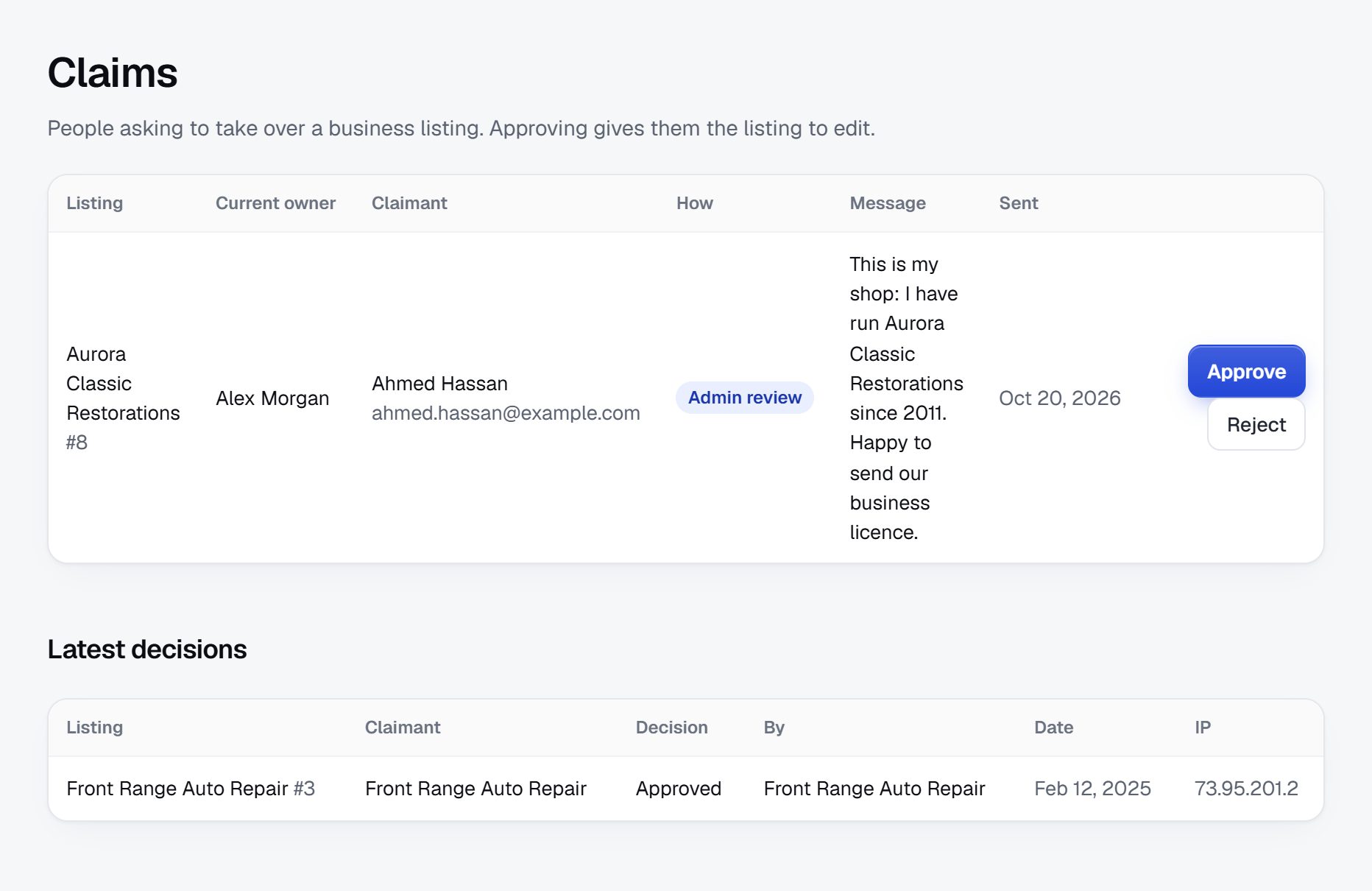
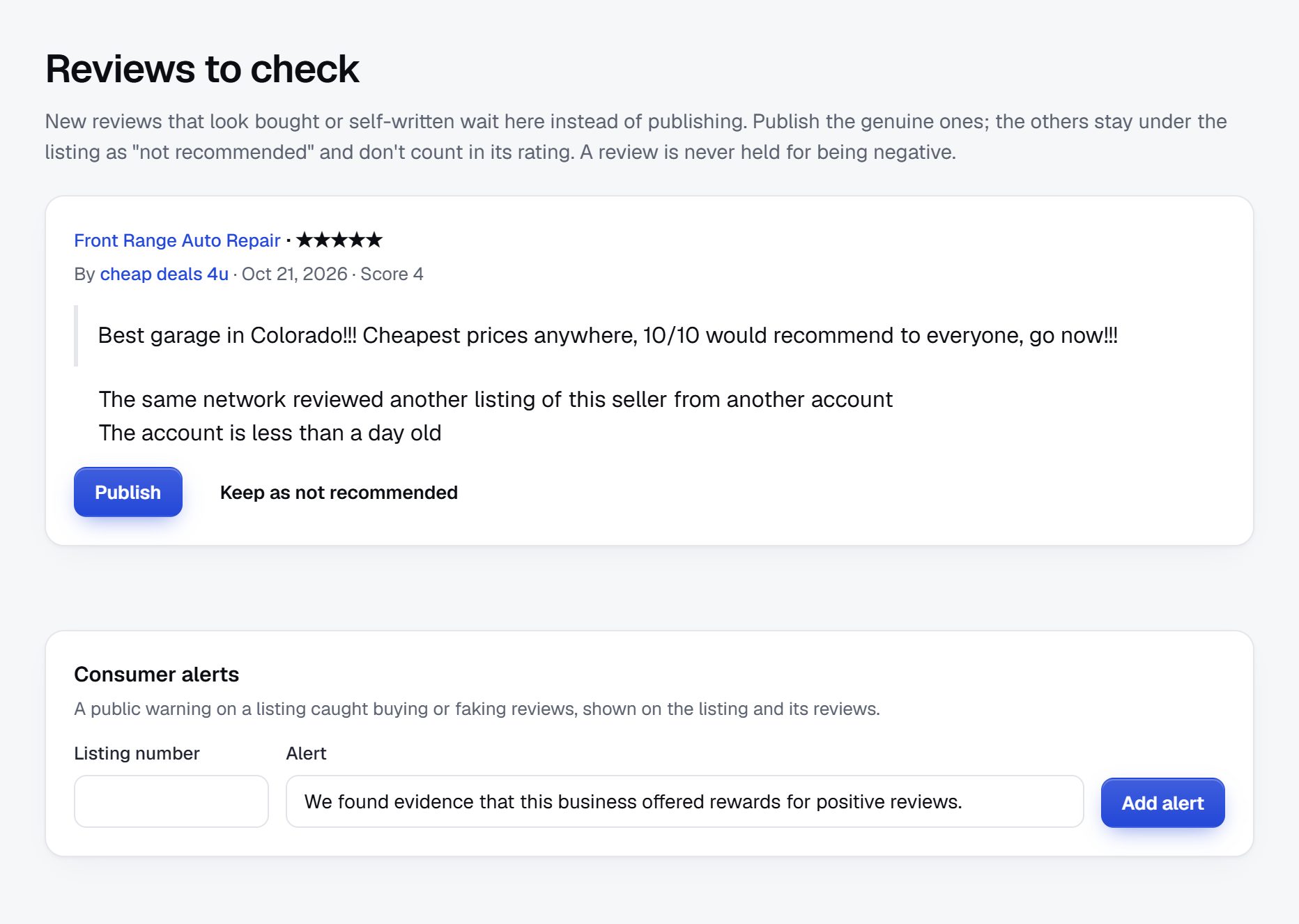
Directories of graduates attract recruiters, sales callers and occasionally someone trying to locate a former partner. Approve every new profile before it goes live, ask new members for their class year and a detail a classmate would recognize, and let members report a message. In Yclas, moderation lets you approve every listing, add banned words, use reCAPTCHA and handle reports, and messages go through the site so addresses stay private.
Write a short privacy page in plain words: what is shown, who can see it, how to leave.
Win the searches graduates make when they look back.
Alumni searches cluster around the school name plus a year, a city or a profession. Realistic examples:
- "Lincoln High class of 1998 reunion"
- "State University alumni in Seattle"
- "nursing school alumni network"
- "alumni-owned businesses near campus"
- "find a classmate from my college"
Pages to build
- Class-year pages. One page per graduating year with the reunion date and the classmates who chose to be listed. These are the pages people share.
- City and chapter pages. "Alumni in Boston" with the chapter contact, the next meetup and members who live there.
- Alumni business pages by type and city. These attract searches from outside the community too.
- Mentor pages by field. Useful for current students searching for career help.
Be careful about one thing: a person's name plus the school is the kind of search that can surface a profile for strangers. Tell members that profiles may appear in search engines, or keep personal profiles visible to signed-in members only and make the class, chapter and business pages the public face of the site.
Content ideas
Short interviews with graduates in interesting jobs, a "where are they now" series per decade, reunion photo galleries with permission, and a page of campus history that older graduates search for.
Launch with one class year and a reunion on the calendar.
Do not launch to every graduate at once. Pick the class with the most active representative and an upcoming reunion, fill that class's page, then move year by year.
Timing that matters
- Reunion season. Many reunions happen in late spring and summer, and homecoming weekends in the fall bring graduates back to campus. A directory link in the reunion invitation is the best recruiting tool you will have.
- Graduation. New graduates are easy to sign up in their last weeks, and they care most about jobs and mentors.
- Year-end newsletters. The alumni office or association newsletter reaches graduates who are not in any group chat.
Partners
Class representatives, chapter leaders, the career services office, the alumni office, and graduate-owned businesses who will sponsor a reunion page.
Checklist
- Agree your scope and whether you work with the school.
- Write the privacy page and the consent wording on the sign-up form.
- Set up profile fields with only class year and program required.
- Recruit five class reps and two chapter leaders.
- Get 100 consented profiles in your first class years.
- Add the alumni business and mentor sections.
- Announce it in the reunion invitation and the next newsletter.
A worked example: a small college's alumni directory in the Finger Lakes.
Picture a fictional directory called Tamarack Alumni Circle, built for graduates of Tamarack College, an invented liberal arts college in the Finger Lakes region of upstate New York. About a third of its graduates stay within a couple of hours of campus, in Rochester, Syracuse and Ithaca, and the rest scatter to New York City, Boston and the West Coast. The college holds a reunion every June and a homecoming weekend in October, and those are the two moments when graduates think about who they have lost touch with.
Categories
- People
- Member profiles by decade
- Mentors for students and recent graduates
- Alumni at work
- Alumni-owned businesses
- Jobs and internships
- Getting together
- Regional chapters
- Reunions and class events
The class-year dropdown runs back to the 1960s, and a "visible to" field lets each graduate choose between signed-in members only and the public. Most pick members only, and almost nobody shows an employer until they have seen what classmates share, which is why the chapter, business and reunion pages carry the public side of the site.
Who it serves
Graduates moving to a new city who want a familiar name there, students hunting for someone in their field to ask about a first job, reunion committees trying to reach a whole class, and graduates who would rather hire a classmate's accounting firm or architecture practice than a stranger's.
How it started
Two members of the class of 2006 were planning their twentieth reunion and found that the college mailing list reached fewer than half of their classmates. They built a sign-up page for their own year, then the class rep from 2011 asked to join, and four more years followed within a semester. The alumni office then agreed to mention it in its newsletter, on condition that the site said clearly it was run by volunteers.
How it makes money
It covers its costs rather than chasing a profit. A credit union run by a graduate sponsors the reunion page each spring, alumni businesses pay for a featured place on the business pages, and two regional engineering firms post paid internship listings for students in the spring term. Profiles stay free, and the member list has never been shared with anyone.
| Listing | Class and program | Key details |
|---|---|---|
| Water resources engineer in Rochester, open to mentoring | 2009, environmental science | Answers student questions by message, members-only profile |
| Family dental practice in Geneva | 1994, biology | Alumni-owned business, 10 percent off for graduates, featured place |
| Bay Area chapter | All years | Meets quarterly in Oakland, chapter contact reached through messages |
| Summer hydrology field intern | Open to current students | Paid, on site near Syracuse, applications close in March |
| Class of 2001 twenty-fifth reunion | 2001, all programs | June weekend on campus, 64 classmates listed so far |
The first 90 days, from one class year to a working network.
An alumni directory grows class by class, so the first 90 days are about proving the idea with a few years before you ask the whole community. Count back from the next reunion or homecoming if you can: that weekend gives you a deadline and a crowd. If none falls inside your first three months, aim at graduation, when final-year students are still easy to reach in one place.
Spend the first month on the parts that are painful to change later: the consent wording, the privacy page, the fields and who can see each one. Changing what a profile shows after hundreds of graduates have filled it in means asking every one of them again. Then recruit class representatives one at a time, by phone or a personal message, because a mass email from a sender nobody recognizes reads as spam to most graduates.
Measure progress by profiles complete enough to search, not by sign-ups. A profile with a class year, a city and a field helps someone; an empty one does not, so send a short, friendly nudge a week after each person joins.
| Weeks | Focus | Done when |
|---|---|---|
| 1-2 | Decide the scope, whether you partner with the alumni office, and the fields each profile shows | Three graduates from different decades have filled in a test profile without asking a question |
| 3-4 | Write the privacy page, the consent line on the sign-up form and the removal process | A graduate can join, hide and delete a profile in under five minutes |
| 5-6 | Recruit class representatives for five class years, starting with the next reunion class | Five reps have sent the sign-up link to their class groups |
| 7-8 | Approve the first profiles and nudge the empty ones | 100 consented profiles have a class year, a city and a field filled in |
| 9-10 | Open the alumni business and mentor sections, and invite graduate owners and volunteer mentors | 20 alumni businesses and 15 mentors are listed |
| 11-12 | Build chapter pages for the three cities with the most members, and announce the directory in the reunion invitation or newsletter | The announcement has gone out and every chapter page names a contact |
Ways to build an alumni directory, and why privacy decides the route.
An alumni directory needs things a plain website or a shared spreadsheet cannot give you: profiles that members create and edit themselves, fields that control what is shown and to whom, approval before a profile goes live, messages that keep email addresses private, and a way to delete a profile completely when someone asks. The public side is modest. Most of the work sits in sign-up, approval and removal.
Building with developers makes sense for a large university that wants the directory tied to its own records and a single sign-in for graduates. It also means owning a database of personal data for years, with security patches, backups and a developer you can call when something breaks.
A directory or membership script, or a WordPress plugin, on your own server suits an association that already has a volunteer running its website. The risk is that the volunteer moves on: plugins go unpatched, and an unpatched site holding names and employers is exactly what you do not want to be responsible for.
A hosted builder such as Yclas fits a volunteer-run directory or a small alumni office, because hosting, updates and spam protection are handled for you and your hours go into recruiting classes and approving profiles.
Whichever you pick, ask two questions before you commit: can a member delete their own profile, and can you export everything if you move later.
| Route | Fits when | Watch out for |
|---|---|---|
| Custom build with developers | A large school wants links to its records and its own sign-in | Years of security work on personal data, and the risk of the developer leaving |
| Membership script or WordPress plugin, self-hosted | An association already runs WordPress and has a technical volunteer | Missed updates, plugin conflicts and backups nobody tests |
| Hosted builder | Volunteers or a small alumni office run the directory | Check that profile fields, approval and removal match what your privacy page promises |
| Shared spreadsheet or document | One class is testing interest before a reunion | No privacy controls, no search, and it goes stale within months |
What an alumni directory costs to run.
The software is the smallest part of the bill. Most of the cost is your time in the first months: finding the first listings, answering questions and checking what gets posted.
The main extra costs are your time on moderation and removal requests, and possibly advice on data protection if you hold profiles of graduates in several countries. If you print sign-up cards or run a table at reunions, budget for that too.
| Cost | Typical range | On Yclas |
|---|---|---|
| Domain | $10 to $20 a year | Your own, with SSL included |
| Software and hosting | $0 to $100+ a month, plus plugins and updates | Starter $19 a month, Professional $99 |
| Design | $0 to $100 for a theme, or a designer | 109 looks included |
| Payment fees | About 3% per payment | Your Stripe or PayPal fees; Yclas takes nothing |
| Business data | Free if you collect it, or a few cents per page of Google results | Paid to Google, with your key |
| Your time | 5 to 10 hours a week at the start | Finding listings, moderation, support |
Mistakes that make graduates leave, or never join.
- Publishing names before people agree. Seeding the directory from a yearbook or an old mailing list makes it look full, but the first graduate who finds a profile they never approved will tell their whole class. Use those lists only to send invitations, and publish nothing until a person says yes. The same goes for a list the school hands you: ask what those graduates agreed to when their details were collected.
- Asking for too much at sign-up. A form with twenty fields, half of them required, loses most people before the second screen. Require class year and program, make everything else optional, and ask for more once members have seen what the directory does for them.
- Looking official when you are not. The school crest or a name that sounds like the alumni office can bring a takedown request just as the site gains members. Say plainly who runs it, and invite the office to work with you instead.
- Opening every class year on day one. A directory with three profiles per year looks empty wherever a visitor lands. Fill one or two class years properly first, so early visitors find people they actually remember. Then use the full classes as proof when you approach the next class rep.
- Making every profile public. Open profiles put graduates' names, employers and cities in front of recruiters, scrapers and, now and then, someone a member is trying to avoid. Keep personal profiles for signed-in members and let chapters, businesses and reunions be the public pages.
- Letting it turn into a sales channel. When members start receiving pitches from an insurance agent who joined only to sell, they stop opening messages. Set a rule against unsolicited sales messages, act on reports quickly, and point businesses to the paid business pages, where graduates go when they are actually looking to hire.
- Treating removal as a chore. A graduate who asks to leave and waits weeks will complain to the people who are still members. Put a removal button on every profile, confirm the same day, and make sure removed profiles also disappear from your exports and any newsletter list.
- Depending on one volunteer. Alumni projects often stall when the founder changes jobs, moves abroad or has a child. Give at least two people admin access, write down how approval works, and keep a short handover note.
- Forgetting the newest graduates. Older classes join out of nostalgia, but final-year students join for jobs and mentors, and they are the ones who keep the directory alive for decades. Sign them up before they leave campus.
Alumni terms a directory founder should know.
These words come up in talks with alumni offices, class reps and the graduates you invite.
| Term | What it means |
|---|---|
| Alumnus, alumna, alumni | Latin forms for graduates: alumnus for a man, alumna for a woman, and alumni for a group. |
| Alum | An informal, gender-neutral word for one graduate, common in American speech. |
| Alumni office | The school department that keeps graduate records, runs reunions and asks graduates for donations. |
| Advancement | The umbrella name many schools use for fundraising, alumni relations and communications together. |
| Class representative | A volunteer who keeps in touch with one graduating year and helps organize its reunions. |
| Chapter | A regional or interest group of graduates, such as alumni in Chicago or alumni working in law. |
| Homecoming | A fall weekend, often built around a football game, when graduates return to campus. |
| Reunion year | A milestone anniversary of graduation, such as the tenth or twenty-fifth, when a class gathers. |
| Lost alumni | Graduates the school can no longer reach because their address or email is out of date. |
| Opt-in | A clear choice a person makes to be included, as opposed to being added and asked to leave later. |
| Data controller | Under the EU's GDPR, the person or body that decides why and how personal data is used. |
| Directory information | In the US, student record details such as name and dates of attendance that a school may release under FERPA unless a student opts out, with rules that vary by school. |
| Mentor match | An introduction between a graduate offering advice and a student or recent graduate who asked for it. |
The same steps for an alumni directory on Yclas.
- Describe your directoryThe setup wizard writes the categories, an About page and example listings from one sentence.
- Add fieldsHours, services, areas served, prices: the details people search by, as filters.
- Fill itImport businesses from a spreadsheet or Google Places, then check them.
- Bring owners inOwners claim their page, update it and answer reviews.
- EarnSwitch on featured places, banners or memberships when visits arrive.
What does it cost to start an alumni directory?
Beyond the site itself and a domain, most of the cost is volunteer time to invite graduates and approve profiles. A small budget for reunion sign-up materials and a short privacy review is enough for most schools.
Can I add graduates from old yearbooks or class lists?
Not as public profiles without their consent. Use those lists to invite people, and let each graduate decide whether to join and what to show. Check the rules where you operate on personal data.
Do I need the school's permission?
You can run an independent alumni community, but avoid the school's crest and anything that suggests official endorsement. Asking the alumni office to partner usually helps both sides, and check the rules where you operate on using the school's name.
How do I get the first graduates to join?
Start with class representatives and the class group chats, then use the next reunion. People join when they see classmates they know already listed.
How can an alumni directory make money?
Featured places for alumni-owned businesses, paid job posts from employers, sponsor banners and, if your association charges dues, a paid membership with extras. Basic profiles should stay free.
Why would graduates use this instead of LinkedIn?
LinkedIn is built around work history. Your directory answers questions LinkedIn cannot: who from my class lives in this city, which alumni run local businesses, who in my program will mentor a student.
What if someone wants their profile removed?
Remove or hide it quickly and confirm by email. Make the removal option visible on every profile so nobody has to ask twice.
How do I stop recruiters and salespeople from mining the directory?
Keep personal profiles behind a member sign-in, approve each new member against a class year a classmate could confirm, and send contact through on-site messages so addresses never show. A clear rule against cold sales messages, enforced on the first report, keeps the rest in line.
Can current students join?
Students can be useful as mentees and as future members, so a separate student category often works. Keep them out of the main graduate profiles until they graduate, and in a high school directory, do not list anyone under 18.
How should I handle graduates who changed their name?
Add an optional field for the name used at graduation and include it in search, so classmates can find someone who married, transitioned or simply changed their name. Let each member decide whether that earlier name is shown at all.
Should people who attended but did not graduate be allowed in?
Many alumni groups welcome them, since friendships do not depend on a diploma. Decide your rule once, write it on the sign-up page and add a simple field such as "attended" or "graduated" so nobody feels misled.
What happens to the directory if I step down?
Plan for it from the start: two admins, written notes on approval and removal, and an export of the data kept somewhere safe. If the alumni office is a partner, agree in writing who takes over and what happens to member profiles.
Related pages.
The parts of Yclas this leans on.
You have the plan. Now invite your first class of graduates.
Describe your site in a sentence and the setup wizard writes the categories, example listings and a look. Free for 15 days, no credit card.
Start my directory