How to build a gym directory that shows classes, hours and real prices.
This guide covers how to build a gym directory for one city: people choosing a gym by classes, hours, equipment and price, the details they filter on, how gyms and studios pay you for featured places, memberships and tour requests, how to list every gym, studio and box, how to handle contract complaints, and how to rank for gym searches.
Free for 15 days · No credit card · Plans from $19 a month
Serve the person comparing gyms before they sign anything.
Choosing a gym is a decision people put off because the information is hidden. Chain websites show their own clubs. Class pass apps list only the studios that partner with them. Independent gyms say "call for pricing" or show nothing at all. And the questions people actually have rarely get answered: is it open at 5 a.m., how many squat racks are there, is there a women-only area, can I cancel without a fight, is there childcare, can I buy a day pass.
A gym directory that answers those questions for one city fills a real gap. People search for gyms when they move, start a new job, after the holidays and when their current gym closes or raises its price.
Pick an angle
- One city covered completely, from big-box chains to garage gyms.
- A training style: strength and powerlifting, boxing and martial arts, climbing, yoga and pilates studios, or functional fitness boxes.
- A group: women, seniors, people training for a sport, people new to exercise, or travelers looking for day passes.
Today people ask in city subreddits ("best gym with a sauna downtown?"), in local Facebook groups, in running clubs and powerlifting forums. Travelers ask where they can drop in for one session. Each of those questions maps to a filter on your site.
People do not want a list of gyms. They want the one that fits their schedule, their training and their budget.
Collect the details people ask about before they visit.
Keep categories as the type of facility and put the comparison into fields. The fields that matter most are the ones gyms rarely publish clearly.
- Access: open around the clock with key card, staffed hours, holiday hours.
- Price band per month, set by the owner as a range rather than an exact figure that changes.
- Contract: month to month, annual contract, joining fee, how to cancel.
- Day pass and drop-ins available.
- Classes offered: spin, HIIT, yoga, pilates, boxing, kids' classes.
- Equipment: number of squat racks, deadlift platforms, chalk allowed, dumbbells up to a weight, turf.
- Amenities: sauna, pool, showers, lockers, childcare, parking.
- Women-only area and accessibility.
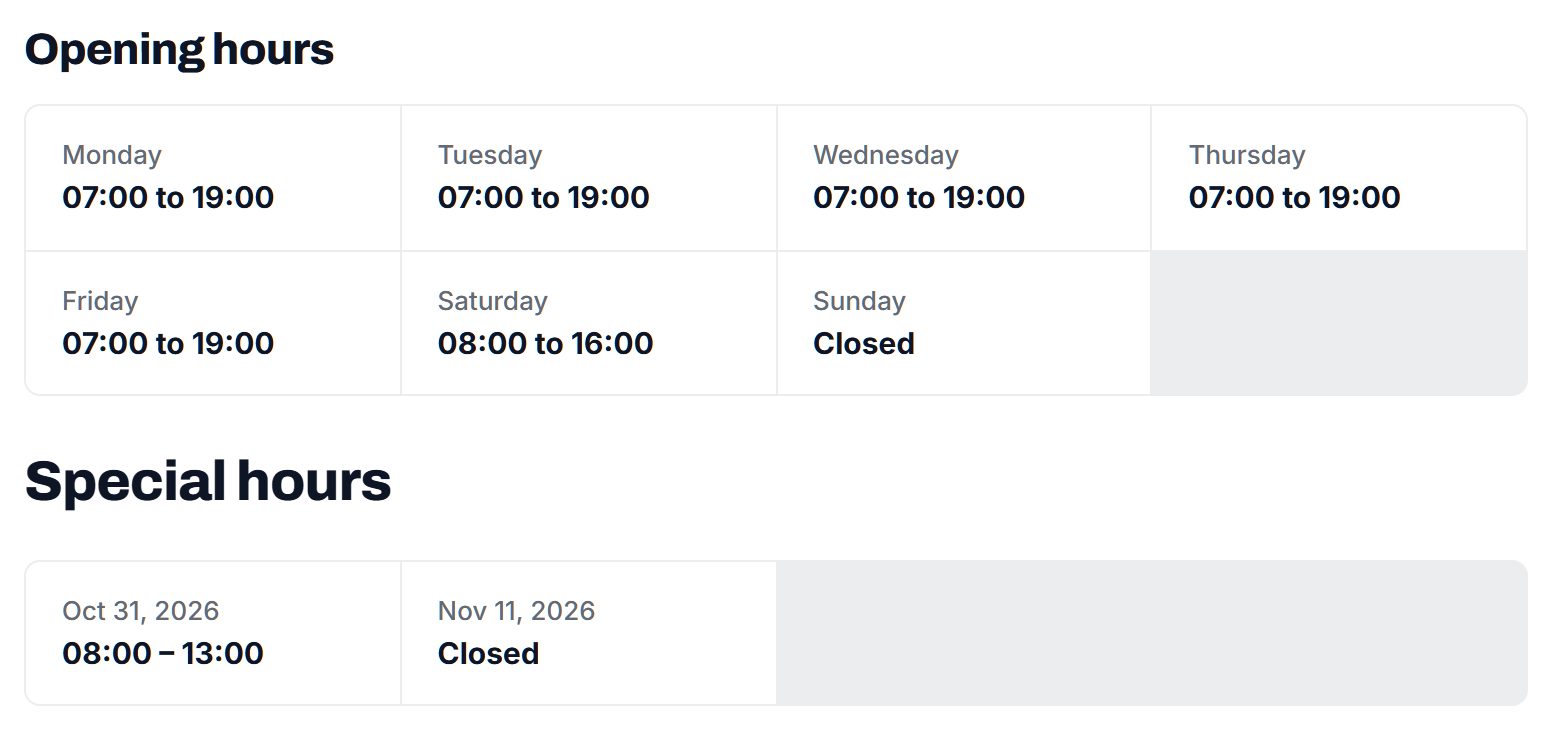
Opening hours deserve their own prominence: "gym open 24 hours" and "gym open on Christmas" are common searches. Class schedules change too often to copy; let gyms point to their own timetable, and remember the directory never takes bookings.
| Category | Example listings | Details people filter on |
|---|---|---|
| Full-service gyms | Chain clubs, independent gyms, community recreation centers | Price band, contract, around-the-clock access, pool, childcare |
| Strength gyms | Powerlifting, weightlifting and strongman gyms | Racks, platforms, chalk allowed, competition equipment |
| Group fitness studios | Spin, HIIT, barre and functional fitness boxes | Classes, drop-in price band, beginner sessions |
| Yoga and pilates | Yoga studios, reformer pilates studios | Styles taught, heated rooms, equipment provided |
| Combat sports | Boxing gyms, martial arts and jiu-jitsu academies | Disciplines, kids' classes, competition team |
| Climbing and specialty | Bouldering gyms, swimming pools, outdoor bootcamps | Day pass, gear rental, intro sessions |
In Yclas, fields like "day pass available" or "chalk allowed" are checkboxes shown as search filters.
Sell visibility and visitors to gyms that need members.
Gyms live on new memberships, and every gym loses members every month. That makes them steady buyers of local advertising. Independent gyms and new studios especially struggle against chains with large marketing budgets, and a good directory gives them a fair place to be compared.
List every facility free, chains included. Switch on paid options once people use the site, and time your sales talks for the months before January and September, when gyms plan their big pushes.
Quote requests become tour and trial requests here: a visitor says what they train, when, and their budget, and the request goes to matching gyms. Gyms answer with their own trial offer. The directory does not book sessions; the gym takes it from there.
Memberships for gyms can include featured placement on their style pages, a badge, a photo gallery and requests. Banner spaces suit physical therapists, sports nutrition shops, running stores, sportswear brands and massage therapists.
Keep paid places labeled. Never let a paying gym hide a review about cancellations; those reviews are what make visitors trust everything else on the page.
| Model | Works when | Switch it on |
|---|---|---|
| Featured places | People browse "24 hour gyms" or "boxing gyms" in an area | When those pages get steady visits |
| Tour and trial requests | Visitors describe what they train and get offers from matching gyms | Free first, then per request or in a membership |
| Gym memberships | Independents and studios want a badge, gallery and top spot | Before the January rush |
| Banner spaces | Physios, nutrition shops and running stores want active locals | When you can show monthly visitors |
| Sponsored guides | A studio funds "best pilates for beginners" with clear labeling | Once your guides rank |
List every gym, studio and box before you launch.
Fitness businesses are easy to find but hard to describe, so seeding is a two-step job.
- Import the facilities. Google Places, with your own Google key, gives each gym's name, address, phone, website and opening hours. It does not bring photos. Remove physiotherapy clinics, sports shops and closed studios that come along with the results.
- Fill in the comparison fields. Prices, contracts and equipment are rarely on the map. Gym websites, a phone call or a visit with a short checklist give you the essentials. Start with the gyms people ask about most in local threads.
- Add what maps miss. Garage gyms that sell memberships, martial arts academies above shops, outdoor bootcamps in parks, and recreation centers run by the city. Recreation departments publish their facilities and are a good source.
- Use sport associations. Powerlifting federations list affiliated gyms; martial arts styles keep lists of member schools; climbing gyms often know each other.
- Bulk import from a spreadsheet (CSV) once you have a list.
Yclas imports businesses from Google Places and lets owners claim their page and reply to reviews. Ask every gym to claim its page: owners will add photos, correct prices and the classes they are proud of, which is exactly the detail visitors want.
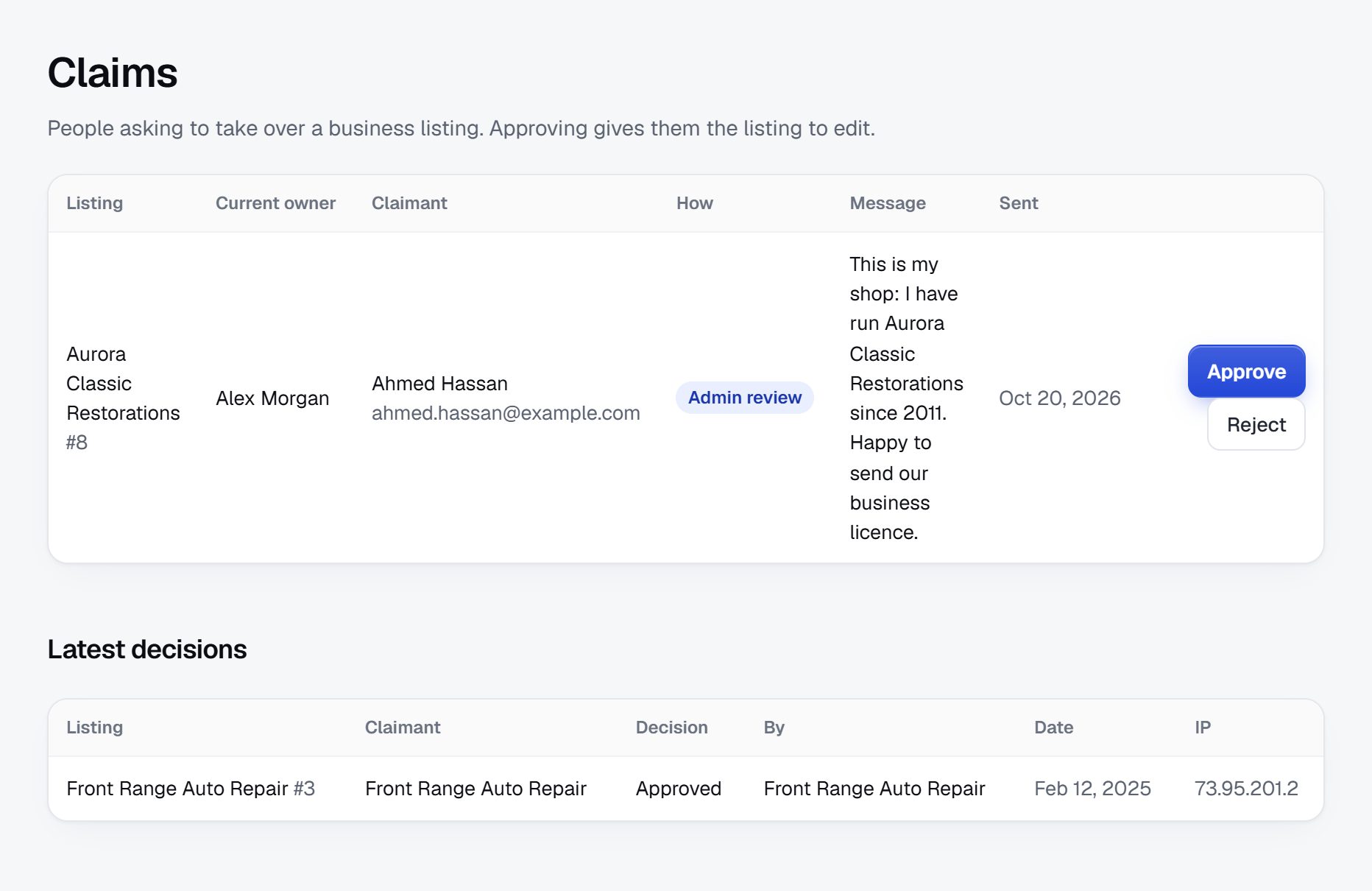
Be honest about contracts, prices and closures.
The most common complaints about gyms are not about the workouts. They are about money and contracts.
- Cancellation problems. Reviews about hard-to-cancel contracts are frequent. Allow them, let the gym reply in public, and do not remove them for paying members.
- Price accuracy. Ask owners to keep price bands current and show the date a page was last updated. Remove promotional prices once they end.
- Closed or sold gyms. Gyms close and change owners often, sometimes while still taking payments. Add a "report a problem" route and check reports within days.
- Fake reviews from staff, members paid with free months, or rivals. Hold reviews for moderation and look for bursts.
- Trainer qualifications. Show a certification only after seeing proof, and name the organization that issued it.
Many places have specific consumer rules for gym and health club contracts, such as cancellation rights, but they vary a lot. Check the rules where you operate before you explain anyone's rights on the site.
Advice for visitors
Ask for a day pass or trial before signing, read the cancellation terms, ask about the joining fee and annual fees, and visit at the time of day you plan to train to see how busy it is.
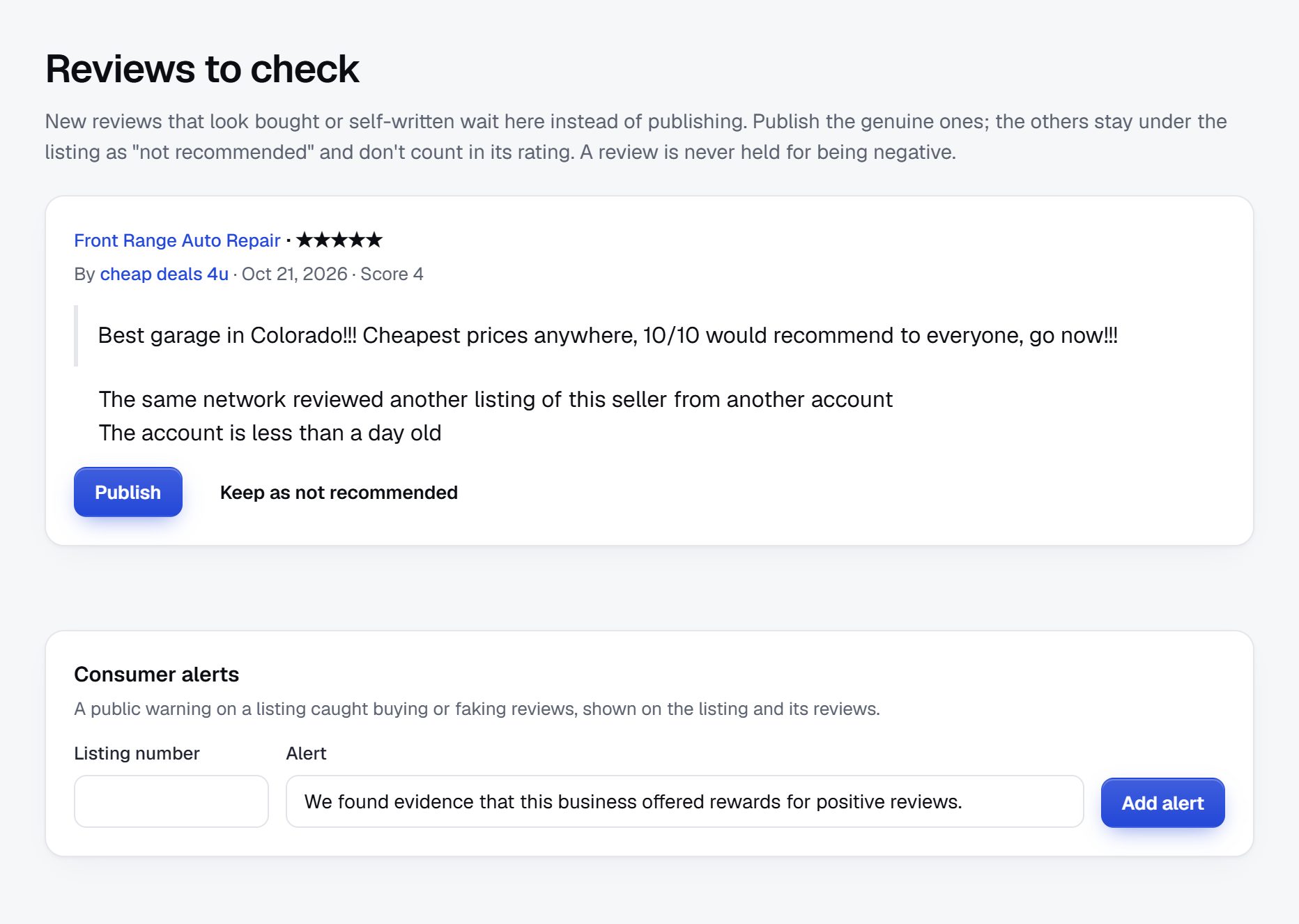
Rank for the gym type, the amenity and the neighborhood.
Gym searches mix a type of training, an amenity or a constraint, and a place. Build pages to match each common pattern.
- "24 hour gym near me" and "gym open late Dallas": access and hours pages per city.
- "gym with sauna Chicago" and "gym with pool and childcare Charlotte": amenity pages.
- "no contract gym Phoenix": contract pages, among the most useful you can build.
- "powerlifting gym Austin" and "jiu jitsu near me": training style pages.
- "women only gym Houston": a group page per city.
- "gym day pass downtown Nashville": drop-in pages for travelers.
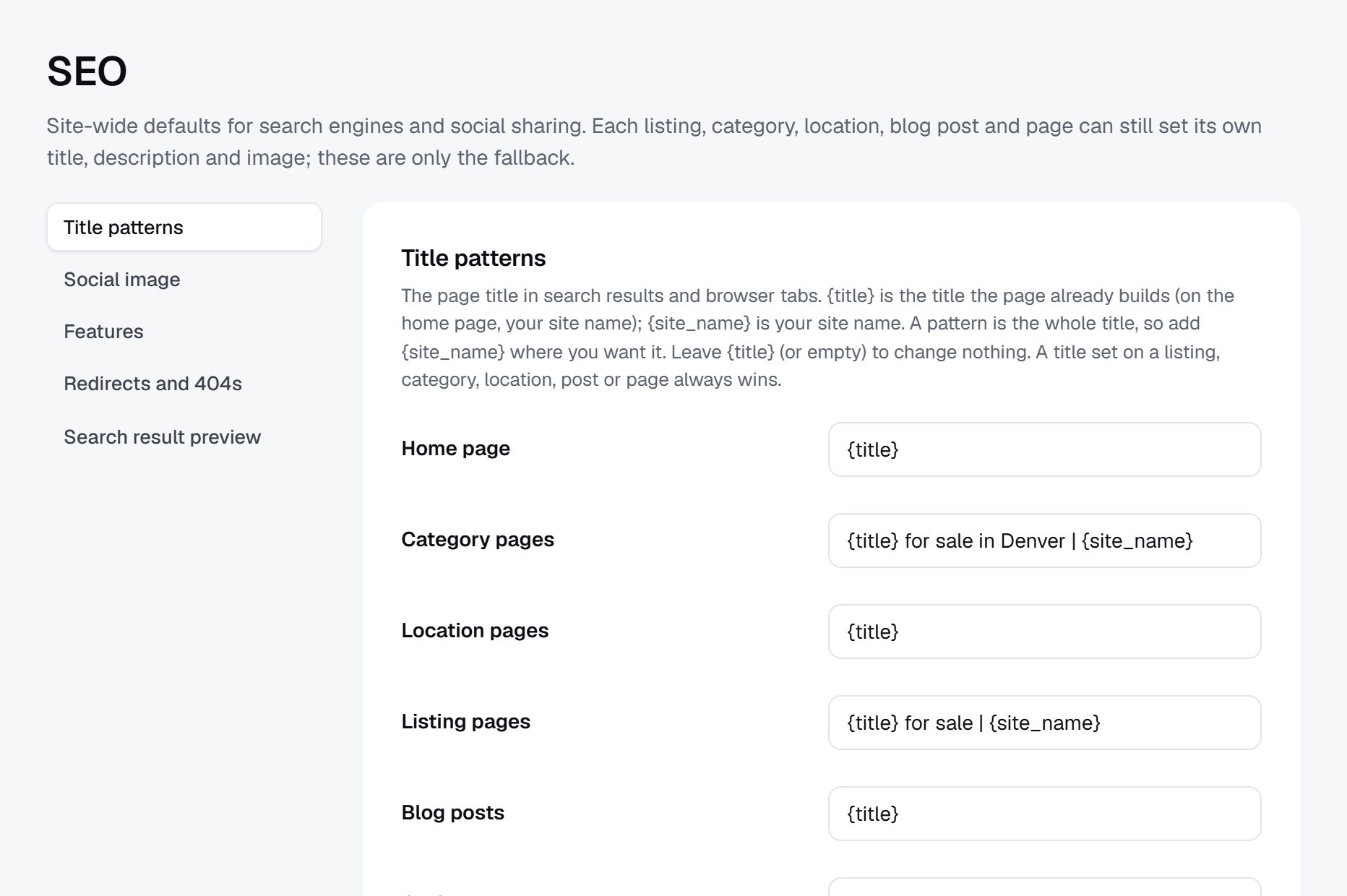
Each gym, category and location has its own page, with an SEO title pattern you set once.
Content ideas
- How to compare gym contracts and what to check before signing.
- The best gyms for beginners in each neighborhood, chosen with clear criteria.
- Where to train while visiting: day passes across the city.
- Strength gym or chain gym: what changes for a lifter.
- A January guide for people joining a gym for the first time.
Update the price and amenity pages every few months and say when they were checked. Freshness is your edge over stale lists.
Launch before January, the busiest month for gyms.
Choose one city or one dense part of a big city, ideally one where you train yourself and know a few owners. Your own gym's owner is your first claimed page and your first reference.
The gym calendar is predictable. January brings the biggest wave of new members, September a smaller one as people return to routines, and late spring a push before summer. Launch in October or November so your pages are found when the January searches start, and so gyms can buy a featured place in time for it.
Partners
- Physical therapists and chiropractors recommend gyms to patients finishing rehab.
- Running stores and clubs reach active people who cross-train.
- Employers and HR teams looking for gyms near the office for staff.
- Colleges and new resident groups: students and newcomers search for gyms in their first weeks.
Checklist
- Every gym, studio and recreation center imported and cleaned.
- Price band, contract and access filled in for the top fifty pages.
- Amenity and training style pages live.
- Tour and trial requests tested with two gyms.
- Twenty claimed pages with photos.
- A post in each city group where people ask about gyms.
A worked example: Scioto Training Guide, Columbus, Ohio.
Picture a fictional site to see the plan in practice. Scioto Training Guide covers Columbus and its inner suburbs, from Grandview and Clintonville to German Village and Whitehall. Its founder is a competitive powerlifter who moved to the city for work and spent a month paying for day passes to find a gym with enough racks and a deadlift platform. Coworkers kept asking where she ended up, and the spreadsheet she shared with them became the directory.
How the categories are arranged
- Full-service gyms
- Open 24 hours
- With pool or childcare
- Strength gyms
- Powerlifting and weightlifting
- Studios
- Spin and HIIT
- Yoga and reformer pilates
- Combat sports
- Climbing and day passes
Who uses it
Students and staff at the big university campus are the largest group, especially in late August and early January. People who just moved for a job come next, followed by lifters who want a serious strength gym rather than a chain. Business travelers and visiting families use the day pass pages, and parents look for gyms with childcare and kids' martial arts. Shift workers from the hospitals and distribution centers form a quieter but steady group, searching for gyms that stay open through the night.
How it got going
She imported every gym, studio and recreation center in Franklin County, removed physical therapy clinics and sports shops, and then spent evenings visiting gyms with a one-page checklist: racks, platforms, chalk policy, contract terms, day pass and childcare. Her own gym's owner claimed the first page and introduced her to three other independent owners. A running store let her leave cards at the register, and a post in the city subreddit asking "which gyms have no joining fee?" brought the first wave of visitors when she answered it with a link to her contract page. The recreation center page, built in one afternoon from the city's own list of facilities, became one of the most visited on the site, mostly from people on tight budgets.
How it makes money
Every facility is listed free, chains included. In November, before the January rush, independent gyms and studios started buying featured places on the strength, pilates and no-contract pages. Tour and trial requests went to matching gyms free for the first season; now they come with a yearly membership. A physical therapy practice and a sports nutrition shop rent the banner spaces. Cancellation reviews stay up whether a gym pays or not, and that is the reason people trust the site.
| Gym | Category | Key details |
|---|---|---|
| Olentangy Iron Club | Strength gyms | Six racks and three deadlift platforms; chalk allowed; month to month |
| German Village Reformer Studio | Studios: yoga and reformer pilates | Reformer classes; drop-ins welcome; beginner series each month |
| Hilltop Community Fitness | Full-service gyms | Open 24 hours with key card; pool; childcare weekday mornings; no joining fee |
| Scioto Bouldering Co. | Climbing and day passes | Day pass; shoe rental; intro sessions on weekends |
| Westside Jiu-Jitsu Academy | Combat sports | Gi and no-gi classes; kids' program; first class free |
The site and every gym in this table are invented for the example.
Ninety days to a gym directory people use.
The gym calendar decides your schedule. The January rush is the moment that matters most, so count back from it: if you start in early September, week twelve lands in late November, with pages indexed and gyms deciding where to spend their new year budget. A September start also catches the smaller back-to-routine wave.
Gyms are easy to import and slow to describe. Prices, contracts, equipment counts and day pass policy rarely appear on maps and are often missing from gym websites. Most of these weeks go into collecting them by phone and in person, beginning with the gyms people already ask about in local threads.
Date every price band and contract detail you record. Gyms change offers often, especially around January, and a page that says when it was checked is trusted far more than one that does not. Hold off on selling until the contract and day pass pages have visitors; those pages earn the attention that later makes featured places worth paying for. By week twelve, aim for a complete city, the comparison fields filled in for the busy gyms, tour requests tested, and a few independents ready to buy before January.
Keep one evening a week for follow-up calls. Owners who did not answer in the first round often will in a quieter week, and those late answers fill the gaps on your most visited pages.
| Weeks | Focus | Done when |
|---|---|---|
| 1-2 | Choose the city; import gyms, studios and recreation centers; remove clinics and shops | Every facility has one clean page in the right category |
| 3-4 | Call or visit for price band, contract, joining fee and day pass | The fifty most discussed gyms have those fields filled in and dated |
| 5-6 | Collect equipment and amenity details with an in-person checklist | Strength gyms have rack and platform counts; amenities are checked |
| 7-8 | Ask owners to claim pages; contact running stores and physical therapists | Twenty gyms have claimed pages with photos and current prices |
| 9-10 | Build the no-contract, 24-hour, day pass and training style pages | Those pages are live and complete for the whole city |
| 11-12 | Switch on tour and trial requests; publish the January beginner guide | Two gyms answer test requests within a day, before December starts |
Ways to build a gym directory, compared.
Most people who visit a gym directory are comparing three or four places, so the build has to make comparison easy. That means a handful of features: many checkbox fields for amenities and equipment that filter together, a price band and contract fields, opening hours that can show around-the-clock access, gym owners who claim and edit their own page, reviews with owner replies for the inevitable contract complaints, and tour or trial requests sent to several matching gyms. It points to each gym's own class schedule rather than taking bookings.
Building with developers
A custom build fits if you want live class timetables pulled from each gym's management software, or a crowd level feature. Each gym uses different software with different access rules, so that work never really ends, and it delays the plain comparison data visitors want first.
A script or WordPress plugin on your own server
A directory script or WordPress plugin covers listings, filters and reviews with full control of the code. It suits a founder who already runs websites. The cost is upkeep: updates, plugin conflicts, spam reviews from rival gyms and backups, at the very time of year you should be visiting gyms before January.
A hosted builder
A hosted builder such as Yclas handles the software and hosting, so you can spend your evenings collecting prices and contract terms. Check that any builder supports checkbox filters, claiming, owner replies and quote requests before you start. Look at how facilities are imported too, because even a mid-sized city has several hundred, and at how quickly you can add a new filter when visitors start asking for something you did not plan for.
| Route | Fits when | Watch out for |
|---|---|---|
| Custom development | You want live timetables or crowd levels from gym software | Different software at every gym, and a build that never finishes |
| Script or WordPress plugin | You run websites already and want the code | Updates and review spam land in the busy months before January |
| Hosted builder | You want your time on prices, contracts and gym visits | Confirm checkbox filters, claiming, owner replies and quote requests |
What a gym directory costs to run.
The software is the smallest part of the bill. Most of the cost is your time in the first months: finding the first listings, answering questions and checking what gets posted.
Beyond software and a domain, budget for the Google Places import on your own key and the time to call or visit gyms for prices and contract terms. A few day passes to check gyms in person are money well spent.
| Cost | Typical range | On Yclas |
|---|---|---|
| Domain | $10 to $20 a year | Your own, with SSL included |
| Software and hosting | $0 to $100+ a month, plus plugins and updates | Starter $19 a month, Professional $99 |
| Design | $0 to $100 for a theme, or a designer | 109 looks included |
| Payment fees | About 3% per payment | Your Stripe or PayPal fees; Yclas takes nothing |
| Business data | Free if you collect it, or a few cents per page of Google results | Paid to Google, with your key |
| Your time | 5 to 10 hours a week at the start | Finding listings, moderation, support |
Mistakes that sink gym directories.
- Copying class schedules. Timetables change weekly, instructors leave and classes get cancelled. A copied schedule is wrong within a month and sends people to a locked studio. List the classes offered and link visitors to the gym's own timetable.
- Listing only independents. It is tempting to leave out the chains and champion small gyms, but visitors compare both, and a list without the big clubs looks incomplete. Include the chains and let independents stand out on equipment, classes and contracts.
- Accepting "call for pricing". People leave a page that hides the price. Ask every gym for a monthly price band and joining fee, and mark pages where the gym would not share one so visitors know it is the gym's choice.
- Removing cancellation complaints for paying gyms. Contract and cancellation reviews are the most read reviews in this niche. Taking them down for a paying gym destroys the reason anyone trusts you. Let the gym reply instead.
- Vague equipment descriptions. "Great equipment" means nothing to a lifter. Count racks, platforms and the heaviest dumbbells, and note whether chalk is allowed. Specific numbers are what serious lifters search for and share.
- Launching in January. By the time the new year rush begins, searches are already landing on pages that were indexed months earlier. Launch in the fall, and sell featured places in November, not after the rush is under way.
- Forgetting recreation centers and low-cost options. City recreation centers, college gyms open to the public and community pools serve many people on tight budgets. Leaving them out makes the directory feel like advertising for expensive clubs.
- Prices without a date. Promotions start and end, and a January offer still showing in June makes every price on the site look unreliable. Show when each price was checked and remove ended promotions.
- Missing closures. Gyms sometimes close or change hands suddenly, occasionally while members are still being billed. A page left up for a closed gym looks careless and can pull visitors into a dispute you cannot help with. Add a way to report a problem and act on reports within days.
- Writing only for experienced athletes. Directories built by keen lifters and runners often speak only to people like them. Someone joining a gym for the first time wants to know about beginner sessions, quiet hours and whether staff will show them the machines. Add fields for those and a guide written for newcomers, and you reach the largest group searching in January.
Glossary of gym directory terms.
Owners and members will use these terms, and many of them make good filters.
| Term | What it means |
|---|---|
| Box | Common name for a functional fitness gym built around group workouts, barbells and open floor space. |
| Day pass | A single-day entry for a fee, used by travelers and people trying a gym before joining. |
| Drop-in | Attending one class or open session without a membership, usually at a set price. |
| Joining fee | A one-time charge at sign-up, also called an enrollment or initiation fee. |
| Annual fee | A yearly charge on top of monthly dues that some gyms bill, often listed as a maintenance fee. |
| Month to month | A membership that renews each month and can be ended with the notice the gym requires. |
| Membership freeze | Pausing a membership for a period, such as an injury or travel, usually for a small fee. |
| Power rack | A steel frame with safety bars for squats and presses, the piece serious lifters count first. |
| Deadlift platform | A raised floor section, often wood with rubber sides, for lifting and dropping heavy barbells safely. |
| Reformer | A pilates machine with a sliding carriage and springs for resistance, used in small classes. |
| Open gym | Times when members can train on their own rather than in a scheduled class. |
| Class pack | A bundle of classes bought up front, common at studios, used within a set period. |
| Key card access | Entry with a member card or phone code outside staffed hours, which is how most 24-hour gyms work. |
| Staffed hours | The hours a front desk or coach is present at a gym that may be open longer with key card access. |
The same steps for a gym directory on Yclas.
- Describe your directoryThe setup wizard writes the categories, an About page and example listings from one sentence.
- Add fieldsHours, services, areas served, prices: the details people search by, as filters.
- Fill itImport businesses from a spreadsheet or Google Places, then check them.
- Bring owners inOwners claim their page, update it and answer reviews.
- EarnSwitch on featured places, banners or memberships when visits arrive.
What should I budget to launch a gym directory?
Plan for software, a domain and a small Google bill for importing gyms, plus some day passes for visits. Most of the investment is time collecting prices, contracts and equipment details.
Can I publish a gym's prices without asking?
Prices a gym publishes itself are fair to summarize, but they change often. Show them as ranges with the date checked, and let owners correct them when they claim the page.
Do I need to include the big chains?
Yes. People compare chains with independents, and a directory without the chains looks incomplete. Independents then stand out on classes, equipment and contract terms.
How do gyms pay a directory?
Featured places on training style and amenity pages, memberships with a badge and gallery, tour and trial requests, and banners for physios, running stores and nutrition shops.
Should I take class bookings?
No. Show which classes a gym offers and how to book with them. Class schedules change weekly, and gyms already have their own systems.
What legal points should I check?
Rules on gym contracts, cancellations and advertising differ by place, and so do rules on publishing reviews. Check the rules where you operate before writing about consumer rights.
How do I compete with class pass apps and chain websites?
List every gym, not only partners, and answer the questions they avoid: contract terms, equipment, day passes and honest reviews.
Should personal trainers get their own pages?
Independent trainers who rent space or train clients outdoors can have a category of their own, with the gyms where they work and their certifications shown once checked. Trainers employed by one gym are better mentioned on that gym's page. Hold trainer pages to the same proof rules as gyms, since a badge for a certification you never saw is worse than no badge.
How should I handle gyms that only say "call for pricing"?
Call and ask for a range. If a gym will not share one, show the page with a note that pricing is on request. Over time, visitors favoring gyms that show a range often persuades the rest to share theirs.
Are hotel and apartment gyms worth listing?
Only when the public can buy a pass. Residents-only gyms frustrate visitors who cannot get in, while a hotel gym that sells day passes is useful on the traveler pages.
How do I list a chain with many locations in one city?
Give each location its own page, because hours, equipment, pools and childcare often differ between clubs of the same chain. Link them to one brand profile and ask the chain for a contact who can update every club. Chains often run different prices at different clubs too, so record the price band per location rather than once for the brand, and recheck each club after the January offers end.
Can I show how busy a gym gets?
Not with live data at first. Ask owners for their quietest and busiest hours, let reviewers mention crowding, and suggest visitors drop in at the time they plan to train. A simple field for quiet hours, filled in by the owner, already answers the question for most people.
Related pages.
The parts of Yclas this leans on.
The gyms are there and the questions are clear. Build the page that answers them.
Describe your site in a sentence and the setup wizard writes the categories, example listings and a look. Free for 15 days, no credit card.
Start my directory