How to build an apartment directory renters actually trust.
This guide covers how to build an apartment directory that lists buildings rather than single units: who searches for apartment communities and why the big rental sites frustrate them, which amenities renters filter on, how to earn from featured buildings and leasing inquiries, where the first buildings come from, and how to handle fair housing and rental scams.
Free for 15 days · No credit card · Plans from $19 a month
List buildings, not just vacancies, and be the guide to one city.
Most rental sites are built around units for rent today. That works for someone moving next week, but many renters start earlier and ask different questions: which buildings near the hospital allow two dogs, which complexes have in-unit laundry and covered parking, which ones are income-restricted, and what is the building like to live in. The big portals answer with dozens of near-identical units, paid placements at the top and listings that vanish once leased.
An apartment directory is a guide to the buildings themselves. Each building keeps its page all year, with its amenities, pet policy, leasing office hours and a link to current availability on its own website. That makes it useful to people planning a move months ahead.
Pick your angle
- One city or metro, every building with more than a handful of units.
- One renter type: students near a university, traveling nurses near hospitals, seniors looking for 55-plus communities, or renters who need affordable and income-restricted housing.
- One neighborhood type: downtown high-rises, garden-style complexes in the suburbs, historic buildings converted to apartments.
Renters ask these questions today in city subreddits, university housing Facebook groups, relocation forums and employer HR offices, which is also where your first visitors are.
The building page outlives every vacancy. That is what makes it worth bookmarking.
Let renters filter on the amenities that decide a move.
Categories should be building types that renters recognize, kept to one level. The deciding details belong in fields, and for apartments those details are mostly yes-or-no amenities and policies.
- Pet policy needs more than a checkbox: cats allowed, dogs allowed, weight limit, number of pets, pet rent. It is one of the most filtered details in any rental search.
- Laundry as a dropdown: in-unit, hookups, on-site shared, none.
- Parking: garage, covered, surface lot, street only, with a field for the monthly cost if there is one.
- Unit mix: studio, one, two and three bedrooms, as checkboxes, plus a rent range per type that the building updates.
- Utilities included, lease lengths offered and whether short-term furnished units exist.
- Accessibility: elevator, step-free entrance, accessible units available.
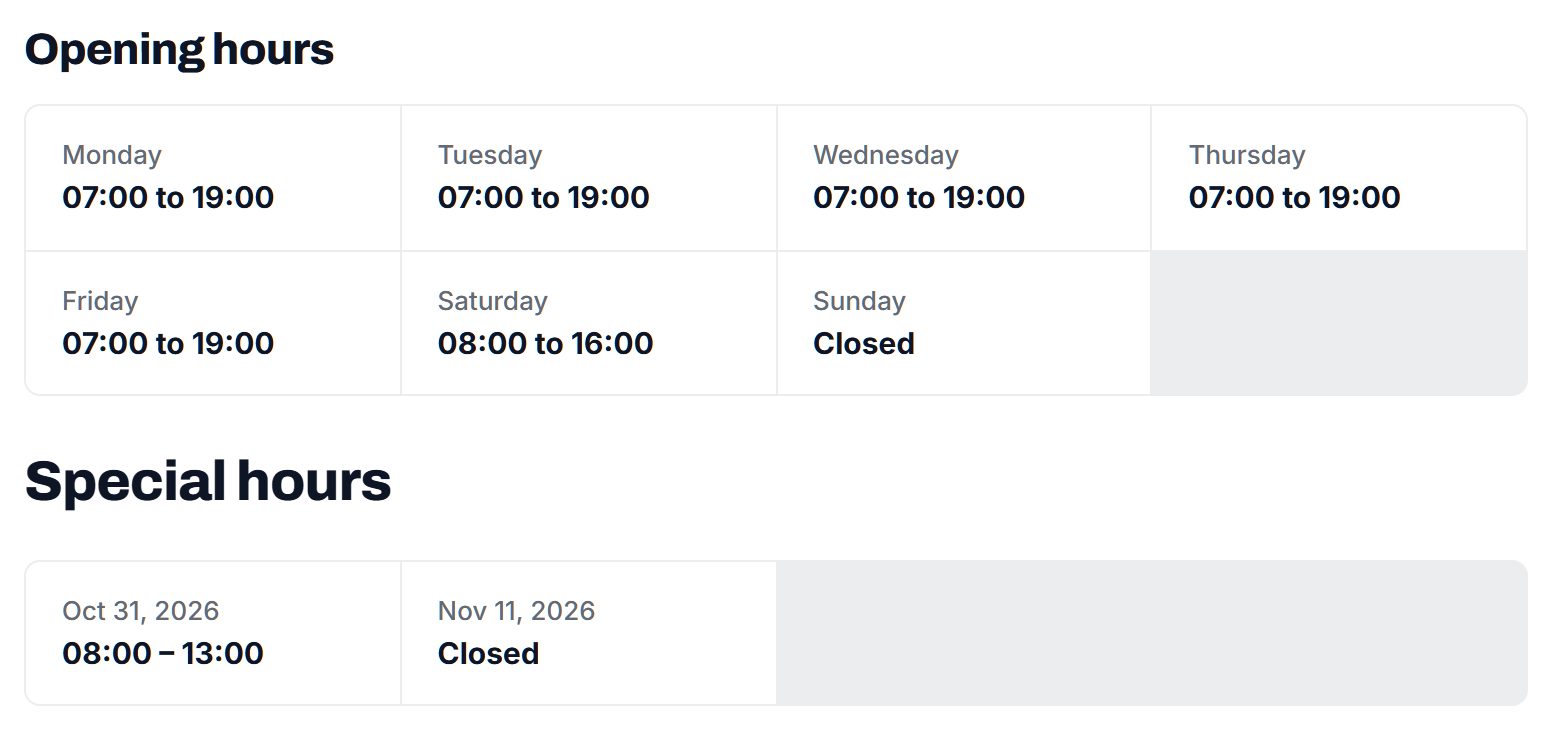
Opening hours on an apartment page are the leasing office hours, which is exactly what someone planning a tour needs to know.
| Category | Example buildings | Details renters filter on |
|---|---|---|
| Garden-style communities | Two and three-story complexes with pools | Pets, parking, in-unit laundry, bedrooms |
| High-rise and mid-rise | Downtown towers, mixed-use buildings | Doorman, gym, garage parking, transit nearby |
| Student housing | Buildings leased by the bed near campus | Distance to campus, furnished, roommate matching, utilities included |
| Senior and 55-plus | Age-restricted communities | Elevator, accessible units, activities, transport |
| Affordable and income-restricted | Tax credit and subsidized buildings | Income limits, waitlist open, accepts vouchers |
| Small buildings and conversions | Fourplexes, historic lofts | Owner on site, street parking, lease length |
The property field pack in Yclas sets up common rental fields in one click, and you can add your own as dropdowns, checkboxes or numbers that show up as search filters.
Sell visibility and inquiries to buildings that have empty units.
Apartment communities already spend money to fill vacancies, so this is one of the easier directories to fund. The rule still holds: list every building for free first, so the directory is complete and renters come, and charge once you can show inquiries.
- Featured places put a building at the top of its neighborhood or category page. Properties with a lease-up or a seasonal vacancy problem buy these first.
- Leasing inquiries are the main value. Renters send their questions straight to the leasing office through a request form on the building page, and management companies pay for a membership once they see those messages arrive.
- Memberships for management companies that run several buildings and want to update rent ranges and specials across all of them.
- Banner spaces fit the businesses around a move: movers, storage, furniture rental, renters insurance, internet providers.
Keep paid buildings clearly marked. A renter who learns that the top results are simply the ones paying will go back to the portals.
| Model | Works when | Switch it on |
|---|---|---|
| Free building pages | You need every building in the area listed | From day one |
| Featured buildings | Properties have vacancies to fill | When neighborhood pages get steady traffic |
| Memberships for management companies | A company runs several buildings and gets regular inquiries | After the first inquiries reach leasing offices |
| Banner spaces | Movers, storage and insurers want new renters | Once you can show monthly visitors |
| Seasonal promotions | Summer moving season and the August student rush | In spring, before leases turn over |
Map every building in your area before you go after renters.
Buildings are fixed and easy to find, which makes seeding an apartment directory faster than most. The work is in getting accurate amenity and pet details for each one.
Where the first buildings come from
- Google Places import. A search for apartment complexes across your city brings in name, address, phone, website and leasing office hours. Photos are not imported, so add your own exterior shots or ask the building for its photos.
- Public records. Many cities keep rental registration lists or building permit data, and housing agencies publish lists of income-restricted properties. Use them to find buildings the map misses.
- Apartment associations. Local apartment associations represent management companies and can introduce you to the regional managers who decide marketing for many buildings at once.
- Management company spreadsheets. A company with twenty buildings will often send a spreadsheet of names, addresses and amenities that you can import as a CSV.
Then ask leasing offices to claim their pages and fill in pets, parking, laundry and rent ranges. Leasing agents change often, so connect the claim to a regional manager or the company's marketing contact as well.
One management company that claims its pages can complete twenty buildings in an afternoon.
Stay on the right side of fair housing and keep scammers out.
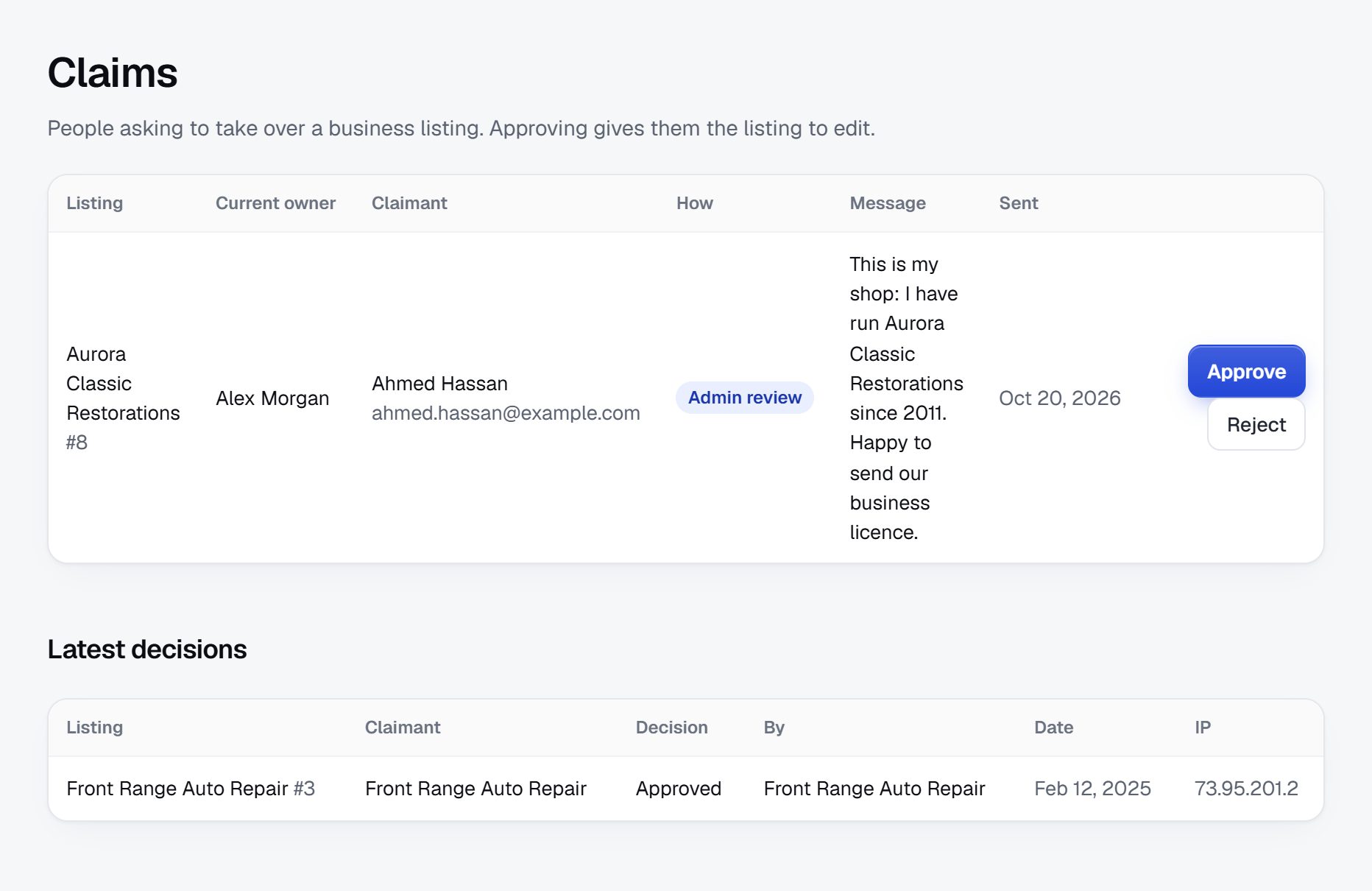
Rental scams are common and painful. The usual pattern copies photos of a real apartment, lists it at a low rent and asks for a deposit or application fee by wire, gift card or payment app before any viewing. A building directory is harder to fake than a unit board, but scammers will still try to claim pages or post contact details that are not the building's.
Rules to set from the start
- Verify every claim by calling the leasing office on the number already published or emailing the management company's own domain.
- Never show private contacts in place of the office number without checking.
- Warn renters on every page: tour before you pay, never wire a deposit, and confirm the leasing office through the building's own website.
- Moderate reviews. Renters' reviews are valuable, but expect angry posts after disputes over deposits. Approve reviews before they go live, remove personal attacks and let buildings reply.
Fair housing
Rules on housing advertising forbid language that discourages people because of protected characteristics, and those characteristics differ by country and state. Do not let descriptions say who a building prefers, review building copy before approving it, and be careful with fields like age restrictions, which are only allowed for specific housing types. Check the rules where you operate, and consider having a local housing lawyer read your listing rules once.
Win the searches about buildings and amenities, not just units.
Renters search in two ways: by building name, when they already have a shortlist, and by amenity and area. Examples: "pet friendly apartments in Charlotte", "apartments with in-unit washer and dryer Phoenix", "income-restricted apartments Seattle", "student apartments near UT Austin", "55 and older apartments Tampa", "reviews of" followed by a building name.
Pages to build
- Building pages that rank for the building's own name, often the most valuable page you have.
- Neighborhood pages with every building in the area, its rent range and its pet policy.
- Amenity pages for the filters people type: pet friendly, in-unit laundry, garage parking, furnished, no broker fee where that applies.
- Renter type pages for students, nurses, seniors and families.
Content ideas
- A neighborhood guide for renters: commute, schools, noise, parking.
- A move-in checklist and a guide to reading a lease.
- How to spot a rental scam in your city.
Keep rent ranges dated on every page. Stale rents hurt trust more than missing ones.
Launch in spring, before the summer moving season.
Moving peaks between late spring and the end of summer, and student markets turn over in a rush before classes start in August or September. Being complete and indexed by April gives you the whole season.
First area and partners
- Start with one city or one campus area. A complete directory of one place beats a thin one of five.
- Employers and hospitals relocate new hires and traveling staff every month and want a list to send them.
- University off-campus housing offices often keep lists of nearby buildings and may link students to a better one.
- Real estate relocation agents and movers get asked about apartments constantly.
Launch checklist
- Every building over a set size in your area listed.
- Pet policy, laundry and parking filled in for at least half.
- Neighborhood and amenity pages built.
- Scam warning and fair housing rules written and visible.
- Two or three management companies with claimed pages.
- A student or summer moving page ready for the season.
Each quarter, ask leasing offices to update rent ranges and specials, and mark the date on the page.
A worked example: Salt Creek Apartment Guide, Lincoln, Nebraska.
Here is a fictional case that ties the steps together: Salt Creek Apartment Guide, a building directory for Lincoln, Nebraska. The city has a large university, two big hospitals and a state government workforce, which means steady demand from students, nurses and new hires who have to choose a building from a distance.
How the categories are arranged
- Near campus
- Leased by the bed
- Standard leases
- Downtown and the Haymarket
- Garden-style communities
- South Lincoln
- North and east Lincoln
- 55-plus communities
- Income-restricted buildings
- Waitlist open
- Accepts vouchers
Who it serves
Most visitors are moving in from elsewhere. A traveling nurse on a thirteen-week contract wants a furnished one-bedroom near the hospital that accepts a cat. A graduate student arriving in August wants a twelve-month lease within biking distance of campus. A retiree moving closer to grandchildren wants an elevator building with a garage. None of them can tour ten buildings in person, so the building pages do the first round of touring for them. Local renters come too, usually when a lease renewal brings a rent increase and they start comparing buildings across town.
How it got going
The founder, a former leasing agent, imported every apartment complex in the city from map data and filtered out the duplicates, the condo associations and the single rental houses that slipped in. She then spent a month photographing building exteriors and calling leasing offices with a five-question script: pets, laundry, parking, utilities and lease lengths. The city housing agency's list of income-restricted properties added buildings the map had missed. A regional management company with eleven local properties sent a spreadsheet of amenities that went in as a CSV import in one afternoon.
Her first real traffic came from a hospital recruiter who sent the neighborhood pages to every incoming traveling nurse. Within a season, nurses were leaving reviews about noise, parking and night-shift quiet hours that no portal had. Those reviews, more than the photos, are what renters now mention when they write to leasing offices.
How it makes money
Every building page is free. Revenue comes from featured buildings in the campus and downtown categories, bought mostly between March and July, from yearly memberships for two management companies whose leasing offices answer renter inquiries through the site, and from banner spaces for a moving company, a storage facility and a furniture rental business.
The guide never posts single units. It points renters to each building for current availability and keeps the building page itself up to date.
| Building | Rent range | Key details |
|---|---|---|
| The Larkspur, near campus | $650 to $780 per bed | Furnished, utilities included, 12-month leases starting in August |
| Haymarket Lofts at 8th Street | $1,050 to $1,600 | Converted warehouse, elevator, garage parking extra, cats only |
| Prairie Ridge Apartments, south Lincoln | $975 to $1,425 | Garden-style, in-unit laundry, dogs up to 50 lb, pool |
| Willow Court Senior Residences | $890 to $1,150 | 55-plus, elevator, accessible units, activity room |
| Oak Bend Commons | Income-based rent | Tax credit building, waitlist open, accepts vouchers, on a bus route |
These buildings and rents are invented for the example.
The first 90 days of an apartment directory.
The first quarter of an apartment directory is a race to finish one city before the moving season, with accuracy as the rule that slows you down. Imports give you the buildings quickly. Pet policies, laundry, parking and rent ranges have to come from leasing offices, and leasing offices are busiest exactly when you would like to call them, on weekends and around the first of the month.
Call in the middle of the week and the middle of the month. Ask the same five questions in the same order every time, and record the date with each answer, because rent ranges and specials move constantly. A spreadsheet with one row per building and one column per question is enough to start, and it later becomes your import file. Where a management company runs several buildings, one conversation with its marketing contact can replace a dozen calls.
Write the fair housing rules and the scam warning before any building copy goes live. Approving descriptions against written rules from the start is far easier than cleaning up a hundred pages later. Selling featured buildings belongs at the end of the plan, once neighborhood pages are drawing visits you can point to. If a company asks to pay early, take its details and promise a call when the season starts; a featured spot on an empty page helps nobody.
| Weeks | Focus | Done when |
|---|---|---|
| 1-2 | Choose the city and a minimum building size; import complexes; remove condos and single houses | One page per qualifying building, with no duplicates |
| 3-4 | Write fair housing and description rules; add income-restricted buildings from housing agency lists | Rules published, and affordable buildings listed with waitlist status |
| 5-6 | Call leasing offices with the five-question script; take exterior photos | Pets, laundry and parking filled in for half the buildings |
| 7-8 | Contact management companies and the apartment association; import their spreadsheets | Three companies with claimed buildings |
| 9-10 | Build neighborhood, amenity and renter-type pages; write the local scam guide | Each neighborhood page shows every building with a dated rent range |
| 11-12 | Reach hospital recruiters, university housing and relocation agents; offer featured buildings for the moving season | Two partners sharing the link and the first featured building sold |
Ways to build an apartment directory, and what each costs you in time.
Apartment directories put specific demands on software. You need many amenity checkboxes that work together as filters, a pet policy with several parts, rent ranges per unit type, leasing office hours, pages that management companies can claim, moderated tenant reviews with replies, and an inquiry path that sends questions to the leasing office. Neighborhood and amenity pages need to exist in large numbers, because those are the searches renters make.
Custom development
Building from scratch fits if your plan depends on live availability feeds from property management software, which is a serious integration project with each provider and usually needs their agreement. Without that, custom code mostly rebuilds features that already exist elsewhere, and you still have to make every phone call to leasing offices yourself.
Script or plugin on your own server
Real estate and directory plugins for WordPress, or a self-hosted directory script, can carry building pages and filters. They suit someone who already runs a property website. Review spam, searches that slow down as filters pile up, and constant updates are the usual costs.
Hosted builder
A hosted builder such as Yclas takes care of hosting and software, which leaves you time for leasing offices. The building data stays yours either way, so keep your own copy of every spreadsheet you import. Whatever you pick, confirm that several fields can be combined in one search, that reviews can be held for approval, and that management companies can claim their pages. Test it with a real building and a real leasing agent before you import the whole city.
| Route | Fits when | Watch out for |
|---|---|---|
| Custom development | Your idea depends on live unit availability from management software | Each software provider needs its own integration and agreement |
| WordPress plugin or script | You already run a property website and its server | Slow filtered searches, review spam, update chores |
| Hosted builder | Your edge is local knowledge and leasing office contacts | Check combined filters, review approval and claiming |
| Spreadsheet or shared map | You are testing demand with one employer or campus | No filters, no reviews, out of date within weeks |
What an apartment directory costs to run.
The software is the smallest part of the bill. Most of the cost is your time in the first months: finding the first listings, answering questions and checking what gets posted.
Seeding from Google Places runs on your own key, and the cost grows with the number of buildings imported. Some cities sell or license rental data, and photography of building exteriors takes time, so plan for both if you cover a large metro.
| Cost | Typical range | On Yclas |
|---|---|---|
| Domain | $10 to $20 a year | Your own, with SSL included |
| Software and hosting | $0 to $100+ a month, plus plugins and updates | Starter $19 a month, Professional $99 |
| Design | $0 to $100 for a theme, or a designer | 109 looks included |
| Payment fees | About 3% per payment | Your Stripe or PayPal fees; Yclas takes nothing |
| Business data | Free if you collect it, or a few cents per page of Google results | Paid to Google, with your key |
| Your time | 5 to 10 hours a week at the start | Finding listings, moderation, support |
Mistakes that hurt apartment directories.
- Drifting into unit listings. Once you post individual vacancies, you compete with the portals on volume and spend your days taking down leased units. Keep the building as the page, show a dated rent range, and send renters to the building for current availability. A building page that stays put for years also collects reviews and links, which a unit ad never does.
- Undated rents. A rent range from last spring makes a building look cheaper than it is, and the renter blames you, not the building. Put the month next to every range and ask for updates each quarter. When a building will not confirm, show the range as unverified rather than guessing a new one.
- Borrowing portal photos. Professional photos on rental portals usually belong to the property or its photographer. Take your own exterior shots or ask the management company for permission to use theirs. Write down who gave permission and when, because the question tends to come up after a building changes owners.
- Letting descriptions describe the ideal tenant. Phrases that say who a building suits, such as young professionals or couples, can raise concerns under fair housing advertising rules. Describe the building, not the tenant, and edit copy before approving it. Keep a short list of phrases you always rewrite, and apply it to reviews as well as descriptions.
- Handling reviews loosely. Deposit disputes produce furious posts, and some properties post glowing reviews of themselves. Approve reviews before they go live, require them to be about living there, and let the building answer. A calm public reply from a property manager often does more for the building than a perfect score.
- Mixing condos with rental buildings. Condo buildings where a few owners rent out units have no leasing office and no single set of policies. Leave them out, or give them a separate category that says so.
- Ignoring the leasing calendar. Student buildings pre-lease for August from the fall before, and general moves peak in summer. Collect student building details in October and November, not in July when the good units are gone.
- Neglecting income-restricted housing. Affordable buildings are hard to find, and the renters searching for them return often. Show income limits, waitlist status and voucher acceptance clearly, and recheck waitlists every month.
- Letting leasing agents own the claim. Leasing staff turn over often, and a page claimed by someone who has left goes stale. Tie each claim to a company email address and a regional contact as well. When a building is sold, ask the new manager to claim the page again before changing anything.
Apartment directory glossary.
Leasing offices and management companies talk in their own shorthand; these are the terms you will hear most.
| Term | What it means |
|---|---|
| Lease-up | The period when a new building fills its units for the first time, often with move-in specials. |
| Concession | A discount offered for signing, such as a free month or waived fees. |
| Garden-style | Low-rise buildings of two or three stories, usually with outdoor entrances and surface parking. |
| Mid-rise and high-rise | Mid-sized and tall apartment buildings with elevators; where one ends and the other begins varies by market. |
| Per-bed lease | A lease, common in student housing, where each resident rents a bedroom and shares the common areas. |
| Pre-leasing | Signing leases months ahead, usually for the next academic year. |
| Pet rent | A monthly fee for each pet, charged on top of any pet deposit. |
| Income-restricted | Units reserved for households under set income limits, often through tax credit programs. |
| LIHTC | The Low-Income Housing Tax Credit, the US program behind many income-restricted buildings. |
| Housing Choice Voucher | US rental assistance, often called Section 8, that pays part of a household's rent. |
| Property management company | A firm that runs buildings for owners, including leasing, maintenance and marketing. |
| Fair housing | Laws that forbid housing discrimination, including in advertising, against protected groups. |
| Leasing office | The on-site office that gives tours, takes applications and answers renter questions. |
| Application fee | A charge to process a rental application, which scammers often demand before any tour. |
| Renewal | A new lease term offered to a current tenant, often with a new rent, a few months before the old lease ends. |
The same steps for an apartment directory on Yclas.
- Describe your directoryThe setup wizard writes the categories, an About page and example listings from one sentence.
- Add fieldsHours, services, areas served, prices: the details people search by, as filters.
- Fill itImport businesses from a spreadsheet or Google Places, then check them.
- Bring owners inOwners claim their page, update it and answer reviews.
- EarnSwitch on featured places, banners or memberships when visits arrive.
What does it take to start an apartment directory?
A clear area, a few weeks to list every building and gather amenity details, and some Google Places usage on your key for the first import. Photos and a local partner or two matter more than any spend.
Is a building directory different from a rental listings site?
Yes. A rental site lists individual units that disappear when leased; a directory keeps a permanent page for each building with its amenities, policies and reviews, and points to current availability.
What legal points should I watch?
Fair housing advertising rules are the big one: listings must not express preferences about protected groups, and rules on age-restricted housing are specific. Check the rules where you operate and have a local lawyer review your listing rules.
How do I get leasing offices to update their pages?
Show them inquiries. Once a leasing office sees messages from renters arriving through your directory, keeping rent ranges and specials up to date stops feeling like a favor.
How does an apartment directory make money?
Featured buildings, memberships for management companies that receive regular inquiries, and banners for movers, storage and insurers. Basic building pages stay free.
Can I compete with the big rental portals?
Not on unit volume. You compete on local depth: every building in one city, accurate pet and parking details, honest reviews and neighborhood guides the portals do not write.
Should I allow tenant reviews?
Yes, with moderation. Reviews are why many renters visit, but approve each one, remove personal details and attacks, and let buildings reply in public.
Should I include buildings with only a few units?
Set a minimum, such as buildings with a leasing contact and more than a handful of units, and state it on the About page. Small landlords change often and rarely keep pages current, so a clear cutoff keeps the directory accurate. If smaller rentals matter in your city, a separate category for small landlords, with fewer required fields, keeps the main building pages consistent.
Can I publish rents I found on a building's website?
Rent ranges are facts many buildings publish openly, but date them and ask the leasing office to confirm. Check the rules where you operate on reusing content, and never copy the building's descriptions or photos.
What if a management company wants negative reviews removed?
Remove a review only when it breaks your published rules, for example by sharing personal details, making threats or having nothing to do with living there. Offer the company a public reply instead, which renters tend to read as a good sign. Never accept payment or a featured place in exchange for removing a review, and say so in your review rules.
Should traveling nurses and corporate renters get their own section?
If your city has large hospitals or employers, yes. A page of buildings with furnished units and short leases near those workplaces answers a question recruiters hear every week, and they will share it. Add fields for furnished units, minimum lease length and distance to each hospital, because those are the three questions a nurse asks first.
What about short-term and vacation rentals?
Leave them out unless that is your angle. Many cities restrict short-term rentals by permit or zoning, so check the rules where you operate, and a mix of nightly stays and long-term buildings confuses renters looking for a home. Furnished monthly stays for nurses and new hires are a different matter and fit well.
Related pages.
The parts of Yclas this leans on.
You have the plan. Now build the apartment guide renters in your city will bookmark.
Describe your site in a sentence and the setup wizard writes the categories, example listings and a look. Free for 15 days, no credit card.
Start my directory