How to build a wedding vendor directory that couples use from engagement to the big day.
This guide is for founders who want to run a directory of wedding venues, photographers, florists, caterers and other vendors for one region or one style of wedding. It covers why couples outgrow the national wedding sites, the vendor details they filter on, how quote requests and featured vendors pay, seeding vendors from wedding shows, deposits and reviews, search pages and a launch timed to engagement season.
Free for 15 days · No credit card · Plans from $19 a month
Couples hire a dozen vendors once, and they want local, honest help doing it.
Planning a wedding means hiring a venue, a photographer, a caterer, flowers, music, an officiant, hair and makeup, a cake and often rentals, mostly from people the couple has never heard of. Each choice is expensive and happens only once, so couples research hard. They want to see real work, know a starting price before they make a call, and check whether a vendor travels to their venue.
The big national wedding sites are crowded with paid listings and tend to favor vendors who advertise. Many smaller vendors, such as a talented florist working from a home studio or a family-run barn venue, are not on them at all. Couples end up piecing things together from social media, friends' weddings and their venue's preferred vendor sheet.
Who searches it
- Newly engaged couples booking the venue and the photographer first, often a year or more ahead.
- Couples planning small weddings and elopements, who need vendors that take short bookings.
- Parents and planners helping with research and budgets.
Choose an angle
Regional works best, because most vendors serve a radius around their base: a metro area, a wine region, a coastal stretch, a mountain town popular for destination weddings. You can sharpen it with a style: barn and rustic weddings, small weddings under fifty guests, elopements, or weddings for a particular culture and its traditions, where couples need vendors who know the customs.
Show a starting price and a service area for every vendor, the two things couples ask first.
One category per vendor type, with price, capacity and area as filters.
Couples think in vendor types, so those are your categories, and they should stay shallow. The fields carry the details that let a couple shortlist vendors without a dozen phone calls.
- Starting price as a number, plus a price note as text, because vendors quote packages and minimums in many ways.
- Service area: the counties or towns covered, and travel fee yes or no.
- Style as checkboxes: classic, rustic, modern, boho, cultural, destination.
- For venues: guest capacity seated and standing, indoor, outdoor, ceremony on site, in-house catering or outside caterers allowed, alcohol policy, overnight rooms, accessible.
- For photographers and videographers: hours included, second shooter, engagement session, delivery time.
- For music: DJ or live band, ceremony music, MC service.
With Yclas these are custom fields (text, numbers, dropdowns or checkboxes) that appear as search filters, so a couple can look for outdoor venues that seat 120 and allow outside caterers.
| Category | Example vendors | Fields couples filter on |
|---|---|---|
| Venues | Barn venue, vineyard, hotel ballroom, garden estate | Guest capacity, indoor or outdoor, outside catering allowed, starting price |
| Photo and video | Wedding photographer, videographer, photo booth | Hours included, second shooter, style, service area |
| Food and cake | Caterer, food truck, cake baker, bar service | Price per guest, dietary options, service style, licensed bar |
| Flowers and decor | Florist, decor and rentals, lighting company | Starting price, delivery and setup, style |
| Music and entertainment | DJ, live band, string quartet, officiant | Ceremony music, MC service, hours, travel fee |
| Beauty and attire | Hair and makeup artist, bridal shop, tailor | On-site service, group size, trial included |
Let vendors pick more than one style, because couples often search by style first.
Wedding vendors already pay for leads, so quote requests are the core.
Wedding vendors are used to paying for marketing: wedding shows, magazine ads and listings on the national sites. What they want most is inquiries from couples whose date, budget and location fit. That makes quote requests the natural engine of a wedding directory: a couple fills in date, guest count, budget and location once, and the request reaches matching vendors. Yclas sends quote requests to businesses and lets you sell featured places, so both models are ready when you are.
What pays
- Featured vendors at the top of each category and area, sold before engagement season.
- Vendor memberships: a larger gallery, real wedding stories, packages and a highlighted profile.
- Quote requests sent to vendors, free at first so vendors see the value, then included in a membership.
- Banner spaces for jewelers, bridal shops, honeymoon travel agents and wedding shows.
Keep basic listings free for every vendor for the first year. Couples need to see a full market, including vendors who never pay, or they will go back to the national sites.
| Model | Works when | Switch it on |
|---|---|---|
| Free vendor listing | For every vendor in the region | From launch |
| Quote requests | Couples send date, guest count and budget | Free at first, then part of memberships |
| Featured vendors | Couples browse category and area pages | Before engagement season in December |
| Vendor memberships | Vendors see inquiries arriving from you | After the first wedding season |
| Banner spaces | Jewelers and bridal shops want engaged couples | Once visits are steady |
Wedding shows and venue vendor lists hand you the first hundred.
Wedding vendors are unusually easy to find, because they advertise to couples all the time. Your job is to gather them, organize them by type and area, and fill in the fields that make them comparable.
Where vendors are
- Wedding shows and bridal expos: the exhibitor list is a ready-made directory of active local vendors, and walking the floor lets you meet them.
- Venue preferred vendor lists: most venues hand couples a list of caterers, florists, DJs and photographers they trust.
- Local wedding associations and planner networks, which list member vendors.
- Social media and wedding blogs: vendors credited on real wedding features are active and proud of their work.
- Google Places: Yclas imports businesses from Google Places with your own Google key, giving names, addresses and opening hours, though photos are not imported. Vendors add their own galleries when they claim their pages.
Getting vendors to claim pages
Vendors care about their portfolio more than anything. Email each one to say they are listed, and that they can claim the page for free to add their best photos, packages and starting price, and to reply to reviews. Photographers are a good group to start with: they share directory features with each other, and couples look at them early. Ask venues to add your directory to their preferred vendor sheets, in return for a featured venue page.
Use photos only from vendors who own them, never from wedding blogs or social posts.
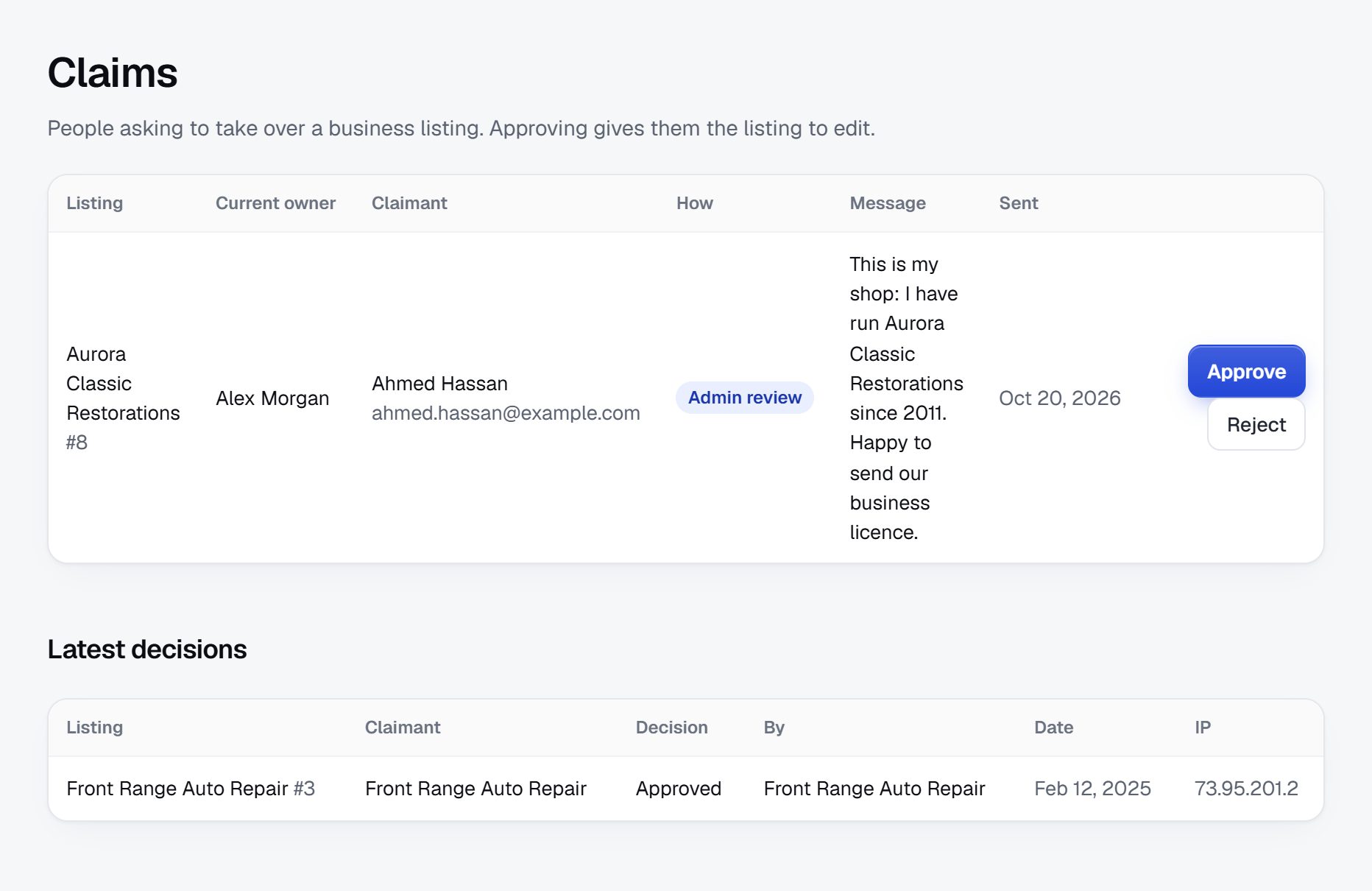
Deposits, no-shows and fake reviews are what couples fear most.
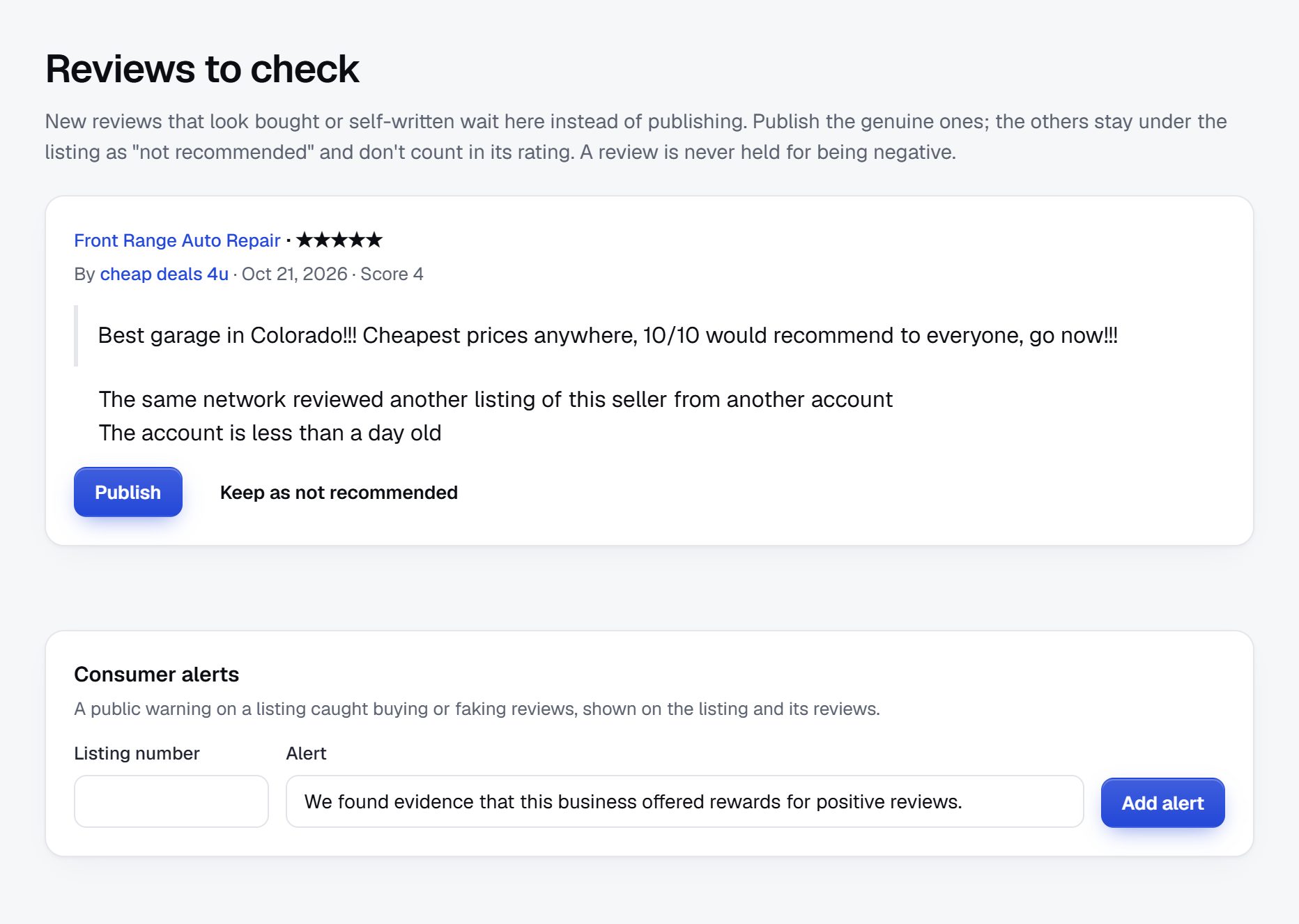
Wedding vendors take large deposits months in advance, and couples have one chance to get the day right. The problems that come up are well known: vendors who close their business without returning deposits, double-booked photographers, fake vendor accounts that ask for a deposit by transfer, and reviews written by friends or by rivals.
Rules for vendors
- Approve every new vendor before it goes live, and check that the business has a real address, phone and portfolio.
- Verified badges for vendors who have claimed their page and confirmed their business details.
- No payment through messages: couples pay vendors under a written contract, never through your site.
Advice for couples
Publish a short guide: get a written contract with the date, hours, deliverables, deposit and cancellation terms; ask whether the vendor has liability insurance, which many venues require; pay deposits by a method that offers protection; and check reviews from several places. Business license and insurance rules vary, so tell couples to check the rules where they live.
Reviews
Ask reviewers for their wedding month, and hold reviews from new accounts for moderation. Vendors can reply to reviews, which matters in an industry where one unhappy couple can write at length. Remove reviews that attack a named person rather than the service, and label featured vendors clearly as paid.
Couples search by vendor, place, style and guest count.
Wedding searches are long and specific, because couples are trying to match a budget and a vision. Expect phrases like "barn wedding venues Tennessee", "wedding photographers Charleston SC", "small wedding venues for 50 guests Denver", "affordable wedding DJ Dallas", "elopement photographer Colorado", "outdoor wedding venues near me" and "Indian wedding caterers New Jersey". Each phrase points to a page you can build.
Pages to build
- Category plus area pages: venues, photographers, florists, caterers and DJs for every town and county you cover.
- Style and size pages: rustic venues, waterfront venues, small wedding venues, elopement-friendly vendors, venues that allow outside catering.
- Cost guides: what a photographer, a florist or a venue typically costs in your region, built from the starting prices vendors enter.
Content ideas
- A wedding planning timeline: what to book twelve, nine, six and three months out.
- Real weddings: short stories from couples, crediting every vendor, which vendors share.
- Questions to ask a photographer, a caterer or a venue before signing.
- A guide to seasons in your region: peak months, off-season savings, weather backups.
Set the SEO title pattern once, for example "vendor name, town: wedding photographer", so every vendor page says what it is and where.
Launch before engagement season and the January wedding shows.
Many couples get engaged over the winter holidays, and the weeks after New Year bring a rush of venue and photographer searches. Wedding shows cluster in January and February for that reason. Aim to have your region's vendors listed and your planning guides live by early December.
First area
Start where you can meet vendors in person: one metro area, or one destination region known for weddings. Cover venues and photographers completely first, because couples book them first, then fill in caterers, florists, DJs and the rest.
Partners
- Venues: a featured page in exchange for a mention on their preferred vendor sheet.
- Wedding planners, who know every good vendor and value a place to send couples.
- Bridal shops and jewelers, who meet couples right after the engagement.
- Wedding shows: exhibit, or partner with the organizer to list every exhibitor.
Checklist
- Pick the region and the wedding style you cover.
- Set up vendor categories and fields for price, area and capacity.
- Seed venues and photographers from shows and preferred lists.
- Import other vendors, then add starting prices.
- Invite vendors to claim pages and add galleries.
- Publish the planning timeline and a cost guide.
- Open quote requests before engagement season.
A worked example: Finger Lakes Vow Book, in central New York.
Finger Lakes Vow Book is a made-up wedding directory, described here to show how the parts fit for one real region. It covers the wine country around Seneca, Cayuga and Keuka lakes, where vineyards, barns and lakeside estates host weddings from May to October and many couples travel in from New York City, Rochester and Syracuse for a long weekend.
Categories
- Venues
- Vineyards and wineries
- Barns and farms
- Lakeside estates and inns
- Photo and video
- Food and drink
- Caterers and food trucks
- Bar service
- Flowers and decor
- Music and officiants
- Hair and makeup
Who it serves
Out-of-town couples use it most, because they cannot drive around on weekends meeting vendors and need to know which caterers serve a given lake and whether a photographer charges for travel. Couples planning small weddings look for venues that take thirty guests on a Friday. Wedding planners use it to check who is new, and parents helping with the budget compare starting prices. Couples who live locally use it differently: they already know a venue or two and come for the vendors, especially caterers and photographers who know how light falls over the water at a vineyard in late September.
How it started
The founder was a florist who had worked dozens of vineyard weddings and kept a list of which venues allowed outside caterers, which had a real rain plan and which required a tent for the ceremony. That list became the venue category. The exhibitor list from a winter bridal show in Rochester and the preferred vendor sheets that venues give couples filled the other categories. Photographers claimed their pages first and shared them with each other, and venues followed once they saw their capacity and catering rules shown accurately.
How it makes money
Every vendor is listed free. Quote requests, where a couple enters date, guest count, budget and lake once, were free to vendors in the first season and then became part of the vendor membership. Featured places on the venue and photographer pages sell in December, ahead of the January shows. Banner spaces go to a jeweler, a guest shuttle company and a bridal shop. The directory never touches deposits: couples sign contracts and pay vendors directly.
| Vendor | Starting price | Key details |
|---|---|---|
| Glacier Ridge Vineyard Barn, Seneca Lake | $6,500 Saturday site fee | Seats 160, outside caterers allowed, tent needed for an outdoor ceremony |
| Keuka Light Photography | $3,200 | Eight hours, second shooter included, travels up to 90 miles |
| Smoke and Shale Catering | $58 per guest | Family style or buffet, vegan options, bar service quoted separately |
| Wild Aster Florals | $1,800 minimum | Delivery and setup, local seasonal flowers, May to October only |
| Gorge Street String Trio | $850 for the ceremony | Ceremony and cocktail hour, needs shade for outdoor sets |
All five vendors are fictional and the prices are only illustrations.
The first 90 days: vendors listed before engagement season begins.
Work backward from the date that matters most in this niche: the holiday engagement season and the bridal shows that follow in January. Starting in early September gives you twelve weeks to be complete for venues and photographers, live with planning content, and ready to take quote requests when newly engaged couples start searching.
Sequence the categories the way couples book them. Venues come first, because the venue sets the date, the guest count and often the list of approved vendors. Photographers come second, because the good ones book a year out. Caterers, florists, music and beauty can fill in over the weeks after.
Track the number of vendors with a starting price and service area, the number of claimed pages with the vendor's own gallery, and the number of quote requests sent. The first two show whether couples can compare vendors on your site; the third shows whether they are actually doing it. Ask a few vendors each week whether the requests fit, and adjust the form if they do not.
| Weeks | Focus | Done when |
|---|---|---|
| Weeks 1-2 | Region, vendor categories and fields | Starting price, service area, style and guest capacity all work as filters |
| Weeks 3-4 | Every venue in the region | All venues are listed with capacity, catering policy, indoor or outdoor space and a rain plan note |
| Weeks 5-6 | Photographers and the bridal show exhibitor list | Every exhibitor from the last two shows is listed and the photographer category is complete |
| Weeks 7-8 | Vendor claims and galleries | Every vendor has been emailed and the first 40 pages are claimed with their own photos |
| Weeks 9-10 | Planning timeline, cost guide and quote form | Both guides are published and a test quote request reached five matching vendors |
| Weeks 11-12 | Venue partners, planners and first reviews | Three venues name the directory on their vendor sheets and 20 reviews from past couples are live |
How to build a wedding vendor directory, and which route suits it.
A wedding directory sells on pictures and trust, so the software needs large vendor galleries, a starting price couples can filter on, a service area, style tags that allow several choices, and venue fields for capacity and catering rules. It also needs a quote request that reaches only the vendors matching a couple's date, area and budget, reviews with vendor replies, verified badges, and approval of new vendors before they appear. It should not take deposits: contracts and payments stay between couples and vendors.
Custom development
Developers can build anything, including a matching tool that scores vendors against a couple's whole plan. That is a large project, and the matching only works once hundreds of vendors have filled in their details, so you pay for it long before it is useful.
Directory software on your own server
WordPress directory themes and self-hosted scripts give you vendor pages and galleries quickly. Routing one inquiry to several matching vendors, verification badges and review replies are often separate add-ons, and wedding traffic peaks in January, which is a bad month to discover that two of them conflict.
A hosted directory builder
Hosted builders bundle listings, galleries, filters, reviews and quote requests, and handle hosting and updates. You trade some freedom in design for the time to visit shows, meet venues and fill in starting prices, which is what couples come for.
| Route | Fits when | Watch out for |
|---|---|---|
| Custom development | You want a matching tool built around your region's vendors | Paying for matching before enough vendors fill in their details |
| Self-hosted theme or script | You know WordPress well and have time for updates | Inquiry routing and verification as add-ons that may conflict in peak season |
| Hosted directory builder | Your effort belongs at shows and with vendors, not on servers | Less control over the design of galleries and pages |
| Instagram account or newsletter only | You are testing whether couples in your region follow you | No search, no filters and no way for vendors to claim pages |
What a wedding vendor directory costs to run.
The software is the smallest part of the bill. Most of the cost is your time in the first months: finding the first listings, answering questions and checking what gets posted.
The biggest optional cost is a booth at a wedding show, which is the fastest way to meet vendors and couples at once. Beyond that, expect Google API usage for importing vendors and printed cards for venues and bridal shops to hand out.
| Cost | Typical range | On Yclas |
|---|---|---|
| Domain | $10 to $20 a year | Your own, with SSL included |
| Software and hosting | $0 to $100+ a month, plus plugins and updates | Starter $19 a month, Professional $99 |
| Design | $0 to $100 for a theme, or a designer | 109 looks included |
| Payment fees | About 3% per payment | Your Stripe or PayPal fees; Yclas takes nothing |
| Business data | Free if you collect it, or a few cents per page of Google results | Paid to Google, with your key |
| Your time | 5 to 10 hours a week at the start | Finding listings, moderation, support |
Mistakes that turn couples back to the national wedding sites.
- Letting paid vendors crowd out everyone else. Couples already suspect the national sites of showing whoever pays most. If every top result on your venue page is featured, they will assume the same of you. Keep featured spots few, labeled, and separate from the main list.
- Hiding starting prices. Vendors often prefer to discuss price only on a call, but couples skip vendors who give no hint at all. Ask every vendor for a starting price or a typical range, and explain that it brings better-matched inquiries. A photographer who states a starting price stops hearing from couples whose whole budget is a third of it.
- Taking photos from blogs and social posts. Wedding photos belong to the photographer and show real couples. Using them on a vendor page without permission can upset three parties at once. Only publish what vendors upload themselves.
- Skipping checks on new vendors. Fake vendor accounts that collect a deposit and vanish are a known problem in this trade. Approve each new vendor by hand, check the business address, phone and portfolio, and warn couples never to pay through messages. Be wary of accounts created days before wedding season with stock-looking photos and only a mobile number.
- Blasting every quote request to every vendor. A florist who receives requests for dates they are booked, in towns they do not serve, will soon ignore all of them. Match requests on area and category at least, and show the date and budget so vendors can reply quickly or decline.
- Stopping at venues and photographers. They matter first, but couples also need officiants, rentals, hair and makeup, and transport. A directory with only two full categories sends couples elsewhere for the rest, and they may not return.
- Overlooking small weddings and elopements. Many vendors have minimums that rule out a twenty-guest wedding, and couples planning one waste hours finding out. A field for small weddings, and a page for vendors who take them, serves a group the big sites handle poorly.
- Launching in spring. By April, most couples engaged over the holidays have booked a venue and a photographer. Be live, complete and taking quote requests by early December, so the first couples to search after the holidays find a full market.
- Holding deposits or payments. Collecting money for vendors makes you part of every dispute when a vendor cancels or a date changes. Keep payment between couples and vendors, under a written contract.
Wedding trade terms a directory founder needs.
Vendors and planners use these terms constantly, and couples learn them quickly.
| Term | What it means |
|---|---|
| Site fee | The charge for using a venue's space, separate from food, drink and rentals. |
| Food and beverage minimum | The least a couple must spend on catering and bar at a venue, whatever the guest count. |
| Preferred vendor list | A venue's list of vendors it recommends, often handed to every couple who books. |
| Exclusive vendor | A vendor a venue requires couples to use, most often the caterer or bar service. |
| Outside catering | A venue policy allowing couples to bring in a caterer of their choice, sometimes for a fee. |
| Day-of coordinator | A planner hired only to run the wedding day itself, rather than the whole planning process. |
| Second shooter | An additional photographer who covers angles and moments the lead photographer cannot. |
| Rain plan | The venue's backup arrangement for an outdoor ceremony or reception, such as a tent or an indoor room. |
| Retainer | The deposit that secures a vendor for the date, usually non-refundable under the contract. |
| Hold | A short, free reservation of a date while a couple decides, offered by some venues. |
| Elopement | A very small wedding, often just the couple, an officiant and a photographer. |
| Corkage fee | A charge per bottle when couples supply their own wine or alcohol. |
| Load-in time | The time vendors may start setting up at the venue, which affects florists, rentals and caterers. |
| Certificate of insurance | Proof of a vendor's liability insurance, which many venues ask to see before the event. |
The same steps for a wedding vendor directory on Yclas.
- Describe your directoryThe setup wizard writes the categories, an About page and example listings from one sentence.
- Add fieldsHours, services, areas served, prices: the details people search by, as filters.
- Fill itImport businesses from a spreadsheet or Google Places, then check them.
- Bring owners inOwners claim their page, update it and answer reviews.
- EarnSwitch on featured places, banners or memberships when visits arrive.
Is it expensive to launch a wedding vendor directory?
Not in software terms; the money question is whether you exhibit at a wedding show, which can be the largest single cost. Many founders attend as visitors the first year and exhibit once vendors are listed.
How can a local directory compete with the big national wedding sites?
List every vendor in your region, including the small ones that do not pay the national sites, show starting prices and service areas, and keep it fair. Local planners and venues will recommend a directory that feels honest.
Should couples pay vendors through my site?
No. Wedding deposits and contracts are best handled directly between couples and vendors, and your role is to help them find and compare vendors. Tell couples never to pay through messages.
How do I get vendors to sign up?
List them yourself from wedding show exhibitor lists and venue vendor sheets, then invite each one to claim the page and add a gallery. Photographers and venues usually respond first.
What should I charge vendors?
Start free, send them quote requests, and charge for featured places and memberships once they see inquiries arriving. Pricing depends on your region and traffic, so test a few levels with your most active vendors.
Can I use photos from wedding blogs and social media?
No, only use photos the vendor uploads or explicitly permits. Wedding photos belong to the photographer, and couples appear in them, so permission matters.
How do I handle a vendor who takes deposits and disappears?
Remove the listing, warn couples who contacted them if you can, and point affected couples to their contract, their payment provider and the local authorities. Check the rules where you operate before publishing anything about a business.
Should I list vendors from outside my region who travel in?
Yes, if they regularly work weddings in your area and state a service area that includes it. Mark their home base and travel fee clearly, so couples can compare them fairly with local vendors. Leave out vendors who have never worked in the region, however good their portfolio looks.
What do I do when a vendor asks me to remove a bad review?
Do not remove a genuine review because the vendor dislikes it. Invite the vendor to reply publicly, and remove a review only if it breaks your rules, for example by attacking a named person or describing an event that clearly did not happen.
How can I serve couples planning cultural or faith-based weddings?
Add style or tradition options vendors can tick, such as South Asian, Jewish or Chinese weddings, and build pages for them. Vendors experienced with a tradition value these pages, and couples searching for them often struggle on the big sites.
Should vendor pages show which dates are still free?
No. Availability changes daily and vendors manage it in their own calendars. Let couples include their date in the quote request, and let vendors reply with whether they are free. A stale availability calendar would do more harm than none, because couples would plan around dates that are already gone.
Is there anything to sell outside engagement season?
Yes. Late summer brings couples who got engaged in spring, fall brings off-season and winter wedding searches, and vendors with open dates late in the year are keen to fill them. Seasonal guides and featured spots can follow those waves.
Related pages.
The parts of Yclas this leans on.
You know the local wedding scene. Now build the directory couples plan with.
Describe your site in a sentence and the setup wizard writes the categories, example listings and a look. Free for 15 days, no credit card.
Start my directory