How to build a farm shop directory that sends people down the right country road.
This guide is for founders who want to run the directory of farm shops, roadside stands and pick-your-own farms in one region. It covers who looks for them and why, the details worth filtering on, such as what is in season and whether you can pick it yourself, how the site earns, where to find the first farms, the risks, search and a launch timed to the first harvest.
Free for 15 days · No credit card · Plans from $19 a month
People want to buy from the farm, but they cannot find which farms sell.
Plenty of farms sell straight to the public: a store in the barn, a stand at the end of the driveway with an honor box, a pick-your-own strawberry field for three weeks in June, an orchard with cider and donuts in October. Most of them have a hand-painted sign, a social media page updated when someone has time, and no website at all.
The people looking for them are searching with a crop and a weekend in mind: where can we pick blueberries on Saturday, who sells pasture-raised eggs near the lake, which orchard has a corn maze. General map listings rarely say what is ready to pick, and they often still show a stand that closed two summers ago.
Who uses a farm shop directory
- Families planning a picking trip or a pumpkin patch outing.
- Home cooks and canners who want a bushel of tomatoes or peaches for preserving.
- People who buy meat, eggs and dairy direct from farms.
- Visitors and weekenders driving through farm country.
Pick the angle
Choose a region people drive around in a day: a county or two, a valley, or the countryside around one metro. Some founders narrow it further, to pick-your-own farms only or to farms selling meat and eggs direct. Both work, as long as the pages say clearly what each farm sells and when.
A farm page is useful only when it answers one question: is it open, and is the crop I want ready this week.
Organize by type of farm, and let people filter by crop and season.
Keep the categories to the kind of place, and put the crops into fields. A single orchard may sell apples, peaches, honey and pies, and it should show up when someone filters for any of them.
- Products as checkboxes: strawberries, blueberries, apples, peaches, sweet corn, pumpkins, Christmas trees, eggs, beef, pork, chicken, honey, maple syrup, flowers.
- Pick-your-own as a checkbox, with picking crops listed separately from what is sold already picked.
- Open from and open until as dates, because many stands only open for a few months.
- Growing practices as a dropdown: certified organic, no spray, conventional, not stated. Keep certified organic separate from the farm's own description.
- Payment: cash, cards, honor box, and SNAP/EBT where the farm accepts it.
- Visitor extras as checkboxes: restrooms, picnic area, farm animals, hayrides, corn maze, dogs allowed.
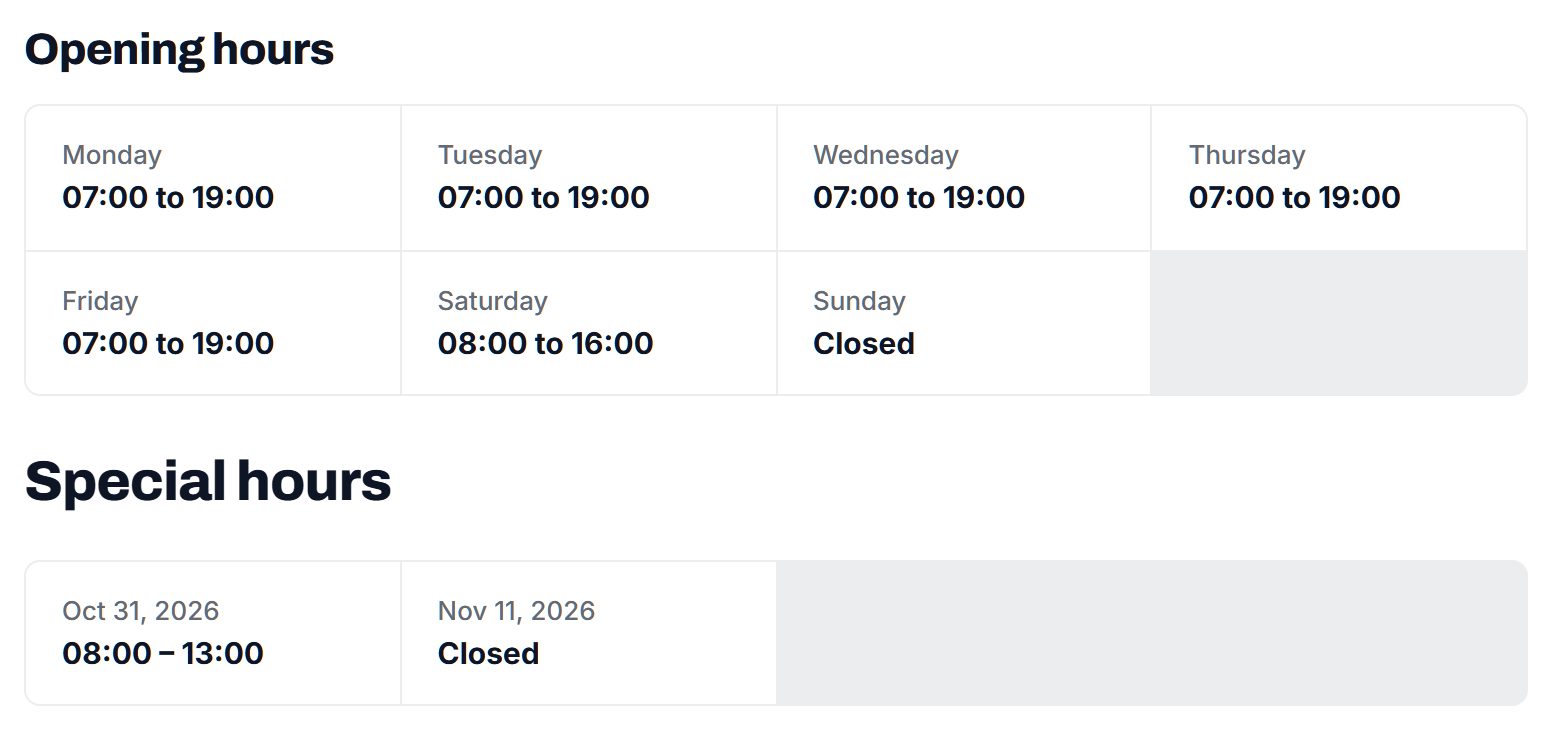
Opening hours matter more than usual here, since a stand may close the moment the corn sells out. Ask farms to update hours when the season changes.
| Category | Example places | Fields people filter on |
|---|---|---|
| Pick-your-own farms | Strawberry fields, blueberry farms, cherry orchards, flower fields | Picking crops, open from and until, dogs allowed, payment |
| Orchards | Apple and peach orchards, cider mills | Products, pick-your-own, visitor extras, hours |
| Farm stores and stands | Barn stores, driveway stands, honor-box stands | Products, payment, growing practices, open season |
| Meat, eggs and dairy | Grass-fed beef farms, pastured poultry, goat dairies | Products, order ahead, freezer bundles, payment |
| Pumpkin patches and fall farms | Corn mazes, hayrides, pumpkin fields | Visitor extras, open from and until, entry fee |
| Christmas tree farms | Choose-and-cut farms, wreath sellers | Choose and cut, tree types, open dates |
Picking crops and products work best as checkboxes, so someone searching for blueberries finds every farm that has them.
Farms pay in season, so sell visibility for the weeks that matter to them.
A small farm will not pay a monthly fee in February. The same farm may happily pay to be at the top of the strawberry page for the three weeks its field is open, because a busy picking weekend makes or breaks its year.
Keep listing free for every farm, and sell visibility around the season. Featured places on crop pages are the clearest product: "apple picking near the city" in late September is the busiest page you will have. Agritourism farms with corn mazes, wedding barns and event spaces are the farms most likely to buy a yearly membership, because they sell experiences all year.
Group requests are a second source. Schools, church groups and day camps want to book a farm visit for thirty children, and a request form that reaches the farms offering tours is useful to both sides.
Banners suit local businesses that sell to farmers or to food lovers: feed stores, farm equipment dealers, butchers, cideries, wineries and country inns.
Price around the calendar. A strawberry farm buys June, an orchard buys October, and a tree farm buys December.
| Model | Works when | Switch it on |
|---|---|---|
| Featured farms on crop pages | Seasonal pages draw visitors searching for a crop | Two weeks before each crop's season opens |
| Farm memberships | Agritourism farms want year-round visibility and a verified badge | After your first full harvest season |
| Group visit requests | Schools and groups use the site to plan farm trips | Before spring field trip planning starts |
| Banner spaces | Feed stores, cideries and inns want local food lovers | When crop pages have steady weekend traffic |
| Sponsored season guides | A tourism board or farm group wants to promote a harvest | Ahead of fall, the busiest farm season |
The first farms come from extension offices, farm trails and the road itself.
Farms that sell direct want to be found, and many are already on some list somewhere. Your job is to collect those lists, check them, and add what they always leave out: what is sold, and when.
Where to look
- Farm trail maps and agritourism guides: many counties and regions print a farm trail or harvest map every year.
- State agriculture departments: several run a "buy local" program with a member list of farms that sell direct.
- Cooperative extension offices: staff know the farms in their county and often keep a list of pick-your-own farms.
- Public business data: an import from Google Places catches orchards, farm stores and pumpkin patches, though you will remove garden centers and grocery stores.
- Farmers market vendor lists: many farms that sell at markets also have a stand at home.
- Driving the back roads on a summer Saturday with a notebook. Honor-box stands are often on no list at all.
Get farmers to claim their page
Farmers are busy and offline for long stretches, so ask for little: confirm the season dates, tick the crops, and add one photo. A phone call or a visit to the stand works far better than email. Offer to fill in the page for them while you talk, and send a link they can check later.
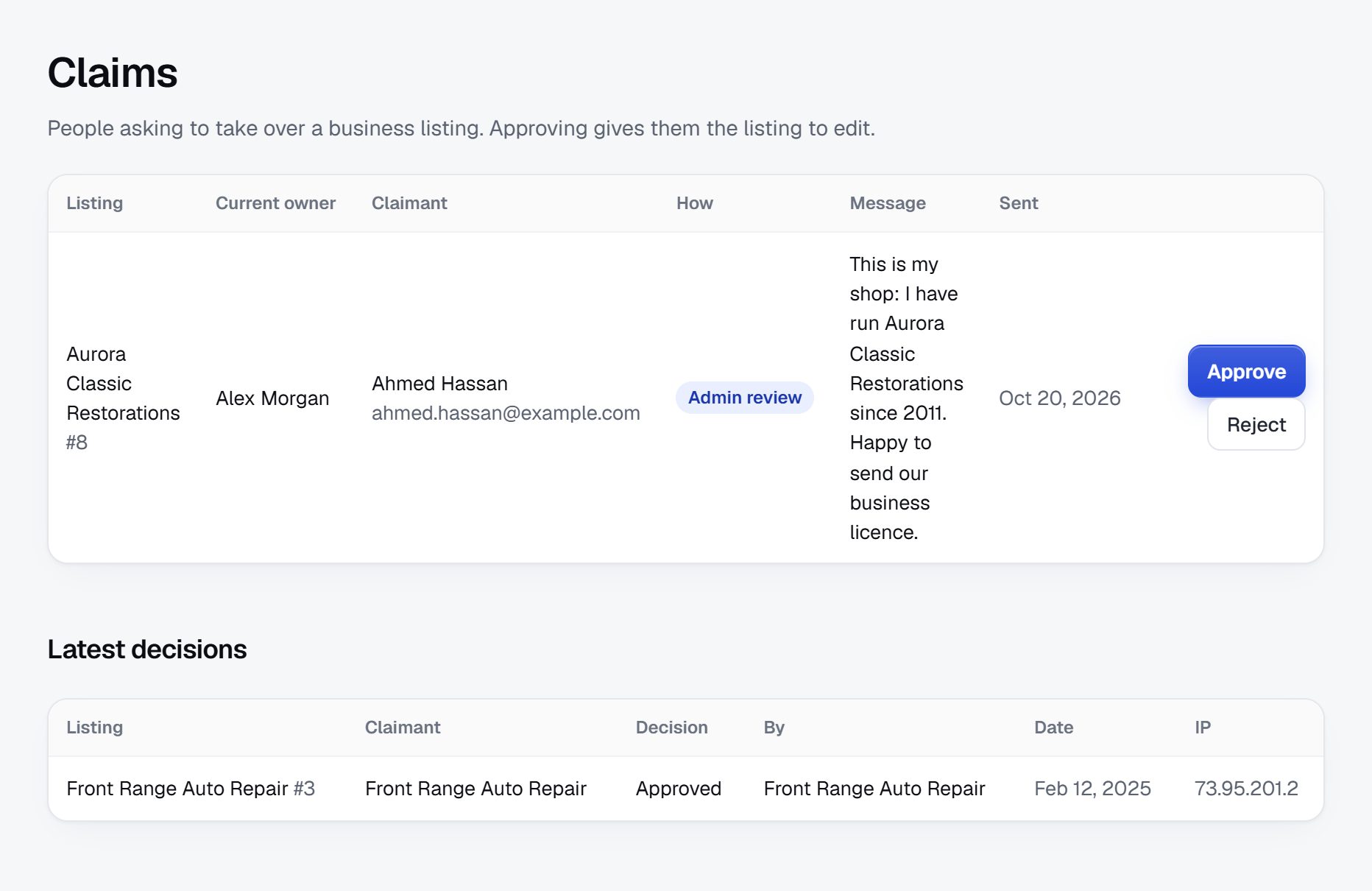
Yclas lets owners claim their page and set opening hours, and visitors leave reviews the farm can reply to.
The big risks are wasted drives, loose claims about growing, and safety on the farm.
Nobody gets scammed out of much at a farm stand. The harm a farm directory can do is sending a family forty minutes down a gravel road to a field that was picked clean on Thursday.
- Crop status: add a short "picking report" field farms can update, and show its date. Tell visitors to call ahead or check the farm's page before a long drive, especially after heavy rain or heat.
- Closed farms: farms retire and stands close quietly. Mark a page as closed after a season with no answer, rather than leaving it live.
- Growing claims: "organic" usually means certified, and using it without certification may break the rules in your country. Only show a certified organic label when the farm confirms it, and let others describe their own practices in their words.
- Raw milk and home-processed foods: rules on selling raw milk, home-canned goods and meat vary a lot by state and country. Check the rules where you operate before allowing those products as filters, and avoid making any health claims about them.
- Safety on the farm: add a visitor note about farm animals, machinery, sun, ticks and handwashing after petting zoos. Farms set their own rules on children and dogs; show them clearly.
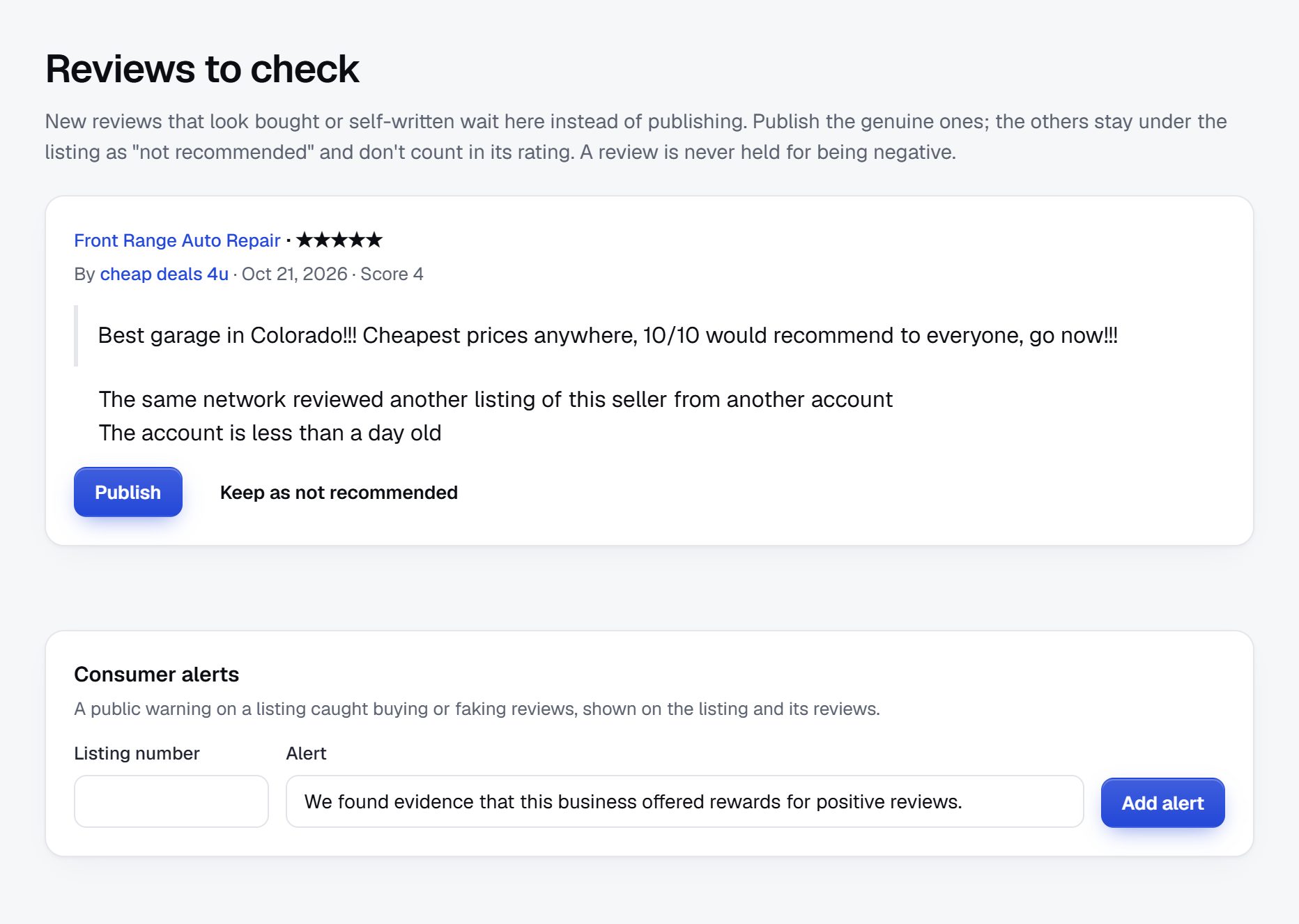
- Fake reviews: competing pumpkin patches do argue. Let farms reply to reviews and remove ones from accounts that post only about a rival.
Every crop has a season, and every season brings its own search.
Farm searches are highly seasonal and almost always local. The same person searches for strawberries in June, peaches in August and pumpkins in October, so a page for each crop near each town catches them every time.
Searches to target
- "pick your own strawberries near [city]", "u-pick blueberries [county]"
- "apple picking near [city]" and "apple orchards open today"
- "pumpkin patch with corn maze near [city]"
- "farm fresh eggs near me", "grass-fed beef farm [county]"
- "choose and cut Christmas trees [town]"
Pages to build
- A page per crop and per area, refreshed each season: blueberry farms near the city, apple orchards in the valley.
- A harvest calendar showing what is usually in season each month in your region, written with a local grower.
- Guides: what to bring to a picking farm, how to pick and store strawberries, buying a quarter beef for the freezer.
- A yearly fall farm guide listing corn mazes, hayrides and festivals.
Publish crop pages a few weeks before each season so they are indexed by the time people start searching.
Open in late winter, so the farms are on the site before the first berries.
Farmers plan their season in winter and are hardest to reach once picking starts. Sign them up in February and March, then launch to the public with the first strawberries or the first spring stands, depending on your climate.
First area
Start with the farm country closest to a city, where weekend demand is highest. Thirty farms with correct seasons and crops are enough to make the strawberry and apple pages useful.
Partners
- Extension offices and farm bureaus: ask them to tell their members about the site.
- Farm trail organizers: offer to host the trail map online for free.
- Tourism offices promoting rural visits and fall foliage drives.
- Parenting groups and schools, who plan picking trips every season.
Checklist
- Farm type categories and the crop checkboxes set up.
- Farm list built from trail maps, state programs and an import, then checked by phone.
- Season dates and crops confirmed for every farm.
- Crop pages for the next three crops written and published.
- Picking report reminder sent to farms at the start of each crop.
- Fall guide planned for August, before orchard season.
A worked example: Backroad Harvest Guide, the Hudson Valley of New York.
Imagine Backroad Harvest Guide, an invented directory of farm stands, orchards and pick-your-own fields in the Hudson Valley. Its founder is a home canner who kept a shared spreadsheet of stands for friends in the city, with notes like "cash only, ring the bell by the barn". When the spreadsheet passed two hundred rows and friends of friends were asking for it, she turned it into a site.
Categories
- Pick your own
- Berries
- Orchard fruit
- Flowers and pumpkins
- Farm stores and stands
- Barn stores
- Roadside and honor-box stands
- Meat, eggs and dairy
- Freezer beef and pork
- Eggs and poultry
- Cheese and milk
- Seasonal outings
- Fall farms and corn mazes
- Christmas trees
Who it serves
City families who drive up for a picking weekend, home cooks who want a bushel of tomatoes in August, and valley residents who buy eggs, meat and syrup straight from farms through the winter. The first group is the biggest, the last group visits most often. A smaller fourth group, people renting cabins in the valley for a week, finds the site through the farm pages for the town they are staying in.
How it started
Over one winter she combined three county farm trail maps, the state's buy-local member list and a Places import, then deleted the garden centers and grocery stores the import pulled in. From January to March she phoned every farm, usually in the late morning after chores, and asked three questions: what do you sell, when are you open, and can people pick it themselves. She launched in May with 85 farms confirmed and another 40 marked as not yet checked.
How it makes money
Featured spots on crop pages, sold for the weeks each crop is in season: strawberries in June, apples in September and October, trees in December. Farms with corn mazes and event barns pay for a yearly membership with a verified badge. A school group request form sends field trip inquiries to farms that offer tours, and a cidery and a feed store hold the two banner spaces. The county tourism office sponsors the fall guide, which goes out in late August before the orchards open.
Notice the timing: almost every dollar is tied to a crop and a few weeks of the year.
| Farm | Season | Key details |
|---|---|---|
| Stone Row Orchard (Orchard fruit) | Late August to early November | Pick-your-own apples and pears; cider donuts on weekends; cards accepted; no dogs in the rows |
| Kettle Creek Berry Farm (Berries) | June to August | Strawberries, then blueberries; picking report updated each morning; containers provided |
| Hollow Road Stand (Honor-box stands) | July to October | Cash only in the box; sweet corn, tomatoes and squash; open dawn to dusk |
| Two Ridge Pastures (Freezer beef and pork) | All year | Beef by the quarter or half, order ahead; eggs in the barn fridge; Saturday pickup |
| Millbrook Pumpkin Farm (Fall farms) | Late September to October 31 | Corn maze and hayrides with a weekend entry fee; restrooms and picnic area |
All five farms are made up for this example.
The first 90 days: winter phone calls, then a site ready for the first berries.
If your first crop is strawberries, your 90 days probably start in early March and end with the first picking weekend in late May or June, a little earlier in the South and later in the North. Farmers are easiest to reach in the first half of that window, before planting and the spring rush take over their days.
If you start with apples instead, shift everything to midsummer and finish in late August.
The order matters. Build the list first, then confirm it by phone, then write the crop pages, and only then tell the public. A family that drives out on your opening weekend and finds the farm exactly as described will tell other parents, and parenting groups are where farm directories spread fastest. Before you call, have the draft page open so you can read it back to the farmer and correct it as you talk. Keep a column in your notes for the best time to call each farm, since a dairy farmer and an orchard owner keep very different hours.
| Weeks | Focus | Done when |
|---|---|---|
| 1 to 2 | Draw the region and set up farm types, crop checkboxes, season dates and payment fields | Every field tested on three farms you know well |
| 3 to 4 | Build the farm list from trail maps, state buy-local lists, extension offices and an import | One clean list with duplicates, garden centers and grocery stores removed |
| 5 to 7 | Phone or visit farms to confirm crops, season dates and payment | Most farms confirmed and the rest clearly marked as not yet checked |
| 8 to 9 | Write the harvest calendar and the first three crop pages | Calendar checked by a local grower and crop pages published |
| 10 to 11 | Recruit partners: extension office, farm trail group, parenting groups | Two partners have shared the site with their members |
| 12 | Open to the public with the first crop and send the first picking report reminder | At least ten farms posted a picking report in opening week |
Ways to build a farm directory, and why farmers' phones decide the choice.
Whatever you build has to work for two people who rarely sit at a desk. The farmer updates a picking report from a phone in the field, often with one bar of signal. The visitor reads the page in the car on a back road. Season dates, crop filters and a map pin that matches the farm gate, not the mailing address, matter more than design. So does a page that loads quickly on a weak connection, because a visitor checking hours at a crossroads will not wait.
Hiring developers fits if you want something unusual, such as crop pages that switch themselves on and off by date or a route planner for a day of farm stops. It is the slowest and most expensive route, and every change after launch costs money in the middle of the season when you can least afford delays.
A directory script or WordPress plugin on your own server suits a founder who already runs a site and likes tinkering. You choose the map plugin and theme, and you also own the updates, backups and spam control, which tends to break at the worst moment, such as the first apple weekend.
A hosted builder such as Yclas gives you claimed pages, opening hours, reviews with owner replies, maps and checkbox filters without managing a server. Check that a farmer can update a page from a phone, and that you can fix map pins by hand for rural addresses.
Test every route the same way: ask a farmer to update a page on their phone while you watch.
| Route | Fits when | Watch out for |
|---|---|---|
| Custom build with developers | You want date-driven crop pages or a farm-to-farm route planner | Paying for fixes in peak season, and farmers facing an unfamiliar tool |
| Script or WordPress plugin on your server | You already run a site and want to pick every plugin | Updates that break the map, spam on claim forms, backups |
| Hosted builder | You want claims, hours, reviews, maps and filters ready before the first crop | Fixing rural map pins by hand and checking phone updates |
| Printed farm trail map only | A farm group already prints one and you want to test interest | Out of date by July, not searchable, and farms cannot update it |
What a farm shop directory costs to run.
The software is the smallest part of the bill. Most of the cost is your time in the first months: finding the first listings, answering questions and checking what gets posted.
Costs here are mostly time and gas: farms are spread out and many are best reached in person. Add Google Places API usage for the first import and printed postcards to leave at stands.
| Cost | Typical range | On Yclas |
|---|---|---|
| Domain | $10 to $20 a year | Your own, with SSL included |
| Software and hosting | $0 to $100+ a month, plus plugins and updates | Starter $19 a month, Professional $99 |
| Design | $0 to $100 for a theme, or a designer | 109 looks included |
| Payment fees | About 3% per payment | Your Stripe or PayPal fees; Yclas takes nothing |
| Business data | Free if you collect it, or a few cents per page of Google results | Paid to Google, with your key |
| Your time | 5 to 10 hours a week at the start | Finding listings, moderation, support |
Mistakes that turn a farm directory into a list of closed gates.
- Leaving out season dates. A farm page without open from and open until sends people to a stand that closed in September. Make both dates required, and show them near the top of every farm page. When a farm closes early because the crop failed, change the date the same day.
- Keeping the whole import. A Places search for farms brings in garden centers, landscape suppliers and supermarkets with "farm" in the name. Check every row before publishing, because one supermarket on the strawberry page makes the whole site look careless.
- Trusting the mailing address. Rural addresses often point to a house or a mailbox miles from the field entrance. Ask each farm where visitors should actually turn in, and move the pin by hand. Add a line such as "second gravel drive past the red barn" when the turn is easy to miss.
- Using "organic" as a casual tag. A filter called organic suggests certification. Keep certified organic as its own choice confirmed by the farm, and let others describe their methods in their own words. Ask which certifier a farm uses if it claims certification, and note it on the page.
- Launching in July. By midsummer farmers are picking, selling and fixing equipment from dawn to dark, and nobody answers the phone. Sign them up in winter, launch with the first crop, so the farms already know you when their busy weeks arrive.
- Asking farmers for long forms. A farmer will tick crops and confirm dates in a two-minute call, but will not fill in twenty fields online. Fill pages in for them while you talk, and ask only for the picking report during the season. Short questions get answers; long ones get put off until the rain stops, which may be never.
- Skipping honor-box stands. They are on no list and have no phone, yet they are exactly what visitors love finding. Drive the back roads and add them, with a note that stock depends on the day. Stands like these often become the most shared pages on the site.
- Selling monthly fees in February. A strawberry farm does not care about visibility in winter. Sell placement for the weeks each crop is ready, and sell year-round memberships only to farms with events and stores open all year.
- Going quiet after the pumpkins. If the site has nothing to say from November to May, visitors forget it. Promote meat, eggs, syrup and tree farms in winter, and publish the next year's harvest calendar in early spring. Winter is also when you write the guides that will rank by summer.
Farm shop terms a directory founder should know.
Words that come up when you talk to farmers, extension staff and regular farm shoppers.
| Term | What it means |
|---|---|
| U-pick or PYO | Pick-your-own: visitors harvest the crop themselves and pay by weight or container. |
| Honor box | An unstaffed stand where buyers leave cash in a locked box or pay by phone. |
| Agritourism | Farm visits sold as an outing, such as corn mazes, hayrides, farm stays and tours. |
| Farm trail | A printed or online route linking farms in one area that sell to the public. |
| Cooperative extension | A university-linked public office that advises farmers and often knows every farm in its county. |
| Certified organic | A label a farm may use only after a certifier inspects its practices under the rules where it operates. |
| CSA | Community supported agriculture: customers pay ahead for a share of a farm's harvest, picked up weekly. |
| Freezer beef | Beef sold direct by the quarter, half or whole animal, cut and wrapped for the buyer's freezer. |
| Hanging weight | The weight of a carcass before cutting, often the basis for pricing freezer beef and pork. |
| Picking report | A short, dated update from a farm on what is ready and how picking looks today. |
| Choose-and-cut | A Christmas tree farm where visitors pick a growing tree and cut it or have it cut. |
| Cottage food | Foods such as jams and baked goods that some places let people make at home and sell under set rules. |
| SNAP/EBT | US food assistance paid by card, which some farm stands are set up to accept. |
The same steps for a farm shop directory on Yclas.
- Describe your directoryThe setup wizard writes the categories, an About page and example listings from one sentence.
- Add fieldsHours, services, areas served, prices: the details people search by, as filters.
- Fill itImport businesses from a spreadsheet or Google Places, then check them.
- Bring owners inOwners claim their page, update it and answer reviews.
- EarnSwitch on featured places, banners or memberships when visits arrive.
How much money do I need to start a farm shop directory?
Not much. Budget for a domain, an import of farm businesses, printed postcards and the fuel to visit farms. Most of the investment is the phone calls in late winter.
Do farms need to agree before I list them?
Listing a farm's public name, location and season is common, but check the rules where you operate and remove any farm that asks. Ask before using their photos.
Can I list farms selling raw milk or meat?
Rules on raw milk, meat and home-processed foods vary by state and country. Check the rules where you operate before you add those products, and never make health claims.
How do I keep crop information current?
Ask farms to update a short picking report each week of their season, show its date on the page, and remind visitors to call ahead before a long drive.
How does a farm directory earn money?
Mostly from featured places on seasonal crop pages, yearly memberships for agritourism farms, group visit requests and banners from feed stores, cideries and country businesses.
Will farms actually pay anything?
Small stands rarely will. Orchards, pumpkin patches and farms with events often do, because one good weekend matters so much to them. Price for the weeks they care about.
What do I do in the off season?
Sign up new farms, write the harvest calendar and guides, and promote the farms that sell meat, eggs, syrup and Christmas trees through the winter.
How do I list farms that have no phone or email?
Visit them. Many honor-box stands have no contact at all, so write the page from what you see, note the date you checked it, and leave a card in the box asking the owner to get in touch.
Should the directory sell farm products online?
Keep the directory for finding farms and let them take preorders their own way, by phone or through their own channels. Add an order ahead checkbox and a short note on how each farm prefers to be contacted. A farm that wants to sell boxes online is better served by its own shop, linked from its description.
Can visitors post their own picking reports?
Let them leave reviews, but keep the dated picking report for the farm itself. A visitor's note from Tuesday can mislead someone driving out on Saturday, while the farm knows what is ripening.
How should I handle farms that host weddings and events?
Give them their own category, with fields for capacity and indoor or outdoor space. They often pay for memberships, but check they still sell to the public before listing them alongside farm stands. Wedding barns that never sell produce fit better in a venue category than on the crop pages.
How do I make pages useful with poor cell signal?
Put season, hours, crops, payment and directions at the top of every page, keep photos few and small, and suggest visitors save directions before leaving town.
Related pages.
The parts of Yclas this leans on.
You know where the farms are. Now build the directory that sends people to them.
Describe your site in a sentence and the setup wizard writes the categories, example listings and a look. Free for 15 days, no credit card.
Start my directory