How to build a tourism directory that visitors trust more than the brochure rack.
This guide is for founders who want to run the local guide to one region: things to do, tours, places to eat and places to stay, written for visitors. It covers who plans trips with a regional directory, the details they filter on, how the site earns from tour operators and attractions, where the first listings come from, the risks, search and a launch timed before the busy season.
Free for 15 days · No credit card · Plans from $19 a month
Visitors want a local's list, and the big travel sites give them a global one.
Someone planning four days in a lake region, a wine valley or a small coastal town gets two kinds of help today. The big travel sites rank the same ten attractions by review count and push bookable tours with commission. The official visitor bureau site is accurate but lists only members and reads like a brochure. Neither tells a family which hikes are short enough for a six-year-old, or which museum is worth it on a rainy Tuesday in April.
A regional tourism directory sits between the two: every attraction, tour and outing in one area, with the practical details visitors filter on, kept current by someone who lives there.
Who uses it
- Visitors planning a trip weeks ahead, building a list of things to do.
- Visitors already there, looking for something to do this afternoon.
- Locals hosting guests who want ideas beyond the usual places.
- Group organizers: reunions, school trips, clubs and wedding parties.
Pick the angle
Choose an area with a clear name that visitors use when they search: a valley, an island chain, a national park gateway, a wine region or a mountain town with its surroundings. Then decide your voice. Some regional guides win by being for families, or for outdoor trips, or for food and drink. A clear angle gives your pages a reason to exist next to the official site.
Cover one region better than anyone, and say plainly what each place is like in each season.
Group by what visitors want to do, then add the fields that shape a day out.
Visitors browse by activity, not by business type. A winery tasting room, a cooking class and a food walking tour all belong under food and drink, even though they are very different businesses.
- Good for as checkboxes: families with small kids, teens, couples, groups, solo travelers, seniors.
- Indoor or outdoor, because rain changes every plan.
- Open months as checkboxes. Many attractions in seasonal regions close for part of the year, and this field saves more disappointment than any other.
- Time needed as a dropdown: under an hour, half a day, full day.
- Price range as a dropdown: free, budget, mid, premium.
- Reservation needed as a checkbox, and accessibility: step-free access, accessible restroom, stroller friendly.
- Dogs allowed, a question that comes up constantly on trails and patios.
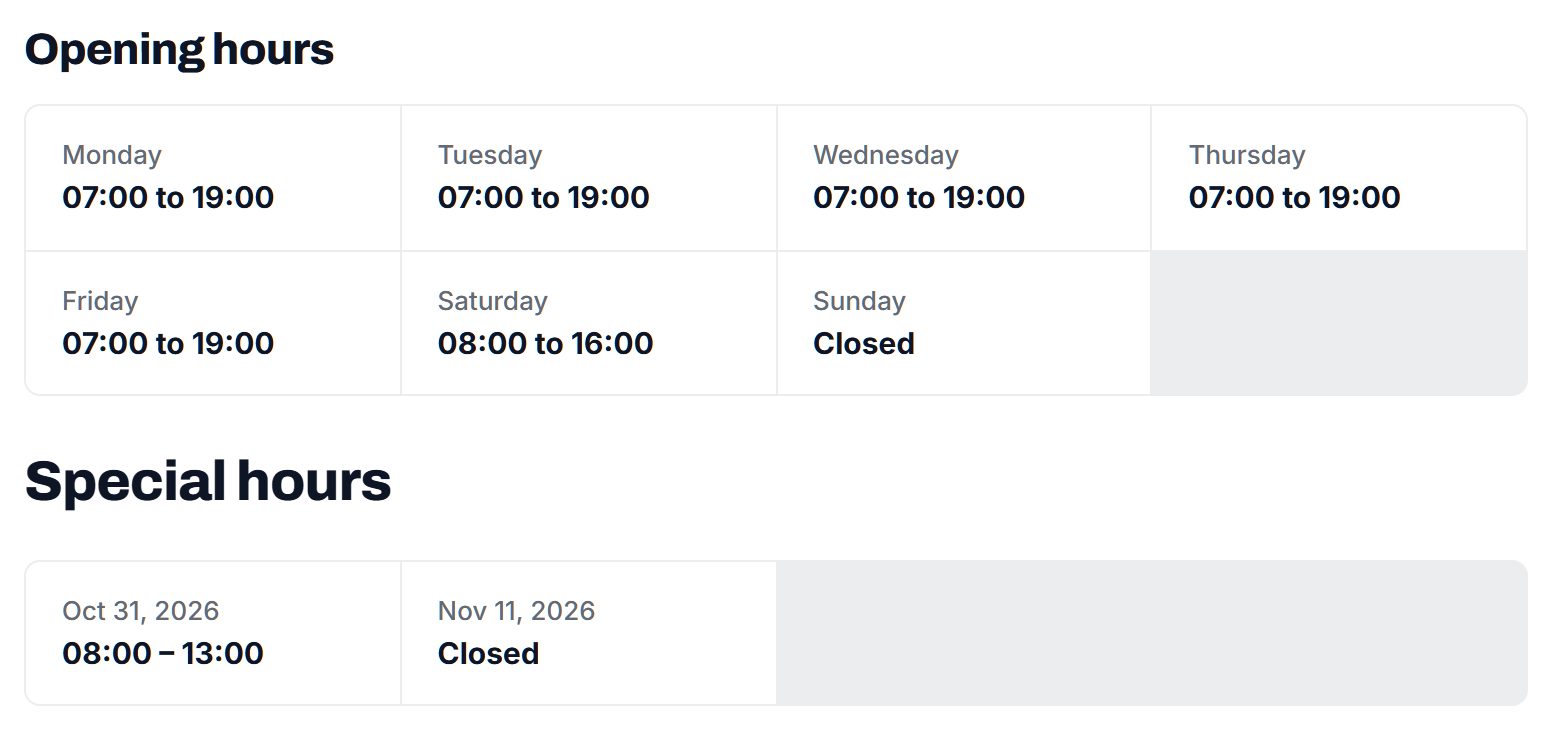
Opening hours belong on every page, with a note when hours change between high and low season. For tours, add group size as a number, since a six-seat boat and a sixty-seat one suit very different visitors.
| Category | Example listings | Fields visitors filter on |
|---|---|---|
| Outdoors | Trails, beaches, viewpoints, kayak rentals, ski areas | Good for, time needed, dogs allowed, open months |
| Tours and guides | Boat tours, walking tours, fishing guides, wildlife tours | Time needed, price range, reservation needed, group size |
| Attractions and culture | Museums, historic sites, galleries, gardens, theaters | Indoor or outdoor, accessibility, price range |
| Food and drink | Wineries, breweries, cooking classes, food tours | Reservation needed, good for, open months |
| Family fun | Mini golf, farms, aquariums, playgrounds, water parks | Good for, indoor or outdoor, price range |
| Places to stay | Inns, campgrounds, cabins, hotels | Price range, dogs allowed, open months |
Open months and indoor or outdoor are the two filters visitors in a seasonal region use most, so put them on every category.
Tour operators and attractions pay for visibility in the weeks before the season.
Tourism businesses already spend on marketing: brochure racks, visitor guide ads, booking site commissions. They will move some of that budget to a regional directory once it sends visitors, and they understand featured placement because they buy it elsewhere.
List every attraction free so the directory is complete. Then sell featured places on activity pages and on the high-intent pages, such as "things to do with kids" or "rainy day ideas". Tour operators, rental shops and wineries are the steadiest buyers, because one extra booking a week pays for a placement many times over.
Group requests are a second line. A reunion organizer, a wedding planner or a school trip leader sends one request, and it goes to the tour operators and venues that handle groups. Visitors contact businesses through the site; the booking itself happens with the business.
Memberships suit operators who want a verified badge, a full profile and priority on group requests. Banners suit businesses that sell to every visitor: car and bike rentals, ferries, outfitters and restaurants near the main sights.
Sell before the season starts. Operators set their marketing budgets months ahead.
| Model | Works when | Switch it on |
|---|---|---|
| Featured places | Activity pages get steady visits from trip planners | A few months before your first high season |
| Operator memberships | Tour and activity businesses want a badge and a full profile | Once 50 or more businesses have claimed pages |
| Group and event requests | Organizers use the site to plan group outings | From launch, for businesses that take groups |
| Banner spaces | Rentals, ferries and outfitters want every visitor | When the home and season pages have regular traffic |
| Sponsored itineraries | A business or local group wants a themed route promoted | After you have published your first itineraries |
The region's visitor guide, chamber list and trailheads give you the first hundred.
Tourism businesses are among the easiest to find, because being found is their whole business. The challenge is breadth: covering the free places, trails and viewpoints that no business pays to list.
Where to look
- Business data: a Google Places import for tourist attractions, tour agencies, museums, wineries and rentals in your region gives you a broad first list.
- The printed visitor guide and the brochure rack at the visitor center: every brochure is a business that wants visitors.
- Chamber of commerce member lists and tourism association members.
- Public land agencies: parks, forests and wildlife areas publish trails, beaches and campgrounds, which you write up yourself.
- Event calendars for festivals, races and fairs that drive visits.
Get owners to claim their page
Email each business a link to its page with a short note: here is how visitors see you, please check your hours and open months. Tour operators usually reply fast, especially before the season. For trails and free sites, write the pages yourself and visit them: a sentence like "the last mile is steep and muddy after rain" is what makes your guide better than a list.
Yclas can import businesses from Google Places with your own Google key; owners then claim their page and add their own photos, since no photos are imported.
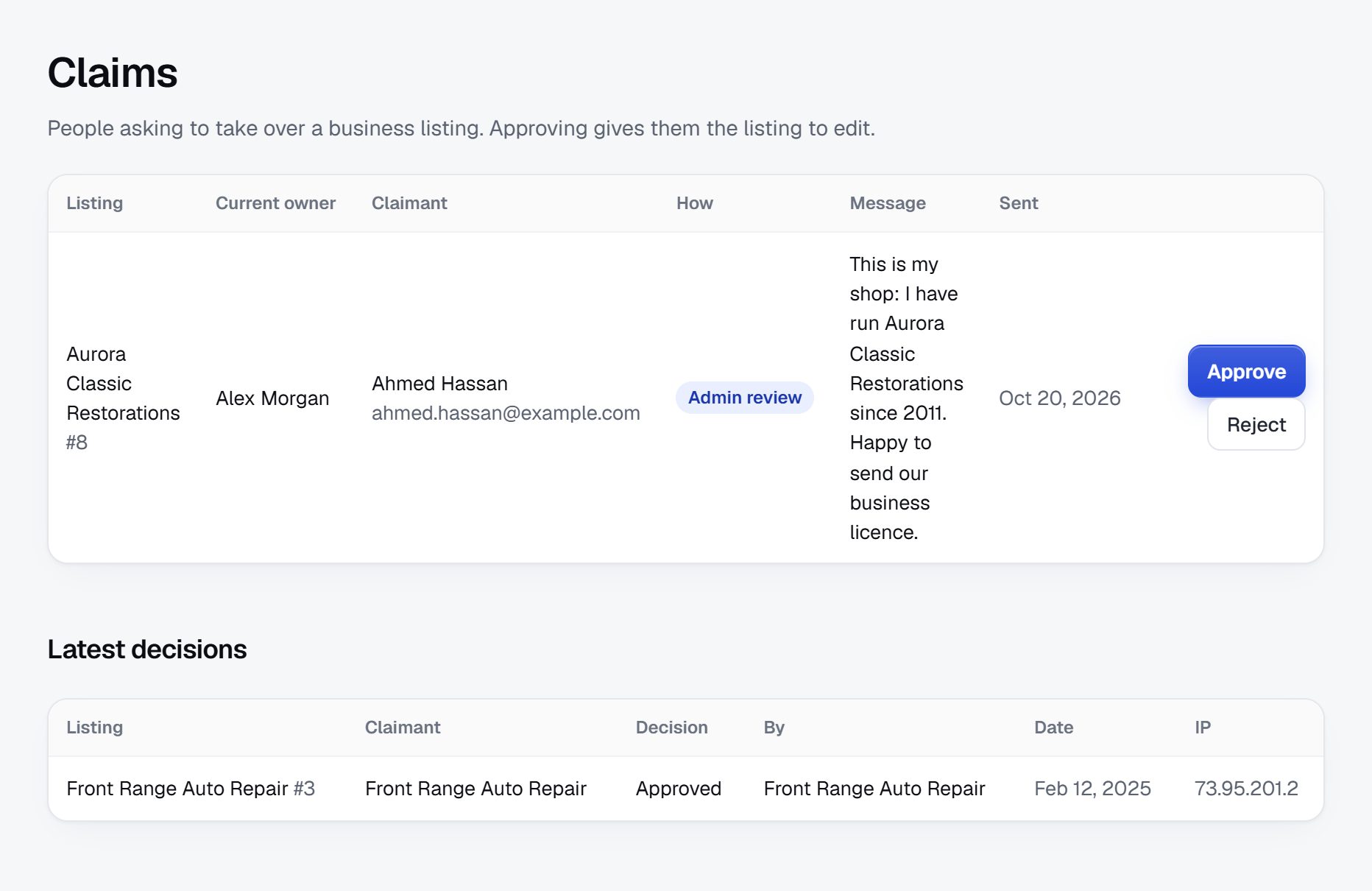
Visitors are easy to mislead, so outdated pages and fake operators matter.
A visitor does not know the area, cannot easily check a business in person, and is often deciding in a hurry. That makes a tourism directory responsible for more than most.
- Seasonal closures: show open months clearly and ask businesses to confirm them each spring. A closed ferry or a trail shut for repairs ruins a day.
- Fake or unlicensed operators: boat tours, fishing guides, hunting outfitters and adventure trips often need licenses or permits, and the rules depend on where you are. Check the rules where you operate, and only show a verified badge when you have seen the operator's paperwork.
- Fake booking pages: scammers copy real tour or rental listings and ask for payment by wire or gift card. Warn visitors to pay only through a business's known channels, never by wire or gift card, and remove any listing that asks for that.
- Review manipulation: competing operators sometimes buy or attack reviews. Moderate new reviews from new accounts, let owners reply, and remove reviews that read like ads.
- Safety outdoors: on trail and water pages, add plain notes on conditions, tides, cell coverage and weather, and tell visitors to check the land manager's current alerts.
Be clear about what is paid. Mark featured places as featured, and keep your own recommendations separate from them.
Travel searches are long, specific and full of the words that become your pages.
Trip planners type whole questions, and each question is a page you can own better than a global site. Mix town names, seasons and types of visitor.
Searches to target
- "things to do in [town] with kids"
- "rainy day things to do in [region]"
- "best hikes near [town]" and "easy hikes [park] with dogs"
- "[region] in winter" and "is [town] worth visiting in March"
- "boat tours [lake]", "wine tasting [valley] without a reservation"
Pages to build
- Activity pages per town, such as kayaking in each lake town.
- Season pages: the region in fall, in winter, on a long weekend.
- Visitor pages: with toddlers, with teens, with a dog, without a car, on a budget.
- Itineraries: one day, a weekend, three days, each linking the places they mention.
- An events calendar page per month.
Update season pages every year with what changed. Freshness helps both visitors and your rankings. Link every place page to the season and visitor pages it appears on, so a reader moves from an idea to a plan.
Build in the off season, launch before the first long weekend of high season.
Tourism runs on a calendar. Businesses plan marketing months ahead, and visitors start planning summer trips in late winter and spring. Build the directory in the quiet months, when owners have time to answer, and go live a few weeks before the first big weekend.
First area
Pick the town or valley where most visitors already stay, and cover it completely: every attraction, trail, tour and rental. Then spread outward to the day trips people take from there.
Partners
- The visitor center: offer free, current pages for places the official site does not list, and a QR code poster for their window.
- Hotels, inns and campgrounds, whose front desks answer "what should we do today" all day.
- Tour operators, who will share their page once it looks good.
- Local photographers who will license photos of trails and views in return for credit.
Checklist
- Activity categories and visitor fields set up.
- Businesses imported, checked and grouped by town.
- Trails and free sites written up from your own visits.
- Open months confirmed with every business.
- Five season and visitor pages, and two itineraries, published.
- QR posters placed at lodging front desks before the season.
A worked example: Ledge and Lantern Guide, the Door County peninsula of Wisconsin.
Consider Ledge and Lantern Guide, an invented visitor directory for the Door County peninsula, with its harbor villages, state parks, orchards and lighthouses. The founder worked six summers at the front desk of a family resort, where the most common question after "where is the ice machine" was "what should we do if it rains". She started the site with her own answers, then widened it to the whole peninsula.
Categories
- Outdoors
- Trails and beaches
- Paddling and boating
- State parks
- Tours and guides
- Boat and sunset tours
- History and lighthouse tours
- Fishing charters
- Food and drink
- Wineries and cideries
- Fish boils and supper clubs
- Orchards and farm stands
- Rainy days
- Museums and galleries
- Theaters and music
Who it serves
Families from Chicago, Milwaukee and the Twin Cities who book a summer week months ahead, couples coming for fall color weekends, and locals with guests in the spare room. A fourth group, wedding parties and reunions, is small but sends the most valuable group requests, often for a sunset cruise or a private winery tasting for thirty people.
How it started
One January she took every brochure from the rack at the resort, imported attractions and tour businesses from Places for each village, and spent February and March writing up trails, beaches and viewpoints she had walked herself, with notes on parking, shade and how muddy the paths get after rain. She emailed every business its draft page in April, asking it to confirm open months and hours. The site went live two weeks before Memorial Day with 260 places, about a third of them free sites no business would ever pay to list. Resort and inn front desks got a printed QR poster that pointed guests to the rainy day page.
How it makes money
Charter captains, sunset cruises and kayak outfitters buy featured spots on the activity pages from May to October. Wineries pay for a yearly membership with a verified badge and priority on group requests. A bike rental shop and a ferry operator share the banner spaces, and a cidery sponsors the fall color itinerary each September.
The free trail and beach pages bring the visitors. The tours and wineries pay for being next to them.
| Listing | Price range | Key details |
|---|---|---|
| Harbor Light Sunset Sail (Boat tours) | Premium | Two hours; May to October; up to 24 guests; reservation needed; good for couples |
| Bluff Loop Trail (Trails) | Free | 2.5 miles with rocky stretches; dogs on leash; open all year; no cell signal past the overlook |
| Red Barn Cherry Orchard (Orchards) | Budget | Pick-your-own cherries for a few weeks in July; good for families; call ahead after rain |
| Peninsula Maritime Museum (Rainy days) | Budget | Indoor; one to two hours; step-free access; shorter hours in winter |
| Sea Cave Kayak Tour (Paddling) | Mid | Half day; June to September; ages 10 and up; cancelled in high wind |
These listings are made up for the example, even where the kind of place is common on the peninsula.
The first 90 days: write in the quiet season, publish before the first long weekend.
Tourism has a clear calendar, and the 90 days should end a few weeks before your region's first big weekend: Memorial Day in many US summer regions, the first snowfall in a ski town, or the start of leaf season in a fall destination. Counting back, that usually puts the start in the depth of the off season, when businesses are closed or quiet and owners have time to reply.
The plan front-loads your own writing. Business pages come easily from an import, but the trails, beaches, viewpoints and rainy day ideas are what make the guide better than the brochure rack, and only you can write them. Visit what you can, even in winter, and write the season notes from what locals tell you. Ask a park ranger, a charter captain and a long-serving waitress what visitors always get wrong.
Leave the partner work, front desks and the visitor center, for the final weeks, when you can show them a complete guide rather than a promise. A front desk clerk recommends what they can see working on their own phone, not a plan.
| Weeks | Focus | Done when |
|---|---|---|
| 1 to 2 | Define the towns in your region and set up activity categories and visitor fields | Fields tested on ten places across outdoors, tours and food |
| 3 to 4 | Import businesses by town and collect brochures, chamber and tourism association lists | Every business you can find has a draft page, sorted by town |
| 5 to 7 | Visit and write up trails, beaches, viewpoints and free sites | At least 40 free places written from your own visits or local advice |
| 8 to 9 | Email owners their draft pages and confirm open months and hours | Most businesses confirmed and the rest marked as unconfirmed |
| 10 to 11 | Publish season pages, visitor pages and two itineraries | Five season or visitor pages and two itineraries live, each linking its places |
| 12 | Meet front desks and the visitor center, and place QR posters | Posters at ten lodging front desks and one test group request answered |
How to build a regional guide, and why writing matters more than code.
A tourism directory is half listings and half writing. The listings are businesses that can claim their own pages. The writing is your season pages, itineraries and notes on trails and beaches, which is where you beat the large travel sites. Whatever you build has to make both easy, and it has to read well on a phone held by someone standing at a trailhead.
Custom development fits a founder who wants features beyond a directory, such as a trip planner that saves itineraries to a visitor account or a custom map layer of trail conditions. It costs the most and takes longest, and in a seasonal business, a launch that slips by two months can miss a whole summer.
A directory script or WordPress plugin on your own server often suits someone who already runs a travel blog. Listings sit next to the articles, and you have full control. You also take on hosting, updates, the speed of pages on weak mobile signal, and spam reviews, which a popular tourism site attracts.
A hosted builder such as Yclas gives you claimed pages, opening hours, reviews with owner replies, maps and pages in many languages without running a server. Itineraries and season guides are pages you write, not something generated, so plan time for them. Budget for a fresh pass each spring too, because season details go out of date even when the places stay the same.
In tourism, the route that gets you live before the season beats the route with more features.
| Route | Fits when | Watch out for |
|---|---|---|
| Custom build with developers | You want trip planners, saved itineraries or your own map layers | A late launch that misses the season, and ongoing costs |
| Script or WordPress plugin on your server | You already run a travel blog and want listings beside it | Slow pages on mobile, plugin updates and spam reviews |
| Hosted builder | You want listings, claims, reviews, maps and several languages ready quickly | Season pages and itineraries still need your own writing time |
| Travel blog without listings | You mainly want to write and earn from ads | Owners cannot update anything, and pages go stale |
What a tourism directory costs to run.
The software is the smallest part of the bill. Most of the cost is your time in the first months: finding the first listings, answering questions and checking what gets posted.
Costs include Google Places API usage for the import, fuel and entry fees to visit attractions you write about, and perhaps licensed photos for trails and views. Visitor guide or tourism association memberships cost money in some regions but can open doors to operators.
| Cost | Typical range | On Yclas |
|---|---|---|
| Domain | $10 to $20 a year | Your own, with SSL included |
| Software and hosting | $0 to $100+ a month, plus plugins and updates | Starter $19 a month, Professional $99 |
| Design | $0 to $100 for a theme, or a designer | 109 looks included |
| Payment fees | About 3% per payment | Your Stripe or PayPal fees; Yclas takes nothing |
| Business data | Free if you collect it, or a few cents per page of Google results | Paid to Google, with your key |
| Your time | 5 to 10 hours a week at the start | Finding listings, moderation, support |
Mistakes that make visitors go back to the big travel sites.
- Copying the visitor bureau. If your pages hold the same places and the same polished words as the official site, nobody needs you. Write what the bureau cannot: which beach is crowded by ten, which museum is worth the drive, which hike is too steep for a stroller.
- Listing only businesses. Trails, beaches, viewpoints and free parks never pay to be listed, yet they are what most visitors are planning around. Write them up yourself, and give them the same care as the paying pages. A good beach page with parking, shade and restroom notes can outrank the official site.
- Ignoring open months. In seasonal regions, half the attractions close for part of the year. A family that drives to a closed ferry dock in March blames your site, not the ferry, so make open months a required field and ask owners to confirm them every spring.
- Writing about places you have not seen. Visitors can tell when a page is assembled from other websites. Visit what you can, ask locals about the rest, and say plainly when a note comes from someone else. Date your visit notes so readers know how fresh they are.
- Blurring paid and unpaid. If featured places appear in your "best rainy day ideas" list without a label, readers stop trusting every list on the site. Label paid placement, and keep your own picks separate. Readers accept advertising; they do not accept advertising dressed up as advice.
- Picking a region nobody names. A guide to an area defined by your own borders matches no one's search. Use the name visitors already use, even if locals divide it differently. You can still mention the local names inside the town pages.
- Borrowing photos. Photos taken from other sites or social media can bring takedown demands and bills for unlicensed use. Use your own, ask owners for theirs, or license work from local photographers with credit. A real photo of a muddy trail in April is also more useful than a postcard shot.
- Launching in high season. Owners are too busy to claim pages in July, and visitors have already planned their trips. Build in the off season and launch a few weeks before the first long weekend.
- Forgetting the shoulder seasons. Many regions are quiet in spring and late fall, yet visitors still search for what is open then. A page for each shoulder season wins searches the big sites barely answer. Shoulder visitors are often repeat visitors, too, and they share good finds with friends.
Tourism terms a directory founder should know.
Terms you will hear from tourism offices, tour operators and lodging owners.
| Term | What it means |
|---|---|
| DMO | Destination marketing organization: the official body that promotes a region to visitors. |
| CVB | Convention and visitors bureau, a common US name for a city or county DMO. |
| High season | The busiest weeks of the year, when prices peak and businesses are hardest to reach. |
| Shoulder season | The quieter weeks either side of high season, often with lower prices and fewer crowds. |
| Off season | The months when many seasonal attractions close or keep short hours. |
| OTA | Online travel agency: a large site that sells hotel stays, tours or tickets for a commission. |
| Itinerary | A suggested plan for a day or a trip, listing places in a sensible order. |
| Independent traveler | A visitor who plans their own trip rather than joining a group tour, often shortened to FIT. |
| Receptive operator | A company that packages local tours and services for travel agents and group tour companies. |
| Outfitter | A business that rents gear or guides outdoor trips such as paddling, fishing or hunting. |
| Commercial use permit | Permission some public land agencies require before a business can guide or run tours on their land. |
| Occupancy tax | A tax on overnight stays, often used to fund the region's tourism office. |
| Gateway town | A town at the entrance to a national park or major attraction, where visitors stay and stock up. |
| Brochure rack | The display of leaflets at visitor centers and lodging front desks, a source of local businesses. |
The same steps for a tourism directory on Yclas.
- Describe your directoryThe setup wizard writes the categories, an About page and example listings from one sentence.
- Add fieldsHours, services, areas served, prices: the details people search by, as filters.
- Fill itImport businesses from a spreadsheet or Google Places, then check them.
- Bring owners inOwners claim their page, update it and answer reviews.
- EarnSwitch on featured places, banners or memberships when visits arrive.
What does a tourism directory cost to start?
Plan for a domain, a Places import, travel to the places you write up, and some photo licensing. The largest cost is the time spent visiting trails and sights yourself.
Can I compete with the big travel sites?
Not on every search. You can win the specific, local questions they answer poorly, like rainy day ideas or easy hikes for small kids, by knowing the region well.
Is the official visitor bureau a competitor?
Partly, but it often lists only members and sells ads in its own guide. Many founders work alongside it, covering places and questions it does not.
Do I need permission to list attractions and businesses?
Public business details are commonly listed, but check the rules where you operate, ask before using photos, and update or remove a page when an owner asks.
How does a tourism directory make money?
From featured places on activity pages, operator memberships, group requests sent to businesses, banners for rentals and outfitters, and sponsored itineraries.
Can visitors book tours on my site?
Visitors contact businesses or send group requests through the site, and the booking itself happens with the business, which keeps you out of handling payments for tours.
What should I do in the off season?
Sign up businesses, confirm next year's open months, write season pages and itineraries, and promote whatever is open in winter, from ski areas to museums.
Should my guide be in more than one language?
If your region draws many visitors from abroad, yes, starting with the language you hear most at front desks. Translate the season pages and the most visited activity pages first, since they carry most searches. Have a fluent speaker check the result, because a wrong word on a safety note matters.
How do I write honestly about places that do not pay?
Keep your recommendations and your paid placements visibly separate, and write the same way about both. Paying businesses get visibility, not kinder words, and saying so plainly on an About page helps.
Can I use photos that visitors post?
Only with their permission. Ask visitors who post good photos whether you can use them with credit, and keep a record of who agreed, since a photo on social media is not free to reuse. A simple message asking for permission, sent before you publish, is usually welcome.
Does my region need to be well known to work?
It needs a name visitors use and enough to do for a weekend. Lesser-known regions are often easier to rank for, because the large travel sites cover them thinly. Check that people actually travel there for leisure, though: a region with no lodging and few attractions will not hold a directory up.
How do I keep event dates right from year to year?
Create a page for each recurring event, update it as soon as organizers announce the date, and mark last year's details clearly as past so visitors are not misled by old information. Organizers often confirm dates months ahead, so a short note to each one in the off season saves a lot of corrections later.
Related pages.
The parts of Yclas this leans on.
You know the region. Now build the guide its visitors will plan their trip with.
Describe your site in a sentence and the setup wizard writes the categories, example listings and a look. Free for 15 days, no credit card.
Start my directory