How to build a farmers market directory that shows which markets run, when and who sells there.
This guide is for founders who want to run the directory of farmers markets in a city, state or region, with the days, seasons and vendors for each. It covers who searches for markets, the details people filter on, how the site earns when most markets run on small budgets, where the first markets and stalls come from, the risks, search and a launch timed to opening day.
Free for 15 days · No credit card · Plans from $19 a month
Markets come and go with the seasons, and the lists never keep up.
A farmers market is a moving target. It runs Saturdays from May to October, moves indoors for winter on alternate Sundays, changes parking lots when the church repaves, and loses its egg vendor in August. The market manager posts updates on social media, the city lists it on a page last edited years ago, and a national directory still shows the Wednesday market that closed.
People who shop at markets are loyal and plan ahead. They want to know which markets are open this weekend, which ones accept SNAP, and which one has the cheese maker they liked.
Who searches a farmers market directory
- Regular shoppers checking days, hours and winter schedules.
- Shoppers using food assistance looking for markets that take SNAP/EBT or run matching programs.
- Visitors who want a market to walk around on a trip.
- Farmers, bakers and makers looking for markets to sell at, and managers looking for vendors.
Pick the angle
A state or a metro area is the natural size: big enough to have dozens of markets, small enough that you can keep each one current. Plan two kinds of page from the start: one for each market, and one for each vendor, showing which markets they attend. That second layer is what no city list has.
Markets are the front door, but vendors are what shoppers come back for.
List each market with its days and season, and each vendor with what they sell.
Use two top-level areas: markets and vendors. Market pages carry the schedule; vendor pages carry the products and the list of markets attended. Keep vendor categories close to how shoppers walk a market.
Market fields
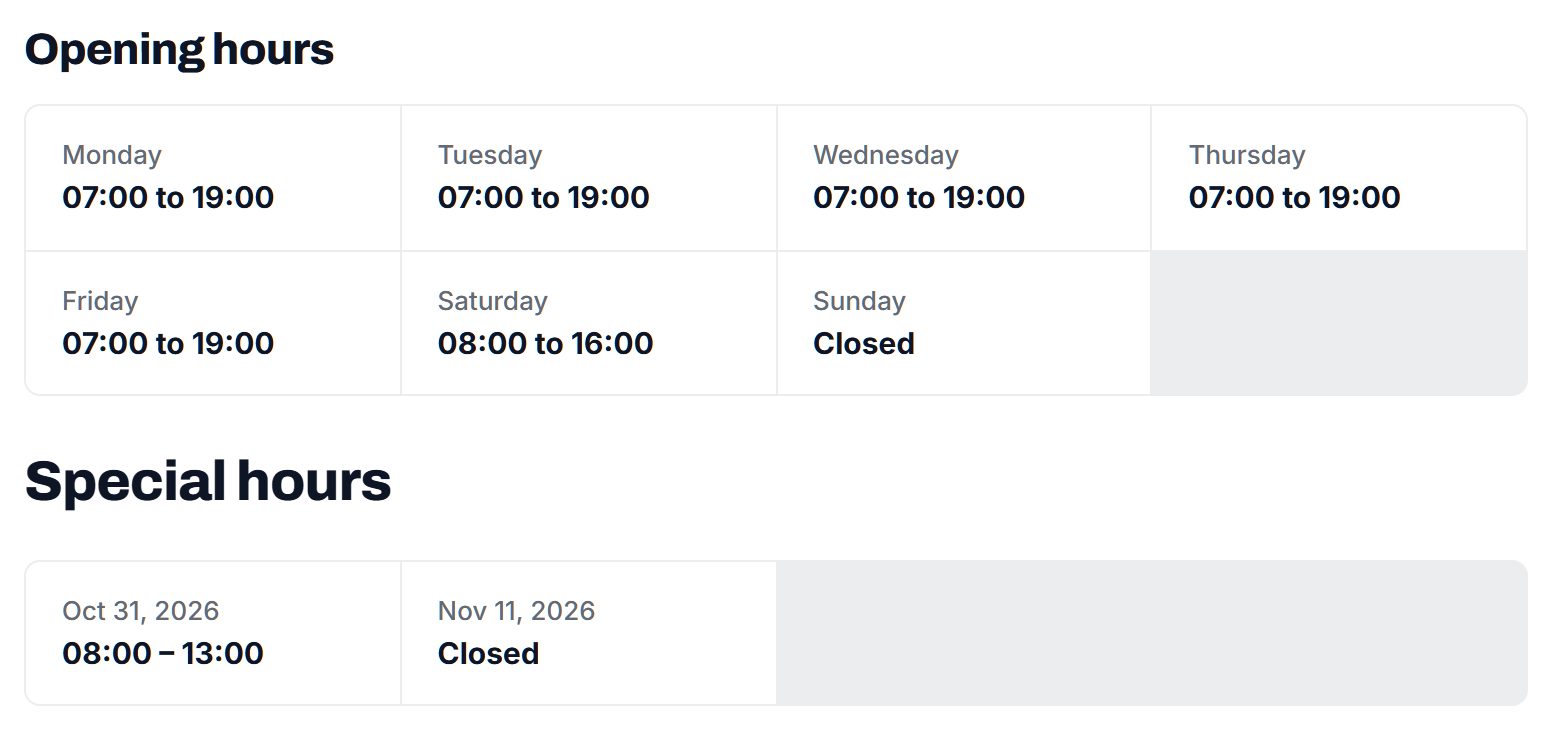
- Market days as checkboxes, with opening hours for each day.
- Season start and season end as dates, plus a winter market checkbox.
- Indoor or outdoor as a dropdown.
- Food assistance as checkboxes: SNAP/EBT, WIC and senior coupons, matching dollars.
- Producer-only as a checkbox, for markets where vendors must sell what they grow or make.
- Number of vendors as a number, and dogs allowed, parking and live music as checkboxes.
Vendor fields
- Markets attended as checkboxes, so shoppers can find the baker at Saturday's market.
- Products, takes cards and preorder for pickup at market.
Keep vendor categories to five or six. A shopper looking for honey should not have to guess whether it sits under produce, pantry or specialty foods.
| Category | Example listings | Fields people filter on |
|---|---|---|
| Farmers markets | Saturday downtown markets, weekday evening markets, winter markets | Market days, season dates, food assistance, indoor or outdoor |
| Produce vendors | Vegetable farms, orchards, berry growers, mushroom growers | Markets attended, products, organic certification |
| Meat, eggs and dairy vendors | Pastured pork, eggs, cheese makers, fishmongers | Markets attended, preorder for pickup, takes cards |
| Bakers and prepared food | Bread bakers, pie makers, hot food stalls, coffee carts | Markets attended, dietary options, takes cards |
| Makers and plants | Flower growers, seedlings, soap makers, woodworkers | Markets attended, products, seasonal only |
| Vendor openings | Markets looking for a baker, a meat vendor, a musician | Market, start date, stall fee type, requirements |
Markets attended is the one field that links the two halves of the site, so make it required on every vendor page.
Markets have small budgets, so earn from vendors, sponsors and vendor recruiting.
Many farmers markets are run by volunteers or small nonprofits, and a few hundred dollars is a real decision for them. Do not build your business on charging the markets. Keep every market and every vendor free to list, and build the revenue around the people with a commercial reason to be seen.
The first product is vendor recruiting. Managers spend every winter looking for vendors to fill gaps, and new farmers and bakers spend every winter looking for a market. A paid listing in a vendor openings category, or a small fee for featured openings, fills a real need on both sides.
The second is featured vendors: a bakery or a farm that wants to be shown first on the pages of the markets it attends. Memberships suit vendors who sell at several markets and want a verified badge and a better profile.
Local sponsors fit naturally here. Credit unions, food co-ops, health systems and garden centers often sponsor markets already, and a banner on a market's page or on the season guide is easy for them to understand.
Never charge a market to appear. A directory with gaps loses shoppers' trust fast.
| Model | Works when | Switch it on |
|---|---|---|
| Paid vendor openings | Managers use the site to find new vendors | In winter, when markets plan their season |
| Featured vendors | Shoppers browse vendors on busy market pages | After opening day, once market pages draw visits |
| Vendor memberships | Vendors at several markets want a badge and better profile | After your first full season |
| Sponsor banners | Co-ops, credit unions and hospitals want local food shoppers | When the season guide has steady traffic |
| Sponsored season guide | A regional food group wants to promote all its markets | Ahead of opening season each spring |
Market associations and managers will give you the first hundred listings.
Markets want shoppers, and most managers will gladly correct a listing if you send them a draft. Start with the markets, then work through each market's vendor list.
Where the markets come from
- State farmers market associations: many keep a member list with contacts for each manager.
- Government listings: in the US, the Department of Agriculture publishes farmers market listings; similar lists exist in other countries. Treat them as a start, since many entries are outdated.
- City and county websites, which often list markets on public land.
- A Google Places import for farmers markets in your area, checked by hand, because closed and seasonal markets mix in.
- Market social media pages, the best source for this season's dates.
Where the vendors come from
Each market's vendor list is usually on its website or posted on a board at the info tent. Walk the market on opening weekend, talk to vendors at quiet moments, and hand each one a card asking them to claim their page and tick the markets they attend. Bring the market manager in first: a short note in the manager's weekly vendor email gets more sign-ups than a dozen cold visits.
Spreadsheets of vendors from market managers can be imported in one go with a CSV file, which saves a lot of typing.
Yclas can import businesses from Google Places with your own Google key, and vendors from a CSV file; no photos come with a Places import.
Wrong dates, resellers and fake vendor fees are the real problems.
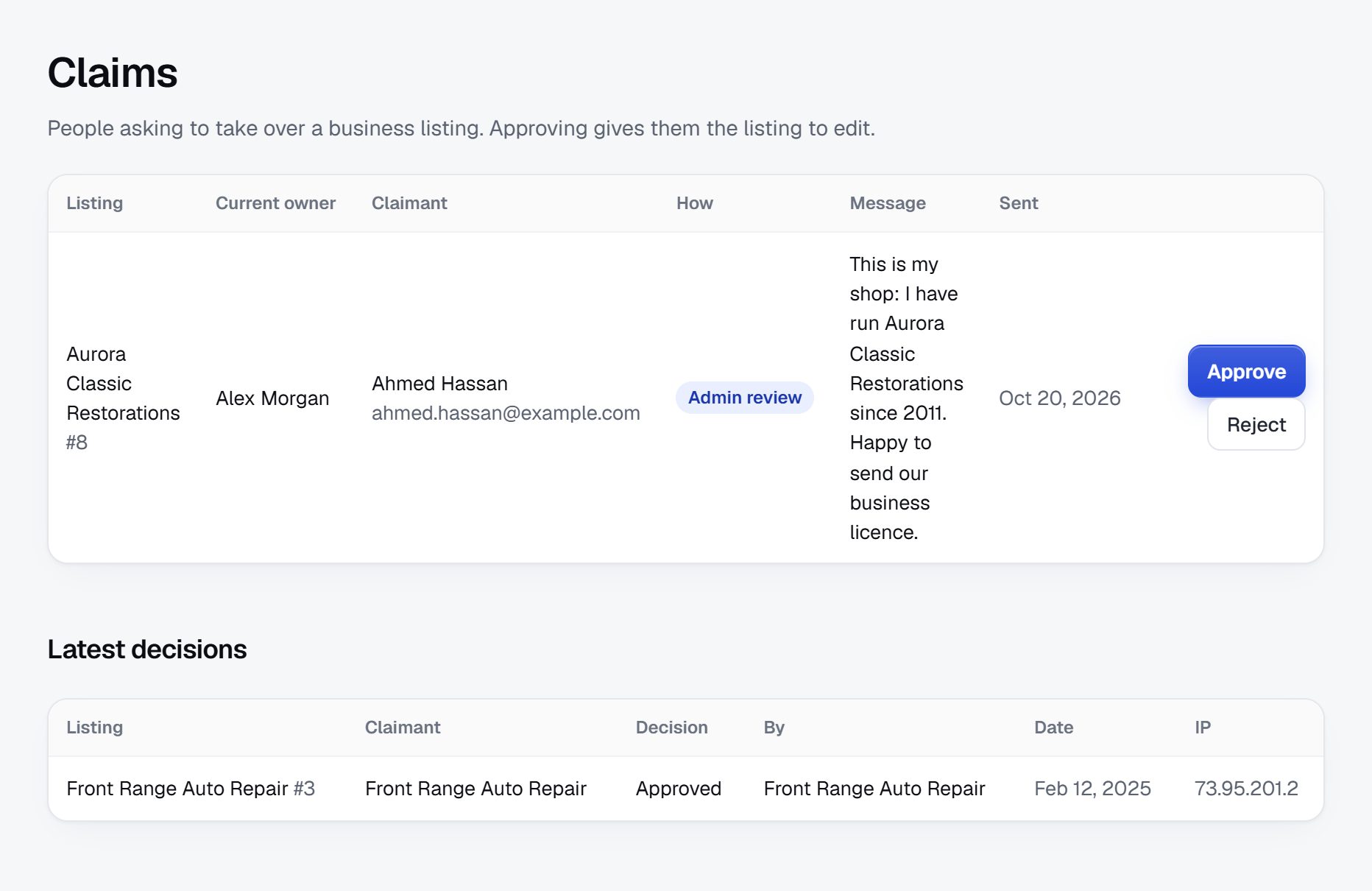
Shoppers who arrive at an empty parking lot do not come back to your site. Most of the trust work in a farmers market directory is keeping schedules honest and vendors real.
- Season and weather changes: show the date each market was last confirmed, and email managers before every season to check days, hours and location. Add a note for weather cancellations.
- Resellers: some stalls resell wholesale produce as if they grew it. Do not judge this yourself, but show the market's producer-only rule and let vendors state whether they grow, make or resell what they sell.
- Fake vendor fee scams: fake event organizers ask vendors to pay booth fees for markets that do not exist. Only allow vendor openings from accounts tied to a market page you have checked, and warn vendors to confirm with the market before paying any fee.
- Food assistance details: SNAP and matching programs change and depend on the market's own setup. Ask managers to confirm each season, and tell shoppers to check at the info tent.
- Food rules: cottage food, meat and dairy sales follow rules that differ by state and country. Check the rules where you operate, and leave compliance to the market and its vendors.
Reviews work better for vendors than for whole markets. Let vendors reply, and remove reviews that are really complaints about parking.
People search by day, by season and by what the market accepts.
Most market searches include a time: today, this Saturday, winter. Build pages that match the way people plan their week.
Searches to target
- "farmers market today near me" and "Saturday farmers market [city]"
- "winter farmers market [city]" and "indoor farmers market [state]"
- "farmers markets that accept SNAP [city]"
- "[market name] hours" and "[market name] vendors"
- "how to become a vendor at a farmers market [state]"
Pages to build
- A page per city or county, with markets grouped by day of the week.
- Day pages: every Saturday market in the region, every weekday evening market.
- A winter market page, which has little competition and real demand.
- A guide for new vendors: how to apply to markets, what stall fees look like, what permits to ask about.
- Product pages linking vendors across markets: where to buy fresh mozzarella, sourdough or pastured eggs at a market.
Run a weekly "what is at the market this week" post in season, using what vendors tell you is ready.
Launch a few weeks before opening day, with one city's markets complete.
Opening day is the biggest moment of the market year. Shoppers search for dates in the weeks before it, and managers want every bit of publicity. Have your first city complete and confirmed a few weeks ahead.
First area
Pick one city or county and get every market on the site with days, season, hours and food assistance details. Then add the vendors from the two or three largest markets. A shopper should be able to find a market and see who sells there on day one.
Partners
- Market managers, who can share the site in their newsletters and on their info tent table.
- The state market association, which may want a better public map than the one it has.
- Food banks and community health groups that help shoppers use SNAP at markets.
- Local food writers and newsletters who cover the season.
Checklist
- Market and vendor areas set up, with markets attended as a required field.
- Every market in the first city confirmed with its manager.
- Vendor lists imported from managers' spreadsheets.
- Opening day page published for each market.
- Winter market page live before the last outdoor markets close.
- Vendor openings category open in winter, when managers recruit.
In August, many US markets celebrate National Farmers Market Week, a good moment for a roundup.
A worked example: Market Day Ledger, the Willamette Valley of Oregon.
Take Market Day Ledger, a fictional directory of farmers markets and their vendors from the Portland suburbs down to Eugene. The founder volunteered for six seasons as manager of a small-town Saturday market, and spent every winter answering the same two emails: a new baker asking which markets had openings, and a shopper asking whether the market ran in January. The site exists so neither question needs an email.
Categories
- Markets
- Weekend markets
- Weekday evening markets
- Winter and indoor markets
- Vendors
- Produce
- Meat, eggs and dairy
- Bakers and prepared food
- Makers and plants
- Vendor openings
Who it serves
Regular shoppers who visit two or three markets a week in summer, shoppers using SNAP who need to know which markets match their dollars, and the farmers, bakers and makers looking for a market with space. Market managers use it too, mostly in winter, when they browse vendor pages to fill gaps in next season's layout.
How it started
In January she gathered the state market association's member list and the government market listings for her counties, then emailed every manager a draft of their page with three questions: which days, which dates, and which food assistance programs. Managers answered faster than she expected, because a correct public page saves them work. Four of the largest markets sent vendor spreadsheets, which went in with a CSV import, each vendor tagged with the markets it attends. She launched three weeks before opening day with 38 markets and 210 vendors, and spent opening weekend at the two busiest markets handing vendors a card with their own page on it.
How it makes money
Vendor openings come first: managers post a free opening, and pay for a featured one when a gap is urgent, such as losing the only egg vendor in June. Featured vendors appear first on the pages of the markets they attend. A regional credit union sponsors the winter market page, and vendors who sell at four or more markets buy a yearly membership for the verified badge and a fuller profile.
The two sides of the site feed each other: shoppers come for markets and stay for vendors, while vendors come for openings and stay for shoppers.
| Listing | Type | Key details |
|---|---|---|
| Riverbend Saturday Market | Market | Saturdays 9 to 1, May to October; 45 vendors; SNAP with matching dollars; dogs on leash |
| Mill Park Thursday Evening Market | Market | Thursdays 4 to 8, June to September; producer-only; live music; parking at the school lot |
| Fernhill Mushroom Co. | Vendor | Shiitake and oyster mushrooms; Riverbend and the winter market; takes cards; preorder for pickup |
| Coyote Ridge Bread | Vendor | Sourdough and rye; attends three markets; usually sells out by 11 on Saturdays |
| Wanted: egg vendor at Mill Park | Vendor opening | Starts in June; weekly stall fee; producer-only; apply by mid-April |
The markets, vendors and opening above are invented.
The first 90 days: count back from opening day.
In most of the US, outdoor markets open between April and June, so a 90-day plan usually runs from February to opening day. February is also when managers finalize vendor lists and stall maps, which means they are at their desks and thinking about exactly the information you need from them.
Work in this order: markets, then managers, then vendors, then shoppers. A market page you have not confirmed with its manager is a guess, and a vendor page with no markets attended is a dead end. Leave promotion to the last two weeks, when the site is complete for your first region and opening day searches are rising.
Keep a tracking sheet with each market's manager, the date you last spoke, and what they confirmed. You will reuse it every spring, when the whole cycle of confirming dates starts again. Note too which managers send a weekly vendor email, since a line in that email is the cheapest way to reach every vendor at once.
| Weeks | Focus | Done when |
|---|---|---|
| 1 to 2 | Set up the markets and vendors areas, market days, season dates, food assistance and markets attended fields | One market manager has reviewed the field list and suggested changes |
| 3 to 4 | Build the market list from the state association, government listings and a Places import | Every market in the first region has a draft page and a named manager contact |
| 5 to 6 | Email and phone managers to confirm days, season, location and SNAP details | Most markets confirmed, the rest marked as not yet confirmed |
| 7 to 8 | Collect vendor spreadsheets from managers and import them as a CSV file | Vendors from the largest markets live, each linked to the markets it attends |
| 9 to 10 | Publish day pages, the winter market page and the guide for new vendors | Saturday, weekday and winter pages live, and a manager has checked the vendor guide |
| 11 to 12 | Walk the first markets of the season, hand out vendor cards and ask managers to mention the site | 50 vendors claimed and two market newsletters have featured the site |
Ways to build it, judged by how well markets and vendors connect.
A farmers market directory is really two directories joined together. Each market has days, seasons and a location; each vendor has products and a list of markets. Shoppers move between the two all the time: from the Saturday market to the cheese maker, and from the cheese maker to the Wednesday market where she also sells. Whatever route you take, test that link first. The second test is seasonal: every spring dozens of markets change dates at once, so updating many pages quickly matters more than any design choice.
Commissioning a custom build lets developers model markets and vendors exactly, with a vendor's markets shown on a calendar by day. It suits a founder with a budget and a clear plan, and it carries the usual risks: a long build, and changes each season that need the developer again.
A directory script or WordPress plugin on your own server often appeals to market groups that already run a WordPress site. The catch is the link between markets and vendors, which may need custom fields, another plugin or code. You also handle updates, backups and the spam that every public sign-up form attracts.
A hosted builder such as Yclas covers claimed pages, opening hours, reviews, maps and CSV imports of vendor lists without any server work. Set markets attended as a required checkbox field, and check that it gives shoppers the market-to-vendor view your region needs.
Whichever route you choose, a market manager should be able to correct their page in a few minutes without calling you.
| Route | Fits when | Watch out for |
|---|---|---|
| Custom build with developers | You want vendors and markets tied together on calendars and maps exactly your way | Cost, a long build, and paying for changes every season |
| Script or WordPress plugin on your server | A market group already runs WordPress and has someone technical | Linking vendors to markets may need custom code; spam and updates |
| Hosted builder | You want markets, vendor pages, CSV import and claims ready by opening day | Check that a markets attended field links both sides well enough |
| A map on the association's site | A state association only needs a better public map of members | Shows markets but no vendors, openings or seasonal details |
What a farmers market directory costs to run.
The software is the smallest part of the bill. Most of the cost is your time in the first months: finding the first listings, answering questions and checking what gets posted.
Expect small costs: a Places import, printed cards for opening weekend and maybe a table fee at a market or a state association conference. Some associations charge for vendor booths at their yearly meeting, which is the best place to meet many managers at once.
| Cost | Typical range | On Yclas |
|---|---|---|
| Domain | $10 to $20 a year | Your own, with SSL included |
| Software and hosting | $0 to $100+ a month, plus plugins and updates | Starter $19 a month, Professional $99 |
| Design | $0 to $100 for a theme, or a designer | 109 looks included |
| Payment fees | About 3% per payment | Your Stripe or PayPal fees; Yclas takes nothing |
| Business data | Free if you collect it, or a few cents per page of Google results | Paid to Google, with your key |
| Your time | 5 to 10 hours a week at the start | Finding listings, moderation, support |
Mistakes that make shoppers go back to asking on social media.
- Listing markets but not vendors. A list of markets with days and times is useful once, and the city already has one. Vendor pages, with the markets each one attends, are the reason shoppers return every week, so plan for them from the first day. Even fifty vendor pages in one city give shoppers something no market list offers.
- Copying government listings as they are. Public market lists are a fine starting point, but many entries are years old, with wrong days or markets that closed. Confirm each one with the manager before it goes live. A single email with the draft page attached is usually enough.
- Charging markets to appear. Many markets are volunteer-run, and the first one you leave out because it did not pay makes your directory incomplete. Keep markets free and earn from vendors, openings and sponsors.
- Forgetting that markets move. Markets change parking lots, days and even towns between seasons. Put a short "changes this season" line at the top of the market page, and update it as soon as the manager tells you. Shoppers forgive a move; they do not forgive a page that sent them to an empty lot.
- Too many vendor categories. Ten categories for a market with forty stalls means shoppers cannot find the honey vendor. Keep five or six, and use product checkboxes for the details. A shopper should be able to guess the right category without reading them all.
- Treating managers as customers. Managers are your best partners, not your buyers. Send them free things: a correct page, a vendor openings section, a vendor guide they can share. They will send you vendors and shoppers in return, and tell other managers about you at the state association meeting.
- Leaving SNAP details unchecked. A shopper relying on food assistance who arrives at a market that no longer matches dollars has been let down badly. Ask managers to confirm every season, and show the confirmation date. Write the details in plain words, such as "bring your card to the info tent first".
- Launching after opening day. Shoppers search for dates in the weeks before the season starts. If your pages appear in July, you miss the moment when everyone is looking, and managers have already sent their opening day news elsewhere.
- Letting vendor pages go silent in winter. Vendors who sell at winter markets or take preorders keep earning in the cold months. Feature them, or the site looks closed from November to April. Winter is also when managers post openings, so keep that section prominent.
Farmers market terms a directory founder should know.
Terms that managers, vendors and regular shoppers will expect you to use correctly.
| Term | What it means |
|---|---|
| Producer-only | A market rule that vendors may sell only what they grow, raise or make themselves. |
| Reseller | A vendor who sells produce bought from others, often wholesale, which some markets ban. |
| Stall fee | What a vendor pays the market for a space, charged per day or per season. |
| Percentage of sales | A fee some markets charge as a share of each vendor's takings instead of, or on top of, a stall fee. |
| Market manager | The person, paid or volunteer, who runs the market, places vendors and handles rules. |
| Info tent | The market's own booth where shoppers get maps, tokens and help with food assistance. |
| SNAP/EBT | US food assistance paid by card, which a market converts into tokens or vouchers at its info tent. |
| Matching program | A program that adds extra dollars for fruits and vegetables when shoppers spend SNAP, known by different local names. |
| Market coupons | WIC and senior programs in the US that give vouchers for fresh produce at approved markets and stands. |
| Anchor vendor | A large or popular vendor that draws shoppers by itself, such as a big produce farm. |
| Day vendor | A vendor who sells on some market days only, as opposed to a full-season vendor. |
| Vendor application | The form and documents a market asks for before accepting a new vendor, often including permits and insurance. |
| Cottage food | Foods such as jams and breads that some places allow people to make at home and sell under set rules. |
The same steps for a farmers market directory on Yclas.
- Describe your directoryThe setup wizard writes the categories, an About page and example listings from one sentence.
- Add fieldsHours, services, areas served, prices: the details people search by, as filters.
- Fill itImport businesses from a spreadsheet or Google Places, then check them.
- Bring owners inOwners claim their page, update it and answer reviews.
- EarnSwitch on featured places, banners or memberships when visits arrive.
What do I need to spend to start a farmers market directory?
A domain, an import of markets, cards for vendors and a few weekends walking markets. A table at the state market association's yearly meeting is the one larger expense worth considering.
Do markets have to agree to be listed?
Market days, locations and public vendor lists are usually public, but check the rules where you operate and correct or remove a listing when a manager asks.
How do I keep market days and seasons right?
Confirm every market with its manager before each season, show the date it was last confirmed, and give managers a claimed page so they can update it themselves.
How can a directory make money when markets are nonprofits?
Earn from vendor openings, featured vendors, vendor memberships and sponsor banners from co-ops, credit unions and health systems, rather than charging the markets.
Should I list vendors or only markets?
Both. Market pages bring the first visits, but vendor pages with the markets each one attends are what make your site more useful than the city's list.
Can I show which markets accept SNAP?
Yes, as a filter, but those details change and depend on each market. Ask managers to confirm every season, and tell shoppers to check at the market.
What about the winter?
Promote winter and indoor markets, run the vendor openings category while managers recruit, and confirm next season's dates before spring.
How do I handle a market that moves halfway through the season?
Update the page the day you hear, put the change at the top in plain words, and keep the old location in a short note for a few weeks so shoppers who saved it are not confused. Ask the manager whether vendors stay the same at the new site, since some leave when a market moves.
Should vendors post their products and prices?
Products, yes, because shoppers filter on them. Prices change with the weeks and the weather, so suggest vendors give a rough range or say prices are posted at the stall.
Should I include craft fairs and flea markets?
Keep them out, or give them a clearly separate category. Shoppers looking for vegetables and eggs are annoyed to find an antiques fair, and managers of producer-only markets may not want to be listed beside them.
What do market managers want from my directory?
Fewer repeated emails, more shoppers on slow days and more vendor applicants. Give them a page they can update, a place to post openings and a link they are happy to share. Ask what they would change about their page before you ask them for anything.
Is a national farmers market directory a better idea?
It is much harder to keep current, because thousands of markets change every season. A state or metro directory you can confirm market by market is more useful, and it can grow outward from there.
Related pages.
The parts of Yclas this leans on.
You know where the markets are. Now build the directory shoppers check before Saturday.
Describe your site in a sentence and the setup wizard writes the categories, example listings and a look. Free for 15 days, no credit card.
Start my directory