How to build a food truck directory that tells people where lunch is parked today.
This guide is for founders who want to run the place a city checks to find its food trucks: who they are, what they serve and where they park this week. It covers the people who search, the details they filter on, how the directory earns from catering leads and featured trucks, how to list the first trucks, the risks, search and a launch timed to the warm months.
Free for 15 days · No credit card · Plans from $19 a month
A food truck moves, and that is exactly why people need a directory for it.
A restaurant has an address. A food truck has a route, a home lot on Tuesdays, a brewery on Friday nights and a festival twice a summer. The hungry person standing on a corner at noon does not care about any of that. They want to know which trucks are within walking distance right now and whether one of them does vegan tacos.
General review sites list a truck once, often with the address of the commissary kitchen where it parks overnight. Map apps show the same stale pin. The truck's own social media feed is current, but you have to already know the truck to follow it.
Who searches a food truck directory
- Office workers and students looking for lunch near them on a weekday.
- People planning an evening at a brewery, winery or park who want to know which truck will be there.
- Event planners: wedding couples, office managers, school PTAs and HOA boards who want to hire a truck for a party.
- Property managers and breweries looking for trucks to book for their lot.
Pick the angle
Start with one metro area, or one city and its suburbs. A national food truck directory is a list of names with no schedules. A city one, kept current, becomes the answer to "what is out there today". Some founders go narrower still: trucks at breweries in one county, or catering trucks for weddings in one region.
The whole value is freshness. A food truck page with last month's schedule is worse than no page at all.
Sort trucks by what they cook, then let people filter by where and when.
Keep categories to the cuisine, because that is how people think when they are hungry. Then add the fields that answer the practical questions: where will it be, can I pay by card, can I bring the kids, and can I book it for a party.
- Regular stops as a text field the owner keeps current: "Tue 11 to 2, Main and 4th; Fri 5 to 9, Riverside taproom". Show it high on the page.
- Neighborhoods served as checkboxes, so a person in one part of town can filter to trucks that come there.
- Dietary options as checkboxes: vegetarian, vegan, gluten-free options, halal, kosher.
- Payment: cash only, cards, mobile pay.
- Books private events as a checkbox, with minimum guest count and travel radius in miles as numbers.
- Price per person as a dropdown band, because a dumpling truck and a lobster roll truck are very different lunches.
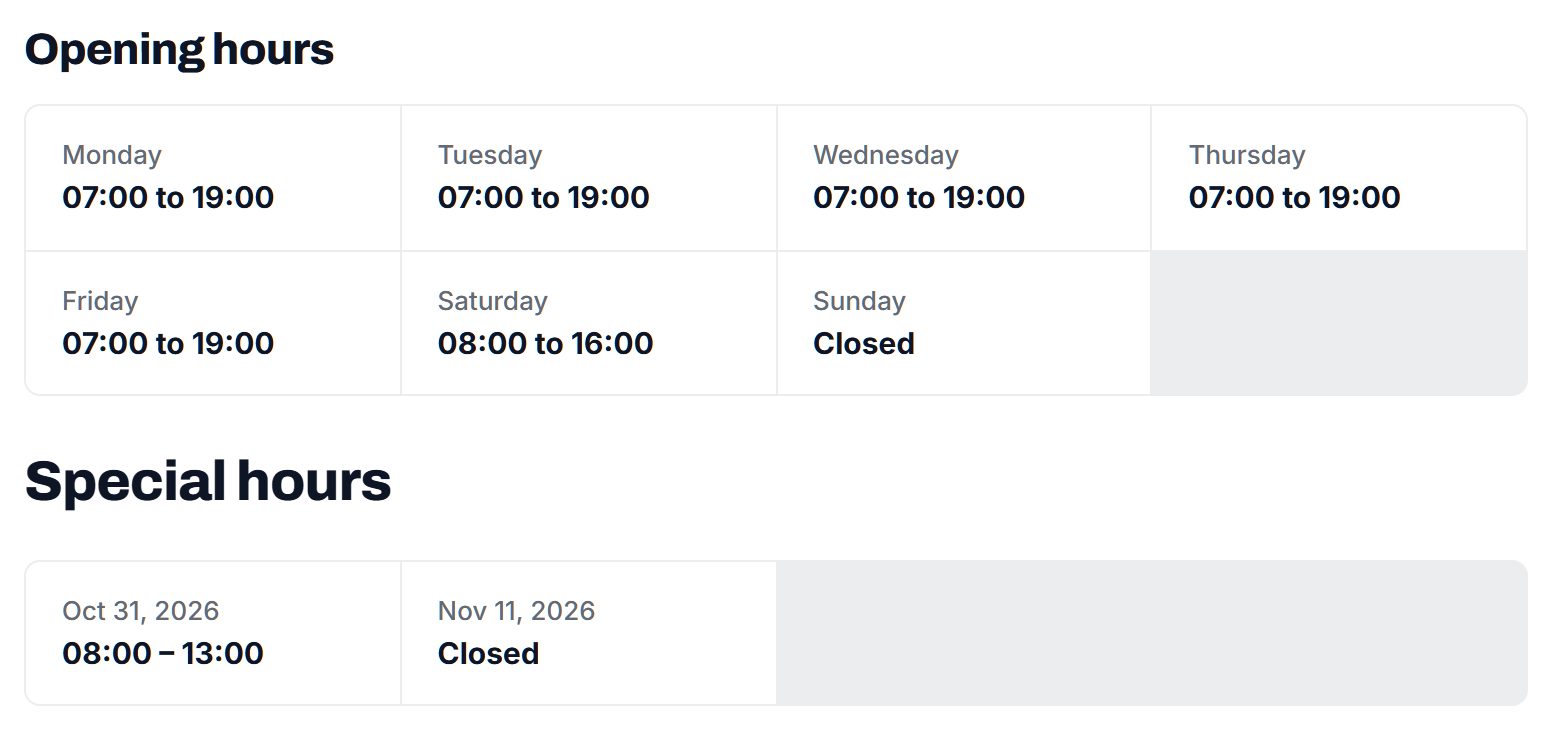
Opening hours work for trucks that keep a fixed lunch spot. For trucks that roam, the regular stops field and the owner's updates do the work.
| Category | Example trucks | Fields people filter on |
|---|---|---|
| Tacos and Latin | Taquerias, birria trucks, arepa and pupusa trucks | Neighborhood, dietary options, payment, regular stops |
| Barbecue and grill | Smokers on trailers, burger trucks, cheesesteaks | Books private events, minimum guests, travel radius |
| Asian | Dumplings, ramen, Korean barbecue, banh mi | Dietary options, price per person, neighborhood |
| Desserts and coffee | Ice cream trucks, shaved ice, espresso vans, donut trucks | Books private events, regular stops, payment |
| Pizza and comfort food | Wood-fired pizza trailers, mac and cheese, fried chicken | Travel radius, price per person, dietary options |
| Catering only | Trucks and trailers that serve weddings and corporate events | Minimum guests, travel radius, cuisine, menu type |
Set regular stops as a text field and neighborhoods and dietary options as checkboxes, so each becomes a filter on the cuisine pages.
Catering leads pay best, because one booked wedding is worth a week of lunches.
Most food truck owners run on thin margins and will not pay to be listed until the directory has sent them customers. So list every truck free, and charge for the things that bring them work they can measure.
The strongest product is the catering request. A couple planning a backyard wedding, or an office planning a summer party, fills in a short form with date, guest count, location and cuisine, and the request goes to the trucks that fit. A truck that books one private event from your site will understand the value straight away.
The second product is visibility on busy days: a featured spot at the top of a cuisine or neighborhood page, or on the "this weekend" pages people check before going out. Breweries, commissary kitchens, truck builders, wrap shops and event venues are natural banner buyers, since their customers are the trucks or the crowds.
Do not charge trucks to appear. Charge them to be seen first, and to get the event inquiries.
| Model | Works when | Switch it on |
|---|---|---|
| Catering and event requests | Planners use the site to find trucks for private events | From day one: it is the reason trucks claim their page |
| Featured trucks | Cuisine and neighborhood pages get steady visits | After your first busy summer month |
| Truck memberships | Owners want priority on requests and a verified badge | Once 30 or more trucks have claimed pages |
| Banner spaces | Breweries, commissaries and builders want to reach trucks or eaters | When a weekend page has regular traffic |
| Sponsored event pages | A food truck rally or festival wants its lineup promoted | Ahead of the spring and summer event season |
Your first 100 trucks are already on the street, on permit lists and at rallies.
A city with any food truck scene has more trucks than most people realize, and you can find them without anyone's permission. The work is collecting them in one place and getting the owners to keep their page current.
Where to find them
- Business listings: import food trucks and mobile caterers in your area from Google Places, then clean up names and remove commissary addresses.
- Food truck associations: many cities and states have one, and its member list is a ready-made starting point.
- Brewery and taproom lineups: breweries without kitchens post their weekly truck schedule, often on a chalkboard and on social media.
- Food truck rallies and festivals: the vendor list for every event is public.
- Commissary kitchens: one shared kitchen may host twenty trucks, and the manager knows every owner.
- Office parks and hospitals that rotate trucks through their lots each week.
Get owners to claim their page
An unclaimed truck page is a sketch. Ask owners to claim it, add their stops for the week and their menu, and turn on catering requests. Most will do it from a phone in a quiet moment between lunch and dinner. Visit trucks in person at a rally: a two-minute chat at the window does more than ten emails.
With Yclas, businesses can be imported from Google Places with your own Google key, and owners then claim their page and add photos themselves, since no photos are imported.
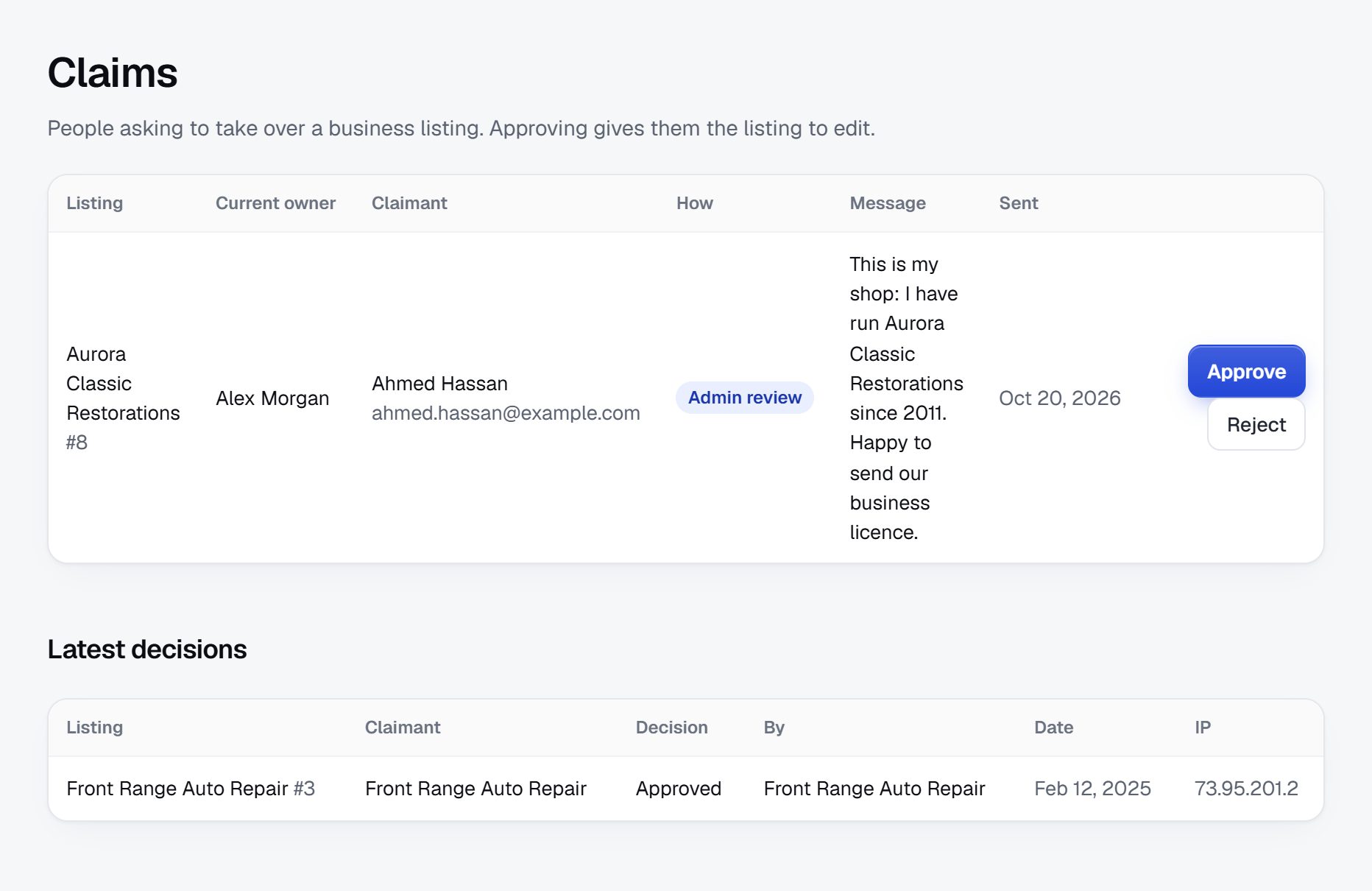
Stale schedules hurt more than scams, but watch for fake catering inquiries too.
The most common way a food truck directory lets people down is simple: someone walks six blocks to a truck that is not there. Treat old schedules as a problem to fix, not just a missing detail.
- Freshness: show when the stops were last updated, and send owners a reminder each week. Hide or mark stops older than a few weeks.
- Closed trucks: trucks change hands and close more often than restaurants. Check pages with no activity for a season and mark them as closed.
- Fake catering inquiries: truck owners are a known target for overpayment scams. A "client" books a big event, sends a check for too much and asks for the difference back. Warn owners in your help pages, and moderate requests that look automated or ask for money to be sent on.
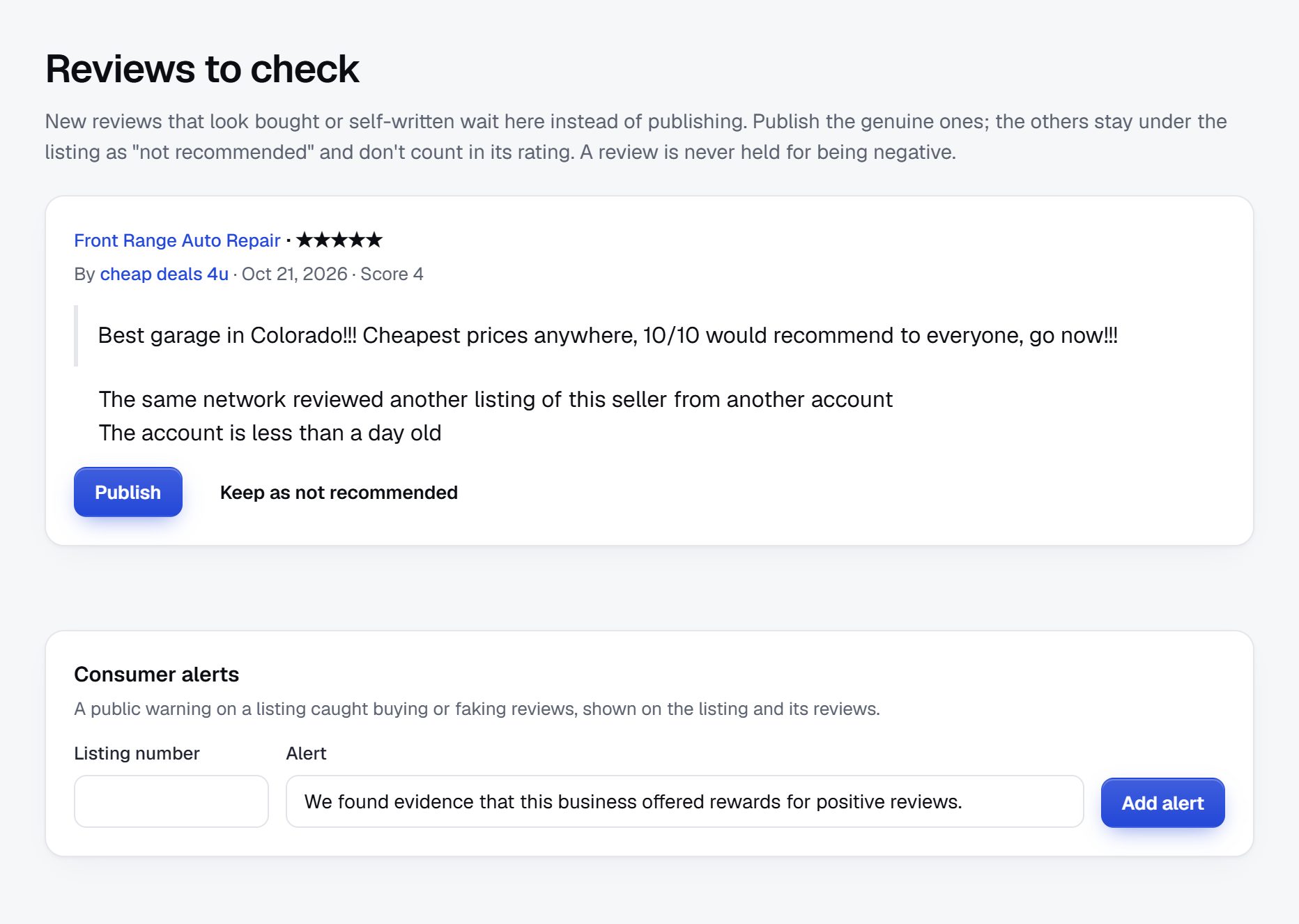
- Review fights: rival trucks at the same brewery may post fake reviews. Let owners reply, and remove reviews from accounts that only ever post about one competitor.
- Permits and food safety: trucks need health permits and often city vending permits, and the rules vary a lot by city and county. Check the rules where you operate before you show any "licensed" label, and only show it when you have seen the document.
Add a short allergy note to every truck page: menus change, and people with allergies should ask at the window.
Rank for the lunch search, the weekend search and the catering search.
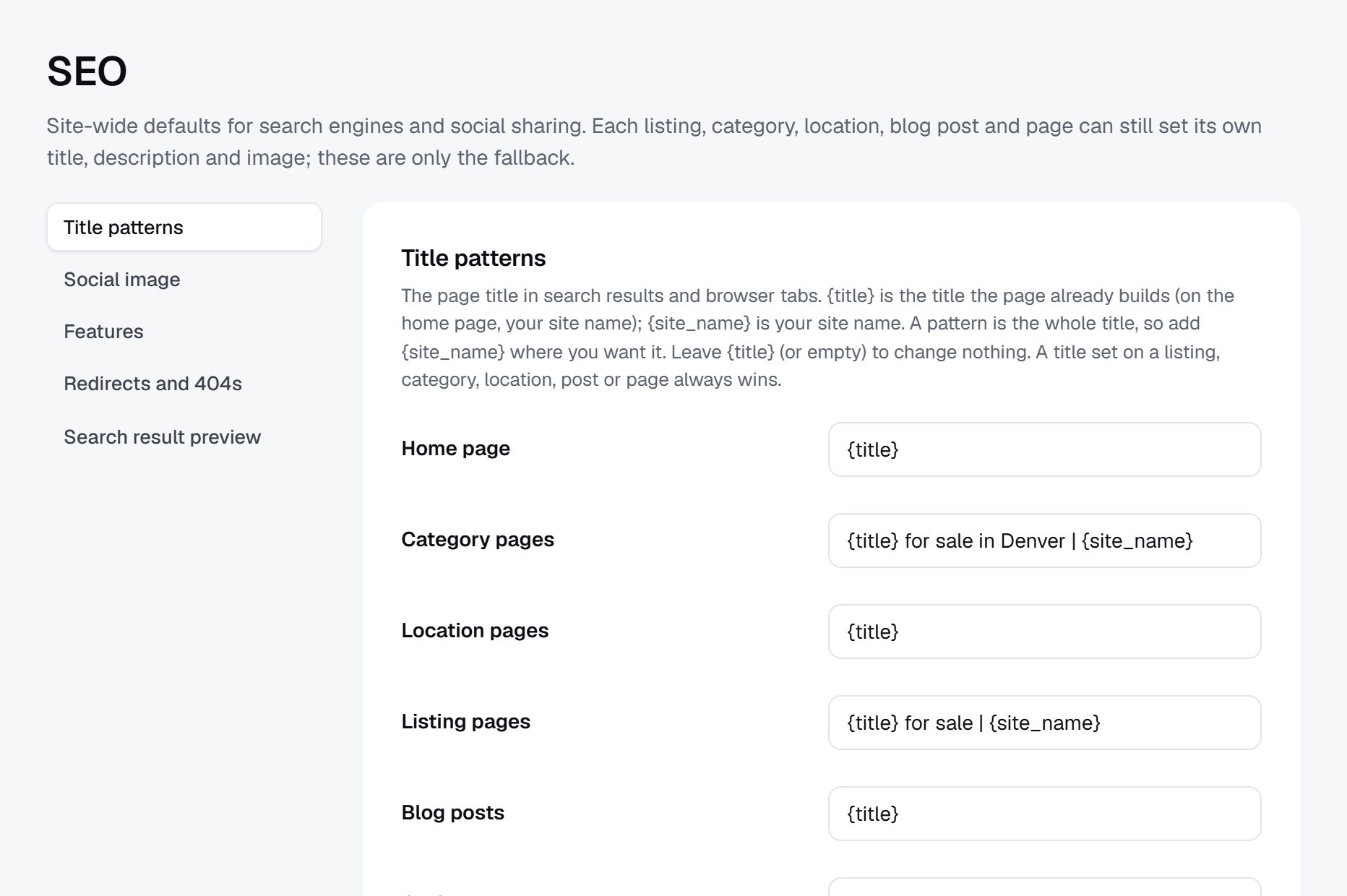
Food truck searches fall into three groups: right now, this weekend, and for my event. Build pages for each, and give every page a city or neighborhood in the title.
Searches to target
- "food trucks near me" and "food trucks downtown [city] today"
- "taco truck [neighborhood]", "best barbecue food truck [city]"
- "food trucks at [brewery name]" and "food truck schedule [city]"
- "food truck catering [city]", "hire a food truck for a wedding near [city]"
- "food truck festival [city] [year]"
Pages to build
- A page per cuisine and per neighborhood, combined where both are busy: vegan trucks downtown, tacos on the east side.
- A page for each brewery, park or office park with regular trucks, listing who comes on which day.
- A "how to hire a food truck" guide for planners: guest counts, how many trucks per hundred guests, power and parking needs, what to ask before booking.
- A yearly page for each rally and festival, with the lineup.
Content that brings people back: a weekly "where the trucks are this weekend" post, new truck spotlights and short interviews with owners.
Launch in early spring, with one brewery strip and one lunch district.
Food truck traffic follows the weather. In most places the season builds in spring, peaks in summer and thins out after the fall festivals, so open the site while owners are planning their season and still have time to talk.
First area
Pick one lunch district and one cluster of breweries in the same city. Get every truck that serves them on the site with current stops before you promote anything. A visitor who finds three accurate trucks will come back; one who finds thirty stale ones will not.
Partners
- Breweries and taprooms: offer to publish their truck lineup for free, in exchange for a link and a sign at the bar.
- Rally organizers: host the official lineup page for their event.
- Commissary kitchens: ask the manager to tell their trucks about the site.
- Office building managers who want to bring trucks in for staff.
Checklist
- Cuisine categories and the fields above set up.
- Trucks imported, cleaned and checked against current social media posts.
- Fifty owners asked to claim, with a printed card handed over at the window.
- Catering request form tested with a real planner.
- Weekend page published every Thursday.
- A weekly reminder to owners to update their stops.
A worked example: Curb and Kettle, a truck directory for Minneapolis and St. Paul.
Picture Curb and Kettle, a made-up food truck directory for Minneapolis and St. Paul. Its founder ran a coffee trailer for three summers and kept getting the same message from friends: who is parked at the brewery tonight? She started the site to answer that question for the whole metro, beginning with the downtown lunch blocks and one brewery district she already knew well.
Categories
- Eat today
- Tacos and Latin
- Barbecue and grill
- Asian
- Sweets and coffee
- Hire a truck
- Weddings and parties
- Office and campus events
- Where trucks park
- Breweries and taprooms
- Office plazas and hospitals
Who it serves
Weekday lunch crowds downtown and around the university, families heading to taprooms on Friday evenings, and people planning a graduation party or a backyard wedding. The third group is the smallest, yet it brings almost all of the revenue, because a party needs a truck for a whole evening.
How it started
In February she pulled together truck names from public permit records, three brewery lineups and the vendor page of a June rally, then cleaned the import by hand, deleting every pin that pointed at a commissary. In March she visited shared kitchens with a stack of printed cards, since that is where owners prep and repair their trucks in the cold months. She also asked each brewery manager for the coming month's lineup, which gave the site its first pages that changed every week. By the first warm weekend, 64 trucks had claimed their pages and 41 were keeping their weekly stops current.
How it makes money
Catering requests came first. A planner enters the date, guest count, address and cuisine, and the request goes to the trucks willing to travel that far. Trucks paid nothing to receive requests in the first season. In the second, a yearly membership gave priority on requests and a verified badge. Two breweries bought banner spaces on their own lineup pages for the summer, and a truck builder sponsored the winter page listing trucks that keep serving from heated lots.
The paying customer is rarely the hungry person at noon. It is the planner, the truck owner and the business that wants to reach either of them.
| Truck | Price per person | Key details |
|---|---|---|
| Birria Corner (Tacos and Latin) | $12 to $16 | Tuesday and Thursday lunch downtown; cards and mobile pay; private events from 50 guests within 25 miles |
| Lake Effect Smokehouse (Barbecue) | $15 to $22 | Smoker trailer; Friday and Saturday evenings at a Northeast taproom; catering minimum of 75 guests |
| Little Dumpling Wagon (Asian) | $10 to $14 | Vegetarian options; Wednesday lunch at a hospital campus; cash and cards |
| Cold Front Creamery (Sweets) | $5 to $9 | Ice cream and floats; weddings and school events; travels up to 40 miles; needs a level spot and power |
| Northwoods Hearth (Pizza) | $14 to $20 | Wood-fired oven trailer; weekend breweries; gluten-free crust on request; private events from 60 guests |
Every truck in this table is invented for the example.
The first 90 days: from an empty site to trucks updating their own stops.
Count the 90 days back from the first warm weekend in your city. In most of the northern US that means starting in February, while owners are planning their season and their trucks are still parked at the commissary. In warm places where trucks serve all year, pick a quiet month, such as the slow weeks after the holidays.
The plan below puts the hard part, getting owners to claim and update, in the middle, after the site already looks complete enough to impress them. It ends with real catering requests, because those decide whether trucks see the site as worth their time. Keep a simple log of every owner you speak to, with the date and what they agreed to, because you will follow up with most of them twice. Do not move to the next block until the "done when" line is true. A directory that launches with half the trucks claimed but every schedule accurate does better than one with every truck listed and stale stops.
| Weeks | Focus | Done when |
|---|---|---|
| 1 to 2 | Choose the first district and brewery cluster; set up cuisine categories, stop and dietary fields and the catering request form | Fields tested on five sample truck pages that a truck owner has looked over |
| 3 to 4 | Import and clean trucks from Places, rally vendor lists, brewery lineups and permit records | Every truck known to serve the area has a page with cuisine and contact, and no commissary pins remain |
| 5 to 6 | Visit commissaries and early rallies; ask owners to claim and enter this week's stops | 30 trucks claimed, each with current stops filled in |
| 7 to 8 | Publish brewery lineup pages and the guide to hiring a truck | A lineup page for every brewery that hosts trucks, and the guide checked by an event planner |
| 9 to 10 | Start the Thursday weekend post and the weekly owner reminder | Two posts published and half of the claimed trucks updated after the reminder |
| 11 | Send real catering requests from planners you know | Three requests sent and each answered by at least one truck |
| 12 | Review traffic and pick the first paid product | Top three cuisine and neighborhood pages known, and featured spots offered to trucks on them |
Three ways to build it, and what a truck directory needs from each.
A food truck directory has one hard requirement and several easy ones. The hard one: an owner must be able to change this week's stops from a phone in under a minute, standing in a parking lot, or the site goes stale by June. The easy ones are cuisine pages, a map of regular stops, reviews and a form that sends event requests to trucks.
Building it with developers makes sense if you want something standard tools do not do, such as live location from a tracker in each truck. Expect months of work and an ongoing bill for fixes, and remember that a live map is only as good as the number of owners who switch the tracker on each morning.
Installing a directory script or WordPress directory plugin on your own server gives you control of the code and a wide choice of themes. You take on hosting, updates, backups and spam, and you often need several add-ons for claims, reviews, maps and lead forms that must keep working together after every update.
A hosted builder such as Yclas gives you claimed pages, reviews, maps and quote requests sent to businesses without running a server, so your hours go to rallies and commissaries. The trade-off is working within what the platform offers rather than designing every feature yourself.
Choose the route that lets you spend your first summer at the truck windows, not fixing a server.
| Route | Fits when | Watch out for |
|---|---|---|
| Custom build with developers | You need live truck locations or features no directory tool offers | Cost before launch, and who maintains it after the first season |
| Script or WordPress plugin on your server | You are at ease with hosting and want full control of the code | Plugin conflicts after updates, spam sign-ups and backups you run yourself |
| Hosted builder | You want claims, reviews, maps and event requests ready before the season | Check that owners can update their stops quickly from a phone |
| Spreadsheet and a social media page | You are testing demand in one neighborhood for a few weeks | Nobody can search it, and owners cannot update it themselves |
What a food truck directory costs to run.
The software is the smallest part of the bill. Most of the cost is your time in the first months: finding the first listings, answering questions and checking what gets posted.
Expect to spend on Google Places API usage when you import trucks, printed cards to hand out at rallies, and perhaps a small booth fee at a food truck festival. Some organizers charge for a sponsor or vendor table even when you are not selling food.
| Cost | Typical range | On Yclas |
|---|---|---|
| Domain | $10 to $20 a year | Your own, with SSL included |
| Software and hosting | $0 to $100+ a month, plus plugins and updates | Starter $19 a month, Professional $99 |
| Design | $0 to $100 for a theme, or a designer | 109 looks included |
| Payment fees | About 3% per payment | Your Stripe or PayPal fees; Yclas takes nothing |
| Business data | Free if you collect it, or a few cents per page of Google results | Paid to Google, with your key |
| Your time | 5 to 10 hours a week at the start | Finding listings, moderation, support |
Mistakes that leave a food truck directory empty by August.
- Launching in November. Owners are winding down and lots are empty, so the first visitors find nothing serving. Do the building in the cold months and open to the public with the first warm weekend.
- Pinning trucks to their commissary. Imports often place a truck at the shared kitchen where it parks overnight, usually in an industrial area nobody eats in. Delete those pins and lead with the regular stops instead. A visitor who drives to a warehouse lot at lunchtime will not trust the site again.
- Typing every schedule yourself. If you copy each truck's week from its social posts, you become the bottleneck, and the first week you are sick the site goes stale. Get owners to claim and update, and only fill gaps on the brewery lineup pages, where one manager can confirm a whole week of trucks in a single message.
- Covering the whole state on day one. Two hundred trucks spread across ten cities leaves no single city with enough to be useful. Finish one metro, then add the next, and only once owners there update their own pages without being chased.
- Treating every truck as a lunch truck. Some trucks only cater and never park in public. Give them their own category, so planners find them and lunch seekers do not walk to a truck that is not serving. A catering-only truck can still have reviews from past events, which planners read closely.
- Burying the catering request. It is your main product, yet many sites hide it behind a contact link. Put a clear "hire this truck" button on every truck page and every cuisine page, and ask for guest count and date up front so trucks can answer in one reply.
- Charging before the first summer. Owners talk to each other at every rally, and a fee charged before any results earns a bad name quickly. Prove the requests first, then sell priority and featured spots, and show each paying truck how many requests and page views it received.
- Ignoring the breweries. Taprooms without kitchens need a truck most nights, and their regulars want the lineup. A brewery that shares your lineup page sends you both eaters and trucks, and the lineup page tends to become one of the most visited pages on the site by midsummer.
- Forgetting the weather. One storm cancels half the stops on the page. Ask owners to post cancellations at the top of their stops field, and say on every truck page that plans can change at short notice. Owners who post a cancellation quickly should be thanked, not marked down.
Food truck terms a directory founder should know.
These are the words you will hear from truck owners, event planners and city permit offices.
| Term | What it means |
|---|---|
| Commissary | A licensed shared kitchen where trucks prep food, store supplies and often park overnight. |
| Mobile food unit | The name many health departments use for a food truck, trailer or cart. |
| Health permit | The health department's approval to sell food from a truck, usually renewed after a yearly inspection. |
| Vending permit | City permission to park and sell on public streets, often with limits on where and for how long. |
| Fire inspection | A check of a truck's propane, generator and fire suppression system, required in many cities. |
| Rally | An event where many trucks gather in one lot, often weekly through the summer. |
| Rotation | The weekly schedule of trucks that a brewery, office park or hospital hosts. |
| Catering minimum | The smallest guest count or order total a truck accepts for a private event. |
| Sales guarantee | An amount a host promises the truck, paying the difference if guests buy less. |
| Buyout | A private event where the host pays for all the food served, so guests eat free. |
| Drop-off catering | Food a truck prepares and delivers in trays without parking and serving on site. |
| Shore power | An electrical hookup a truck plugs into instead of running its generator. |
| Service window | The hours a truck actually serves at a stop, usually shorter than the time it is parked. |
| Trailer | A towed kitchen with no engine of its own, common for smokers and pizza ovens. |
The same steps for a food truck directory on Yclas.
- Describe your directoryThe setup wizard writes the categories, an About page and example listings from one sentence.
- Add fieldsHours, services, areas served, prices: the details people search by, as filters.
- Fill itImport businesses from a spreadsheet or Google Places, then check them.
- Bring owners inOwners claim their page, update it and answer reviews.
- EarnSwitch on featured places, banners or memberships when visits arrive.
What does it cost to get a food truck directory going?
Very little beyond the site itself: a domain, some Google Places API usage for the first import, and printed cards for truck owners. Your main cost is time spent at rallies and breweries meeting owners.
Can I list trucks without asking them first?
Listing public business details such as name, cuisine and public stops is common practice, but check the rules where you operate and remove any truck that asks. Ask before you use a truck's photos or logo.
How do I keep truck schedules up to date?
Get owners to claim their page and update their regular stops, send a weekly reminder, and show the date of the last update. Fill gaps by checking the brewery lineups you already publish.
How does a food truck directory make money?
Mostly from catering and event requests, featured spots on busy cuisine and weekend pages, memberships for trucks that want priority, and banners from breweries, commissaries and truck builders.
Why would people use my site instead of a map app?
Map apps usually show one fixed address for a truck. Your site shows where trucks will actually be this week and lets planners send one request to several trucks.
Should I list food trucks for sale too?
Keep it separate. Selling used trucks is a classifieds business with different buyers. A small section is fine, but the directory works best when it stays about finding food.
What happens in winter?
Traffic drops in cold places, so lean on catering for holiday parties, indoor markets and the trucks that keep a fixed winter spot. Use the quiet months to sign up new trucks before spring.
Should I show trucks on a live map?
A map of regular stops is simple and useful. A live map needs owners to share their location every day, and most will not, so start with stops and add live location only if owners ask for it.
How many trucks do I need before launch?
Enough that a visitor to your first district always finds a few options on a weekday. In practice that means every truck serving that district and its breweries, with current stops, rather than a round number.
Can I include carts, pop-up tents and coffee bikes?
Yes, if people in your city think of them as street food. Add a vendor type dropdown so someone looking for a full lunch can leave out the coffee bikes and dessert carts.
Do I need insurance to run a food truck directory?
You are not serving food, but you are publishing information people rely on. Ask a local insurance broker whether general or professional liability cover makes sense where you operate.
When should I add a second city?
Once the first city runs on routine: owners update their stops, requests arrive and the weekend post goes out every Thursday. Then repeat the commissary and rally rounds in the next city, ideally with a local helper who knows the trucks.
Related pages.
The parts of Yclas this leans on.
You know where the trucks are. Now build the page your city checks at lunchtime.
Describe your site in a sentence and the setup wizard writes the categories, example listings and a look. Free for 15 days, no credit card.
Start my directory