How to build a lawyer directory people trust when they need legal help.
This guide covers how to build a lawyer directory for one state, city or practice area: why people struggle to choose a lawyer today, the details they filter on, how to earn from law firms while staying careful with advertising and referral rules, where the first hundred lawyers come from, how to keep profiles accurate, the searches to rank for, and a launch plan.
Free for 15 days · No credit card · Plans from $19 a month
Build for people who need a lawyer once and do not know where to start.
Most people look for a lawyer once or twice in their lives, usually under stress: an arrest, a divorce, an injury, a dispute with a landlord, an estate after a death in the family. They do not know which kind of lawyer they need, what it will cost, or how to tell one firm from another. Large national directories are crowded, and search results lean toward the firms with the biggest advertising budgets.
Who searches
- Individuals with one specific problem: a DUI charge, a custody hearing, a denied insurance claim.
- Small business owners who need help with contracts, leases, employees or forming a company.
- Families dealing with wills, probate, elder law and guardianship.
- Immigrants who need a lawyer who speaks their language and knows their situation.
Pick your angle
General lawyer directories exist everywhere, so a new one needs an edge. Angles that work: one city or county with every local firm, not only the advertisers; one practice area across a state, such as family law or immigration; or one audience, such as lawyers who speak Spanish, Vietnamese or Polish, or lawyers who offer flat fees and payment plans.
Today people ask friends, local Facebook groups and Reddit threads, or call the lawyer referral service of a bar association. A directory that explains practice areas in plain words and shows fees and languages up front fills a gap those sources leave open.
Explain what each kind of lawyer does. Many visitors do not know whether they need a family, estate or litigation lawyer.
Organize by practice area and let people filter on fees, languages and location.
Categories should follow practice areas, named the way people describe their problem. "Divorce and custody" works better than "domestic relations". Keep it to one level where you can and put the detail in fields.
- Practice areas as checkboxes, since most lawyers handle more than one.
- Jurisdictions and courts: the state or states where the lawyer is admitted, and federal or immigration courts where relevant.
- Fee structures: free first consultation, flat fee, hourly, contingency, payment plans.
- Languages spoken by the lawyers and their staff.
- Year admitted to the bar, as the lawyer states it.
- Consultation options: in person, by phone or by video.
- Office location and counties served, shown on a map.
Leave out fields that invite claims you cannot check, such as "best", "top rated" or win rates. Many places restrict how lawyers describe results and specializations, so keep fields factual and let each lawyer write their own description.
| Category | Example listings | Fields people filter on |
|---|---|---|
| Family law | Divorce, custody, adoption, prenuptial agreements | Fee type, free consultation, languages, county |
| Criminal defense | DUI, drug charges, expungement, juvenile cases | Courts covered, after-hours phone, payment plans |
| Personal injury | Car accidents, slip and fall, medical malpractice | Contingency fee, case types, languages |
| Estate planning and probate | Wills, trusts, probate, elder law | Flat fees, home visits, counties served |
| Immigration | Visas, green cards, citizenship, asylum | Languages, video consultation, fee type |
| Business and employment | Contracts, company formation, wrongful termination | Employer or employee side, business size, flat fees |
| Housing and real estate | Closings, landlord disputes, evictions | Landlord or tenant side, fee type, county |
Keep practice areas as checkboxes rather than separate profiles, so one firm keeps one page with all its reviews.

Sell visibility to firms, and be careful with anything that looks like paying for referrals.
Law firms already pay for visibility: search ads, national directories and local sponsorships. A focused directory can win part of that budget, but legal marketing is more regulated than most niches. Many places have rules on lawyer advertising and on paying for referrals, and paid lead schemes are where directories most often run into trouble. Before you charge for anything that depends on a client contacting or hiring a lawyer, get advice from a lawyer who knows the professional conduct rules where you operate.
- Featured places: a flat fee to appear first in a practice area and county, clearly labeled as sponsored.
- Firm memberships: a monthly fee for a fuller profile with photos, several lawyers and a featured spot.
- Banner spaces for court reporters, process servers, legal translators, bail bond services and other businesses around the courts.
- Contact requests: visitors describe their problem and choose which firms receive it. Charging per request is the model that needs the most legal care.
Flat advertising fees tend to be the simpler path. Fees tied to whether a case is taken, or a share of the lawyer's fee, are the arrangements most likely to raise questions.
Label every paid placement as sponsored, and never rank lawyers by who pays more without saying so.
| Model | Works when | Switch it on |
|---|---|---|
| Featured places, labeled as sponsored | Several firms compete in one practice area and county | Once each area page lists ten or more lawyers |
| Firm memberships | Firms want fuller profiles with each lawyer listed | When firms start editing their own pages |
| Banner spaces | Court and legal service businesses want visitors | When you can show visitor numbers |
| Paid contact requests | Visitors send their problem to chosen firms | Only after advice on referral rules where you operate |
| Sponsored plain-language guides | A firm wants to back a guide in its practice area | When the guide ranks and the sponsor is labeled |
Seed every practicing lawyer in your area, then ask firms to claim their pages.
Lawyers are licensed, and most bar associations or regulators publish a public search of admitted lawyers. It tells you who may practice, but check its terms before copying anything in bulk. Most directories start from business listings and firm websites instead, and use the official search to confirm.
- Import law firms from Google Places for your city with your own Google key: names, addresses, phone numbers and opening hours come in, without photos. Then add practice areas by hand from each firm's website.
- Build a spreadsheet of firms from courthouse directories, chamber of commerce members and legal aid referral lists, and import it as a CSV.
- Contact solo practitioners and small firms first. They have no marketing staff and gain the most from a complete profile. Large firms come later, if at all.
- Go to local bar association events, continuing legal education sessions and chamber mixers. A short conversation gets more claims than any email campaign.
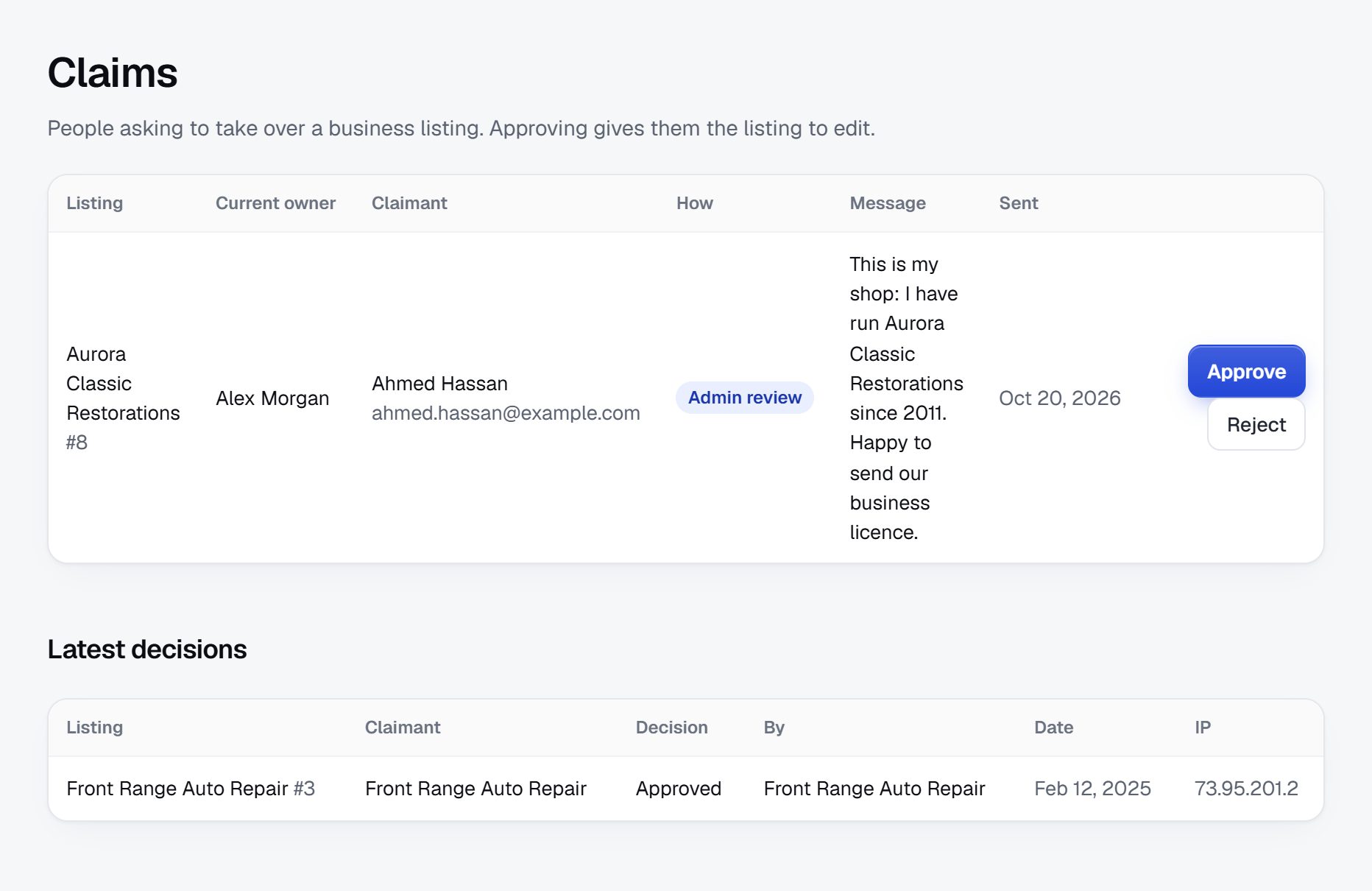
- Invite each firm to claim its page and add lawyers, fees, languages and a photo. On Yclas, owners claim their page and can reply to reviews.
Mark unclaimed pages clearly, and remove a lawyer promptly when asked. Lawyers are careful about how they appear in public, and a quick, polite answer to a complaint builds the reputation a lawyer directory depends on.
Keep profiles factual, reviews fair and visitors clear that you are not a law firm.
A lawyer directory sits close to legal advice, so be careful about what the site says and what it lets others say.
What the site says
- State on every page that the directory is not a law firm, does not give legal advice, and that a listing is not a recommendation.
- Do not answer visitors' legal questions yourself. If you add a questions section, only licensed lawyers should answer, and each answer should say it is general information.
- Tell visitors to confirm a lawyer's license on the official register of the bar or regulator.
What lawyers say
- Keep claims factual. Many places restrict words like "specialist" or "expert" and promises about results, so ask lawyers to confirm their profile follows the rules that apply to them.
- Remove profiles of lawyers who are suspended or disbarred as soon as you learn of it.
Reviews
Client reviews can include confidential details of a case. Moderate before publishing, remove anything that names other people or describes a case in detail, and let lawyers reply. Lawyers generally must not reveal client information, so watch for replies that say too much and hold them for review.
Scams
Watch for fake firm profiles set up to take advance fees, common around immigration and debt relief, and for people posing as lawyers who hold no license. Check every new firm against the official register before approving it.
Check the rules where you operate on lawyer advertising and reviews, and have a local lawyer read your terms.
Rank for the problem people have, not only the job title.
People search for their situation and their place. Many never type the word "lawyer" at all, and plenty use "attorney" instead.
- "divorce lawyer in Tampa"
- "DUI attorney free consultation Phoenix"
- "how much does a will cost in Ohio"
- "immigration lawyer who speaks Spanish near me"
- "tenant rights lawyer Brooklyn"
- "probate attorney flat fee"
Pages to build
- Practice area plus place: one page for each practice area in each county or city you cover.
- Plain-language guides: what a probate lawyer does, whether you need a lawyer for small claims court, what happens at a first consultation. Have a lawyer review each one, and date it.
- Fee guides: how lawyers in your area charge for common matters (flat fee, hourly or contingency), drawn from what listed firms publish, without quoting figures you cannot support.
- Language pages: lawyers by language spoken, which large directories handle poorly.
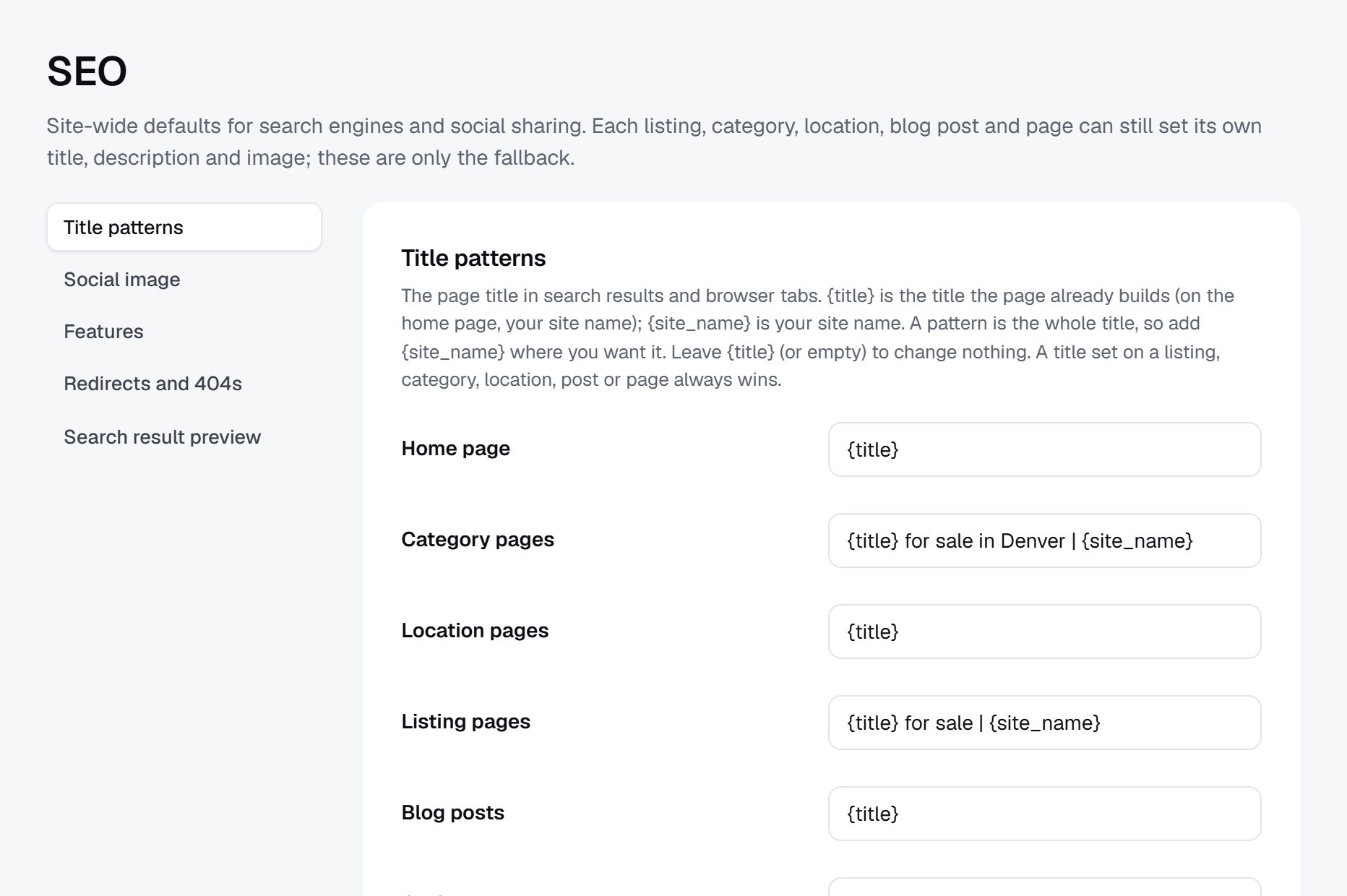
Use both "lawyer" and "attorney" in titles and headings. Set title patterns once so every profile reads like "Jane Smith, family lawyer in Tampa" without anyone typing it.
Start with one county and the practice areas people search most.
Legal need is steady through the year, with a few bumps: family law firms often report more divorce inquiries after the winter holidays, business questions gather around tax time, and estate planning follows retirements and losses. You do not need to time the launch to a season, but you do need full pages in the areas you start with.
First area
Pick one county or city and three to five practice areas. Family law, criminal defense, estate planning, personal injury and immigration cover a large share of what people search. List every firm in those areas, not only the ones likely to pay.
Partners
- Solo lawyers and small firms who want a better profile than they have today.
- Legal aid organizations and law school clinics, who can direct people who cannot pay.
- Immigrant associations, senior centers and community groups, for the language and estate pages.
- Accountants, financial planners and real estate agents, who refer clients to lawyers constantly.
Checklist
- Seed every firm in the first county and practice areas.
- Write the disclaimer, the review rules and a "how we list lawyers" page, and have a lawyer read them.
- Publish five plain-language guides.
- Invite every firm to claim its page, starting with solo lawyers.
- Add a free legal help page with legal aid contacts.
- Only then talk to firms about featured places.
A worked example: a plain-language lawyer directory for the South Carolina Lowcountry.
Here is an invented case to make the steps concrete: Lowcountry Plain Counsel, a lawyer directory for Charleston, Berkeley, Dorchester and Beaufort counties on the South Carolina coast. The site, its founder and the firms in the table are fictional.
How it is organized
Categories follow the problems people bring, not the names of courts.
- Family and estate
- Divorce and custody
- Wills, trusts and probate
- Trouble with the law
- DUI and traffic
- Criminal defense and expungement
- Work, home and money
- Landlord and tenant
- Employment
- Small business
- Injury and insurance
- Car and boat accidents
- Denied storm damage claims
Who it serves
Three groups use it most. Retirees who have moved to Hilton Head, Bluffton or Mount Pleasant from other states need wills and powers of attorney redone under South Carolina law, and they want a fixed price before they call. Spanish-speaking workers in hospitality and construction look for immigration and employment lawyers who speak their language. And homeowners along the coast search after every hurricane season for help with insurance claims that were denied or underpaid.
How it started
The founder, a former paralegal who is not a lawyer, listed every firm in Charleston and Beaufort counties from business listings and firm websites, then checked each lawyer against the bar's public member search before publishing. She began with only two practice areas, estate planning and family law, and wrote six short guides that a retired lawyer volunteered to review. The first claims came from solo practitioners in Summerville and Bluffton who had no marketing help and liked seeing their fees and languages laid out clearly.
How it makes money
Every profile is free. Firms pay for featured places in one practice area and county, labeled as sponsored, and a few small firms pay a monthly membership for fuller pages listing each lawyer. Banner spaces go to court reporters, mediators and a legal translation service. The founder had a local lawyer read her terms before launch and does not charge per inquiry. If she ever considers it, she will take advice on the referral rules first, and she shows each firm its monthly views and messages so the value of a featured place is plain.
| Listing | Fee approach | Key details |
|---|---|---|
| Marsh and Pruitt Family Law, Mount Pleasant | Hourly, free 20-minute phone consultation | Divorce, custody and mediation, video meetings, two lawyers |
| Delgado Immigration and Family, North Charleston | Fixed fees for most filings | Spanish and English, visas and citizenship, Saturday hours |
| Bluffton Estate Law Office | Fixed fee wills and trusts, quoted after a consultation | Wills, trusts and probate, home visits for clients with limited mobility |
| Harlan Defense Group, Summerville | Fixed fee for a first-offense DUI, hourly for trials | DUI, traffic and expungement, after-hours phone line |
| Tidewater Injury Lawyers, Charleston | Contingency fee, terms in writing at the consultation | Car, boat and workplace injuries, storm insurance claims |
All firms and names here are made up.
The first 90 days of a lawyer directory.
A lawyer directory has one step most niches skip: a legal review of your own site before you invite anyone. Build it into the first month, not the week before launch, so the disclaimer, the review rules and the wording of sponsored places are settled before a single firm sees its profile. Lawyers read terms closely, and the first thing many will do on claiming a page is check how you describe them.
After that, the work is completeness and accuracy. Every lawyer you list should be confirmed on the official register, each profile should show fee types and languages, and every practice area page you launch should list every local firm in that area, not only those likely to pay. Plain-language guides go up alongside the profiles, because they are what people find when they do not yet know which kind of lawyer they need.
The plan below is for one county and five practice areas, run by one person part time. Expect the legal review to take longer than you hope, and use the waiting time to confirm licenses. Hold off on any paid offer until after week twelve: the first quarter is about showing firms that real people with real problems reach them through your pages.
| Weeks | Focus | Done when |
|---|---|---|
| 1-2 | Choose the county and five practice areas | A spreadsheet lists every firm in those areas with address, phone and website |
| 3-4 | Confirm licenses and add details | Each lawyer is checked on the official register, with practice areas, fee types and languages entered |
| 5-6 | Disclaimer, review rules and legal review | A local lawyer has read your terms, disclaimer and sponsored-place wording, and all three are published |
| 7-8 | Write plain-language guides | Five guides are live, each reviewed by a lawyer and dated |
| 9-10 | Invite solo and small firms to claim | Every firm has been contacted, and the first 30 lawyers have claimed and filled in their fees |
| 11-12 | Partners and first reports | Legal aid and two community groups link to your free help page, and each claimed firm gets a monthly views and messages report |
Choosing how to build a lawyer directory.
A lawyer directory needs a few things that ordinary business listings do not. One firm page must hold several lawyers. Sponsored places must be labeled on every page where they appear. Reviews and owner replies must both be held for approval, since either can reveal a client's case. Disclaimers must show everywhere. And the messages visitors send describe arrests, divorces and immigration status, so they need to be handled with care.
A custom build with developers makes sense if you want something no package offers, such as a guided questionnaire that steers a visitor to the right practice area. You then own the security of every message and every future change, and law firms will expect the site to be maintained properly.
A directory script or WordPress plugin on your own hosting is a common start. Check before you commit that it can hold both reviews and replies for moderation, label sponsored places clearly, and show a disclaimer on every profile, because adding those later through add-ons is where self-hosted directories often get untidy.
A hosted builder such as Yclas covers the standard directory features, hosting and updates, so your effort goes into accurate profiles and guides. You work within what the platform does, so test the claim flow, the review settings and the profile layout with a real firm before you invite the rest. Whatever the route, the hardest part of this niche is not software but keeping several hundred profiles accurate, so pick the tool that makes edits quickest for you and for the firms.
| Route | Fits when | Watch out for |
|---|---|---|
| Custom build with developers | You want a guided intake that matches problems to practice areas | Cost, time, and full responsibility for sensitive visitor messages |
| Directory script or WordPress plugin | You can run a server and keep plugins patched | Moderation of owner replies and sponsored labels may need add-ons |
| Hosted builder | Your time is better spent on profiles, guides and firm relationships | Test claims, review holds and disclaimers before inviting firms |
What a lawyer directory costs to run.
The software is the smallest part of the bill. Most of the cost is your time in the first months: finding the first listings, answering questions and checking what gets posted.
Set aside money for a lawyer to review your terms, disclaimer and any paid contact or lead model before launch, since legal advertising and referral rules vary by place. Business insurance that covers defamation and errors claims is worth pricing early, because profiles and reviews of lawyers draw complaints.
| Cost | Typical range | On Yclas |
|---|---|---|
| Domain | $10 to $20 a year | Your own, with SSL included |
| Software and hosting | $0 to $100+ a month, plus plugins and updates | Starter $19 a month, Professional $99 |
| Design | $0 to $100 for a theme, or a designer | 109 looks included |
| Payment fees | About 3% per payment | Your Stripe or PayPal fees; Yclas takes nothing |
| Business data | Free if you collect it, or a few cents per page of Google results | Paid to Google, with your key |
| Your time | 5 to 10 hours a week at the start | Finding listings, moderation, support |
Mistakes that sink lawyer directories.
- Copying the pay-per-lead model from other trades. What works for roofers can cross referral and advertising rules for lawyers. Start with labeled, fixed-price visibility and take advice before charging for anything tied to a client contacting or hiring a firm.
- Handing out badges like top lawyer or best attorney. Many places restrict comparative claims in legal advertising, and visitors read a badge on your site as your verdict. Show facts such as fee types, languages and years since admission instead, and let the reviews speak for quality.
- Naming categories the way courts do. Nobody in trouble searches for domestic relations or tort litigation. Use the words people say, such as divorce, car accident or eviction, and explain the formal term inside the page.
- Splitting one firm into many profiles. A firm that creates a separate page for each practice area scatters its reviews, clutters search results and looks like spam. Keep one page per firm with practice areas as checkboxes, and list each lawyer within it.
- Letting profiles go stale. Lawyers change firms, retire, and sometimes lose their license. A profile for a suspended lawyer is a real problem, so check your list against the official register on a schedule and remove anyone no longer in good standing.
- Treating visitor messages casually. People write about crimes, debts and immigration status in their first message. Send each message only to the firms the visitor chose, limit who on your side can read them, and warn visitors not to share sensitive details until a lawyer has agreed to look at the matter. A leaked message about an immigration case can hurt someone badly.
- Publishing reviews that disclose a case. A grateful client may name the other party or describe a settlement. Hold every review, trim identifying details or reject it, and hold lawyers' replies too, since a reply that answers a complaint can reveal client information.
- Ignoring people who cannot pay. A large share of visitors cannot afford private fees, and sending them away empty-handed hurts the directory's reputation. A page listing legal aid, law school clinics, court self-help centers and the bar's referral service serves them and earns links.
- Launching statewide with only advertisers. A directory that lists a few paying firms per county looks like an ad network. Cover every firm in one county first, including the ones that will never pay, then expand county by county once each practice area page there is complete.
Legal directory terms worth knowing.
These are the words lawyers and bar staff will use when you call them, and that your profile fields should get right.
| Term | What it means |
|---|---|
| Practice area | A field of law a lawyer handles, such as family law, criminal defense or estate planning. |
| Bar admission | Permission to practice law in a given state or court, granted after meeting its requirements. |
| Good standing | Status showing a lawyer is currently allowed to practice and not suspended or disbarred. |
| Contingency fee | A fee paid as a share of what the client recovers, common in injury cases and limited or banned in some matters. |
| Retainer | An advance payment held against future work, or an agreement that engages the lawyer. |
| Fixed fee | One agreed price for a defined piece of work, such as a will or an uncontested divorce. |
| Initial consultation | A first meeting to assess the problem, sometimes free and sometimes charged. |
| Solo practitioner | A lawyer who runs their own practice without partners. |
| Of counsel | A lawyer affiliated with a firm who is neither a partner nor a regular employee. |
| Certified specialist | A title some states let lawyers use after a bar-approved certification; elsewhere the word specialist may be restricted. |
| Unauthorized practice of law | Legal advice or services given by someone not licensed to give them, which a directory must not drift into. |
| Lawyer referral service | A program, often run by a bar association, that connects the public with participating lawyers. |
| Legal aid | Free or low-cost legal help for people on low incomes, run by nonprofit organizations. |
| Pro bono | Legal work a lawyer does without charge, often for people who could not otherwise afford it. |
The same steps for a lawyer directory on Yclas.
- Describe your directoryThe setup wizard writes the categories, an About page and example listings from one sentence.
- Add fieldsHours, services, areas served, prices: the details people search by, as filters.
- Fill itImport businesses from a spreadsheet or Google Places, then check them.
- Bring owners inOwners claim their page, update it and answer reviews.
- EarnSwitch on featured places, banners or memberships when visits arrive.
How much money do I need to launch a lawyer directory?
The site itself is cheap to run; the larger bill is usually a legal review of your terms and money model. Seeding firms and getting them to claim pages costs time more than cash.
Can I charge lawyers per lead?
Possibly, but many places have rules on referral fees and lawyer advertising, and paid leads are where those rules bite. Get advice from a lawyer who knows the professional conduct rules where you operate before selling leads.
Can I list lawyers without asking them first?
Many directories list publicly available business details, but lawyers care a great deal about how they appear. Mark pages as unclaimed, keep them factual and remove a lawyer quickly when asked.
Do I have to be a lawyer to run a lawyer directory?
Generally no, as long as the site does not give legal advice. Say clearly that you are not a law firm, and check the rules where you operate.
How do I compete with the big national lawyer directories?
Be the complete, honest source for one place or one practice area: every firm, fees and languages shown, sponsored places labeled. Visitors notice when a directory is more than a list of advertisers.
Should I allow client reviews of lawyers?
Yes, moderated before publishing. Remove confidential case details and personal information, and let lawyers reply without disclosing anything about their clients.
What makes a law firm pay for a listing?
Proof that people found and contacted it through the directory. Show each firm its profile views and messages every month, then offer a featured place in its practice area.
Should I list paralegals, notaries and document preparers?
Only in a separate, clearly labeled category, if at all. In the United States some people calling themselves notarios have taken money for immigration help they cannot legally give, so check the rules on non-lawyer services where you operate before listing them.
What should happen to the messages visitors send to firms?
Deliver each one only to the firms the visitor picked, keep access on your side tight, and delete old messages on a schedule. Tell visitors plainly that sending a message does not make the firm their lawyer.
Can lawyers publish articles on the directory?
Yes, and good articles help both the firm and your search traffic. Show the author and date, ask the lawyer to confirm the piece follows the advertising rules that apply to them, and label it as general information.
What if a lawyer threatens action over a review?
Stay calm, check the review against your published rules, and remove it only if it breaks them. Keep a record of every exchange, and take advice from your own lawyer before answering a formal demand.
Should profiles show a lawyer's disciplinary history?
Point each profile to the official register, where public discipline is usually shown. Do not summarize disciplinary records yourself, because an error about a named lawyer is serious.
Related pages.
The parts of Yclas this leans on.
You have the plan. Now help people in your area find the right lawyer.
Describe your site in a sentence and the setup wizard writes the categories, example listings and a look. Free for 15 days, no credit card.
Start my directory