How to build a real estate agent directory that buyers and sellers rely on.
This guide covers how to build a directory of real estate agents and agencies for one market: why buyers and sellers struggle to choose an agent, the details they filter on, how to earn from agents and brokerages, where the first hundred profiles come from, licensing and fair housing points, the searches to rank for, and a launch timed to the spring market.
Free for 15 days · No credit card · Plans from $19 a month
Help people choose an agent by neighborhood, not by yard sign.
Choosing an agent is one of the biggest decisions in a sale or purchase, yet many people pick the first name on a yard sign or the agent a friend used years ago. National portals do show agents, but the ones shown first are often the ones paying for placement, and they say little about who knows a particular neighborhood, speaks a particular language or handles a particular kind of property.
Who searches
- Sellers comparing agents before listing a home, often by looking at who sells nearby.
- First-time buyers who want someone patient who explains every step.
- Relocating families who know neither the area nor anyone in it.
- Investors and landlords looking for agents who handle rentals, multifamily or commercial property.
- Out-of-state and overseas buyers who need an agent in their own language.
Pick your angle
A real estate agent directory works best for one market: a city, a county, a resort area or a cluster of towns. Within it, angles that stand out are neighborhood experts, agents for one property type (farms and ranches, condos, waterfront, new construction), agents who speak a given language, or agents for one group of clients such as military families, retirees or international buyers.
Today people ask in neighborhood Facebook groups and on Nextdoor, read scattered online reviews, or call the office whose signs they see most. A directory that shows each agent's areas, languages and specialties in one place saves them weeks of guessing.
Neighborhood knowledge is what clients want from an agent. Make areas served the heart of every profile.
List agents by the areas they cover and the clients they serve.
Categories can stay simple: types of agent, agencies and brokerages, and related services. The real filters are area, property type and client type.
- Areas served: towns, neighborhoods and zip codes as checkboxes, since most agents cover several.
- Client type: buyers, sellers, landlords, tenants, investors.
- Property types: single-family homes, condos, land, farms and ranches, multifamily, commercial, luxury, new construction.
- Languages spoken.
- License type and number (salesperson or broker) as the agent states it, with the brokerage they work under.
- Year first licensed and any professional designations, as stated.
- Specialties: first-time buyers, relocation, military moves, downsizing, probate and estate sales.
Ask agents to describe recent work in their own words, without client names, rather than posting sales volume you cannot check. Make areas served and client type required, because they drive every search on the site.
| Category | Example listings | Fields people filter on |
|---|---|---|
| Buyer's agents | First-time buyer specialists, relocation agents | Areas served, languages, price range |
| Listing agents | Agents who mainly sell homes | Areas served, property types, year licensed |
| Agencies and brokerages | Independent offices, franchise offices | Office location, number of agents, areas |
| Luxury and waterfront | Lakefront, golf community and high-end condo agents | Property types, languages, international buyers |
| Land, farms and ranches | Rural land, acreage and ranch agents | Acreage range, counties, property types |
| Commercial and investment | Retail, office and multifamily agents | Property types, client type, counties |
| Leasing and property management | Leasing agents, property management firms | Areas, landlord or tenant side, unit types |
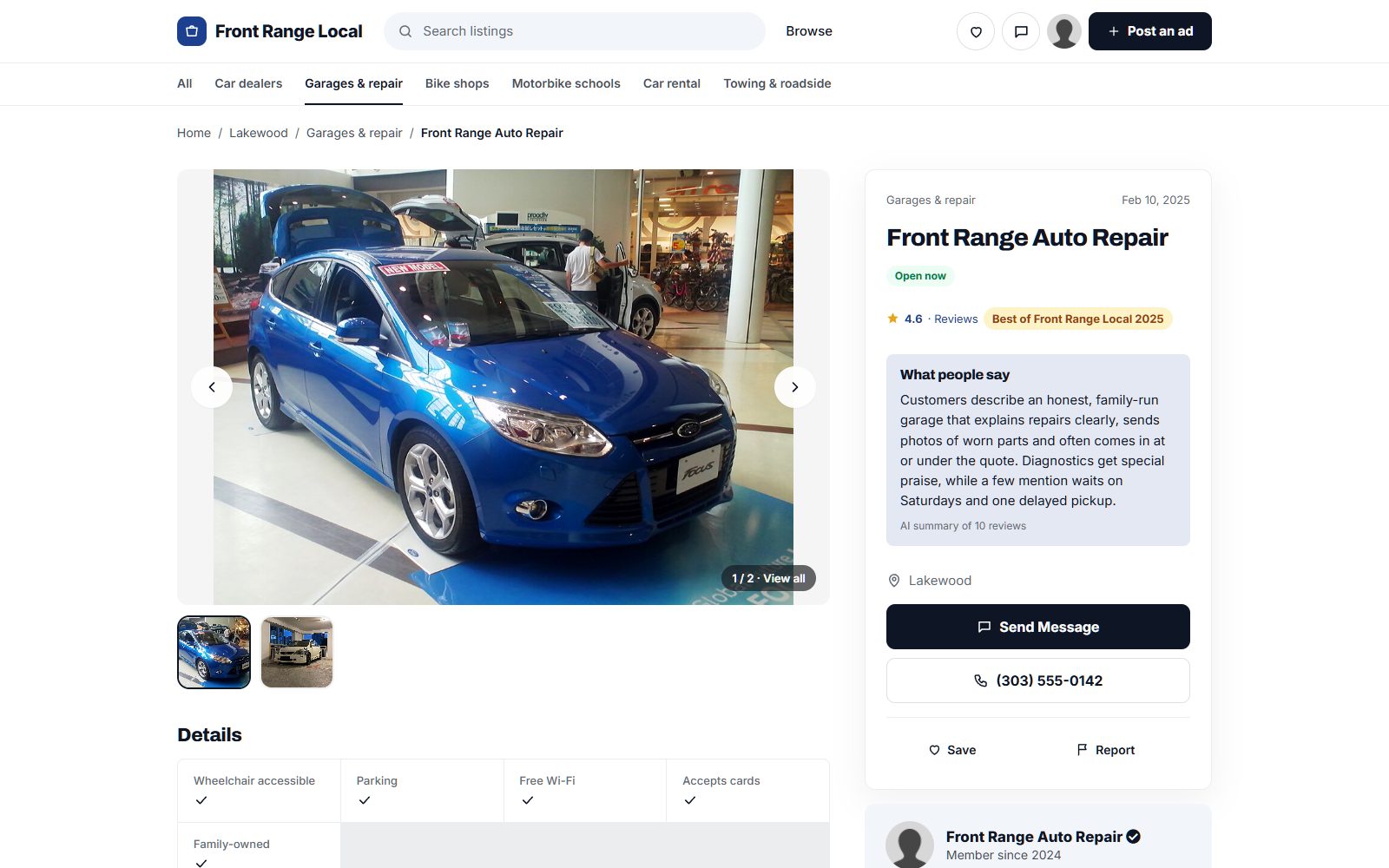
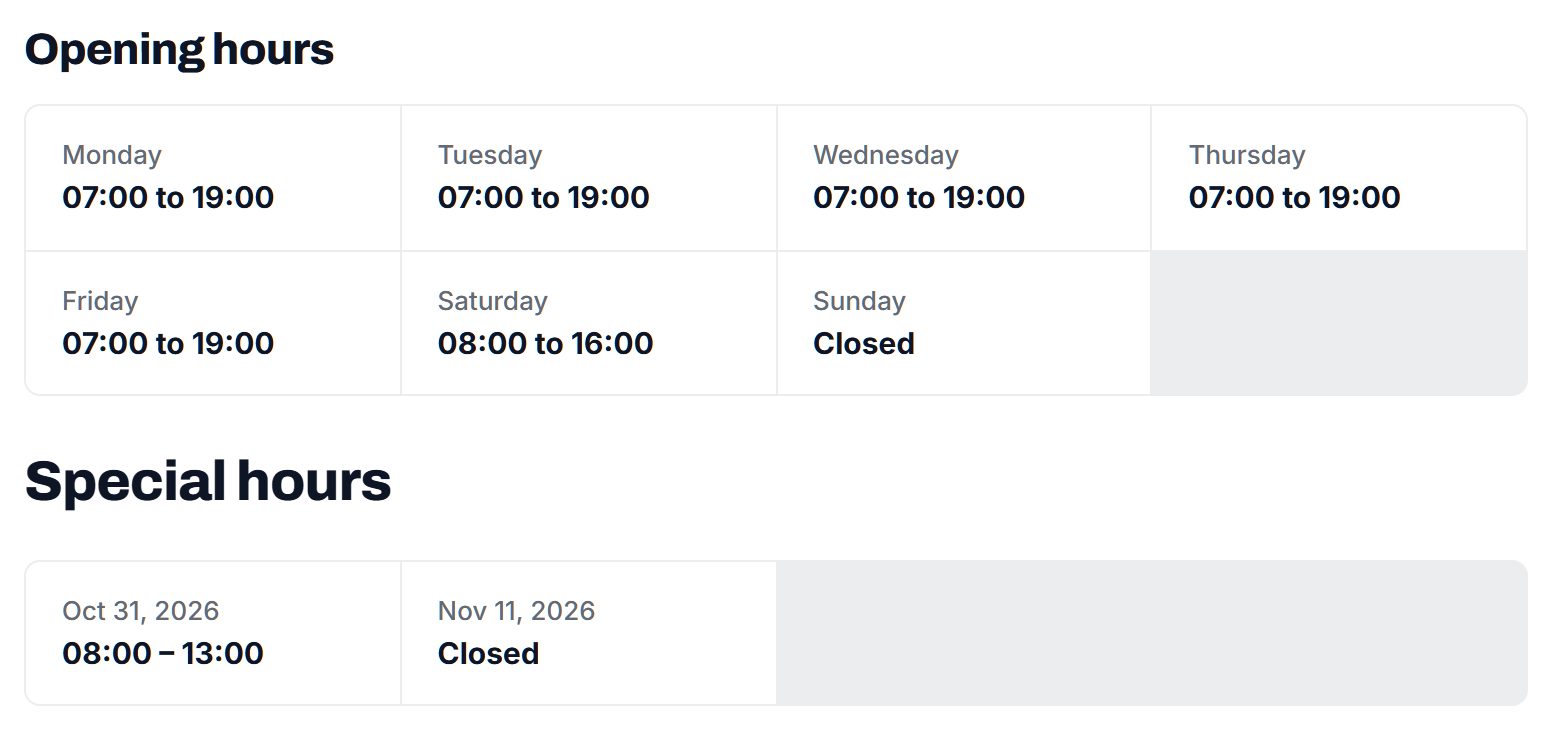
Yclas directories show each profile on a map, with opening hours, reviews with owner replies and featured places.
Sell featured neighborhoods to agents, and keep referral rules in mind.
Agents are used to paying for visibility: portal ads, sponsored posts, sign riders and mailers to the neighborhoods they farm. A local directory that ranks for neighborhood searches can win part of that spend.
- Featured places in a neighborhood or zip code, sold by the month. Agents often want to own one area, so sell a limited number of spots per area.
- Agent memberships: a monthly fee for a fuller profile, photos, a featured spot and presence in several areas.
- Brokerage packages covering every agent in an office, billed to the brokerage.
- Banner spaces for mortgage lenders, home inspectors, movers, stagers and title or escrow companies.
Be careful with paid leads. In many places only licensed parties may receive a referral fee on a real estate deal, and fees for steering business to lenders, title companies and similar services can be restricted too. A fee per closed deal, or a share of commission, is the model most likely to need legal advice. Flat advertising fees are simpler. Check the rules where you operate before charging for anything tied to a transaction.
Sell a fixed number of featured spots per neighborhood. Scarcity is what makes agents buy.
| Model | Works when | Switch it on |
|---|---|---|
| Featured places by neighborhood | Agents compete to be known in one area | When area pages get steady visitors |
| Agent memberships | Agents want full profiles across several areas | Once agents are updating their own profiles |
| Brokerage packages | Offices want every agent to look consistent | When two or three offices have claimed pages |
| Banner spaces | Lenders, inspectors and movers want buyers | When you can show visitor numbers |
| Referral fees per deal | Only where the rules allow it | After legal advice where you operate |
Seed agents and offices from public sources, then win the independents first.
Real estate is licensed in most places, and many regulators publish a public lookup of licensees. Use it to confirm licenses, and check its terms before copying anything in bulk.
- Import brokerages from Google Places for your market with your own Google key. Office names, addresses and opening hours come in (no photos are imported). Then add each office's agents from its website.
- Collect agents from office rosters into a spreadsheet with areas served and languages, and import it as a CSV.
- Start with independent agents and small offices. Large franchise brands often have their own marketing rules; small offices welcome a free, complete profile.
- Go where agents meet: local association meetings, broker open houses, continuing education classes and title company breakfasts.
- Ask agents to claim their page and add their areas, languages and a headshot. Agents keep profiles current once they see inquiries arriving.
Keep each agent linked to their brokerage. Agents move between offices, so ask them to update their brokerage when they switch, and remove profiles of agents who leave the business. A directory full of agents who retired years ago is the fastest way to lose a seller's trust.
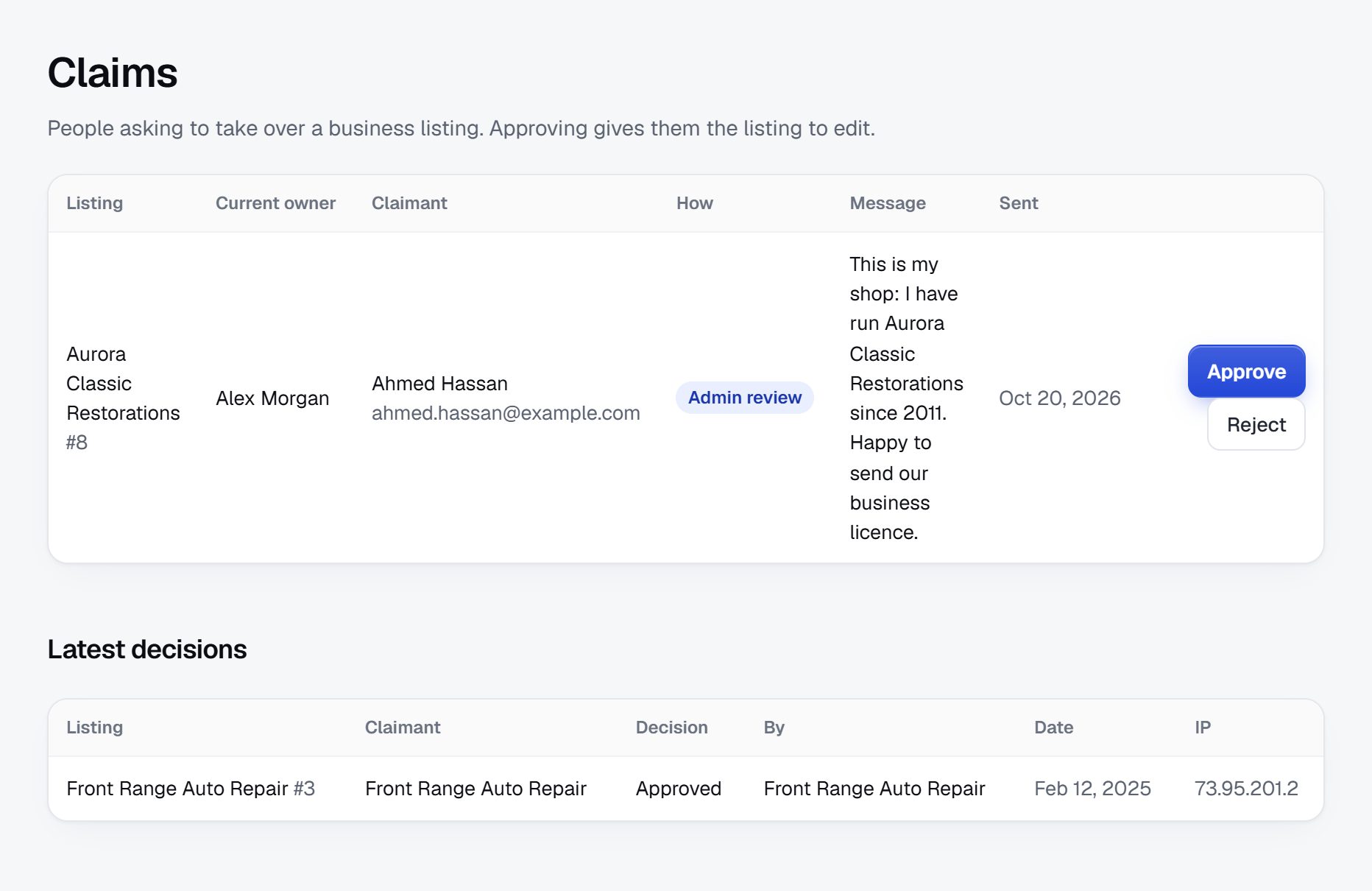
Confirm licenses, follow fair housing principles and keep reviews honest.
A real estate agent directory faces two kinds of risk: people who are not who they say they are, and content that treats people unfairly.
Licensing
- Show license type, number and brokerage as stated by the agent, and tell visitors to confirm them on the regulator's lookup.
- Check new profiles against that lookup before approval, at least while the directory is small.
- Remove profiles when a license lapses or is revoked.
Fair housing
Many places have fair housing or anti-discrimination laws covering how property and housing services are advertised. Do not let agents describe neighborhoods by race, religion, family status or other protected characteristics, and avoid wording like "good for families" or "safe area" on your own pages. Describe places with facts: schools by name, commute times, parks, property types.
Scams
- Rental scams where someone poses as an agent to take deposits on homes they do not control.
- Wire fraud: fake emails that appear to come from an agent or title company, telling buyers to send closing funds to a new account.
- Fake reviews posted by agents for themselves or against rivals.
Publish a buyer safety page: confirm the agent's license, never wire money on email instructions alone, and call the title or escrow company on a number you found yourself. Check the rules where you operate on fair housing and real estate advertising.
Describe neighborhoods by facts, never by who lives there.
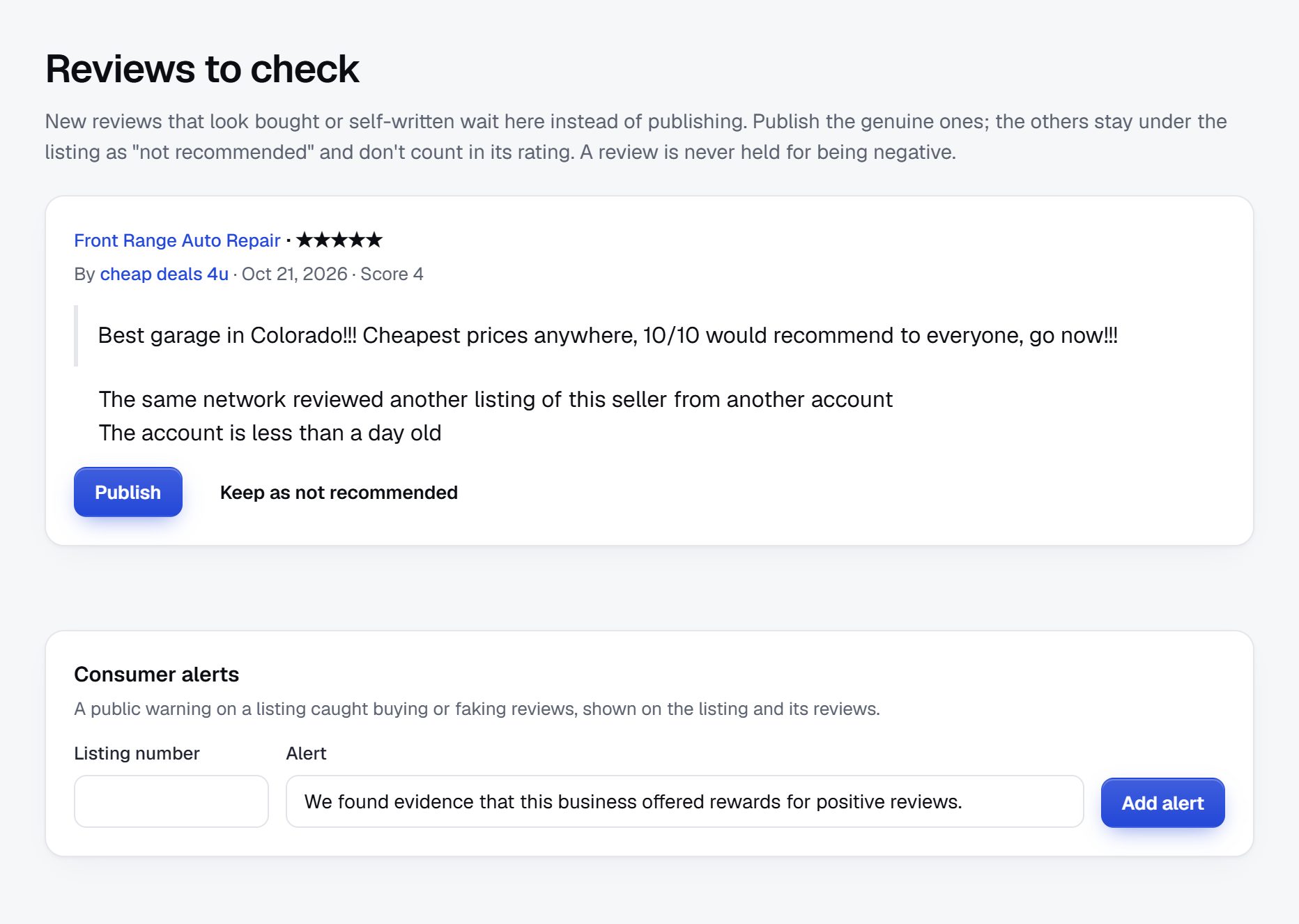
Rank for agent searches by neighborhood, property type and language.
People search for an agent by place, by the kind of sale and by the help they need. Neighborhood and zip code searches are where a local directory can beat national sites.
- "real estate agent in Boise"
- "listing agent Hyde Park Chicago"
- "realtor who speaks Mandarin San Jose"
- "farm and ranch real estate agent Texas Hill Country"
- "first time home buyer agent Columbus"
- "how to choose a listing agent"
People type "realtor" constantly, but in the United States REALTOR is a trademark of a trade association for its members. Use "real estate agent" in your own titles and check how the term may be used before putting it in page names.
Pages to build
- Agents by neighborhood and zip code, one page each.
- Agents by property type and by language, across the market.
- Neighborhood guides: property types, schools, parks and commutes, written with facts and dated.
- Seller and buyer guides: questions to ask an agent before signing, how commission is agreed, what happens at closing.
- Market updates from public sources, with the source named.
Neighborhood guides earn links and reach sellers months before they list. End each guide with the agents who serve that neighborhood.
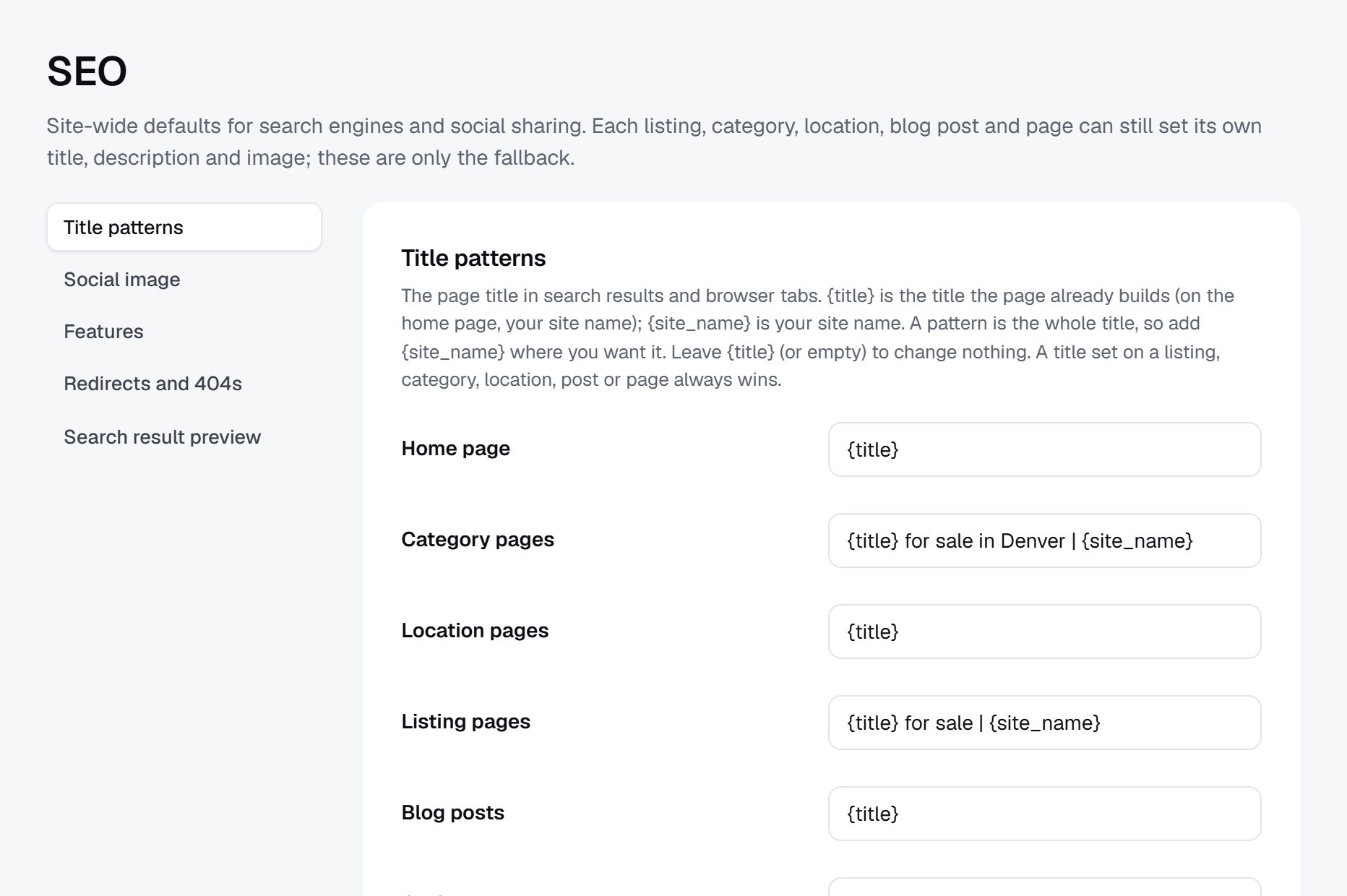
Launch in one market before the spring selling season.
In many markets, homes list and sell most in spring and early summer, and sellers choose agents in the weeks before. Have your first market seeded and the first agents claimed by late winter. Resort, college and second-home markets can follow their own seasons, so learn yours.
First market
Pick a city or county whose neighborhoods you know. You need enough agents to compare but few enough to call yourself: a market with a few hundred licensed agents is a manageable start.
Partners
- Independent brokerages, and newer agents building a client base.
- Mortgage brokers, inspectors, movers and stagers, as banner customers and promoters.
- Relocation teams at large local employers, universities and hospitals.
- Neighborhood associations, who can help with the guides.
Checklist
- Seed every brokerage and agent in the first market.
- Write the fair housing rules for profiles and the buyer safety page.
- Publish five neighborhood guides.
- Invite agents to claim their pages, starting with independents.
- Share the guides with relocation teams and neighborhood groups.
- Offer featured neighborhood spots once the guides draw visitors.
A worked example: an agent directory for northern Michigan's lake country.
Consider a fictional site, Bayline Agent Guide, covering Grand Traverse, Leelanau, Benzie and Antrim counties around Traverse City in northern Michigan. It is a resort and second-home market: lakefront cottages, condos in town, orchards and hunting land inland. The site, its founder and every agent in the table are invented.
How it is organized
- Agents by client
- Buyer's agents
- Listing agents
- Agents by property
- Waterfront and cottages
- Land, orchards and farms
- Condos and in-town homes
- Brokerages
- Related services
- Home, well and septic inspectors
- Vacation rental managers
Each profile carries areas served by township and lake, languages, property types, license type and brokerage, and whether the agent works with buyers who are not yet in the area.
Who it serves
Most visitors live somewhere else. Families from downstate Michigan and the Chicago area are buying a summer place, and they need an agent who will walk a cottage on video and explain shoreline rules, private wells and septic systems. Retirees are moving up for good and selling a house far away. And many sellers are siblings who inherited a family cottage and live in three different states. They need one agent they can all trust, who will handle a sale mostly by phone and email and keep everyone informed.
How it started
The founder managed vacation rentals for ten years and was asked the same question by owners every fall: which agent should I call to sell? He seeded every brokerage from business listings, added agents from office rosters, and checked each license on the state's public lookup before the profile went live. Then he wrote a guide for each of the larger lakes, covering property types, public access points and typical lot shapes, with the agents who serve that lake listed at the bottom.
How it makes money
Profiles are free. Agents pay for a featured spot on a lake or township page, and only three spots are sold per page, so they keep their value. Two independent brokerages pay a package covering all their agents. Banner spaces go to an inspection company, a mortgage broker and a dock and lift installer, all of whom want the same buyers. No fee is tied to any sale, and the founder had his advertising terms read by a local lawyer before he took the first payment. The lake guides, updated each spring, bring in most of the sellers who later contact an agent.
| Listing | Areas served | Key details |
|---|---|---|
| Dana Whitlock, buyer's agent | Leelanau County, Suttons Bay, Northport | Licensed since 2012, waterfront and cottages, video tours for buyers out of the area |
| Peninsula Lantern Realty | Traverse City and Grand Traverse County | Independent brokerage, 14 agents, condos and in-town homes |
| Marcus Ortiz, listing agent | Benzie County, Frankfort, Beulah | Inherited and estate cottage sales, Spanish and English |
| Hollis Land and Farm Team | Antrim and Kalkaska counties | Acreage, orchards and hunting land, explains wells and septic |
| Ruth Annick, associate broker | Grand Traverse and Leelanau counties | Condos and downsizing, works with sellers who live out of state |
Every agent and brokerage here is fictional.
The first 90 days, timed to your selling season.
Work backward from the months when sellers in your market choose agents. In many places that is late winter, ahead of a spring market; in resort and lake areas it can be late summer and fall, when owners decide after a last season at the cottage. Your 90 days should finish just before that window opens.
Agent directories have an advantage here: almost every agent is already listed somewhere, and many regulators publish license lookups. The data work is quick. What takes time is turning a list of names into profiles that say which neighborhoods each agent really knows, and writing the neighborhood guides that bring sellers to those profiles.
Plan for agents to move. In a market of a few hundred agents, several will change brokerage or leave the business during your first quarter alone, so build a monthly check into the routine from the start.
Keep paid offers out of the first quarter. Agents talk to each other constantly, and the story you want told at the next association meeting is that the new directory sent someone a real seller, not that it asked everyone for money in week three.
| Weeks | Focus | Done when |
|---|---|---|
| 1-2 | Define the market and seed brokerages | Every brokerage office in the market is in a spreadsheet with address, phone and website |
| 3-4 | Add agents from office rosters | Each agent is linked to a brokerage, with license type checked on the regulator's lookup |
| 5-6 | Fair housing rules and the buyer safety page | Profile rules, neighborhood wording rules and the wire fraud warning are published |
| 7-8 | Write neighborhood guides | Five guides are live, written with facts and each ending with the agents who serve that area |
| 9-10 | Claim drive with independents | Every independent office has been visited or called, and the first 30 agents have claimed and set their areas |
| 11 | Partners and first reports | Two relocation teams use the guides, and every claimed agent has received a report of views and messages on their areas |
| 12 | First featured spots | Featured spots are offered on the three busiest area pages, capped at three per page, with a waiting list started |
Ways to build a real estate agent directory.
An agent directory needs profiles linked to brokerages, areas served as a multi-select field, a map, area pages for every neighborhood or township, reviews you can moderate, and featured spots you can limit per area. It also needs firm control over wording, since fair housing rules apply to what agents and you publish. One thing it does not need is homes for sale: showing listings from a multiple listing service usually requires a feed licensed through a broker and the MLS's own rules, which is a different and larger project.
Developers building it from scratch makes sense if you plan to grow into property search later and want everything in one system. It is the most expensive route and you maintain it for good.
A real estate theme or directory plugin for WordPress, or a directory script on your own server, is common in this niche, and many themes are built for agents. Many of them focus on property listings rather than agent profiles, so check that the agent side has proper claims, reviews and area filters before you choose.
A hosted builder such as Yclas gives you the directory parts and hosting without upkeep, which lets you spend your time on neighborhood guides and agents. You work within the platform's features, so map out your area pages and profile fields first and confirm they fit. Whichever route you choose, budget more time for wording and moderation than for software, since fair housing and licensing questions come up weekly in this niche.
| Route | Fits when | Watch out for |
|---|---|---|
| Custom build | You plan to add licensed property search later | Cost, upkeep, and MLS data rules if you add listings |
| Real estate theme, plugin or script | You want many agent-focused designs and can run a server | Themes built for property listings with weak agent profiles |
| Hosted builder | Your focus is agents, areas and guides, not homes for sale | Platform limits; plan your area pages before importing |
What a real estate agent directory costs to run.
The software is the smallest part of the bill. Most of the cost is your time in the first months: finding the first listings, answering questions and checking what gets posted.
Beyond the platform, plan for Google import charges, printing for association meetings and a legal review of your fair housing wording and any referral model. Some regulators charge for bulk license data, so check before you build on it.
| Cost | Typical range | On Yclas |
|---|---|---|
| Domain | $10 to $20 a year | Your own, with SSL included |
| Software and hosting | $0 to $100+ a month, plus plugins and updates | Starter $19 a month, Professional $99 |
| Design | $0 to $100 for a theme, or a designer | 109 looks included |
| Payment fees | About 3% per payment | Your Stripe or PayPal fees; Yclas takes nothing |
| Business data | Free if you collect it, or a few cents per page of Google results | Paid to Google, with your key |
| Your time | 5 to 10 hours a week at the start | Finding listings, moderation, support |
Mistakes that sink real estate agent directories.
- Drifting into a property portal. Adding homes for sale sounds natural, but it brings MLS data rules, constant updates and competition with the biggest sites in the country. Stay an agent directory and link out to each agent's own listings. Your edge is knowing who serves which street, not having more homes than the portals.
- Selling unlimited featured spots per area. Once seven agents are featured on one neighborhood page, none of them stands out and all of them stop paying. Cap the spots per area and keep a waiting list, which also tells you where demand is strong enough to raise the price.
- Letting agents write neighborhood descriptions unchecked. A well-meaning agent may describe an area as perfect for young families or full of a certain community, which can cross fair housing lines. Moderate every profile and give agents a short list of words to avoid, with factual alternatives such as school names, park names and commute times.
- Keeping agents who have left. Real estate has high turnover, and a seller who calls three dead numbers will not trust the fourth. Check licenses and brokerage rosters every month and remove or mark agents who have gone.
- Ranking by self-reported sales. Volume and units sold are easy to inflate and hard for you to check. Sort by relevance to the area and let moderated reviews and a clear profile do the work. If agents want to show results, ask them to describe recent sales in words, without addresses or client names.
- Burying newer agents. If only agents with dozens of reviews appear first, new agents never get a chance, and they are the ones most likely to claim, update and later pay. Rotate fair placement or sort by area match.
- Covering the whole state. A directory that spreads across every county ends up with thin area pages that national portals beat easily. Own one market so completely that local agents feel they must be on it.
- Missing the season. Launching after sellers have chosen their agents means a year of thin traffic and no buyers for featured spots. Learn when your market lists, and finish seeding a few months before. Ask a few local agents when their phones start ringing; they will know to the week.
- Ignoring the people around the sale. Inspectors, lenders, stagers and movers want the same visitors and often pay sooner than agents. Give them a related services section and banner spaces from the start. They also help sellers and buyers, who need an inspector or a mover within days of choosing an agent.
Real estate terms for directory founders.
Learn these before you sit down with your first broker, because they shape your fields and your rules.
| Term | What it means |
|---|---|
| Buyer's agent | An agent who represents the buyer in a purchase. |
| Listing agent | An agent who represents the seller and markets the property. |
| Broker | A licensee with a higher level of license who can run a brokerage and supervise agents. |
| Brokerage | The firm agents work under; in many places an agent must be attached to one to practice. |
| Salesperson license | The entry-level real estate license, which usually requires working under a broker. |
| MLS | A multiple listing service, the shared database where member brokers list properties for sale. |
| IDX | Internet Data Exchange, the arrangement that lets brokers show MLS listings on websites under MLS rules. |
| Dual agency | One agent or brokerage representing both buyer and seller, which some places restrict or ban. |
| Buyer representation agreement | A written agreement between a buyer and an agent setting out the services and how the agent is paid. |
| CMA | A comparative market analysis, the agent's estimate of a home's price based on recent nearby sales. |
| Farming | An agent's habit of marketing steadily to one neighborhood to become known there. |
| REALTOR | A trademark for members of a national trade association, not a general word for any agent. |
| Designation | A credential from a trade body showing extra training in an area such as relocation or seniors. |
| Earnest money | A deposit a buyer pays with an offer, held until closing, a common target of wire fraud. |
The same steps for a real estate agent directory on Yclas.
- Describe your directoryThe setup wizard writes the categories, an About page and example listings from one sentence.
- Add fieldsHours, services, areas served, prices: the details people search by, as filters.
- Fill itImport businesses from a spreadsheet or Google Places, then check them.
- Bring owners inOwners claim their page, update it and answer reviews.
- EarnSwitch on featured places, banners or memberships when visits arrive.
How much does it cost to start a real estate agent directory?
Not much in cash: a domain, Google import charges, some printing and a legal review of your terms. Most of the cost is time spent adding agents and writing neighborhood guides.
Can I charge agents a referral fee when a deal closes?
In many places referral fees are limited to licensed parties, and fees tied to a transaction can fall under other rules as well. Get legal advice where you operate, and start with flat advertising fees.
Do I need a real estate license to run an agent directory?
Often not for selling flat-fee advertising to agents, but that can change if you take part in transactions or charge per deal. Check the rules where you operate.
How do I get agents to claim their profiles?
Show them the searches for their neighborhood and the visitors on its page, then invite them to claim their profile free. Newer agents and independents respond first.
How can I compete with the national real estate portals?
Go deeper on one market: every agent, neighborhood guides written with local facts, languages and specialties. Portals cover the whole country; you can know every street in one city.
Should I show agents' sales numbers?
Only if you can check them. Self-reported volume is easy to inflate, so let agents describe recent work in their own words and rely on moderated reviews.
How do I handle fake or unfair reviews of agents?
Moderate reviews before they go live, watch for bursts from new accounts, and let agents reply. Remove reviews that mention protected characteristics or private details.
Can I show homes for sale on the directory too?
It is possible, but displaying MLS listings usually requires a licensed data feed through a broker and following the MLS's rules. Most agent directories link to each agent's own listings instead, which keeps the site simple and keeps agents happy, since visitors land on their pages.
Should I list new agents who have no reviews yet?
Yes. New agents are the most eager to claim profiles and build a presence, and leaving them out makes the directory incomplete. Sort by area match rather than review count so they still appear.
How should I handle agent teams?
Give the team a page under its brokerage and list each member as well, so sellers can find either. Make sure each member's own license is shown, since the team itself may not hold one, and that the team name is never presented as a separate brokerage.
How many featured spots should one neighborhood page have?
Two or three is usually enough, clearly labeled as featured, with the rest of the agents listed below in a fair order. Fewer spots keep each one visible and worth paying for, and a waiting list tells you when an area could carry a higher price.
Do reviews of agents need fair housing moderation too?
Yes. A reviewer may praise an agent for steering them toward or away from a neighborhood or group. Remove those parts, and check the rules where you operate on how reviews may be published. Hold agents' replies for approval as well, for the same reason.
Related pages.
The parts of Yclas this leans on.
You have the plan. Now help your town find the right agent.
Describe your site in a sentence and the setup wizard writes the categories, example listings and a look. Free for 15 days, no credit card.
Start my directory