How to build a restaurant directory that hungry locals and visitors trust.
This guide covers how to build a restaurant directory for one city or region: picking a food angle, the cuisine, price and dietary filters diners use, how the directory earns money from restaurants and food events, how to list every place to eat and get owners to claim their pages, fake reviews and allergy questions, the searches to rank for, and a launch timed to restaurant week.
Free for 15 days · No credit card · Plans from $19 a month
Answer "where should we eat tonight" better than the big apps for one place.
Diners in a city have no shortage of apps. What they lack is a source that is current, local and honest. Big review apps mix closed restaurants with open ones, rank places partly by who advertises, and bury the family-run taqueria behind chains. Delivery apps only show places that pay their commission, and food blogs cover the new openings once and move on.
Who uses a restaurant directory
- Locals looking for something new, a place for a birthday dinner, or a lunch spot near the office.
- Visitors who want the places locals go, not the ones by the hotel.
- Diners with dietary needs: vegan, gluten-free, halal, kosher, nut allergies.
- Event planners and office managers looking for private rooms and catering.
Picking the angle
A whole city is a lot to cover well. Narrower angles get traction faster: one neighborhood or small city, one cuisine across a metro (the Korean restaurants of Los Angeles, the barbecue joints of Texas), one diet (every vegan and vegan-friendly place in a state), or one format such as food trucks, brunch spots or late-night food.
Today people find restaurants through Google Maps, Instagram food accounts, local food Facebook groups, city magazines and word of mouth. The Instagram accounts and group admins are also your first partners.
Food is local and seasonal: a directory that knows this week's openings and closings earns repeat visits.
Let diners filter on cuisine, price and the details that rule a place in or out.
Cuisine is the natural category, with a few format categories alongside it for people who do not start from cuisine: brunch, food trucks, bakeries and coffee, bars with food. Keep cuisines broad, "Mexican" rather than separate Oaxacan and Tex-Mex categories, and put the detail in tags and descriptions.
Details diners filter on
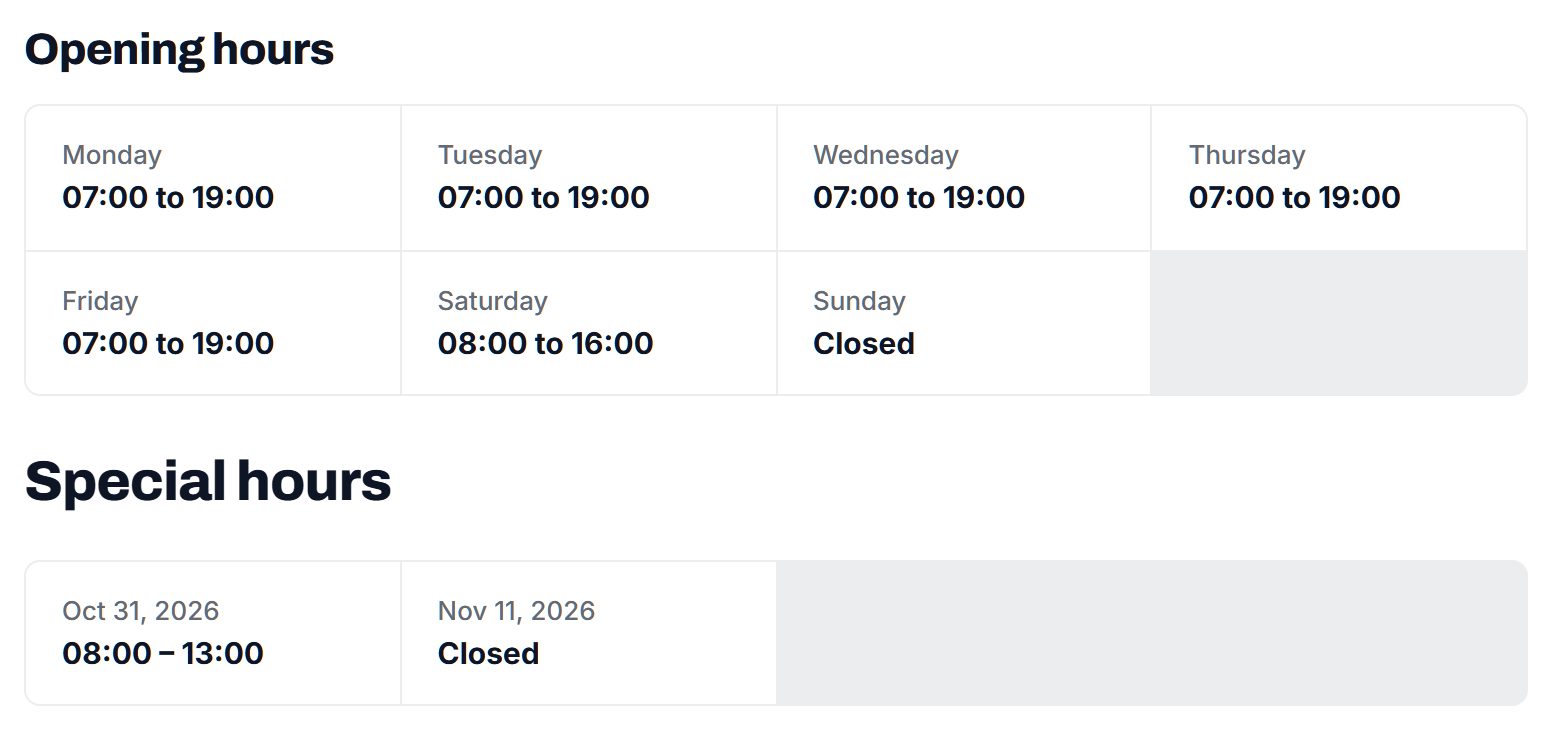
- Opening hours, with separate kitchen hours if they close earlier than the bar.
- Price range: a dropdown from $ to $$$$, defined on an about page so owners pick it consistently.
- Dietary options: vegan, vegetarian, gluten-free options, halal, kosher. Make these checkboxes the owner confirms.
- Service: dine-in, takeout, delivery, reservations, walk-ins only.
- Setting: outdoor seating, private room, kid-friendly, dog-friendly patio, bar seating.
- Neighborhood, plus a map with every place on it.
Add a menu field: a link to the restaurant's menu or a short text of signature dishes. A page that names "brisket, burnt ends and banana pudding" is more useful, and more searchable, than one with only an address.
| Category | Example listings | Fields diners filter on |
|---|---|---|
| Cuisines | Mexican, Thai, Italian, Ethiopian, barbecue, sushi | Price range, neighborhood, dietary options, reservations |
| Brunch and breakfast | Diners, brunch cafes, bagel shops | Weekend hours, wait times, outdoor seating, kid-friendly |
| Coffee and bakeries | Coffee shops, bakeries, donut shops | Opening hours, wifi, gluten-free options, seating |
| Food trucks | Taco trucks, barbecue trailers, dessert trucks | Usual locations, days out, cards accepted |
| Bars with food | Gastropubs, wine bars, sports bars | Kitchen hours, happy hour, age policy, live music |
| Special occasions | Fine dining, tasting menus, rooftop restaurants | Price range, dress code, private room, reservations |
Yclas directories show opening hours and a map, and custom fields like price range or dietary options can be search filters.
Earn from restaurants and food brands once diners rely on your lists.
Restaurants run on thin margins and are pitched by every app, magazine and coupon book in town. They pay for things that fill tables on slow nights, and they can tell quickly whether it worked. So keep basic listings free, prove you send diners, and then sell placement around the moments people decide where to eat.
What pays in a restaurant directory
- Featured places at the top of a cuisine or neighborhood page.
- Memberships with photos, menus, weekly specials, events and a badge.
- Event and catering requests: an office manager describes a lunch for 30 or a rehearsal dinner, and it goes to restaurants that cater, as a quote request.
- Banner spaces sold to food brands, local breweries, food festivals and hotels.
- Sponsored guides, clearly labeled, such as a patio season guide or a restaurant week guide.
Keep ranking and paid placement separate and labeled. If diners think your "best of" lists are paid, the directory loses its value for everyone, including advertisers.
Never let money change a review or an editorial list.
| Model | Works when | Switch it on |
|---|---|---|
| Featured places | Diners browse cuisine and neighborhood pages | When pages get steady weekly traffic |
| Restaurant memberships | Owners want menus, specials and photos shown | After a few dozen owners claim pages |
| Catering and event requests | Offices and families plan group meals | Once requests come in without prompting |
| Banner spaces | Food brands, festivals and hotels want diners | When you can show monthly visitors |
| Sponsored seasonal guides | Restaurant week or patio season bring traffic | From the first restaurant week you cover |
List every place to eat in your area, then bring owners in one by one.
Diners notice gaps immediately: if their favorite pho place is missing, the directory looks amateur. Start with a complete list from public sources, then use claiming to get photos, menus and accurate hours.
Where the restaurants come from
- Google Places import by cuisine and neighborhood gives you names, addresses, phone numbers and hours. Photos are not imported, which is fine: owners and your own visits supply better ones.
- Health department inspection records: many cities and counties publish lists of permitted food establishments as open data. Check what yours publishes.
- Food truck associations and city food truck permit lists, plus the trucks at weekly food truck nights.
- The state or city restaurant association, and the restaurant week participant list.
- Farmers market vendors and pop-ups that will open brick-and-mortar places later.
Getting owners to claim
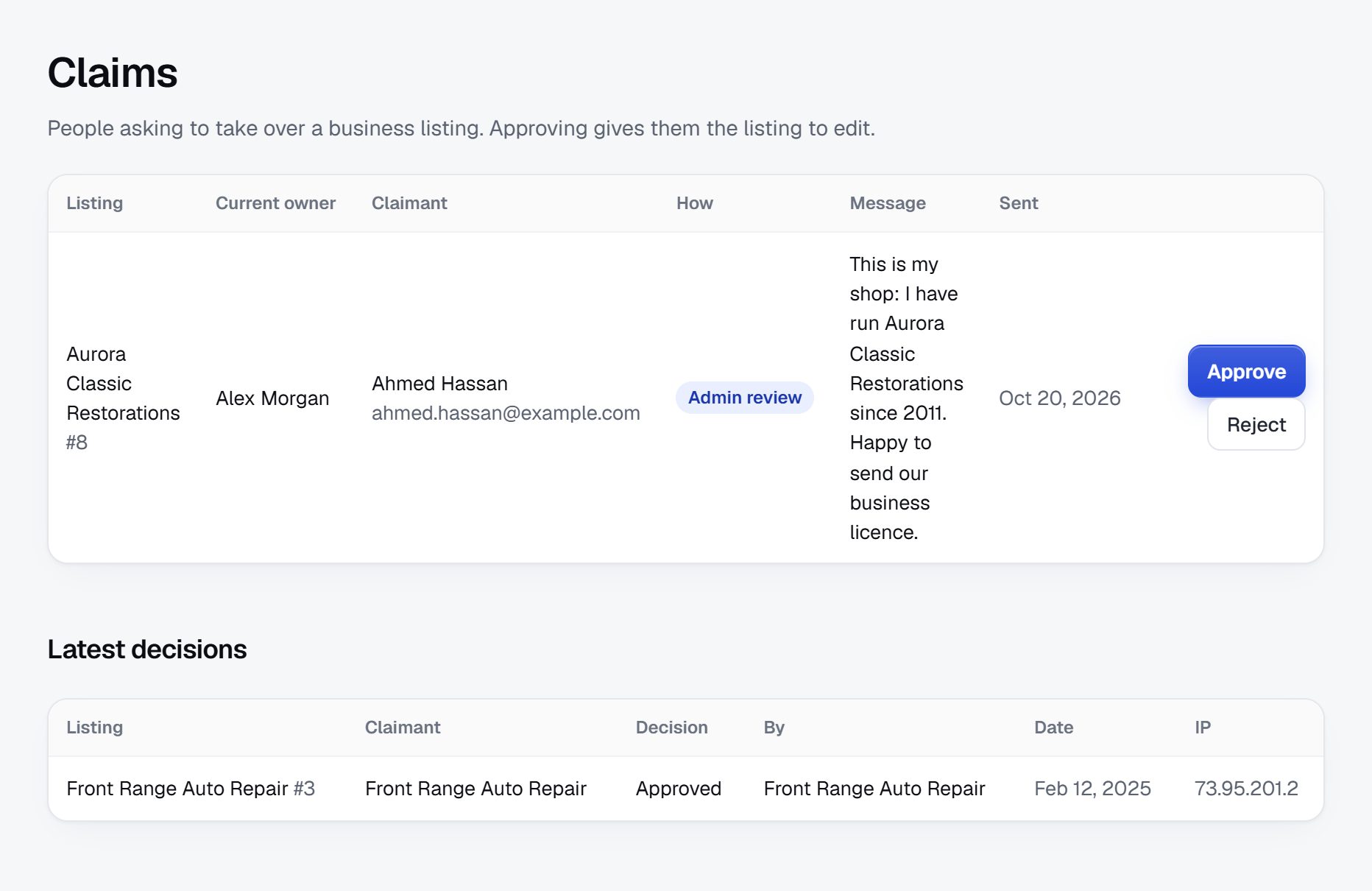
Visit between lunch and dinner service, not during it. Show the owner their page on your phone and offer to add the menu and photos then and there. Email the rest with their page link and a request to confirm hours. On Yclas, a restaurant owner can claim the page and answer diner reviews in public.
Restaurants close often. Recheck hours and closures every few months.
Keep reviews honest and allergy information clearly the owner's.
Restaurant directories attract the same problems as review apps, on a smaller and more personal scale. Owners are proud, competitors are close by, and diners with allergies rely on what they read.
Risks typical of restaurant directories
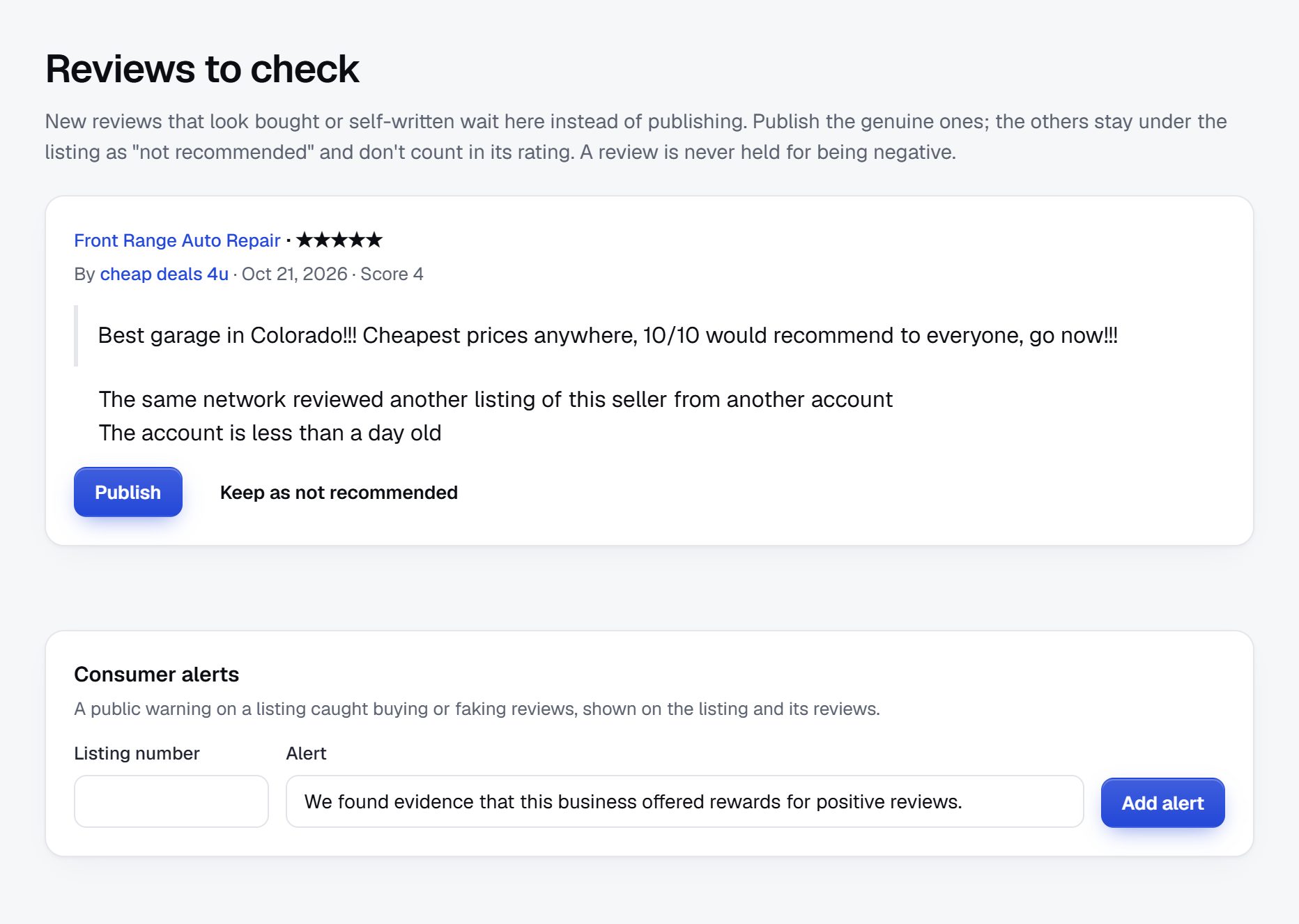
- Fake reviews: owners and staff reviewing their own place, rivals posting one-star reviews, and paid review services. Require accounts, hold first reviews for moderation, and watch for bursts from new accounts.
- Review bombing after a viral social media post about a restaurant. Pause new reviews on that page and remove those that are not about a visit.
- Allergy and dietary claims: a "gluten-free options" checkbox is not a guarantee of safety. Label dietary details as provided by the restaurant and tell diners with allergies to confirm with staff.
- Closed restaurants still listed, which annoys diners more than anything else. Let visitors report a closure in one click.
- Wrong claims by former owners or delivery middlemen. Verify claims by calling the restaurant.
Some cities publish health inspection scores. If you show them, take them from the official source, date them and link nothing you cannot keep current. Rules on reviews and inspection data differ, so check the rules where you operate.
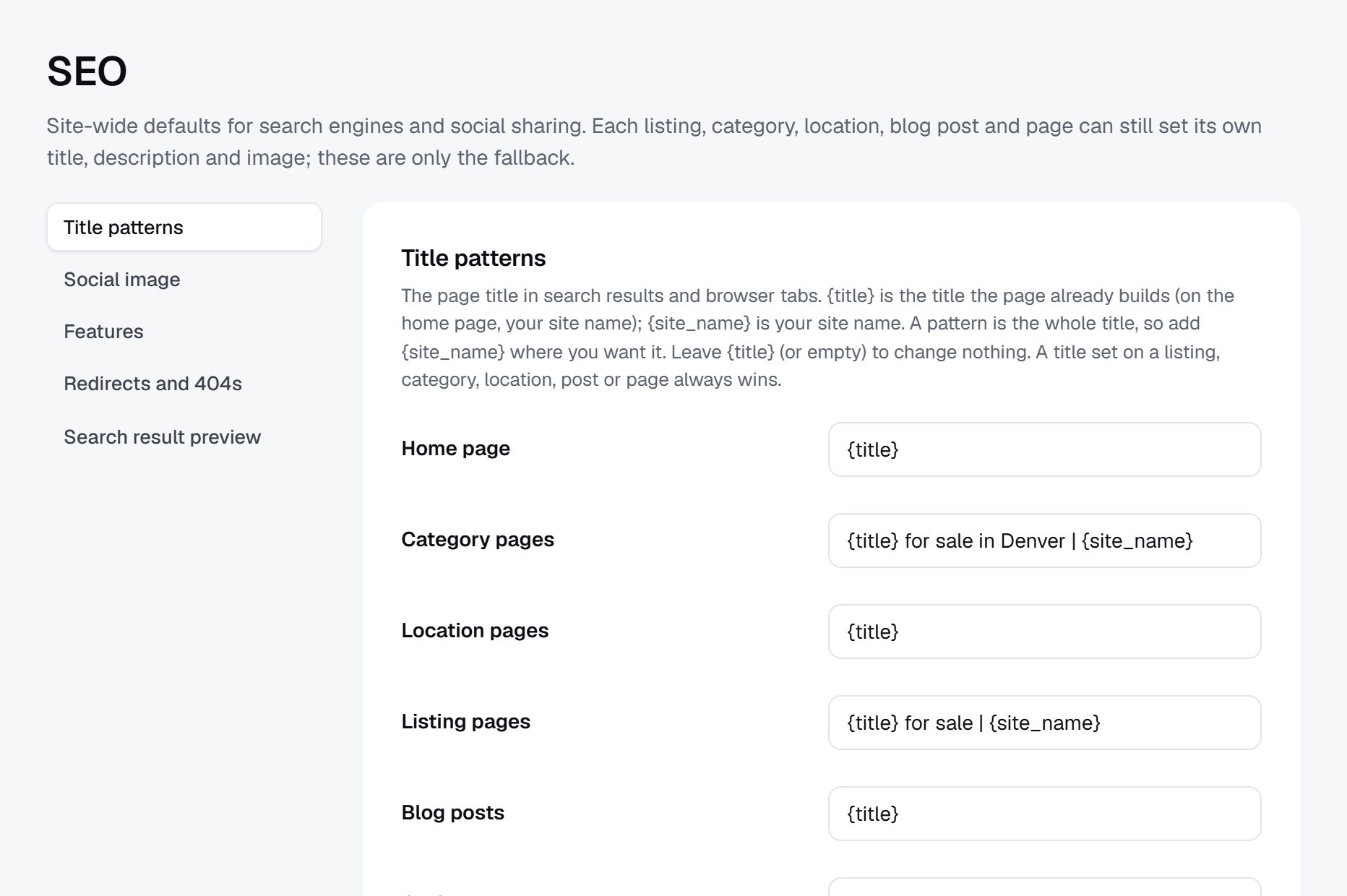
Rank for cuisine, neighborhood and occasion searches.
Restaurant searches combine a food, a place and often an occasion or a need. Each combination you can answer with a real list of places is a page that can rank.
Searches to target
- "best tacos in Austin" and "ramen near downtown Portland"
- "brunch in Capitol Hill Seattle"
- "gluten-free restaurants in Savannah"
- "restaurants open late near me"
- "restaurants with private rooms for parties" plus the city
- "kid-friendly restaurants" plus the neighborhood
Pages to build
- Cuisine pages for the city, and cuisine plus neighborhood pages where you have at least five places.
- Occasion and need pages: date night, groups, late night, outdoor dining, vegan.
- Restaurant pages with hours, price range, signature dishes and the owner's description.
Content ideas
- New openings and closings each month, which locals share.
- A restaurant week guide with every participating menu.
- Neighborhood food guides written after a walk, with your own photos.
- A dish map: where to get the best burger, banh mi or pierogi in town.
Launch around a food moment the whole city already talks about.
The best launch for a restaurant directory rides an existing event: restaurant week, a food festival, a new food hall opening, or patio season. People are already looking for where to eat, and restaurants are already promoting.
The order that works
- Import and clean every restaurant, removing closed places, and get the 30 best-known owners to claim and add menus.
- Partner with local food Instagram accounts and Facebook group admins: give them a featured guide page they can share.
- Publish one strong list, such as the city's best patios or every vegan-friendly menu, and pitch it to the local paper and city magazine.
- Cover restaurant week fully, with every menu and price on one page.
Seasons that matter
Restaurant weeks (many cities run them in winter or late summer), patio season in spring, holiday party booking in the fall, and graduation season for family dinners. Each is a guide page and a sales conversation with owners.
Launch checklist
- Every restaurant in your area, with closures removed.
- Price range defined and dietary labels explained.
- Review policy and allergy notice published.
- A map that works on phones.
- Domain connected with SSL, and terms and a privacy policy linked in the footer.
A worked example: every vegan-friendly table in the Twin Cities.
Imagine a fictional directory called Green Fork Guide, covering Minneapolis, St. Paul and the inner suburbs. It does not try to list every restaurant in the metro. It lists every place where a vegan can order a full meal without asking the server to remove four ingredients, from fully vegan cafes to Ethiopian, Vietnamese and Middle Eastern kitchens with long plant-based menus.
Categories
- Fully vegan
- Restaurants
- Bakeries and cafes
- Food trucks
- Vegan-friendly by cuisine
- East African
- Southeast Asian
- Mexican and Latin American
- Middle Eastern
- Pizza and burgers
- Occasions
- Brunch
- Date night
- Group dinners and catering
Every page shows two custom fields that matter more here than anywhere else: how many vegan mains are on the menu, and whether the kitchen uses separate fryers and prep areas, as stated by the restaurant.
Who it serves
Vegans and vegetarians who live in the metro, couples where one person is vegan and the other is not, visitors in town for a conference, and office managers who need a lunch order that works for everyone. A surprising share of searches come from people who are not vegan at all but are planning a dinner for a friend or relative who is.
How it started
The founder is a home cook who kept a shared spreadsheet of vegan options for a local plant-based meetup group. The sheet had 140 rows and was always out of date. She imported restaurants by neighborhood from public data, read every menu online, kept only places that met her rule of at least two vegan mains, and phoned the rest to ask about fryers. The meetup group became her first 300 users, and she launched with a "vegan brunch in every neighborhood" guide timed to the spring patio opening.
How it makes money
Basic listings are free. Restaurants pay for featured places on cuisine pages and for a membership that adds photos, a weekly specials field and a badge. Catering requests from offices go out as quote requests to places that cater. A plant-based food brand sponsors the annual brunch guide, labeled as sponsored, and a local bakery buys the banner on the cafe pages. Editorial picks are never sold, and the about page says so in one sentence.
The narrow rule is what made it useful. A general review app can show 3,000 restaurants with a vegan tag, most of which offer one side salad. Green Fork lists a few hundred, and every one of them passed a menu check by a person who eats there.
| Restaurant (fictional) | Type and area | Key details |
|---|---|---|
| Root and Ember | Fully vegan, North Loop | Dinner Tuesday to Sunday, $$$, reservations, tasting menu on Fridays |
| Addis Garden | Ethiopian, Cedar-Riverside | Ten vegan platters, $$, takeout, fasting menu Wednesdays and Fridays |
| Little Pho Kitchen | Vietnamese, Eat Street | Separate vegan broth, $, open late on weekends, cash and cards |
| Oat and Sparrow Bakehouse | Fully vegan bakery, St. Paul | Opens 7 am, gluten-free shelf, custom cakes with a week of notice |
| Taqueria Verde Truck | Vegan-friendly food truck | Usual spots posted weekly, jackfruit tacos, cards accepted |
Ninety days from first import to a directory diners bookmark.
Restaurants change faster than almost any other kind of business: new openings, closures, menu changes and kitchen hours that shift with staffing. That shapes the first three months. You need a clean, complete list before anything else, then a handful of guides strong enough that locals share them, and only then outreach to the press and food accounts.
Do not try to visit every restaurant before launch. Visit the ones that matter most for your angle, and verify the rest by phone, menu and recent photos posted by the restaurant. Track closures in a separate list; diners forgive a missing photo much more readily than a recommendation that sends them to a dark dining room.
The single most useful launch asset is one list people want to send to a friend: the best patios, every late-night kitchen, or every place with a real vegan brunch. Build it in weeks 7 and 8 and launch around it.
Keep a running note of every owner conversation: what they liked, what they asked for, whether they cater, and when their slow nights are. Those notes become your first sales list when you switch on featured places and memberships after the launch. Owners who feel listened to in the first weeks are the ones who later pay.
| Weeks | Focus | Done when |
|---|---|---|
| 1-2 | Choose the angle, define price range symbols and dietary checkboxes | A one-paragraph definition of each price symbol is on the about page |
| 3-4 | Import restaurants by cuisine and neighborhood, cross-check permit or inspection lists | Each neighborhood list matches what a local food friend expects to see |
| 5-6 | Remove closures, add menus and signature dishes, call places with unclear hours | No restaurant on the site is closed, and 80 percent show hours |
| 7-8 | Visit 30 owners between services and write the first shareable list | Thirty claimed pages, and the list has photos you took yourself |
| 9-10 | Partner with two local food accounts and a group admin | They have shared the list and linked to your cuisine pages |
| 11-12 | Pitch the list to the local paper or city magazine, set a closures check routine | One press mention or newsletter feature, and a monthly recheck on the calendar |
Custom code, a plugin or a hosted builder for a restaurant directory.
A restaurant directory leans on a few features more than most: opening hours with separate kitchen hours, a map that works on a phone in the street, filters for cuisine, price and diet, reviews that owners can answer, and a quick way for diners to report a closure. It does not need online ordering or table reservations of its own; restaurants already use their own systems for those, and you can describe them in a field.
A custom build is worth it if your idea is really a product, such as a menu search across every restaurant in a city, or a dish-level rating system. Menu data is messy and changes weekly, so budget for ongoing work, not a one-time project.
A directory script or WordPress plugin suits food bloggers who already publish reviews on WordPress and want their recommendations searchable. The blog and the directory can share a theme. You carry the upkeep, and map, review and claim add-ons do not always agree with each other.
A hosted builder such as Yclas covers opening hours, maps, claims, reviews with owner replies, catering quote requests and featured places out of the box. That leaves your time for eating, photographing and writing, which is what makes a food directory worth reading.
Whichever route you take, test the site on a phone at 7 pm on a Friday, standing on a sidewalk with weak signal. That is when diners use it. If the page takes several seconds to show a map, the diner will open a map app instead and may not come back. Compress photos, keep the home page light and put the search box at the top.
| Route | Fits when | Watch out for |
|---|---|---|
| Custom build | You want menu search or dish ratings no directory product has | Menu data upkeep, long build, slow pages on phones |
| Script or WordPress plugin | You already run a food blog and want it searchable | Map and review add-ons, spam reviews, hosting speed at dinner time |
| Hosted builder | Your edge is local knowledge and writing, not software | Check the map and filters on a phone before you commit |
What a restaurant directory costs to run.
The software is the smallest part of the bill. Most of the cost is your time in the first months: finding the first listings, answering questions and checking what gets posted.
Expect Google Places API charges for the first import and regular refreshes, meals and coffee while visiting owners, and perhaps a photographer for your own guide pages. Some food bloggers and Instagram partners will ask for a fee or a free meal for promotion.
| Cost | Typical range | On Yclas |
|---|---|---|
| Domain | $10 to $20 a year | Your own, with SSL included |
| Software and hosting | $0 to $100+ a month, plus plugins and updates | Starter $19 a month, Professional $99 |
| Design | $0 to $100 for a theme, or a designer | 109 looks included |
| Payment fees | About 3% per payment | Your Stripe or PayPal fees; Yclas takes nothing |
| Business data | Free if you collect it, or a few cents per page of Google results | Paid to Google, with your key |
| Your time | 5 to 10 hours a week at the start | Finding listings, moderation, support |
Mistakes that make diners stop trusting a restaurant directory.
- Keeping closed restaurants listed. Nothing sends a diner away faster than driving to a place that shut in March. Recheck hours and status every few months, read local food news weekly, and put a "this place has closed" report link on every page.
- Selling "best of" spots. The moment a reader suspects your top ten list is paid, every list loses value, including the ones advertisers want to be on. Label paid placement clearly and keep editorial lists separate from it.
- Treating dietary checkboxes as guarantees. A "gluten-free options" tick is the restaurant's statement, not a safety check. Label it as provided by the restaurant, date it, and tell diners with allergies to ask staff every time. A diner who gets sick after trusting your page will blame the directory as much as the kitchen.
- Making categories too fine. Separate categories for Neapolitan, Detroit and New York pizza leave each page with two places on it. Keep cuisines broad and put the style in the description, where search still finds it. Split a category only when it has more places than a diner will scroll through.
- Using only stock or scraped photos. Diners can tell, and photos taken from other sites can bring copyright complaints. Use the owner's photos or your own, and leave a page without a photo rather than borrowing one. A plain page fills in later; a copyright complaint can take the page down.
- Visiting owners during service. Walking in at 12:30 on a Friday guarantees a no, and the owner will remember you as the person who got in the way. The quiet window between lunch and dinner, early in the week, is when owners have ten minutes to look at their page.
- Ignoring the cheap and the casual. Taquerias, dumpling counters and food trucks are what locals most want to discover and what big guides cover worst. A directory that only lists sit-down places loses its most loyal readers. Food trucks need a field for where they usually park and a note on how they announce their location.
- Writing generic descriptions. "Great food and friendly service" fits every restaurant and tells the diner nothing. Name dishes, the room, the noise level and who it suits, so each page earns its place in search. Two specific sentences beat a paragraph of adjectives.
- Launching in a dead month. A launch in January, when many people are eating at home and saving money, gets little attention. Launch with restaurant week, patio season or a food festival, when the city is already talking about where to eat. Use the quiet winter weeks to do the data work instead.
Restaurant terms for directory founders.
Owners, chefs and food writers use these words, and some belong in your fields and filters.
| Term | What it means |
|---|---|
| Front of house | The dining room team: hosts, servers, bartenders and managers who deal with guests. |
| Back of house | The kitchen team and the areas guests do not see. |
| Covers | The number of guests served in a service or a day, used to describe how busy a place is. |
| Fast casual | Counter-service restaurants with fresher, pricier food than fast food, such as build-your-own bowls. |
| QSR | Quick service restaurant, the trade term for fast food. |
| Prix fixe | A set menu with a few courses at one price. |
| Tasting menu | A long series of small courses chosen by the chef, often with a reservation required. |
| BYOB | Bring your own bottle: the restaurant lets guests bring wine or beer, sometimes for a corkage fee. |
| Corkage fee | A charge per bottle that a restaurant adds when guests bring their own wine. |
| Soft opening | A trial period before the official opening, often with a short menu and limited hours. |
| Pop-up | A temporary restaurant run for days or weeks, often in another business's space. |
| Ghost kitchen | A kitchen that cooks only for delivery, with no dining room open to guests. |
| Health inspection score | The grade or result a local health department gives after inspecting a food business, where published. |
| Kitchen hours | The hours food is served, which can end earlier than the bar or the building. |
The same steps for a restaurant directory on Yclas.
- Describe your directoryThe setup wizard writes the categories, an About page and example listings from one sentence.
- Add fieldsHours, services, areas served, prices: the details people search by, as filters.
- Fill itImport businesses from a spreadsheet or Google Places, then check them.
- Bring owners inOwners claim their page, update it and answer reviews.
- EarnSwitch on featured places, banners or memberships when visits arrive.
What does a restaurant directory cost to get going?
Hosting, a domain and a modest Google Places API bill cover the build. The larger cost is time: visiting restaurants, writing guides and keeping hours current.
How do I compete with Yelp, Google Maps and TripAdvisor?
Pick an angle they serve poorly, such as one neighborhood, one cuisine or one diet, and be more current and more honest about it. Local guides and openings news give people a reason to come back.
Can I list restaurants that have not signed up?
Listing public facts such as name, address, phone and hours is common for directories, but check the rules where you operate. Remove any restaurant that asks and invite owners to claim their pages.
How do I handle allergy and dietary information?
Label it as provided by the restaurant and tell diners with allergies to confirm with staff. Do not certify any place as safe for an allergy yourself.
How does a restaurant directory make money?
Featured places, memberships with menus and specials, catering and event requests, banners for food brands and festivals, and labeled sponsored guides. Start charging once owners see diners arriving from the site.
Should I write my own reviews?
Editorial guides written by you are valuable, as long as they are clearly yours and never paid for. Keep them separate from diner reviews.
How often do I need to update restaurant listings?
Recheck hours and closures every few months, and let diners report closures. Restaurants open, close and change hours more often than most businesses.
Should I accept free meals from restaurants I write about?
Many food writers refuse them, and it is safest to pay for any meal you write about. If you accept one, say so on the page, because readers trust a directory less once they learn a review was comped.
Can I show health inspection scores on restaurant pages?
Some cities and counties publish them, and showing them can be useful. Take them only from the official source, show the inspection date, and check the rules where you operate on how the data may be reused.
How do I handle restaurants that move or change their name?
Keep the old page and redirect it to the new one, or update it with a line such as "formerly known as". Diners still search the old name for months, and the page keeps its reviews. If the owner changed too, start a new page and mark the old one as closed. Reviews of the old kitchen say little about the new one.
Do I need a photographer?
Not at the start. A recent phone with good light, taken at a quiet time with the owner's permission, works well. Hire a photographer later for your guide pages and sponsored lists, where the photos sell the page. Always ask before photographing staff or other diners, and keep the original files so you can prove the photos are yours.
Should I add delivery or online ordering links?
A field that says whether a place delivers, and through which service, is useful. Avoid building your own ordering: restaurants already juggle several systems, and you would take on payment and order problems you do not need. When a place has its own ordering page, link to that instead.
Related pages.
The parts of Yclas this leans on.
You know what diners want to find. Now build your restaurant directory.
Describe your site in a sentence and the setup wizard writes the categories, example listings and a look. Free for 15 days, no credit card.
Start my directory