How to build a winery directory that wine lovers use to plan their visits.
This guide covers how to build a winery directory of wineries, tasting rooms and visits for one wine region or state: who plans winery trips, the details visitors filter on, how the directory earns money from wineries and wine tourism, how to list every winery from public sources, age rules and wine shipping limits, the searches to rank for, and a launch around harvest season.
Free for 15 days · No credit card · Plans from $19 a month
Help visitors choose which three wineries to visit, out of fifty nearby.
A wine region can have dozens or hundreds of wineries along a few roads. Visitors have one day and time for three or four tastings. They want to know which ones need a reservation, what a tasting costs, which allow picnics, which have a view, and which pour the varietal they love. Today they piece it together from winery websites, a regional association map, review apps and travel blogs that recommend the same five famous estates.
Who uses a winery directory
- Wine tourists planning a weekend or a day trip from the nearest city.
- Couples and wedding parties looking for a venue, a rehearsal dinner or a group tasting.
- Locals who want a tasting room for a Sunday afternoon or a wine club worth joining.
- Tour operators and hotels recommending routes to their guests.
Picking the angle
Wine is regional by nature, so geography is the usual angle: one region or appellation, one state with a growing wine scene, or a wine trail. Smaller and newer regions are often the best opportunity, because large famous regions already have well-funded guides, and newer regions in states such as Michigan, Virginia, Texas or New York have growing numbers of wineries and few good guides.
Cover the small family wineries as fully as the famous estates: visitors want discoveries.
Record what decides a visit: reservations, tasting fees, varietals and setting.
Keep categories simple: wineries with tasting rooms, urban tasting rooms, wine bars run by wineries, and wine tours. Put the subregion or appellation in a location field, since visitors pick a route by area first.
Details visitors filter on
- Tasting hours and days, which vary by season and are often shorter in winter.
- Reservations: walk-ins welcome, reservations recommended, appointment only.
- Tasting fee: a range rather than an exact price, and whether it is waived with a bottle purchase.
- Varietals and styles: checkboxes for the region's main grapes, plus sparkling, dessert and fruit wines.
- Setting and extras: vineyard views, picnics allowed, food served, live music, tours of the cellar.
- Groups and events: maximum group size, private tastings, weddings and venue hire.
- Family and pets: kids welcome, dogs allowed on the terrace.
Add a field for the winemaker's own note on what makes the place different. "Fourth generation growers, everything estate grown on 30 acres" helps a visitor choose and keeps pages unique.
| Category | Example listings | Fields visitors filter on |
|---|---|---|
| Estate wineries | Vineyard wineries with tasting rooms | Reservations, tasting fee range, varietals, picnics allowed |
| Urban tasting rooms | City tasting rooms, winery wine bars | Opening hours, food, walk-ins, live music |
| Event and wedding venues | Wineries that host weddings and parties | Guest capacity, indoor or outdoor, catering, season |
| Wine tours | Guided van tours, limo tours, bike tours | Wineries visited, pickup points, group size, price range |
| Cideries and fruit wineries | Orchard cideries, fruit and honey wineries | Styles, orchard visits, tasting hours, kids welcome |
In Yclas, fields like reservations or varietals can be dropdowns or checkboxes, and each one can show as a search filter.
Earn from the businesses that depend on wine visitors.
Wineries with tasting rooms live on visitors and wine club sign-ups, and the region's hotels, restaurants and tour companies live on the same visitors. That gives a winery directory more paying customers than the wineries alone. Keep basic listings free, because a complete regional map is what draws visitors, and add paid options when the traffic is there.
What pays in a winery directory
- Featured places on the region and subregion pages.
- Winery memberships with photos, events, a longer story and a badge.
- Event and wedding requests: couples and groups describe their plans, and the request goes to matching venues and tour companies as a quote request.
- Banner spaces for hotels, bed and breakfasts, tour operators and restaurants in the region.
- Sponsored trail and itinerary pages paid for by a wine trail association or tourism office.
Advertising wine is regulated in many places, with rules on minors, claims and how drinking is shown, and ad platforms add their own policies. Check the rules where you operate before selling ads, and do not sell wine through the directory.
Wedding and event requests can be worth more to a winery than any ad.
| Model | Works when | Switch it on |
|---|---|---|
| Featured places | Visitors browse region pages before trips | When a region page lists more wineries than people scroll |
| Winery memberships | Wineries want events and photos shown | After a few dozen wineries claim pages |
| Wedding and event requests | Couples and groups plan through the site | Once venue pages get regular views |
| Banner spaces | Hotels, tours and restaurants want wine visitors | When you can show visitors per region |
| Sponsored trail pages | A wine trail or tourism office promotes the area | As soon as one trail page is complete |
List every winery in the region, then win over the winemakers.
A winery directory is worth using only if it is complete for its region. Visitors cross-check with the map they picked up at the first tasting room, and every missing winery costs you trust.
Where the wineries come from
- State and regional wine associations: most publish member lists and trail maps.
- Wine trail organizations, which list every stop on their trail with hours.
- Federal permit lists: in the US, the Alcohol and Tobacco Tax and Trade Bureau publishes lists of permitted wineries. Many are production-only with no tasting room, so check each one.
- Google Places import for "winery" and "tasting room" in each county gives addresses, phone numbers and hours. Photos are not imported, so ask wineries for theirs or take your own.
- Tourism offices and visitor centers, whose brochures include newer and smaller wineries.
Getting wineries to claim
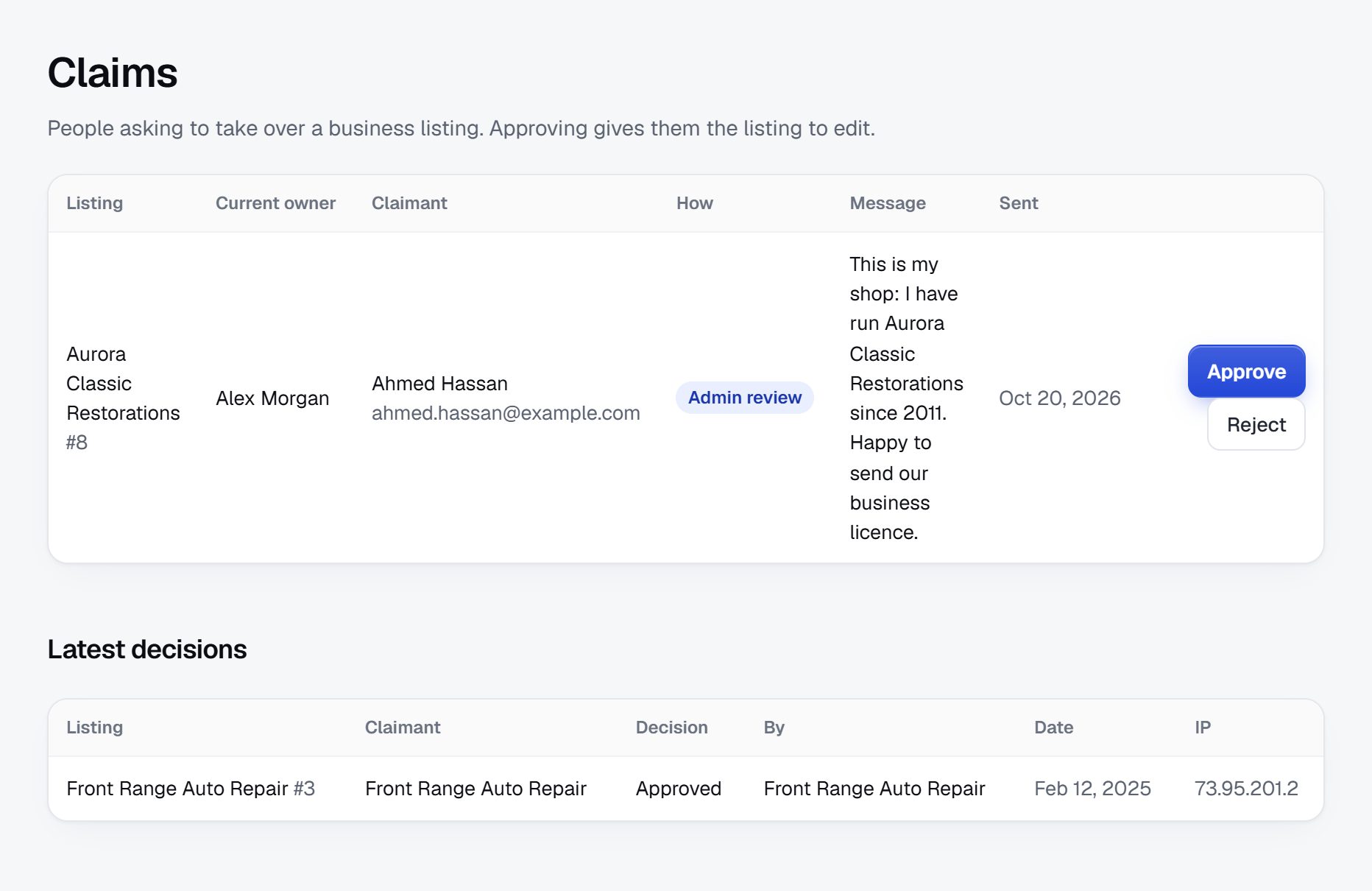
Visit on a weekday when the tasting room is quiet, ideally outside harvest. Show the owner their page and offer to add events, the tasting fee and photos. Wineries that claim keep their hours current, which matters most in a seasonal business. Yclas lets owners claim their page and reply to reviews, and featured places can be added later.
Ask every winery for its winter hours before the first cold weekend.
Handle wine responsibly: age rules, shipping limits, driving and reviews.
A winery directory promotes alcohol, even if it never sells any. Rules differ widely by country and state, so treat these as good practice and check the rules where you operate.
Points to handle
- Age gate: many wine sites ask visitors to confirm they are of legal drinking age. It may not be required for a directory, but it is common in this niche and expected by some advertisers.
- Wine shipping: shipping wine to consumers is allowed in some places and restricted or banned in others. Do not promise that a winery ships to a visitor's state; send people to the winery's own shop.
- No sales on the directory: list wine clubs and link to wineries' own information, but do not take orders or payments for wine.
- Driving: winery routes mean several tastings in a day. Show tour operators, ride services and designated driver advice on every itinerary.
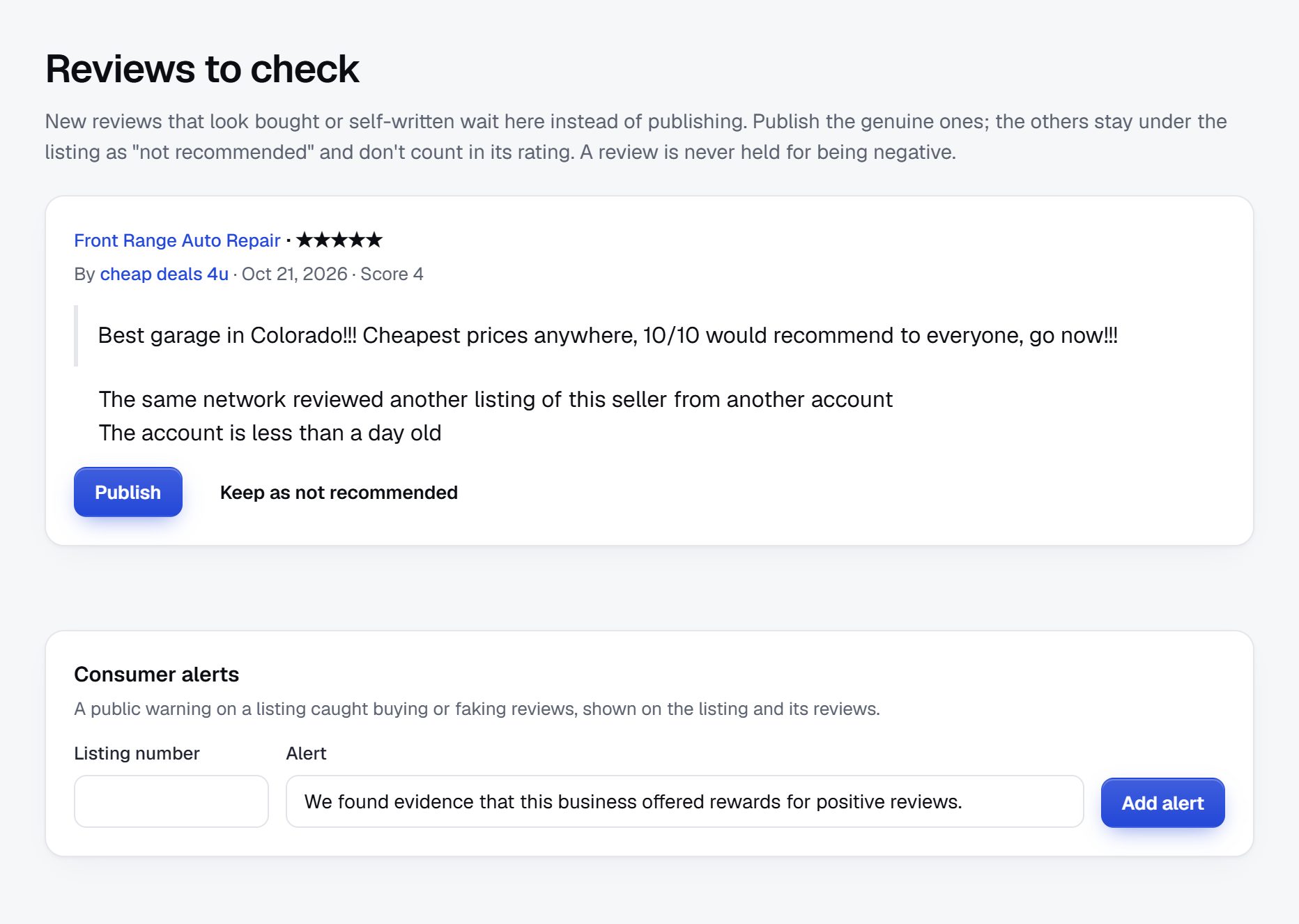
- Reviews: wineries asking club members for reviews, competitors posting bad ones. Hold reviews from new accounts and let owners reply in public.
- Event promises: venue capacity, catering rules and dates are the winery's to confirm. Show them as provided by the winery.
Publish a page that explains your age policy, how featured places are chosen and how reviews are checked.
Rank for region, route and occasion searches.
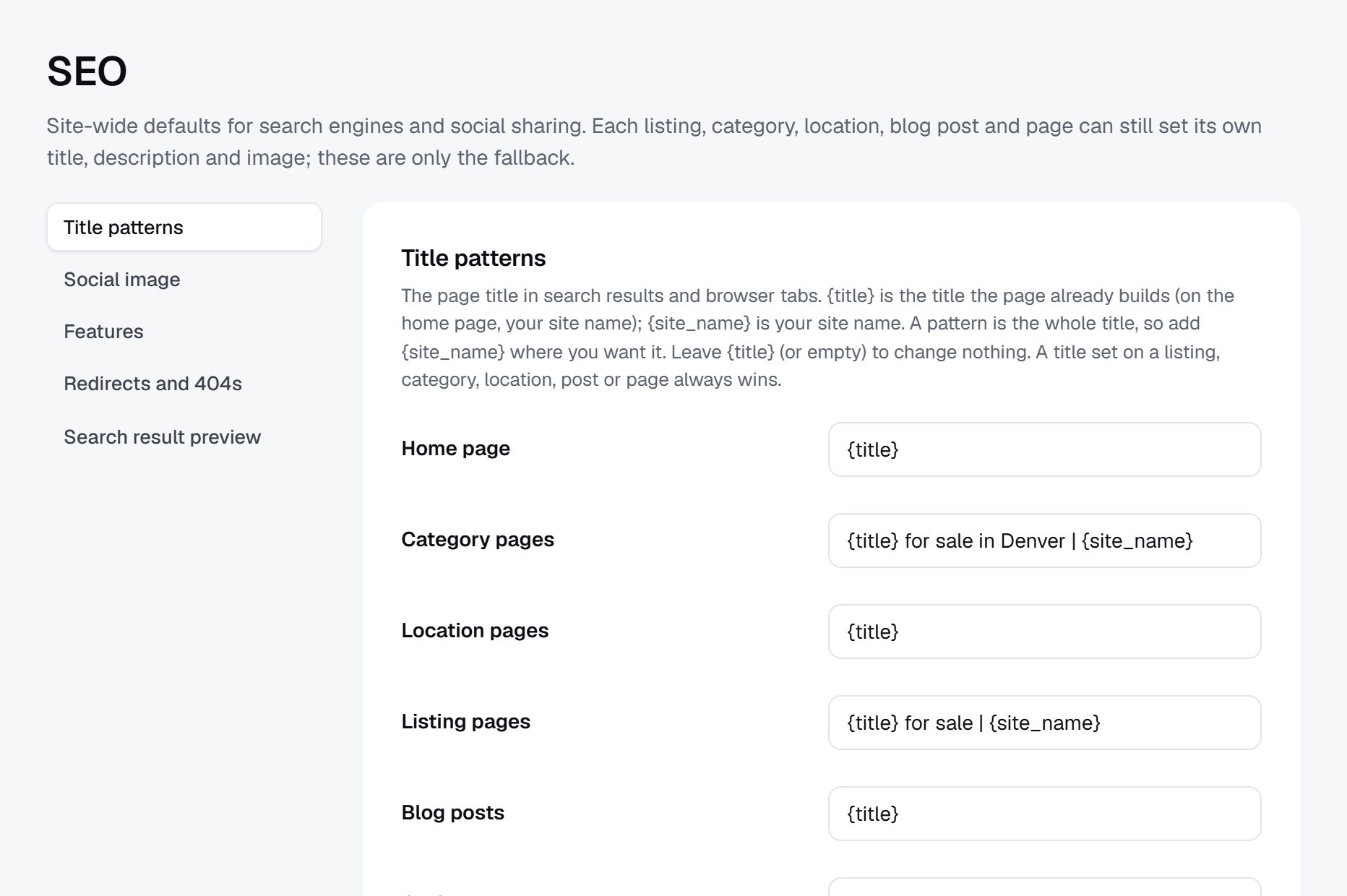
Wine travel searches name a region and often a kind of visit. Visitors search weeks before a trip, then again on the day from their phone.
Searches to target
- "wineries in Paso Robles" and "best wineries in the Finger Lakes"
- "Texas Hill Country wineries" and "Virginia wine trail"
- "wineries that allow picnics" plus the region
- "dog friendly wineries near Charlottesville"
- "winery wedding venues in Michigan"
- "wineries open on Monday" plus the region
Pages to build
- Region and subregion pages with every winery on a map.
- Filter pages that match searches: picnic-friendly, dog-friendly, walk-ins welcome, wedding venues.
- Itinerary pages: a one-day route with three wineries, a lunch stop and drive times.
- Winery pages with hours, fees, varietals, the winemaker's note and events.
Content ideas
- A first-timer's guide to the region: when to go, how tastings work, what to bring.
- A guide to the region's grapes and the wineries known for each.
- A harvest season events calendar.
- Profiles of small family wineries most visitors miss.
Launch before harvest, when visitors and wineries are both paying attention.
Wine country is seasonal. Wineries want visitors most in late summer and fall, and they plan their marketing in the quiet months before. Time your launch to have complete pages before the busy season starts.
The order that works
- List every winery with a tasting room in the region and get the wine association or trail to share the directory with members.
- Get 20 or 30 wineries to claim pages and add events, tasting fees and photos.
- Publish itineraries for the region's main roads and towns.
- Offer the tourism office and visitor center a printed card or poster with a QR code to the map.
- Ask hotels, bed and breakfasts and tour companies to recommend the itineraries to guests.
Seasons that matter
Spring release weekends, summer concerts on the lawn, harvest and crush from late summer into fall in the Northern Hemisphere, wedding season, and holiday wine club shipments. Each is a guide page and a reason to email wineries.
Launch checklist
- Every winery with a tasting room in your region, with seasonal hours.
- Age gate and responsible drinking notice in place.
- Itineraries with tour operators and ride services listed.
- Review policy and featured places policy published.
- Your domain live with SSL, plus written terms and a privacy policy.
A worked example: a winery guide for the Lake Erie shore of Ohio.
Suppose a fictional directory called Erie Shore Cellar Roads, covering the wineries along Lake Erie in northeast Ohio, from the Grand River Valley to the islands near Sandusky. The area has dozens of wineries, from old family estates growing native and hybrid grapes to newer ones planting Riesling, Pinot Noir and Cabernet Franc, plus a few making ice wine in cold winters. Most visitors drive in from Cleveland, Pittsburgh or Columbus for a day or a weekend.
Categories
- Wineries
- Estate wineries with vineyards
- Lakeside and island wineries
- Urban tasting rooms
- Events and venues
- Wedding venues
- Private tastings and parties
- Getting around
- Wine tours and limo services
- Ferries and island transport
The custom fields reflect how this region works: grape types grown (with native and hybrid grapes listed next to European ones), whether a winery serves food beyond snacks, seasonal hours, and a "reachable by ferry" checkbox for the island wineries.
Who it serves
Day trippers from the nearby cities, couples planning a weekend in a lakeside cottage, bachelorette groups booking a tour van, engaged couples looking for a vineyard wedding within driving distance of family, and locals hunting for a tasting room with live music on a summer Friday. Hotels and inns along the shore use the itineraries to answer guests at check-in.
How it started
The founder worked weekends pouring at a tasting room for two seasons and noticed that most visitors came with a list of three famous names and left surprised by the small places next door. She built the first list from the state wine association, the federal permit list and public business data, then dropped the permit holders with no tasting room. Over a winter she visited every winery on a quiet weekday, asked for summer and winter hours, and photographed the vineyards herself. She launched in May with three day-trip itineraries and a printed map left at visitor centers along the lake.
How it makes money
Every winery is listed free. Featured places on the subregion pages go to wineries that want weekday visitors. Wedding and event requests go out as quote requests to venues, which value them far more than any banner. Inns and tour companies buy banners on the itinerary pages, and the regional tourism office sponsors an ice wine weekend page each winter. The site never sells wine or takes wine club sign-ups; it describes the clubs and sends visitors to each winery.
| Place (fictional) | Type | Key details |
|---|---|---|
| Heron Bluff Vineyards | Estate winery, Grand River Valley | Riesling and Pinot Noir, walk-ins welcome, tasting fee waived with two bottles |
| Old Harbor Wine Cellar | Island winery | Reachable by ferry, open May to October, lawn seating, pizza on weekends |
| Copperfield Family Winery | Estate winery, lakeshore | Native and hybrid grapes, sweet and dry wines, kids welcome with adults |
| North Coast Vineyard Weddings | Wedding venue | Up to 180 guests, covered pavilion, approved caterers list, booked in spring |
| Lakeline Wine Tours | Tour company | Four-winery day tours, pickup in three towns, private vans for 6 to 14 |
Your first 90 days, timed to the wine calendar.
Wine regions follow a fixed rhythm: quiet winters, spring release weekends, busy summers and a harvest season when winemakers have no time for anyone. A winery directory works best when its first 12 weeks fall in the quiet part of that year, so you can visit owners while they have time and launch just before visitors arrive.
The plan below assumes you start in midwinter and launch in spring. Shift it if your region has a different season, but keep the order: data first, visits second, itineraries third and the public launch last. Do not visit wineries during crush. They will be polite, and they will forget you the moment you leave.
Count success in claimed pages with correct seasonal hours and in partners who agreed to share the guide: the wine association, a trail, the tourism office and a few inns. Traffic comes later, once the season starts and visitors begin planning. Expect most early visits on Thursdays and Fridays, when people decide on their weekend.
Keep a list of every venue that hosts weddings, with its capacity and booking season, from the first week. Event requests are likely to be your earliest income, and that list is where you start selling. Note which venues already get more inquiries than they can handle; they are unlikely buyers, while newer venues often want every request they can get.
| Weeks | Focus | Done when |
|---|---|---|
| 1-2 | Choose the region, set subregions, categories and fields for reservations, fees and grapes | A winemaker has reviewed a sample page and the field list |
| 3-4 | Combine association lists, the permit list and public business data | Every winery is listed once, with production-only ones removed |
| 5-7 | Visit or call every winery for seasonal hours, fees and event details | All listings show both summer and winter hours |
| 8-9 | Get claims and photos from the best-known wineries and the event venues | Twenty-five claimed pages, including every wedding venue |
| 10-11 | Write day-trip itineraries with lunch stops and transport options | Three itineraries are published with drive times |
| 12 | Deliver printed maps to visitor centers and inns, then launch | The tourism office and at least five inns are sharing the guide |
How to build a winery directory: three routes compared.
Wine visitors ask practical questions, and the software has to answer them: seasonal hours, a reservation policy, a tasting fee range, grape and style filters, a map of each subregion, reviews that owners can reply to, quote requests for weddings and group tastings, and an age confirmation screen. What it should not have is a shop, because selling and shipping wine is regulated in ways that vary from one state to the next.
A custom build with developers pays off if you want something unusual, such as a trip planner that checks which wineries are open on a given day and orders them by drive time. Expect a long build and ongoing changes whenever wineries change their hours or reservation systems.
A directory script or WordPress plugin on your own server suits wine writers who already have readers on a WordPress blog. You can shape every page, but you also take on spam, security updates, add-ons that fight each other and slow pages on rural phone signal.
A hosted builder such as Yclas handles opening hours, maps, claims, reviews with owner replies, event quote requests and featured places for you. The trade is less control over the code; the gain is that winter goes on visits and writing rather than servers.
Test whichever you choose with a real visitor question, such as "which wineries near the lake allow picnics and are open on a Monday in October", and see whether the filters can answer it. If they cannot, that is the gap your visitors will hit on their first visit.
| Route | Fits when | Watch out for |
|---|---|---|
| Custom build | You want an open-day trip planner or other tools no product has | Long build, upkeep, missing the spring launch window |
| Script or WordPress plugin | You already publish wine writing on WordPress | Spam, updates, add-on conflicts, speed on rural signal |
| Hosted builder | You want to launch for the coming season and spend time in the region | Confirm the fields for fees, reservations and grapes fit your region |
What a winery directory costs to run.
The software is the smallest part of the bill. Most of the cost is your time in the first months: finding the first listings, answering questions and checking what gets posted.
A winery directory adds costs for Google Places API usage, printed cards or posters for visitor centers and tasting rooms, tasting fees and fuel while visiting wineries, and perhaps a photographer for vineyard photos. Allow time to check the alcohol advertising rules before selling ads.
| Cost | Typical range | On Yclas |
|---|---|---|
| Domain | $10 to $20 a year | Your own, with SSL included |
| Software and hosting | $0 to $100+ a month, plus plugins and updates | Starter $19 a month, Professional $99 |
| Design | $0 to $100 for a theme, or a designer | 109 looks included |
| Payment fees | About 3% per payment | Your Stripe or PayPal fees; Yclas takes nothing |
| Business data | Free if you collect it, or a few cents per page of Google results | Paid to Google, with your key |
| Your time | 5 to 10 hours a week at the start | Finding listings, moderation, support |
Mistakes that keep visitors from trusting a winery guide.
- Covering only the famous estates. Visitors already know the big names from labels and magazines. The reason to use a regional guide is to find the family winery down the side road. List every tasting room, and give small places the same care in their pages. Profiles of family growers are often the pages readers share most.
- Listing permit holders as places to visit. Many permitted wineries make wine with no tasting room, or sell only through stores. Sending a couple to a locked barn door on their anniversary costs you their trust. Check every one before it goes live, and mark production-only wineries clearly if you list them at all.
- Showing exact tasting fees. Fees change every season and often depend on the flight. A range and a note on whether the fee is waived with a purchase stays accurate much longer, and wineries are happier to fill it in. Ask for the date each winery last confirmed it, and show that date on the page.
- Promising that wine ships to the visitor's state. Direct shipping rules differ by state and by country, and change. Leave shipping questions to each winery, and never imply that the directory itself can send wine.
- Itineraries that ignore driving. Three or four tastings in an afternoon is a lot of wine for the person behind the wheel. Every route page should start with tours, drivers and ride services, and suggest sharing flights. A responsible tone also matters to the tourism offices and inns you want as partners.
- Visiting during harvest. From late summer into fall, winemakers work long days in the vineyard and cellar. Arrive then and you get a hurried hello at best. Do your visits in winter and early spring, when tasting rooms are quiet.
- Treating weddings as an afterthought. For many wineries, events earn more than tastings. A venue page without capacity, indoor and outdoor options, catering rules and booking season will not produce requests. Build those fields first, and ask venues for photos of a set-up event rather than an empty lawn.
- Letting reviews turn into wine scores. Point ratings belong to critics and wine apps. Ask reviewers about the visit: the welcome, the setting, how busy it was, whether reservations mattered. That is what your readers need, and it keeps wineries from feeling judged on taste alone.
- One map for the whole state. A pin map of 300 wineries across a state helps nobody plan a day. Break it into subregions and trails that can be visited in one trip, and give each its own page, with a suggested order and drive times between stops.
Wine country terms for directory founders.
Winemakers, visitors and tourism partners use these terms, and several belong in your fields.
| Term | What it means |
|---|---|
| AVA | American Viticultural Area, a US grape-growing region with defined boundaries, named on labels. |
| Appellation | The official place name a wine is labeled with, such as a region, county or state. |
| Estate grown | Made from grapes the winery grows on land it owns or controls. |
| Varietal | A wine named after its main grape, such as Riesling or Cabernet Franc. |
| Vintage | The year the grapes were harvested. |
| Tasting flight | A set of small pours offered for a tasting fee. |
| Fee waived with purchase | A common policy where the tasting fee is dropped if the visitor buys bottles. |
| Wine club | A membership that sends members wine several times a year, often with tasting perks. |
| Crush | The harvest and pressing season, the busiest time of the winery year. |
| Release weekend | A weekend when a winery opens new vintages to visitors and club members. |
| Direct-to-consumer shipping | A winery sending wine straight to a buyer's home, allowed in some places and restricted in others. |
| Hybrid grapes | Grapes bred from European and native American vines, common in colder regions. |
| Ice wine | A sweet wine made from grapes left to freeze on the vine. |
| Library wine | Older vintages a winery has kept back and sells or pours on special occasions. |
The same steps for a winery directory on Yclas.
- Describe your directoryThe setup wizard writes the categories, an About page and example listings from one sentence.
- Add fieldsHours, services, areas served, prices: the details people search by, as filters.
- Fill itImport businesses from a spreadsheet or Google Places, then check them.
- Bring owners inOwners claim their page, update it and answer reviews.
- EarnSwitch on featured places, banners or memberships when visits arrive.
How much should I set aside to start a winery directory?
Hosting, a domain and a modest Google Places API bill cover the site. Add printing, travel and tasting fees for visiting wineries, which is where most of the early money and time goes.
Do I need an age gate on a winery directory?
It depends on where you operate and whether you run wine ads, so check the rules that apply to you. Many wine sites use one, and some advertisers expect it.
Can I sell wine or take wine club sign-ups on the directory?
Do not sell wine: sales and shipping are regulated and vary by state and country. Describe the wine club and send visitors to the winery's own site to join.
How do I get wineries to pay for a directory?
Start with what brings them visitors: featured places on region pages, memberships with events and photos, and wedding and event requests. Hotels, tours and tourism offices are often readier to pay than the wineries themselves.
Should I cover a famous region or a smaller one?
A smaller or newer region is usually easier: fewer competing guides, wineries hungry for visitors, and a tourism office looking for help.
Where do I get a list of wineries?
Regional wine associations and trails, US federal permit lists, tourism office brochures and a Google Places import. Check each winery, since many permit holders have no tasting room.
How do I keep winery hours current?
Ask every winery to claim its page, remind them before each season changes, and let visitors report wrong hours. Winter and harvest hours differ at many wineries.
Should I cover cideries and fruit wineries too?
Yes, in their own categories. Many wine regions also have orchards, and visitors happily mix a cider stop into a winery day, while purists can filter them out. In colder regions, fruit and honey wines are often part of what makes the area distinct.
How do I handle wineries that require reservations?
Make reservations a required field with clear options: walk-ins welcome, recommended, or appointment only. Send visitors to the winery's own booking page or phone number, and do not take reservations on the directory yourself. Appointment-only wineries should also show how far ahead visitors need to book, since some fill up weeks before a summer weekend.
Can I list wine prices on the directory?
A tasting fee range is useful. Bottle prices change with each vintage and quickly go stale, so leave them to the winery's own site and describe the styles instead. Visitors care more about whether a winery makes dry or sweet wines than about the price of one bottle.
How do I deal with a winery that disputes a review?
Apply your published review policy, let the owner reply in public, and remove only reviews that break the rules, such as personal attacks or reviews of the wrong place. Keep the conversation polite: the region is small and wineries talk to each other. A dispute handled fairly in public often wins you more trust than the review cost.
When is the best month to launch a winery directory?
In the Northern Hemisphere, spring is usually best, a few weeks before release weekends and the start of the summer season. Avoid launching during harvest, when neither visitors nor wineries are paying attention to anything new. A second, smaller push in late winter around holiday gift guides and ice wine events can follow once the site is established.
Related pages.
The parts of Yclas this leans on.
You know the region and its wineries. Now build your winery directory.
Describe your site in a sentence and the setup wizard writes the categories, example listings and a look. Free for 15 days, no credit card.
Start my directory