How to build an accountant directory that small businesses actually use.
This guide covers how to build a directory of accountants and bookkeepers for one area or one kind of client: why business owners struggle to find the right one, the services and software they filter on, how to earn from firms, where the first hundred listings come from, how to keep qualifications honest, the searches to rank for, and a launch timed to tax season.
Free for 15 days · No credit card · Plans from $19 a month
Match business owners to accountants who know their kind of work.
Finding an accountant is a recurring headache for small business owners, freelancers and families with complicated taxes. They want someone who knows their kind of business, uses the software they already use, answers email, and charges a price they can predict. A map search shows dozens of firms with nothing to tell them apart, and national sites list only a fraction of local practices.
Who searches
- New business owners who need bookkeeping, payroll and their first business tax return.
- Freelancers and contractors dealing with self-employment tax and quarterly estimated payments.
- Growing companies moving from a part-time bookkeeper to a firm that can handle audits, lenders or investors.
- Individuals with rental property, crypto, foreign income or an inherited estate.
Pick your angle
An accountant directory is strongest when it matches clients to expertise. Choose one area, such as a city or a state, or one industry across a wider region: accountants for restaurants, for farms, for dental and medical practices, for real estate investors, for nonprofits. Another angle is software, since many owners want an adviser who knows QuickBooks, Xero or Sage and will not make them switch.
Today people ask their bank, their lawyer, other owners at the chamber of commerce, or a local business Facebook group. The answer is usually "try my accountant", who may not be taking new clients.
Show whether a firm is taking new clients. It is the first question every business owner asks.
Let business owners filter by service, industry, software and fee type.
Keep categories to the main kinds of help, and use fields for what really separates one firm from the next. A restaurant owner and a software startup both "need a CPA", yet they need very different people.
- Services as checkboxes: bookkeeping, payroll, tax preparation, tax planning, audit, advisory, fractional CFO.
- Industries served: construction, restaurants, healthcare, real estate, ecommerce, nonprofits, farming.
- Accounting software the firm works with: QuickBooks, Xero, Sage, FreshBooks and others.
- Qualifications as the firm states them: CPA, enrolled agent, chartered accountant, certified bookkeeper.
- Fee structure: fixed monthly packages, hourly, per return.
- Taking new clients, with the date it was last confirmed.
- Remote or local: whether they work with clients online across the state or prefer meeting in person.
Make services, location and "taking new clients" required. A profile without them answers none of the questions people arrive with.
| Category | Example listings | Fields people filter on |
|---|---|---|
| Tax preparation | Personal returns, self-employed returns, rental property | Return types, fee per return, languages |
| Bookkeeping | Monthly bookkeeping, catch-up and cleanup work | Software used, monthly fee, remote or local |
| Payroll | Small business payroll, contractor payments | Number of employees, software, states covered |
| CPA firms | Year-end accounts, audits, business tax | Industries served, qualifications, taking new clients |
| Advisory and fractional CFO | Cash flow planning, budgeting, fundraising support | Company size, industries, hourly or retainer |
| Specialist practices | Nonprofits, farms, medical practices, trusts and estates | Sector experience, filings handled, location |
Industry and software are filters general business listings rarely offer, so ask firms for both when they claim their page.
Earn from firms with featured places and memberships, timed to the tax calendar.
Accounting firms spend on marketing in waves. Many want new clients before tax season and none during it, when they are too busy to take on more work. Keep listings free for every firm so the directory is complete, then sell extras once firms can see business owners using it.
- Featured places in one service and area, such as bookkeeping in Denver, sold by the month. Interest is highest in the months before the main filing deadlines.
- Firm memberships for practices that want a full profile with each accountant, photos, services and a featured spot.
- Quote requests: a business owner describes what they need and chooses firms, and the request is sent to each of them. Firms tend to value these, because they are real prospects with a stated need. Charging for them works once volume is steady.
- Banner spaces for banks, payroll providers, business insurance brokers and software resellers.
Some professional bodies have rules on how members advertise and on paying for referrals, so a lead-based model is worth checking with an adviser where you operate before you start charging per request.
The months before tax season are when firms buy visibility. Launch free listings well before then.
| Model | Works when | Switch it on |
|---|---|---|
| Featured places | Several firms compete in one service and area | A season before the filing deadlines |
| Firm memberships | Practices want full profiles for each accountant | Once firms are editing their own pages |
| Paid quote requests | Business owners send needs to chosen firms | After a few months of free requests |
| Banner spaces | Banks and software sellers want business owners | When you can show visitor numbers |
| Sponsored deadline calendar | A firm wants to back a yearly tax calendar | When the calendar brings steady visitors |
Seed firms from public sources, then sign up small practices one by one.
Accountants are easier to find than most professionals: they advertise, they join associations and they appear in every local business list. The work is adding the details that make the directory worth using.
- Import accounting firms and tax preparers from Google Places with your own Google key. Names, addresses and opening hours come in (no photos); fill in services and software from each firm's website.
- Use public registers with care. State boards of accountancy and professional bodies often run public lookups of licensed CPAs. Use them to confirm a license, and check their terms before copying any data.
- Software partner lists: several accounting software companies publish finders of certified advisers, which show who works with which software.
- Chambers of commerce and small business development centers keep lists of service providers and host workshops where accountants speak.
- Seek out solo bookkeepers. Many work from home, have no website and live on referrals. A good profile with reviews helps them more than anyone.
When a firm claims its page, ask for three things first: services, industries and whether it is taking new clients. Those three turn a name on a map into a listing a business owner can act on. A spreadsheet of the answers can go back into the site as a CSV import when you collect them by phone.
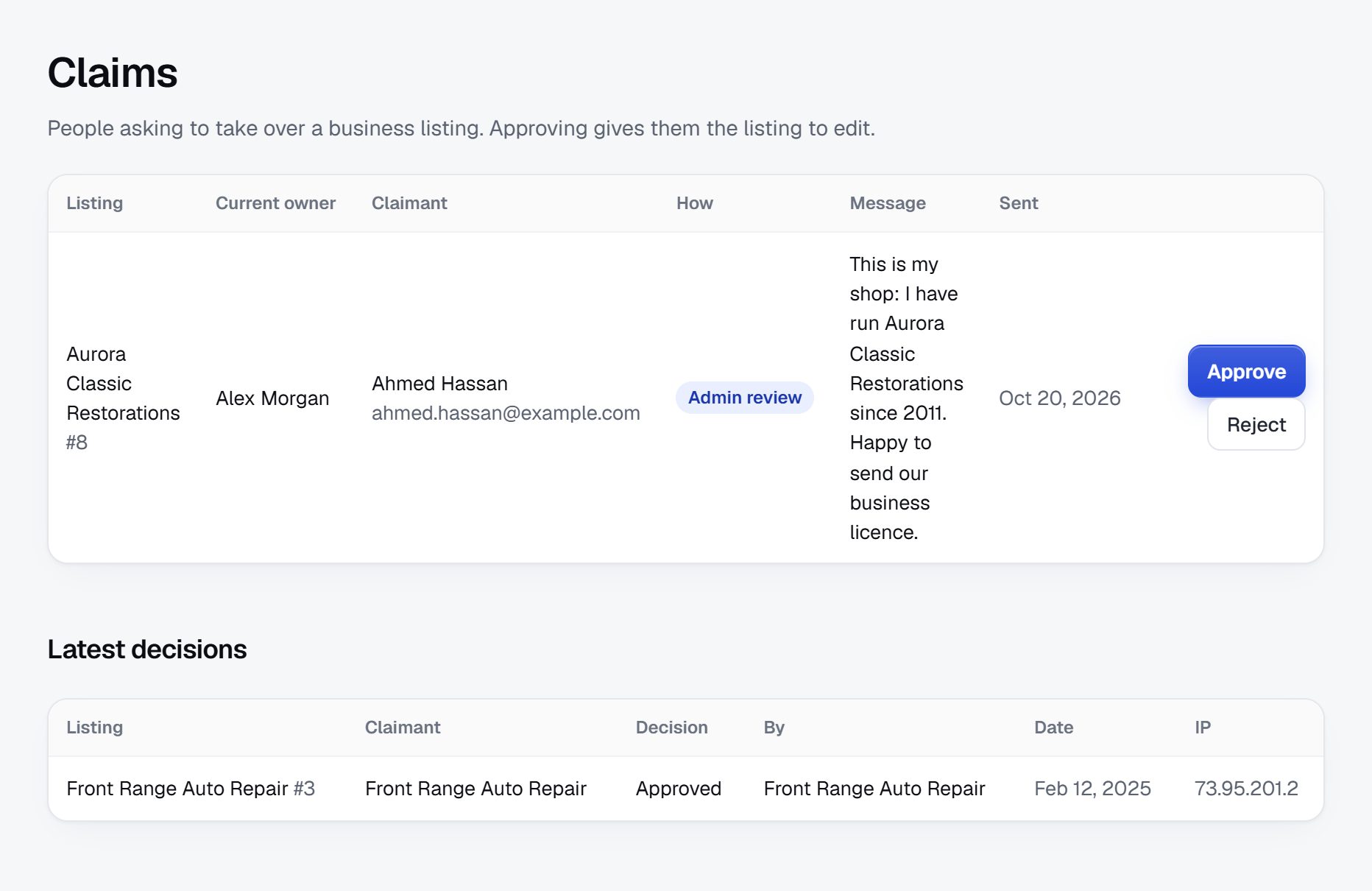
Show qualifications honestly and protect clients from tax preparer scams.
Business owners hand an accountant their bank records, payroll and tax identity. The directory should make it easy to check who they are dealing with.
Qualifications
- Separate titles clearly. A CPA, an enrolled agent and a bookkeeper do different work, and not every title is regulated in the same way. Explain the difference on a guide page.
- Show qualifications as the firm states them, with a license number where one exists, and tell people to confirm it on the official register.
- Remove listings when you learn a license has been revoked, and give visitors a report button.
Scams to watch for
- Ghost preparers who promise unusually large refunds, charge a share of the refund and refuse to sign the return.
- Fake firms set up during tax season to collect identity documents and bank details.
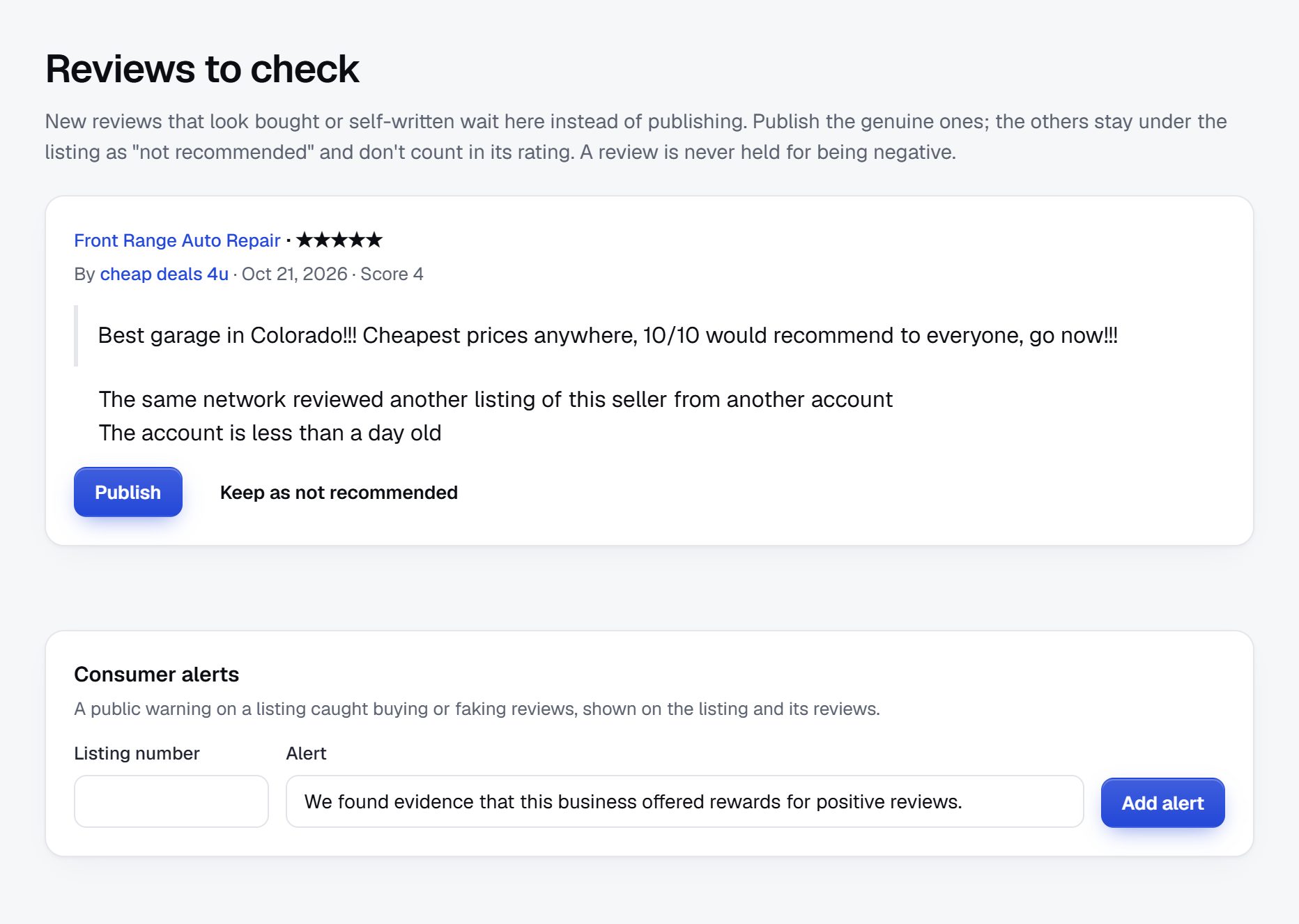
- Review manipulation: bursts of five-star reviews from new accounts, or a competitor posting negative ones.
Hold new listings for approval in the weeks before filing deadlines, when fake preparers are most active, and look twice at any firm with no website, no address and no license number.
Advice for business owners
Publish a short guide: confirm the license, ask for an engagement letter with fees in writing, never sign a blank return, and never let a refund go to an account that is not yours. Tax rules, and who may prepare returns for a fee, differ by country and state, so check the rules where you operate.
Explain what each qualification means. Many business owners cannot tell an enrolled agent from a bookkeeper.
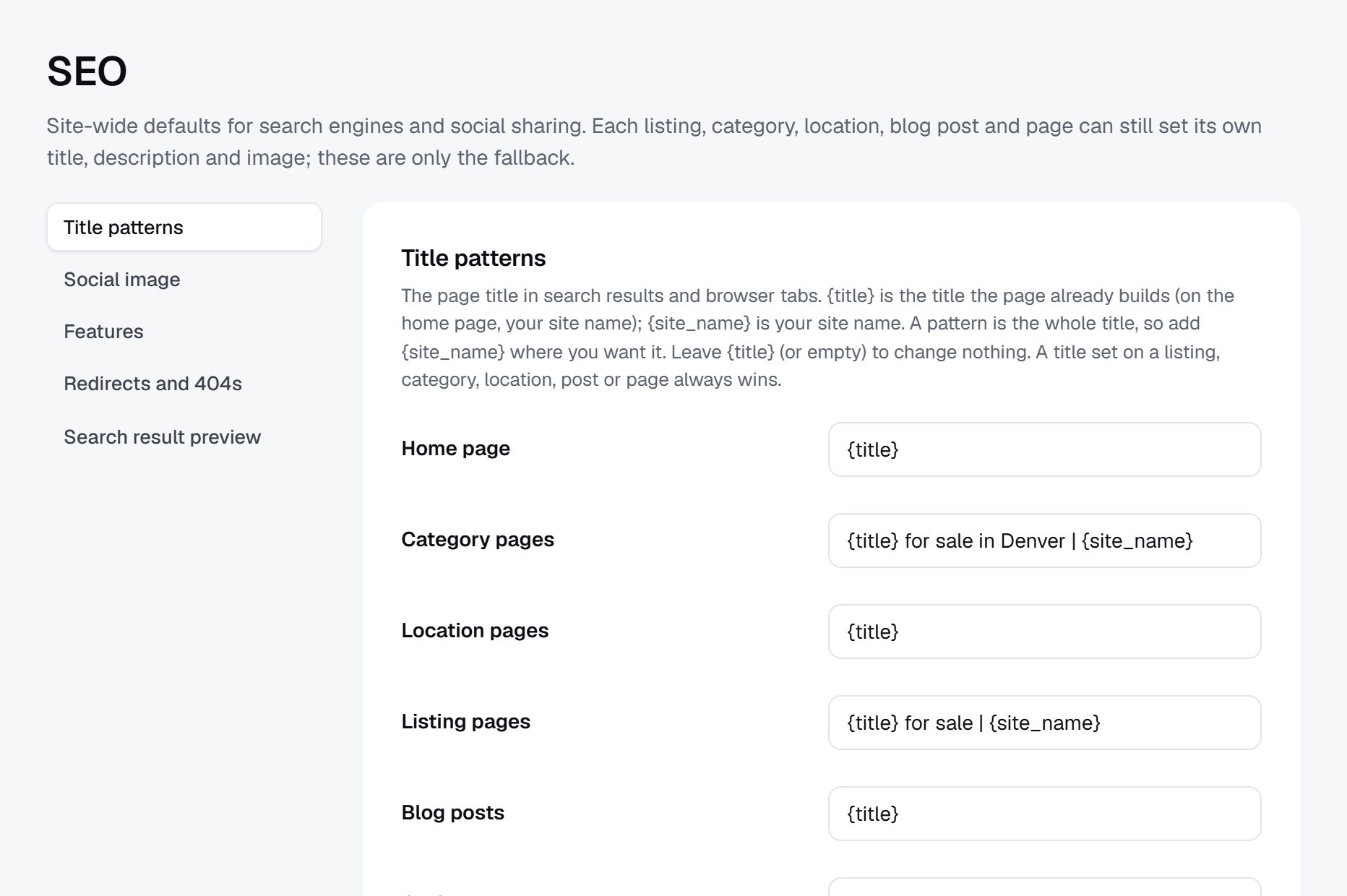
Rank for the service, the industry and the place.
Accountant searches combine a service, a kind of client and a place, and they climb sharply in the weeks before tax deadlines.
- "small business accountant in Charlotte"
- "bookkeeper for restaurants near me"
- "CPA for real estate investors Atlanta"
- "QuickBooks bookkeeper remote"
- "tax preparer that speaks Spanish Houston"
- "how much does a bookkeeper cost per month"
Pages to build
- Service plus city: bookkeeping, payroll, tax preparation and CPA firms in each city you cover.
- Industry pages: accountants for contractors, for nonprofits, for farms, for medical practices.
- Software pages: QuickBooks, Xero and Sage advisers in your area.
- Guides: CPA vs enrolled agent vs bookkeeper, what to bring to a first meeting, how to switch accountants mid-year, and a tax deadline calendar for your state, updated every year.
- A fee guide that explains how local firms charge, monthly packages versus hourly, drawn from what listed firms publish.
Publish the deadline calendar early in the year and update it whenever dates move. It is the page owners bookmark and share, and it brings them back to the directory every season.
Launch in the fall so firms are listed before tax season.
The accounting year sets your calendar. In the United States, the main business and personal filing deadlines fall in the first months of the year, and many owners look for a new accountant in the fall and early winter before them. Other countries run different tax years, so plan around the deadlines where you operate. Aim to have every firm in your first area listed, and the first ones claimed, by late fall.
First area
Pick one city or region, or one industry you know from the inside. If you have worked in restaurants or construction, an accountant directory for that trade gives you contacts on both sides from day one.
Partners
- Small business development centers, chambers of commerce and coworking spaces.
- Banks and credit unions that open business accounts.
- Lawyers who form companies and want somewhere to send new clients for accounting.
- Local business groups on Facebook and LinkedIn.
Checklist
- Seed every firm and bookkeeper in the first area.
- Write the qualifications guide and the scam guide.
- Invite firms to claim their pages, starting with solo bookkeepers.
- Publish the deadline calendar and two service guides.
- Switch on quote requests and make sure each one is answered.
- Offer featured places after the first tax season.
A worked example: an accountant directory for contractors in the Twin Cities.
To see how the parts connect, imagine Trade Ledger Twin Cities, a directory of accountants and bookkeepers who work with contractors and the building trades around Minneapolis and St. Paul. The site, its founder and the firms listed are all invented for this guide.
How it is organized
- Bookkeeping
- Monthly bookkeeping for contractors
- Catch-up and cleanup
- Tax
- Business returns
- Owner and household returns
- Payroll and compliance
- Payroll for crews
- Sales and use tax
- Advisory
- Job costing and bidding
- Fractional CFO
Fields cover trades served (general contracting, remodeling, electrical, plumbing, HVAC, roofing), software, crew size, qualifications and whether the firm is taking new clients.
Who it serves
The typical visitor runs a trade business that has grown past what the owner's spouse or a part-time bookkeeper can handle. Some need job costing so they stop underbidding. Others have won a public project and need certified payroll, or have been told by a surety agent that bigger bonds will require better financial statements. A smaller group is new owners who left a larger company to start their own crew and have never filed a business return. All of them want the same thing: someone who already knows what a draw schedule is, so they do not pay to teach their accountant the trade.
How it started
The founder spent eight years running the office of a remodeling company and knew how hard it was to find an accountant who understood retainage and work-in-progress schedules. She seeded the site from business listings and the adviser finders that accounting software companies publish, then called every firm to ask one question: do you work with contractors, and which trades? Only firms that said yes went live. She handed out cards at trade association meetings and at the counter of two plumbing and electrical supply houses, where owners stand in line every morning.
How it makes money
Profiles are free. Firms pay for featured places in one service, such as payroll for crews, and a few pay for a membership that lists each accountant with photos. Banner spaces suit surety bond agents, equipment lenders and contractor insurance brokers, who want the same owners. Quote requests are free to firms while the founder checks how the professional rules treat paid referrals. Each month she sends every claimed firm its views, messages and requests, which has done more to sell memberships than any sales call.
| Listing | Typical fee | Key details |
|---|---|---|
| Northloop Contractor Books, Minneapolis | Monthly packages from about $450 | Job costing in QuickBooks, crews of 5 to 40, taking new clients |
| Kowalski Tax and Bookkeeping, St. Paul | Per return, quoted after a review | Enrolled agent, sole proprietors and small LLCs, Polish and English |
| Ramsey Ridge CPA Group, Roseville | Hourly or annual retainer | CPA firm, reviewed statements for bonding, work-in-progress schedules |
| Ironline Payroll Partners, Bloomington | Per employee per month | Union and non-union crews, certified payroll for public jobs |
| Hennepin Catch-Up Bookkeeping | Fixed project price after a free review | Cleanup of one to three years of books, Xero and QuickBooks |
These firms are fictional.
A 90-day plan built around the tax calendar.
The accounting year decides when your 90 days should run. Firms will happily talk about a new directory in late summer and fall, and will not return your calls between February and the spring filing deadline. Count back from the start of tax season and begin at least three months earlier, so your claim drive lands in the quiet months and your listings are complete when business owners start looking.
The first half of the plan is research: every firm and solo bookkeeper in your area or industry, with services, software and qualifications filled in. The second half is relationships: phone calls, chamber events and the first quote requests. Treat each quote request as a test of the directory. If a request goes unanswered, call the firm, find out why, and fix the cause, whether that is a wrong email address or a firm that is not taking clients after all.
The plan assumes one city or one industry, and one person working on it part time. If you start in an industry rather than a place, swap the city pages in weeks nine and ten for pages by trade or by type of practice, and recruit through that industry's association instead of the chamber of commerce.
| Weeks | Focus | Done when |
|---|---|---|
| 1-2 | Choose the area or industry and list firms | A spreadsheet holds every firm and solo bookkeeper in scope, with website and phone |
| 3-4 | Add services, software and qualifications | Each firm has services, software, industries and stated credentials, and every CPA is checked on the state board's lookup |
| 5-6 | Import and publish the trust pages | Firms show on the map, and the qualifications guide and the scam guide are live |
| 7-8 | Run the claim drive | Every firm has been contacted, and the first 25 have confirmed whether they take new clients |
| 9-10 | Deadline calendar and guides | The state deadline calendar and two service guides are live and linked from every city page |
| 11-12 | Quote requests and partners | Quote requests are on, each gets a reply within two working days, and two chambers or development centers share the site |
Three ways to build an accountant directory.
An accountant directory leans on filters more than most. Business owners narrow by service, industry, software and fee type at once, so the tool must handle several checkbox fields as search filters. It also needs quote requests that go only to the firms a visitor picks, pages that owners can claim and keep current, and a way to show when the taking-new-clients answer was last confirmed.
Commissioning a custom build suits a founder with a specific idea, such as a matching quiz that asks about revenue, staff and software and suggests three firms. It is the slowest and most expensive route, and you carry every bug and security fix, which matters when visitors describe their finances.
Self-hosting a directory script or a WordPress directory plugin gives you plenty of control for less money. Look closely at how it handles several filters at once and at its quote request feature, because those two are often weak or sold as separate add-ons, and every add-on is another thing to update.
A hosted builder such as Yclas provides custom fields as search filters, claims, quote requests and hosting in one place, so you can put your hours into firm data and guides. You accept the platform's limits in exchange. Try your full set of filters with ten real firms before importing the rest. Whichever route you take, the filters are the product here: an accountant directory that cannot answer which bookkeepers near me use Xero and work with restaurants is just another map.
| Route | Fits when | Watch out for |
|---|---|---|
| Custom build | You want a matching quiz or a feature no package has | Slow start, high cost, and sensitive financial messages to secure |
| Script or WordPress plugin on your server | You can maintain software and want to tinker | Weak multi-filter search and quote requests sold as add-ons |
| Hosted builder | You want to launch before the next tax season | Platform limits; test your filters with real firms first |
What an accountant directory costs to run.
The software is the smallest part of the bill. Most of the cost is your time in the first months: finding the first listings, answering questions and checking what gets posted.
Expect modest costs beyond your time: usage charges on your Google key for importing firms, printed material for chamber events, and possibly a fee if you buy a professional body's member list. Have your terms and any per-request fees checked by an adviser where you operate.
| Cost | Typical range | On Yclas |
|---|---|---|
| Domain | $10 to $20 a year | Your own, with SSL included |
| Software and hosting | $0 to $100+ a month, plus plugins and updates | Starter $19 a month, Professional $99 |
| Design | $0 to $100 for a theme, or a designer | 109 looks included |
| Payment fees | About 3% per payment | Your Stripe or PayPal fees; Yclas takes nothing |
| Business data | Free if you collect it, or a few cents per page of Google results | Paid to Google, with your key |
| Your time | 5 to 10 hours a week at the start | Finding listings, moderation, support |
Mistakes that sink accountant directories.
- Launching during tax season. Firms are buried from late winter to the spring deadline and will ignore claim requests, however polite. Seed and invite in the quieter months, and save your busy-season energy for helping business owners who arrive. If you do launch in March, expect almost no claims until May, and plan your outreach around that.
- Treating every title as the same thing. Lumping CPAs, enrolled agents and bookkeepers together confuses visitors and annoys the firms. Label each credential, explain what each can do on a guide page, and let visitors filter by it.
- Leaving the taking-new-clients answer to rot. A yes from last spring means little in December. Date the answer, ask firms to confirm it each quarter, and drop it to unknown when they do not.
- Inviting documents through messages. Visitors keen to get a quote will attach returns, bank statements and Social Security numbers. Tell them not to on the form itself, and ask firms to collect documents through their own secure systems once they take the client on.
- Approving preparers who promise big refunds. A listing that advertises maximum refunds or fees as a share of the refund matches a well-known scam pattern. Reject it, or hold it until you have checked the preparer and the wording. One such listing on a page signals to every careful owner that you do not screen.
- Organizing by credential instead of need. Owners arrive with a problem, such as messy books, payroll for a first employee or a letter from the tax agency. Build categories around those needs and show credentials inside each profile, where a visitor who already knows they want a CPA can still filter for one.
- Building city pages with nothing on them but a list. A page of twelve firm names gives searchers no reason to stay. Add a short introduction on local deadlines, the industries those firms serve and the languages they speak, plus a link to the fee guide. That context is also what lets the page rank.
- Letting quote requests go unanswered. One ignored request teaches an owner that the directory does not work. Track every request, nudge firms that have not replied after two days, and remove quote requests from firms that never answer.
- Mixing remote and local firms without saying which. An owner who wants to meet in person is frustrated to find that half the results only work online. Make remote or local a required field and a filter, and show on the map only the firms that actually meet clients at an office.
Accounting terms a directory founder should know.
Firms will use these terms on their first call with you, and several belong in your fields.
| Term | What it means |
|---|---|
| CPA | Certified public accountant, a title licensed by a state board after exams and experience requirements. |
| Enrolled agent | A tax practitioner licensed by the IRS who can represent taxpayers before it. |
| PTIN | A preparer tax identification number, which paid preparers of federal returns in the United States must have. |
| State board of accountancy | The state body that licenses CPAs and usually runs a public license lookup. |
| Engagement letter | A written agreement setting out the work an accountant will do and the fees. |
| Catch-up bookkeeping | Bringing months or years of unrecorded or messy books up to date in one project. |
| Month-end close | The routine of reconciling accounts and finishing the books for a month. |
| Chart of accounts | The list of categories a business uses to record income, costs, assets and debts. |
| Estimated tax payments | Payments made during the year by people and businesses whose income has no tax withheld. |
| Fractional CFO | A senior finance adviser who works part time for several companies. |
| Reviewed financial statements | Statements a CPA has checked with limited procedures, less than an audit, often requested by lenders and surety companies. |
| Tax resolution | Work to settle back taxes, penalties or disputes with a tax agency. |
| Job costing | Tracking income and costs for each project, central to contractors and agencies. |
| Filing extension | Extra time to file a return, which usually does not extend the time to pay. |
The same steps for an accountant directory on Yclas.
- Describe your directoryThe setup wizard writes the categories, an About page and example listings from one sentence.
- Add fieldsHours, services, areas served, prices: the details people search by, as filters.
- Fill itImport businesses from a spreadsheet or Google Places, then check them.
- Bring owners inOwners claim their page, update it and answer reviews.
- EarnSwitch on featured places, banners or memberships when visits arrive.
How much should I budget to start an accountant directory?
Beyond the platform, a small budget covers a domain, Google import charges and some printing for one area. The real investment is the hours spent adding services and calling firms.
Do I need permission to list accounting firms?
Business names, addresses and phone numbers are generally public, but check the terms of any register you copy from. Mark pages as unclaimed and remove a firm that asks.
Should I include bookkeepers and tax preparers, or only CPAs?
Include them, clearly labeled. Many small businesses need a bookkeeper more than a CPA, and explaining the difference is part of what makes the directory useful.
How do I get firms to claim their pages?
Contact them in the quiet months before tax season and show them the searches already reaching their page. Solo bookkeepers and small firms tend to respond first.
How does an accountant directory make money?
Featured places in each service and area, firm memberships, paid quote requests once volume is steady, and banners for banks and software sellers.
Can I charge firms for every quote request?
It can work, but some professional bodies have rules on advertising and referral payments. Ask an adviser where you operate before you charge per request.
How can a small directory compete with Google and the large sites?
Answer what they leave out: industries served, software used, fees and whether the firm is taking clients. Those filters are what bring business owners back.
Should I include firms that only work online?
Yes, as long as you say so on the profile and offer a remote or local filter. Online firms widen the choice in small towns, while many owners still want someone they can meet. Licensing and tax rules can differ by state, so ask remote firms which states they serve and show that on the profile.
What do I do with firms that are not taking new clients?
Keep them listed, because people still search for them by name, and show the status clearly with the date. Offer to switch it back as soon as they have room.
Is one industry a better start than one city?
Often, if you know the industry well. A directory of accountants for dentists or for farms can cover a whole state, and owners in that trade share it among themselves.
What should visitors never send through the directory?
Tax returns, bank statements, Social Security numbers and login details. Say so on every quote form, and leave document exchange to the firm once it has taken the work. A short description of the business, its size and the help needed is all a firm needs to reply.
Can I publish typical bookkeeping fees for my area?
Yes, as ranges drawn from what listed firms publish, with the date and the number of firms behind them. Never quote one firm's price unless the firm gave it to you. Update the ranges once a year, after tax season, when firms set their prices for the next cycle.
Related pages.
The parts of Yclas this leans on.
You have the plan. Now help business owners find their accountant.
Describe your site in a sentence and the setup wizard writes the categories, example listings and a look. Free for 15 days, no credit card.
Start my directory