How to build a dog walking marketplace for the weekday walks owners cannot do.
This guide covers a marketplace where working dog owners find walkers for weekday walks, puppy visits and trail hikes: choosing neighborhoods and walk types, the schedule and dog details owners filter on, trial walks arranged through on-site messages, walk packages sold as listings, signing up the first walkers, leash, pack size and key safety, the searches to rank for, and a launch timed to the return to work and school routines.
Free for 15 days · No credit card · Plans from $19 a month
Match owners with a walker who comes at the same time every weekday.
Dog walking is a routine, not a one-off purchase. An owner who works long days needs the same walker at the same time, three or five days a week, for years. Puppies need a midday break, older dogs need a slow stroll, and high-energy breeds need an hour of real exercise. Getting the match right once keeps a customer for a long time.
The two sides
- Walkers: professional walkers with a van for group walks, students with free afternoons, retirees who like the exercise, and trainers who offer training walks between classes.
- Owners: office workers and hospital staff on long shifts, people recovering from surgery, older owners who can no longer manage a strong dog, and owners of puppies or reactive dogs.
Pick the angle
- A few neighborhoods. Walkers string several walks together on foot or with short drives, so a site covering a whole metro area spreads them too thin. Start with dense districts full of apartment dogs.
- Walk type. Solo walks, small group walks, trail hikes where dogs may run off leash legally, or training walks for reactive dogs.
- Schedule. Weekday lunchtime walks are the core; early morning, evening and weekend walks serve shift workers.
Today owners find walkers through building notice boards, neighbors, dog park conversations, Nextdoor, and apps such as Rover and Wag. Professional walkers want steady weekly clients close to their existing route, not one-off walks across town. A site organized by neighborhood and weekday gives them exactly that.
The best walker is the one who already walks three dogs on your street. Build the site around neighborhoods and weekdays.
Put the schedule, the route and the pack size in searchable fields.
Categories stay simple: solo walks, group walks, puppy visits, trail hikes, training walks, and walks for senior or special-needs dogs. The real work is in the fields.
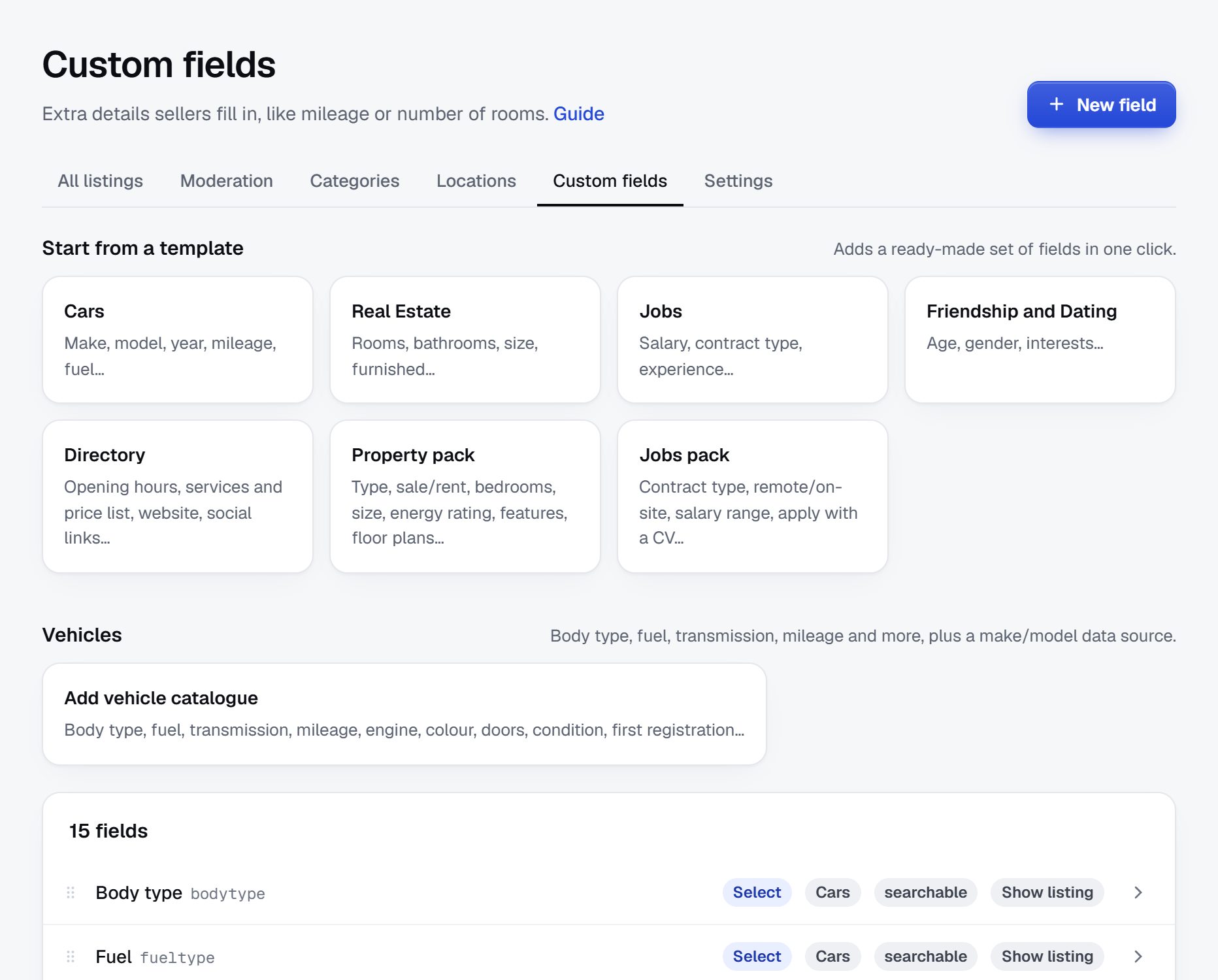
For the walker: neighborhoods covered, weekdays available, time windows (early morning, midday, late afternoon), walk lengths offered (20, 30, 45 or 60 minutes), the most dogs walked together, whether they accept large or reactive dogs, how they handle keys (lockbox, doorman, key copy), transport for hikes, and whether they send a short report with photos after each walk.
For the dog, which the owner describes in the first message: size and breed, age, how it behaves with other dogs, leash manners, vaccinations, and any medical needs or mobility limits. A walker who reads that a dog pulls hard and lunges at bikes can say yes or no before the trial walk.
Weekday availability is the filter owners care about most. In Yclas, custom fields can be a checkbox for each weekday and a dropdown for the time window, each shown as a search filter, and a map shows which walkers cover the owner's street.
| Category | Example listings | Fields owners filter on |
|---|---|---|
| Solo walks | 30-minute midday walk, one dog only | Weekdays, time window, walk length, neighborhood |
| Group walks | Up to four small dogs on a park loop | Most dogs per walk, dog size, temperament required |
| Puppy visits | 20-minute potty break and play | Puppy age, visits per day, crate routine |
| Trail hikes | Two-hour trail hike with van pickup | Hike length, transport, on or off leash, fitness needed |
| Training walks | Loose-leash practice for reactive dogs | Methods used, reactive dogs accepted, certification (self-declared) |
| Senior and special-needs walks | Slow 20-minute stroll with tablets given | Mobility, medication, walk length |
Make "most dogs per walk" a required number on every listing, because careful owners ask about it before anything else.
Sell walks in sets, and keep your cut below what the big apps take.
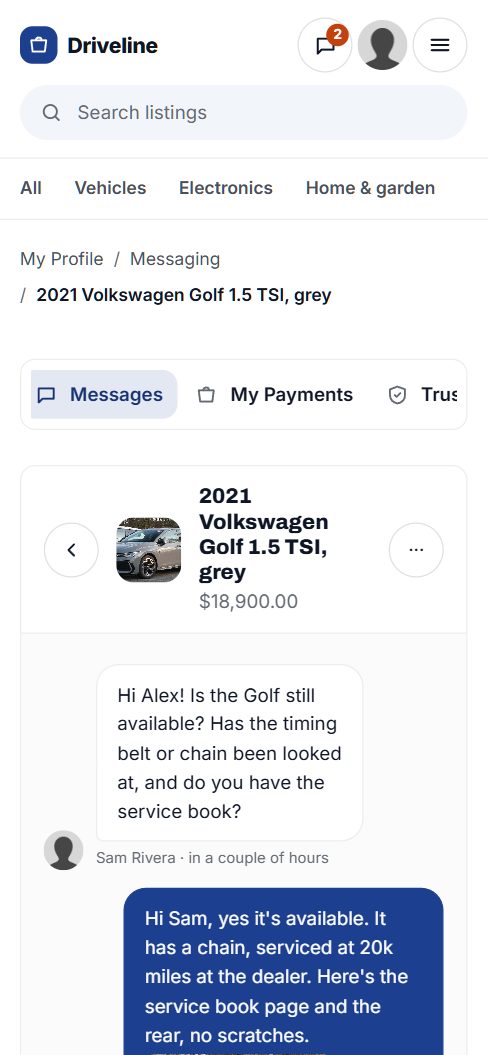
Dog walking is priced per walk, and most clients buy the same walk many times. That suits packages: five midday walks for one week, or ten 30-minute walks to use within a month. On the Marketplace plan, walkers can sell these as listings with Stripe checkout, and you keep a commission per sale. The first meeting and a trial walk are arranged in on-site messages before the owner buys a package.
Keep the commission low. Walkers earn per walk, margins are small, and many already give up a large share to national apps. A smaller cut than those apps is your strongest argument with professional walkers, who bring their regular clients with them.
Featured listings help new walkers stand out in a busy neighborhood. Seller memberships suit walking businesses with several walkers on staff. Banner spaces suit dog daycares, trainers, groomers, pet stores and vets. A buyer service fee is possible later, but owners paying for a walk every weekday notice every extra dollar.
Leave posting free until each neighborhood has enough walkers to cover the midday rush, when demand is highest.
| Model | Works when | Switch it on |
|---|---|---|
| Commission on walk packages | Owners buy walks in sets | From the first package |
| Featured listings | Several walkers cover one neighborhood | When neighborhoods fill up |
| Seller memberships | Walking businesses have staff | When businesses join |
| Banner spaces | Daycares, trainers and stores want local owners | Once traffic is steady |
| Buyer service fee | Owners rely on the site for their regular walker | Later, and keep it small |
Recruit walkers where they already are at noon.
Walkers are easy to spot: they are out at midday holding several leashes. Recruiting them is partly street work.
- Dog parks and popular routes. Visit at lunchtime and talk to the people walking three or four dogs. Bring cards with a short pitch.
- Apartment buildings. Doormen and building managers know which walkers come in every day. Ask for introductions and a spot on the lobby board.
- Dog trainers. Trainers often walk dogs between classes, or know graduates of their courses who do.
- Daycares. Some staff walk dogs on their days off and want regular clients of their own.
- Running clubs and colleges. Students and runners want paid exercise with flexible hours.
- Walkers on national apps. Many want their own weekly clients. Offer a profile where reviews build up under their own name and stay with them.
Set up each profile with the walker: neighborhoods, weekday availability, walk lengths, most dogs per walk, and photos from walks, taken with the owners' permission. Before you advertise to owners, make sure the midday window is covered in every neighborhood you open, with at least two walkers each so a sick day does not leave dogs waiting.
Plan for dog fights, slipped collars and lost keys.
Walkers handle other people's dogs in public, often near traffic, and usually hold the house keys. Most problems come from too many dogs at once, the wrong dogs together, or keys and codes in the wrong hands.
Risks to plan for
- Dog fights and bites. Mixing unfamiliar dogs causes most incidents. Ask walkers to meet each new dog alone before adding it to a group, and to state which temperaments they accept.
- Lost dogs. Slipped collars and off-leash runs end badly near roads. Encourage harnesses for escape artists, ID tags on every dog, and microchip details on file.
- Pack size. Some cities and parks cap how many dogs one person may walk, or require a permit for commercial walkers. Show pack size on every listing.
- Keys and home access. Advise owners to use lockboxes or doormen rather than handing out key copies, and to change codes when a walker stops.
- Fake walkers. Watch for new accounts asking owners to pay a month up front outside the site.
Legal points
Leash laws, off-leash areas, park permits and waste rules differ by city. Whether walkers need insurance, a business license or a background check also varies by place. Check the rules where you operate, ask walkers to state what they hold, mark it self-declared, and never describe walkers as vetted on the site's behalf.
Approve every new walker, keep reports open on every profile, and let owners leave ratings and reviews after a few weeks of walks.
One fight on a group walk can end a walker's business. Make pack size and temperament visible on every listing.
Rank for walkers by neighborhood, walk type and price.
Dog walking searches are hyperlocal. Owners search their own neighborhood, the time of day and the kind of dog they have.
- "dog walker near me" and "dog walker [neighborhood]"
- "midday dog walker [city]"
- "how much does a dog walker cost"
- "puppy potty break service"
- "dog hiking service [city]"
- "dog walker for reactive dog"
- "group dog walks [city]"
Pages to build
- Neighborhood pages. One for every district you serve, listing the walkers who cover it. Every location has its own page, so a new walker adds to it automatically.
- Walk type pages. Puppy visits, trail hikes, reactive dog walks.
- Price guide. What a 30-minute solo walk and a group walk usually cost in your city, based on your listings.
- Route guides. The best dog walks and off-leash areas in each neighborhood.
Content ideas
Write how to choose a dog walker, questions to ask on a trial walk, how to get a puppy used to a walker, the leash rules and off-leash areas in your city, and safe walk lengths during heat waves and icy weeks. Local route guides earn links from neighborhood blogs.
Open one neighborhood at a time, starting with the midday rush.
Launch neighborhood by neighborhood. Fill one district with walkers who cover weekday middays, then move to the next. A thin site across a whole city disappoints everyone.
Timing
- September. School and work routines return, and owners whose summers were flexible need a walker again.
- January. Puppies from the holidays need midday visits once their owners go back to work.
- Spring. Longer days bring new adoptions and interest in trail hikes.
- Office return dates. When large local employers call staff back to the office, owners who walked their dogs at home suddenly need help.
Partners
Apartment buildings with many dogs, shelters handing over newly adopted dogs, trainers, vets and dog daycares all meet owners who need a walker. Ask building managers to share your site in their resident newsletter.
Checklist
- Pick one or two dense neighborhoods.
- Set up weekday, time window, walk length and pack size fields.
- Write rules on trial walks, pack size, keys and reports.
- Sign up enough walkers to cover every weekday midday.
- Publish a price guide and a neighborhood route guide.
- Ask walkers to bring their regular clients for reviews.
- Open to owners in September or January.
A worked example: East End Midday Walks, Pittsburgh.
East End Midday Walks is a fictional site created for this guide; no such company exists. Imagine a professional walker in Pittsburgh with a full weekday route and a waiting list she could not serve. She also knew three other walkers with half-empty afternoons. Owners kept emailing her, and she kept forwarding names by hand. The site began as a cleaner way to send her overflow to people she trusted, and grew into a local marketplace.
Who it serves
It covers a handful of East End neighborhoods: Lawrenceville, Bloomfield, Shadyside, Squirrel Hill and Highland Park. Owners are hospital staff on twelve-hour shifts, office workers back at their desks several days a week, and people in older rowhouses with no yard. Walkers are full-time professionals, grad students with free middays, two retirees who walk for the exercise, and a trainer who offers loose-leash walks between classes.
Categories at launch
- Solo walks
- 30 minutes
- 60 minutes
- Small group walks
- Puppy visits
- Park hikes
- Senior dog strolls
How it started
Before any owner could sign up, every walker filled in the weekdays they cover, the time windows, the neighborhoods, and the most dogs they take at once. She checked that each neighborhood had at least two walkers for the 11 a.m. to 2 p.m. window, so a sick day would not leave dogs crossing their legs. The city's hills and steps shaped the fields too: walkers say whether they take dogs who cannot manage stairs, and how they handle icy sidewalks and road salt in winter. Launch came in early September, when routines return and owners who had summer flexibility needed help again.
How it makes money
Trial walks and weekly schedules are agreed in messages. Once the owner is happy, they buy packs of walks as fixed-price listings with checkout on the Marketplace plan, and the site keeps a commission that is clearly lower than the big apps take. One walking business with four staff pays for a seller membership, and a nearby dog daycare buys the banner on the neighborhood pages. A second year adds two more neighborhoods, opened only after the same midday grid is full there.
She did not need many owners at first. She needed every midday slot covered on a handful of streets.
| Listing | Price | Key details |
|---|---|---|
| 30-minute solo walk, pack of ten | $240 fixed, paid on the site | Weekdays 11 a.m. to 2 p.m.; Lawrenceville and Bloomfield |
| Small group walk, up to three dogs | $20 per walk | Each dog meets the walker alone first; friendly dogs under 50 pounds |
| Puppy potty visit | $18 per visit | 15 to 20 minutes, crate routine followed, up to two visits a day |
| Park hike with pickup | Quote | Ninety minutes, van transport, solid recall needed for off-leash areas |
| Senior dog stroll with medication | $22 per visit | Slow pace, no steps, tablets given with lunch; Squirrel Hill |
These five listings are invented; real walkers set their own prices.
The first 90 days: cover the midday window, street by street.
A dog walking site has one hard test: an owner on a given street needs someone Monday to Friday around noon, starting next week. If your site can answer that for a few neighborhoods, it works. If it cannot, no amount of advertising will help. The first 90 days are about coverage, measured by weekday and time window rather than by the number of walkers signed up.
Draw a simple grid for each neighborhood you open, with weekdays across the top and morning, midday and afternoon down the side, and fill it with walkers' names. Gaps on the grid tell you who to recruit next. Aim to open to owners in September or January, the two moments when routines change and owners look for a walker.
Once owners arrive, count trial walks that turn into weekly schedules. A walker who converts most trials is your model for the next recruits; one who converts none needs a word about their profile or their pricing.
| Weeks | Focus | Done when |
|---|---|---|
| 1-2 | Pick two dense neighborhoods; set fields for weekdays, time windows, walk length and pack size; write rules on trials, keys and limits | Weekdays and the most dogs per walk are required on every listing |
| 3-4 | Recruit at dog parks at lunchtime and through building managers | Eight walkers cover every weekday midday in both neighborhoods |
| 5-6 | Set up walk packs and senior or puppy options | Each walker sells at least one pack of five or ten walks with checkout |
| 7-8 | Ask walkers to bring their regular clients for reviews | Every walker has two or more reviews from current owners |
| 9-10 | Publish a price guide and a neighborhood route guide; put flyers in apartment lobbies | Both guides are live and flyers are up in ten buildings |
| 11 | Open to owners as routines change in September or January | New owners get a trial walk offered within two days of their first message |
| 12 | Review the grid and pick the next neighborhood | The next neighborhood has walkers named for every weekday midday before it opens |
Ways to build it: the schedule is the hard part.
Most of what a dog walking marketplace needs is ordinary: profiles, reviews, messages and checkout for walk packs. The unusual part is the schedule. Owners filter by weekday, time window and street, so the site must let walkers mark each weekday they work and the windows they cover, and must show those as search filters alongside a map of the neighborhoods they serve. Pack size and temperament limits should be required fields, not free text.
Build it with developers
A developer can create a live walk calendar, GPS tracking of each walk or automatic matching of owners to the walker already on their street. That is a real product, and it takes a real budget and many months. Consider it after you have proved demand in a few neighborhoods, not before.
Run a script or plugin yourself
Self-hosted classifieds and directory scripts and WordPress plugins are cheap to start with. Test whether weekday checkboxes and time windows can be filters, and whether walkers can sell packs. Hosting, updates and security are on you, and the site will hold owners' addresses and notes about keys, so take that seriously.
Use a hosted builder
A hosted builder such as Yclas lets you set checkbox and dropdown fields as filters and add maps and reviews, while you spend lunchtimes at the dog park recruiting. Whichever route you choose, test it on a phone: walkers read messages between walks with a leash in one hand.
| Route | Fits when | Watch out for |
|---|---|---|
| Custom development | You want live tracking or automatic matching by street | Cost and time before you know if owners will come |
| Script or plugin on a server you manage | You are comfortable securing a site that stores addresses and key notes | Weekday and time-window filters may need extra work |
| Hosted builder | Recruiting walkers is where your hours should go | Check that every schedule field can work as a filter |
What a dog walking marketplace costs to run.
The software is the smallest part of the bill. Most of the cost is your time in the first months: finding the first listings, answering questions and checking what gets posted.
Costs are mostly local: cards and lobby flyers, time at dog parks, and a lawyer's review of your terms on liability and contractor status. If you choose to confirm walkers' identity or insurance yourself, budget the time or a screening service fee.
| Cost | Typical range | On Yclas |
|---|---|---|
| Domain | $10 to $20 a year | Your own, with SSL included |
| Software and hosting | $0 to $100+ a month, plus plugins and updates | Marketplace $149 a month for checkout and commission |
| Design | $0 to $100 for a theme, or a designer | 109 looks included |
| Payment fees | About 3% per payment | Your Stripe or PayPal fees; Yclas takes nothing |
| Your time | 5 to 10 hours a week at the start | Finding listings, moderation, support |
Mistakes that stall a dog walking site.
- Covering the whole city at once. Walkers string walks together on foot, so a walker across town is no use to an owner here. A citywide launch leaves most streets with nobody available at noon. Fill a few neighborhoods first.
- Designing for one-off walks. The real customer wants the same walker at the same time for months. If your listings and packs are built around a single walk, you lose the steady weekly business that keeps walkers on the site.
- No limit on dogs per walk. Large groups of unfamiliar dogs cause most fights and escapes, and some cities and parks cap the number one person may walk. Require a pack-size number on every listing and make sure walkers introduce each new dog alone first.
- Promising off-leash runs where they are not allowed. A listing that offers off-leash play in a park with a leash law puts the walker at risk of a fine and the dog at risk near traffic. Ask walkers to name the designated areas they use and the recall they expect.
- Taking a big cut. Walkers earn per walk on thin margins, and many joined you to escape the share national apps keep. A commission close to theirs removes your main reason to exist.
- Leaving key handling to chance. Copies of keys pass between walkers, codes never change, and a lost key means a locksmith. Recommend lockboxes or building staff, ask owners to change codes when a walker stops, and keep key arrangements in messages.
- Photos that give away the home. Walk photos are great marketing, but a dog on its own front step with the house number in view shows strangers which home is empty at noon. Ask walkers to share photos only with permission, and away from the front door.
- No weather policy. Heat waves, thunderstorms and ice change what is safe. Without a policy, owners argue about shortened walks or cancellations. Ask walkers to state what they do in extreme weather and how it affects the price. Paw balm, booties and shaded routes in summer are details owners notice.
- Ignoring the dogs nobody wants to walk. Large, strong or reactive dogs and seniors who need a slow pace are exactly the dogs whose owners struggle most to find help, and they stay loyal once they do. Recruit a few walkers who say they take these dogs, give each its own filter, and let those walkers charge accordingly.
Dog walking words to know.
Walkers and owners use these terms, and some of them belong in your fields.
| Term | What it means |
|---|---|
| Solo walk | A walk with one dog, or dogs from a single household, and no others. |
| Group walk | A walk with dogs from several households together, sometimes called a pack walk. |
| Pack size | The most dogs a walker takes out at the same time. |
| Potty break | A short visit, often 15 to 20 minutes, mainly for puppies or older dogs to go outside. |
| Trial walk | A first walk, usually with the owner present, to see if dog and walker are a good fit. |
| Reactive dog | A dog that barks, lunges or pulls hard at other dogs, people, bikes or cars. |
| Recall | How reliably a dog comes back when called, which matters for any off-leash time. |
| Leash law | A local rule that dogs must be on a leash in public places outside designated areas. |
| Off-leash area | A park or zone where dogs may legally run free, sometimes with permit or tag rules. |
| Front-clip harness | A harness with the leash attached at the chest, often used for dogs that pull. |
| Martingale collar | A collar that tightens a little when pulled, used to stop a dog backing out of it. |
| Commercial walker permit | A permit some cities or parks require for people paid to walk dogs, sometimes with pack limits. |
| Walk report | A short message after each walk with timing, bathroom notes and a photo. |
The same steps for a dog walking marketplace on Yclas.
- Describe your marketplaceThe setup wizard writes the categories, an About page and example listings from one sentence.
- Add fieldsThe details buyers filter on, as dropdowns, numbers or checkboxes.
- Bring sellersInvite them, import their stock from a spreadsheet, or post for them.
- Set the rulesChoose moderation, verified sellers, reviews and reports.
- Take paymentsOn Marketplace, buyers pay on the site and you keep a commission, with Stripe.
How much does it cost to start a dog walking marketplace?
Very little beyond the site and a domain. Spend on printed cards, lobby flyers and a legal review of your terms. The rest is time spent meeting walkers at parks.
Do dog walkers need a permit?
Some cities require a permit for commercial walkers in parks, or cap the number of dogs per walker. Check your city's rules and show pack size on each listing.
Who is responsible if a dog bites someone on a walk?
That depends on local law and the agreement between owner and walker. Your terms should say you connect owners and walkers, and walkers should state whether they carry insurance. Ask a lawyer to review the wording.
Can owners pay for walks on the site?
Yes, when walkers sell fixed-price packages, such as ten 30-minute walks, as listings with checkout. Trial walks and weekly schedules are agreed in messages.
How do I compete with Rover and Wag?
Neighborhood focus and a lower commission. Professional walkers want nearby weekly clients and a bigger share of each walk, and owners want the same person every day.
Should walkers be my employees?
Walkers who set their own rates, areas and hours look more like independent businesses than staff, but the legal tests vary by country and state. Check with a local lawyer before you set rules on how walks are done.
How many walkers do I need before launching?
Enough to cover weekday middays in every neighborhood you open, with a backup for sick days. Start with one or two districts rather than a whole city.
Should walkers drive dogs in their own cars?
Only if they say so on their listing and the owner agrees in messages. Ask walkers who transport dogs to describe how dogs travel, such as crates or seat harnesses, and to check whether their car insurance covers carrying dogs for business. Short drives to a park are common, but a dog loose in a car or left in a hot one is a real risk.
Do owners need to be home for the first walk?
It is the best way to start. A trial walk with the owner present lets the walker learn the dog's routine, the key arrangement and any quirks, such as a dog that will not pass a certain corner. Make it the expected first step on your site.
Should I limit how many walkers join one neighborhood?
Not formally, but watch the balance. If a neighborhood has far more walkers than owners, new walkers get no work and leave unhappy. Tell walkers honestly which neighborhoods need them and which are full. A short note on each neighborhood page saying whether you are looking for more walkers there saves everyone time.
What should happen when a walker keeps canceling?
Ask owners to report cancellations, and talk to the walker before anything else, since illness and family problems happen. Repeated cancellations without notice should lead to removing the listing, because an owner at work cannot leave to walk the dog.
Can walkers offer training on the same site?
Yes, as its own category with fields for methods used and dogs accepted. Keep training claims as the walker's own statements, and let owners read reviews before they choose someone for a reactive or anxious dog.
Related pages.
The parts of Yclas this leans on.
You have the plan. Now meet the walkers at your nearest dog park.
Describe your site in a sentence and the setup wizard writes the categories, example listings and a look. Free for 15 days, no credit card.
Start my marketplace