How to build a vintage clothing marketplace where true vintage is easy to find.
This guide covers how to build a marketplace for vintage and pre-loved fashion: which sellers and shoppers to serve, the era, measurement and condition details buyers filter on, how to price commission and fees, where the first sellers come from, how to stop reproductions and condition disputes, and when in the year to launch.
Free for 15 days · No credit card · Plans from $19 a month
Give real vintage a home away from fast fashion resale.
On the big secondhand fashion apps, a 1970s prairie dress sits next to a last-season polyester top labeled "vintage style". Serious buyers scroll through pages of noise, and sellers who source genuine pieces at estate sales and rag houses compete on price with closet clear-outs. A marketplace that only accepts true vintage, with honest dating and measurements, gives both sides a reason to switch.
Your sellers are pickers who dig through thrift stores, estate sales and wholesale bales, small vintage shops with more backstock than floor space, collectors trimming their archive, and people selling a parent's wardrobe. Your buyers are stylists, costume departments, collectors of one label, and shoppers who simply want clothes that were made to last.
Pick your angle
- One era: 1950s and 1960s dresses, 1990s streetwear, or everything older than twenty years with a clear cutoff.
- One category: vintage denim and workwear, band and tour tees, outerwear, or designer vintage.
- One region: a city with a strong vintage scene, where buyers also like knowing the shop they can visit.
Today this trade happens on Instagram drops and live sales, at vintage fairs and flea markets, in Facebook groups for specific labels, and on the general resale apps. Decide your cutoff early: many communities use twenty years for vintage and a hundred for antique, but whatever you pick, write it down.
The site is only as good as its definition of vintage. Publish it and enforce it.
Sort by garment, then let buyers filter on era, measurements and flaws.
Vintage sizing is the biggest source of returns. A size 12 from 1965 fits like a modern 4 or 6, so the labeled size is close to useless on its own. Make measurements required, taken with the garment laid out and doubled where it matters, and explain how to measure on a help page sellers can follow.
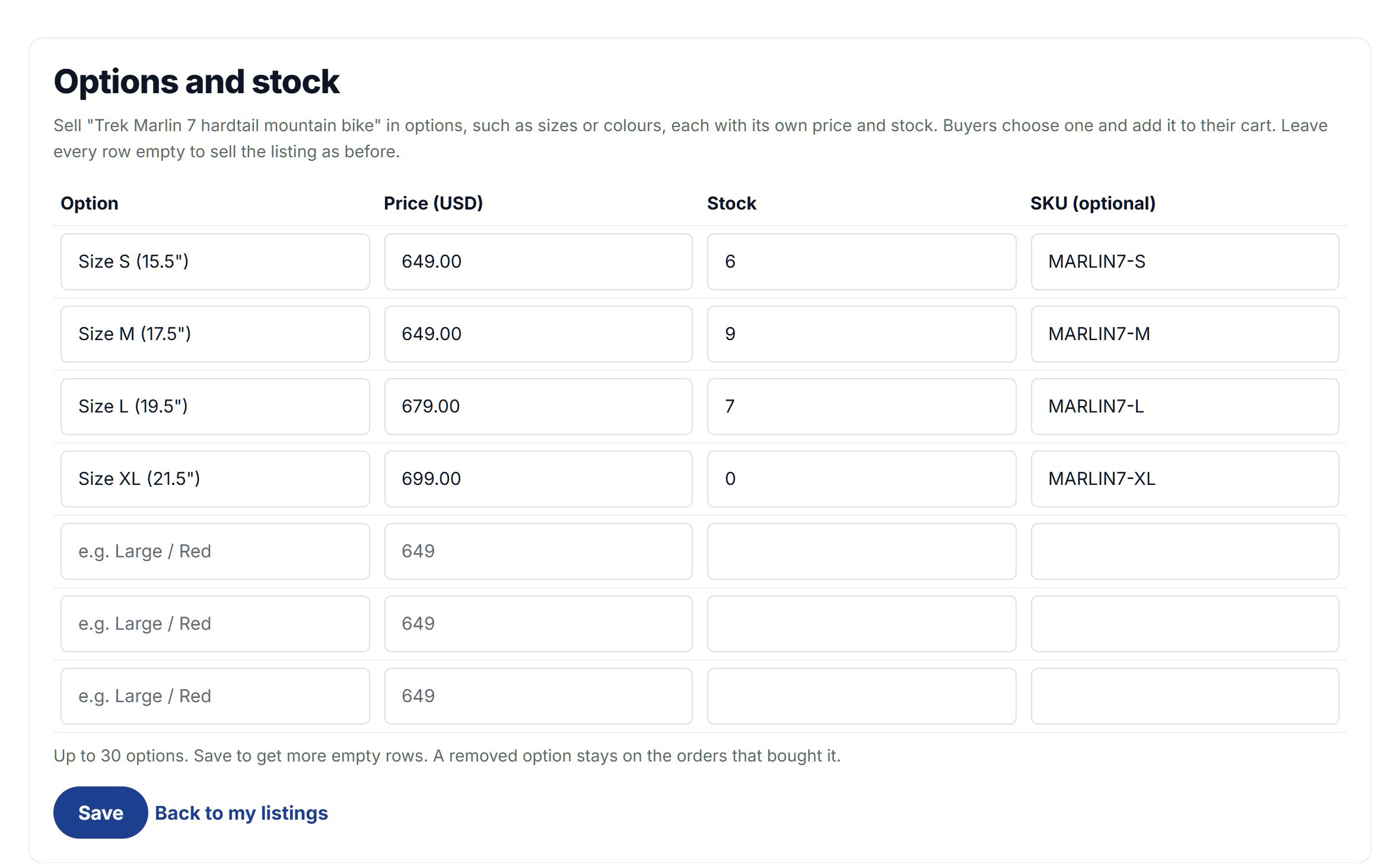
- Era as a dropdown by decade, plus an "era confidence" note where sellers say how they dated it: union label, care tag, zipper type, single stitch hem.
- Measurements per garment type: pit to pit, shoulder, sleeve and length for tops; waist, rise, inseam and leg opening for trousers and jeans.
- Labeled size and modern fit estimate side by side, so buyers searching for their own size can still find pieces.
- Condition as a dropdown with a required flaws field: pinholes, fading, stains, repairs, odor, missing buttons.
- Fabric and label or brand, since many buyers collect one maker or want only wool, silk or cotton.
Keep categories by garment, one level deep. Era, brand and fabric are filters, not categories, because a buyer looking for a 1980s silk blouse may start from any of the three.
| Category | Example listings | Fields buyers filter on |
|---|---|---|
| Dresses | 1950s swing dresses, 1970s maxi dresses, slip dresses | Decade, bust, waist, length, fabric, closure |
| Denim and workwear | Selvedge jeans, chore coats, overalls, duck canvas jackets | Brand, waist, inseam, rise, wash, made in |
| T-shirts and sweatshirts | Band and tour tees, college sweatshirts, souvenir tees | Pit to pit, length, single stitch, print, tag |
| Outerwear | Leather jackets, wool overcoats, varsity jackets, parkas | Shoulder, sleeve, lining, material, decade |
| Knitwear and shirts | Fisherman sweaters, western shirts, Hawaiian shirts | Fiber, pit to pit, pattern, labeled size |
| Accessories | Silk scarves, leather belts, handbags, costume jewelry | Material, width or size, brand, condition |
Each of these details becomes a Yclas custom field: a number for every measurement, a dropdown for decade and condition, all shown as filters.
Earn from sales, and keep the commission low enough for cheap pieces.
Vintage prices range from a ten-dollar thrifted shirt to a museum-grade dress worth hundreds. A commission that works on the dress may wipe out the margin on the shirt, so think about both ends when you set fees.
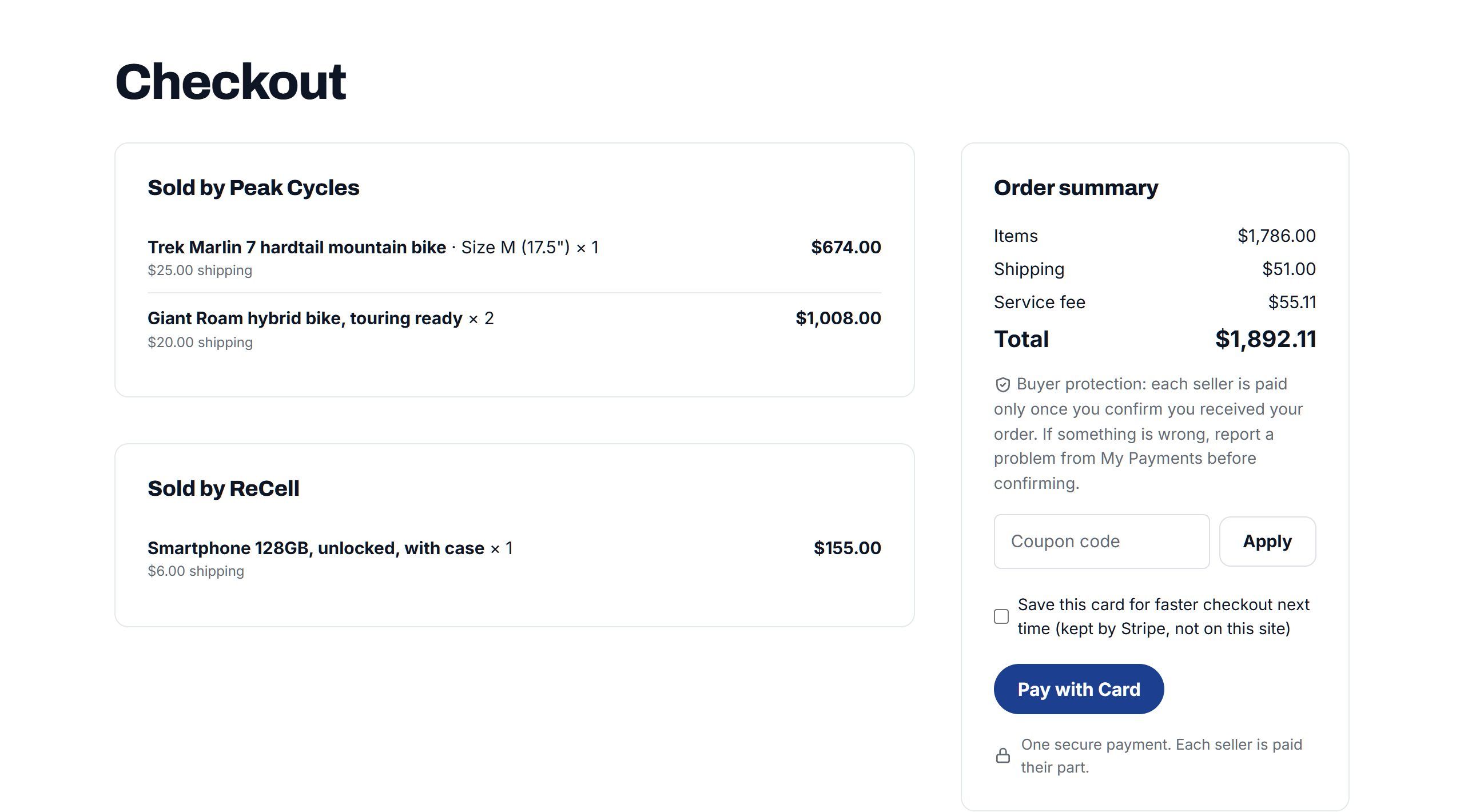
Buyers check out on the site with a card through Stripe, sellers are paid through Stripe, and you keep a commission on each sale. Because a cart can hold items from several sellers and each seller sets their own shipping, a buyer can pick up a jacket from one shop and two tees from another in a single order.
- Commission per sale is the core income. Start with a low founding rate for early sellers and raise it to your standard rate after a set date.
- Buyer service fee lets you keep seller commission low, which helps you win pickers who sell many cheap items.
- Featured listings and bumps suit sellers who post drops of new stock and want them seen on the day.
- Seller memberships fit vintage shops listing hundreds of pieces, with a highlighted shop page and lower per-sale fees.
- Banner spaces for vintage fairs, tailors and garment cleaners who want your audience.
Pickers talk to each other about fees. One clear published rate travels further than a clever pricing table.
| Model | Works when | Switch it on |
|---|---|---|
| Commission per sale | Buyers check out on the site | From the first sale, at a founding rate |
| Buyer service fee | You want seller fees low for cheap items | Once repeat buyers are common |
| Featured listings and bumps | Sellers post weekly drops | When the home page gets daily visits |
| Shop memberships | Vintage shops list in bulk | After a few shops pass a hundred items |
| Banner spaces | Fairs and tailors want vintage buyers | When you can show monthly visitors |
Sign up sellers with deep stock first, then the people who sell one piece.
A vintage marketplace needs volume and variety from the first day: buyers come to browse, and a site with forty items gets one visit. Aim for a few sellers with large inventories before you chase individuals.
Where the first sellers are
- Vintage fairs and flea markets. Dealers who travel to fairs have storage units full of stock they cannot fit on a rail. Visit at setup or pack-down, when they have time to talk.
- Pickers on Instagram. Search by decade and garment hashtags and look for sellers who post regular drops but sell out slowly.
- Small vintage shops. Backstock in the basement is money they cannot reach. Offer to help them list it.
- Label collector groups. Members of groups devoted to one denim or workwear maker often hold duplicates.
- Estate sale companies. They see whole wardrobes from the 1960s to the 1980s and need somewhere to send clothing buyers.
Shops with an inventory spreadsheet can import their stock as a CSV, which turns a two-week job into an afternoon. For pickers listing piece by piece, the AI listing from a photo drafts the title, description, category and price for them to correct before posting; they still add measurements and flaws themselves.
Set a photo standard and show an example: front, back, label, close-ups of every flaw, and one photo on a person or form.
Stop reproductions and settle condition questions before they start.
Vintage has its own fakes. Reprinted band tees on new blanks, modern jeans with swapped vintage patches, and recent garments with old labels sewn in all turn up regularly. Designer vintage carries the same counterfeit risk as new luxury goods.
Rules worth setting
- Require a photo of the label and care tag on every listing. Experienced buyers date pieces from them, and fakes often fail there.
- Ban "vintage style" and reproductions unless you choose to allow them in a clearly named category.
- Approve new sellers' first listings and remove anyone who repeatedly misdates pieces.
- Handle counterfeit designer items firmly. Remove them on report and close repeat accounts.
Condition disputes and returns
Most complaints are about fit and flaws: a stain the photos missed, a smell of smoke or storage, a measurement taken wrong. Required measurements and a flaws field prevent most of them. Ask each seller to publish a returns policy, and set a minimum you expect, such as accepting returns when an item is significantly not as described.
Remind buyers to pay only through the site checkout and to report anyone who offers a discount for paying by bank transfer or a payment app outside it.
Fur, exotic skins and some feathers face import and sale restrictions in certain countries and states, especially across borders. Check the rules where you operate before you allow them.

Target the precise searches collectors and stylists type.
Vintage searches are specific: a decade, a brand, a garment and often a size. Typical examples: "vintage Levi's 501 32 waist", "1970s maxi dress", "90s band t-shirt single stitch", "vintage Carhartt chore coat", "1950s cocktail dress size small", "vintage wool fisherman sweater", "vintage clothing store Austin".
Pages to build
- Decade plus garment pages: 1960s dresses, 1990s windbreakers, 1980s leather jackets.
- Brand pages for the labels your sellers carry most often, each with a short history.
- Size pages built from measurements, such as vintage jeans with a 30-inch waist, so people stop guessing from labels.
- City pages if you list physical shops alongside online stock.
Content worth writing
- How to date a garment from its label, care tag and zipper.
- Vintage sizing explained: why a size 12 from 1960 fits differently.
- How to spot a reprinted band tee.
- Caring for vintage wool, silk and rayon.
- Price guides by decade and garment, based on what sold on your own site.
Guides on dating and spotting fakes attract the most knowledgeable buyers, and they link to these pages from forums and groups.

Launch with a vintage fair, ahead of the fall jacket season.
Vintage sells all year, but two moments stand out. Late summer into fall brings searches for jackets, knitwear and denim, and spring brings dresses and festival outfits. Launching in August gives you time to fill outerwear before the weather turns.
First community and partners
- One fair. Pick the biggest vintage fair within reach, sign up a dozen dealers there, and give buyers a card that says the stock they missed is online.
- Stylists and costume departments. Theater companies, film students and wardrobe stylists buy by era and come back often.
- Tailors and alteration shops. Vintage buyers need them, and they can recommend your site in return for a listing on it.
- Label collector groups. A post about a new place to buy and sell their brand reaches exactly the right people.
Launch checklist
- A written definition of vintage and a ban on reproductions published.
- At least five sellers with deep stock and a thousand listings between them.
- Measurements and flaws fields required on every garment category.
- A measuring guide and a photo standard for sellers.
- Decade pages and the dating guide written.
- A test order with items from two sellers in one cart.
Run themed weeks after launch, such as 1970s week or denim week, and ask sellers to save their best stock for them.
A worked example: Ironbridge Vintage Market, western Pennsylvania and northeast Ohio.
Consider Ironbridge Vintage Market, a fictional marketplace for vintage workwear, denim and outerwear, based around Pittsburgh and the old mill towns of northeast Ohio. The founder ran a booth at regional flea markets for years and kept running into the same gap: pickers in the region pull heavy canvas coats and old union-made jeans out of estate sales by the bag, but many of the buyers who pay properly for them live in other countries or on the coasts. The site exists to connect the two, and to give the region's pickers a name buyers recognize.
The angle was chosen on purpose. Workwear and denim are measured the same way every time, collectors already know the labels, and the pieces are tough enough to ship without much risk of damage.
Categories
- Denim
- Jeans
- Jackets
- Workwear
- Chore coats and duck canvas
- Overalls and coveralls
- Outerwear
- Leather and suede
- Wool coats and mackinaws
- Shirts and knitwear
- Boots and accessories
Who it serves
Sellers are pickers, two small shops and a handful of flea market dealers from the region, all of whom accept the site's cutoff: nothing made after 1999. Buyers are collectors of particular labels, stylists sourcing for photo shoots, and people who want a coat that will outlast them.
How it started
The founder signed eleven dealers at two flea markets in one summer, then spent a weekend in each of the two shops photographing backstock to the site's standard: front, back, label, flaws, and every measurement shown against a tape. The site opened in late August with about nine hundred pieces, timed for the first cool evenings, when searches for coats and flannel start to climb.
How it makes money
A commission on every sale, lower in the first year for founding dealers. The two shops pay a yearly membership for a highlighted storefront and a reduced rate. Dealers pay to bump new drops to the top of their category on the morning they post them, and a denim repair shop and a tailor in Pittsburgh rent banner spaces on the denim pages.
A narrow focus on hard-wearing clothes from one industrial region gave the site a clear identity that general apps cannot copy.
| Listing | Price | Key details |
|---|---|---|
| 1950s denim chore coat, union label | $185 | Pit to pit 23 in, blanket lined, two small repairs at the cuff |
| 1970s straight-leg jeans, made in USA | $120 | Waist 31 in, inseam 30 in, rise 11 in, light fading at knees |
| 1960s wool mackinaw, red buffalo check | $160 | Shoulder 19 in, sleeve 25 in, two pinholes near the hem |
| 1990s duck canvas work jacket | $95 | Pit to pit 26 in, blanket lined, paint marks on front |
| 1970s leather work boots | $140 | Size 10 D, resoled, original heels, laces replaced |
The first 90 days: stock first, buyers second.
Vintage shoppers browse, and a browser wants hundreds of pieces to scroll through, not a few dozen. Spend most of your first three months filling the site with well measured stock from a small number of sellers, and keep the last few weeks for bringing in buyers.
Before you call any seller, write two documents: your definition of vintage, with a year cutoff, and your measuring and photo standard. Every dealer conversation comes back to them, and agreeing them up front saves you from removing listings later and upsetting the sellers you worked hardest to win.
Time the plan to a season. If you finish in late August, outerwear and knitwear searches are starting; if you finish in March, dresses and lightweight shirts are. Ask sellers to hold back some of their best seasonal pieces for launch week instead of selling them at a fair the weekend before. A launch week with fresh, wanted stock gives early visitors a reason to return.
| Weeks | Focus | Done when |
|---|---|---|
| 1-2 | Rules and fields | Vintage cutoff, reproduction ban, measuring guide and photo standard published; measurements required per garment |
| 3-4 | Anchor dealers | Three sellers with deep backstock signed and their inventory spreadsheets checked |
| 5-6 | Fairs and flea markets | Ten more sellers recruited, each with a first batch that passed review |
| 7-8 | Volume | At least eight hundred pieces live, every one with a label photo and flaws noted |
| 9-10 | Buyer pages | Decade pages, the dating guide and the measuring guide written; two test orders shipped |
| 11 | Collector groups | Moderators of three label or era groups contacted and a post approved |
| 12 | Launch week | A themed drop announced, sellers' saved pieces released and first reviews requested |
Ways to build it: what matters for one-of-a-kind stock.
Every listing on a vintage marketplace is a single item. Once it sells it is gone, so the software must mark it sold at once, take it out of search and stop a second buyer paying for it. Listings also carry many numbers, a different set for each garment type, and buyers need to filter on them. Those two needs, single-quantity stock and measurement filters by category, are the test for any route.
A custom build by developers lets you design the measurement system exactly, perhaps with buyers saving their own measurements to compare against listings. It is the costliest and slowest choice, and you still have to build checkout, payouts to sellers and the commission logic before any of that.
A self-installed marketplace script or WordPress multi-vendor plugin costs less up front. Check that its custom fields can differ by category and work as filters, since many plugins treat product attributes as plain text. You will also be responsible for hosting, backups and updates on a site that may hold tens of thousands of photos.
A hosted builder handles the servers and usually ships with checkout, a cart across sellers and custom fields as filters. Confirm before you choose that fields can be required per category, so no jacket goes live without a pit to pit measurement.
| Route | Fits when | Watch out for |
|---|---|---|
| Custom build with developers | You want unusual tools, such as saved buyer measurements matched to listings | A long build, and payments and seller payouts are your problem |
| Script or plugin on your own server | You are comfortable running a server and storing many photos | Fields that cannot act as filters, image storage costs, plugin updates |
| Hosted builder | You want to start listing stock this month | Check per-category required fields and that sold items leave search at once |
| Online store platform with a multi-vendor app | You already run a vintage shop on a store platform and want to add other sellers | Per-seller payouts and per-category measurement filters may need several paid apps |
What a vintage clothing marketplace costs to run.
The software is the smallest part of the bill. Most of the cost is your time in the first months: finding the first listings, answering questions and checking what gets posted.
Stripe processing fees apply to every order, so check your commission still covers them on the cheapest pieces. Plan for stall fees or sponsorship at one or two vintage fairs and a tape measure, form and backdrop if you photograph stock for sellers yourself.
| Cost | Typical range | On Yclas |
|---|---|---|
| Domain | $10 to $20 a year | Your own, with SSL included |
| Software and hosting | $0 to $100+ a month, plus plugins and updates | Marketplace $149 a month for checkout and commission |
| Design | $0 to $100 for a theme, or a designer | 109 looks included |
| Payment fees | About 3% per payment | Your Stripe or PayPal fees; Yclas takes nothing |
| Your time | 5 to 10 hours a week at the start | Finding listings, moderation, support |
Mistakes that sink vintage clothing marketplaces.
- A vague definition of vintage. If vintage means whatever the seller says, the site fills with recent mall brands within weeks. Publish a year cutoff, give examples of what fails it, and remove listings that break it without long debates.
- Letting the labeled size stand in for measurements. A buyer who orders a size 14 from 1962 and receives something that fits a modern 6 asks for a refund and tells others. Make measurements required for every garment type, with no way to skip them.
- Accepting flaws in the small print. Pinholes, underarm staining and a faint storage smell are common in old clothes, and buyers forgive them when they are told. An optional flaws field becomes a field nobody fills in. Require it, and accept "none found" only alongside close-up photos.
- Chasing individual closets before dealers. One person selling six dresses brings six listings and a lot of support questions. One dealer with a storage unit brings six hundred. Recruit depth first and individuals later, once buyers are arriving and the help pages answer the common questions.
- Setting one commission for a ten-dollar tee and a museum dress. A percentage that feels small on a gown can leave almost nothing on a cheap shirt after card fees. Model both ends, and consider a buyer fee before you raise the rate.
- Ignoring reprinted band and sports tees. They are among the most faked items in vintage and the easiest to sell to newcomers. Ask for tag and hem photos on every graphic tee, and remove sellers who list modern reprints as old more than once.
- Leaving shipping to chance. A leather jacket costs far more to send than a silk scarf, and buyers abroad face customs forms and duties. Ask sellers to set shipping that reflects weight and to say plainly which countries they ship to, so nobody is surprised at checkout.
- Opening with the wrong season. Vintage demand follows the weather. A home page full of wool overcoats in July looks like a site nobody updates. Lead every month with what people are wearing next, and ask sellers to photograph and list seasonal stock about six weeks ahead of the weather.
- Letting one seller dominate the home page. A dealer who uploads three hundred pieces in a night pushes everyone else off the front page, and smaller sellers conclude the site is not for them. Rotate the newest listings by seller, and use paid bumps rather than raw volume to decide who gets extra attention.
Vintage clothing terms a marketplace founder should know.
The words pickers, dealers and collectors use when they date, describe and price old clothes.
| Term | What it means |
|---|---|
| Deadstock | Old stock that was never sold or worn, often with its original tags still attached. |
| Picker | Someone who sources vintage from thrift stores, estate sales and wholesale bales to resell. |
| Rag house | A wholesale warehouse that sorts used clothing by type and grade and sells it in bulk. |
| Bale | A compressed bundle of used clothing sold wholesale, sometimes sorted by type such as tees or jackets. |
| Pit to pit | The width of a top measured straight across from one armpit seam to the other, laid out. |
| Single stitch | A sleeve or hem sewn with one row of stitching, common on older T-shirts and used as a dating clue. |
| Union label | A label from a garment workers' union sewn into clothing made in the US, used to help date it. |
| Selvedge | A self-finished fabric edge, seen on denim woven on narrow shuttle looms and visible when the outseam is cuffed. |
| Repro | Short for reproduction, a new garment made to look like an older one. |
| Talon zipper | A zipper from a long-running American maker whose markings collectors use as one clue when dating a garment. |
| True to size | A note that a piece fits its labeled size by modern standards, which is unusual for older garments. |
| Estate sale | A sale of a household's contents, often after a death or a move, usually run by a company over a few days. |
| Visible mending | Repairs left deliberately on show, such as patches or decorative stitching, which some buyers seek out and others avoid. |
The same steps for a vintage clothing marketplace on Yclas.
- Describe your marketplaceThe setup wizard writes the categories, an About page and example listings from one sentence.
- Add fieldsThe details buyers filter on, as dropdowns, numbers or checkboxes.
- Bring sellersInvite them, import their stock from a spreadsheet, or post for them.
- Set the rulesChoose moderation, verified sellers, reviews and reports.
- Take paymentsOn Marketplace, buyers pay on the site and you keep a commission, with Stripe.
What does it take to start a vintage clothing marketplace?
Mainly time spent recruiting sellers, plus a small budget for fair visits, printed cards and perhaps a stall. Payment fees only start once buyers place orders.
How old does clothing have to be to count as vintage?
There is no single legal definition. Many sellers use twenty years as the line and a hundred for antique, so choose a cutoff, publish it and apply it the same way to every listing.
How can I compete with the large resale apps?
By being strict where they are not: only true vintage, required measurements, honest dating and flaws described. Buyers who are tired of scrolling past fast fashion come to a site where every item is the real thing.
How do I stop sellers from listing fakes or reproductions?
Require label and care tag photos, approve new sellers' first listings, publish a ban on reproductions and remove repeat offenders. Spotting guides on your blog also train buyers to report problems.
What should the returns policy be?
Let each seller set their own, with a minimum you require, such as returns for items significantly not as described. Required measurements and flaw photos keep most fit and condition disputes from happening.
How should I price commission when some items sell for ten dollars?
Start with a low founding rate and consider a buyer service fee so seller fees stay manageable on cheap pieces. Work out what a seller keeps on a ten-dollar shirt after card fees before you publish the rate.
Can I sell fur, leather or exotic skins?
Leather is generally fine, but fur, exotic skins and some feathers face restrictions in certain places, especially when shipped across borders. Check the rules where you operate before you open those categories.
Should sellers ship internationally?
Let each seller decide, and ask them to list the countries they ship to and to state that buyers pay any import duties. Vintage has many buyers abroad, so sellers who ship overseas often find homes for their best pieces faster.
Can I include vintage shoes, bags and jewelry?
Yes, as long as they meet the same age cutoff and description standard. Shoes need insole length and width, bags need dimensions and lining condition, and costume jewelry needs clasp and stone details.
How should sellers handle pieces that are hard to date?
Let them give a range such as late 1970s to early 1980s and explain their clues in the era note. A careful range with reasons is more useful to buyers than a guess presented as fact.
What about clothes with odors or mildew?
Ask sellers to clean what they safely can before listing and to disclose any remaining smell in the flaws field. Smoke and storage odors are a frequent cause of complaints, so a clear rule saves you support time.
Should I allow holds, layaway or trades?
Keep it simple: listings are sold through checkout, and any hold or trade arranged off the site is at the seller's own risk. Off-site arrangements are also where payment scams often begin.
Related pages.
The parts of Yclas this leans on.
You have the plan. Now build the vintage marketplace serious buyers will bookmark.
Describe your site in a sentence and the setup wizard writes the categories, example listings and a look. Free for 15 days, no credit card.
Start my marketplace