How to build a wedding dress marketplace brides can buy from with confidence.
This guide covers how to build a marketplace for pre-owned and sample wedding dresses: who sells and who buys, the designer, size and alteration details brides filter on, how to set commission on high-value sales, where the first dresses come from, how to stop knockoffs and sizing disputes, and how to time your launch around engagement season.
Free for 15 days · No credit card · Plans from $19 a month
Connect brides who wore the dress once with brides who want it next.
A wedding dress is one of the most expensive pieces of clothing most people ever buy, and it is usually worn for a single day. Afterward it hangs in a garment bag or sits in a preservation box. Many brides would happily sell it, and many brides-to-be would happily buy a designer gown for a good deal less than the boutique price. The difficulty is finding each other with enough information to trust the sale.
On a general marketplace, a dress listing gets lost among prom gowns and costumes, the size is often just "8", and the buyer has no way to check the designer or the alterations. Facebook groups for pre-owned gowns are active but chaotic, and scammers use them too.
Your sellers
- Recent brides selling one dress, often with veil and accessories.
- Bridal boutiques clearing samples, floor models and discontinued styles each season.
- Brides who changed their mind and hold a new dress with tags they never wore.
Pick your angle
- Designer gowns above a set original price, for brides who want a known name.
- One region, so buyers can arrange to try on locally before paying.
- One audience: plus-size gowns, modest dresses with sleeves and higher necklines, or simple courthouse and elopement dresses.
Brides buy with their heart and their measuring tape. Give them both the photos and the numbers.
List the designer and style, then measurements, then everything a bride asks.
The first thing a bride wants to know is the designer and the style name or number, because she can then find the catwalk photos and the original price. The second is whether it will fit. Bridal sizes often run smaller than street sizes, and most gowns have been altered, so the tagged size alone tells her little.
- Designer as a dropdown with "other", and style name or number as text.
- Tagged size and required measurements: bust, waist, hips and hollow to hem, taken as the dress is now, after alterations.
- Alterations made as a text field: hem shortened, bustle added, straps added, taken in at the sides. Ask whether seam allowance remains to let it out.
- Silhouette: ball gown, A-line, mermaid, trumpet, sheath.
- Neckline, sleeves and train length: sweetheart, V-neck, off the shoulder; strapless to long sleeves; no train to cathedral.
- Color: white, ivory, champagne, blush, with a note that photos shift tones.
- Worn status: new with tags, sample, worn once, and whether it was cleaned.
Keep categories few and clear, and let fields carry the detail.
| Category | Example listings | Fields brides filter on |
|---|---|---|
| Pre-owned wedding dresses | Worn once designer gowns, cleaned and stored | Designer, size, measurements, silhouette, cleaned |
| New and never worn | Dresses bought then replaced, tags still on | Designer, tagged size, color, original price |
| Boutique samples | Floor samples and discontinued styles | Sample size, condition, location, designer |
| Plus-size and modest | Sleeved gowns, high necklines, extended sizes | Size, sleeves, neckline, measurements |
| Veils and accessories | Cathedral veils, headpieces, belts, petticoats | Length, color, edge style, material |
| Bridesmaid and mother of the bride | Matching sets, cocktail-length gowns | Size, color, quantity, length |
Yclas lets you mark measurement fields as required, so no gown goes live with only a tagged size.
Charge commission on the sale, and earn from the businesses around the wedding.
Wedding dresses sell for hundreds or even a few thousand dollars, so a percentage commission brings meaningful income from each sale even at a modest rate. Brides selling a dress they paid a lot for will compare your rate with what they keep elsewhere, so publish it with a worked example.
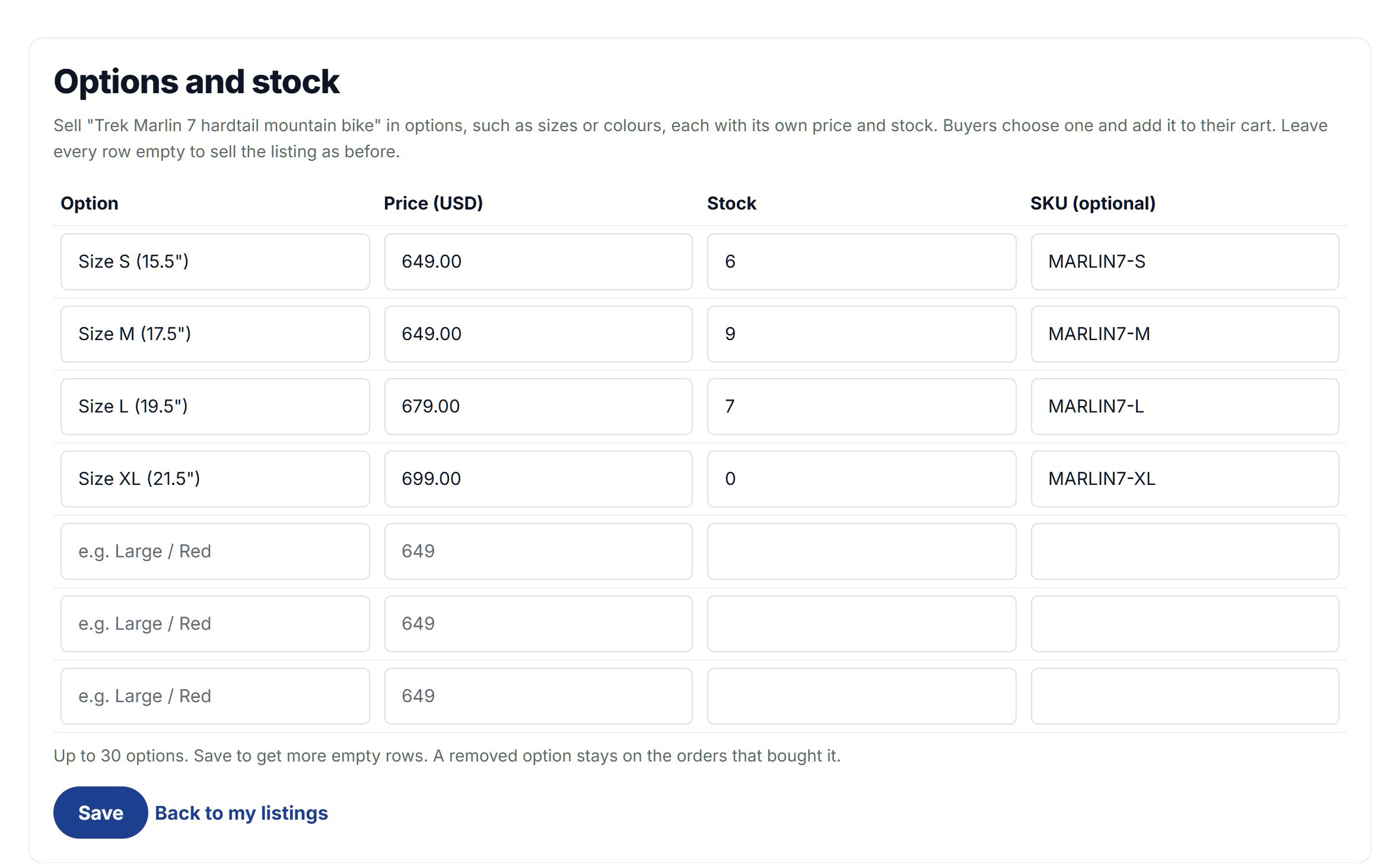
The buyer pays on the site by card through Stripe, the seller is paid through Stripe, and you keep a commission per sale. Each seller sets their own shipping, which matters for a heavy, boxed gown that should travel tracked and signed for. A bride can also add a veil from another seller to the same cart.
- Commission per sale as the main income. A lower founding rate helps you win the first boutiques.
- Buyer service fee if you prefer to keep the seller's rate low and competitive.
- Featured listings for designer gowns during engagement season, when brides browse most.
- Boutique memberships for shops that list samples every season and want a shop page.
- Banner spaces for alteration seamstresses, gown cleaning and preservation services, wedding photographers and planners.
Brides arrive with a budget and a date. Help them buy within both and they will tell their bridesmaids.
| Model | Works when | Switch it on |
|---|---|---|
| Commission per sale | Brides pay through checkout | From the first sale, founding rate for boutiques |
| Buyer service fee | You want a lower seller rate than competitors | After a few dozen sales |
| Featured gowns | Brides browse during engagement season | From late December into spring |
| Boutique memberships | Shops clear samples each season | Once three boutiques list regularly |
| Wedding services banners | Seamstresses and cleaners want brides | When one region has steady visitors |
Start with boutique samples, then reach brides after the wedding.
Boutiques are the fastest way to a full site. A single shop may hold dozens of samples and discontinued styles that it needs to clear before new collections arrive, and they come with designer names, style numbers and good photos.
Where the first dresses come from
- Bridal boutiques. Visit before sample sales and offer to list what does not sell in the store. Shops with a stock spreadsheet can import it as a CSV.
- Bridal shows and expos. Talk to boutiques, seamstresses and planners who exhibit, and collect sellers and partners in one day.
- Recent brides. Wedding planning groups, wedding forums and the newlyweds in your own circle. Brides often decide to sell a few months after the wedding.
- Alteration seamstresses and gown cleaners. They meet every bride before and after the day, and a card at their counter works well.
- Wedding planners and photographers, who can mention the site to every client after the wedding.
Make listing feel personal but quick. With the AI listing from a photo, the bride uploads a picture and gets a draft title, description, category and price to check, then adds the designer, measurements and alterations herself. Ask for at least six photos: front, back, the train, the label, any flaws, and one of the dress being worn if she is happy to share it.
Stop knockoffs and stolen photos, and agree the rules on fit and returns.
The most common fraud in this niche is the knockoff: a cheap copy sold with the designer's catalog photos, or a real listing whose photos were taken from a bride's social media. Brides who receive a copy are heartbroken, and the story spreads fast.
Rules worth setting
- Require the seller's own photos, including a close-up of the designer label and the size tag, and ban designer catalog images on their own.
- Ask for the style number and, where the bride has it, proof of purchase with the price hidden.
- Approve every listing and run a reverse image search on new sellers' photos.
- Use verified seller badges for boutiques and returning sellers once you have checked them.
Fit, condition and returns
Most disputes are about fit. Required measurements after alterations, and a note on how much seam allowance remains, prevent many of them. Condition matters too: hem dirt, makeup on the neckline and loose beading should be photographed. Gowns are usually final sale, but set a minimum rule that a dress significantly not as described can be returned, and ask each seller to state their policy.
Payment and shipping
Tell brides never to pay a seller outside the site, and to be wary of anyone who pushes for a quick payment by bank transfer because "another bride is interested". Advise sellers to ship with tracking and signature, and to buy the carrier's coverage for valuable gowns. For questions about designer trademarks, check the rules where you operate.

Rank for designer, style and size searches brides make at night.
Brides search with remarkable precision. Typical examples: "used Pronovias wedding dress size 10", "Maggie Sottero wedding dress for sale", "sample wedding dress sale Dallas", "pre-owned wedding dress under 1000", "plus size wedding dress secondhand", "modest wedding dress with sleeves", "never worn wedding dress Vera Wang".
Pages to build
- Designer pages for every brand your sellers list, each with a short note on how that designer's sizes run.
- Silhouette and neckline pages: A-line gowns, mermaid gowns, off the shoulder dresses.
- Size pages built from measurements, so a bride can find every gown with a 30-inch waist.
- City and region pages for brides who want to try on before buying.
- Price pages such as wedding dresses under a set amount, which match how budgets work.
Content worth writing
- How to buy a pre-owned dress you have not tried on.
- Bridal sizes against street sizes, and how to measure yourself.
- What alterations can and cannot fix, written with a local seamstress.
- How to clean and pack a gown for sale.
- Real stories: brides who bought and sold on your site.

Launch for engagement season, when new brides start looking.
Many couples get engaged between Christmas and Valentine's Day, and dress shopping starts in the weeks after. January is also the busiest month for bridal shows. Have a full site live by early December so your pages are indexed when the searches begin. On the supply side, the months after the summer and fall wedding seasons are when brides decide to sell.
First area and partners
- One metro area. Enough boutiques to give you a few hundred gowns, and brides close enough to arrange a try-on.
- Three boutiques. Their samples fill the site and give it credibility on day one.
- A bridal show stand in January, with a few gowns on display and cards for sellers and buyers.
- Seamstresses, cleaners and planners, who become your referral network.
Launch checklist
- At least a hundred gowns live, with designer, style and measurements.
- Photo rules and the ban on catalog-only listings published.
- Returns minimum and payment safety advice on every listing.
- Designer and size pages written.
- A guide to buying a gown you cannot try on.
- A test order with a gown and a veil from two sellers.
In late summer, contact last year's buyers. Many are ready to sell the gown on.
A worked example: Lantern Hall Gown Exchange, Dallas-Fort Worth.
Picture Lantern Hall Gown Exchange, a fictional marketplace for pre-owned and sample wedding dresses across the Dallas-Fort Worth area. The founder worked weekends as a bridal stylist for five years and kept hearing two things: brides who loved a designer gown but could not stretch the budget, and newlyweds asking the shop whether anyone would buy their dress. The boutique could help neither, so she built a place where both could meet, with measurements and alterations on every listing.
Her years in the fitting room shaped the rules. She knew which measurements a seamstress needs, which designers run small, and how often a bride falls for a gown in photos that would never fit her frame, so the listing form asks for exactly what she used to ask at the mirror.
Categories
- Wedding dresses
- Pre-owned
- New and never worn
- Boutique samples
- Plus-size and modest gowns
- Veils and accessories
- Bridal party
- Bridesmaid dresses
- Mother of the bride
Who it serves
Sellers are recent brides, three local boutiques clearing samples twice a year, and a few brides who bought a second dress and never wore the first. Buyers are brides from across north Texas, many of whom like being able to ask for a viewing before paying, and brides further away who buy on measurements and photos alone. Two seamstresses hand the site's card to every bride they fit.
How it started
The founder spent the fall visiting boutiques ahead of their winter sample sales and offered to list whatever did not sell in the store. Two agreed, and their stock spreadsheets became about a hundred and twenty listings. She added gowns from newlyweds she knew through work, booked a small stand at a January bridal show, and opened in the first week of December with around one hundred and seventy gowns.
How it makes money
A commission on each sale, set lower for the founding boutiques. During engagement season, sellers of designer gowns can pay to feature them on the home page. Boutiques pay a yearly membership for a shop page with a verified badge, and a gown preservation service and two alteration studios rent banners on the size and designer pages.
Boutique samples gave the site volume on day one; brides' own gowns gave it variety by spring.
| Listing | Price | Key details |
|---|---|---|
| Lace A-line gown, worn once | $1,150 | Tagged 10, bust 36 in, waist 29 in, hem shortened, bustle added, cleaned |
| Satin ball gown, boutique sample | $900 | Sample size 12, light makeup mark at neckline, cathedral train |
| Crepe sheath, new with tags | $650 | Size 6, ivory, never altered, receipt available |
| Long-sleeve modest gown | $1,300 | Size 18, high neck, chapel train, sleeves taken in |
| Lace-edged cathedral veil | $180 | 108 in long, ivory, single tier, comb attached |
The first 90 days: work back from engagement season.
Bridal demand follows the calendar more closely than most resale niches. Engagements cluster around the winter holidays and Valentine's Day, and dress shopping follows soon after. Supply runs on a different clock: boutiques clear samples when new collections land, and brides list a few months after the wedding. Your ninety days should line both up, so a full site meets the January wave.
For most founders that means starting in September. The first month goes on rules and boutique visits, because boutiques bring volume and credibility. The second goes on brides who married in spring and summer and are ready to let the dress go. The last month is for the pages brides find through search: designers, sizes and silhouettes.
Keep a running list of gowns by designer as they arrive. When one label dominates, recruit boutiques that carry others, since a site full of one designer looks like a single shop's clearance rail.
Do the same for sizes. Many sample gowns come in a small range of sizes, so ask brides who married in larger or smaller sizes to list early, and say on the home page which sizes you are looking for.
| Weeks | Focus | Done when |
|---|---|---|
| 1-2 | Rules and fields | Required measurements, alterations field, photo rules and the catalog-photo ban published |
| 3-5 | Boutiques | Three boutiques signed and their sample lists imported and reviewed |
| 6-7 | Recent brides | Posts approved in two wedding planning groups and forty gowns from individual brides live |
| 8-9 | Partners | Five seamstresses, gown cleaners or planners agree to hand out cards |
| 10 | Search pages | Designer, silhouette and size pages written and a guide to buying without a try-on published |
| 11 | Test and review | Two test orders shipped tracked and signed for; every listing checked against the photo rules |
| 12 | Opening | Bridal show stand booked, featured gowns switched on and local wedding press pitched |
Ways to build it: one-off, high-value gowns set the priorities.
A wedding dress marketplace sells single, expensive items that buyers judge on measurements and photos. That puts three demands on the software: many required fields per gown, large galleries of sharp photos, and checkout that handles a sale of a thousand dollars or more with card payment, payment to the seller and your commission. Look at how each route handles those before anything else.
Commissioning developers suits a founder with a specific idea, such as matching a bride's measurements to gowns automatically. Expect a long build, and expect a large part of the cost to go on payments and seller accounts that other routes already include.
Installing a marketplace script or multi-vendor WordPress plugin on your own server is cheaper at the start. Watch storage and page speed, since each gown may carry ten or more large photos, and test the required-field rules carefully, because a gown listed with only a tagged size is the start of a dispute.
A hosted builder removes the server work and usually includes card checkout, commission and a cart across sellers. Check that measurement fields can be required and shown as filters, and that you can approve every listing before it goes live.
Whatever you choose, test it the way a bride will use it: on a phone, late at night, filtering by waist measurement and designer, then opening a gallery of twelve photos on a slow connection.
| Route | Fits when | Watch out for |
|---|---|---|
| Custom build with developers | You want measurement matching or another tool built to your own design | High cost, a long build, and payment security is yours |
| Script or plugin on your own server | You have technical help and want to control every page | Photo storage, slow galleries, required fields that are easy to bypass |
| Hosted builder | You want boutique samples live before engagement season | Confirm required measurement fields, listing approval and checkout for high-value items |
| Online store platform with a multi-vendor app | A bridal boutique already sells online and wants to add brides' gowns | Seller payouts, approval of each gown and measurement filters may each need a separate paid app |
What a wedding dress marketplace costs to run.
The software is the smallest part of the bill. Most of the cost is your time in the first months: finding the first listings, answering questions and checking what gets posted.
Stripe processing fees apply to every gown sold, which on a high-value sale is a noticeable amount, so include them in your commission planning. Expect a stand fee if you exhibit at a bridal show, plus printed cards for boutique and seamstress counters.
| Cost | Typical range | On Yclas |
|---|---|---|
| Domain | $10 to $20 a year | Your own, with SSL included |
| Software and hosting | $0 to $100+ a month, plus plugins and updates | Marketplace $149 a month for checkout and commission |
| Design | $0 to $100 for a theme, or a designer | 109 looks included |
| Payment fees | About 3% per payment | Your Stripe or PayPal fees; Yclas takes nothing |
| Your time | 5 to 10 hours a week at the start | Finding listings, moderation, support |
Mistakes that sink wedding dress marketplaces.
- Accepting the tagged size alone. Bridal sizing runs small and nearly every worn gown has been altered, so a listing that says "size 8" tells a bride almost nothing. Require bust, waist, hips and hollow to hem as the gown is now, or do not publish it.
- Allowing designer catalog photos on their own. They are the favorite tool of knockoff sellers. A listing may include one for reference, but only next to the seller's own photos of the actual gown and its label.
- Launching after the engagement wave. A site that opens in March has missed the weeks when new brides search hardest, and its first months look quiet. Have a full site indexed by early December, with designer and size pages already written, so search engines have found you before the rush.
- Thin designer coverage. If two designers make up most of your stock, brides looking for anyone else leave at once. Recruit boutiques that carry different labels and check the mix every week. Price matters too: make sure brides with modest budgets find real choice, not only gowns above a thousand dollars.
- Treating final sale as a rule with no exceptions. Worn gowns are usually final sale, and that is reasonable. But a bride who receives a gown with a torn bodice, or a different style from the listing, needs a remedy, or she will dispute the card payment and tell every wedding group she belongs to. Publish a minimum rule for items significantly not as described.
- Letting payment move off the site. Off-site payment is where many bridal scams start, often with a story about another bride ready to pay today. Keep messages and payment on the site, and say so on every listing.
- Ignoring the people around the bride. Seamstresses, cleaners, planners and photographers meet every bride before and after the wedding. A site that does not win them over recruits sellers one at a time. Visit them in person, leave cards, and offer each a banner or a mention on the pages brides read most.
- Forgetting the second sale. A gown bought on your site will often be sold again after the wedding. Contact buyers a few months later and invite them to relist, starting from their original photos and measurements.
- Leaving packing to the seller's guesswork. A ball gown needs a large box, tissue between folds and tracked shipping with a signature. Give sellers a short packing guide so gowns do not arrive creased, crushed or soiled, and suggest that buyers steam or have the gown pressed before the first fitting.
Bridal resale terms a marketplace founder should know.
The bridal trade has its own vocabulary, and brides who shop seriously use it in their searches.
| Term | What it means |
|---|---|
| Sample gown | A dress a boutique used for try-ons, sold off when new collections arrive. |
| Off the rack | A gown bought from stock in the shop rather than ordered in the bride's size. |
| Style number | The designer's code for a gown, which buyers use to find catalog photos and the original price. |
| Hollow to hem | A measurement from the hollow at the base of the neck to the hem, used to set gown length. |
| Bustle | Hooks, buttons or ribbons added to lift the train off the floor after the ceremony. |
| Seam allowance | Extra fabric inside the seams that a seamstress can let out to make a gown larger. |
| Silhouette | The overall shape of a gown, such as ball gown, A-line, mermaid, trumpet or sheath. |
| Chapel train | A train of moderate length, longer than a sweep train and shorter than a cathedral train. |
| Cathedral length | The longest common length for trains and veils, reaching well beyond the feet. |
| Illusion | Sheer mesh or tulle that blends with the skin, used for necklines, sleeves and backs. |
| Preservation | Professional cleaning and boxed storage of a gown after the wedding. |
| Trunk show | A limited-time event where a designer's full collection visits a boutique. |
| Sweep train | The shortest train, which just brushes the floor behind the gown. |
| Ivory | An off-white shade, warmer than bright white, that photos often make hard to tell apart from it. |
The same steps for a wedding dress marketplace on Yclas.
- Describe your marketplaceThe setup wizard writes the categories, an About page and example listings from one sentence.
- Add fieldsThe details buyers filter on, as dropdowns, numbers or checkboxes.
- Bring sellersInvite them, import their stock from a spreadsheet, or post for them.
- Set the rulesChoose moderation, verified sellers, reviews and reports.
- Take paymentsOn Marketplace, buyers pay on the site and you keep a commission, with Stripe.
What does it cost to start a wedding dress resale site?
The biggest costs are a bridal show stand if you take one, printed cards for partners, and your time visiting boutiques. Card fees are charged per sale, so they only begin when gowns sell.
How do I make sure a dress is not a knockoff?
Require the seller's own photos with a close-up of the label, ask for the style number, ban catalog-only photos and reverse search new sellers' images. Verified badges for checked boutiques and repeat sellers help buyers choose.
Will brides really buy a dress they cannot try on?
Many do, when measurements are complete and the designer and style are known, because they can compare with the original. A local focus also lets some brides arrange a try-on before they pay.
Should gowns be returnable?
Most sellers sell as final sale, which is normal for worn gowns, but set a minimum rule that a dress significantly not as described can be returned. Ask every seller to state their own policy on the listing.
How do I get bridal boutiques to list samples?
Visit before their sample sales, offer a low founding commission and help them import their stock list. Boutiques need to clear samples every season, so a steady second channel is useful to them.
Is there enough demand outside big cities?
Yes, because buyers can order and have the gown shipped, but supply is easier to gather in a metro area with several boutiques. Start in one city and let shipping carry the reach.
Can I add bridesmaid dresses and suits later?
Yes, and they are a natural next step once the gown side works. Bridesmaid sets, mother of the bride outfits and accessories bring more orders from the same weddings.
Should sellers offer in-person viewings?
If they want to, yes, arranged through on-site messages in a public place or a setting the seller is comfortable with. Advise both sides to bring someone along, and to complete payment through the site checkout before the gown changes hands.
How do I set commission when gowns range from a few hundred to several thousand dollars?
Work out what a seller keeps at both ends after card fees, and check that the percentage still feels fair on the most expensive gowns. Some marketplaces give boutiques a lower rate through a membership instead of cutting the rate for everyone.
Can sellers list gowns that need repairs?
Yes, if the damage is clearly photographed and described and the price reflects it. Some brides want a project gown for their seamstress, but they need to know exactly what is wrong before paying.
Should I add suits and tuxedos?
They belong to the same weddings, but sizing works differently and many grooms rent rather than buy. Test demand with one small category before you spend time recruiting for it.
Should veils and accessories be sold with the gown or separately?
Allow both. A seller may prefer to list a gown and veil as one set, while many brides buy a gown from one seller and a veil from another, and the cart handles both in a single checkout.
Related pages.
The parts of Yclas this leans on.
You have the plan. Now build the place where every gown gets a second wedding.
Describe your site in a sentence and the setup wizard writes the categories, example listings and a look. Free for 15 days, no credit card.
Start my marketplace