How to build a sneaker marketplace where buyers trust the pair that arrives.
This guide covers how to build a sneaker marketplace: picking a corner of the resale world big apps serve badly, the size and condition fields buyers filter on, commission and fees that sellers accept, recruiting the first resellers, handling fakes and chargebacks without pretending to authenticate, and launching around release days and sneaker events.
Free for 15 days · No credit card · Plans from $19 a month
Find the sneakerheads the big resale apps leave out.
A sneaker marketplace has two sides that already know each other. Sellers are resellers who bought a few pairs on release day, collectors thinning out a closet, small consignment shops and people who wore a pair twice. Buyers are hunting a specific model in a specific size, often a pair that sold out in minutes, and they want to know exactly what they are getting before they pay.
The large resale apps work well for current hype releases in standard sizes. They work less well for used pairs, older models, rare sizes, local pickup, and communities that want to buy from people they know. That gap is your opening.
Pick your angle
- One city or region, with local pickup and meetups, so buyers can try a pair on before paying.
- One kind of shoe: basketball sneakers, vintage runners, skate shoes, retro releases from the 1990s and 2000s.
- One kind of buyer: big sizes (US 14 and up), small sizes and grade school, women's exclusives, or players who want performance pairs at fair prices.
- Used and beaters: worn pairs with honest photos, which many apps restrict or skip.
Today this trade happens in Facebook groups, Discord servers, Instagram stories, Reddit threads, consignment shops and at sneaker conventions. Every one of those places has the same weakness: payment and trust are left to the two strangers.
Pick a corner the apps treat as an afterthought, and own it.
Keep categories short and make size the first filter.
Sneaker buyers search by model and size before anything else. A buyer who wears a US 10.5 does not want to scroll through 9s. Keep categories one level deep, by kind of shoe, and put the details that decide a sale into fields.
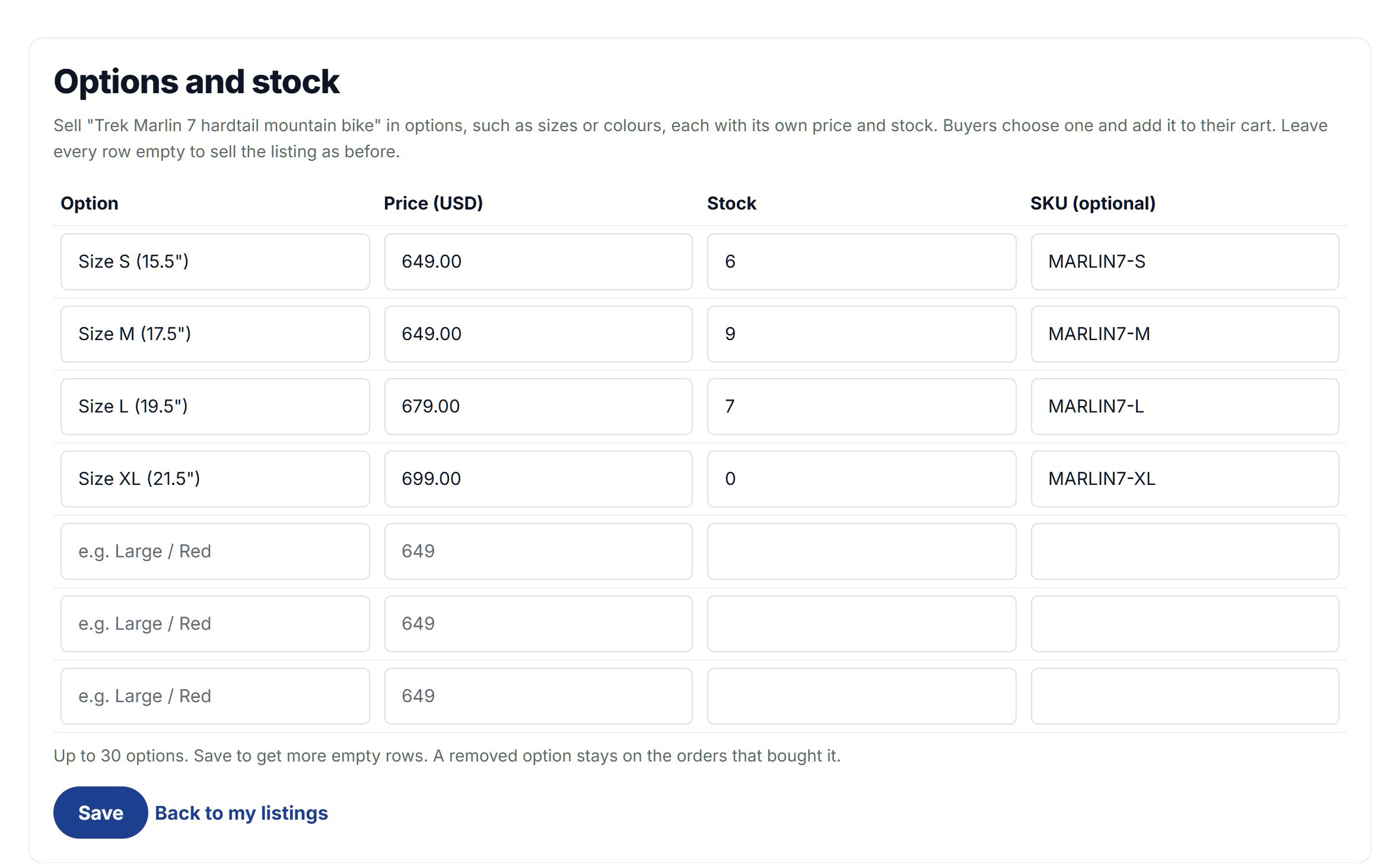
- Size should be a dropdown, with a separate field for the sizing system (US men's, US women's, grade school, toddler, UK, EU). Mixing systems is the most common source of returns.
- Brand, model and colorway help search. The style code printed on the box label and the size tag lets buyers match a pair to the exact release.
- Condition needs a fixed list that everyone reads the same way: deadstock (new, never tried on), new without box, very near deadstock, used with light wear, used with heavy wear.
- Box is its own dropdown: original box, original box damaged, replacement box, no box.
- Extras such as spare laces, receipt or original tags can be checkboxes.
Ask sellers for a set of photos on every listing: both sides, soles, heels, the size tag inside the tongue, the box label and a close view of any flaws.
| Category | Example listings | Fields buyers filter on |
|---|---|---|
| Basketball | Retro signature models, team colorways, player exclusives | Size, sizing system, condition, style code, box |
| Lifestyle and running | Classic runners, collaboration releases, everyday pairs | Brand, model, colorway, size, condition |
| Skate | Suede skate shoes, pro models, vintage skate pairs | Size, condition, wear on the toe, box |
| Vintage | Pairs from the 1980s to 2000s, original releases | Year, sole condition, yellowing, wearable or display only |
| Kids and grade school | GS, preschool and toddler sizes | Size, sizing system, condition |
| Apparel and accessories | Hoodies, caps, crease protectors, cleaning kits | Size, brand, new or used |
Yclas custom fields can be text, numbers, dropdowns, checkboxes or dates, required or optional, and each one can be a search filter.
Charge a commission sellers compare favorably to the big apps.
Resellers know their numbers to the dollar. They will compare your commission with the seller fees and payment processing they pay elsewhere, and they will notice if your cut eats their margin on a pair that sells close to retail. Set a commission per sale that is clearly lower than what they pay today, and say so plainly on the sell page.
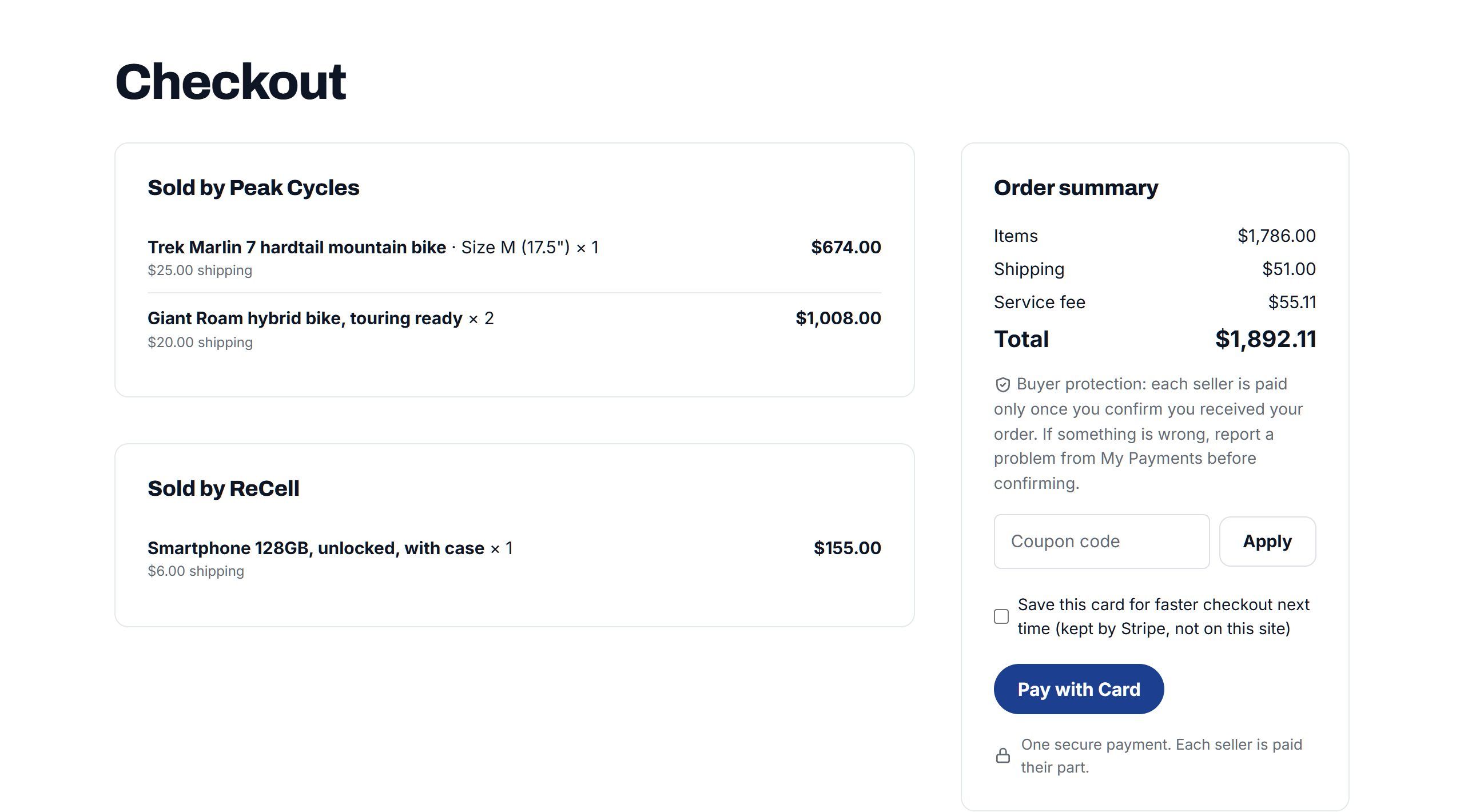
Buyers pay on the site with Stripe, the cart can hold pairs from several sellers, and each seller sets their own shipping. An optional buyer service fee lets you keep the seller commission low, though sneaker buyers watch the total at checkout closely, so keep it small or skip it at first.
- Featured listings suit sellers moving a rare pair or a big size run before a holiday.
- Bumps help used pairs that slide down the list after a few days.
- Seller memberships fit consignment shops and full-time resellers who list dozens of pairs a week.
- Banner spaces suit cleaning brands, local sneaker shops and customization artists.
Start with commission only. Add paid extras once sellers are getting regular sales.
| Model | Works when | Switch it on |
|---|---|---|
| Commission per sale | Pairs are selling every week | At launch, set below the resale apps |
| Buyer service fee | Buyers value the site for selection and trust | After a few months, kept small |
| Featured listings and bumps | Listings compete for the first page | When a category has more than a page of pairs |
| Seller memberships | Shops and resellers list in volume | When you have regular high-volume sellers |
| Banner spaces | Local businesses want sneakerhead traffic | Once you have steady visitors |
Recruit resellers and consignment shops before you invite buyers.
Buyers come for selection, so sellers come first. Aim for a few hundred pairs across the sizes your angle covers before you promote the site to buyers.
- Local consignment and resale shops. Many already sell online and want another channel. Offer to set up their inventory for them.
- Resellers you meet at sneaker conventions and pop-up markets. Bring cards and offer a lower commission for the first months.
- Admins of Facebook groups and Discord servers for your city or sub-niche. Their members already trade; you offer payment, shipping and a record of each sale.
- Collectors with large closets who want to clear space without dealing with app rules on used pairs.
- Cleaners and customizers, who often have restored pairs to sell.
Shops with spreadsheets of stock can be imported in one go from a CSV file, so ask for their inventory export rather than asking them to list pair by pair. For casual sellers, keep the sell form short and the photo checklist clear.
Set a rule early about what may be listed: only authentic pairs, no replicas, no "unauthorized authentic" claims. Writing it down before the first seller arrives is easier than enforcing it after.
A few serious shops with real inventory beat a hundred empty seller accounts.
Make fakes hard to sell and easy to report.
Counterfeits are the biggest risk in sneaker resale. Replicas have become good enough to fool casual buyers, and a marketplace that lets them through loses its reputation fast. Be clear in your terms and on every listing page: the marketplace does not authenticate sneakers. Sellers are responsible for what they sell, and you remove sellers who list fakes.
What you can do
- Ban replicas and "reps" outright, and add those words, along with "UA" and "1:1", to your banned words list.
- Require tagged photos: the pair next to a paper with the seller's username and the date, so stolen photos are easy to spot.
- Approve listings from new sellers before they go live, and hold any listing priced far below the going rate for review.
- Give trusted sellers a verified seller badge once they have a record of sales and good reviews, and make reviews visible on profiles.
- Tell buyers they can pay for an independent legit check service before or after buying, and that this is their choice and cost.
Payment and condition disputes
Expect "item not as described" claims and chargebacks, sometimes from buyers who swap a real pair for a fake and send it back. Require sellers to ship with tracking, to use signature on delivery above a set value, and to photograph the pair and box before sealing. Publish a returns policy that says what counts as not as described. Selling counterfeit goods is illegal in many countries; check the rules where you operate and act on reports from brand owners.
Rank for the exact model and size people type.
Sneaker searches are precise. People type the model, the colorway and often the size, and they compare prices before buying. Every listing and category gets its own page, so a well-titled listing can rank on its own.
- "retro basketball sneakers size 14"
- "used running shoes for sale near me"
- "where to sell sneakers locally"
- "how to tell if sneakers are fake"
- "vintage skate shoes for sale"
- "grade school sneakers resale"
Set your title pattern to put brand, model, colorway and size at the front. A listing called "Brand Model Colorway, US 11, deadstock" matches how people search far better than "Fire pair, must go".
Pages worth writing
- A size guide for each major brand, explaining how sizing runs and how US, UK and EU sizes compare.
- A condition guide with photos of each grade, so buyers and sellers agree on what "very near deadstock" means.
- Spotting fakes: general signs to check, written as advice for buyers, not as an authentication promise.
- Release calendars and recaps for your sub-niche, which bring people back every week.
- Cleaning and care guides, which also give cleaning brands a natural place to advertise.
If you run a local marketplace, add your city to category titles, so "sneakers for sale in" searches find you.

Launch around release days and sneaker events.
The sneaker calendar gives you natural moments to launch. Big release days send people looking for pairs they missed, and back-to-school and the holiday season bring parents and gift buyers into the market.
First community
Start with one city or one sub-niche where you can personally reach the main sellers. A local launch lets you host a meetup or a trade night at a partner shop, where sellers can list on the spot and buyers can see pairs in person.
Partners
- Sneaker shops and consignment stores that want an online channel.
- Cleaning and restoration businesses.
- Organizers of local sneaker conventions and pop-up markets, who often rent tables to the same resellers you want.
- Basketball leagues and running clubs for performance pairs.
Checklist
- Write the authenticity rules, the condition list and the returns policy.
- Set up size, sizing system, condition, box and style code fields.
- Sign up at least three shops or resellers with real inventory.
- Reach a few hundred pairs across the main sizes.
- Run test orders with friends, including a return.
- Announce in the groups and servers your sellers already use.
- Pick one release day or event as your public launch.
Launch with stock in the sizes people struggle to find.
A worked example: Second Lace Exchange in Chicago and northwest Indiana.
Second Lace Exchange is a made-up site, invented here to show how the steps in this guide fit together. It serves Chicago and the suburbs across the state line in northwest Indiana, a region with a deep basketball culture, plenty of independent sneaker shops and long winters that keep people trading indoors.
How it started
The founder ran a weekend table at sneaker conventions for years and kept meeting tall buyers in a US 13 and up who could never find pairs. He opened with one promise: every size from US 4 to US 18, used pairs welcome, and local handovers at two partner shops. Before telling buyers anything, he signed three consignment shops and about forty resellers from two Discord servers, imported the shops' stock from their spreadsheets and reached roughly six hundred pairs. The first weeks were slow until a shop owner posted a big-size restock in a local basketball league's group chat, and several of the earliest sales were US 14s bought by players who had given up looking.
Categories
- Basketball
- Retro signature models
- Performance pairs for playing
- Running and lifestyle
- Big sizes, US 13 and up
- Used and beaters
- Light wear
- Heavy wear
- Kids and grade school
Who it serves
Buyers are high school and rec league players who want performance pairs at a fair price, tall collectors tired of hunting big sizes online, parents buying grade school pairs for growing feet, and city collectors who would rather meet a seller at a shop counter than wait for a box from across the country. Sellers are the three shops, a few dozen part-time resellers and collectors clearing out closets. Many sellers are buyers as well, selling one pair to fund the next.
How it makes money
Buyers check out on the site and pay with Stripe, and the site keeps a commission per sale set a little under what its sellers paid on the national apps. Sellers set their own shipping, and the two partner shops act as handover points for nearby buyers who arrange it with the seller through messages. After the first holiday season it added featured listings for rare big-size pairs and a seller membership with a lower commission for the shops, which list new consignments every week. A local cleaning business pays for a banner on the condition guide.
| Listing | Price | Key details |
|---|---|---|
| Retro basketball high, black and red, US 15 | $240 | Deadstock, original box, style code shown, handover at a partner shop |
| Classic suede runner, grey, US 10 | $95 | Used with light wear, replacement box, spare laces included |
| Skate pro model, US 9.5 | $70 | Worn twice, small toe scuff photographed, original box |
| Grade school lifestyle low, white, 5Y | $60 | Very near deadstock, box damaged, ships with tracking |
| 1990s trainer, original release, US 11 | $180 | Display only, yellowed midsole, original box and receipt |
Your first 90 days, size by size.
A sneaker marketplace has a harder start than most, because buyers search for one size. A site with plenty of pairs but none in a buyer's size looks empty to that buyer. Put almost all of your first ninety days into supply, in the sizes your angle promises, and only then turn to buyers.
Pick a public launch date about twelve weeks out and tie it to something buyers already care about, such as a big retro release weekend, back-to-school or a local convention. Work backward from it. The first month covers rules and fields, the second covers sellers and stock, and the third covers test orders, content and a soft opening in the groups your sellers already use. Keep a simple count of your stock by size as you go, and recruit to fill the empty sizes rather than adding more pairs where you already have plenty.
Give each phase a number you can check, such as pairs per size or test orders completed, so you know when to move on instead of guessing. If a phase slips, push the launch date back rather than opening thin, because sneaker buyers who find nothing in their size rarely give a site a second look.
| Weeks | Focus | Done when |
|---|---|---|
| 1-2 | Rules and setup | Authenticity rules, condition grades, the returns policy and the size, sizing system and box fields are live |
| 3-4 | Anchor sellers | Two or three consignment shops have agreed to list and sent their stock spreadsheets |
| 5-6 | Imports and photos | Shop stock is imported and every pair has the full photo set, including the size tag |
| 7-8 | Resellers and collectors | Thirty or more individual sellers have listed, and no size in your range has zero pairs |
| 9-10 | Test orders and guides | Five test orders, one return and one local handover are done, and the size and condition guides are published |
| 11-12 | Public launch | The launch post is out in your sellers' groups and servers, timed to the chosen release or event, and the first outside buyer has paid |
Three ways to build a sneaker marketplace.
A sneaker marketplace needs more than a listing board. Buyers have to pay on the site, the cart has to handle pairs from several sellers with their own shipping, size has to work as a strict filter, and you need to hold new sellers' listings for review before fakes reach the page. Shop imports matter too, since consignment stores track their stock in spreadsheets. Saved searches with email alerts also earn their place here, because a buyer chasing one model in one size wants to hear the moment it is listed instead of checking every day.
Hiring developers suits a founder with a specific idea no package covers, such as a live price feed from past sales or an in-house authentication center with staff inspecting pairs. Both are large, ongoing projects, and payments between buyers and many sellers are the hardest part to get right.
A marketplace script or WordPress plugin on your own server gives you control and a low starting cost, but you handle hosting, security updates, payment setup and spam. Multi-seller checkout often means chaining several plugins, and one update can break the chain on a release weekend when traffic peaks.
A hosted builder such as Yclas gives you checkout with a commission per sale, a cart across sellers, custom fields for size and condition, and moderation tools without a server to run. You give up some freedom to change how the site works underneath, which matters less when your real work happens in shops, Discord servers and convention halls.
| Route | Fits when | Watch out for |
|---|---|---|
| Developers | You need a feature no package has, like your own authentication flow | Long build time, ongoing cost and the payment rules between many sellers |
| Script or plugin on your server | You or a partner can run servers and want full control | Plugin conflicts, security updates and slow pages on busy release days |
| Hosted builder | You want your time on recruiting sellers, not on maintaining code | Less room for custom features; check that checkout and fields fit your rules |
What a sneaker marketplace costs to run.
The software is the smallest part of the bill. Most of the cost is your time in the first months: finding the first listings, answering questions and checking what gets posted.
Budget for tagged photo guidelines, a supply of test orders, and a table or sponsorship at a local sneaker event. Independent legit check services are paid by the buyer or seller who uses them, not by the marketplace.
| Cost | Typical range | On Yclas |
|---|---|---|
| Domain | $10 to $20 a year | Your own, with SSL included |
| Software and hosting | $0 to $100+ a month, plus plugins and updates | Marketplace $149 a month for checkout and commission |
| Design | $0 to $100 for a theme, or a designer | 109 looks included |
| Payment fees | About 3% per payment | Your Stripe or PayPal fees; Yclas takes nothing |
| Your time | 5 to 10 hours a week at the start | Finding listings, moderation, support |
Mistakes that sink sneaker marketplaces.
- Treating size as free text. When sellers type "10", "10M", "US10" and "44" into one box, the size filter breaks and buyers leave. Make size a dropdown with a separate sizing system field, and send back listings that skip it. Grade school and toddler sizes need their own values, since a 5Y and a men's 5 are not the same shoe.
- Chasing hype releases. On the latest drop in a common size you compete with the biggest apps on price, speed and buyer protection, and you lose. Their buyers also expect fast shipping and guarantees you cannot match on day one. Put your effort into the pairs they handle poorly: used, older, odd sizes and local.
- Letting replicas in for a while. One week of labeled reps tells every serious seller what kind of site you run, and some never come back. Ban them before launch and hold any pair priced far below the market.
- Accepting stock photos. A catalog image proves nothing about the pair in the box. Require the seller's own photos of soles, heels, the size tag and the box label, plus one tagged photo with username and date. Listings that reuse photos from another site are a common sign of a seller who does not hold the pair.
- Vague condition words. "Good condition" means something different to every seller and turns into a return. Use a fixed condition list and publish photos of each grade, so both sides read it the same way.
- No plan for the swapped return. Some buyers send back a different pair than the one they received. Ask sellers to photograph the pair, its tag and any marks before sealing the box, and say in your returns policy that returned pairs must match those photos.
- A commission that eats a near-retail sale. Many resale pairs sell close to what the seller paid. If your cut plus card processing wipes out the margin, resellers list elsewhere. Show them, on the sell page, what they keep on a typical pair, worked out with real numbers.
- Opening with gaps in the size run. A buyer in a US 12 who finds nothing will not check again next week. Track stock by size and recruit to fill the empty ones before you advertise. Big and small sizes are often the gaps, and also the reason a niche site gets chosen.
- Ignoring the calendar. Opening in a quiet stretch, with no release, school start or holiday in sight, wastes the attention you could get. Time your launch and later promotions to moments when buyers are already searching.
Sneaker terms to know before you launch.
Resellers and collectors use these words in nearly every listing and message.
| Term | What it means |
|---|---|
| DS | Deadstock: new, unworn and never tried on, usually with the original box. |
| VNDS | Very near deadstock: tried on or worn once or twice with no visible wear. |
| Beaters | Pairs bought or sold to be worn hard, priced for use rather than for collecting. |
| Colorway | The combination of colors a model was released in, often with its own name. |
| Style code | The maker's code on the box label and size tag that identifies the exact model and colorway. |
| GS | Grade school: older kids' sizes, which some adults with small feet also buy. |
| Retro | A re-release of an older model, often in its original colors. |
| PE | Player exclusive: a pair made for one athlete, sometimes released to the public later. |
| Reps or UA | Slang for replica pairs, sometimes falsely sold as "unauthorized authentic"; fakes either way. |
| Legit check | An opinion on whether a pair is genuine, from an experienced collector or a paid service. |
| Retail | The original store price, which resale prices are measured against. |
| Drop | A release of a new pair or colorway, often limited and gone within minutes. |
| Box label | The sticker on the end of the box showing the model, size, colorway and style code. |
| Consignment | An arrangement where a shop sells a pair for its owner and keeps a share of the price. |
The same steps for a sneaker marketplace on Yclas.
- Describe your marketplaceThe setup wizard writes the categories, an About page and example listings from one sentence.
- Add fieldsThe details buyers filter on, as dropdowns, numbers or checkboxes.
- Bring sellersInvite them, import their stock from a spreadsheet, or post for them.
- Set the rulesChoose moderation, verified sellers, reviews and reports.
- Take paymentsOn Marketplace, buyers pay on the site and you keep a commission, with Stripe.
How much money do I need to start a sneaker marketplace?
Very little beyond the software and a domain, as long as you do not hold stock. Spend on getting sellers listed: event tables, small ads in local groups, and your own time setting up shop inventories.
Do I have to authenticate every pair?
No, and you should not claim to. Make sellers responsible for authenticity, ban replicas, review new sellers, and point buyers to independent legit check services they can use at their own cost.
Is it legal to run a sneaker resale site?
Reselling genuine sneakers is legal in most places, while selling counterfeits is illegal in many countries. Check the rules where you operate, and remove listings when a brand owner reports them.
How do I compete with the big resale apps?
Do not fight them on hype releases in standard sizes. Win on used pairs, rare sizes, vintage models, local pickup, or a community that wants to buy from people it knows.
What commission should I charge?
Look at what your sellers pay elsewhere in fees and processing, and set yours visibly lower. You can raise it a little later once sellers are getting steady sales.
How do I handle chargebacks and fake returns?
Ask sellers for tracking, signature on high-value orders, and photos of the pair before shipping. A written returns policy and good records make it easier to answer a payment dispute.
Should I allow replicas if they are clearly labeled?
No. Labeled replicas still infringe trademarks in many countries, scare off serious sellers, and attract payment processor problems. Ban them in your rules from day one.
Should sellers offer local handovers as well as shipping?
If your angle is a city or region, yes, because trying a pair on before paying is a big reason buyers would pick you over the apps. Ask buyers to pay through the site first, and suggest partner shops or busy public places for the handover.
Can sellers list pairs they do not have yet?
Pre-orders on pairs the seller does not hold cause cancellations and disputes when a release falls through or a delivery is late. Most small marketplaces allow only pairs in hand, and say so in their rules.
Should I include streetwear and accessories?
A small apparel and accessories category helps sellers clear hoodies, caps and cleaning kits, but keep sneakers at the center. Fakes are common in streetwear too, so the same rules and banned words apply.
How many pairs should I have before I open?
Enough that most buyers in your size range find several options. For a city site that might be a few hundred pairs; count by size, not only in total.
What do I do when a buyer says a pair is fake?
Ask for photos and any legit check result the buyer has, and pause the seller's other listings while you look. You are not the judge of authenticity, but you decide who sells on your site: ask the seller to accept the return under your policy, and remove sellers who list fakes.
Related pages.
The parts of Yclas this leans on.
You have the plan. Now build the sneaker marketplace your city has been missing.
Describe your site in a sentence and the setup wizard writes the categories, example listings and a look. Free for 15 days, no credit card.
Start my marketplace