How to build an equipment rental marketplace where idle machines earn by the day.
This guide covers building a marketplace where contractors, farmers and rental yards hire out machines by the day or week: choosing a region and machine type, the specs renters filter on, daily and weekly rates with deposits, a commission owners accept, finding the first fleets, damage and safety rules, the searches to rank for, and a launch timed to the building and harvest seasons.
Free for 15 days · No credit card · Plans from $19 a month
Match idle machines with crews who need them for a few days.
Heavy equipment is expensive to own and sits unused for much of the year. A landscaper's mini excavator is idle every winter week; a farmer's telehandler waits between harvests; a contractor finishes a job and parks a skid steer for a month. On the other side, small builders, landscapers, fencing crews and landowners need a machine for three days, not a purchase. The big rental chains serve them, but stock runs short in busy weeks, branches are far from rural jobs, and specialty attachments are hard to find.
The two sides
- Owners: independent rental yards, contractors with spare machines, farmers, landscaping firms, and owner-operators who rent with or without an operator.
- Renters: small contractors, landscapers, farmers, event and film crews, and capable homeowners clearing land or digging a pond.
Pick the angle
- One region. Machines are delivered on trailers, so a region of a few hours' drive keeps delivery practical.
- One machine type. Compact earthmoving, aerial lifts, farm machinery, or road and paving equipment.
- One renter type. Trades crews renting by the week, or homeowners renting small machines for a weekend.
This is a rental site, not a place to sell machines. Listings stay up all year and earn again every time the calendar fills. Today this trade happens by phone between contractors who know each other, at independent yards, and in local trade groups.
Owners join to earn from idle weeks. Show them a full calendar on someone else's machine and they list theirs.
List each machine with the specs, rates and terms renters compare.
Keep categories to machine families: excavators, skid steers and track loaders, aerial lifts, telehandlers, compaction, trenchers, farm machinery, attachments. Renters search by what the job needs: dig depth, lift height, platform height, machine width for a gate, operating weight for a trailer. Put those specs in fields, not in the description.
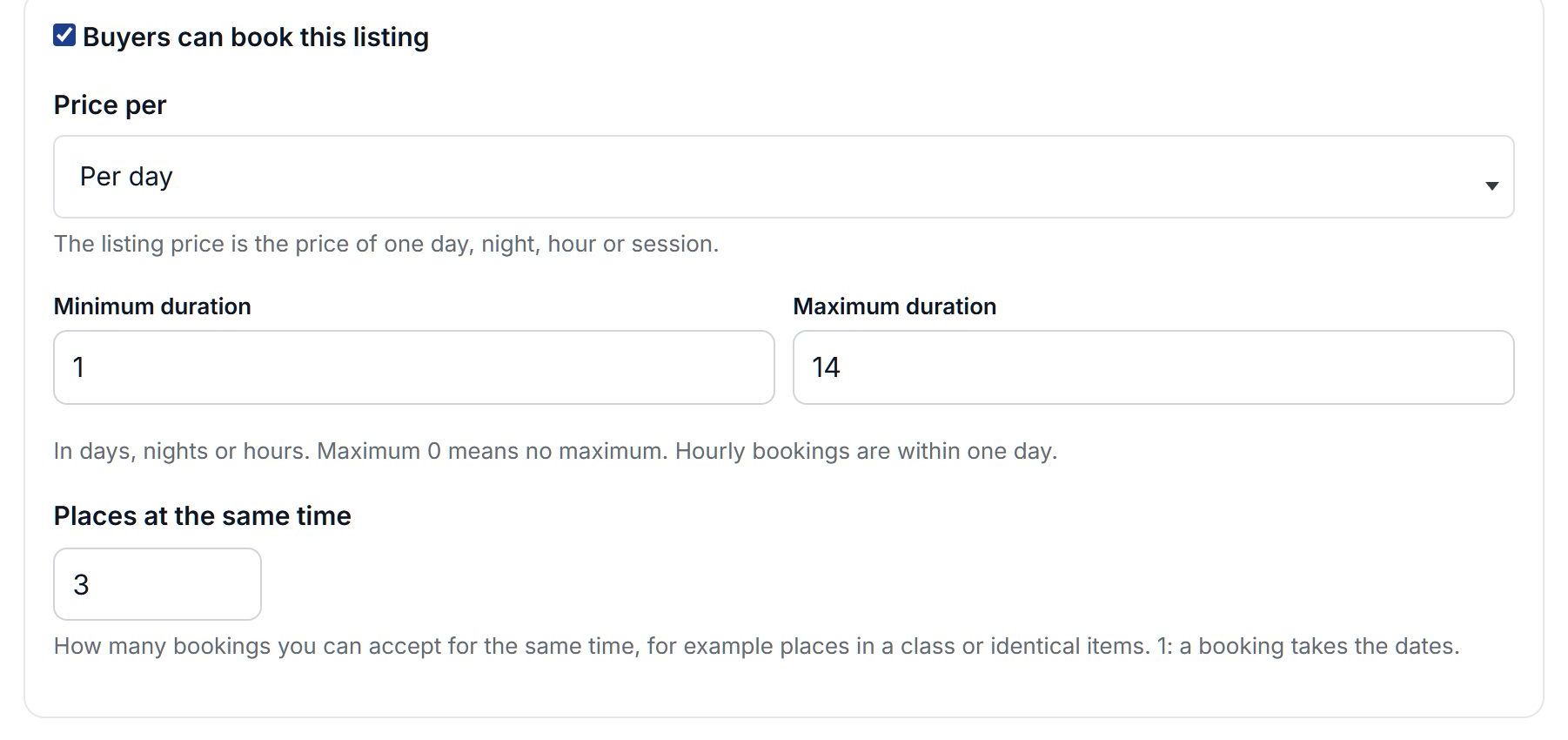
Rental terms matter as much as specs. Each listing needs a daily rate, a weekly rate, the deposit, a minimum rental period, whether delivery is offered and how it is charged, and whether an operator is included. Add the hour meter reading so the owner can record hours used, and a fuel policy, since most owners expect a machine back full.
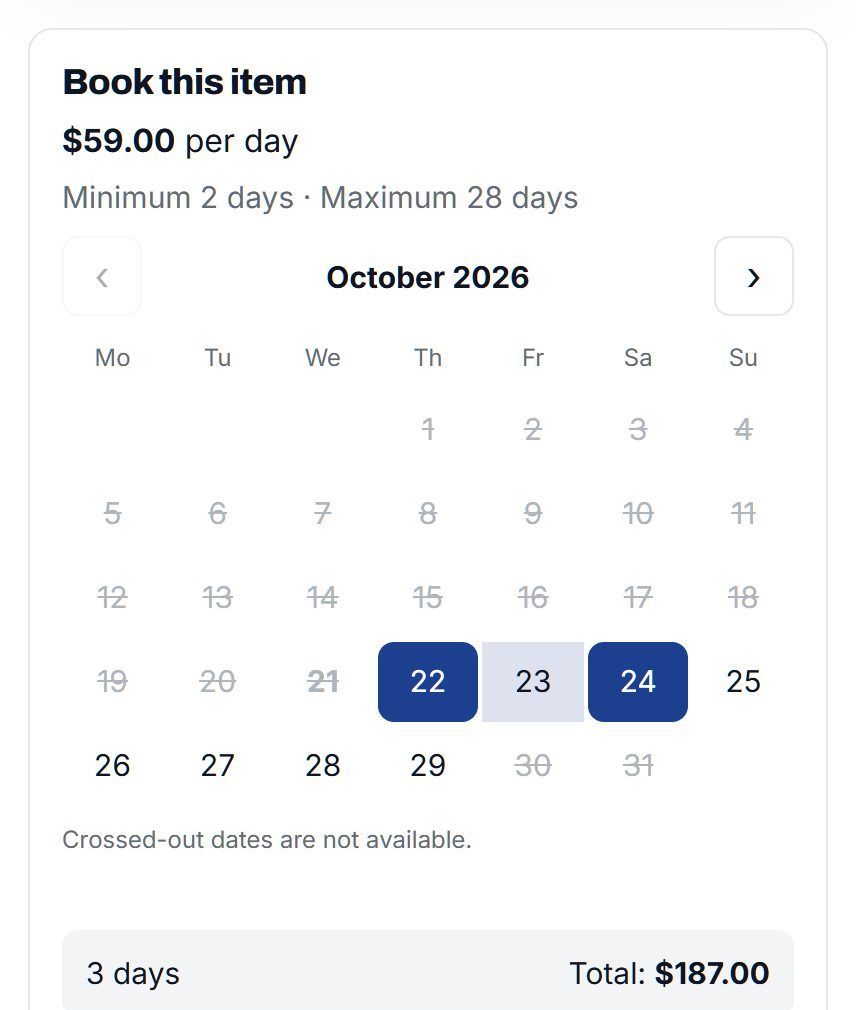
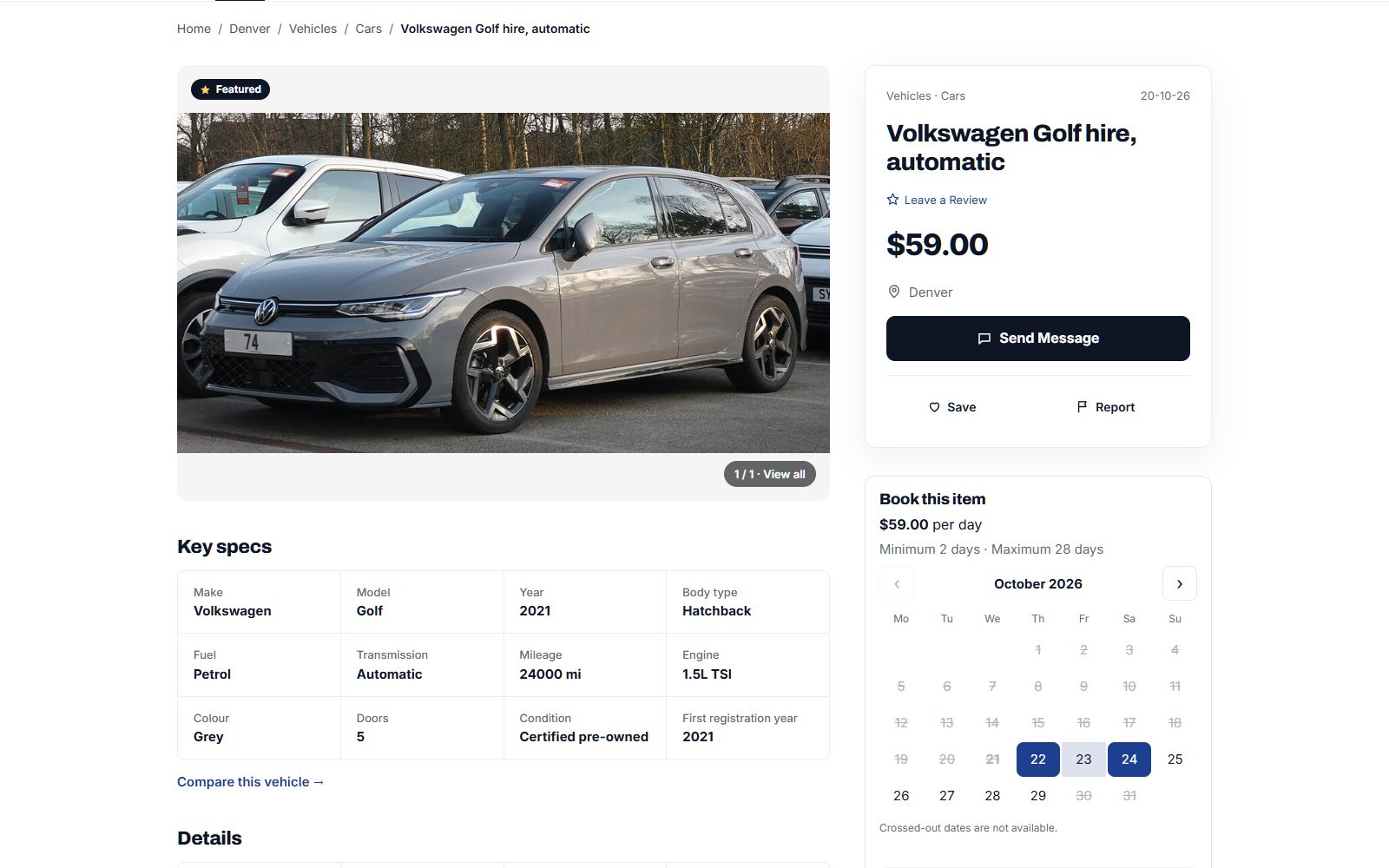
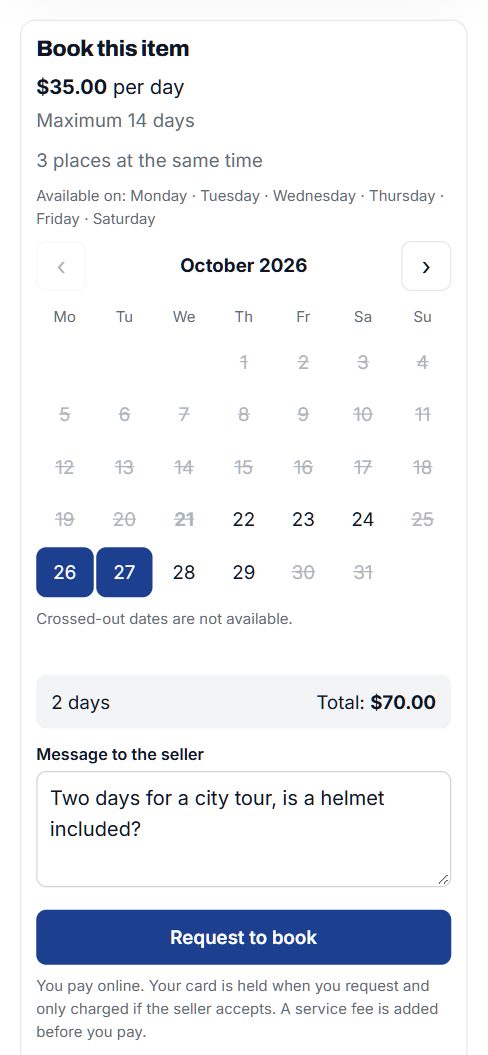
In Yclas, rentals come with a booking calendar, prices per day or week, and a deposit, so renters see available dates before they ask. Add the machine's year and last service date as well: renters booking for a week want a machine that will not break down on day two.
| Category | Example listings | Fields renters filter on |
|---|---|---|
| Mini excavators | 1.8-ton mini excavator with three buckets | Operating weight, dig depth, width, buckets included, daily rate |
| Skid steers and track loaders | Compact track loader with forks and grapple | Rated operating capacity, tracks or wheels, attachments, weekly rate |
| Aerial lifts | 40 ft articulating boom lift | Platform height, power type, indoor or outdoor, delivery |
| Telehandlers | 8,000 lb telehandler, 42 ft reach | Lift capacity, reach, operator available |
| Farm machinery | Hay rake; no-till drill; post driver | Working width, tractor horsepower needed, hitch type |
| Attachments | Auger with 12 in bit; trencher; brush cutter | Fits which machines, coupler type, deposit |
Make "operator included" a checkbox. Renting a machine alone and hiring it with an operator are different jobs and draw different renters.
Take a share of each booking and let owners set their own rates.
Renters pay through the site when they book, and you keep a commission on each rental. Owners compare that to the cost of the machine sitting idle, which makes a reasonable share easy to accept for spare machines. Independent rental yards are tougher: they already have customers and will judge your commission against their own margins, so offer them something extra, such as featured placement or a membership.
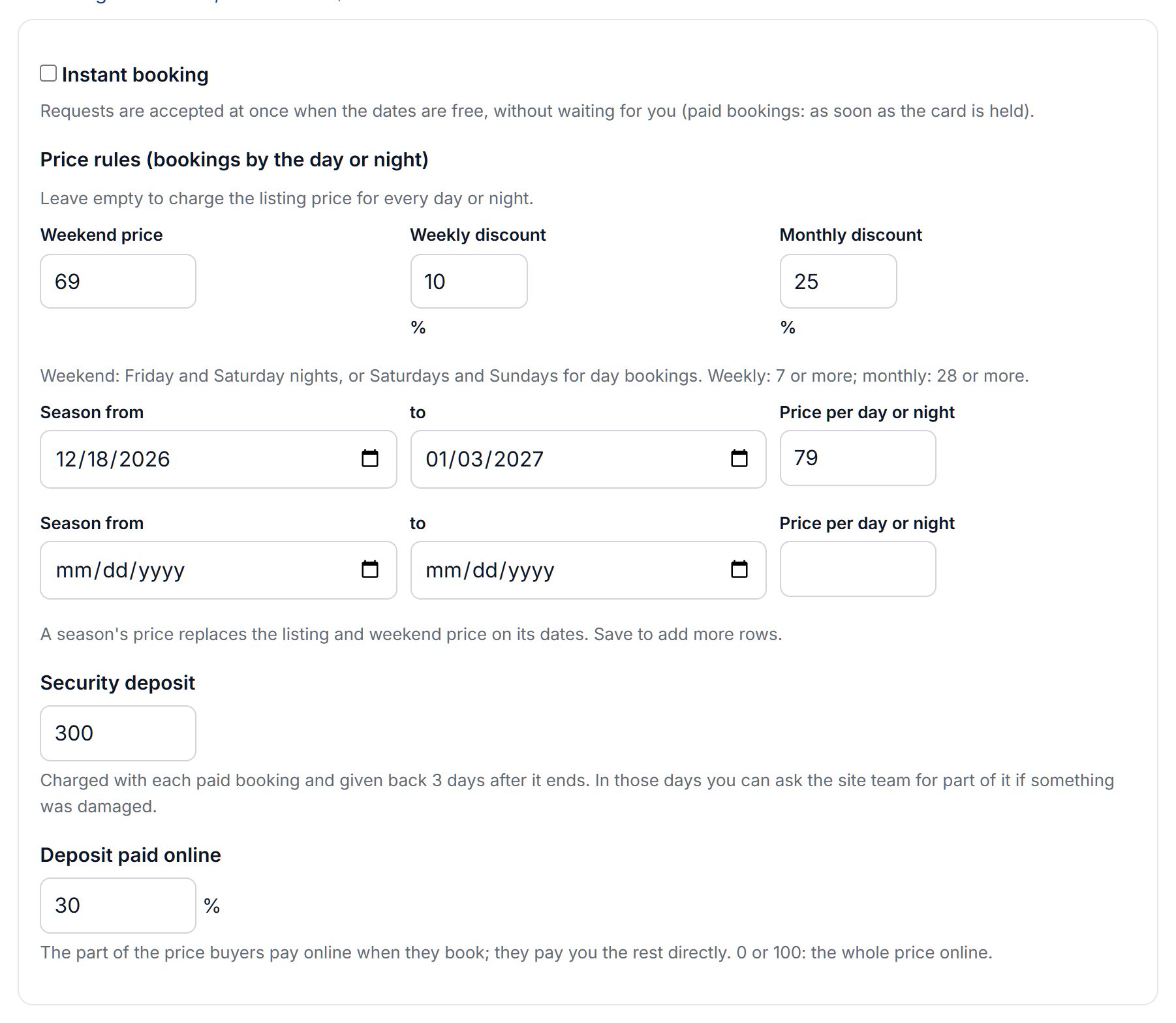
Deposits protect owners against damage, late returns and missing attachments. Set clear guidance: a deposit sized to the machine, stated on the listing, and the conditions under which part of it is kept. The deposit is between owner and renter; explain your rules but do not promise to settle disputes yourself.
A buyer service fee on each booking can cover your costs on small rentals where commission is tiny. Featured listings suit owners who want their machines on top in spring. Seller memberships fit rental yards and contractors with many machines. Banner spaces suit trailer dealers, fuel suppliers, attachment makers and training providers.
| Model | Works when | Switch it on |
|---|---|---|
| Commission per booking | Renters book and pay on the site | From the first booking |
| Renter service fee | Short rentals of small machines | After the first busy season |
| Featured listings | Many similar machines compete in one area | When a category has several owners |
| Owner memberships | Rental yards list a whole fleet | Once a few yards have joined |
| Banner spaces | Trailer dealers, attachment makers or training providers want contractors' attention | When you can show renter numbers |
Recruit fleets and spare machines before you look for renters.
A renter who finds no machine in their area will not return. Fill one region first, starting with owners who have several machines.
- Independent rental yards. They compete with national chains and want more reach. Their fleet list can be imported from a spreadsheet as a CSV in one go.
- Contractors with spare machines. Excavation, landscaping and fencing firms often own more than they use in slow months. Ask at equipment dealers, supply yards and contractor associations.
- Farmers. Machinery used a few weeks a year can earn the rest of the time. Farm shows, co-ops and machinery rings are the places to meet them.
- Owner-operators. One person with a machine and a trailer who rents with themselves as operator.
- Equipment dealers. Some run rental fleets and want to rent out demo or trade-in machines.
Visit owners in person where you can. Take photos of each machine, read the hour meter, note the attachments and agree the rates and deposit together. Seed the calendars with real availability so renters see open dates from the first day.
Five rental yards with full fleets make a stronger launch than fifty owners with one machine each.
Write rules for damage, safety and fake renters before the first booking.
Equipment rental carries real money and real danger, so the rules need to be clear from the start.
- Damage disputes. The most common problem. Ask owners and renters to take photos of the machine and record the hour meter and fuel level at handover and return, and to agree what counts as normal wear.
- Insurance. Renters usually need insurance or a damage waiver, and owners need cover for renting out. Requirements differ by place and by insurer; check the rules where you operate, and tell both sides it is their responsibility. Do not suggest the site insures anything.
- Operator training and licensing. Some machines need certified operators and some sites require proof of training. Rules vary; ask owners to state what they require and to check it at handover.
- Fake renters and theft. Machines have been stolen by people posing as renters. Owners should check ID and business details, and may refuse first-time renters for expensive machines without references.
- Payment scams. Fake listings with low rates asking for a deposit by wire transfer. Tell renters to pay only through the site's checkout, and hold new owners' listings for review.
- Transport. Moving machines needs the right trailer and tow vehicle. Make delivery terms clear and warn renters not to tow beyond their vehicle's limits.
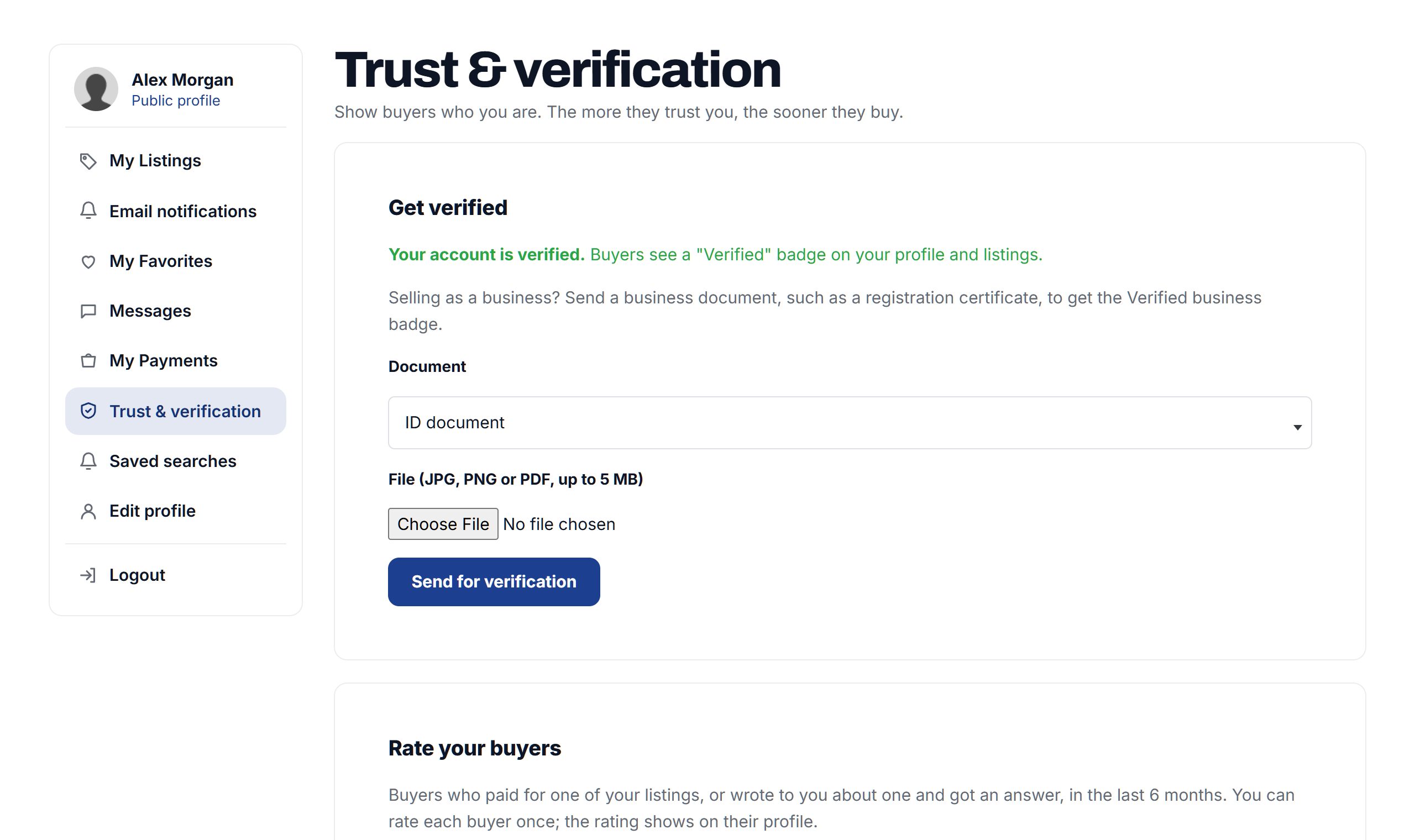
Verified owner badges, ratings and reviews on both sides help owners trust renters and renters trust machines.
Rank for local rental searches by machine and town.
People search for a machine and a place, often in a hurry: "mini excavator rental near me", "skid steer rental weekend price", "boom lift rental Austin", "rent a post hole auger for tractor" and "telehandler hire with operator". Many add "cheap", "weekly" or "delivered".
Pages to build
- Machine and location pages: "Mini excavator rental in Boise", "Aerial lift rental in Tampa". Each machine, category and location gets its own page.
- Rate guides: what daily and weekly rental of common machines usually costs in your region, based on your own listings.
- Which-machine guides: mini excavator or backhoe for a septic job, scissor lift or boom lift for siding, what size skid steer fits a backyard gate.
- Job guides: renting equipment to clear land, dig a pond, build a fence line, pour a driveway.
Rental pages stay useful all year because the same machine is booked again and again, so a well-ranked listing keeps paying back. Write the machine's specs and the town in each title.
Launch before spring building season, with one region and a few fleets.
Demand for construction and landscaping machines rises in spring and stays high through fall in most climates. Farm machinery follows planting and harvest. Snow removal equipment flips the calendar. Launch a month or two before your main season, so calendars are filled with availability when renters start searching.
First steps
- One region where delivery from most owners takes under a couple of hours.
- Three to five rental yards or contractors with several machines each.
- A stand or a conversation at the regional farm show, home show or contractor trade show.
- A local equipment dealer or trailer dealer as a partner.
Launch checklist
- Daily rate, weekly rate, deposit and minimum period on every listing.
- Calendars up to date for the next three months.
- Handover rules for photos, hour meter and fuel published.
- Insurance and operator training expectations stated on every listing.
- Delivery area and price shown by each owner.
After the first season, look at what renters searched for and could not book, and recruit owners of those machines next.
A worked example: Palouse Iron Share, eastern Washington and north Idaho.
Meet Palouse Iron Share, a fictional equipment rental marketplace covering the rolling wheat country between Spokane, Pullman and Moscow, Idaho. It is a region of large farms, small towns and long drives, where the nearest branch of a national rental chain can be an hour away and often has nothing left in late spring.
How it started
The founder ran a small excavation company with three machines: a mini excavator, a compact track loader and a skid steer. Every winter, and again during the summer harvest when farm clients had no time for projects, at least one machine sat in his shop for weeks. He started renting them to two landscapers he trusted, by phone and on a paper calendar. When an independent rental yard in a nearby town asked whether he knew anyone with a spare telehandler, he realized the region had plenty of idle machines and no place to find them. He signed the yard, four contractors and six farmers over one winter, visiting each to photograph machines and read hour meters.
Categories
- Earthmoving
- Mini excavators
- Skid steers and track loaders
- Lifting
- Telehandlers
- Boom and scissor lifts
- Farm machinery
- Tillage and seeding
- Hay equipment
- Grain handling
- Attachments
- Augers and post drivers
- Grapples and brush cutters
Who it serves
Renters are small contractors and landscapers, farmers who need a second machine at planting time, and rural landowners clearing brush, digging stock ponds or setting fence posts. A few university facilities crews rent lifts for one-off jobs. Owners range from the rental yard with forty machines to a retired farmer with one hay rake. What they share is a machine that costs them money every week it sits in the shed, and no time to chase renters by phone.
How it makes money
Palouse Iron Share keeps a commission on each booking. Renters pay a small service fee on rentals shorter than three days, where the commission alone would not cover the work of a booking. The rental yard and a contractor with a large fleet pay for memberships, and a trailer dealer holds the banner space through spring. In the second season, featured listings filled up for the weeks before planting, when farmers compete for the same few no-till drills.
Every owner uses the same handover sheet: photos from four sides, hour meter, fuel level and attachments, signed by both people. In the first season that sheet settled every damage question without the founder having to step in, and owners who joined later asked for it by name.
| Listing | Daily and weekly rate | Key details |
|---|---|---|
| 3.5-ton mini excavator with thumb | $330 a day, $1,250 a week | Two buckets, 1,840 hours, $1,000 deposit, delivery within 40 miles |
| Compact track loader, 74 hp | $350 a day, $1,300 a week | Bucket and pallet forks, $1,500 deposit, renter needs a 14,000 lb trailer |
| 50 ft towable boom lift | $280 a day, $900 a week | Tows behind a three-quarter-ton pickup, outdoor use, training shown at handover |
| Grain auger, 10 in by 61 ft | $150 a day, $600 a week | PTO driven, available outside harvest dates, safety briefing at pickup |
| Hydraulic post driver attachment | $120 a day, $450 a week | Fits skid steer universal quick attach, $500 deposit |
The first 90 days: fill the calendars before you find the renters.
In equipment rental, a listing without open dates is worse than no listing, because a renter who finds a machine and cannot book it rarely comes back. So the first 90 days are about owners and their calendars. Start the plan in the slow season, usually winter, when contractors and farmers have time to meet and their machines are parked in front of you.
Write the rules before the first visit: what the deposit should cover, what happens at handover and return, who arranges insurance, which machines need proof of training, how delivery is priced. Owners will ask about every one of these, and an answer on paper earns more trust than a promise to work it out later.
Visit owners in person where you can. Photograph each machine, read the hour meter, list the attachments, set the daily and weekly rates and the deposit together, and block out the dates the owner needs the machine. Then run a few test rentals between owners who already know each other before you open to strangers. Those test weeks show which rules are unclear while the stakes are low and the people involved are forgiving.
| Weeks | Focus | Done when |
|---|---|---|
| 1-2 | Pick the region and machine types | You can draw the delivery area on a map and name the three machine families you will lead with |
| 3-4 | Write rental rules | Deposit guidance, handover checklist, insurance and training expectations are on one page owners have read |
| 5-7 | Sign fleets and spare machines | Three yards or contractors and ten single-machine owners are listed with rates, deposits and photos |
| 8-9 | Fill the calendars | Every machine shows real availability for the next three months, with the owner's own dates blocked |
| 10-11 | Run test rentals | Five paid bookings between owners and renters you know, each with a signed handover sheet |
| 12 | Open to the public | Machine and town pages are live, and a farm show, dealer or contractor association has announced the site |
Ways to build it, judged by calendars, deposits and many owners.
An equipment rental marketplace has requirements a normal shop does not. Each machine needs its own availability calendar, a daily and a weekly price, a deposit, and payment that goes to the right owner. Owners need to block dates for their own work, and renters need to see open dates before they ask. Any route that cannot do all of this for many owners at once will push you back to phone calls.
Building it yourself with developers fits a company that wants telematics links to read hour meters and locations automatically, damage waivers priced per rental, or dispatch tools for delivery trucks. These are real advantages for a large fleet, but they take a long build and a large budget, and none of them helps until owners have listed. Most founders who need them add them later, once they know which ones renters and owners actually ask for.
Installing a booking plugin or rental script on your own server is common for a single rental yard. For a marketplace, check that it supports many owners, each paid for their own machines, and deposits per listing. Many booking plugins assume one business and one bank account.
A hosted builder such as Yclas already handles rentals with a booking calendar, prices per day or week, and deposits, alongside payment to each owner through Stripe. You give up custom features such as telematics or delivery dispatch, and you write your handover and damage rules yourself.
Test any route with one real week: two owners, three machines, one renter who books, picks up, extends by a day and returns late. That week shows you where each route breaks.
| Route | Fits when | Watch out for |
|---|---|---|
| Custom development | You need telematics, damage waivers or delivery dispatch from the start | Long build time and high cost before owners have listed a machine |
| Booking plugin or rental script on your server | One yard rents its own fleet | Many tools assume one business, one calendar owner and one bank account |
| Hosted builder with rentals | Many owners need calendars, daily and weekly rates and deposits now | Handover, damage and delivery rules you have to write and enforce yourself |
What an equipment rental marketplace costs to run.
The software is the smallest part of the bill. Most of the cost is your time in the first months: finding the first listings, answering questions and checking what gets posted.
Costs specific to rentals are mostly on the owners' side, but plan for advice from an insurance broker on what owners and renters should carry, printed handover checklists, and time spent visiting yards to photograph machines. If you ever offer delivery yourself, a truck and trailer change the budget completely.
| Cost | Typical range | On Yclas |
|---|---|---|
| Domain | $10 to $20 a year | Your own, with SSL included |
| Software and hosting | $0 to $100+ a month, plus plugins and updates | Marketplace $149 a month for checkout and commission |
| Design | $0 to $100 for a theme, or a designer | 109 looks included |
| Payment fees | About 3% per payment | Your Stripe or PayPal fees; Yclas takes nothing |
| Your time | 5 to 10 hours a week at the start | Finding listings, moderation, support |
Mistakes that sink an equipment rental marketplace.
- Letting calendars go stale. An owner rents a machine by phone and forgets to block the dates. A renter books online, drives an hour with a trailer and finds nothing. Make calendar updates a condition of staying listed, and remove machines whose owners ignore booking requests.
- Skipping the handover routine. Without photos, an hour meter reading and a fuel level at pickup and return, every scratch becomes an argument. Give every owner the same printed or phone checklist, and refuse to discuss damage claims that have no handover record. The routine takes five minutes and saves hours of argument.
- Deposits that are too low or too high. A token deposit on an expensive machine invites careless renters; a huge one scares off honest ones. Suggest a deposit range for each machine family and ask owners to explain anything outside it, so renters can compare listings fairly.
- Renting big machines to anyone. A first-time homeowner with an online account should not take a 20-ton excavator home. Encourage owners to set minimum experience for large machines, ask for references or business details, and offer operated rentals instead. One rollover on a slope can end an owner's interest in renting for good.
- Ignoring transport. Many renters do not own a suitable trailer, and towing a heavy machine on the wrong hitch is dangerous. State the trailer and tow vehicle needed on every listing, and recruit owners who deliver. Delivery often decides the booking more than the daily rate does.
- Mixing rentals with sale ads. A renter looking for a skid steer this weekend does not want to scroll past machines for sale. Keep the site about rentals, and point sellers elsewhere. Mixed listings also confuse search pages built around rental terms.
- Launching in the middle of the busy season. In May every owner is using their own machines and has no time to list them. Recruit in winter, when machines are idle and owners are at the shop with time to talk about rates and rules.
- Spreading across too large an area. Machines move on trailers, so a renter two hundred miles away is not a customer. A tight region with plenty of choice beats a whole state with one machine per county.
- Forgetting attachments. Many jobs need an auger, a grapple or a trencher more than another machine. Attachments are cheap to list, rent often and bring renters back to the site. They also let owners of one machine earn from the tools stacked in the corner of the shop.
Equipment rental terms owners and renters use every day.
Words you will meet on rate sheets, spec plates and handover forms.
| Term | What it means |
|---|---|
| Operating weight | The weight of a machine ready to work, which decides what trailer and truck can move it. |
| Dig depth | How deep an excavator or backhoe can reach below ground level. |
| Rated operating capacity | The load a skid steer or track loader is rated to lift safely, often shortened to ROC. |
| Hour meter | The gauge that records how many hours a machine's engine has run, used to track use and service. |
| Bare rental | Renting the machine alone, with the renter providing the operator. |
| Operated rental | Renting a machine together with a driver supplied by the owner. |
| Damage waiver | An optional charge some rental businesses offer that limits what the renter pays if the machine is damaged. |
| Quick attach | A coupler that lets attachments be changed quickly; models differ, so attachments must match the machine. |
| Off-rent | The moment a rental ends and the machine is returned or called in for pickup. |
| Billing cycle | How rental time is counted, such as a day of eight engine hours or a week of five working days. |
| Utilization | The share of time a machine is out on rent, the number owners care most about. |
| Telematics | Devices on a machine that report its location, hours and faults over the internet. |
| PTO | Power take-off: the driveshaft on a tractor that powers implements such as augers and balers. |
| Call before you dig | The service in many places that marks buried utility lines before digging, often required by law. |
The same steps for an equipment rental marketplace on Yclas.
- Describe your marketplaceThe setup wizard writes the categories, an About page and example listings from one sentence.
- Add fieldsThe details buyers filter on, as dropdowns, numbers or checkboxes.
- Bring sellersInvite them, import their stock from a spreadsheet, or post for them.
- Set the rulesChoose moderation, verified sellers, reviews and reports.
- Take paymentsOn Marketplace, buyers pay on the site and you keep a commission, with Stripe.
What does it take to start an equipment rental marketplace?
No machines of your own: owners keep their equipment and handle handovers. Your costs are the site, visits to yards and contractors, and some local marketing in your first region.
Who is responsible if a rented machine is damaged?
The owner and renter, under the terms on the listing, with photos and meter readings at handover as evidence. Ask both sides to arrange their own insurance and check the rules where you operate.
Do renters need a license or training to operate machines?
It depends on the machine and the place. Ask owners to state what they require and check it at handover, and point renters to local training providers.
How do I compete with big rental chains?
Cover what they do poorly: rural areas, specialty attachments, owner-operators and busy weeks when chain stock is gone. Contractors also like renting from other local contractors.
How much should I charge owners?
A share of each booking that leaves the owner clearly better off than leaving the machine idle. Rental yards may need a lower rate or extra features to join.
What deposit should owners ask for?
Enough to cover common damage, missing attachments and late returns for that machine, stated clearly on the listing. Larger machines need larger deposits.
Should I list machines for sale too?
Keep this site about rentals so renters always find bookable machines. Owners who want to sell can use an equipment classifieds site, or you can add a separate sales section later.
Can homeowners rent through the site, or only contractors?
Both, but let owners decide per machine. Small machines such as compact loaders and towable lifts suit capable homeowners; large excavators are usually better rented with an operator or only to renters with experience.
What happens if a renter returns a machine late?
Set a rule on every listing: extra days are charged at the daily rate, and the owner may keep part of the deposit if the late return costs them another booking. Ask renters to request an extension through the site before the end date, so the owner can say yes or warn the next renter.
Should owners rent machines with an operator?
Operated rentals suit large machines and renters without experience, and they reduce damage risk. Price them separately, because an operator's time and skill are part of what the renter pays for.
How do I handle seasonal machines like grain augers?
Let owners block the weeks they need the machine themselves, often planting and harvest, and list it for the rest of the year. Seasonal machines are often most in demand exactly when their owners need them, so honest calendars matter more than usual.
What about machines that break down during a rental?
Agree in your rules that breakdowns caused by wear are the owner's problem and should be repaired or the rental refunded for lost days, while damage from misuse falls on the renter. Ask owners to state a phone number for breakdowns on every booking, and to answer it, because a crew standing beside a dead machine is losing money by the hour.
Related pages.
The parts of Yclas this leans on.
You have the plan. Now put your region's idle machines to work.
Describe your site in a sentence and the setup wizard writes the categories, example listings and a look. Free for 15 days, no credit card.
Start my marketplace