How to build a cleaning services marketplace households and offices can rely on.
This guide covers a marketplace where households, landlords and small offices find cleaners nearby: picking a city and a service type, the details customers filter on, quotes sent through on-site messages, fixed-price packages sold as listings, finding the first cleaners, trust and safety inside people's homes, the searches to rank for, and a launch timed to spring cleaning and moving season.
Free for 15 days · No credit card · Plans from $19 a month
Connect people who need a clean home with cleaners who want a fuller week.
Cleaning is bought again and again, close to home, from someone the customer has to let in the door. That makes it a good fit for a local marketplace. Households want a regular cleaner every week or two, a deep clean before guests arrive, or an end-of-lease clean before the deposit inspection. Landlords and short-term rental hosts need turnovers between guests. Small offices, clinics and shops need evening cleaning a few times a week.
The two sides
- Providers: independent house cleaners, two- or three-person teams, small cleaning companies, and specialists in carpets, windows, ovens or post-construction cleanup.
- Customers: busy households, older people living alone, landlords and property managers, vacation rental hosts, and small businesses.
Pick the angle
- One city or a group of suburbs. Cleaners prefer jobs a short drive from home, so a tight area gives every customer a real choice.
- One service type. Regular home cleaning, move-in and move-out cleaning, vacation rental turnovers, or commercial cleaning.
- One customer type. Hosts who need a fast turnover on a fixed day behave very differently from families who want the same person every Tuesday.
Today most of this work changes hands through word of mouth, neighborhood Facebook groups, Nextdoor posts, Craigslist ads and national apps that set the price for the cleaner. Many independent cleaners dislike platforms that dictate their rates. A local site where they write their own quotes and keep their own customers is the reason they would join.
Cleaners join to fill gaps in their week. Customers stay because they find someone nearby who comes back.
Describe the home, the job and the cleaner in fields customers can filter.
Keep categories to the kinds of cleaning people search for: regular home cleaning, deep cleaning, move-in and move-out, vacation rental turnovers, office and commercial, carpet and upholstery, windows, and post-construction cleanup. Two levels is plenty; a customer should find the right category in one click.
The fields that matter describe the job and the provider. For the job: home size in bedrooms and bathrooms, or square footage for offices; frequency (one time, weekly, every two weeks, monthly); and extras such as inside the oven, inside the fridge, interior windows, laundry or a balcony. For the provider: service area by zip code or neighborhood, whether they bring their own supplies and equipment, eco-friendly or fragrance-free products, comfortable with pets, team size, and the languages they speak.
Two fields deserve a checkbox each because customers care about them: "insured" and "background check available". These record what the provider says about themselves. Label them as self-declared on every listing and ask providers to show documents to customers on request, so nobody reads them as something the site has confirmed.
With Yclas custom fields (text, numbers, dropdowns, checkboxes or dates) each of these becomes a search filter, so a host can find cleaners who do same-day turnovers and handle laundry.
| Category | Example listings | Fields customers filter on |
|---|---|---|
| Regular home cleaning | Weekly two-person team for three-bedroom homes | Frequency, bedrooms, bathrooms, supplies included, area |
| Deep cleaning | Spring deep clean including baseboards and inside cabinets | Home size, extras, eco products, price from |
| Move-in and move-out | End-of-lease clean with oven and fridge | Bedrooms, empty or furnished, earliest date, area |
| Vacation rental turnovers | Same-day turnover with linen change and restocking | Turnover window, laundry, restocking, properties per week |
| Office and commercial | Evening cleaning for small offices and clinics | Square footage, visits per week, after hours, insured (self-declared) |
| Carpets and windows | Hot water extraction for carpets; interior and exterior windows | Rooms or panes, equipment, number of stories |
Show a "price from" field on every listing: customers compare starting prices first and then ask for a quote.
Earn from fixed-price packages and visibility, not from every quote.
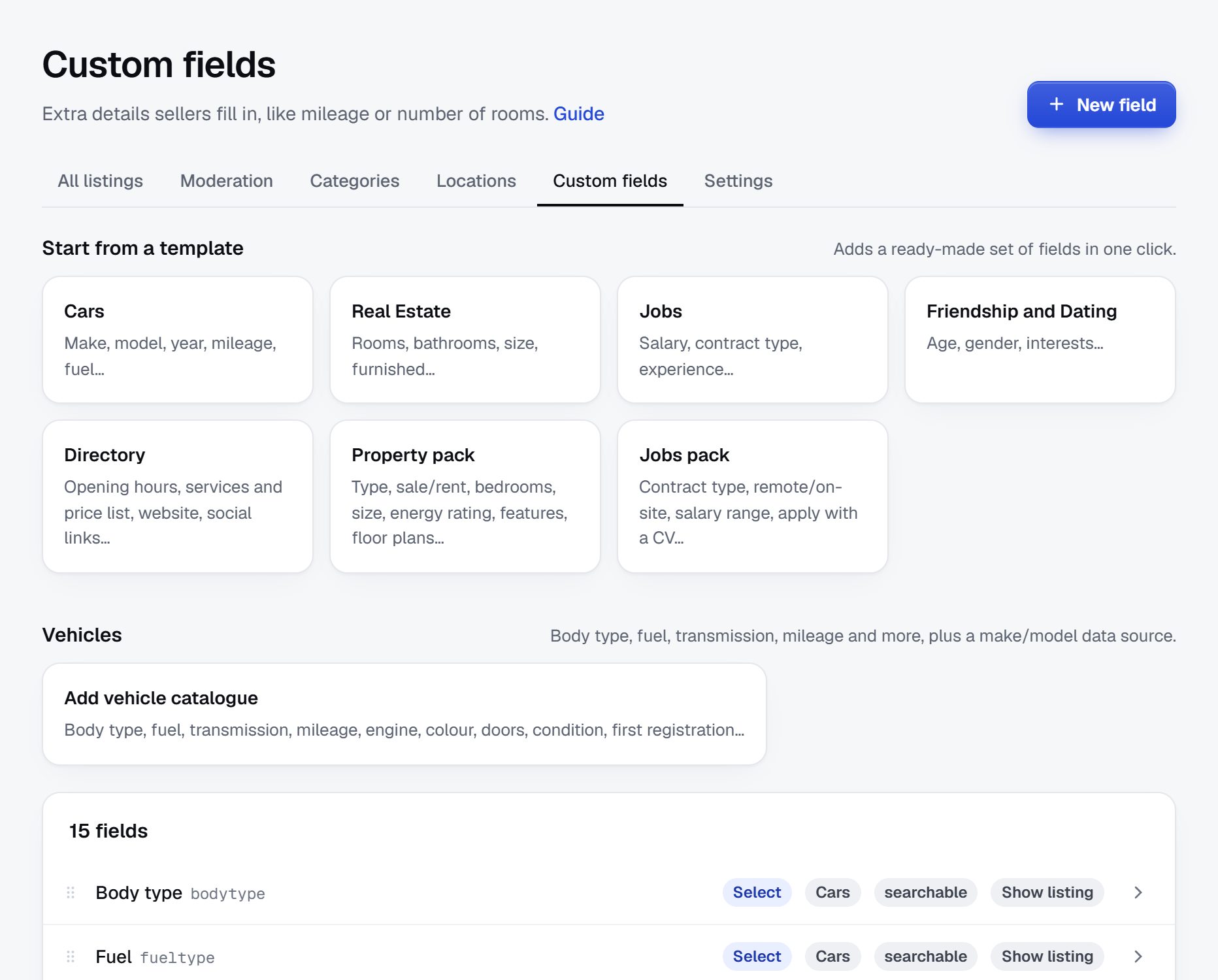
Most cleaning work is quoted, because no two homes are alike. A customer sends a message with the home size and what they need, and the cleaner replies with a price. That leaves you two ways to earn: sell the jobs that can be priced in advance, and charge providers for visibility.
Fixed-price packages suit jobs that are easy to define: a two-hour standard clean for a one-bedroom apartment, an oven clean, a move-out clean for a studio. On the Marketplace plan these can be sold as listings with checkout: the customer pays on the site through Stripe and you keep a commission per sale. Keep the commission modest, since cleaning margins are thin and cleaners will compare you with apps that already take a cut. A small buyer service fee on each package is another option once customers value the site.
For quoted work, charge for visibility instead. Featured listings put a cleaner at the top of their area's page, bumps lift a listing back up after a quiet week, and seller memberships suit companies with several teams. Banner spaces fit janitorial supply shops, laundry services and property managers looking for partners.
Start free. A cleaning site with five providers helps nobody, and the first cleaners are doing you a favor by joining. Switch on paid options once each area has enough cleaners that customers have a real choice.
| Model | Works when | Switch it on |
|---|---|---|
| Commission on fixed-price packages | Jobs can be priced before the visit | Once a few providers offer packages |
| Buyer service fee | Customers buy packages again and again | After customers start coming back |
| Featured listings | Several cleaners compete in one area | When an area page has a full first screen |
| Bumps | Cleaners have gaps in their week | Alongside featured listings |
| Seller memberships | Companies list several teams or services | Once companies ask for more listings |
| Banner spaces | Local suppliers want to reach customers and cleaners | When traffic is steady |
Sign up cleaners first, one neighborhood at a time.
Supply comes first. A customer who searches and finds two cleaners will not come back, so recruit providers before you advertise to households.
- Neighborhood groups. Facebook groups and Nextdoor are full of cleaners posting their openings. Message them directly and offer a free profile with reviews under their own name.
- Craigslist services ads. Independent cleaners post here often, usually with a phone number and nothing else to show for their work.
- Small cleaning companies. Search the map for local firms with a handful of reviews. They want more customers but cannot afford much advertising.
- Janitorial supply stores. The counter staff know every independent cleaner in town. Ask to leave cards by the register.
- Vacation rental hosts. Hosts swap cleaner names constantly in their local groups. Ask the cleaners they trust to join.
- Community organizations. Many cleaners work in languages other than English. A site that shows the languages each cleaner speaks reaches people the big apps miss.
Make joining quick. Offer to write the first profile for each cleaner from a phone call: services, area, price from, and two or three photos of rooms they have finished. If a cleaning company has a long list of services, load it from a spreadsheet. Aim for at least ten active cleaners in your first area before inviting customers, and ask each early cleaner to send the link to their existing clients so their first reviews appear quickly.
Set safety rules before the first cleaner walks into a stranger's home.
Cleaners work inside people's homes, often while the owners are out and keys or door codes have been handed over. Trust is the whole product, so set your rules before the first listing goes live.
Risks to plan for
- Theft and damage claims. A missing ring or a scratched floor can turn into an angry review. Encourage customers to put valuables away and to agree in messages what is and is not included.
- Unverified claims. Anyone can tick "insured" or "background checked". Treat these as the provider's own statements, tell customers to ask for proof directly, and say plainly on your pages that the site does not check anyone unless you actually do.
- Payment scams. Fake customers send overpayment checks and ask for the difference back. Fake cleaners take a deposit and never arrive. Warn both sides, and keep conversations in on-site messages so there is a record.
- Fake reviews. Watch for bursts of five-star reviews from brand-new accounts, and remove reviews that come from the provider's friends or own accounts.
Legal points to check
Rules on insurance, bonding, business licenses and whether cleaners count as employees or independent contractors differ by country, state and city. Check the rules where you operate with a local lawyer before you set prices or tell cleaners how to work, and make it clear in your terms that cleaners set their own rates and hours.
Moderate from day one: approve every new provider, require a working phone number, and give customers a report button on every listing. Use verified badges only for providers whose identity you have personally confirmed.
Never describe a cleaner as vetted unless you did the vetting. Say what you checked, and only that.
Rank for the service, the neighborhood and the price question.
Cleaning searches are local and practical. People type the service and the place, and often a question about cost.
- "house cleaning near me" and "house cleaners in [city]"
- "move out cleaning [city]" and "end of lease cleaning cost"
- "deep cleaning service [neighborhood]"
- "airbnb cleaning service [city]"
- "office cleaning [city]"
- "how much does a house cleaner cost per hour"
- "eco friendly cleaning service [city]"
Pages to build
- Service and location pages. One page for each service in each neighborhood or suburb, such as move-out cleaning in a named district. Every category and location already has its own page, so these fill up as cleaners join.
- Price guides. What a standard clean, a deep clean and a move-out clean usually cost in your city, written from the quotes cleaners send.
- Checklists. A move-out cleaning checklist that matches what landlords inspect, and a turnover checklist for vacation rental hosts. These get shared and saved.
Content ideas
Write about what to expect from a first clean, how to get the home ready before the cleaner arrives, tipping customs, the difference between a standard and a deep clean, and how to hire a cleaner safely. Profiles that name the neighborhoods a cleaner serves also pick up local searches.
Launch in one area just before a busy cleaning season.
Start in one city or a cluster of neighborhoods where you can meet cleaners in person. Cleaning demand has clear peaks, and a launch timed to one of them brings customers when cleaners can show what they do.
Seasons that matter
- Spring. Deep cleaning requests rise in March and April.
- Moving season. Late spring and summer, plus the last days of each month, bring move-out cleans before deposit inspections. In college towns, the end of the school year is the busiest week.
- Holidays. Households want a clean before Thanksgiving and the December holidays, when good cleaners fill up early.
- Vacation rental season. In beach and ski towns, hosts look for reliable turnover cleaners before the season opens.
Partners
Property managers, real estate agents, moving companies and storage businesses meet people who need a cleaner every week. Offer them a short page of local move-out cleaners to hand to their clients, and ask for a mention in their newsletters.
Checklist
- Pick one area and one or two main services.
- Set up categories, fields and the self-declared insurance and background check boxes.
- Write your rules on safety, reviews and payment.
- Sign up at least ten cleaners, each with photos and a price from.
- Publish a price guide and a move-out checklist.
- Ask cleaners to invite their existing clients to review them.
- Open to customers before the next busy season.
A worked example: Cream City Clean Match, Milwaukee.
Cream City Clean Match is a fictional site made up for this guide; it is not a real business. Picture a former office manager in Milwaukee who spent years hiring cleaners for her employer's three floors, then watched her own tenants lose part of their deposits over greasy ovens and bathroom grout. She noticed two things. The independent cleaners she trusted had no simple way to be found, and households in Bay View or on the East Side were picking names from group threads with no prices and no reviews.
Who it serves
The site covers Milwaukee County, starting with the East Side, Riverwest, Bay View and Wauwatosa. Its customers are renters moving out, landlords who own a duplex or a small apartment building, families who want a cleaner every other week, and short-term rental hosts near the lakefront. Its providers are solo cleaners, a few two-person teams, and two small companies that also clean carpets.
Categories at launch
- Home cleaning
- Weekly or every two weeks
- Deep cleaning
- Move-in and move-out
- Apartments and duplexes
- Student rentals
- Rental turnovers
- Carpets and windows
How it started
She began in early spring with twelve cleaners she already knew or had met through a Riverwest neighborhood group, and wrote each profile with them over the phone. The insured and background check boxes went on every listing with a plain note that they are the cleaner's own statements and that the site checks neither. Her first push aimed at the end of the school year, when many leases near the city's universities turn over and landlords need a run of move-out cleans in the same few days. Two landlords with eleven units between them sent their tenants a link to the move-out category, and the first reviews arrived within two weeks.
How it makes money
Quoted work stays free: a customer describes the home in a message and cleaners reply with a price. Five cleaners sell fixed-price packages, such as a studio move-out or an oven and fridge clean, with checkout on the Marketplace plan and a modest commission on each sale. In the second year the two companies take seller memberships, cleaners pay to feature their listings in the weeks before move-out, and a janitorial supply store buys the banner on the move-out pages.
One busy week a year can carry a cleaning site through its first season. Here it was student move-out, planned for from day one.
| Listing | Price | Key details |
|---|---|---|
| Studio or one-bedroom move-out clean | $180 fixed, paid on the site | Inside oven, fridge and cabinets; empty unit; East Side and Riverwest |
| Clean every two weeks, three-bedroom house | Quote, from $130 a visit | Own supplies, fragrance-free products, fine with cats and dogs; Wauwatosa |
| Duplex unit turnover for landlords | Quote per unit | Walls spot-cleaned, blinds wiped, bathrooms descaled; same-week dates |
| Deep clean before the holidays | From $260 | Baseboards, inside cabinets, interior windows; two-person team |
| Carpet cleaning by hot water extraction | $45 per room, fixed | Truck-mounted unit, furniture moved and put back; Bay View |
All five listings are invented to show how a full listing reads.
The first 90 days: cleaners, rules, then customers.
In its first months a cleaning marketplace is judged on one thing: when a household asks for a quote, does a real cleaner answer the same day. Every step below serves that. Spend the first month on people rather than pages, with phone calls, coffee with small company owners and profiles written together. Then settle your rules on safety, keys and payment before anyone lets a stranger in the door through your site.
Line the calendar up with demand. A January start ends just as spring deep cleans and the first move-outs begin; a September start lands on holiday deep cleans. Choose the peak first and count backward, so cleaners have photos and reviews on their profiles before the rush rather than during it.
Track two numbers every week: the share of quote requests answered within a day, and how many customers come back for a second clean. Those two tell you whether the area is ready for advertising and which neighborhood to open next.
| Weeks | Focus | Done when |
|---|---|---|
| 1-2 | Pick the area and two main services; write rules on safety, keys, reviews and payment | The rules page is live and the insured and background check boxes are labeled self-declared |
| 3-4 | Recruit cleaners from neighborhood groups, supply stores and small companies | Ten cleaners have profiles with photos, service area and a price from |
| 5-6 | Turn the jobs that never change into fixed-price packages | At least five packages, such as a studio move-out or an oven clean, sell with checkout |
| 7-8 | Ask each cleaner's existing clients for reviews and publish the price guide | Every cleaner has two or more reviews and the price guide shows up in search |
| 9-10 | Reach landlords, property managers and rental hosts | Three landlords or managers pass your move-out page to their tenants |
| 11-12 | Open to households with local posts timed to the next peak | For two weeks running, most quote requests get an answer within a day |
Ways to build it: what a quote-driven cleaning site needs.
Strip a cleaning marketplace down and it needs four things. Provider profiles with fields customers filter on, such as bedrooms, frequency and supplies. On-site messages, so a customer can describe the home and get a quote with a written record of what was agreed. Checkout for the handful of jobs with a fixed price. And reviews from real customers. Add an approval step so no new cleaner appears before you have looked at the profile. Any route that does those well will work; the question is where your hours go.
A custom build with developers
This makes sense only if you want something the other routes cannot do, such as an instant price estimate from square footage or a shift planner for cleaning teams. Expect months before launch and a developer on call afterward. Most founders find the hard part is recruiting cleaners, not code.
A script or plugin on your own server
A classifieds or marketplace script, or a WordPress directory plugin, can be running cheaply. Check that it supports messages between users and payments for fixed packages, and that a field like insured can be shown as the provider's own claim. Updates, spam and backups are yours, and cleaning sites draw a steady stream of fake provider sign-ups.
A hosted builder
A hosted builder such as Yclas gives you custom fields, messages, reviews and checkout without running a server, so your weeks go to meeting cleaners and landlords.
| Route | Fits when | Watch out for |
|---|---|---|
| Developers and a custom build | You need something no platform offers, like estimates from home size | Months of building and a bill for every later change |
| Script or plugin on your own server | You or a partner can code, and you want to own the software outright | Fake sign-ups, security updates and payment setup are all on you |
| Hosted builder | Your time should go to recruiting cleaners and customers | Check that fields, messages and checkout fit the way cleaners quote |
What a cleaning services marketplace costs to run.
The software is the smallest part of the bill. Most of the cost is your time in the first months: finding the first listings, answering questions and checking what gets posted.
Budget for local promotion in neighborhood groups and cards at supply stores, and for a lawyer to review your terms on contractor status and liability. If you decide to confirm providers' identity or insurance yourself, set aside the time it takes, or the fee of a third-party screening service.
| Cost | Typical range | On Yclas |
|---|---|---|
| Domain | $10 to $20 a year | Your own, with SSL included |
| Software and hosting | $0 to $100+ a month, plus plugins and updates | Marketplace $149 a month for checkout and commission |
| Design | $0 to $100 for a theme, or a designer | 109 looks included |
| Payment fees | About 3% per payment | Your Stripe or PayPal fees; Yclas takes nothing |
| Your time | 5 to 10 hours a week at the start | Finding listings, moderation, support |
Mistakes that empty a cleaning marketplace.
- Opening the whole metro on day one. A customer in an outer suburb who finds one cleaner forty minutes away decides the site is empty and never checks again. Open one cluster of neighborhoods, fill it, and add the next only when requests there get answered.
- Calling cleaners vetted, checked or trusted. Unless you checked something yourself, those words are a promise you cannot keep, and they will be quoted back to you after the first missing ring. Describe exactly what the site does, label provider claims as self-declared, and tell customers to ask for proof.
- Setting prices for cleaners. Fixed rates are the main reason independent cleaners resent the national apps, and controlling prices and hours can also make cleaners look more like your staff in the eyes of the law. Let each cleaner write their own quotes and packages.
- Packaging jobs that are never the same. One fixed price for a deep clean of any house invites a fight when the house turns out to have four bathrooms and two shedding dogs. Keep fixed prices to tightly defined jobs, with home size in the title, and quote the rest.
- Vague move-out listings. End-of-lease customers care about one result: their deposit. A listing that does not spell out the oven, fridge, cabinets, baseboards and blinds leads to arguments after the inspection. Ask move-out cleaners to list what is included line by line, and to say whether they come back free of charge if the landlord flags a missed spot.
- Letting quote requests sit. A household that writes to three cleaners and hears nothing by evening hires someone from a group thread and does not return. Look at unanswered requests every day, nudge slow cleaners, and hide profiles of cleaners who stop replying.
- Charging per inquiry. Cleaners who pay for messages that never turn into work feel cheated, and many left lead sites for exactly that reason. Charge for visibility, memberships and completed packages instead.
- Saying nothing about keys and door codes. Regular customers hand over keys or codes, and without guidance those codes stay active long after a cleaner stops coming. Publish advice on lockboxes, changing codes, and agreeing in messages who holds what.
- Mixing offices in with homes. Commercial clients want after-hours visits, invoices and proof of insurance before a walk-through, and they rarely find that among house cleaners. Give commercial work its own category and fields, or leave it out until providers ask for it.
Words you will hear running a cleaning marketplace.
Cleaners, landlords and hosts use these terms daily, so your categories and fields should use them too.
| Term | What it means |
|---|---|
| Regular clean | A recurring visit, usually weekly or every two weeks, that keeps a home at a set standard. |
| Deep clean | A longer one-off visit that covers what a regular clean skips, such as baseboards, grout and inside cabinets. |
| Move-out clean | A thorough clean of an empty home at the end of a lease, aimed at what the landlord inspects. |
| Turnover | Cleaning and resetting a short-term rental between one guest's checkout and the next arrival. |
| Walk-through | A visit before quoting, common for offices and large homes, to see the space and agree the scope. |
| Scope | The written list of what a cleaning job includes and what it leaves out. |
| Add-on | An extra task priced on top of a standard clean, such as inside the oven or interior windows. |
| Bonded | Covered by a surety bond that may compensate a customer for proven theft by a worker, depending on its terms. |
| General liability insurance | A policy that may pay for damage a cleaner causes to a customer's property, within its limits. |
| Janitorial | The trade word for cleaning offices, shops, clinics and other workplaces. |
| Hot water extraction | A carpet cleaning method that sprays hot water and solution into the fibers and vacuums it back out. |
| Lockbox | A small coded box that holds a house key, so the owner does not hand out copies. |
| Independent contractor | A self-employed worker who sets their own rates and hours; the legal test for this varies by place. |
The same steps for a cleaning services marketplace on Yclas.
- Describe your marketplaceThe setup wizard writes the categories, an About page and example listings from one sentence.
- Add fieldsThe details buyers filter on, as dropdowns, numbers or checkboxes.
- Bring sellersInvite them, import their stock from a spreadsheet, or post for them.
- Set the rulesChoose moderation, verified sellers, reviews and reports.
- Take paymentsOn Marketplace, buyers pay on the site and you keep a commission, with Stripe.
How much money do I need to start a cleaning marketplace?
Less than most founders expect. Beyond the site and a domain, you pay for some local promotion and an hour with a lawyer on your terms. The largest early cost is your own time recruiting cleaners.
Do I need to run background checks on cleaners?
That depends on what you promise and on local law. Many sites let providers state whether they have a check and ask customers to request proof. If you want to say providers are checked, use a screening service and follow the consent rules where you operate.
Are the cleaners my employees?
Your model matters: a site where customers hire cleaners directly and cleaners set their own prices and hours is different from an agency that sends staff out. The tests differ by country and state, so ask a local lawyer before you control prices, schedules or uniforms.
Can customers pay on the site?
Yes, for fixed-price packages sold as listings, such as an oven clean or a studio move-out clean. Quoted jobs are agreed in messages and paid to the cleaner directly.
How do I compete with the big cleaning apps?
Stay local and let cleaners set their own prices. Many independent cleaners dislike apps that fix rates, and customers like seeing the same cleaner come back every visit.
How do I get the first customers?
Ask your first cleaners to send their existing clients to their profile for reviews, then share your price guide and move-out checklist in local groups before moving season.
Should I offer a satisfaction guarantee?
Only if you can pay for it yourself. A safer start is a clear policy where customers report problems within a day, and cleaners say on their listing whether they return to fix missed areas.
Should I accept cleaning companies as well as solo cleaners?
Yes, and help customers tell them apart. A team size field and a listed by field, solo cleaner or company, matter here: some households want the same person every visit, while offices often prefer a company that can cover a sick day.
What do I do when a customer says something went missing after a clean?
Take it seriously without trying to judge it yourself. Ask both sides for their account in messages, point the customer to the police and their insurer for theft, and suspend a cleaner when there is clear evidence or a pattern of reports. Write this process down before you need it.
Can cleaners cover areas outside my launch neighborhoods?
Let them list every zip code they serve, but show the area plainly on each listing and keep location filters on. A cleaner who drives forty minutes will build that into the quote, and customers should see it before they ask.
How should cancellations and lockouts work?
Ask every cleaner to state a cancellation policy on their listing, including what happens when they arrive and cannot get in. Customers then know the terms before they agree, and you are not left deciding fees after the fact.
How do I stop cleaners from taking customers off the site?
You mostly cannot, and in cleaning you should not try too hard, because regular customers will deal directly with a cleaner they like. Earn from visibility and from packages that are easier to buy on the site, so a cleaner who keeps a client still has reasons to stay listed.
Related pages.
The parts of Yclas this leans on.
You have the plan. Now find the first ten cleaners in your area.
Describe your site in a sentence and the setup wizard writes the categories, example listings and a look. Free for 15 days, no credit card.
Start my marketplace