How to build a pet sitting marketplace owners trust with their animals and their keys.
This guide covers a marketplace where pet owners find sitters for drop-in visits, overnight house sitting and boarding in the sitter's home: picking an area and a service mix, the details owners filter on, meet-and-greets arranged through on-site messages, fixed-price stays sold as listings, recruiting the first sitters, animal welfare and safety rules, the searches to rank for, and a launch before the holiday rush.
Free for 15 days · No credit card · Plans from $19 a month
Give owners a better choice than a kennel or a favor from a friend.
Pet owners going away have three options: a kennel, a favor from a friend, or a sitter. Many pick a sitter, because the animal stays in a home and gets one-to-one attention. Finding one they trust, though, usually means asking around weeks ahead and hoping someone is free over the holidays.
The two sides
- Sitters: students, retirees, vet techs and groomers earning extra, full-time professional sitters, and people with a fenced yard who board one or two dogs at home.
- Owners: dog and cat owners who travel, owners of older or medicated pets who should not go to a kennel, and keepers of birds, rabbits, reptiles and fish who struggle to find anyone who knows those animals.
Pick the angle
- One city or a few suburbs. Drop-in visits happen two or three times a day, so sitters stay close to home.
- One service mix. Drop-in visits, overnight house sitting, or boarding in the sitter's home. Each attracts a different kind of sitter.
- One kind of animal. Cats, exotics, senior and special-needs pets, or horses and backyard chickens on a rural site are all poorly served by the big apps.
Most pet sitting today is arranged through friends, vet clinic notice boards, Facebook groups, Nextdoor, and national apps such as Rover. A local site where sitters describe their experience with specific animals, and are reviewed by neighbors, gives owners more to go on than a star rating from a stranger in another city.
Owners are handing over a family member and a house key. Everything on the site should help them decide who deserves both.
Let owners filter by the animals a sitter takes and the home they keep.
Keep categories to the service types: drop-in visits, overnight house sitting, boarding at the sitter's home, daycare, and specialist care for cats, exotics, senior pets or farm animals. Within each, owners filter on the animals a sitter accepts and the conditions in the sitter's home.
For the sitter: animals accepted (dogs, cats, birds, small animals, reptiles, horses), largest dog size taken, how many pets they care for at once, whether they have pets of their own, a fenced yard, children in the home, a smoke-free home, and experience with tablets, insulin injections or pets recovering from surgery. For the stay: service area, minimum number of nights, holiday availability, and how often the sitter sends updates and photos.
Two checkboxes need care: "pet first aid course" and "insured". Both are statements the sitter makes, so label them as self-declared and tell owners to ask to see the certificate or policy.
In Yclas, custom fields (text, numbers, dropdowns, checkboxes or dates) appear as search filters, so the owner of a diabetic cat can find sitters who give insulin. Owner and sitter then arrange a meet-and-greet through on-site messages before agreeing on dates.
| Category | Example listings | Fields owners filter on |
|---|---|---|
| Drop-in visits | Two 30-minute cat visits a day | Visits per day, animals accepted, medication, area |
| Overnight house sitting | Sitter stays in the owner's home with two dogs | Nights, pets in the household, plants and mail, holidays |
| Boarding at the sitter's home | One dog at a time in a home with a fenced yard | Dog size, fenced yard, sitter's own pets, children |
| Daycare | Daytime care for puppies and older dogs | Hours, group size, potty breaks |
| Specialist care | Parrots, reptiles, rabbits, senior and special-needs pets | Species, medication, injections, experience |
| Farm and horse sitting | Feeding and turnout for horses and chickens | Animals, chores, distance from town |
Make "animals accepted" a required set of checkboxes, because it is the first filter almost every owner uses.
Sell nights and visits as packages, and keep first stays personal.
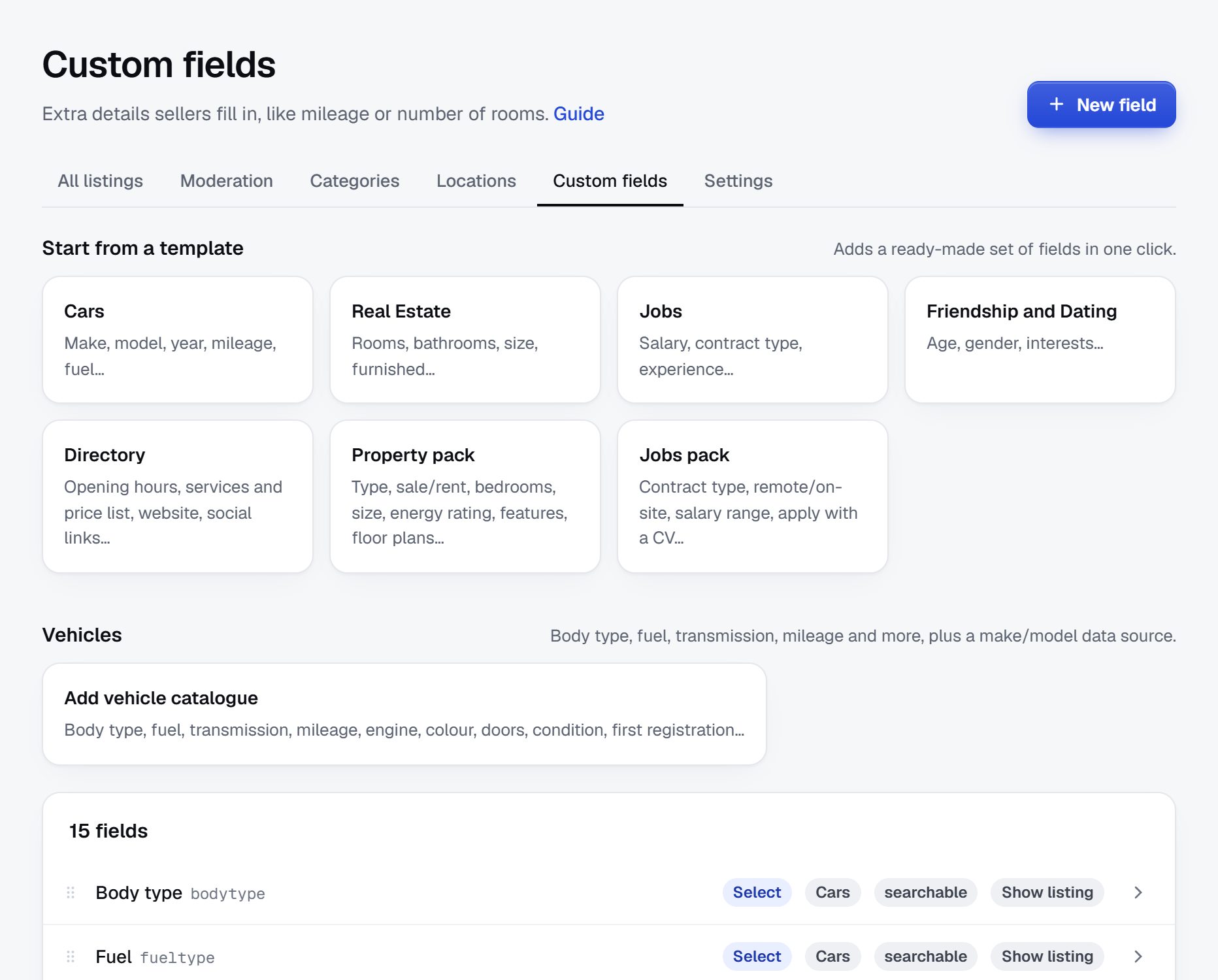
Pet sitting has more set prices than most services: a 30-minute visit, a night of house sitting, a day of boarding. That makes it suitable for packages sold as listings. On the Marketplace plan, a sitter can list one night of boarding for a small dog with checkout through Stripe, and you keep a commission per sale. Longer or unusual stays still start in messages, where owner and sitter agree on dates and a price.
Encourage a meet-and-greet before every first stay, even when the owner pays on the site, and ask sitters to state their cancellation terms on each listing. Holiday rates are normal in this trade; sitters can add them as separate packages so nobody is surprised in December.
A buyer service fee on each purchase can work once owners rely on the site, especially around holidays. Featured listings help sitters fill quiet months like February. Seller memberships fit small pet care businesses with several sitters. Banner spaces suit vets, groomers, pet stores and dog trainers who want local owners.
Start free for sitters. You need enough of them in each neighborhood that an owner looking for Christmas week finds someone available. Charging sitters before then only slows recruiting.
| Model | Works when | Switch it on |
|---|---|---|
| Commission on packages | Visits and nights have set prices | From the first sale |
| Buyer service fee | Owners come back for every trip | After your first holiday season |
| Featured listings | Many sitters work in one area | When neighborhoods are well covered |
| Seller memberships | Pet care businesses list several sitters | When businesses join |
| Banner spaces | Vets, groomers and stores want local owners | When traffic is steady |
Recruit sitters through the people who already care for animals.
Good sitters are already busy through word of mouth. Your pitch to them: a profile that shows their experience and reviews, and new clients for the quiet months.
- Vet clinics. Vet techs and assistants often pet sit on the side, and clinic notice boards carry sitter cards. Ask the practice manager to share your sign-up with staff.
- Groomers and pet stores. Staff know which regular customers already sit for others.
- Shelters and rescues. Foster volunteers have experience with nervous, sick and medicated animals. Offer the rescue a free banner space in return for an introduction.
- Colleges with veterinary or animal science programs. Students want flexible paid work with animals and often stay in town over holidays.
- Facebook groups and Nextdoor. Sitters post their holiday availability here every fall. Contact them before those dates fill.
- Retirement communities. Retired pet lovers often enjoy daytime visits and house sitting.
Help each sitter write a full profile: animals they know, their home if they board, a few photos with pets, and their rates. Ask them to invite their regular clients to leave reviews in the first week. Before you advertise to owners, aim for several sitters per neighborhood, including at least a few who take cats and exotic pets.
Protect the animals first, then the homes and the payments.
Owners leave a living animal and access to their home. Trust problems in pet sitting are about welfare, honesty and safety.
Risks to plan for
- Neglect and missed visits. A missed visit can mean a cat without water for a day. Ask sitters to send a photo update through messages after each visit, and ask owners to name a backup contact.
- Lost pets. Escapes happen at front doors and garden gates. Ask sitters to go over escape risks, microchip details and the owner's vet before the stay starts.
- Overcrowded boarding. Some sitters take in more dogs than they can manage. Show the maximum number of pets on each listing, and remove sitters who break it.
- Fake sitters and payment scams. Scammers post cheap listings, ask for a deposit outside the site and vanish. Warn owners to keep conversations and payments on the site.
- Emergencies. Ask owners to leave written permission and a spending limit for vet care, plus the name of their usual clinic.
Rules to check
Some cities and countries require a license or inspection for boarding animals in a home, limit how many dogs one household may keep, or have zoning rules on home businesses. Whether sitters need insurance or a background check also varies. Check the rules where you operate, and never describe a sitter as checked or insured unless you have seen proof yourself.
Approve every sitter, give verified badges only to sitters whose identity you have confirmed, and let owners leave ratings and reviews after each stay.
A meet-and-greet before the first stay prevents more problems than any rule. Make it the norm on your site.
Rank for the animal, the service and the holiday.
Pet sitting searches name the animal, the service and the area, and they spike before holidays.
- "pet sitter near me" and "cat sitter [city]"
- "dog boarding in a home [city]"
- "overnight pet sitting cost"
- "house sitter for dogs [neighborhood]"
- "exotic pet sitter [city]" and "bird sitter near me"
- "pet sitter for diabetic cat"
- "christmas dog boarding [city]"
Pages to build
- Service and neighborhood pages. Cat sitting in each suburb, home boarding in each district. Every category and location has its own page, so these grow as sitters join.
- Price guides. What a drop-in visit, a night of house sitting and a night of home boarding usually cost in your area, based on the listings on your site.
- Species guides. What a sitter needs to know to look after rabbits, parrots, bearded dragons or a senior dog on medication.
Content ideas
Write a checklist for leaving a pet with a sitter, questions to ask at a meet-and-greet, how to prepare an anxious dog for a stay, and a comparison of home boarding and kennels. Every November, publish a holiday availability page listing sitters with open dates.
Fill the site with sitters before the holidays, then open it to owners.
Launch in one area with enough sitters to cover a busy weekend. An owner who searches for the Fourth of July and finds nobody free will not come back at Thanksgiving.
Seasons that matter
- Summer vacations. The longest stays of the year, often a week or two.
- Thanksgiving and the December holidays. Owners plan weeks ahead and sitters fill up early.
- Spring break and long weekends. Short stays that test a new sitter before a long trip.
- After the holidays. Owners of new puppies and kittens want daytime visits once they go back to work.
Partners
Vets, groomers, trainers, pet stores and rescues meet owners every day. Ask rescues to include your site in adoption packs, and ask vet clinics to hand your card to owners booking pre-travel checkups.
Checklist
- Choose one area and the services you will start with.
- Set up fields for animals accepted, home conditions and medication experience.
- Write rules on meet-and-greets, updates, pet limits and emergencies.
- Sign up sitters in every neighborhood, including some for cats and exotics.
- Publish a price guide and a pet sitter checklist.
- Recruit through September and October.
- Launch the holiday availability page in November.
A worked example: Triangle Pet Keepers, central North Carolina.
Triangle Pet Keepers is a made-up site for this guide, not a real company. Imagine a former receptionist at a Durham animal hospital who kept a handwritten list of sitters behind the front desk. Every December the same thing happened: clients with diabetic cats, elderly dogs or a pair of cockatiels asked for a name, and the list ran out by mid-month. When she left the clinic, she turned the list into a website.
Who it serves
The site covers Raleigh, Durham, Chapel Hill and Cary. It is built for owners whose pets do not suit a kennel: cats that hate travel, senior dogs on several medications, rabbits, birds and reptiles. Its sitters are vet techs and assistants working extra shifts, retirees who love animals, a few full-time professional sitters, and people who board one small dog at a time in a home with a fenced yard.
Categories at launch
- Drop-in visits
- Cats
- Rabbits, birds and small animals
- Overnight house sitting
- Home boarding for small dogs
- Specialist care
- Medication and senior pets
- Reptiles and other exotics
How it started
She began recruiting in August through the staff rooms of clinics she knew, plus groomers and two rescues with foster networks. One lesson came early: an area full of universities has plenty of student sitters, but many go home for exactly the holidays when owners need them most. So she made a point of signing up retirees and year-round professionals, and added a field for holiday availability. Every sitter wrote down which animals they accept, how many pets they care for at once, and their medication experience, with first aid and insurance marked as self-declared. The holiday availability page went live in early November and was shared by three clinics.
How it makes money
Longer and unusual stays are agreed in messages after a meet-and-greet. Simple, repeatable services sell as fixed-price listings with checkout on the Marketplace plan, and the site keeps a commission on each one, with holiday prices offered as separate packages so nobody is surprised. A clinic that treats exotic pets sponsors the specialist care pages, and featured listings sell best in late winter, when sitters have empty calendars.
Recruit for the dates owners worry about, not for an average week.
| Listing | Price | Key details |
|---|---|---|
| Two cat visits a day | $38 per day, fixed | Litter, fresh water and food, photo update after each visit; North Raleigh |
| Insulin visit for a diabetic cat | $32 per visit, fixed | Sitter states injection experience; doses on the owner's schedule |
| Overnight house sitting with two dogs | From $85 a night | Sitter stays from 7 p.m. to 7 a.m., plants and mail included; Cary |
| Small-dog boarding in a fenced home | From $55 a night | One guest dog at a time, no children in the home; Durham |
| Reptile and gecko care | Quote | Heat lamps checked, live feeders, misting; Chapel Hill |
Every listing here is fictional and shows the details owners look for first.
The first 90 days: sitters in place before the holiday rush.
Pet sitting has the most predictable rush of any service: owners start planning holiday trips weeks ahead, and the best sitters fill their December first. Your first 90 days should end just before one of those peaks, summer vacations or the year-end holidays, with sitters already reviewed and owners already aware of you.
Spend the early weeks on rules and coverage gaps rather than numbers. Ten sitters who all take only dogs leave the owner of a parrot or a cat on medication with nothing, and those are often the owners most worried about leaving their pets and most willing to pay. Map who covers which animals in which part of your area, and recruit for the gaps.
Watch two things throughout: how many owners who send a first message go on to a meet-and-greet, and how many come back for a second trip. A second stay with the same sitter means the match worked.
| Weeks | Focus | Done when |
|---|---|---|
| 1-2 | Choose services and animals; write rules on meet-and-greets, updates, pet limits and emergencies | Rules are published and every listing must state animals accepted and the most pets cared for at once |
| 3-4 | Recruit through vet clinics, groomers and rescues with foster networks | Fifteen sitters have full profiles with photos and rates |
| 5-6 | Fill gaps in cats, exotics and pets on medication | Each part of the area has sitters for cats and at least one for medication or exotics |
| 7-8 | Add fixed-price packages and separate holiday rates | Every sitter who works holidays has a holiday package next to the standard one |
| 9-10 | Ask sitters' regular clients for reviews; publish the checklist for leaving a pet | Most sitters show at least two reviews |
| 11-12 | Open to owners with cards at clinics and the holiday availability page | At least ten sitters list open dates for the next holiday |
Ways to build it: the route depends on how much you need to show.
Owners choose a sitter on detail. They want to see which animals a sitter accepts, what the sitter's home is like if they board, how many pets they take at once, whether they give medication, and what other owners say. So the essentials are custom fields that work as filters, profile photos, reviews, on-site messages for arranging a meet-and-greet, and checkout for set visits and nights. Approval of every new sitter before they appear is not optional in this niche.
A custom build
The big national apps offer things like GPS-tracked walks and visit report cards. If those are central to your idea, developers can build them, but it takes months and money before you meet a single sitter. Owners in a local site often care more about knowing the sitter than about tracking.
Your own server with a script or plugin
A marketplace or directory script, or a WordPress plugin, can do profiles, fields and messages for a small outlay. Check that it handles checkboxes for many animal types as search filters and that it supports payment for packages. You take on hosting, spam, backups and security, and a site that holds owners' addresses and travel dates needs those done well.
A hosted builder
A hosted builder such as Yclas covers fields, messages, reviews and checkout, so your effort goes into clinic visits and sitter interviews instead of servers.
| Route | Fits when | Watch out for |
|---|---|---|
| Developers build it for you | Tracking or daily report cards are central to your idea | Months and a large budget before any sitter joins |
| Self-hosted script or WordPress plugin | You can run a server and secure owners' personal details | Updates, backups and spam control fall to you |
| Hosted builder | You want to spend your time on sitters and clinics | Confirm that animal and home-condition fields can all be search filters |
What a pet sitting marketplace costs to run.
The software is the smallest part of the bill. Most of the cost is your time in the first months: finding the first listings, answering questions and checking what gets posted.
Plan for a lawyer to review your terms on responsibility for animals and homes, and for printed cards at vet clinics and pet stores. If you choose to confirm sitters' identity, check documents or use a screening service, budget for the time or fees involved.
| Cost | Typical range | On Yclas |
|---|---|---|
| Domain | $10 to $20 a year | Your own, with SSL included |
| Software and hosting | $0 to $100+ a month, plus plugins and updates | Marketplace $149 a month for checkout and commission |
| Design | $0 to $100 for a theme, or a designer | 109 looks included |
| Payment fees | About 3% per payment | Your Stripe or PayPal fees; Yclas takes nothing |
| Your time | 5 to 10 hours a week at the start | Finding listings, moderation, support |
Mistakes that lose owners' trust in a pet sitting site.
- Treating the meet-and-greet as optional. Owners who skip it learn on day one that the dog will not let the sitter in the door, or that the sitter cannot handle the cat's tablets. Make a meet-and-greet the expected first step, and ask sitters to say on their listing that they require one.
- No cap on boarding numbers. A sitter who takes six dogs over a holiday weekend can lose control of the house and the yard. Make the most pets cared for at once a required field, check it against reviews, and remove sitters who quietly exceed it.
- Building the whole site around dogs. Dog sitters are easy to find. Owners of cats, rabbits, birds and reptiles are the ones who struggle, and they search for the species by name. Give those animals their own filters and recruit for them on purpose.
- Relying on student sitters for the holidays. In university towns students are plentiful in October and gone at Christmas. Recruit retirees and full-time sitters for the peak dates, and add a holiday availability field so owners can see who is really around.
- Promising background-checked sitters. A line like that on your home page claims something about every sitter, including ones you have never met. Say what you actually do, label sitters' own claims as self-declared, and encourage owners to meet first and check references.
- Leaving emergencies unplanned. When a dog swallows a sock at midnight, the sitter needs the owner's vet, a backup contact and written permission to spend money on treatment. Put those on your checklist for leaving a pet, and ask sitters to collect them before every stay.
- Holiday prices that appear at the end. An owner who agrees to a rate in October and is asked for more in December leaves angry. Ask sitters to publish holiday rates as their own packages in advance.
- Deposits sent outside the site. Fake sitters post low prices, ask for a deposit by a payment app and disappear. Warn owners on every listing and keep conversations in on-site messages, so there is a record and you can spot the same scammer twice.
- Assuming home boarding is always allowed. Some cities and counties limit how many dogs a household may keep, or require a permit or inspection for boarding animals at home, and neighbors do complain about barking. Ask boarding sitters to check their local rules and state what they hold, and keep the number of guest dogs visible on every boarding listing.
Pet sitting terms to know.
Sitters, vets and owners use these words, and your listings should use them the same way.
| Term | What it means |
|---|---|
| Drop-in visit | A short visit to the owner's home, often 30 minutes, to feed, clean up and check on a pet. |
| House sitting | The sitter stays overnight in the owner's home, caring for pets and often plants and mail. |
| Home boarding | The pet stays at the sitter's own home instead of a kennel. |
| Meet-and-greet | A meeting before the first stay where owner, sitter and pet get to know each other. |
| Holiday rate | A higher price sitters charge for peak dates such as Thanksgiving and the December holidays. |
| Vet release | Written permission from the owner for the sitter to get veterinary care, often with a spending limit. |
| Backup contact | A friend or relative who can step in if the sitter or the pet has a problem and the owner cannot be reached. |
| Exotics | Pets other than dogs and cats, such as reptiles, birds, rabbits and rodents, which need specific care. |
| Medication administration | Giving pills, liquids or injections such as insulin on the schedule the vet set. |
| Separation anxiety | Distress some pets show when left alone or away from their owner, which affects the kind of care they need. |
| Visit update | A short message with photos the sitter sends after each visit or day of care. |
| Key handoff | How the sitter gets into the home: a copied key, a lockbox, a neighbor or a door code. |
The same steps for a pet sitting marketplace on Yclas.
- Describe your marketplaceThe setup wizard writes the categories, an About page and example listings from one sentence.
- Add fieldsThe details buyers filter on, as dropdowns, numbers or checkboxes.
- Bring sellersInvite them, import their stock from a spreadsheet, or post for them.
- Set the rulesChoose moderation, verified sellers, reviews and reports.
- Take paymentsOn Marketplace, buyers pay on the site and you keep a commission, with Stripe.
What do I need to spend to start a pet sitting site?
Startup costs are modest: the site, a domain, printed cards for vet clinics and pet stores, and legal advice on your terms. Most of the work is recruiting sitters in person.
Do pet sitters need a license?
It depends on the service and the place. Home boarding is the service most likely to need a permit or face limits on how many animals a home can keep. Check with your city or county, and ask sitters to state what they hold.
Should I require background checks for sitters?
You can, through a screening service with the sitter's consent, but the rules on checks differ by country and state. If you do not check, say so clearly and encourage owners to meet sitters first.
What happens if a pet gets hurt during a stay?
Your terms should say the arrangement is between owner and sitter. Ask owners to share vet details and a spending limit in advance, and ask sitters to state whether they carry insurance.
Can owners pay on the site?
Yes, for fixed-price packages such as a night of boarding or a set of drop-in visits sold as listings. Longer stays are agreed in messages first.
How do I compete with Rover and similar apps?
Go local and specialist. Cat owners, exotic pet keepers and owners of senior pets often struggle to find the right sitter on big apps, and a neighborhood site with familiar faces earns their trust.
When should I start recruiting sitters?
In late summer. Owners search early for Christmas week, so you want sitters signed up by October and a holiday availability page live in November.
Should sitters be allowed to care for pets from several households at once?
For drop-in visits, yes, since that is how sitters fill a day. For home boarding, ask sitters to say whether guest pets from different households stay together, and require them to introduce dogs before a stay. Owners of nervous or older animals often want theirs to be the only guest.
What happens when a sitter cancels a holiday stay at short notice?
Ask sitters to name a backup sitter on the site where possible, and to state their own cancellation terms on each listing. If a sitter cancels without good reason more than once, take that into account when they appear in search or renew their listing.
Can the site include house sitting with no pets?
It can, as a separate category for plants, mail and an occupied-looking house while owners travel. Keep it apart from pet care so owners filtering for animals do not have to scroll past it.
Should I include farm animals and horses at launch?
Only if your area has the demand and you can find sitters who know livestock. On a rural or semi-rural site, chores like feeding horses and shutting in chickens can be a strong niche on their own; in a city, wait until owners ask.
How should sitters share photos of the pets they look after?
Ask them to get the owner's permission first, and to avoid photos that show a house number, a street sign or the inside of a home. Owners often like seeing their pet on a sitter's profile, but some do not want the world to know when their home is empty.
Related pages.
The parts of Yclas this leans on.
You have the plan. Now sign up the sitters your local vets already recommend.
Describe your site in a sentence and the setup wizard writes the categories, example listings and a look. Free for 15 days, no credit card.
Start my marketplace