How to build a music lessons marketplace where every student finds the right teacher.
This guide covers how to build a marketplace that matches music teachers with students and parents: picking an area and a set of instruments, the fields families filter on, how to earn when lessons are paid week by week, where the first teachers come from, child safety and credentials, the searches to rank for, and a launch timed to the school year.
Free for 15 days · No credit card · Plans from $19 a month
Match teachers with open slots to students who need them.
Music teachers work from home studios, music stores, schools, students' homes and, more and more, online. Parents look for a piano or violin teacher for a child, adults come back to guitar or want singing lessons, and teenagers prepare for exams, auditions or a place in the school band. Most still find a teacher through a notice board at the music store, a school, word of mouth, Craigslist or a local Facebook group, and they cannot see who has openings, which styles they teach or what they charge.
The two sides of your marketplace are teachers who want a full week of regular students, and students or parents who want the right match for instrument, level, age and travel time. A teacher who fills a weekly slot may keep that student for years, so one good match is worth a lot to them.
Pick your angle
- One city or school district, for in-person lessons where the drive to the lesson matters.
- One group of instruments: piano and strings for children, or guitar, bass and drums for adults.
- One kind of student: beginners, exam candidates, adult learners or homeschool families.
- Online lessons in one language, if you would rather have reach than a local area.
Students choose by instrument, level and distance. Your site has to answer those three before anything else.
Organize by instrument, filter by level, age and format.
Use the instrument as the category and keep the tree shallow. Everything else that decides a match belongs in fields that families can filter on.
- Levels taught as checkboxes: beginner, intermediate, advanced.
- Ages taught: young children, teens, adults, seniors.
- Styles: classical, jazz, rock, pop, folk, worship, musical theater.
- Lesson format: at the teacher's studio, at the student's home, online.
- Lesson length and price: 30, 45 or 60 minutes, with a price per lesson.
- Exam and audition preparation as a text field, because exam systems differ from country to country.
- Method where it matters, such as Suzuki for young string players.
- Neighborhood or ZIP code, and how far the teacher travels.
With Yclas these are custom fields (dropdowns, checkboxes, numbers) shown as search filters, so a parent can ask for "violin, beginner, ages 6 to 9, at our home" in one search. Ask every teacher for a short recording or video of them playing: it tells a parent more than a page of credentials.
| Category | Example listings | Fields students filter on |
|---|---|---|
| Piano and keyboard | Beginner piano for ages 6 to 10, jazz piano for adults | Level, ages, format, area |
| Guitar and bass | Acoustic guitar for beginners, rock lead guitar | Styles, level, format |
| Voice | Classical voice, musical theater audition prep | Styles, ages, audition prep |
| Strings | Suzuki violin for young children, cello lessons | Method, ages, level |
| Drums and percussion | Drum kit lessons in a soundproofed home studio | Format, level, lesson length |
| Wind and brass | Saxophone, trumpet and flute for school band students | Level, ages, area |
| Theory and production | Ear training, songwriting, home recording | Format, level, software used |
Plan for recurring lessons that are paid outside the site.
Lessons recur: a student who finds a teacher on your site may pay that teacher every week for a year. Once the match is made, though, most families pay the teacher directly by the month or the term. Build your income around the first match and around visibility, not around every lesson.
- Free teacher profiles while you build supply, so families see real choice in each instrument.
- Featured listings before the busy start dates: late summer before the school year, January when adults make resolutions, and the weeks before exams and auditions.
- Teacher memberships with a higher place in search and more videos, once teachers say the site fills their slots.
- Set-price packages with checkout: a trial lesson, a "four beginner lessons" bundle or an audition preparation package, paid on the site with a commission to you. The trial lesson is the best first package, because it is the moment two strangers meet.
- Banner spaces for music stores, instrument rental programs, repair shops and recording studios.
Do not charge families to contact teachers. A parent comparing three violin teachers should be able to write to all three.
| Model | Works when | Switch it on |
|---|---|---|
| Free profiles | You need teachers in every instrument and area | From launch |
| Featured listings | Several teachers compete for the same students | Before September and January |
| Teacher memberships | Teachers fill weekly slots from the site | After a term of steady messages |
| Trial lesson packages | Students want to try a teacher first | When a dozen teachers offer a set-price trial |
| Banner spaces | Music stores and rental programs want families | Once parents visit every week |
Recruit teachers through stores, schools and associations.
Teachers are spread out and many are already half full, so ask for little and do the typing for them.
- Music stores: many rent rooms to teachers or keep a list of them. Ask the store to share your link and let you put up a notice by the register.
- Music teacher associations and their local chapters, which list members and run recitals and exams.
- University and conservatory music departments: students and recent graduates teach to pay the rent and want more students.
- School band and orchestra directors, who are asked for teacher names by parents every fall.
- Churches and community choirs, where church organ players and choir directors often teach piano and voice.
- Craigslist and Facebook groups, where teachers already post lesson ads. Message them with an offer to list for free.
Make a template profile with instrument, levels, ages, format, rates and a short note on how the teacher teaches, and fill it in on a ten-minute call. Aim for at least three teachers in each main instrument in your area before you market to parents. A search for cello that returns nothing teaches a parent not to come back.
A teacher with a waiting list is your best recruit: their overflow becomes your first students.
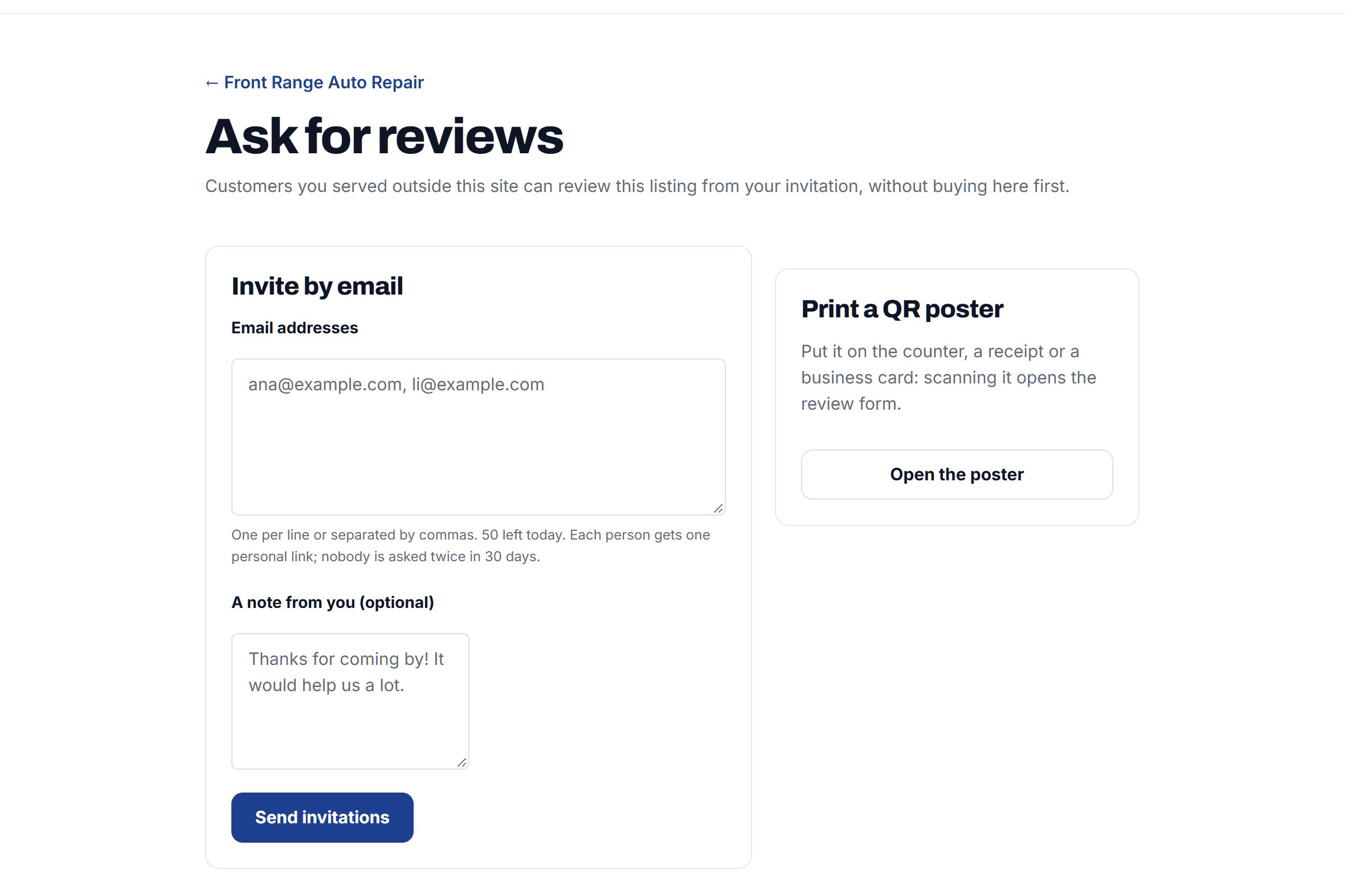
Take child safety seriously and be honest about checks.
Many music students are children, often taught one-to-one in a home. That is the main risk on your site.
- Child safety: some places require or expect background checks for people who work with children, and some teacher associations have their own standards. Check the rules where you operate. Do not suggest that teachers have been checked unless you did it, and tell parents plainly what you have and have not verified.
- Advice for parents: stay for the first lesson, prefer settings where another adult is in the home or studio, keep messages on the site, and let the parent's account do the contacting, not the child's.
- Online lessons: suggest parents stay within hearing and use a shared family device rather than a child's own phone.
- Credentials: anyone can write "conservatory trained". Ask teachers to name where they studied and what exams they prepare students for, and let reviews from families do the rest.
- Payment scams: fake students who overpay by check and ask for a refund are a known trick aimed at teachers, and fake teachers may ask for a term's fees up front and disappear.
Write a short code of conduct that every teacher accepts before posting. Approve every profile before it goes live and act quickly on reports from parents.
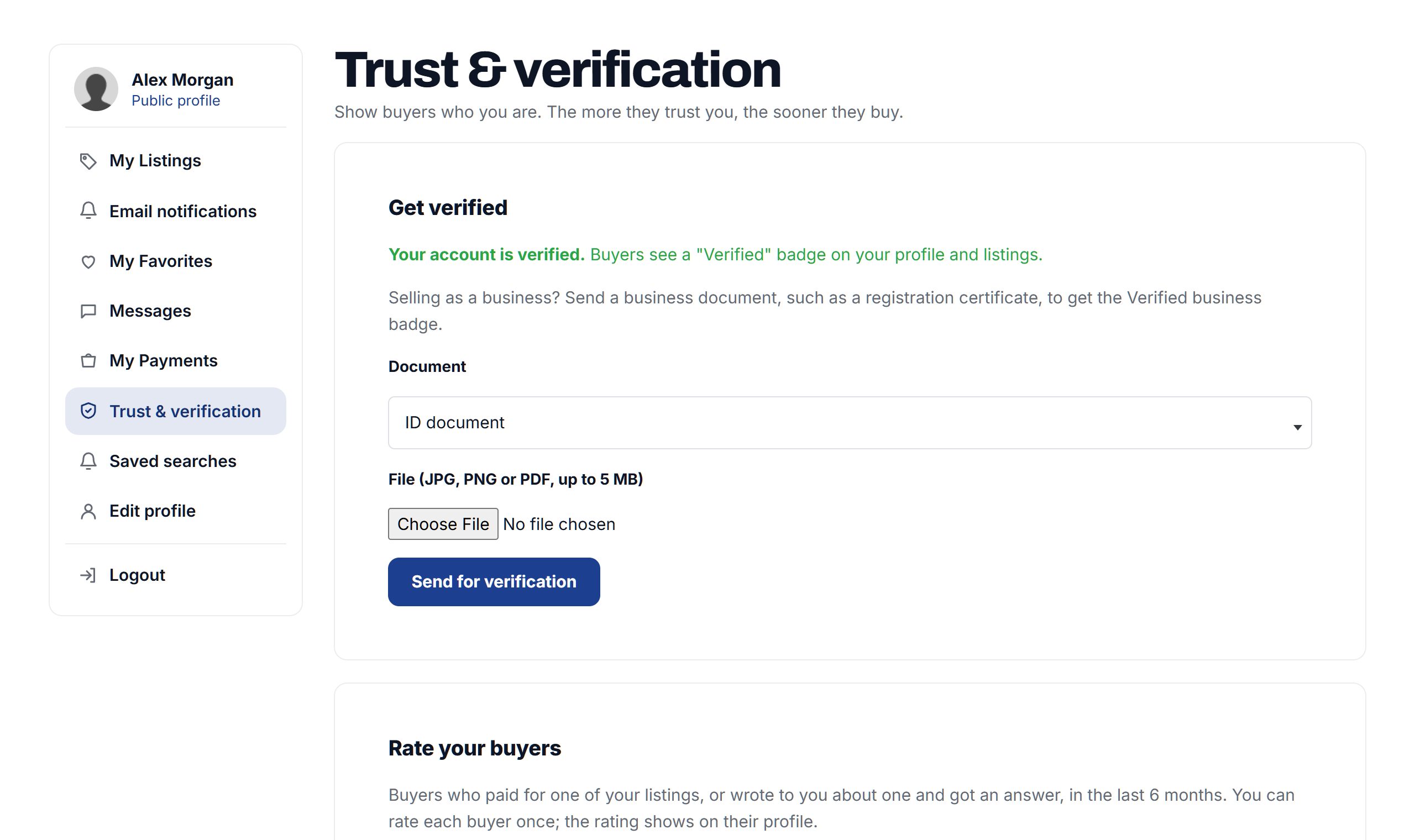
Rank for instrument, town and age searches.
Lesson searches combine an instrument with a place or an age. Typical searches:
- "piano lessons near me", "guitar lessons Austin"
- "violin teacher for kids", "voice lessons for adults"
- "drum lessons for beginners", "online music lessons"
- "how much do piano lessons cost", "what age to start piano"
- "audition prep voice teacher", "cello lessons for adults"
Build a page for each instrument in each town or neighborhood, plus pages by age ("Piano lessons for kids in Plano"). Then add the guides parents and adult learners read before they choose:
- "What age should my child start piano, violin or guitar", with views from your teachers.
- A lesson cost guide by instrument and lesson length, using the ranges teachers give you.
- "How to choose a music teacher": questions to ask and what a first lesson looks like.
- "Renting or buying a first instrument", which also suits your music store partners.
- Teacher spotlights with a short video, and a list of upcoming student recitals in town.
Recital and exam season pages bring parents back every spring.
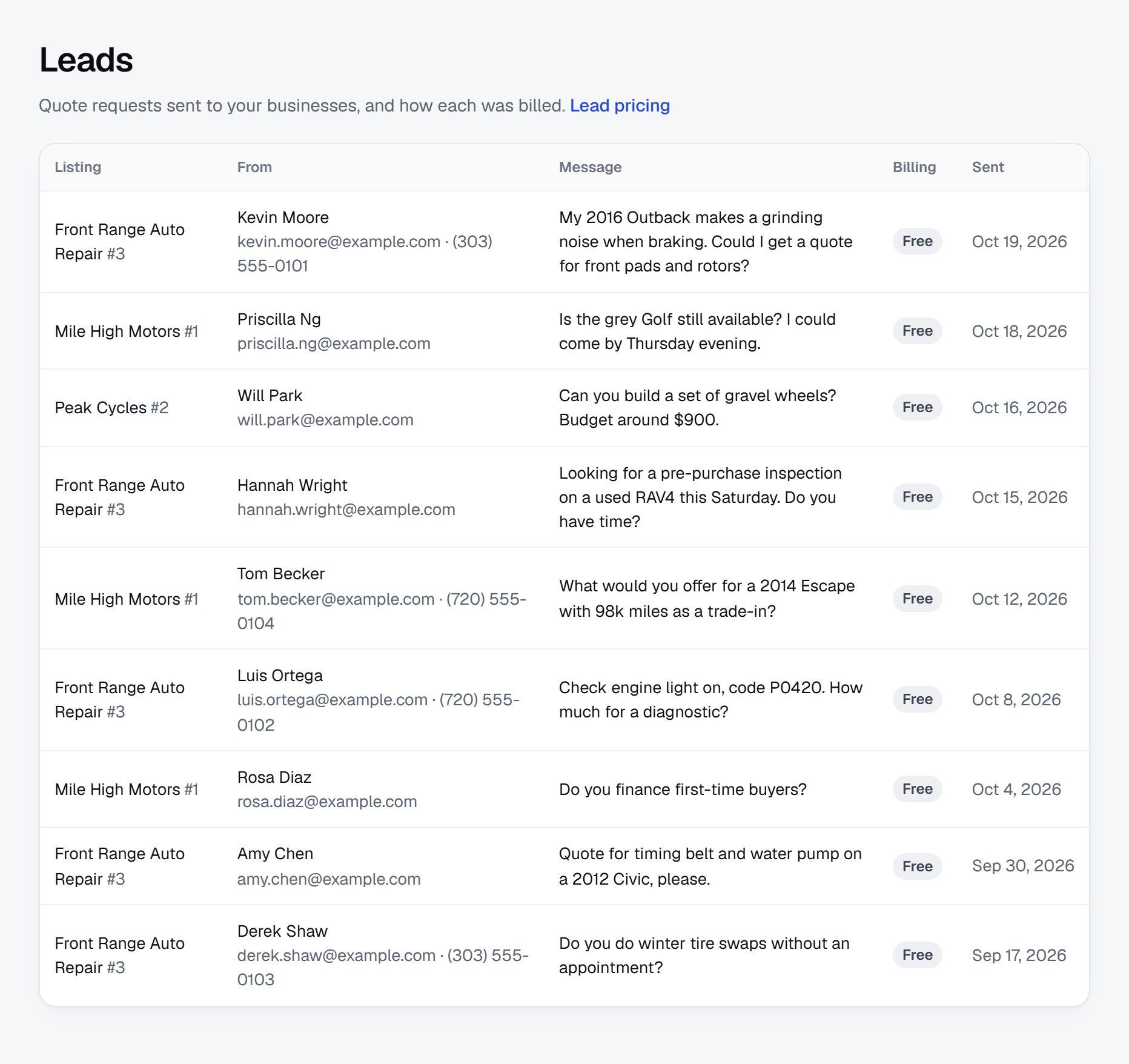
Launch with the school year, push again in January.
Music lessons follow the school calendar. Launch in late summer, when parents plan fall schedules and school band starts, and run a second push in January for adults.
- First area: one town or district with a few music stores and a strong school music program.
- Partners: music stores, instrument rental programs, school band and orchestra directors, homeschool groups and community music schools.
- Events: student recitals, back-to-school nights, music store open days and summer music camps where parents ask about lessons.
- Referrals: ask teachers to send their profile link to families on their waiting list and to past students.
Checklist
- Choose your area and the instruments you start with.
- Set fields for level, ages, styles, format and lesson price.
- Write a teacher code of conduct and a safety page for parents.
- Sign at least three teachers per main instrument, each with a recording or video.
- Publish instrument and town pages and the "what age to start" guide.
- Visit music stores and contact band directors before the school year begins.
A worked example: Casco Bay Lesson Finder, greater Portland, Maine.
Here is a fictional site to show how the pieces fit. Casco Bay Lesson Finder lists music teachers in Portland, South Portland, Falmouth, Westbrook, Cumberland and Scarborough. The area has strong school band programs, a few independent music stores, a university music department and plenty of adults who played as children and want to start again.
The category tree
- Keyboard
- Piano
- Organ
- Strings
- Violin and viola
- Cello and bass
- Guitar and ukulele
- Voice
- Band instruments
- Woodwinds
- Brass
- Drums and percussion
- Theory and songwriting
Who it serves
Parents of children aged five to fifteen make up most of the visitors, followed by adult beginners and returners, and teenagers preparing for honor band or musical theater auditions. The teachers are a mix: retired school music teachers, university students and graduates, working musicians who teach between gigs, and two music stores that rent rooms to teachers by the hour.
How it started
The founder was a piano teacher with fourteen families on her waiting list and no one to send them to. She asked the teachers she knew from local recitals whether they had openings, and found that most did, just not on the days the families wanted. In early August she built the site, filled in profiles for 22 teachers on short phone calls, and asked each for a one-minute recording. She sent her waiting list the link first, then gave a stack of cards to the two music stores and to every band director she could reach before school started. By the end of September the waiting list was gone, and the families who had found a teacher began sending friends. The surprise was the adults: a small January post in a neighborhood newsletter brought more guitar and piano inquiries from grown-ups than the whole fall had.
How it makes money
Teacher profiles stayed free in the first year, and parents never paid anything. From the second August the site sold featured spots for the back-to-school weeks and for January, and teacher memberships to those who said the site had filled their week. Trial lessons sold at a set price with checkout brought a small commission on each new match. One of the music stores bought a banner space on the band instrument pages to promote its rental program, which sent parents straight from a rental to a teacher.
| Listing | Rate | Key details |
|---|---|---|
| Beginner piano for ages 6 to 10 | $38 per 30 minutes | Home studio in South Portland, Saturday openings, two recitals a year |
| Suzuki violin for young beginners | $42 per 30 minutes, plus group class | Ages 4 to 8, a parent attends each lesson |
| Adult acoustic guitar, in person or online | $55 per hour | Chords, fingerpicking and songs, weekday evening slots |
| Musical theater voice and audition prep | $60 per 45 minutes | Teens, mock auditions with an accompanist each spring |
| Trumpet and trombone for school band students | $35 per 30 minutes | Travels to students' homes in Falmouth and Cumberland |
The first 90 days, lined up with the school year.
Music lessons have one big start date: the weeks around the beginning of the school year, when parents set fall schedules and band programs hand out instruments. A good first quarter runs from early June to the end of August, so that parents searching in late summer find full instrument pages.
Summer is also a good time to reach teachers. Many have fewer students while families travel, so they have time for a phone call, and they are thinking about how to fill their fall week. Use June and July for supply and for the pages parents read, and keep August for the people who send you families: stores, band directors and homeschool groups. Band directors are busiest in the first week of school, so reach them in the second half of August, while they are planning but before the rush. A short email with a printable list of teachers by instrument is easier for them to pass on than a link alone.
Track one number above the rest: how many instruments in your area have at least three teachers with openings. A parent who searches for cello and finds one name may still write, but a parent who finds none is gone. Write that number on your sheet every Friday, next to the count of parent messages and how quickly teachers answered them, and you will see where to recruit next.
| Weeks | Focus | Done when |
|---|---|---|
| 1 to 2 | Area, instruments and code of conduct | Area and starting instruments chosen, fields for level, ages, styles, format and price set, teacher code of conduct written |
| 3 to 4 | First teachers from your own circle | 15 teacher profiles live, each with rates, ages taught and a short recording |
| 5 to 6 | Music stores and associations | Two music stores and one teacher association have shared the link with their teachers |
| 7 to 8 | Fill the gaps | Every main instrument in the area has at least three teachers with openings |
| 9 to 10 | Pages parents read | Instrument and town pages live, plus the what-age-to-start guide and a lesson cost guide |
| 11 | Back-to-school push | Cards at every music store, links sent to band directors and two homeschool groups |
| 12 | First matches and trial lessons | Every parent message answered within a day, first trial lessons sold and first reviews requested |
Ways to build a music lessons marketplace.
A lessons site has a particular set of needs. Families filter by instrument, level, age and format all at once, so you need several filters that combine. Teachers prove themselves with recordings and a clear description of how they teach, so profiles need room for both. Most matches start with a message from a parent, and many teachers already use studio management software for scheduling and invoicing once a student signs up. Your site does not need to replace that: it needs to make the first match.
A custom build
Hiring developers fits if you want to run lessons end to end, with term billing, attendance and make-up credits in one system. That is a much larger product than a marketplace, and it competes with tools teachers already pay for. It also delays the part that matters most in year one, which is getting enough teachers listed in each instrument.
A script or plugin on your own server
A directory or classifieds script, or a WordPress plugin, can list teachers cheaply. The work is in configuring combined filters for instrument, level and age, keeping the software updated, and blocking spam profiles, which lesson sites attract.
A hosted builder
A hosted builder such as Yclas comes with custom fields as filters, profile approval and set-price listings for trial lessons, so you can spend the summer recruiting teachers. Whatever you choose, test it the way a parent would: search for one instrument, one age and one neighborhood, and see whether the results make sense.
| Route | Fits when | Watch out for |
|---|---|---|
| Custom build with developers | You want scheduling, term billing and attendance in one system | Competing with studio software teachers already use, and a long build |
| Directory or classifieds script on your own server | You can manage hosting and want full control | Combined filters take setup, and spam profiles need constant cleaning |
| WordPress with a listing plugin | You already run a music blog or teacher association site | Plugin conflicts and updates, and messages that leave the site by email |
| Hosted builder | You want filters, profile approval and trial lesson sales ready to use | Check that level, age and format can all be filtered together |
What a music lessons marketplace costs to run.
The software is the smallest part of the bill. Most of the cost is your time in the first months: finding the first listings, answering questions and checking what gets posted.
Plan for printed notices for music stores and schools, and some local ads before September. If you decide to run background or identity checks before showing a badge, budget for the check provider's fees and for handling consent properly.
| Cost | Typical range | On Yclas |
|---|---|---|
| Domain | $10 to $20 a year | Your own, with SSL included |
| Software and hosting | $0 to $100+ a month, plus plugins and updates | Marketplace $149 a month for checkout and commission |
| Design | $0 to $100 for a theme, or a designer | 109 looks included |
| Payment fees | About 3% per payment | Your Stripe or PayPal fees; Yclas takes nothing |
| Your time | 5 to 10 hours a week at the start | Finding listings, moderation, support |
Mistakes that stall music lessons marketplaces.
- Launching with empty instruments. A category for oboe or harp with nobody in it tells parents the site is not ready. Show only the instruments you can fill, and add the rest as teachers join. A shorter list that always returns teachers earns more trust than a long one with gaps.
- Letting children sign up and message teachers. Accounts and messages should belong to a parent or an adult student. Say so in your terms and in the sign-up form, and remove accounts that are clearly run by a child. Teachers will thank you for it, because most of them prefer to talk scheduling and fees with a parent anyway.
- Opening in October. By then most families have fixed their week and teachers have filled their slots. Launch in late summer, or wait for the January push for adults. If you are ready in October, use the time to recruit and write pages rather than to advertise.
- No recordings on profiles. Two teachers with the same degree can be very different in a room with a seven-year-old. A one-minute recording or a short clip of a student lesson, with permission, does more than a list of qualifications.
- Using loose badges. A "certified" or "qualified" badge on a profile you have not checked misleads parents. Give a badge only for something you have seen, such as an association membership, and say what it means.
- Forgetting teachers with waiting lists. These are the teachers most likely to say they are too busy for your site, and the most useful. Ask them to list anyway and point their overflow families to colleagues on the site. Their name also tells other teachers that serious people are joining.
- Charging parents to see contact details. Parents compare several teachers before a trial lesson. A paywall at that step sends them back to the music store notice board. Charge teachers for visibility instead, once they can see students arriving.
- Hiding rates. Lesson prices vary by instrument, length and experience, and parents budget for a year, not a week. A profile without a price per lesson gets far fewer messages, so make the rate and lesson length required fields.
- Going quiet after September. Adults start lessons in January, and parents look again before spring recitals and summer camps. Plan content and featured spots for each of those moments, and remind teachers to update their openings when a student leaves in spring.
Music lesson terms worth knowing.
Teachers and parents use these words on profiles and in messages, so learn them before you write your categories.
| Term | What it means |
|---|---|
| Suzuki method | A teaching approach that starts very young children by ear, with a parent taking part in lessons. |
| ABRSM | A British exam board for graded music exams that many countries also use. |
| RCM Certificate Program | The graded exam system of the Royal Conservatory of Music in Canada. |
| MTNA | The Music Teachers National Association, a US professional body with local chapters. |
| NCTM | Nationally Certified Teacher of Music, a credential awarded by MTNA. |
| Studio policy | A teacher's written rules on fees, missed lessons, notice periods and practice. |
| Make-up lesson | A lesson given later to replace one the student missed, if the studio policy allows. |
| Recital | A performance where a teacher's students each play a piece for families. |
| Sight-reading | Playing a piece of music from the page on first look, without practice. |
| Ear training | Exercises that build the skill of recognizing notes, intervals and chords by sound. |
| Method book | A series of beginner books that sets the order in which skills are taught. |
| Honor band | A selective band for strong school players, entered by audition. |
| Accompanist | A pianist who plays alongside a singer or soloist in lessons, exams or auditions. |
| Trial lesson | A single first lesson, often shorter or discounted, to see whether teacher and student fit. |
The same steps for a music lessons marketplace on Yclas.
- Describe your marketplaceThe setup wizard writes the categories, an About page and example listings from one sentence.
- Add fieldsThe details buyers filter on, as dropdowns, numbers or checkboxes.
- Bring sellersInvite them, import their stock from a spreadsheet, or post for them.
- Set the rulesChoose moderation, verified sellers, reviews and reports.
- Take paymentsOn Marketplace, buyers pay on the site and you keep a commission, with Stripe.
What does it cost to launch a music lessons marketplace?
Expect to spend more time than money. Printing for music stores, a few local ads before the school year and recordings of your first teachers usually come to a few hundred dollars.
Should teachers on my site have background checks?
Rules on checks for people who teach children vary by place, and some associations set their own standards, so check what applies where you operate. If you do not run checks, say so clearly and give parents practical safety advice.
How do I earn money if students pay teachers directly?
Sell featured listings and teacher memberships once teachers fill slots from your site, and sell trial lessons or lesson bundles at a set price with on-site checkout so you keep a commission.
Should I include online lessons?
Yes, as a lesson format filter, so local students still find nearby teachers first. If you go fully online, focus on one language or one instrument to stand out.
Where do I find the first teachers?
Music stores, local music teacher associations, university music departments, school band directors, churches, and teachers already posting lesson ads on Craigslist and Facebook groups.
Can students book a weekly slot on the site?
Students send a message with their instrument, level and the days that suit them, and the teacher replies with openings. The weekly time is agreed between them, which is how most teachers already schedule.
How do I compete with large lesson platforms?
Be the most complete local list for in-person lessons, with videos, real rates and teachers the local music stores know. Large platforms are often thin in any one town, and many parents want a teacher nearby.
How should my site handle missed lessons and studio policies?
Leave the rules to each teacher, but ask them to summarize their studio policy on their profile: notice needed to cancel, make-up lessons and how fees are paid. Parents then know what they are agreeing to before the first lesson.
Should I list group classes as well as private lessons?
Yes, as their own category or a format field. Group piano, ukulele circles and children's music classes are an easy first step for families who are not sure about weekly private lessons, and they often lead to them. Ask for the class size, the age range and the number of weeks in a term, so parents can compare classes with private lessons fairly.
Can music stores list their in-house teachers?
Yes, either one profile per teacher or a store page that names each teacher and instrument. Ask stores to keep each teacher's openings current, because a store page that always says full sends parents elsewhere. Store teachers often have evening and weekend slots that independent home studios cannot offer, which is worth showing in the listing.
How young can a student on my site be?
That is for teachers to decide, and some start children at three or four. What matters for you is that the account and all messages belong to a parent, never to the child. Ages taught should be a filter, so a parent of a four-year-old only sees teachers who take students that young.
Do I need content about buying or renting instruments?
It helps. Parents ask about instruments in the same week they look for a teacher, and a plain guide on renting versus buying, with input from your music store partners, brings in searches and a natural banner partner. Add a short note on sizes too, since fractional violins and smaller guitars for children confuse many first-time parents.
Related pages.
The parts of Yclas this leans on.
You have the plan. Now build your music lessons site.
Describe your site in a sentence and the setup wizard writes the categories, example listings and a look. Free for 15 days, no credit card.
Start my marketplace