How to build a moving help marketplace where people find movers and vans by the job.
This guide covers how to build a marketplace that connects people who are moving with local movers, labor-only crews and owners of vans and trucks: picking a city and a type of move, the fields customers filter on, quote requests and set-price jobs, recruiting the first movers, rogue movers and other scams, the searches to rank for, and a launch before the summer moving season.
Free for 15 days · No credit card · Plans from $19 a month
Connect people who are moving with crews who have free days.
People moving across town want help they can afford and trust: two strong people for three hours to load a rental truck, a small crew with a box truck for a one-bedroom apartment, someone with a van to collect a sofa bought online, or a full-service mover for a family house. Today they ask friends, post on Craigslist or a local Facebook group, call big moving companies for estimates, or pick a name from a search ad and hope.
On the other side are small moving companies, owner-operators with a box truck, labor-only crews, students who move furniture in summer and specialists in pianos or safes. Most have quiet weekdays and mid-month gaps they would like to fill, and they spend a lot of time quoting jobs that never happen.
A moving help marketplace gives customers a place to compare crews by service, size and price, and send a quote request with the details a mover needs: addresses, floors, stairs or elevator, inventory and date. Movers get requests they can actually price.
Pick your angle
- One city and its suburbs, for local moves where the crew drives to the customer.
- One kind of help: labor-only loading and unloading, or single items and small moves.
- One kind of customer: students in a college town, apartment renters, or older people moving to a smaller home.
A mover cannot price a job from "I need help moving". Your request form is the product.
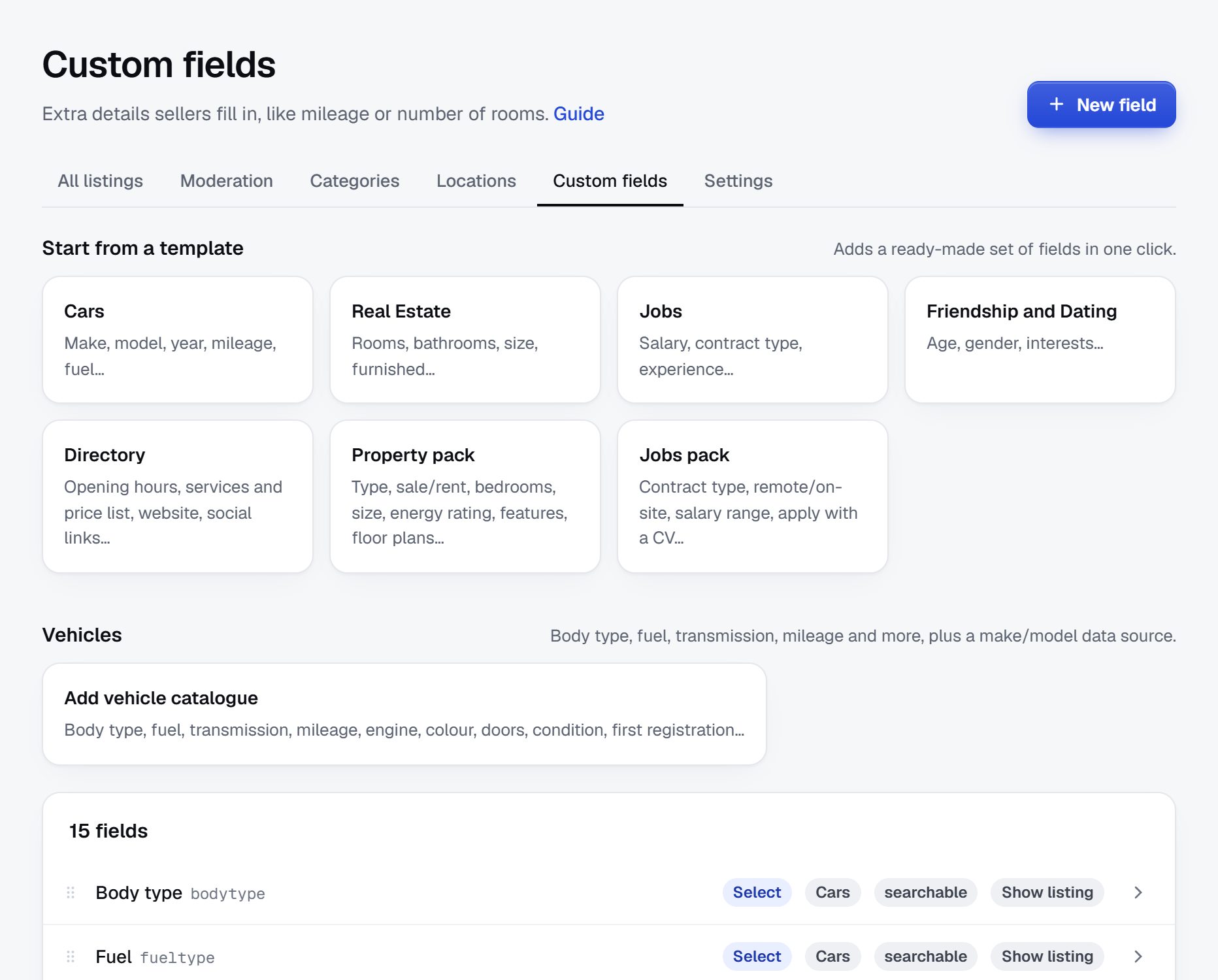
Let customers filter by service, move size and crew.
Keep categories to the type of service, because a labor-only crew and a full-service mover answer different needs. Put the rest in fields.
- Service type: labor only, truck and crew, packing, single item delivery, junk removal, specialty items.
- Move size: studio, one bedroom, two to three bedrooms, house, office.
- Crew size: one, two, three or more people.
- Vehicle: none, cargo van, box truck with its size in feet, with or without a lift gate.
- Hourly rate and minimum hours, the two numbers customers compare first.
- Distance: local only, within the state, long distance.
- Equipment: dollies, furniture pads, straps, piano board.
- USDOT or state registration number as a text field for movers who need one, so customers can look it up.
- Areas served as a dropdown of neighborhoods and towns.
Yclas custom fields can be required or optional and appear as search filters, so make the registration number required in the categories where your local rules expect it.
| Category | Example listings | Fields customers filter on |
|---|---|---|
| Labor only | Two movers to load your rental truck, two-hour minimum | Crew size, hourly rate, minimum hours, area |
| Truck and crew | Box truck and three movers for a two-bedroom apartment | Move size, vehicle, crew size, hourly rate |
| Small moves and single items | Van and driver to collect a sofa or a washer | Vehicle, distance, area |
| Packing and unpacking | Packing a kitchen the day before the move | Move size, materials included, area |
| Specialty items | Upright piano, gun safe, pool table moves | Equipment, item type, stairs |
| Junk removal | Clearing a garage before moving out | Vehicle, load size, area |
| Long distance | Interstate household move with a registered carrier | Distance, registration number, move size |
Charge for visibility and sell standard jobs at a set price.
Most moving jobs are priced after a quote: the mover sees the inventory and the stairs, then names a price. Some jobs are standard enough to sell at a set price. Use both.
- Free listings while you sign movers, so customers find real choice in every service.
- Set-price jobs with checkout: "two movers for two hours", "single item delivery within the city", "load a rental truck", listed at a set price and paid on the site with a commission to you. Extra time is then agreed between customer and crew.
- Featured listings during the peak: late spring and summer, the last and first days of each month, and college move-in and move-out weeks.
- Mover memberships with a higher place in search and more photos of trucks and crews.
- Banner spaces for self storage, truck rental counters, box and packing supply stores, cleaning services and real estate agents.
Avoid charging movers per quote request until requests are steady and well filled in. A mover who pays for a request with no address and no inventory will not renew.
| Model | Works when | Switch it on |
|---|---|---|
| Free listings | You need crews across your city | From launch |
| Set-price jobs | Small, standard jobs that need no site visit | When ten crews offer the same kind of job |
| Featured listings | Summer and month ends bring competition | Before May and before college move-in |
| Mover memberships | Movers win regular jobs from the site | After one full summer |
| Banner spaces | Storage and supply businesses want movers' customers | Once traffic is steady |
Find crews with trucks and gaps in their week.
Small movers live on their phones between jobs. Reach them where they already look for work and help them build a listing in a few minutes.
- Craigslist and Facebook groups: the "labor" and "moving" sections are full of crews advertising. Message them with a free listing.
- Truck rental counters and self storage offices, where staff know the local crews and sometimes keep a list.
- Small moving companies found through business listings, especially those with one or two trucks.
- College athletes and student groups who move furniture in summer, often through an organizer.
- Piano technicians and stores, who know who moves pianos well.
- Junk removal and hauling businesses, which often take small moves too.
Ask each mover for photos of their truck and crew, their rates, minimum hours, areas and any registration numbers. Aim for at least 20 crews across your main service types before you advertise, and make sure every part of your city has someone who covers it.
A real photo of the truck with the company name on it does more for trust than any slogan.
Keep rogue movers and deposit scams off your site.
Moving has well-known scams, and customers are handing over everything they own. Write rules for them from day one.
- Rogue movers: the classic scam gives a low quote, loads the truck, then demands much more before unloading, holding the goods until the customer pays. Tell customers to get the price in writing in the on-site messages, to be wary of quotes far below others, and never to hire a mover who will not give a company name and address.
- Registration: in the United States, movers carrying household goods between states generally need a USDOT number, and many states regulate local movers too. Rules differ elsewhere. Check the rules where you operate, ask movers for their numbers and let customers look them up with the regulator.
- Large deposits: warn customers against paying a big deposit by gift card or money transfer to a mover they have not met.
- Damage and liability: what a mover owes for damaged items depends on local rules and on the coverage the customer chooses. Ask movers to state their coverage and insurance, and tell customers to read it before moving day.
- Fake listings: stolen truck photos and copied company names. Hold new listings for review and check the number and name match.
Encourage reviews after every job, and remove any mover with a pattern of complaints about held goods or surprise charges.
Rank for local moving searches and cost questions.
Moving searches are urgent and local, and many include a price question. Typical searches:
- "movers near me", "moving help Columbus", "cheap movers Houston"
- "labor only movers", "help loading a moving truck"
- "piano movers near me", "move a couch across town"
- "how much do movers cost per hour", "how much to move a one bedroom apartment"
- "college move out help", "junk removal before moving"
Build a page for each service in each town or neighborhood ("Labor-only movers in Arlington"), and pages for each move size. Then write the guides people read the week before they move:
- A moving cost guide by move size and service, using rates your crews share.
- "How to spot a moving scam": low quotes, held goods, missing registration, and what to ask.
- "Labor only or full service": when renting a truck and hiring help makes sense.
- A moving checklist and a packing guide, which people save and share.
- College town pages before move-in and move-out weeks.

Launch in spring, before the summer rush.
Moving is seasonal: most household moves happen between May and September, with spikes at the end and start of each month and around college move-in and move-out. Launch in March or April so your pages and crews are ready for the first busy weekend.
- First area: one city with many renters, or a college town where move-out week is a known crunch.
- Partners: self storage facilities, truck rental counters, apartment managers, real estate agents and university housing offices.
- Events: college move-in and move-out days, apartment lease turnover at month end, and local home shows.
- Reviews: ask each crew to send the profile to their last few customers for reviews before summer.
Checklist
- Choose your city and the services you start with.
- Set fields for service type, move size, crew, vehicle, rate and registration.
- Write rules against rogue movers and a safety page for customers.
- Sign at least 20 crews, each with truck photos and clear rates.
- Publish town pages, the cost guide and the scam guide.
- Leave cards at storage facilities and apartment offices before May.
A worked example: Isthmus Lift Crew Exchange, Madison, Wisconsin.
Here is a fictional site to show the model at work in one city. Isthmus Lift Crew Exchange covers Madison, Middleton, Fitchburg, Sun Prairie and Verona. The city has a large university, thousands of renters, and a crunch every August when many campus-area leases end and begin within days of each other, so trucks, crews and parking spaces all run short at once.
The category tree
- Labor only
- Loading a rental truck
- Unloading and carrying in
- Truck and crew
- Studios and one bedrooms
- Houses
- Small moves
- Single items
- Store and marketplace pickups
- Specialty items
- Pianos
- Safes and pool tables
- Junk hauling before a move
Who it serves
Customers are students and young renters moving a few blocks, couples moving from an apartment to a first house in the suburbs, older people moving to a smaller place, and anyone who bought a couch online and has no way to get it home. The movers are about 30 small operators: two moving companies with three trucks each, a dozen owner-operators with one box truck, labor-only crews of college athletes in summer, a piano mover and several junk haulers who take small moves between jobs.
How it started
The founder ran a two-person labor crew while at the university and spent more time answering vague texts than moving furniture. In February he built a site with one goal: every request had to arrive with addresses, floors, elevator or stairs, a list of large items and a date. He signed 20 crews by answering their Craigslist ads and visiting truck rental counters, and asked each for photos of the truck, rates, minimum hours and any registration numbers. Before May he left cards at storage facilities and apartment leasing offices, and in July he published an August move-out page that the university's off-campus housing newsletter shared.
How it makes money
Listings were free through the first summer. Set-price jobs, such as two movers for two hours or a single item pickup across town, were paid at checkout with a commission to the site, and became most of the income. In the second year featured spots sold out for the last week of July and all of August, and three of the bigger crews bought memberships. A self storage company and a box and supply store took banner spaces on the student moving pages.
| Listing | Price | Key details |
|---|---|---|
| Two movers to load your rental truck | $120 for two hours | Dollies and furniture pads, extra time agreed in messages |
| 16-foot box truck and three movers | $165 per hour, three-hour minimum | Lift gate, Madison and Middleton, states its state registration number |
| Couch or appliance pickup across town | $95 set price | Cargo van and two people, ground floor or elevator only |
| Upright piano move | Quote on request | Piano board and straps, stairs priced per flight |
| Garage clear-out before moving day | From $150 per quarter load | Hauling to recycling and donation drop-off, same-week slots |
The first 90 days, before the summer rush.
Moving demand climbs from May and peaks in summer and at each month's end, so the useful ninety days run from about February to the end of April. In that window you need crews signed, a request form that collects what movers need, pages that answer cost and scam questions, and partners who meet people on the day they decide to move.
Crews are easiest to sign in winter, when their calendars have gaps and they are thinking about the season ahead. Ask for the basics in one call: services, truck size, crew size, hourly rate, minimum hours, areas and registration numbers. Then look up each number before you approve the listing, and write down when you did it.
Test the request form yourself with a few friends who are moving, and ask a couple of crews to quote from what it collects. If a crew still has to send three follow-up questions before they can quote, add those questions to the form. A month-end weekend in April makes a good dress rehearsal before the summer rush: watch how quickly crews answer and which ones take the jobs they quote.
| Weeks | Focus | Done when |
|---|---|---|
| 1 to 2 | City, services and request form | City and services chosen, fields for service, move size, crew, vehicle, rate and registration set, request form asks for addresses, floors, stairs, items and date |
| 3 to 4 | First 12 crews | 12 crews live, each with truck photos, hourly rate, minimum hours and areas served |
| 5 to 6 | Rules and scam guide | Rules against held goods and surprise charges published, scam guide and safety page live, registration numbers checked |
| 7 to 8 | Partners | Cards at five storage facilities and five apartment leasing offices, and one truck rental counter sharing the link |
| 9 to 10 | Reach 20 crews and set-price jobs | 20 crews live across the city, at least five offering set-price small jobs |
| 11 | Month-end test | Every request on the last weekend of April answered within two hours by at least one crew |
| 12 | Summer and student pages | Cost guide and move-out page published, featured spots planned for late July and August |
Ways to build a moving help marketplace.
The heart of a moving help site is the request: addresses, floors, stairs or elevator, a list of large items and a date. Whatever you build must collect these in a structured way and get them to the right crews fast, because many moving searches are made days or hours before the job. It also needs filters for service, crew, vehicle and rate, room for truck photos and registration numbers, and checkout for small set-price jobs.
A custom build
Developers can build an instant quote engine that prices a move from an inventory, or live tracking of crews. Both are hard to get right, and a quote engine that underprices jobs will anger the movers you need most. Build this only once you know your market well.
A script or plugin on your own server
A classifieds or marketplace script, or WordPress with a listings plugin, can work, but you will spend time on the request form, on email delivery so crews actually see requests, and on spam, which moving sites attract in large amounts.
A hosted builder
A hosted builder such as Yclas gives you required custom fields, on-site messages, reviews and set-price listings paid at checkout, so you can spend the winter signing crews instead of setting up servers. Test any choice with a real request on a phone: if it takes longer than a few minutes to send one, customers in a hurry will call the first number on a search ad instead.
| Route | Fits when | Watch out for |
|---|---|---|
| Custom build with developers | You want instant quotes from an inventory or live crew tracking | Mispriced jobs, long build time and a product movers may not trust |
| Marketplace script on your own server | You can run a server and want full control over the request form | Spam, email delivery to crews and updates during the busy season |
| WordPress with a listings plugin | You already run a local moving or storage blog | Making requests structured and fast instead of a loose contact form |
| Hosted builder | You want required fields, messages and set-price jobs ready before spring | Check that requests are easy to send on a phone in a few minutes |
What a moving help marketplace costs to run.
The software is the smallest part of the bill. Most of the cost is your time in the first months: finding the first listings, answering questions and checking what gets posted.
Expect costs for local ads in spring and summer, printed cards for storage facilities and apartment offices, and the time it takes to look up mover registration numbers before you approve listings.
| Cost | Typical range | On Yclas |
|---|---|---|
| Domain | $10 to $20 a year | Your own, with SSL included |
| Software and hosting | $0 to $100+ a month, plus plugins and updates | Marketplace $149 a month for checkout and commission |
| Design | $0 to $100 for a theme, or a designer | 109 looks included |
| Payment fees | About 3% per payment | Your Stripe or PayPal fees; Yclas takes nothing |
| Your time | 5 to 10 hours a week at the start | Finding listings, moderation, support |
Mistakes that sink moving help marketplaces.
- Accepting vague requests. "Need help moving Saturday" gives a crew nothing to price. Movers stop opening requests that lack addresses, floors and items, and then customers get no replies. Make those details required on the request form, and add a free-text box for anything awkward, such as a narrow staircase or a sofa that came in through a window.
- Selling each request to many movers. Lead sites that pass one request to many companies at once leave customers flooded with calls and movers paying for jobs they rarely win. Let the customer choose which crews to contact, and earn from visibility and set-price jobs.
- Approving movers without checking registration. Where your rules expect a USDOT or state number, a listing without one, or with a number belonging to another company, is a warning sign. Look it up before approval and record the date you checked.
- Ignoring the rogue mover pattern. One review describing a low quote followed by a much higher demand at the destination is a serious signal. Investigate at once, hide the listing while you do, and remove movers who hold goods for more money.
- Missing the month-end crunch. Most leases turn over at the end of the month, and a site where crews answer slowly on those days loses customers when it matters most. Ask crews to mark which month-end days they still have free, and feature them.
- Launching in September. A site that opens after the summer peak waits eight months for real demand. Open in spring, and use any time before that for crews and content. If you are ready in the fall, aim at the smaller peaks instead: December graduations, January lease starts and office moves over the holidays.
- Listing only full-service companies. Big movers already have ads and websites. The gap is labor-only help, single items and small moves that large companies turn down. Recruit those crews first. They are also the ones most short of steady work midweek, so your requests matter more to them.
- Allowing listings without truck photos. Stolen photos and fake company names are common in this trade. A real photo of the truck with its name and number is one of the few things a customer can check before moving day, so require it.
- Hiding minimum hours. An hourly rate that looks cheap until a four-hour minimum appears at the door feels like a bait and switch. Require minimum hours next to the rate on every listing, along with any travel fee, and ask crews to say whether the clock starts at their yard or at the customer's door.
Moving trade terms to know.
Movers use these terms in quotes and listings, and customers often misread them.
| Term | What it means |
|---|---|
| Labor only | A crew that loads or unloads but brings no truck; the customer rents one. |
| Binding estimate | A quote that fixes the price for the listed items and services, whatever the move takes. |
| Non-binding estimate | An approximate quote; the final price depends on actual weight or time. |
| Not-to-exceed estimate | A quote that caps the price while allowing a lower final bill if the job takes less. |
| USDOT number | An identifier from the US Department of Transportation that interstate household movers generally need. |
| Bill of lading | The contract and receipt between customer and mover, listing services, terms and the goods moved. |
| Released value protection | Basic coverage that pays only a limited amount per pound for lost or damaged items. |
| Full value protection | Coverage under which the mover repairs, replaces or pays for damaged items, usually at extra cost. |
| Long carry | An extra charge when the truck cannot park close to the door and items must be carried far. |
| Stair or flight charge | An extra fee for each flight of stairs the crew must carry items up or down. |
| Lift gate | A powered platform at the back of a truck that raises heavy items to the cargo floor. |
| Hostage load | A scam in which a mover holds belongings and refuses to unload until paid much more than quoted. |
| Travel fee | A charge for the time or distance a crew drives to reach the job, sometimes billed as one extra hour. |
| Minimum hours | The smallest number of hours a crew charges for, however short the job turns out. |
The same steps for a moving help marketplace on Yclas.
- Describe your marketplaceThe setup wizard writes the categories, an About page and example listings from one sentence.
- Add fieldsThe details buyers filter on, as dropdowns, numbers or checkboxes.
- Bring sellersInvite them, import their stock from a spreadsheet, or post for them.
- Set the rulesChoose moderation, verified sellers, reviews and reports.
- Take paymentsOn Marketplace, buyers pay on the site and you keep a commission, with Stripe.
What does a moving help marketplace cost to launch?
Mostly time spent signing crews and checking their details. Local ads in spring and printed cards for storage and apartment offices usually cost a few hundred dollars.
Do movers on my site need a license?
Often they do. In the United States, interstate household movers generally need a USDOT number, and many states regulate local movers, while other countries have their own rules. Check the rules where you operate and ask movers for their numbers.
Am I liable if a mover damages or holds someone's belongings?
Ask a local lawyer how your terms should state that movers are independent businesses responsible for their work, coverage and insurance. Act fast on complaints and remove movers who hold goods for more money.
How do I make money from quote requests?
Start free, then sell featured listings in summer and mover memberships. Small standard jobs, such as two movers for two hours, can be sold at a set price with on-site checkout so you keep a commission.
Where do I find the first movers?
Crews advertising on Craigslist and Facebook groups, truck rental counters, self storage offices, small moving companies, student groups, piano technicians and junk removal businesses.
Can customers book a crew for a date on the site?
Customers send a quote request with their addresses, inventory, stairs and date through on-site messages, and movers reply with a price and availability. Set-price small jobs can be paid on the site, with the time agreed in messages.
How do I compete with big moving companies and lead sites?
Focus on the small jobs and labor-only help the big companies do not want, show real hourly rates and truck photos, and keep quote requests local and specific instead of selling them to many movers at once.
Should I include junk removal and hauling?
Yes, as its own category. People clearing a garage or an apartment before a move often need hauling the same week, and junk haulers with trucks are good recruits who also take small moves. Ask them to state how they dispose of items and whether they donate or recycle.
How do I handle complaints about damaged furniture?
Ask customers to raise the complaint in the on-site messages with photos, and ask the mover to reply there. You are not the insurer, so point both sides to the mover's stated coverage and remove movers who ignore valid complaints.
Should I allow movers to ask for deposits?
Some movers ask for a small deposit to hold a busy date. Ask them to state any deposit in the listing, and warn customers never to pay one by gift card or wire transfer. Set-price jobs paid on the site leave a record for both sides.
Can I serve long distance moves?
You can list registered long distance carriers, but local moves are easier to serve well and to check. Start local, and add long distance only once you know how to look up each carrier's registration and complaint history.
How fast do crews need to reply to requests?
Faster than in most service trades, because many people look for help a few days before the move. Ask crews to reply within a few hours in the busy season, and pause listings for crews that leave requests unanswered. A short weekly note to crews showing how many requests came in, and how many went unanswered, does more than any rule.
Related pages.
The parts of Yclas this leans on.
You have the plan. Now build your moving help site.
Describe your site in a sentence and the setup wizard writes the categories, example listings and a look. Free for 15 days, no credit card.
Start my marketplace