How to build a tutoring marketplace parents trust with their kids' grades.
This guide covers building a marketplace where families and adult learners find tutors by subject, grade level and area: choosing a town and subject focus, the fields parents filter on, how tutors are contacted through on-site messages, packages and featured profiles, recruiting the first tutors, child safety and academic honesty rules, the searches to rank for, and a launch timed to the school calendar.
Free for 15 days · No credit card · Plans from $19 a month
Help parents find the right tutor without asking every parent at pickup.
Most families find a tutor through a friend, a teacher's suggestion or a post in a school parents' group. It works when you know the right people, and fails when a child needs help in AP Chemistry next week. Tutors face the mirror problem: a retired math teacher or a grad student who would gladly take three more students has no way to reach the families nearby.
The two sides
- Tutors: current and retired teachers, college and grad students, test prep specialists, native speakers teaching languages, and reading and special education specialists.
- Learners: parents of school-age children, homeschooling families, college students stuck in one course, and adults learning a language or preparing for a professional exam.
Why a local, focused site wins
Large national tutoring platforms are built around online lessons and their own pricing. Many parents still want someone who can come to the house or meet at the library, and they want a tutor who knows the local school's curriculum and teachers. A site for one town or school district can show exactly that.
Pick the angle
- One area: a town, a school district or the neighborhoods around a university.
- One focus: K-12 math and science, test prep, languages, or reading support.
- One learner type: parents of teenagers, homeschool families, or adults.
Parents choose a person, not a platform. Make every tutor profile answer "would I trust this person with my child."
Let parents filter by subject, level, format and area.
Categories should be subjects, kept shallow: math, sciences, English and writing, languages, test prep, reading and learning support, music theory if you want it. The rest goes in fields, because a parent searching "math tutor" really means Algebra 2, tenth grade, in person, on weeknights.
- Level taught: elementary, middle school, high school, college, adult, as checkboxes so one tutor can tick several.
- Course or exam: Algebra 1, Geometry, Precalculus, AP Biology, SAT, ACT.
- Format: at the student's home, at a library or public place, online, small groups.
- Rate per hour as a number, so parents can sort and compare.
- Background: certified teacher, years of experience, degree subject.
- Availability: weekday afternoons, evenings, weekends, summer.
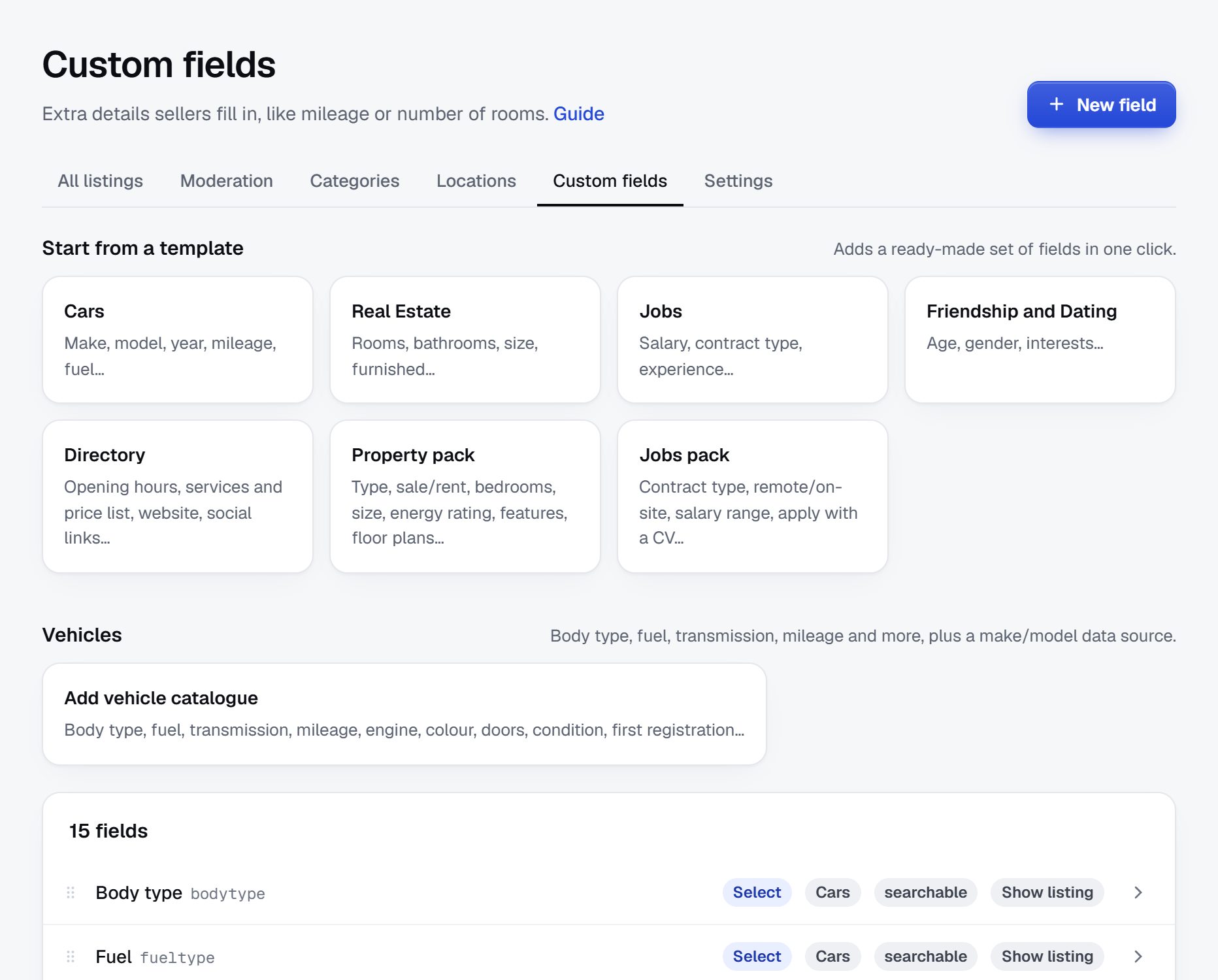
In Yclas, custom fields can be text, numbers, dropdowns, checkboxes or dates, each one required or optional and shown as a search filter. Make "Level taught" and "Format" required: they are the first two filters almost every parent uses. Families contact a tutor through on-site messages to ask about times and fit, and arrange the first session from there.
| Category | Example listings | Fields parents filter on |
|---|---|---|
| Math | Algebra and Geometry help, in-home, grades 8-10 | Level, course, format, rate per hour |
| Sciences | AP Chemistry and Biology, former high school teacher | Course, certified teacher, online or in person |
| English and writing | Essay coaching for college applications | Level, availability, years of experience |
| Languages | Conversational Spanish for adults, native speaker | Language, learner level, group sessions |
| Test prep | SAT and ACT prep, 8-week package | Exam, format, package or per hour |
| Reading and learning support | Reading specialist for grades 1-4 | Level, specialist training, in-home |
Earn from tutor visibility first, then from packages sold on the site.
Tutoring is a relationship. A parent finds a tutor once and then pays them every week for months, usually directly. Trying to force each session through the site will push tutors and families to leave, so build your income around what tutors gain from being found.
What works
- Featured profiles at the top of a subject and area, sold in the weeks before school starts and before exams.
- Tutor memberships with a verified badge, more photos and a place in a "top tutors" list, for tutors who teach many students.
- Fixed-price packages: on the Marketplace plan a tutor can sell a package as a listing, such as "SAT prep, eight sessions" or "summer reading program, six weeks", paid at checkout, with your commission per sale.
- Banner spaces for local learning centers, bookstores, test prep publishers and after-school programs.
- Pay to post in a busy category like test prep, once tutors there get regular inquiries.
Keep basic profiles free while you build supply. A tutor with no students yet will not pay to be listed, but the same tutor will happily pay for a featured spot in August once the site sends inquiries.
| Model | Works when | Switch it on |
|---|---|---|
| Featured profiles | Parents compare several tutors per subject | Before back-to-school and exam seasons |
| Tutor memberships | Tutors with many students want a stronger profile | Once tutors get regular inquiries |
| Packages with checkout | Test prep and summer programs with a fixed scope | When tutors ask to sell packages |
| Pay to post in test prep | Test prep inquiries are steady | After the first busy exam season |
| Banner spaces | Local education businesses want parents | When parent traffic is steady |
Recruit fifty tutors across the subjects parents ask about most.
Tutors first. A parent who searches for a chemistry tutor and finds nobody will not search again. Before you promote the site to families, aim for at least fifty tutor profiles in your area, with math and the sciences well covered, since those are what parents search for most.
Where tutors are
- Retired and current teachers, reached through retired teacher associations, teacher union newsletters and former colleagues.
- University students and grad students in math, science and education departments, through department notice boards, student job boards and teaching assistant lists.
- Tutors already advertising on Craigslist, library notice boards, local Facebook groups and parents' WhatsApp chats.
- Homeschool co-ops, where parents with subject strengths often tutor other families' children.
- Language schools and native speaker communities for language tutoring.
- Test prep teachers working part time for national chains who want their own students.
Help each tutor write a strong profile: a clear photo, the courses and levels they teach, their background in plain words, and a short note on how they teach. Profiles with a specific course list ("Algebra 1, Geometry, Algebra 2") get far more contact than "all math". Ask your first tutors to invite one colleague each.
Recruit by subject gaps, not by numbers. Ten chemistry tutors are worth more than thirty for general homework help.
Put child safety and honest credentials before growth.
Most learners are minors, and tutoring often happens in a family's home. That makes safety the first thing parents judge you on.
Child safety
- Background checks: many parents expect them, and some places have rules for adults who work with children. Check the rules where you operate. Encourage tutors to share a recent background check and show which tutors have, without claiming you guarantee anyone.
- Parent accounts: children should not hold accounts; parents contact tutors and arrange sessions. Rules on collecting children's data exist in many places, so keep minors' data out of the site.
- Session safety tips: first session at a library or with a parent home, sessions in common rooms, and messages between tutor and parent rather than tutor and child.
Credentials and honesty
- Inflated qualifications: ask tutors to describe degrees and certifications precisely, and mark the ones you have seen documents for with a verified badge.
- Academic dishonesty: ban listings that offer to write essays, complete homework or take online exams for students. Add these phrases to your banned words and remove offenders.
- Off-site payment requests from strangers: warn families never to prepay a tutor they have not met, outside of packages sold on the site.
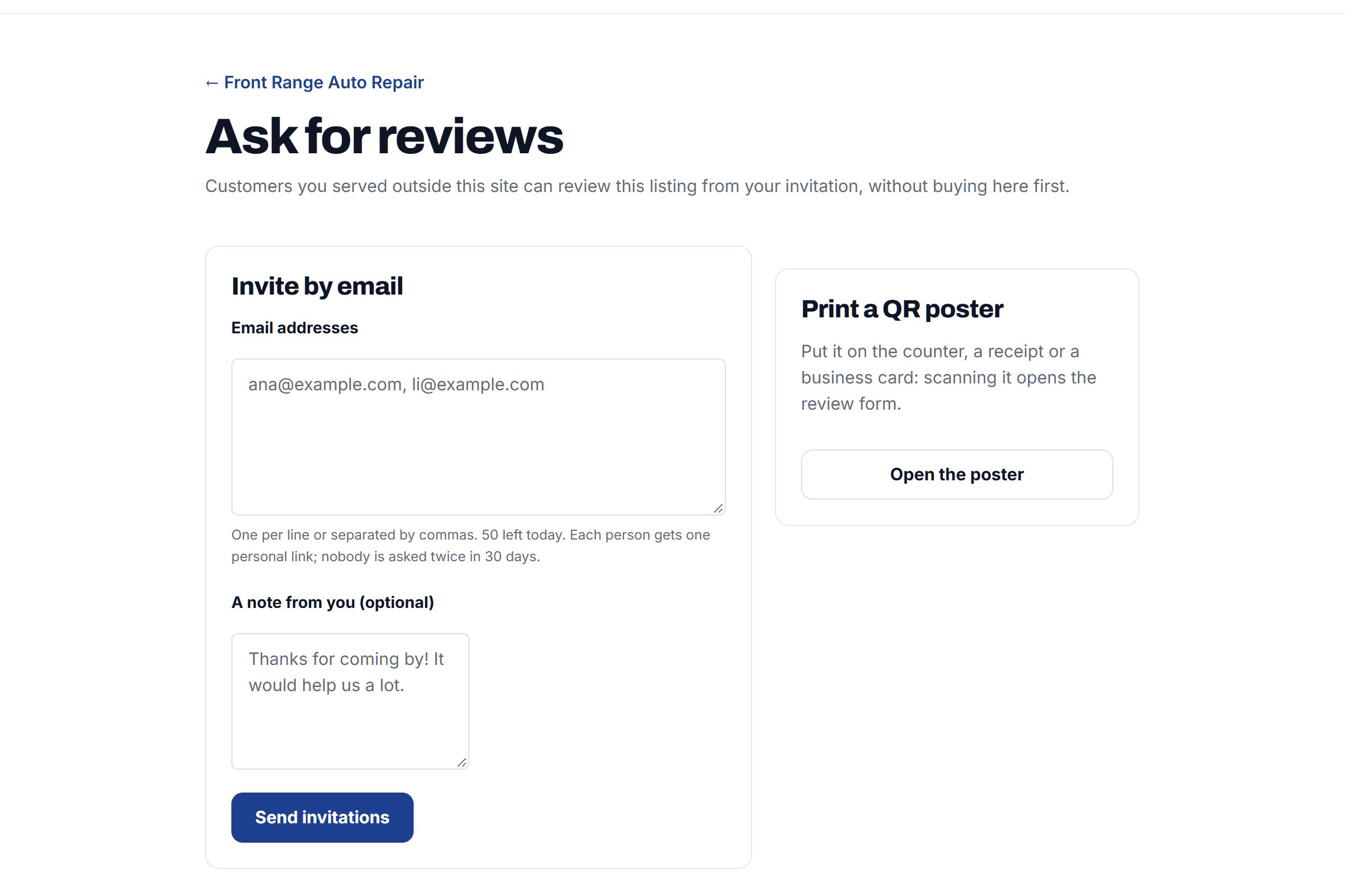
Yclas offers verified seller badges, profiles, ratings and reviews; ask families for a review after the first month, when they can judge progress, not after the first session.
Rank for subject, grade and town searches.
Parents search with the subject, the grade or exam, and the place: "math tutor near me", "chemistry tutor [town]", "SAT tutor [city]", "reading tutor for 2nd grader", "Algebra 2 tutor in person", "Spanish tutor for adults [city]" and "how much does a tutor cost". Each of these is a page you can build.
Pages to build
- Subject and town pages: math tutors, chemistry tutors, SAT tutors, each in each town or school district you cover.
- Course pages for the courses that send families looking: Algebra 1, Geometry, Precalculus, AP courses, high school Chemistry.
- Exam pages with test dates, timelines for preparing and a list of local test prep tutors.
- Parent guides: how to choose a tutor, questions to ask in the first message, signs your child needs help, online or in-person tutoring.
- Price pages: what tutoring costs in your town by subject, built from the rates on your own profiles once there are enough.
Profile titles should name the course, level and area: "Algebra and Geometry tutor, grades 8-10, in-home in Westfield" ranks for what parents type. Publish exam pages early: families start searching for test prep months before the test date.
Launch in late summer, before the first report cards.
Tutoring demand follows the school year. Late August and September bring families who want to start the year well. Searches rise again after the first report cards and before midterms, finals and the spring exam season for AP and college entrance tests. Summer brings catch-up and reading programs. Be live with tutors in place by mid-August if you can.
Partners
- School parent-teacher associations and their newsletters.
- Public libraries, which host homework help and often allow tutoring in study rooms.
- Homeschool co-ops and support groups.
- School counselors, who get asked about tutors every week.
- Local bookstores and after-school programs.
Checklist
- Pick one town or district and the subjects you will cover first.
- Write your rules: parent accounts, safety tips, banned services such as essay writing.
- Recruit fifty tutors, with math and science covered at every level.
- Publish subject, course and exam pages for your area.
- Send a short note to every PTA newsletter in the district two weeks before school starts.
- Ask families for a review a month after they start with a tutor.
A worked example: Poudre Valley Tutor Board in Fort Collins, Colorado.
Poudre Valley Tutor Board is fictional. It stands in for the kind of site this guide describes, set in Fort Collins and Loveland in northern Colorado: two school districts, a large university, a strong homeschool community and parents who would rather meet a tutor at the library than log in to a national app.
Categories
- Math
- Elementary and middle school
- High school and AP
- Sciences
- Reading and writing
- Early reading support
- Essays and college applications
- Languages
- Test prep
Who it serves
On the learner side: parents of middle and high school students, homeschool families looking for help with chemistry and upper math, university students stuck in a single course, and adults learning Spanish or preparing for a professional exam. On the tutor side: retired teachers, graduate students in the sciences, reading specialists working privately after school hours, and native speakers teaching languages.
How it started
The founder taught high school math for twenty years. After she retired, parents kept calling to ask whether she knew anyone for Algebra 2 or AP Physics, and she kept a list on her fridge. She turned the list into a site, asked each person on it to write a profile with her help, and visited the university's math and chemistry departments with a one-page flyer. She launched in early August with 54 tutors, every one with a photo, a course list and a note on where they meet students. Her first parent guide, on questions to ask a tutor before the first session, went to every middle school PTA newsletter in the two districts.
How it makes money
Families contact tutors through on-site messages, agree times and fit, and pay most tutors directly for weekly sessions. The site earns elsewhere. Tutors pay for featured spots in August and in the weeks before AP exams in May. Test prep tutors sell fixed-price packages, such as eight SAT math sessions, as listings with checkout on the Marketplace plan, and the site keeps a commission per sale. A local learning center and a used bookstore rent the banner spaces. Basic profiles stay free, which keeps new tutors joining each semester. By the second year the busiest category was not math but early reading, which the founder had nearly left out, so she recruited two more reading specialists before the next fall.
The founder's name opened doors: retired colleagues joined because they trusted her, and parents trusted them for the same reason.
| Listing | Rate or price | Key details |
|---|---|---|
| Algebra 1 and Geometry help, in-home | $45 per hour | Grades 8-10, retired teacher, weeknights |
| AP Chemistry tutor, library sessions | $55 per hour | Former lab teaching assistant, weekends, pairs of students welcome |
| SAT math, eight-session package | $480 | Online or in person, includes two timed practice tests |
| Reading support for grades 1-3 | $40 per hour | Reading specialist, after school, parent present at the first session |
| Conversational Spanish for adults | $35 per hour | Native speaker, coffee shop or online, beginner to intermediate |
The site, tutors and prices are invented for this example.
The first 90 days: from a list of names to a full term of inquiries.
A tutoring site opens on the school calendar, not your own. Parents look hardest in the first weeks of the school year and after the first grades come home, so the quarter is built to have tutors ready and pages indexed before those moments. That usually means starting in late spring or early summer, while teachers have time to write a profile and students in grad programs are still on campus.
Spend the first half on tutors and rules, the second on parents. Track profiles live by subject and level, messages sent by families and how many tutors answer within a day. A tutor who leaves messages unanswered for a week costs you a family, so follow up personally in the first month. Note every subject parents ask for that you cannot match, because those gaps tell you which department or association to call next. Write down the questions parents ask in their first messages; they become your parent guides. Plan one quiet week in the middle for fixing profiles, since many early profiles will need better photos or clearer course lists.
| Weeks | Focus | Done when |
|---|---|---|
| 1-2 | Choose the town or district and the subjects, write safety rules, parent accounts only and banned services | Rules published and essay-writing phrases added to banned words |
| 3-4 | Contact retired teacher groups, university departments and tutors already posting on library boards | 30 tutors have agreed to write a profile |
| 5-6 | Help each tutor write a profile with courses, levels, format, rate and a clear photo | 50 profiles live with math and science covered at each level |
| 7-8 | Publish subject, course and exam pages and two parent guides | A page exists for each main course in the local high schools |
| 9 | Send notes to PTA newsletters, school counselors, libraries and homeschool co-ops | At least ten partners have shared the site with families |
| 10-11 | Watch first messages, chase slow replies, invite test prep tutors to add packages | Most family messages get a reply within a day and three packages are live |
| 12 | Ask families who started a month ago for reviews, offer featured spots before exams | The first reviews are published and tutors have been offered featured spots |
Ways to build a tutoring marketplace, and what parents expect from it.
A tutoring site is mostly profiles, search and messages, so it does not need a booking engine. What it does need: filters for subject, course, level, format and rate; profiles with a photo, background and reviews; private messages between parents and tutors; moderation strong enough to keep out essay mills; and, if you sell packages, checkout with a commission. Child safety shapes the choice too, since you want parent accounts and as little data about minors as possible.
Building it with developers
Makes sense if your plan rests on something specific, such as an online classroom with video and a whiteboard, or session tracking for schools. Those are large projects, and they pull you toward online tutoring, where national platforms are strongest.
A script or WordPress plugin on your own server
Directory and listing plugins can hold tutor profiles. Check how they handle custom filters, private messages and spam before you choose, and plan for keeping plugins updated, since a site full of parents' contact details is a target.
A hosted builder
A hosted builder such as Yclas gives you profiles, custom filters, on-site messages, reviews and moderation, with fixed-price packages and checkout on the Marketplace plan. It suits a founder who would rather spend the summer recruiting tutors. Whatever you pick, test it the way a parent will use it: on a phone, searching for one course in one town, and writing to three tutors in a row.
| Route | Fits when | Watch out for |
|---|---|---|
| Custom build with developers | Online classrooms or school reporting are your core idea | High cost, and competing on the national platforms' own ground |
| Self-hosted script or plugin | You can maintain the site and secure parents' data | Spam, plugin updates and messages that leak contact details |
| Hosted builder | Profiles, filters, messages and packages cover your plan | Families and tutors agree session times in messages, not on a calendar |
| Parent group post plus a shared spreadsheet | You want to test demand in one school before building | No profiles, no reviews and contact details passed around openly |
What a tutoring marketplace costs to run.
The software is the smallest part of the bill. Most of the cost is your time in the first months: finding the first listings, answering questions and checking what gets posted.
Set money aside for a legal review of your terms on minors, safety and data, and consider what background check guidance you will give tutors, since some places regulate adults who work with children. Flyers for libraries and a PTA newsletter mention or two cost little.
| Cost | Typical range | On Yclas |
|---|---|---|
| Domain | $10 to $20 a year | Your own, with SSL included |
| Software and hosting | $0 to $100+ a month, plus plugins and updates | Marketplace $149 a month for checkout and commission |
| Design | $0 to $100 for a theme, or a designer | 109 looks included |
| Payment fees | About 3% per payment | Your Stripe or PayPal fees; Yclas takes nothing |
| Your time | 5 to 10 hours a week at the start | Finding listings, moderation, support |
Mistakes that lose parents' trust in a tutoring marketplace.
- Letting children sign up. Accounts and messages between adults and minors are the single biggest risk on a tutoring site. Keep accounts for parents and adult learners only, and write in your rules that tutors message the parent, not the student. Repeat it in the welcome message every new tutor receives, so nobody can say they did not know.
- Accepting "all subjects, all levels" profiles. A parent looking for AP Physics help skips a profile that also offers kindergarten phonics. Ask tutors to list specific courses and levels, and limit how many they can tick. A narrow profile looks more expert and ranks for the course names parents actually type.
- Recruiting only college students. They are easy to sign up and often good tutors, but many parents of younger children want a certified teacher. Balance the supply, and show teaching background clearly in a field. Students also leave in May and graduate, so a supply built only on them empties every summer.
- Launching in October. By then many families have already found someone through school contacts. Be live with tutors and pages in place before school starts, and treat the first report cards as your second chance.
- Trying to take a cut of every weekly session. Parents and tutors who meet every Tuesday for a year will pay each other directly, whatever your rules say. Earn from visibility, memberships and packages instead. A rule nobody follows also teaches users that your other rules are optional.
- Asking for reviews too early. After one session, a parent can only judge punctuality. Ask after about a month, when grades and confidence have had time to move.
- Tolerating homework-for-hire. Listings that offer to write essays or take online tests attract the wrong traffic and can damage your name with schools. Ban the phrases, remove offenders and say why in your rules.
- Ignoring reply times. A family that writes to three tutors and hears nothing for a week stops using the site. Check reply times monthly, nudge slow tutors and hide profiles that never answer. Ask tutors to pause their profile when their week is full, rather than leaving families waiting.
- Overstating background checks. If you show a badge, say exactly what it means, such as a tutor who shared a recent check with you. Never suggest you have vetted anyone more than you have.
- Writing subject pages with no local detail. A page called "math tutors" competes with every national site. A page for Algebra 2 tutors near the local high schools, naming the course sequence and the exam season, is one only you can write.
Tutoring terms to know before you talk to your first school counselor.
Parents, teachers and counselors use these words when they describe what a child needs, so tutor profiles and your guides should use them correctly.
| Term | What it means |
|---|---|
| K-12 | The school years from kindergarten through twelfth grade. |
| AP | Advanced Placement, college-level high school courses that end in a national exam in May. |
| SAT and ACT | College entrance tests used by many US colleges, often the focus of test prep tutoring. |
| IEP | An Individualized Education Program, a plan public schools write for students with a qualifying disability. |
| 504 plan | A school plan that gives a student with a disability accommodations such as extra test time. |
| Structured literacy | Reading instruction that teaches sounds, spelling patterns and word parts step by step, often used for struggling readers. |
| Executive function coaching | Help with organization, planning and study habits rather than a single subject. |
| Homeschool co-op | A group of homeschooling families who share teaching, classes or activities. |
| Learning pod | A small group of students who learn together with a shared tutor or teacher. |
| Diagnostic session | A first session where the tutor assesses what the student knows and where the gaps are. |
| Dual enrollment | High school students taking college courses for credit, who sometimes need course-specific tutoring. |
| Teaching license | State certification to teach in public schools, which parents often look for in a tutor's background. |
| Package | A fixed set of sessions sold at one price, such as eight test prep sessions. |
| Background check | A search of criminal and other records, which many parents expect for adults who work with children. |
The same steps for a tutoring marketplace on Yclas.
- Describe your marketplaceThe setup wizard writes the categories, an About page and example listings from one sentence.
- Add fieldsThe details buyers filter on, as dropdowns, numbers or checkboxes.
- Bring sellersInvite them, import their stock from a spreadsheet, or post for them.
- Set the rulesChoose moderation, verified sellers, reviews and reports.
- Take paymentsOn Marketplace, buyers pay on the site and you keep a commission, with Stripe.
What does a tutoring marketplace cost to get off the ground?
Your biggest cost is weeks of recruiting tutors and writing subject pages. Add a lawyer's review of your terms on minors and safety; hosting and a domain are a modest monthly bill.
Do tutors need background checks?
It depends on where you operate and on how sessions happen. Many parents expect one, so encourage tutors to share a recent check and check the local rules before you set a policy.
Can families book and pay for sessions on the site?
Families contact tutors through on-site messages and arrange sessions directly. Fixed-price packages, such as an eight-session SAT course, can be sold as listings with checkout on the Marketplace plan.
How do I compete with big online tutoring platforms?
Focus on local, in-person tutoring and on tutors who know your schools' courses. National platforms are built for online lessons; parents who want someone at the kitchen table need you.
How do I find my first tutors?
Retired teacher associations, university math and science departments, homeschool co-ops, and tutors already posting on library boards and parent groups.
How does a tutoring site make money if families pay tutors directly?
Featured profiles before school starts and before exams, tutor memberships, packages sold with checkout, and banner spaces for local education businesses.
How do I stop people offering to write students' essays?
Ban it in your rules, add phrases like "write your essay" to banned words, and remove those listings and accounts.
Should tutors list their hourly rate publicly?
Yes, as a number field. Parents filter and sort by rate, and profiles without one get fewer messages; tutors can still mention discounts for packages or siblings. Ask them to say whether travel to the student's home costs extra.
Can I include online tutors from other cities?
You can add an online category, but keep the site's focus local. Your edge over national platforms is tutors who know the local schools and can meet in person.
How do I handle a complaint from a parent about a tutor?
Ask for the details in writing, hear the tutor's side, and remove tutors who break your safety rules. Anything that suggests a child is at risk should go to the authorities, not just your inbox. Keep a written record of what you received and what you did.
Should I accept tutors who are still in high school?
Some sites allow older high school students to tutor younger children, but that brings minors onto both sides. Most founders start with adult tutors only, and you should check the rules where you operate before deciding.
How do I cover summer when school demand drops?
Promote summer reading programs, catch-up courses, test prep for fall exams and adult language learning. Packages work well in summer because families plan a fixed number of weeks. Ask tutors in May which summer offers they will run, so the pages are ready before school ends.
Related pages.
The parts of Yclas this leans on.
You have the plan. Now find the first math tutor.
Describe your site in a sentence and the setup wizard writes the categories, example listings and a look. Free for 15 days, no credit card.
Start my marketplace