How to build a personal trainer marketplace that matches people to trainers by goal and area.
This guide covers how to build a marketplace where people find personal trainers for their goal, schedule and neighborhood: choosing a city or a specialty, the fields clients filter on, selling intro sessions and session packs at a set price, recruiting the first independent trainers, health claims and credentials, the searches to rank for, and a launch timed for January.
Free for 15 days · No credit card · Plans from $19 a month
Serve clients with a goal and trainers with empty hours.
Personal trainers work in big gyms, small studios, parks, clients' living rooms and online. Their clients want to lose weight, get stronger, run a first half marathon, stay steady on their feet in their seventies, or get back into exercise after having a baby. Most people find a trainer at the gym's front desk, on Instagram, through a friend or in a neighborhood Facebook group. Independent trainers who have left a gym to work for themselves often struggle to fill early mornings and evenings with clients who live nearby.
Your marketplace serves both sides: clients who want a trainer for their goal, timetable and budget, and trainers who want steady clients in their area without handing a large share to a gym. A good match lasts, because a client who sees progress often trains twice a week for months.
Pick your angle
- One city, covering in-home, outdoor and studio training.
- One goal: strength training for women, fitness for older adults, pre and postnatal exercise, or endurance coaching.
- One setting: in-home trainers who bring their own equipment, or outdoor boot camps in local parks.
People choose a trainer for a goal, not for a gym. Build your site around goals.
Let clients filter by goal, location type and price.
Use goals and training types as categories, and put the details that decide a match in fields.
- Specialties as checkboxes: weight loss, strength, mobility, sports performance, pre and postnatal, older adults.
- Training location: client's home, trainer's studio, outdoors, a commercial gym, online.
- Session length and price, plus the price of a pack of sessions if the trainer sells one.
- Group size: one-on-one, partner training, small group.
- Client experience: complete beginners, returning after injury with medical approval, athletes.
- Certifications as a text field naming the issuing organization, so clients can look it up.
- Area and travel distance for in-home and outdoor trainers.
- Time of day: early morning, daytime, evening, weekends.
Certifications vary a great deal in depth. Show what each trainer states and let clients judge, unless you have seen the certificate yourself. Ask every trainer for photos of real sessions, not only gym selfies: a client wants to see how they coach.
| Category | Example listings | Fields clients filter on |
|---|---|---|
| General fitness and weight loss | 12-week coaching, three sessions a week | Location, session price, client experience |
| Strength training | Barbell basics for beginners, powerlifting meet prep | Specialties, group size, location |
| Older adults and mobility | Balance and strength sessions at home | Client experience, in-home, area |
| Pre and postnatal | Postnatal core and strength program | Specialties, certifications, location |
| Running and endurance | Half marathon plan with weekly track sessions | Race distance, online or in person |
| Small group and boot camps | Park boot camp three mornings a week | Group size, area, time of day |
| Online coaching | Monthly program with video form checks | Goal, price per month, check-in frequency |
Sell intro sessions and session packs at a set price.
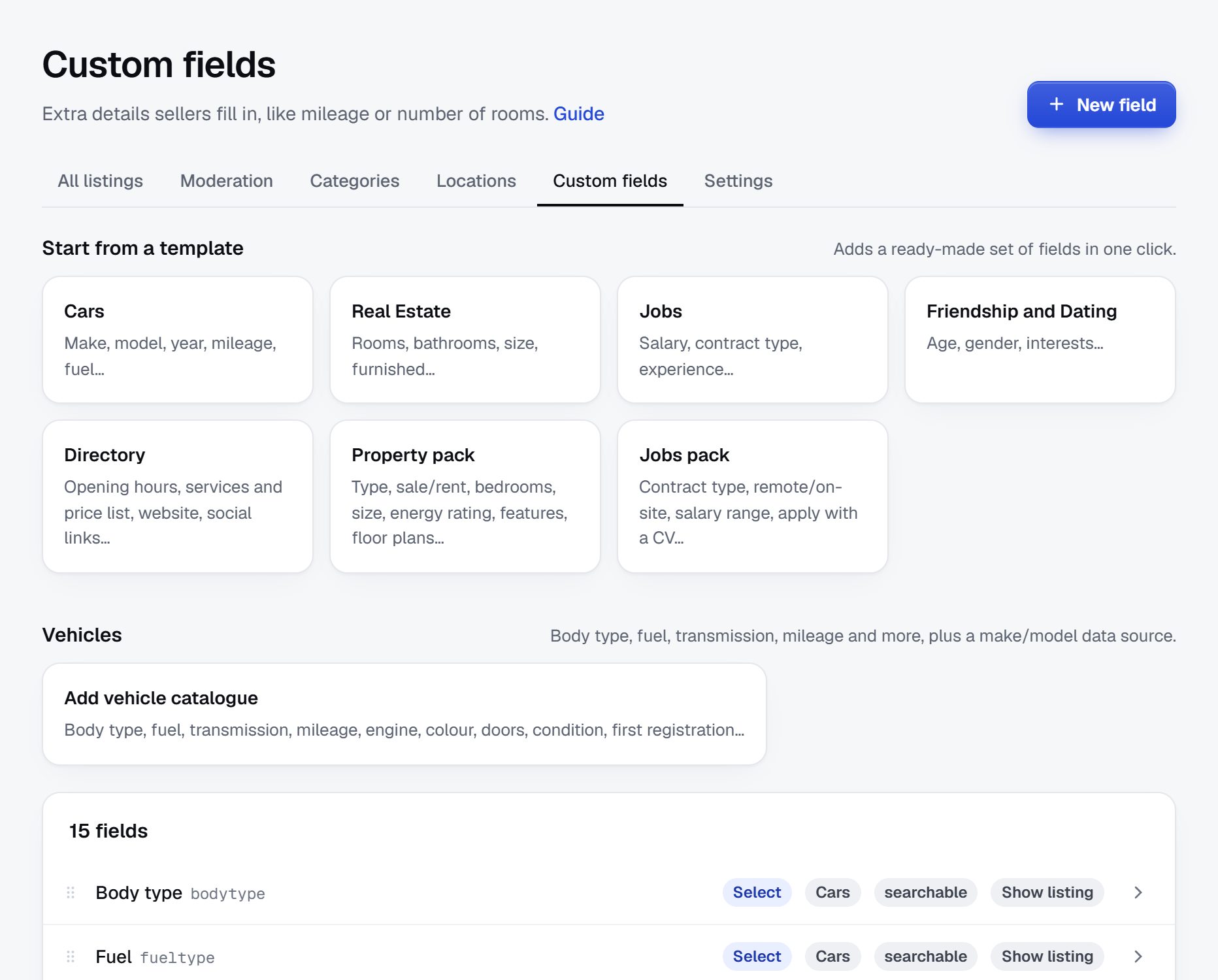
Training is sold by the session, by packs of sessions or by the month. Packs and intro sessions suit a marketplace well, because they have a set price and a clear scope.
- Free trainer profiles while you build supply.
- Packages with checkout: an intro session, a pack of ten sessions or an eight-week program, listed at a set price and paid on the site, with a commission to you. Keep the rate modest: trainers who already pay rent for studio space will compare it with what a gym keeps.
- Featured listings in January, before summer and in September, when people start new routines.
- Trainer memberships with more photos, more packages and a higher place in search.
- Banner spaces for running stores, sports physical therapists, athletic wear shops and healthy meal delivery services.
Custom programs agreed in messages will often be paid directly between client and trainer, and that is fine. Your packages earn on the first purchase, which is where a client trying a stranger is most likely to want a clear price and a record of the payment.
| Model | Works when | Switch it on |
|---|---|---|
| Free profiles | You need trainers in every area and goal | From launch |
| Intro session packages | Clients want to try a trainer first | Once 20 trainers offer one |
| Session packs and programs | Trainers sell standard blocks at a set price | After the first month of intro sales |
| Featured listings | January and early summer bring a rush | Two weeks before each peak |
| Trainer memberships | Trainers get regular clients from the site | After a full season |
Find independent trainers who want more clients.
Trainers who work for themselves are your first supply. Those employed by a big gym often cannot take outside clients, so focus on the independents.
- Instagram: search your city with "personal trainer", "in-home trainer" and "mobile trainer", and message trainers who post client sessions.
- Small studios and boutique gyms, whose trainers want to fill off-peak hours.
- Newly certified trainers: certification course groups and local colleges with exercise science programs.
- Running and triathlon clubs, where coaches already sell training plans.
- Physical therapy clinics, which often know trainers who take clients after rehab ends.
- Community and senior centers, where trainers run classes and want private clients too.
Use a short form: goals, client types, location, certifications, prices and a few photos of real sessions. Ask each trainer to add at least one intro session at a set price so clients see exactly what they get. Aim for 25 to 40 trainers across your main goals and neighborhoods before you advertise to clients.
An intro session with a clear price is the listing that turns a browser into a client.
Stop risky health claims and be clear about credentials.
Training involves bodies, health and often a stranger in your home, so set rules from the first day.
- Health claims: ban promises such as "lose 20 pounds in a month" and any claim to treat or cure a medical condition. Trainers who work with injuries or conditions should tell clients to get their doctor's approval first.
- Health screening: encourage trainers to use a pre-exercise questionnaire, such as the widely used PAR-Q, before a first session.
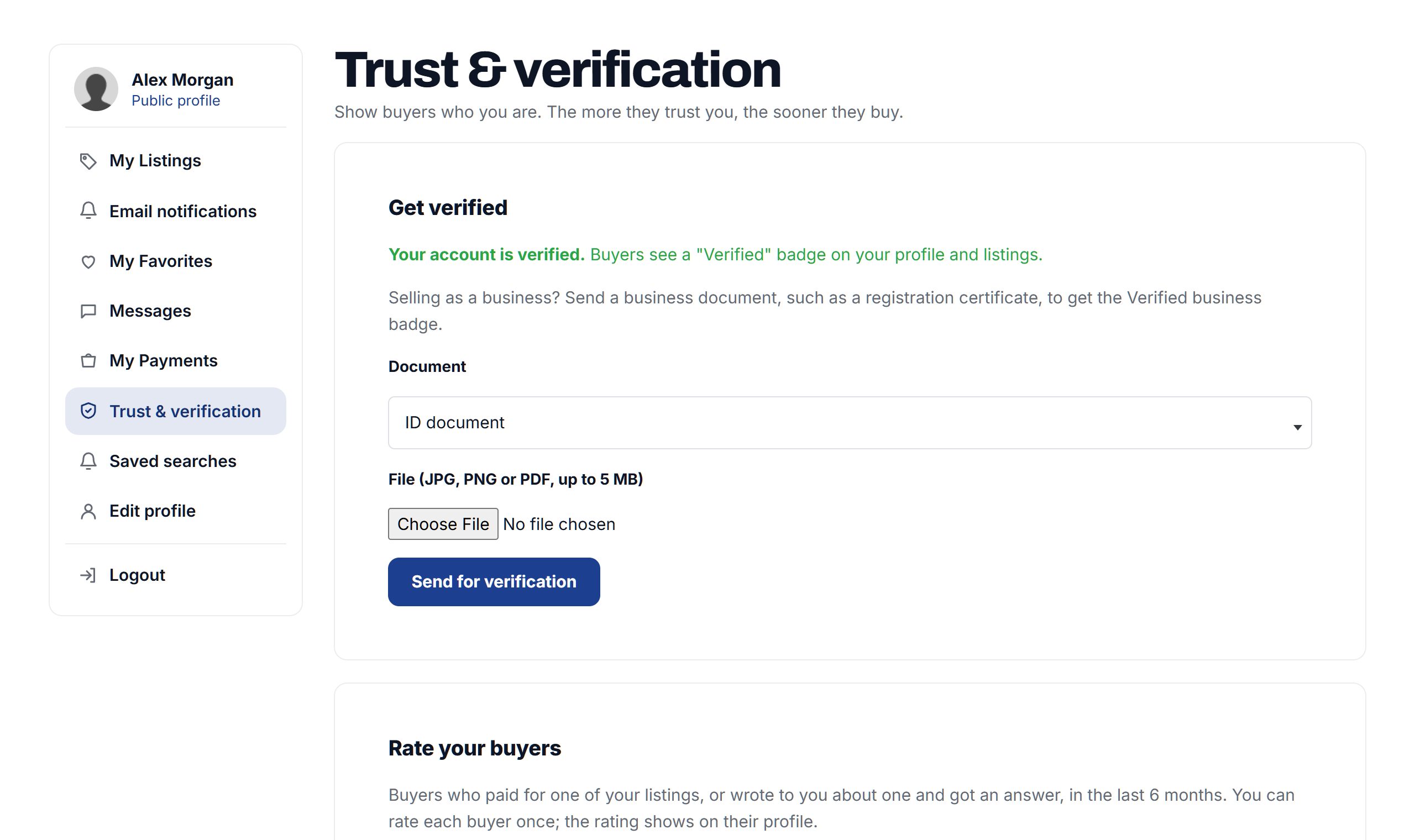
- Credentials: in many places personal training is not licensed by law, but that can vary and some titles or settings may be regulated, so check the rules where you operate. Give a verified badge only for a certificate you have seen, and never present trainers as checked by the site otherwise.
- Insurance: many independent trainers carry their own liability insurance. Ask them to state whether they do, and suggest clients ask.
- Supplements: do not let trainers sell supplements or diet products through their profiles. Claims about them can be regulated and hard to judge.
- Personal safety: suggest a first session in a gym or public park, and keep messages on the site.
- Scams: fake trainers using stolen photos, overpayment by check, and online programs paid up front and never delivered. Packages paid on the site at least leave a record.
Yclas shows seller profiles with ratings and reviews; ask every client for one after their first month.
Rank for goal, area and "near me" searches.
Fitness searches mix a goal, a type of trainer and a place. Typical searches:
- "personal trainer near me", "in-home personal trainer Phoenix"
- "female personal trainer", "personal trainer for seniors"
- "postnatal personal trainer", "strength coach for beginners"
- "how much does a personal trainer cost", "is a personal trainer worth it"
- "online personal trainer for beginners", "marathon coach Chicago"
Build a page for each goal in each town ("In-home trainers for seniors in Tampa"), and pages for each training location type. Then publish the guides people read before hiring:
- A cost guide by session, pack and online coaching, with ranges your trainers give you.
- "How to choose a personal trainer": questions to ask, certifications explained in plain terms, red flags.
- "Training at home with little equipment", written with your in-home trainers.
- A January series on starting safely, and a spring series on race training.
- Trainer profiles with a short story of one client's progress, with the client's permission.
Launch in late fall so you are ready for January.
January is when the most people decide to hire a trainer, so sign trainers in November and December and open to clients before New Year. Late spring is a second peak, as people prepare for summer.
- First area: one city or a cluster of suburbs where in-home and park training is common.
- Partners: physical therapy clinics, running stores, community centers, employers with wellness programs.
- Events: local races and fun runs, fitness expos, free park sessions run by your trainers to meet clients.
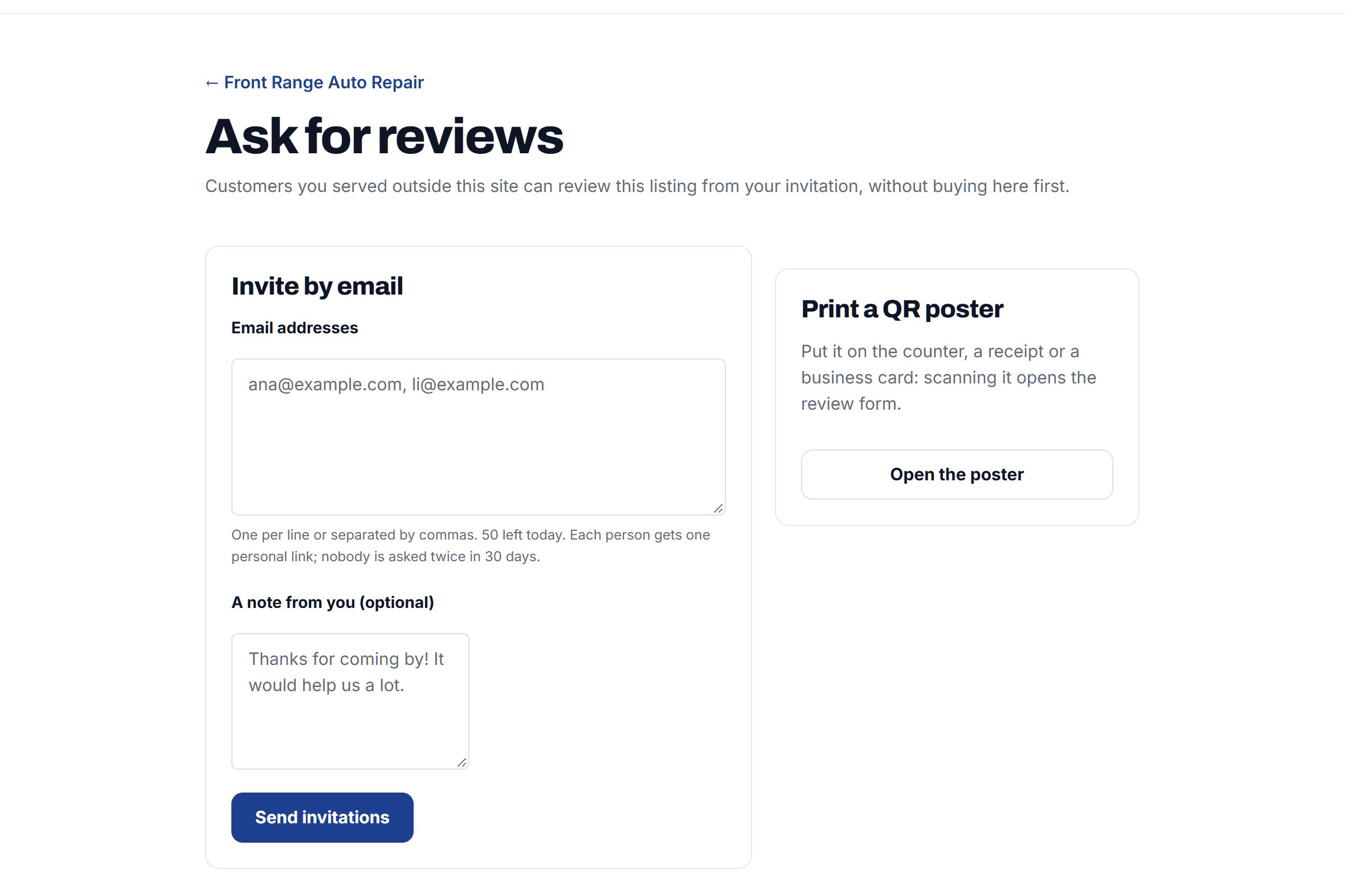
- Reviews: ask trainers to invite current clients to leave a review in the first weeks, so profiles are not empty.
Checklist
- Choose your city and the goals you start with.
- Set fields for specialties, location type, price and client experience.
- Write rules on health claims, supplements and credentials, and a safety page.
- Sign 25 to 40 independent trainers, each with an intro session listing.
- Publish goal and town pages and the cost guide.
- Run a free park session with your trainers in the first week of January.
A worked example: Foothill Form Coaches, Boulder County, Colorado.
This fictional site shows how a trainer marketplace can start small and stay focused. Foothill Form Coaches lists independent trainers in Boulder, Longmont, Louisville, Lafayette and Niwot. The county has many runners and cyclists, a large group of active older residents, and plenty of people with a garage gym they bought and never learned to use.
The category tree
- Strength and conditioning
- Beginners at home
- Barbell coaching
- Endurance
- Trail running
- Cycling strength
- Active aging
- Balance and strength
- Mobility after rehab
- Pre and postnatal
- Outdoor small groups
Who it serves
Clients are mostly adults between thirty and seventy-five: beginners who want someone to come to their home, runners who keep getting hurt and want strength work, new parents, and retirees who want to stay steady and strong. The trainers are about thirty-five independents: some left a commercial gym to work for themselves, some coach at a running store on weekends, and a handful rent time in small private studios.
How it started
The founder was a trainer who had built a full schedule of in-home clients and kept turning people away. In October she asked a dozen trainers she knew from local races and studios to list on a simple site, each with an intro session at a set price and photos of real sessions. By mid-December she had 30 trainers live, a page for every town and a guide called "Starting strength training after 60", which she gave to two physical therapy clinics as a printed handout. Each trainer also agreed to run one free park session in January, which gave the site something to announce and gave nervous beginners a way to meet a trainer before paying. The site opened to clients in the last week of December, and the first requests arrived on New Year's Day.
How it makes money
Trainer profiles were free in the first year. The main income was a commission on intro sessions and session packs paid at checkout, kept modest so trainers would not feel it matched a gym's cut. From the second January, featured spots sold out for the first six weeks of the year and again in May, before summer. A running store and a sports physical therapy clinic bought banner spaces on the endurance pages, and a few trainers paid for memberships with extra photos and a higher place in search.
| Listing | Price | Key details |
|---|---|---|
| Intro session at your home | $70 | 60 minutes, goal-setting and movement check, trainer brings kettlebells and bands |
| Ten-session strength pack | $650 | Garage or home gym, complete beginners welcome, Longmont and Niwot |
| Eight-week trail running strength block | $320 | Two small group sessions a week at Boulder trailheads, written plan |
| Balance and strength for adults over 65 | $60 per session | In-home, doctor's approval asked for clients with health conditions |
| Six-week postnatal core and strength program | $480 | Twelve sessions, trainer states a pre and postnatal certificate |
The first 90 days, counting back from January.
For a trainer marketplace the calendar sets the plan. January brings the most new clients of the year, so the ninety days that matter run from early October to the end of December. Use October to sign trainers and set rules, November to build the pages people will read when they decide to start, and December to line up partners and open the doors.
Trainers are easier to recruit in the fall than in January, when their own diaries fill up. Ask each one for a set-price intro session before anything else, because that is the listing a nervous beginner is most likely to buy. Then ask for a pack or program, and photos of sessions with clients who agreed to be shown. Trainers who already have regular clients can ask a few of them to leave a review on the site in December, so that profiles do not look brand new when January visitors arrive.
Watch two numbers each week: how many goals and towns have at least three trainers, and how many intro sessions have been bought. If people browse but nobody buys, check the prices and photos before you spend money on ads. A profile with a smiling headshot in a gym mirror sells far fewer intro sessions than one with a photo of the trainer coaching a real client in a living room or a park. Ask trainers to replace mirror selfies before you open.
| Weeks | Focus | Done when |
|---|---|---|
| 1 to 2 | City, goals and rules | City and starting goals chosen, fields for specialties, location, price and time of day set, rules on health claims and supplements published |
| 3 to 4 | First 15 trainers | 15 independent trainers live, each with an intro session at a set price and real session photos |
| 5 to 6 | Partners who refer clients | Two physical therapy clinics and one running store have agreed to share the site |
| 7 to 8 | Pages people read before hiring | Cost guide, how to choose a trainer, and one goal page per town published |
| 9 to 10 | Reach 30 trainers | 30 trainers live, with in-home, outdoor and older adult options in every main town |
| 11 | New Year open | Site promoted to clients, free park session with trainers announced for the first week of January |
| 12 | First sales and reviews | First intro sessions sold, every message answered within a day, reviews requested after first sessions |
Ways to build a personal trainer marketplace.
A trainer site needs profiles that show a person and how they coach, filters for goal, training location, time of day and area, messages for custom requests, and checkout for intro sessions and session packs at a set price. It also needs firm moderation, because fitness attracts listings with unrealistic promises and supplement sales.
Building it with developers
A custom build fits if your plan depends on deep features such as workout tracking, video form reviews or progress dashboards for clients. Those are real products with established competitors, and building them alongside a marketplace multiplies the cost and the time before you can test whether clients come at all.
Installing software on your own server
A marketplace or classifieds script, or a WordPress plugin, can list trainers and take payments for packages. You will set up the filters yourself, handle security updates, and connect a payment provider, and you carry the work of keeping a site that takes payments secure. Expect to spend weekends on fixes during the January rush, which is exactly when you want to be talking to clients and trainers.
A hosted builder
A hosted builder such as Yclas gives you custom fields as filters, messages, reviews and set-price packages paid at checkout without running servers, so your time goes into recruiting trainers before January. Whichever route you pick, make sure a beginner can find an in-home trainer near them and buy an intro session in a few minutes, on a phone, because that is how most will arrive. Try it yourself on a phone with slow mobile data before you choose.
| Route | Fits when | Watch out for |
|---|---|---|
| Custom build with developers | Your plan needs workout tracking or video coaching built in | Months of work and competing with established fitness apps |
| Marketplace script on your own server | You want control and can run a secure server | Payment setup, updates and security for a site that takes money |
| WordPress with marketplace plugins | You already run a fitness blog on WordPress | Several plugins for filters, messages and checkout that must stay compatible |
| Hosted builder | You want to open before January and focus on trainers | Check that set-price packages and goal filters both work the way you need |
What a personal trainer marketplace costs to run.
The software is the smallest part of the bill. Most of the cost is your time in the first months: finding the first listings, answering questions and checking what gets posted.
Costs here are mostly marketing: ads in late December and January, a table at a local race expo, and printed cards for physical therapy clinics. If you check certificates or identity before giving a badge, plan the time or the fees for it.
| Cost | Typical range | On Yclas |
|---|---|---|
| Domain | $10 to $20 a year | Your own, with SSL included |
| Software and hosting | $0 to $100+ a month, plus plugins and updates | Marketplace $149 a month for checkout and commission |
| Design | $0 to $100 for a theme, or a designer | 109 looks included |
| Payment fees | About 3% per payment | Your Stripe or PayPal fees; Yclas takes nothing |
| Your time | 5 to 10 hours a week at the start | Finding listings, moderation, support |
Mistakes that hold back personal trainer marketplaces.
- Allowing before-and-after promises. Transformation photos and claims such as "drop three sizes in six weeks" bring clicks and complaints. They also set expectations no trainer can meet for most clients. Ban weight-loss promises and medical claims in your rules, and remove listings that make them. Progress stories are fine when they describe what a client did, such as a first pull-up or a finished race, and the client agreed to share it.
- Recruiting trainers who cannot take outside clients. Many trainers employed by large gyms are not allowed to train members privately. Signing them fills your site with profiles that never answer. Focus on independents and small studio trainers, and ask each one up front. A trainer who has to hide their listing from an employer will also hide it from clients.
- Listing trainers without an intro offer. A beginner nervous about exercise rarely writes a long message to a stranger. A clear intro session at a set price gives them a small, low-risk first step, so make it the first listing every trainer adds.
- Organizing by gym instead of by goal. Clients do not search for "trainers at a downtown gym"; they search for help with a goal. Build categories around goals and use training location as a filter.
- Launching in February. By then most people who planned to start have either started or given up for the year. Sign trainers in the fall and open before New Year, with a second push in late spring. September is a smaller third window, when routines restart after summer and parents have their mornings back.
- Letting trainers sell supplements. Supplement listings bring health claims you cannot judge, products with their own rules, and conflicts of interest. Keep the site to training, and say so in your rules. Trainers can still recommend products to their own clients in person; your listings are simply not the place to sell them.
- Badges for certificates you have not seen. Certifications range from weekend courses to accredited exams. A badge that looks like approval misleads clients. Badge only what you checked and explain what the certificate covers.
- Overlooking older adults. Many founders build for young people in a hurry to get lean, but adults over sixty often have more time, steadier budgets and a real reason to want a trainer at home. Give them a category and a guide, written in plain language with photos of people their age, and share it through senior centers and physical therapy clinics.
- Letting online coaching crowd out local trainers. Online coaches can list from anywhere and quickly outnumber local trainers in search results. Keep online coaching in its own category so a client looking for someone nearby still finds them first. A local site that turns into a list of distant online coaches loses the reason it exists.
Personal training terms to know.
Trainers use these terms in profiles and messages, and clients often ask what they mean.
| Term | What it means |
|---|---|
| CPT | Certified Personal Trainer, a title used by several certifying organizations. |
| NCCA accreditation | Recognition from the National Commission for Certifying Agencies, which many US trainer certifications hold. |
| PAR-Q | A short health questionnaire used to spot people who should see a doctor before exercising. |
| Intro session | A first session, often discounted, where trainer and client set goals and try working together. |
| Session pack | A set number of sessions sold together, usually at a lower price per session. |
| Semi-private training | Two to four clients training with one trainer, sharing the cost. |
| Movement assessment | A check of how a client squats, bends, reaches and balances before a program starts. |
| Progressive overload | Making training harder little by little, through weight, reps or difficulty, so the body adapts. |
| 1RM | One-rep max, the heaviest weight someone can lift once with good form. |
| RPE | Rate of perceived exertion, a scale on which clients rate how hard an effort felt. |
| Periodization | Planning training in phases, such as building, peaking and recovering, around a goal or event. |
| Scope of practice | The limits of what a trainer may do, such as not diagnosing injuries or prescribing diets. |
| Functional training | Exercises that copy everyday movements such as lifting, carrying and getting up from the floor. |
| Liability insurance | Insurance a trainer carries in case a client claims they were harmed during a session. |
The same steps for a personal trainer marketplace on Yclas.
- Describe your marketplaceThe setup wizard writes the categories, an About page and example listings from one sentence.
- Add fieldsThe details buyers filter on, as dropdowns, numbers or checkboxes.
- Bring sellersInvite them, import their stock from a spreadsheet, or post for them.
- Set the rulesChoose moderation, verified sellers, reviews and reports.
- Take paymentsOn Marketplace, buyers pay on the site and you keep a commission, with Stripe.
How much money do I need to start a personal trainer marketplace?
Not much beyond the site itself. Plan a few hundred dollars for local ads around New Year and printed cards for partners, and most of your effort will go into signing trainers.
Do personal trainers need a license?
In many places personal training is not licensed by law, but rules vary and can change, so check where you operate. Ask trainers to name their certifications and only verify what you have seen.
What happens if a client gets injured?
Trainers are responsible for their own sessions, and many carry liability insurance; ask a local lawyer how your terms should say this. Require trainers to recommend medical approval for clients with health conditions.
How should I charge trainers?
Start free, then earn a commission on intro sessions and session packs paid on the site, and sell featured listings before January and summer. Add trainer memberships once trainers get regular clients from you.
Where do I find the first trainers?
Independent trainers on Instagram, small studios, newly certified trainers, running clubs, physical therapy clinics and community centers. Trainers employed by large gyms often cannot take outside clients.
Can clients book a session time on the site?
Clients buy an intro session or send a message with their goal and the times that suit them, and the trainer replies to agree a time. Regular sessions are then scheduled between them.
How can I compete with gyms and fitness apps?
Gyms only show their own staff and apps rarely offer someone who comes to your home. A local site with in-home, outdoor and specialist trainers, real prices and reviews fills that gap.
Should I accept trainers who coach only online?
Yes, in an online category of their own, so they do not push local trainers down in search results. Ask online coaches to explain exactly what a month includes, such as programs, check-ins and video reviews, because that varies widely. A client paying monthly for an online program wants to know whether a real person reviews their sessions or only sends a plan.
What if a trainer and client argue over unused sessions?
Ask trainers to state in each package how long sessions stay valid and what happens if either side cancels. For packages paid on your site, publish your own refund policy before the first sale and apply it the same way every time.
Can trainers run classes in public parks?
Many do, but some towns ask commercial fitness groups to get a permit to use parks. Tell trainers to check with the local parks department, and show the meeting place clearly on outdoor listings. Ask outdoor trainers to say what happens in rain, snow or extreme heat, since weather cancellations are the most common complaint about park sessions.
Should I include nutrition coaching?
Only within limits. General healthy eating advice is part of many trainers' work, but meal plans for medical conditions may be restricted to licensed professionals in some places. Check the rules where you operate and keep diet claims out of listings.
How do I keep trainer profiles fresh?
Ask trainers to update their openings and photos at the start of each season, and pause profiles that have not answered a message in a month. Fresh photos and recent reviews tell clients the trainer is active and taking new people. A short seasonal note, such as a spring running group, also gives you something to share in your newsletter.
Related pages.
The parts of Yclas this leans on.
You have the plan. Now build your personal trainer site.
Describe your site in a sentence and the setup wizard writes the categories, example listings and a look. Free for 15 days, no credit card.
Start my marketplace