How to build a boat rental marketplace where owners rent out the boat that sits at the dock.
This guide covers a marketplace where boat owners and small rental outfits rent out pontoons, fishing boats, sailboats, kayaks and houseboats: choosing a lake or coast, the details renters filter on, day and week prices with deposits, commission, the first owners, the captain, insurance and safety questions this niche turns on, the searches to rank for, and a launch before the boating season.
Free for 15 days · No credit card · Plans from $19 a month
Put idle boats on the water for people who want a day on the lake.
Most private boats spend the season tied to a dock or sitting on a trailer, used a handful of weekends while the owner still pays for the slip, storage and maintenance. Meanwhile visitors to a lake town, families on vacation and groups planning a birthday want a boat for a day and have no idea who to ask. The local marina may rent a few pontoons, but they are booked weeks ahead in July.
The two sides
- Owners: private owners of pontoons, bowriders, fishing boats and sailboats; small rental outfits at lakes and marinas; houseboat owners; and kayak and paddleboard rental businesses.
- Renters: vacationers in lake and coastal towns, families with a cabin rental, fishing groups, friends celebrating an occasion, and locals without a boat of their own.
Pick the angle
- One body of water. A popular lake, a stretch of coast, a river or a bay. Renters search by where they are staying, so local depth matters more than reach.
- One kind of rental. Bareboat rentals the renter drives, captained trips with the owner aboard, or multi-day houseboat and sailboat charters.
- One boat type. Pontoons for families, fishing boats for anglers, or paddle craft for day trippers.
Today this trade runs through marina rental desks, vacation rental hosts who know a guy with a boat, fishing guides, and national peer-to-peer apps where many lakes have only a few listings. A site that knows one lake, its ramps and its rules has an edge.
Renters choose the lake first and the boat second. Build for one lake and own it.
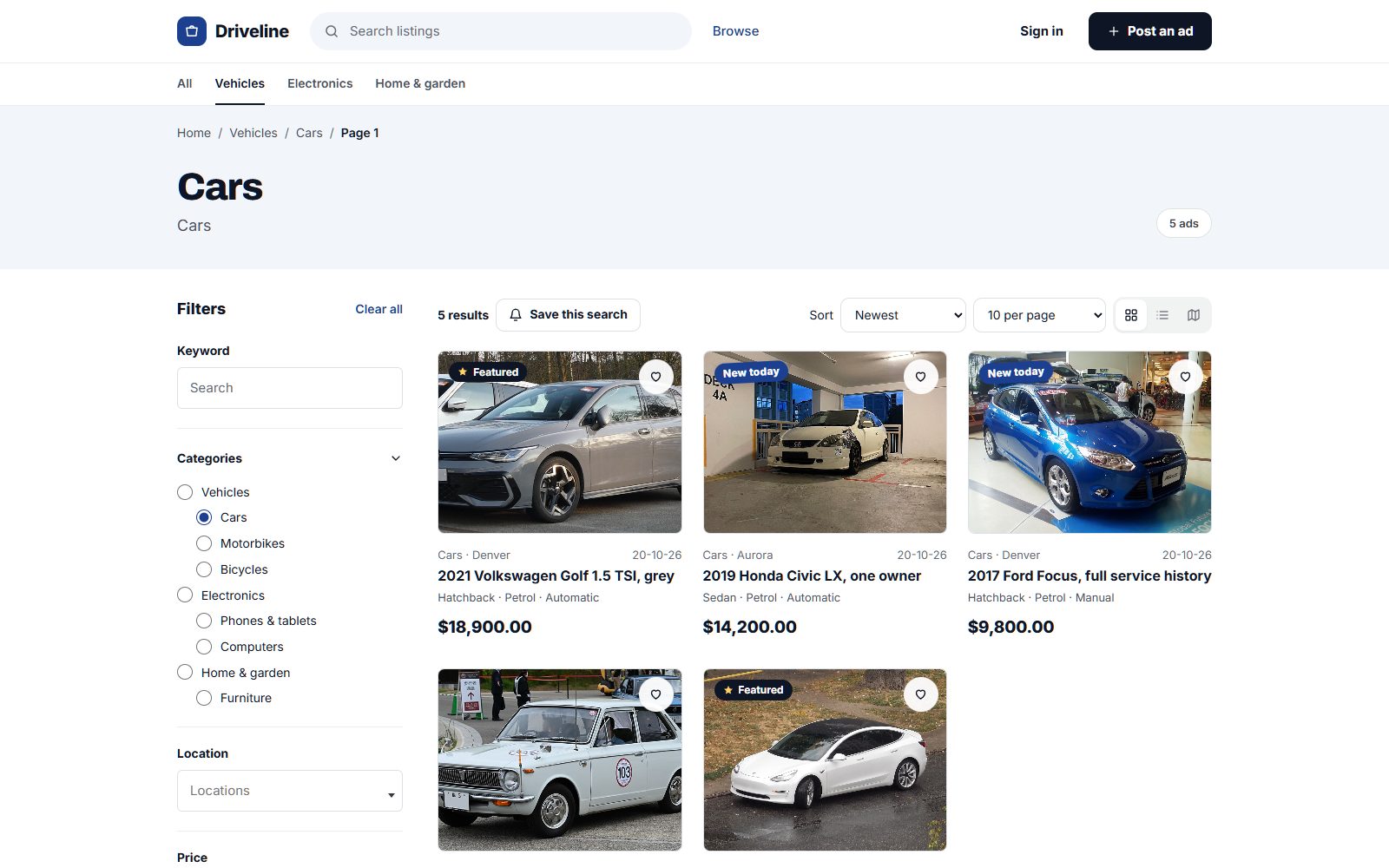
List each boat by type, capacity, power and where it is picked up.
Boat renters decide on a few facts: how many people fit, whether they can drive it themselves, and where to meet it. Keep categories by boat type: pontoons and tritoons, bowriders and deck boats, fishing boats, sailboats, houseboats, personal watercraft, and kayaks and paddleboards.
The essential fields are passenger capacity, length, engine horsepower, and whether the boat is bareboat (renter drives) or captained (owner or a hired captain drives). Make captained a dropdown with clear options, since it changes the price, the legal position and who books.
Location fields matter more than in most rentals: the marina, dock or ramp where the boat is picked up, or whether the owner delivers on a trailer to a nearby ramp. Use maps so renters see the pickup point next to their cabin.
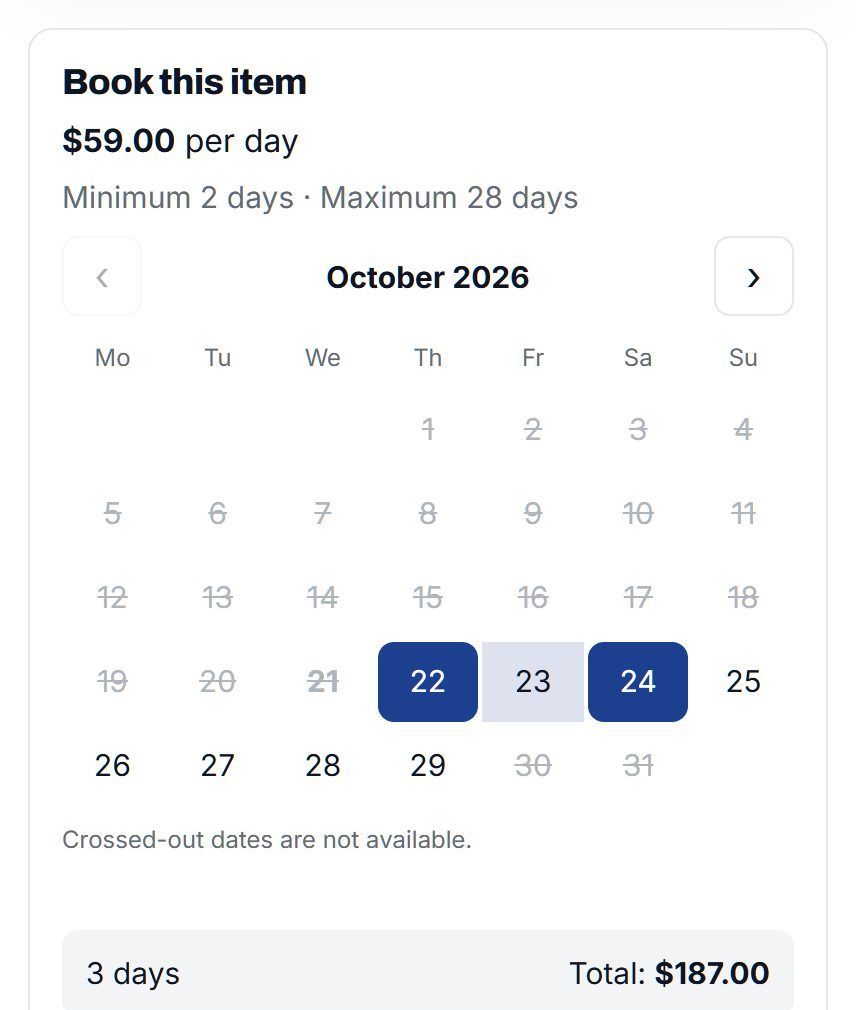
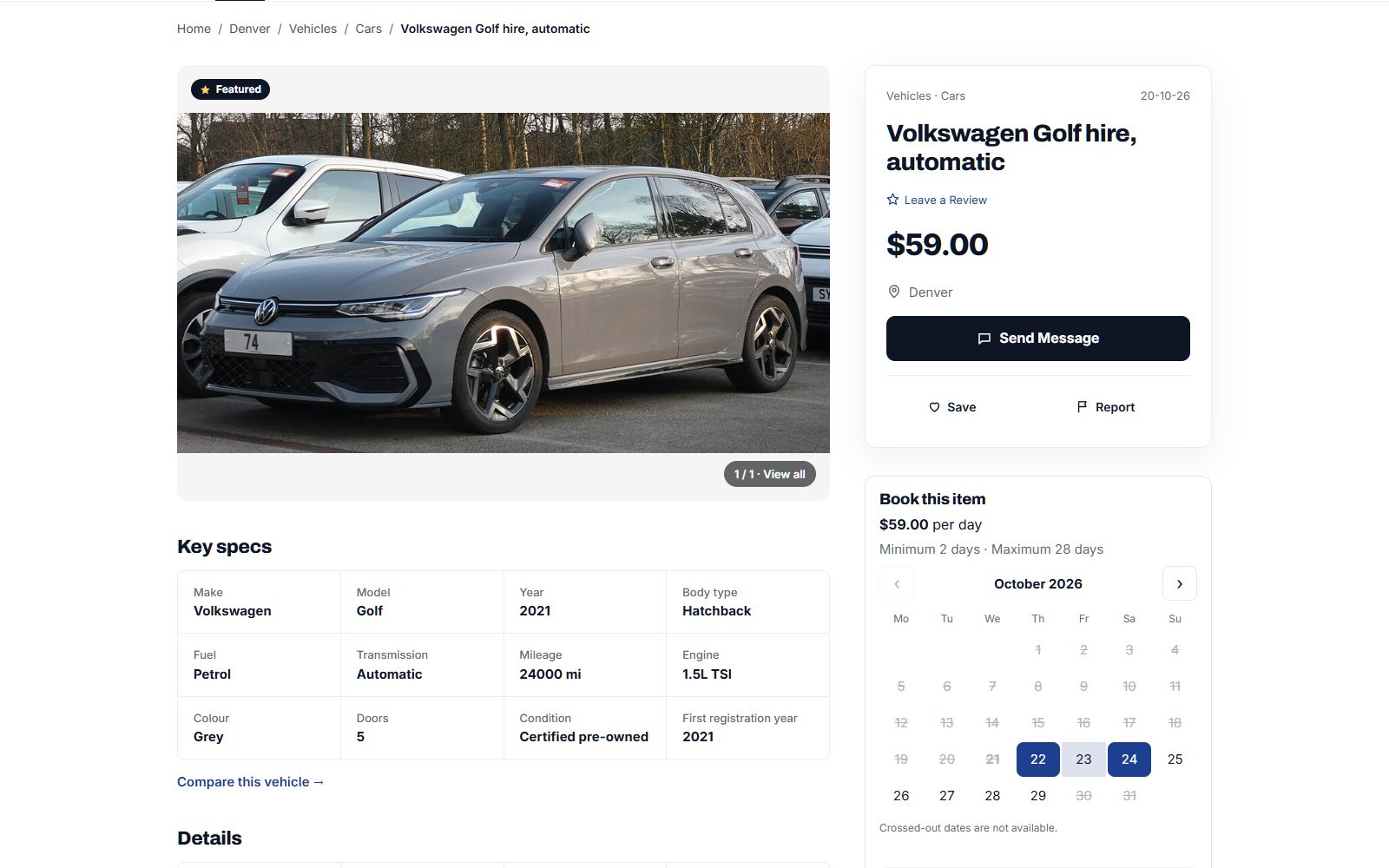
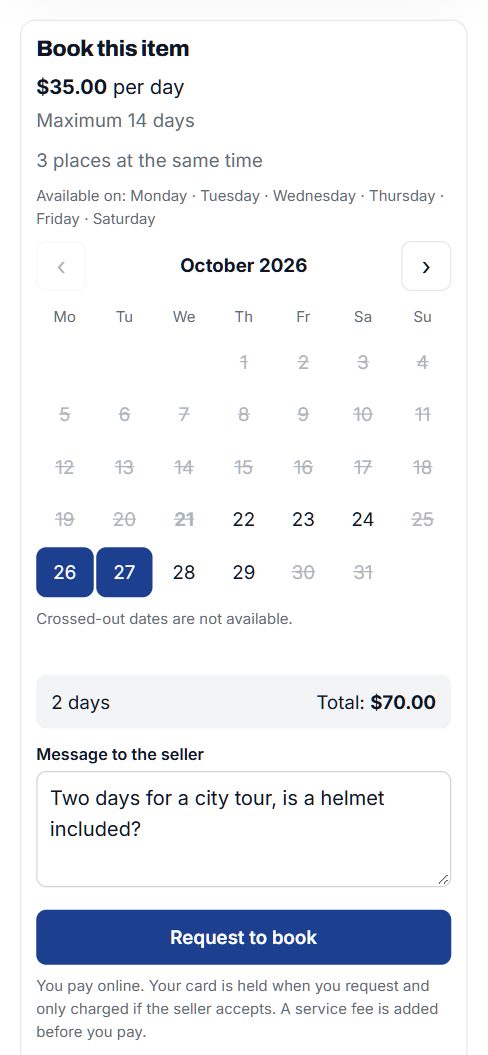
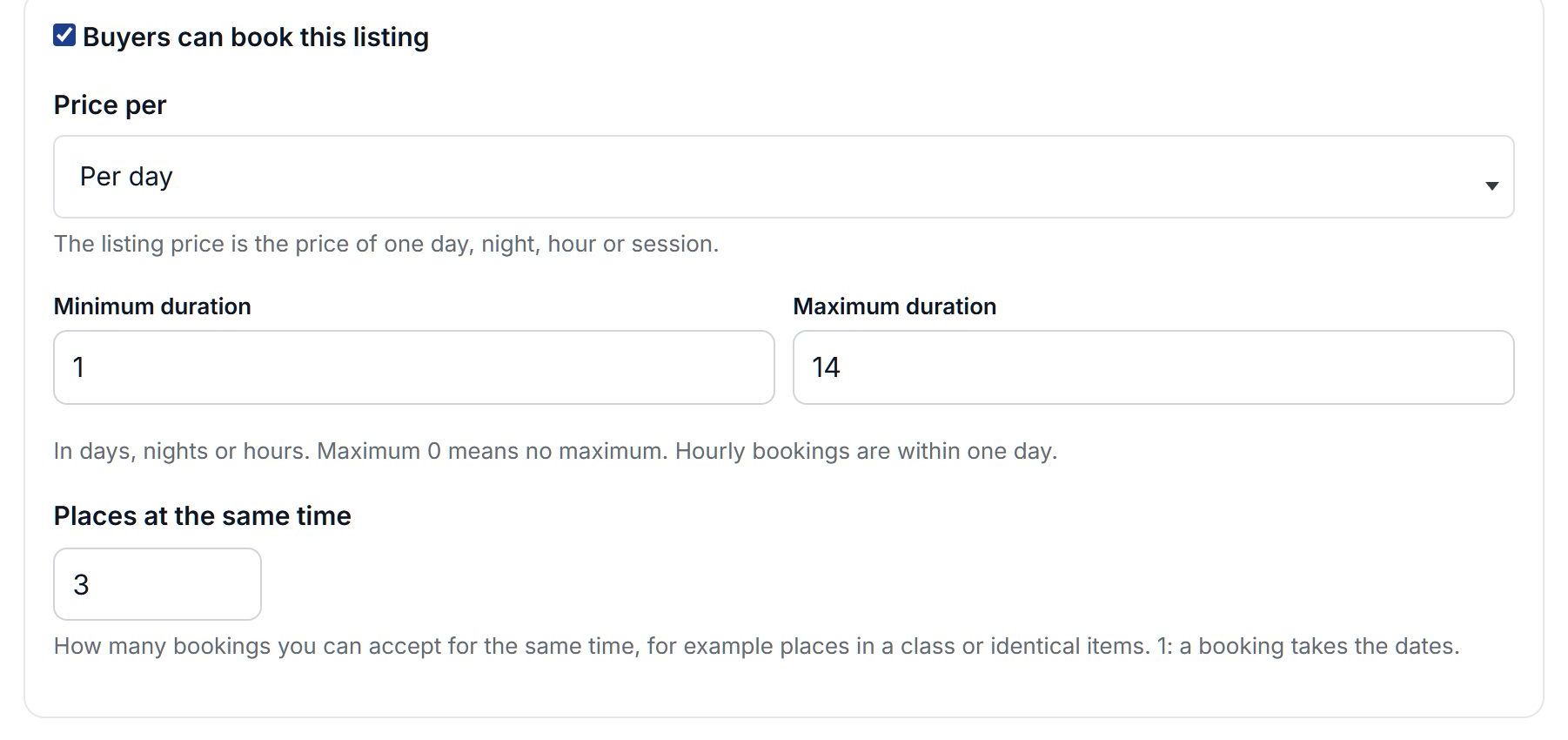
Rental terms need their own fields: price per day, price per week for houseboats and sailboats, deposit, fuel policy (full to full or fuel charged after), what is included such as life jackets, a cooler, fishing gear, a tube or a Bimini top, and any boater education or age requirement the renter must meet.
| Category | Example listings | Fields renters filter on |
|---|---|---|
| Pontoons and tritoons | 24 ft tritoon with 150 hp, seats 12 | Passenger capacity, horsepower, bareboat or captained, pickup marina |
| Bowriders and deck boats | 21 ft bowrider with tow bar for tubing | Capacity, towing gear included, fuel policy, daily price |
| Fishing boats | Bass boat with trolling motor and fish finder | Length, electronics, fishing gear included, launch ramp |
| Sailboats | 30 ft sloop, sleeps four, bareboat for experienced sailors | Length, berths, sailing experience required, weekly price |
| Houseboats | Houseboat sleeping eight with slide and grill | Berths, bathrooms, generator, minimum nights, deposit |
| Kayaks and paddleboards | Tandem kayak; inflatable paddleboard set | Number of seats, delivered or pickup, life jackets included |
Make "captain included" a required dropdown. It answers the first question every renter asks and the first legal question too.
Take a commission on each booking and sell visibility in peak season.
A renter pays for the day on the site, the owner receives the money through Stripe, and your commission comes off each booking. Boat owners look at your share against their yearly costs: slip fees, storage, insurance and maintenance. A few bookings a season that cover the slip fee is a strong pitch for private owners. Small rental outfits will weigh your commission against their own ads and walk-up trade.
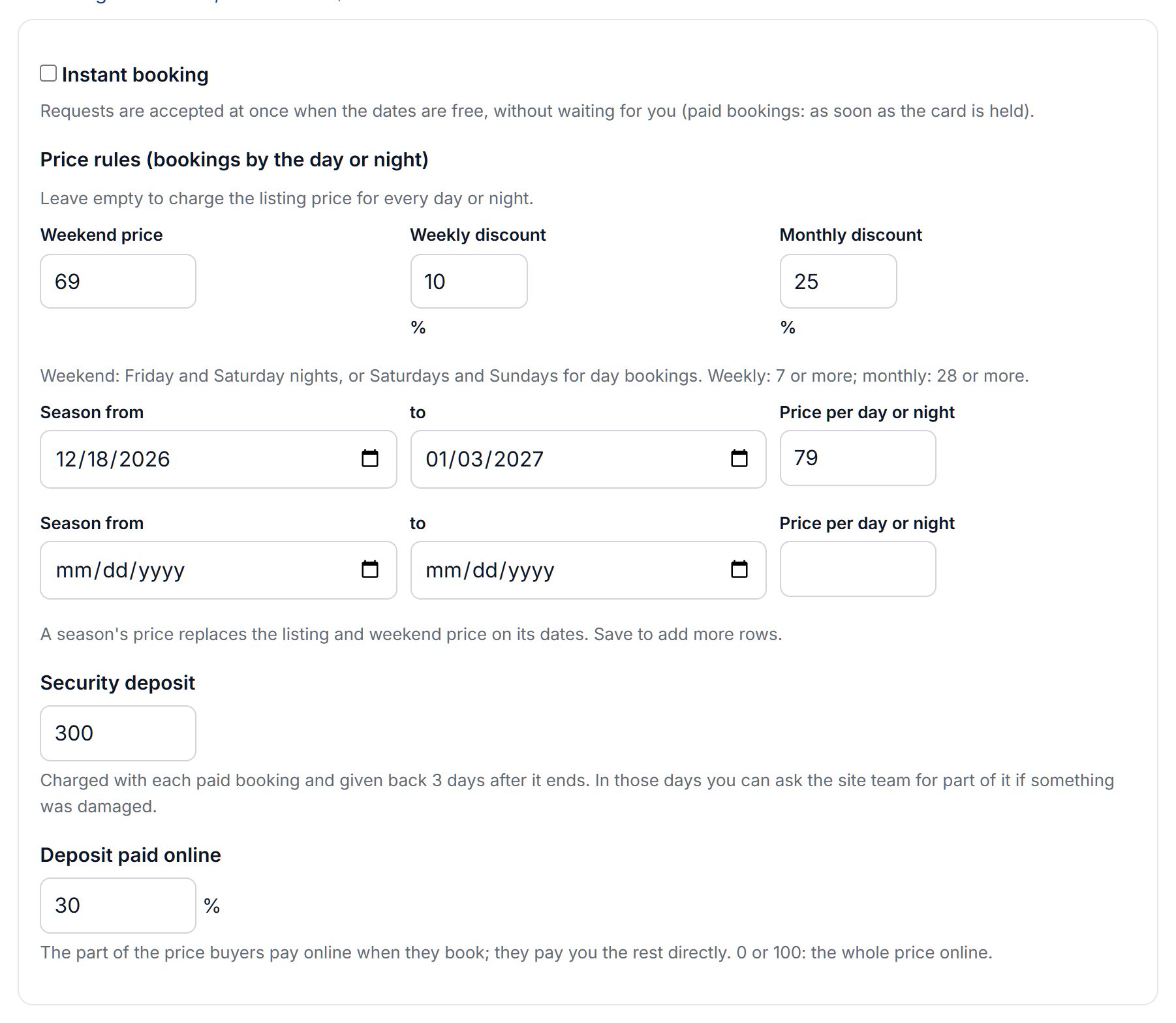
Deposits matter a lot on boats. A bent propeller, a dinged hull from a dock, or a burned-out engine from running it aground are common and costly. Ask owners to set a deposit that matches their boat's typical repair costs and to explain clearly what is deducted and why.
A renter service fee works on short day rentals. Featured listings sell well before summer holiday weekends when renters book in a hurry. Owner memberships fit rental outfits and marinas listing a fleet. Banner spaces suit marinas, bait and tackle shops, waterfront restaurants, boating schools and lake cabin rentals.
| Model | Works when | Switch it on |
|---|---|---|
| Commission per booking | Renters book and pay on the site | From the first booking |
| Renter service fee | Many short day rentals | After the first season |
| Featured listings | Holiday weekends with more renters than boats | A month before peak season |
| Owner memberships | Rental outfits and marinas list fleets | When several outfits are active |
| Banner spaces | Marinas, tackle shops and cabin rentals want visitors | When summer traffic is steady |
Recruit the boats at one lake before you advertise to visitors.
Visitors search for boats at a specific lake or harbor, so the first fleet has to be in one place. Begin with owners who rent already and owners who want to cover their costs.
- Small rental outfits. Pontoon and kayak rental businesses at lakes and beaches often take bookings by phone. They can import their fleet from a spreadsheet as a CSV and fill their calendars online.
- Marinas. Many have a rental fleet and slip holders who would rent their boats if someone handled the bookings.
- Private owners. Ask at boat ramps, yacht and sailing clubs, and lake associations. Owners paying for a slip all summer are the most interested.
- Fishing guides and captains. They offer captained trips and often know which owners rent.
- Houseboat owners. On lakes known for houseboats, a few owners can fill a category quickly.
Meet owners at the dock, photograph the boat on the water, note capacity, horsepower and included gear, and agree the deposit and fuel policy with them. Ask how they handle the renter's experience and whether a captain is required.
Ten boats on one lake beat a hundred spread across the state.
Get the captain, insurance and safety rules right before the first trip.
Boat rental is where the legal and safety questions are most serious, so set rules before any boat leaves the dock.
- Captained trips and passengers for hire. Taking paying passengers out usually needs a licensed captain and sometimes an inspected vessel. In the US the Coast Guard has warned about illegal charters run by unlicensed operators. Rules differ by country and waterway, so check the rules where you operate, and ask owners offering captained trips to confirm they hold what is required.
- Renter qualifications. Many states and countries require a boater education card or a minimum age to operate a motorboat. Owners should ask for it and check it at handover, along with ID. These are the owner's checks; the site does not verify identity or licenses.
- Insurance. Standard boat policies often exclude renting the boat out. Owners must ask their own insurer about rental use or buy cover meant for it, and renters should know what they are liable for. The site does not insure boats or people; make that clear.
- Safety equipment. Life jackets for every passenger, in the right sizes for children, plus the required safety gear for the boat. Owners should show renters where everything is and give a short briefing on the water rules.
- Weather and cancellations. Owners should state what happens when storms or high wind cancel a trip.
- Damage. Photos of the hull and propeller at handover and return, fuel level recorded, and a clear deposit policy prevent most disputes.
- Alcohol. Operating a boat under the influence is illegal in many places. Let owners state their own rules on the listing.
Ratings and reviews on both sides help owners choose careful renters and help renters choose well-kept boats.
Rank for the lake and boat searches vacationers make before their trip.
Boat rental searches combine a boat and a place: "pontoon rental Lake Travis", "boat rental near me", "houseboat rental Lake Powell", "rent a fishing boat Lake Okeechobee", "sailboat charter Annapolis" and "kayak rental Lake George". Many visitors search a few weeks before a trip, and again the day they arrive.
Pages to build
- Boat type and lake pages: "Pontoon rentals on Lake Norman". Each lake and boat type you cover gets a page of its own as owners list.
- Lake guides: where to launch, swimming coves, fuel docks, waterfront restaurants with docks, and local boating rules.
- First-timer guides: what you need to rent a pontoon, what a boater education card is, how to drive a pontoon on your first day.
- Group guides: renting a boat for a bachelorette party, a family reunion, a fishing trip.
Write the lake name and boat type in every title. Lake guides earn links from cabin rental hosts and local tourism pages, which brings renters who are already booked into the area.
Launch in spring, before the first warm weekends on the water.
In most northern areas boating runs from late spring to early fall, with holiday weekends as the peaks. Warm-weather coasts and southern lakes rent most of the year, with winter visitors and spring break as busy periods. Launch a couple of months before your area's season so owners have listed and renters find full calendars.
First steps
- Pick one lake, bay or stretch of coast with plenty of visitors.
- Sign up one or two rental outfits and a handful of private owners.
- Partner with cabin and vacation rental hosts who are asked about boats every week.
- Set up a table at a spring boat show or a marina open day.
Launch checklist
- Capacity, horsepower, bareboat or captained, pickup point, deposit and fuel policy on every listing.
- A clear note that owners check renter ID and boater education, and arrange their own insurance.
- Captained trips only from owners who confirm they hold the required license.
- A handover checklist: photos, fuel, safety gear and a short briefing.
- Weather and cancellation terms stated on each listing.
After the first season, look at which weekends had more renters than boats and recruit owners for them.
A worked example: Cove and Channel Boat Share on Smith Mountain Lake, Virginia.
Cove and Channel Boat Share is a fictional site, created for this guide. It covers Smith Mountain Lake in southwest Virginia, a large reservoir with long, winding shorelines and many quiet coves, many vacation homes and cabins, a handful of marinas, and summer visitors who drive in from Roanoke, Lynchburg and farther away. The season starts around Memorial Day and fades after Labor Day, with fishing trips in spring and fall on either side.
Who it serves
Renters are families staying in lake rentals for a week, groups of friends booking a day for a birthday, anglers who want a bass boat with electronics for a weekend tournament practice, and locals whose own boat is in the shop. Owners include two small rental outfits at marinas, a fishing guide who offers captained half days, and about twenty private owners with pontoons and bowriders at private docks or marina slips.
Categories
- Bareboat rentals
- Pontoons and tritoons
- Bowriders and deck boats
- Fishing boats
- Captained trips
- Fishing charters
- Sunset and sightseeing cruises
- Paddle and small craft
- Kayaks and paddleboards
How it started
The founder manages a few vacation rentals on the lake, and guests asked him every week where to rent a boat. The marina fleets were full by June. He asked slip holders at two marinas and owners in the lake association whether they would rent their pontoons, and wrote the rules first: owners check ID and boater education at handover, captained trips only from operators who show a valid license, a fuel policy and a weather policy on every listing, and life jackets in children's sizes on every boat. Ten owners signed up in the first spring, and his own rental guests became the first renters.
How it makes money
Renters book and pay on the site with a deposit, and the site keeps a commission on every booking plus a renter fee on day rentals. The two rental outfits pay for owner memberships. A marina restaurant, a bait and tackle shop and a cabin rental agency share the banner spaces, and featured spots on tritoons sell out before the Fourth of July.
The lake guide page with ramps, fuel docks and no-wake zones brought more renters than any ad.
| Listing | Price | Key details |
|---|---|---|
| 24 ft tritoon, 150 hp | $450 per day, $500 deposit | Seats 12, bareboat, fuel charged after return, pickup at marina dock |
| 21 ft bowrider with tow bar | $400 per day, $600 deposit | Seats 8, tube and ropes included, boater education card required |
| Bass boat with trolling motor | $275 per day, $500 deposit | Two fish finders, livewell, launch ramp pickup, ages 21 and over |
| Captained half-day fishing trip | $350 for up to 4 guests | Licensed captain, rods and tackle included, fishing licenses are the guests' own |
| Tandem kayak with paddles | $45 per day, $100 deposit | Two life jackets, delivered to lakeside cabins within 5 miles |
The first 90 days of a boat rental marketplace.
A boat rental site lives or dies on the summer weekends, so the first ninety days should end just as the water warms up. On most northern and mid-latitude lakes that means starting in February or March. On southern lakes and warm coasts, time it to the busiest visitor season, such as spring break or winter visitors.
Most of the early work is at the docks. Owners want to meet you, understand the rules on captains, insurance and renter checks, and see that you have thought about weather and damage before they hand their boat to a stranger. Visit marinas while they are preparing for the season, when slip holders are around and staff have time to talk.
Measure the period by the number of boats with open calendars for the peak weekends, the captained listings with license confirmed, and the partners sending you visitors. Visits matter less, since a boat renter often looks once and books the same day. A cabin rental agency that mentions you in every booking confirmation is worth more than a month of ads, because those renters are already coming to the lake.
| Weeks | Focus | Done when |
|---|---|---|
| 1-2 | Choose the lake, set categories and fields for capacity, horsepower, bareboat or captained, pickup point and fuel policy | A test pontoon listing shows its pickup on the map and filters by capacity |
| 3-4 | Write the rules: renter checks, captain license proof, weather, fuel, damage and alcohol | Owner rules and handover checklist published and reviewed by a marine insurance broker |
| 5-6 | Recruit rental outfits, marina slip holders and private owners | At least 15 boats listed with prices, deposits and calendars for the season |
| 7-8 | Sign partners: cabin rental agencies, the lake association, a tackle shop | Two partners mention the site to their guests or members |
| 9-10 | Publish the lake guide, first-timer guides and boat type pages | Lake guide with ramps, fuel docks and rules is live and linked from partners |
| 11-12 | Run first bookings before the first holiday weekend, collect reviews | Twenty bookings completed, deposits returned, every owner reviewed at least once |
How to build a boat rental marketplace: three routes compared.
Boat rental sites need a few things that general rental sites can skip. Pickup location is central, so every listing needs a marina, dock or ramp on a map. The difference between bareboat and captained has to be a clear field, because it changes the price, the rules and who can book. Day prices, multi-day prices for houseboats and sailboats, deposits sized for propeller and hull damage, and calendars that hold up on holiday weekends all matter. Owners also need room in the listing for their own weather, fuel and age rules.
Building it with developers makes sense if you want features such as half-day time slots with fuel calculated after return, or weather-based automatic rescheduling. They are possible, but slot booking and payments with adjustable charges are complex, and errors happen on the busiest weekends.
A rental or charter script on your own server gives you control and can be cheaper at first. Many are made for a single fleet rather than many owners, so check that each owner gets their own calendar and payout, and plan for maintenance and security yourself.
A hosted builder such as Yclas leaves you free to spend the spring on the docks, where the owners are. Rental calendars with day or week prices and deposits, Stripe payments with a commission, custom fields, maps and reviews on both sides are included. If half-day slots are essential, check how they would work before you decide, for example by listing half days as their own items.
| Route | Fits when | Watch out for |
|---|---|---|
| Custom build | You need hourly slots, fuel billing after return or weather rescheduling | Cost, time and bugs that surface on holiday weekends |
| Charter script on your own server | You are technical and want full control over the booking flow | Tools made for one fleet, not many owners, plus security updates |
| Hosted builder | You want to be live before the season and focus on owners and partners | Check how half days and multi-day trips will be listed |
| Listings with phone contact only | You want to test demand on one lake first | No deposits or calendars, and owners carry all the payment risk |
What a boat rental marketplace costs to run.
The software is the smallest part of the bill. Most of the cost is your time in the first months: finding the first listings, answering questions and checking what gets posted.
Boat rentals add niche costs: a meeting with a marine insurance broker to understand what owners need for rental use, a table at a boat show or marina day, and time at the docks photographing boats on the water. If you ever offer captains yourself, licensing and insurance change the budget and the risk completely.
| Cost | Typical range | On Yclas |
|---|---|---|
| Domain | $10 to $20 a year | Your own, with SSL included |
| Software and hosting | $0 to $100+ a month, plus plugins and updates | Marketplace $149 a month for checkout and commission |
| Design | $0 to $100 for a theme, or a designer | 109 looks included |
| Payment fees | About 3% per payment | Your Stripe or PayPal fees; Yclas takes nothing |
| Your time | 5 to 10 hours a week at the start | Finding listings, moderation, support |
Mistakes that sink boat rental marketplaces.
- Listing captained trips without checking the license. Carrying paying passengers without the required license can be illegal, and the US Coast Guard has publicly warned about illegal charters. Ask for proof before a captained listing goes live, and remove any owner who cannot show it. Note the license type and expiry date in your own records and ask again each season.
- The disguised bareboat. Some owners call a trip bareboat while also supplying the captain, to avoid charter rules. Regulators have treated that arrangement as an illegal charter in some cases. Keep bareboat and captained listings separate and do not let owners blur them.
- Covering a whole state. Renters choose a lake first. Twenty boats spread across ten lakes means two per lake and empty searches everywhere. Fill one lake before you add the next, and choose the second lake by where your renters already ask to go.
- No pickup point on the map. A renter who drives to the wrong marina loses an hour of a paid day. Make the pickup dock or ramp required, with the map pin checked by the owner.
- Ignoring the capacity plate. Groups always want to bring more friends than a boat can carry. Ask owners to list the capacity shown on the boat, not a guess, and to turn away extra passengers at the dock. An overloaded pontoon in choppy water is how a pleasant afternoon turns into a rescue.
- No weather policy. Summer storms build fast on lakes. Without a stated rule, every canceled day becomes an argument about refunds. Ask every owner to state theirs, and show it next to the price. A clear rule, such as a new date or a full refund when a storm warning is issued, keeps both sides calm.
- Skipping the handover briefing. First-time renters do not know where the kill switch lanyard, the fire extinguisher and the throwable flotation are, or what the buoys mean. A ten-minute briefing at the dock prevents many accidents and most damage claims. A laminated card with the lake map and the owner's phone number helps too.
- Launching in July. Families book lake weeks and boats in spring. A site that opens in midsummer finds the good weekends already gone. Sign owners in winter, and be visible when vacation rentals are being booked.
- Assuming marinas allow rentals from slips. Some marinas restrict commercial use of slips or require rental operators to register with them. Ask owners to check their slip agreement, and talk to marina managers early so they become partners rather than opponents.
Boat rental terms every founder should know.
Owners, marinas and regulators use these words, and your listings should too.
| Term | What it means |
|---|---|
| Bareboat | A rental where the renter operates the boat and no crew is supplied. |
| Captained charter | A trip where a licensed captain operates the boat for the paying guests. |
| Passenger for hire | A person who pays, directly or indirectly, to be carried on a boat, which brings extra rules. |
| Six-pack license | US slang for the Coast Guard license to carry up to six paying passengers on an uninspected boat. |
| Capacity plate | A plate on many boats showing the maximum number of people and weight it can safely carry. |
| Boater education card | Proof of a completed boating safety course, required to operate a boat in many places. |
| PFD | Personal flotation device, the formal term for a life jacket. |
| Tritoon | A pontoon boat with three tubes instead of two, giving more stability and power. |
| Bimini top | A fabric sun shade on a frame over the seating area of a boat. |
| No-wake zone | An area where boats must go slowly enough not to create a wave. |
| Slip | A rented berth at a marina dock where a boat is kept in the water. |
| Kill switch lanyard | A cord attached to the driver that stops the engine if they fall overboard. |
| Fuel dock | A dock where boats fill up with fuel, often at a marina. |
The same steps for a boat rental marketplace on Yclas.
- Describe your marketplaceThe setup wizard writes the categories, an About page and example listings from one sentence.
- Add fieldsThe details buyers filter on, as dropdowns, numbers or checkboxes.
- Bring sellersInvite them, import their stock from a spreadsheet, or post for them.
- Set the rulesChoose moderation, verified sellers, reviews and reports.
- Take paymentsOn Marketplace, buyers pay on the site and you keep a commission, with Stripe.
Do I need to own boats to start a boat rental marketplace?
No. Owners and rental outfits keep their boats and handle handovers. Your early costs are the site, time at docks and marinas, and promotion to visitors in your area.
Can owners take renters out as captain?
Only if they hold the license required where they operate; carrying paying passengers without one can be illegal. Check the rules where you operate and ask owners for proof before listing captained trips.
Who is responsible if a renter damages a boat?
The renter, under the listing's terms, with the deposit covering common damage. Owners should check with their insurer that rental use is covered, since many standard policies exclude it.
Do renters need a license to drive a rented boat?
Many places require a boater education card or a minimum age. Owners should check it at handover; the rules depend on the state or country.
How do I compete with national boat rental apps?
Go deep on one lake: more local boats, lake guides, partnerships with cabin hosts and marinas, and listings from outfits that do not use the big apps.
What happens when bad weather cancels a booking?
Each owner should state a weather policy on the listing, such as a full refund or a new date if storms or high wind are forecast.
Should I allow boats for sale too?
Keep this site about renting so every listing is bookable. Owners selling a boat can use a boat classifieds site instead.
Can renters pull tubes or water skiers?
Let each owner decide and say so on the listing, along with the gear included. Towing adds risk, so owners who allow it should brief renters on the spotter and hand signals, and check the local rules on towing where they operate.
Should the site allow jet skis?
Personal watercraft rent well, but many places have specific age, education and operating rules for them. Allow them only from owners who know those rules, and ask owners to check them at handover.
How do multi-day houseboat rentals work on the site?
List them with a weekly or nightly price, a minimum stay and a larger deposit. Owners should give a longer handover covering the generator, holding tanks and anchoring, and state where the boat may and may not go.
Can a marina stop slip holders from renting their boats?
Some marinas restrict commercial use of their slips or require rental operators to register. Ask owners to read their slip agreement, and talk with marina managers so they see the site as a partner.
How many passengers can a renter bring?
No more than the capacity the owner lists, which should match the boat's capacity plate where it has one. Owners can turn away extra passengers at the dock, and the listing should say so.
Related pages.
The parts of Yclas this leans on.
You have the plan. Now get your lake's boats out on the water.
Describe your site in a sentence and the setup wizard writes the categories, example listings and a look. Free for 15 days, no credit card.
Start my marketplace