How to build a bike rental marketplace that puts riders on the right bike.
This guide covers a marketplace where bike shops, tour operators and private owners rent out road bikes, mountain bikes and e-bikes by the day or week: choosing a region and riding style, the sizing and spec fields riders need, daily rates and deposits, a commission shops accept, the first fleets, theft and safety rules, local searches, and a launch timed to the riding season.
Free for 15 days · No credit card · Plans from $19 a month
Help visiting and local riders find a bike that fits the ride.
Riders who travel rarely bring their own bike. Shipping one is costly, airlines charge for bike boxes, and a rental bike from a hotel or a beach stand is often a heavy cruiser in one size. A cyclist planning a mountain pass wants a carbon road bike in their frame size with their pedals. A family on a rail trail wants e-bikes and a child trailer. A mountain biker visiting a trail town wants a full-suspension bike set up for the local terrain.
The two sides
- Owners: bike shops with rental fleets, tour operators, trail-town rental businesses, hotels and campgrounds with bikes for guests, and private riders with a spare high-end bike.
- Riders: tourists, cyclists on training camps, families on vacation, commuters testing an e-bike before buying, and locals who need a cargo bike for a week.
Pick the angle
- A riding destination. A mountain bike trail town, a road cycling region with famous climbs, a coastal path or a long-distance rail trail.
- A bike type. E-bikes and cargo bikes in a city, high-end road bikes, or kids' bikes and trailers for families.
- A rider type. Visiting road cyclists who care about frame size and groupset, or casual riders who care about comfort and a basket.
Today riders find rentals by calling shops one by one, through hotel desks, or on general travel sites that list a single shop. A site that shows every shop and owner in one place, with sizes and dates, saves them the calls.
Riders book on size and fit. A listing without frame size is a listing they skip.
Describe each bike with size, type and the parts riders care about.
Keep categories to bike types: road and gravel, mountain bikes, e-bikes, city and hybrid bikes, cargo bikes, kids' bikes and trailers, tandems and adaptive bikes. Then put the details riders compare in fields.
Frame size is the field that matters most, and every brand measures it a little differently. Ask owners for the frame size as printed by the brand plus the rider height range it suits. For road and gravel bikes add the groupset, the gearing and the tire width. For mountain bikes add the suspension travel front and rear, the wheel size and whether it has a dropper post. For e-bikes add the motor type, the battery range and the speed class, because rules on where each class may ride differ by place.
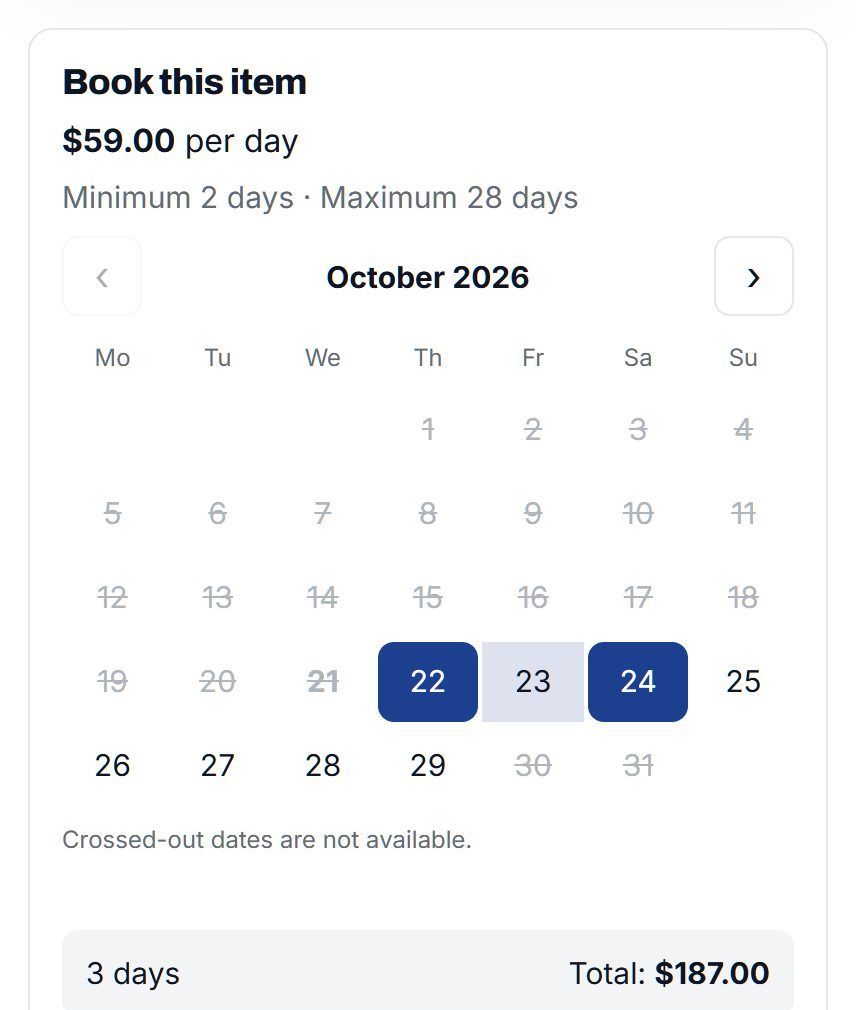
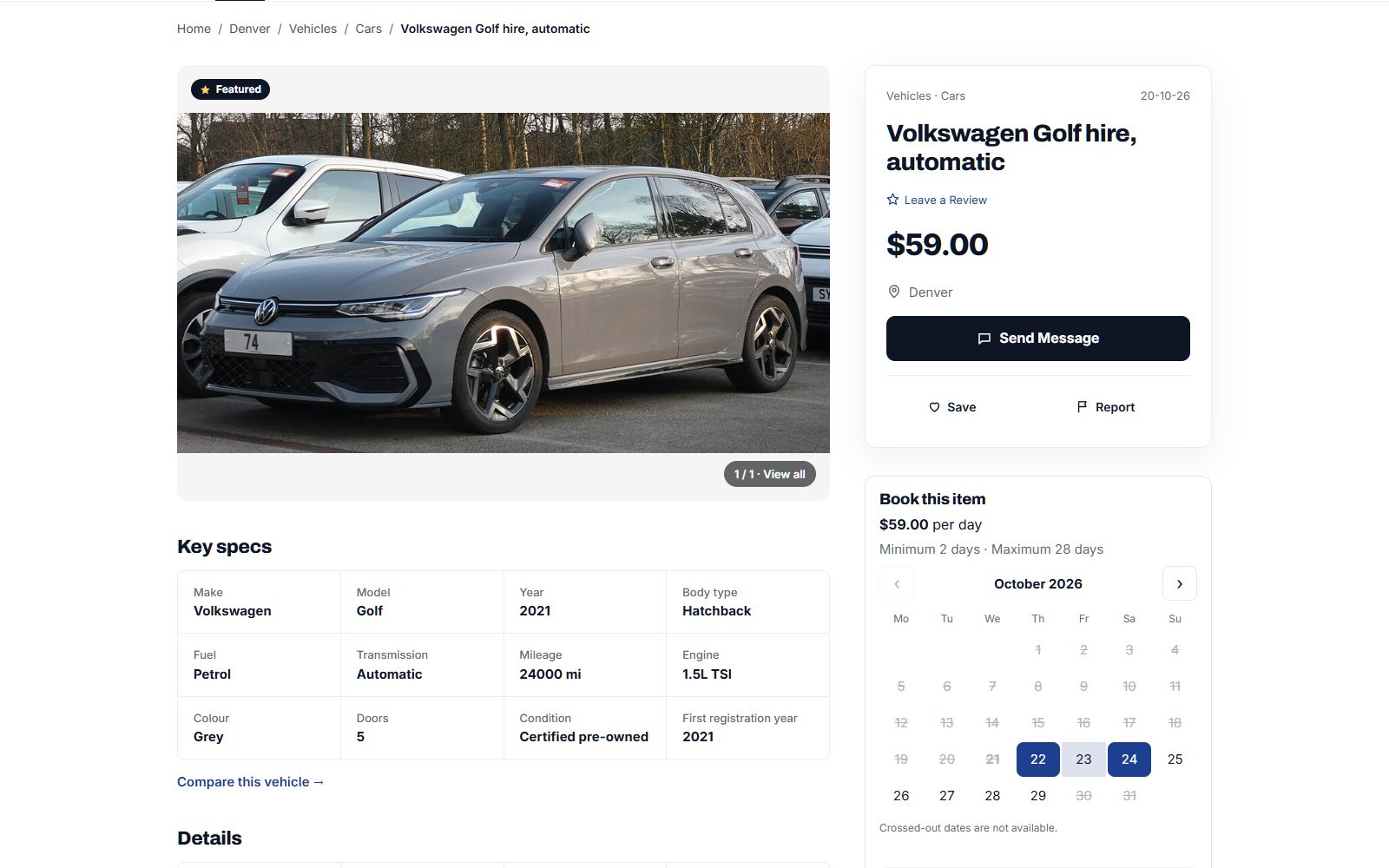
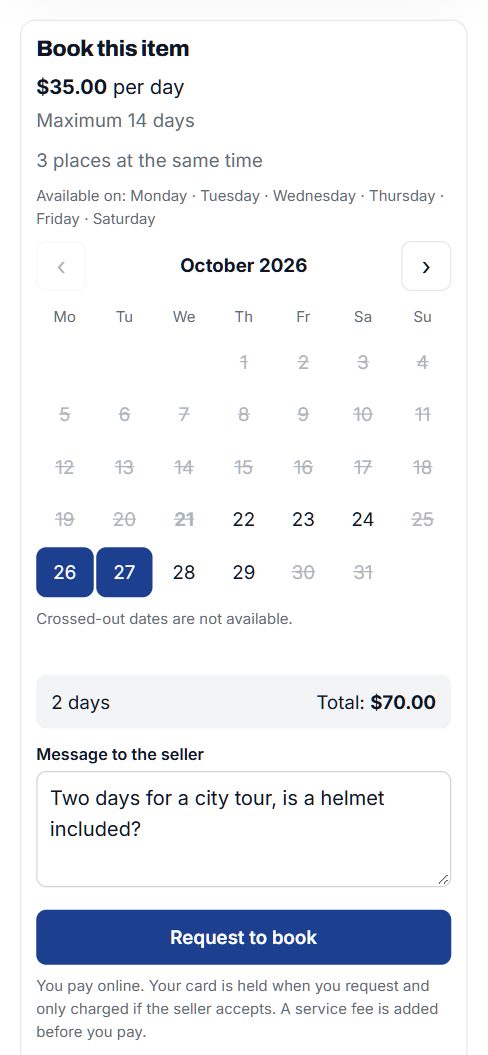
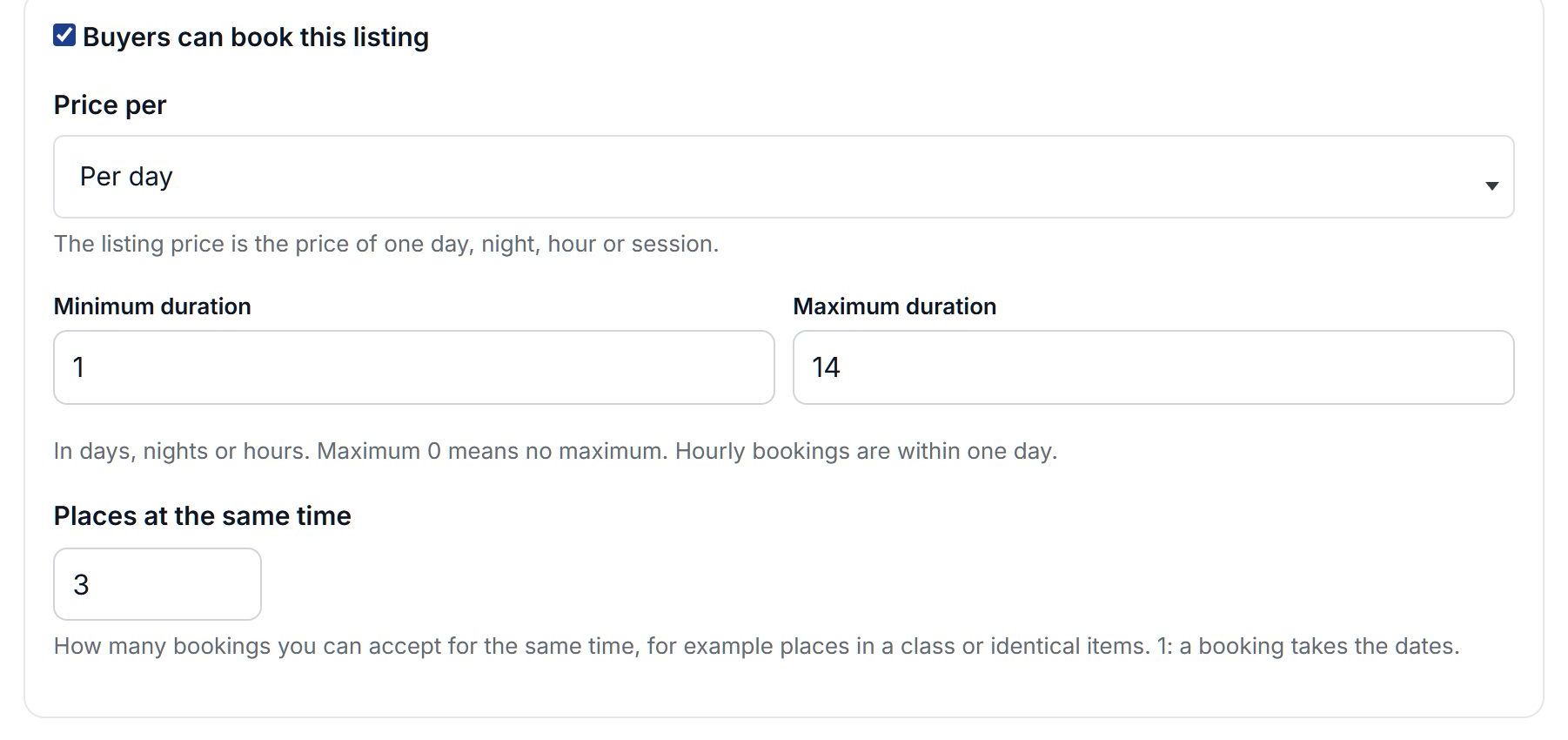
Rental terms complete the listing: price per day and per week, deposit, what comes included (helmet, lock, lights, repair kit, pedals), and whether the owner delivers to a hotel. Each bike can carry a booking calendar with daily or weekly prices and a deposit in Yclas, so a rider sees which dates are free before sending a message.
| Category | Example listings | Fields riders filter on |
|---|---|---|
| Road and gravel | Carbon endurance road bike, size 56, Shimano 105 | Frame size, rider height, groupset, tire width |
| Mountain bikes | Full-suspension trail bike, 150 mm travel | Wheel size, travel, dropper post, frame size |
| E-bikes | Step-through e-bike with a 50-mile range | Motor type, battery range, speed class, step-through |
| City and hybrid | Hybrid with rack and panniers | Frame size, gears, basket or rack, lights |
| Cargo bikes | Electric box bike for two children | Load capacity, child seats, electric assist |
| Kids' bikes and trailers | 20-inch kids' bike; two-seat trailer | Wheel size, age range, hitch type |
Add pedals as a dropdown (platform, SPD, Look) for road and mountain bikes, since keen riders often bring their own.
Take a commission per booking and keep fees low for small rentals.
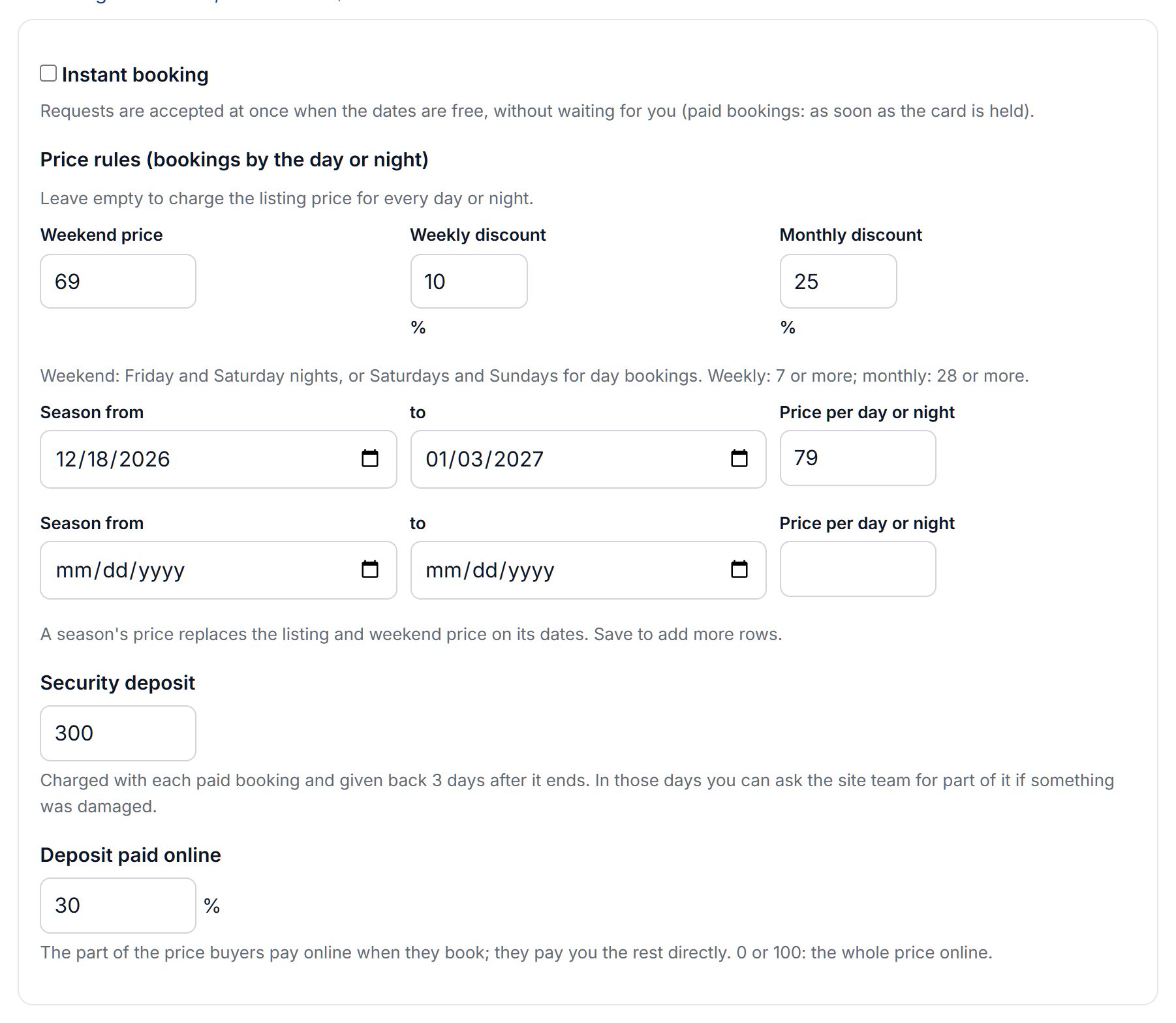
Riders pay through the site when they book, and you keep a commission on each rental. Bike rentals are small tickets, often one or two days, so the commission on any single booking is modest. The site earns through volume in a busy season and through weekly rentals for cycling holidays.
Bike shops will weigh your commission against walk-in customers who pay them nothing extra. Show them the riders they would never meet otherwise: visitors who book weeks ahead from another country. Private owners with one expensive bike are glad to earn anything from it.
Deposits matter because bikes are easy to steal and expensive to repair. A carbon road bike or a high-end e-bike justifies a deposit of several hundred dollars; a city bike needs much less. Owners set it on each listing and say when part of it may be kept.
A rider service fee can top up income on short rentals. Featured listings help shops stand out in peak months. Shop memberships suit businesses with large fleets. Banner spaces fit tour operators, bike-friendly hotels, guides and local events.
| Model | Works when | Switch it on |
|---|---|---|
| Commission per booking | Riders book and pay on the site | From the first rental |
| Rider service fee | Many one-day rentals at low prices | In the second season |
| Featured listings | Several shops in one town compete | Once a town has three or more shops listed |
| Shop memberships | Shops list twenty or more bikes | When shops ask for more visibility |
| Banner spaces | Hotels, guides and event organizers want riders | When peak season traffic is steady |
Sign up shops and tour operators first, then private owners.
Riders need choice in their size on their dates. One shop with forty bikes gives more of that than forty owners with one bike each, so start with businesses.
- Bike shops with rental fleets. Most shops in tourist areas already rent. Ask for their fleet list and import it from a spreadsheet.
- Tour and guiding companies. They own bikes that sit idle between tours and know what visitors ask for.
- Trail-town rental businesses. Mountain bike towns often have small rental outfits with no booking system of their own.
- Hotels, campgrounds and vacation rentals. Some keep bikes for guests and would rent to others.
- Private riders. Club members with a spare road or gravel bike, families whose kids have outgrown a trailer. Find them through cycling clubs, group rides and local forums.
Visit shops in the off-season when they have time to talk. Photograph each bike side-on, note the size, groupset and condition, and agree the rates, deposit and what is included. Fill the calendars with real availability from the start.
Cover the common frame sizes first. A rider who finds nothing in a 54 or a medium leaves for good.
Plan for theft, damage and rider safety from day one.
Bikes are light, valuable and easy to resell, so rules on theft and damage come first.
- Theft. Ask owners to include a good lock, record serial numbers, and tell riders how to lock the bike and where not to leave it. Riders should know they are responsible under the listing terms if a bike is stolen while in their care.
- Damage disputes. Handover photos of the frame, wheels and derailleurs, and a quick check of brakes and gears, settle most arguments. Agree in advance what counts as normal wear, such as tire and brake pad wear.
- Fit and safety. A wrong size or badly adjusted bike causes falls. Ask owners to set saddle height and check brakes at handover, and to offer a helmet.
- E-bike rules. Speed classes, age limits and where e-bikes may ride differ between places. Check the rules where you operate and ask owners to explain them to riders.
- Insurance and liability. Owners should check whether their own cover applies to rentals, and some need waivers. Requirements vary; take local advice. The site does not insure bikes or riders.
- Fake listings. Low prices on premium bikes with a request for payment by transfer. Riders should pay only through the site, and new listings can be held for review.
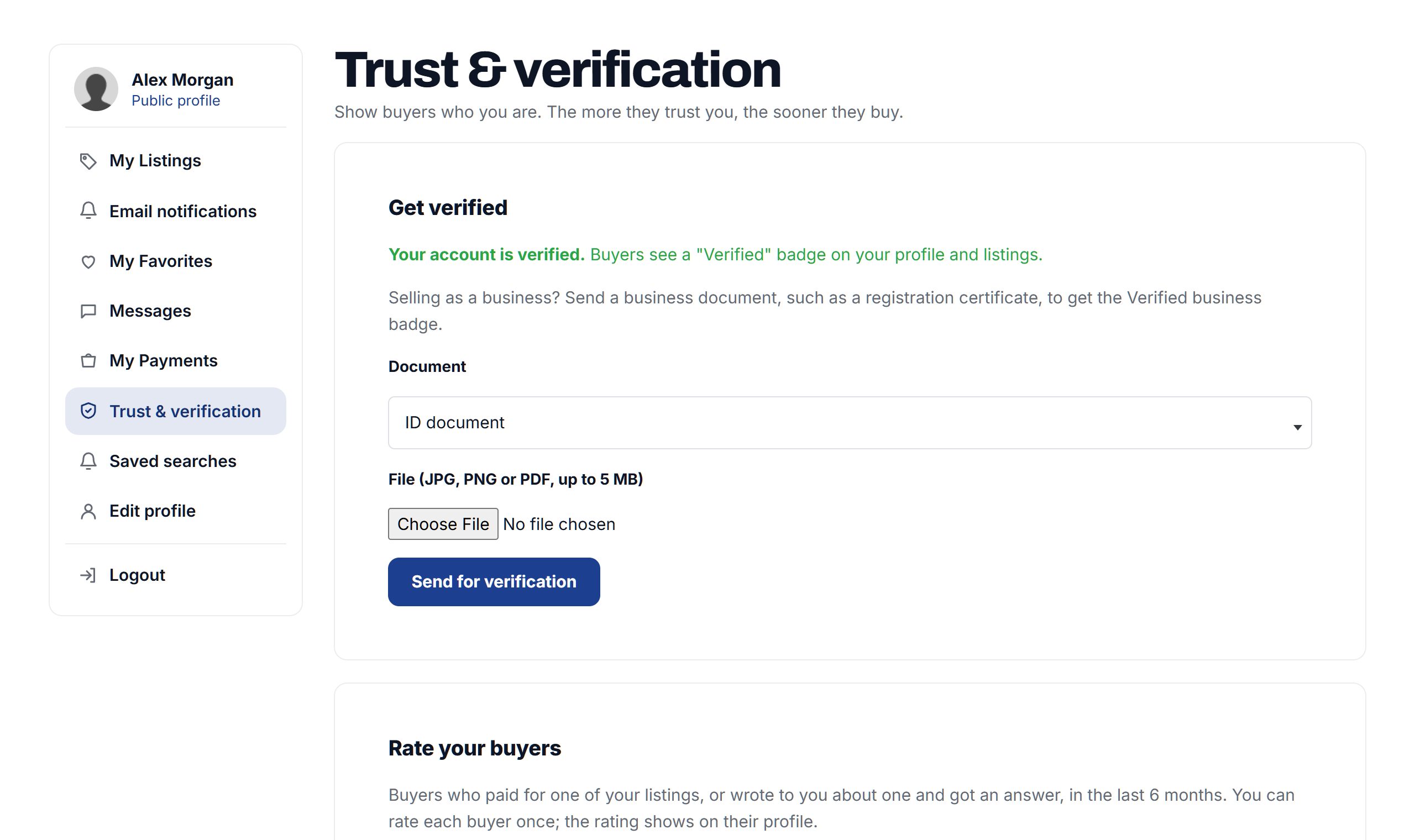
Ratings and reviews on both sides, and verified badges for established shops, help riders choose and help owners decide who to rent to.
Rank for bike hire searches by bike type, size and destination.
Riders search with a place and a bike type: "e-bike rental Moab", "road bike rental Girona size 56", "full suspension mountain bike rental Whistler", "bike rental near me for a week", "cargo bike rental Portland", "rent a bike for the Katy Trail". Many add "with delivery to hotel" or "kids".
Pages to build
- Bike type and location pages: "E-bike rental in Sedona", "Gravel bike rental in Asheville". Each category and location has its own page.
- Route guides: the best rides from your town with distance, climbing and the bike that suits each, linking to that category.
- Sizing guides: how to choose a frame size from your height, what to bring (pedals, saddle, shoes) and what shops usually provide.
- Trip planning: where to stay, when the trails are dry, and a sample week of riding.
Route guides earn links from clubs and travel blogs, and riders planning a trip land on them months before they book. Put the bike model, size and town in every listing title.
Launch one riding destination before spring and fill the size chart.
Riding seasons drive everything. Road cycling destinations fill in spring and fall; mountain bike towns peak when trails dry out in late spring and summer; beach and city e-bike rentals peak in summer and on holiday weekends. Big events matter too: gran fondos, century rides, mountain bike festivals and charity rides bring hundreds of riders who need bikes in the same week.
First steps
- Pick one destination with clear riding appeal and a handful of rental shops.
- Sign up those shops and two or three tour operators before you market to riders.
- Contact organizers of the next big local ride and offer rentals to entrants.
- Partner with bike-friendly hotels and vacation rental hosts who get asked about bikes.
Launch checklist
- Frame size and rider height range on every listing.
- Daily rate, weekly rate, deposit and what is included shown clearly.
- Calendars open for the whole coming season.
- Handover checks and theft rules published.
- Local e-bike rules summarized for riders.
After the first season, look at which sizes and bike types riders searched for without finding a free bike, and recruit owners to fill those gaps.
A worked example: Ozark Spoke Share in northwest Arkansas.
Ozark Spoke Share is a made-up site, invented for this guide to show the steps working together. It covers Bentonville, Rogers, Fayetteville and the hills around them in northwest Arkansas, where a large network of mountain bike trails and paved greenways draws riders from across the country, many of whom fly in without a bike.
Who it serves
Riders are visiting mountain bikers on long weekends, groups of friends on a trail trip, families riding the greenway between towns, and people in town for work who want a ride after their meetings. Owners are four bike shops with rental fleets, a guiding company with demo bikes, two vacation rental hosts who keep e-bikes for guests, and a handful of local riders with a spare trail bike.
Categories
- Mountain bikes
- Trail and enduro
- Cross-country and hardtails
- Electric mountain bikes
- Gravel and road
- Greenway and family
- Hybrids and cruisers
- Kids' bikes and trailers
How it started
The founder guided rides on weekends and kept getting the same message from friends out of state: which shop still has a large trail bike for Saturday? He spent a winter visiting shops, when owners had time to talk, and imported their fleets from the spreadsheets they already kept. Before opening, he made frame size, rider height range, wheel size and suspension travel required, and added a pedals dropdown after the first shop pointed out that visiting riders bring their own.
The first spring showed the gaps clearly: extra-large trail bikes and kids' bikes were gone every weekend. He recruited two tall local riders with large bikes, and a family whose children had outgrown a trailer and a 20-inch bike. Each shop also agreed to block walk-in rentals on its calendar every morning, after one rider arrived to find his booked bike already out on the trail.
How it makes money
Riders book and pay on the site, and the site keeps a commission on each rental. Weekly rentals during the spring and fall riding peaks bring most of the income. The two largest shops pay for memberships that show their bikes first, and a trail shuttle service and a brewery near a trailhead buy banner spaces. Race weekends and the big fall festival fill every calendar, so shops now open their bookings for those dates months in advance.
Most bookings came from riders who searched a size and a date, not a shop name.
| Listing | Per day / week | Key details |
|---|---|---|
| Trail bike, 140 mm travel, size L, Bentonville | $85 / $425 | 29-inch wheels, dropper post, riders 5 ft 10 in to 6 ft 2 in, helmet included |
| Electric mountain bike, size M, Rogers | $120 / $600 | Full suspension, 625 Wh battery, Class 1, $600 deposit |
| Carbon gravel bike, 54 cm, Fayetteville | $65 / $325 | 2x11 gearing, 40 mm tires, platform or SPD pedals |
| Hybrid with rear rack, size S, greenway trailhead | $35 / $175 | Upright position, lock and lights included, delivery to hotels |
| Kids' 20-inch bike and two-seat trailer | $30 / $150 | Ages 6 to 9, trailer fits most hitches, two helmets included |
The first 90 days of a bike rental marketplace.
Rental shops are busiest exactly when you would want their attention, so the first ninety days work best in the off-season. In most trail towns and road cycling regions that means late fall through winter, when owners have time for a coffee and the fleet sits in the back room waiting for service.
Measure readiness by size coverage rather than bike count. Draw a grid of bike types against frame sizes and mark the cells that have at least one bike free on a typical weekend. Riders who find nothing in their size rarely try again, so fill the grid before you market.
Expect shops to want proof before they hand over a whole fleet. Start with part of it, show them the bookings, and ask for the rest after the first busy month. End the ninety days a few weeks before the first riding peak or big local event, so listings and route guides are already in search results when riders plan their trips.
Keep a simple log of every request you could not fill: the size, the bike type and the dates. By week twelve that log is your recruiting list for the next season, and it tells shops exactly which bikes would earn if they bought them.
| Weeks | Focus | Done when |
|---|---|---|
| 1-2 | Choose the destination and bike types; set categories and fields for size, travel and battery | A test listing shows frame size, rider height and pedals, and the filters return it correctly |
| 3-4 | Visit every rental shop and tour operator in the area | At least three shops agree to list and you hold their fleet spreadsheets |
| 5-6 | Import fleets, photograph bikes, set rates, deposits and what is included | Every common size of trail, gravel and hybrid bike has a listing with an open calendar |
| 7-8 | Fill size gaps with private riders, hotels and vacation rental hosts | The size grid has no empty cell for medium, large and kids' bikes |
| 9-10 | Route guides and a page on local e-bike rules | Five route pages and the e-bike page are live and linked from the categories |
| 11-12 | Event outreach and the first rentals | One ride organizer has shared the site with entrants and the first ten rentals have reviews |
Three ways to build a bike rental marketplace.
Bike rental makes specific demands on a site. A bike can be booked for a day or a week, and the same model exists in four or five sizes, each with its own calendar. Riders filter on frame size and wheel size first, then on bike type, so those filters must work well on a phone at a trailhead. Shops also want their whole fleet loaded without typing each bike by hand.
Having developers build it makes sense for one thing above all: a live link to a shop's own counter system, so a bike rented to a walk-in customer disappears from your calendar at once. That matters for large fleets, and it is a lasting maintenance job.
A rental script or WordPress booking plugin on your own server can work for one shop, but test it with a real fleet: forty bikes in five sizes, a weekly rate, a deposit and a helmet included. Many booking plugins assume one item per listing, and updates and payment security fall to you.
A hosted builder such as Yclas fits founders who want rentals with a booking calendar, daily or weekly prices, deposits and spreadsheet imports working from the start, so their time goes to shops and trailheads. Load one complete shop fleet before launch to see how it reads to a rider, then search it as a visitor would: by size, by type and by date.
On every route, the counter problem stays: shops rent to walk-in customers too, and they must block those dates on your site.
| Route | Fits when | Watch out for |
|---|---|---|
| Developers build it | Large shops need live sync with their own rental counter system | The cost of building and maintaining each shop connection |
| Script or plugin on your server | One destination, a technical founder and simple fleets | Plugins built for one item per listing, plus updates and security |
| Hosted builder | You want calendars, deposits and fleet imports ready while you recruit shops | Shops still have to block walk-in rentals on the calendar |
What a bike rental marketplace costs to run.
The software is the smallest part of the bill. Most of the cost is your time in the first months: finding the first listings, answering questions and checking what gets posted.
Specific costs are small: time visiting shops off-season, photos of bikes, and legal advice on waivers and the terms owners and riders accept. If you sponsor or attend riding events to meet riders, entry and stand fees add up.
| Cost | Typical range | On Yclas |
|---|---|---|
| Domain | $10 to $20 a year | Your own, with SSL included |
| Software and hosting | $0 to $100+ a month, plus plugins and updates | Marketplace $149 a month for checkout and commission |
| Design | $0 to $100 for a theme, or a designer | 109 looks included |
| Payment fees | About 3% per payment | Your Stripe or PayPal fees; Yclas takes nothing |
| Your time | 5 to 10 hours a week at the start | Finding listings, moderation, support |
Mistakes that leave a bike rental site with empty calendars.
- Listing bikes without frame sizes. "Mountain bike, good condition" tells a visiting rider nothing. Make frame size and rider height range required, and send back listings that leave them out, because a wrong size ruins the ride and the review that follows.
- One listing for every size. A shop with six medium trail bikes and two extra-large ones needs separate calendars, or the site shows a large bike as free when none is left. Ask shops to list each size on its own, with the number of bikes they really have.
- Forgetting the counter. Shops rent to walk-in customers every day. If they do not block those dates, a rider arrives to find the booked bike already out. Agree a morning routine with each shop and remove shops that keep double-booking.
- Launching in midsummer. Riders book cycling trips months ahead, and shops have no time to talk once the season starts. Recruit in winter and open before spring.
- Ignoring families. Keen riders are the most visible customers, but families on greenways and rail trails book often and need trailers, tag-alongs and small bikes. A destination with no kids' bikes loses the whole family's booking.
- Vague e-bike listings. Riders need the speed class, battery range and where the bike may go. Without that, an e-bike ends up on a trail where it is banned, and the rider blames you. Require the class on every e-bike and publish a local rules page.
- No condition standard. Worn brake pads, a stretched chain or a slow leak turn a holiday ride into a long walk back. Publish a minimum service standard and ask owners to note the last service date on each listing.
- One deposit for every bike. The same deposit on a beach cruiser and a carbon e-mountain bike either scares off casual riders or leaves the expensive bike unprotected. Suggest deposit bands by bike type and value.
- No plan for theft. A bike locked badly outside a café is gone in minutes, and the owner then argues with the rider over its value. Ask owners to include a proper lock, record serial numbers, and state on the listing what the rider owes if the bike is stolen while in their care.
- Skipping route content. Riders plan around rides, not shops. A site with only listings misses every search for the best loops in town, so write route guides that end with the bikes suited to each ride.
Bike rental terms worth learning before you call a shop.
Shops and keen riders use these words without explaining them.
| Term | What it means |
|---|---|
| Frame size | The size of the frame, given in centimeters for road bikes and often as S, M, L or inches for mountain bikes. |
| Reach and stack | Two frame measurements that describe how long and how tall a bike feels to the rider. |
| Groupset | The gears, shifters, brakes and cranks on a bike, usually named by maker and level. |
| Suspension travel | How far the fork or rear shock can compress, given in millimeters. |
| Hardtail | A mountain bike with front suspension only. |
| Full suspension | A mountain bike with suspension front and rear, often shortened to full-sus. |
| Dropper post | A seat post the rider lowers with a handlebar lever for steep descents. |
| Clipless pedals | Pedals that lock to cleats on cycling shoes, such as SPD or Look systems. |
| E-bike class | A category that sets an e-bike's assisted top speed and whether it has a throttle; rules on each class differ by place. |
| Watt-hours (Wh) | The capacity of an e-bike battery, which roughly sets how far it goes on one charge. |
| Tubeless | Tires run without inner tubes, with liquid sealant that closes small punctures. |
| Demo bike | A bike a shop or brand rents out so riders can try a model before buying it. |
| Bike box | A padded case or cardboard box used to ship or fly a bike, which many riders would rather avoid. |
| Rail trail | A path built on a former railway line, usually gentle and popular with families. |
The same steps for a bike rental marketplace on Yclas.
- Describe your marketplaceThe setup wizard writes the categories, an About page and example listings from one sentence.
- Add fieldsThe details buyers filter on, as dropdowns, numbers or checkboxes.
- Bring sellersInvite them, import their stock from a spreadsheet, or post for them.
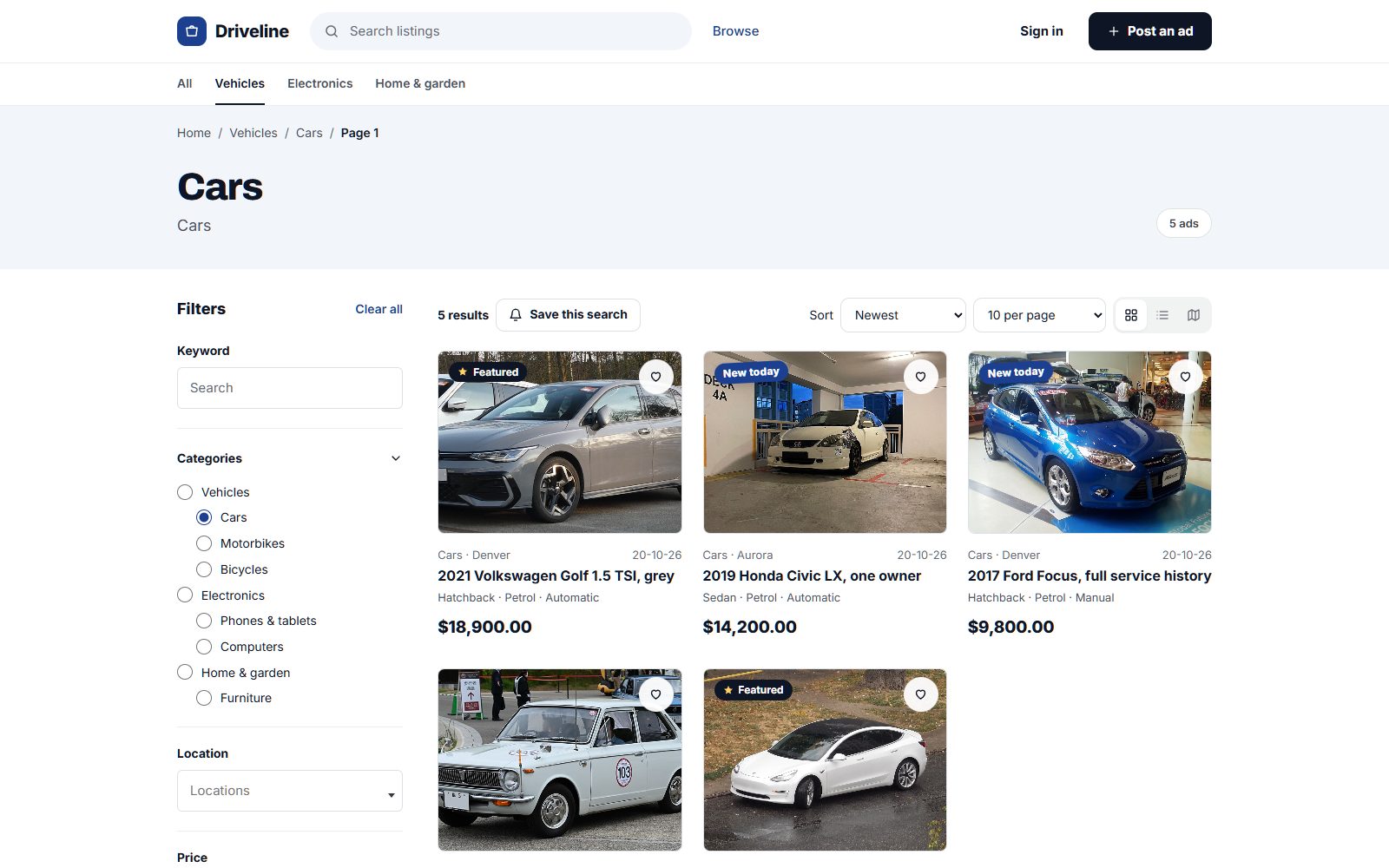
- Set the rulesChoose moderation, verified sellers, reviews and reports.
- Take paymentsOn Marketplace, buyers pay on the site and you keep a commission, with Stripe.
What does it cost to get a bike rental marketplace running?
You do not buy bikes: shops and owners keep their fleets. Spend on legal advice for your terms, visits to shops, and a presence at one or two local riding events.
Will bike shops pay a commission when they already rent bikes?
Many will for bookings they would not get otherwise, such as visitors booking from abroad weeks ahead. Keep the rate modest and show them where the bookings came from.
Who is liable if a rider crashes?
That depends on local law, the owner's insurance and any waiver the rider signs. Get local legal advice and make clear the site does not insure bikes or riders.
How do I stop bikes being stolen?
Owners include a lock, record serial numbers, set deposits that match the bike's value and decline riders they are unsure of. Riders agree in the terms that they are responsible while the bike is in their care.
Should private owners be allowed to list bikes?
Yes, especially high-end road and gravel bikes that shops rarely rent. Ask them to follow the same handover checks as shops and to set a fitting deposit.
Are e-bikes different to rent out?
They cost more, so deposits are higher, and speed classes and where they may ride vary by place. Check local rules and ask owners to explain them at handover.
How do I compete with shops' own websites?
Riders compare sizes and prices across a whole town in one search, which no single shop offers. Shops still get the booking, plus visitors they would never reach.
Should helmets, shoes and other gear be listed separately?
Include a helmet with every bike, since few visitors travel with one. Cycling shoes, child seats, racks and bike computers can be separate listings with their own calendars and prices.
Can guides offer guided rides on the site?
Yes, as fixed-price listings for a set ride, kept separate from the bike rental itself. Ask guides to state the group size, difficulty, distance and what is included.
What if a rented bike breaks on the trail?
Each listing should say what to do: a phone number for the shop, whether a replacement bike is offered and who pays for parts. A puncture is normal wear, while crash damage may come out of the deposit under the listing terms.
Can I cover a whole state or country from the start?
Not well. Riders travel to a destination, so build around one region first, then add the next one when riders who booked with you ask about it.
Will shops mind competing with each other on one site?
Some will at first. Riders already compare shops online, and the site brings them visitors who would never have walked past their door. Shop ratings and reviews let a well-run shop win on service rather than price alone. Shops also keep their own customers: the site is one more place to be found, not a replacement for their counter.
Related pages.
The parts of Yclas this leans on.
You have the plan. Now get riders on the right bike in your town.
Describe your site in a sentence and the setup wizard writes the categories, example listings and a look. Free for 15 days, no credit card.
Start my marketplace