How to build a storage space marketplace that fills empty garages and barns.
This guide covers building a marketplace where homeowners, farmers and small businesses rent out spare garages, sheds, barns, basements and parking spots: picking a town and a space type, the details renters filter on, weekly prices with deposits, the commission hosts accept, finding the first hosts, rules on what can be stored, the searches to rank for, and a launch timed to moving season.
Free for 15 days · No credit card · Plans from $19 a month
Connect people with empty space to neighbors who have too much stuff.
Almost every street has a garage full of nothing and an apartment full of boxes. A retired couple has a double garage and one car. A farmer five miles out of town has a pole barn that could hold six boats over winter. A shop owner has a back room that sits empty after the holidays. On the other side, people between leases, students leaving for the summer, kayak and motorcycle owners in small apartments, and online sellers with stock piling up in the living room all need somewhere close, dry and cheaper than a storage facility.
Why a dedicated site wins
Self-storage facilities sit on the edge of town, fill up in busy months and charge for a unit size you may not need. Garage-for-rent posts on Craigslist and Facebook Marketplace exist, but they have no calendar, no deposit and no way to search by door width or ceiling height. A site built for storage answers the questions renters actually have: can I drive a trailer up to it, is it heated, and when can I get in.
Pick the angle
- One town or a few neighborhoods. People want storage within a short drive, so density matters more than reach.
- One space type. Vehicle, boat and RV storage is a strong start: the items are valuable, the seasons are clear and barns are easy to find.
- One renter type. Students near a campus, people moving house, or small businesses needing stock room.
Storage is local and repeat: one good host in the right neighborhood can serve renters for years.
Describe each space by size, access and conditions.
Keep categories to space types and put the detail in fields. Renters ask three things before anything else: will my things fit, can I get them in, and will they stay dry and safe. Answer those in fields so they can filter instead of messaging every host.
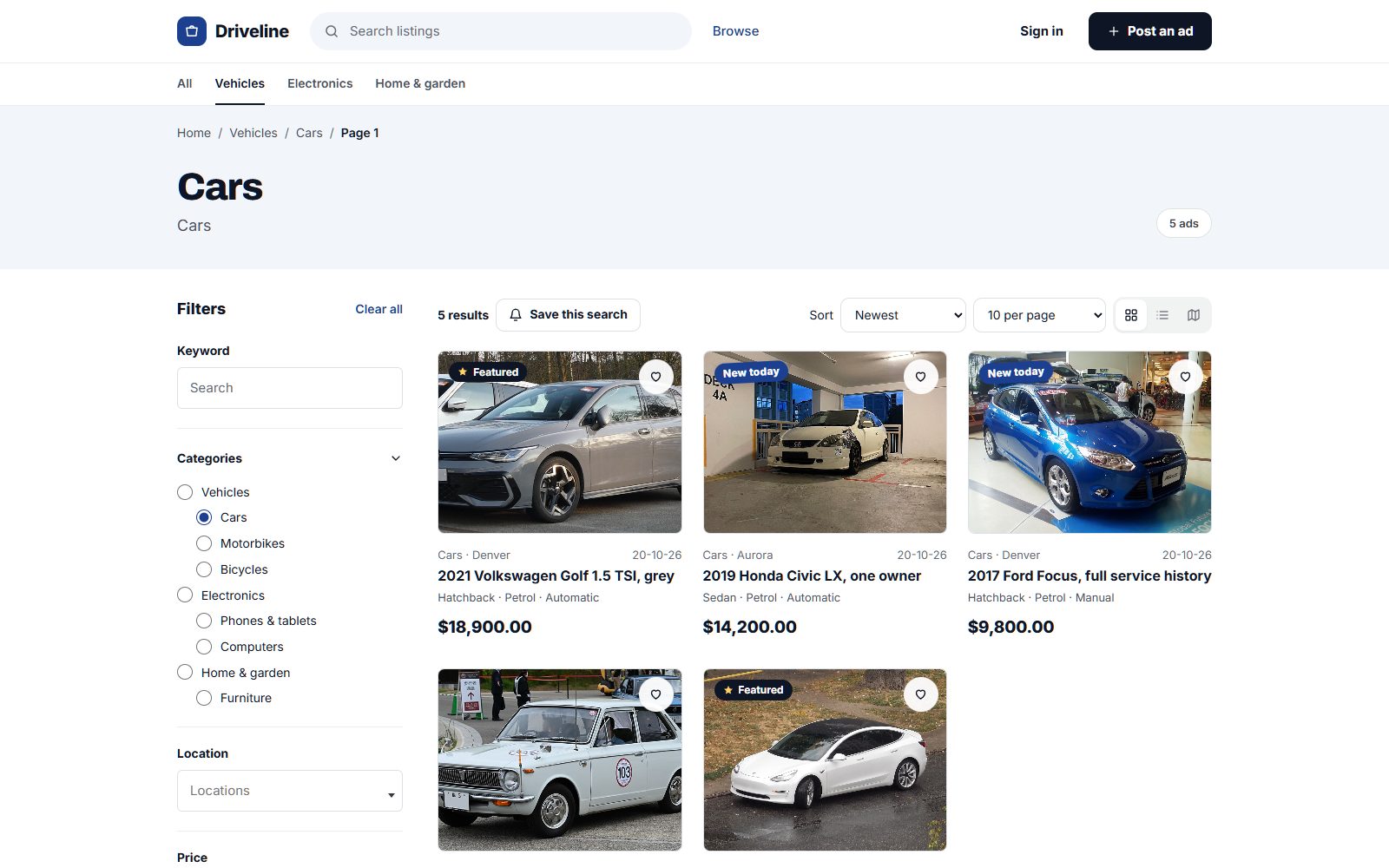
- Size: floor area in square feet, ceiling height, and door width and height. A boat on a trailer or a tall van needs the door numbers, not just the floor area.
- Access: drive-up or carry-in, ground floor or stairs, and access hours: anytime with own key, set hours, or by appointment.
- Conditions: heated or climate controlled, dry floor, power outlet, lighting.
- Security: lockable door, renter brings own lock, camera, gated property, host lives on site.
- Terms: weekly price, deposit, minimum number of weeks.
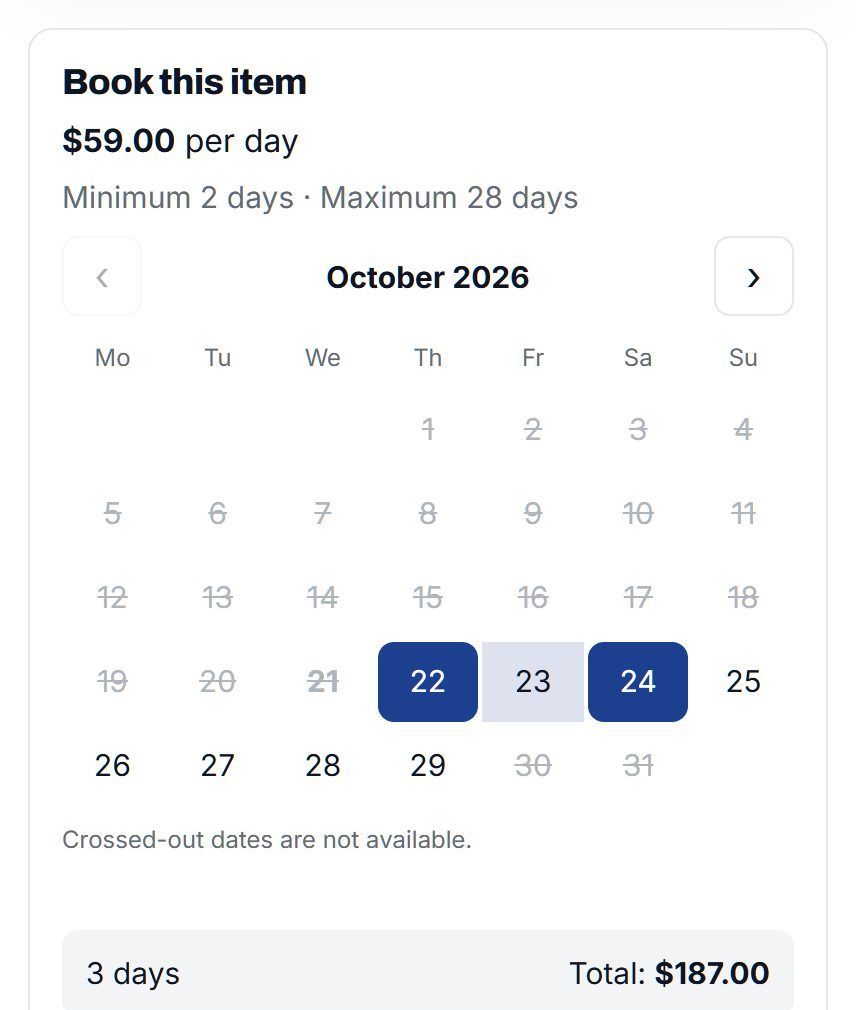
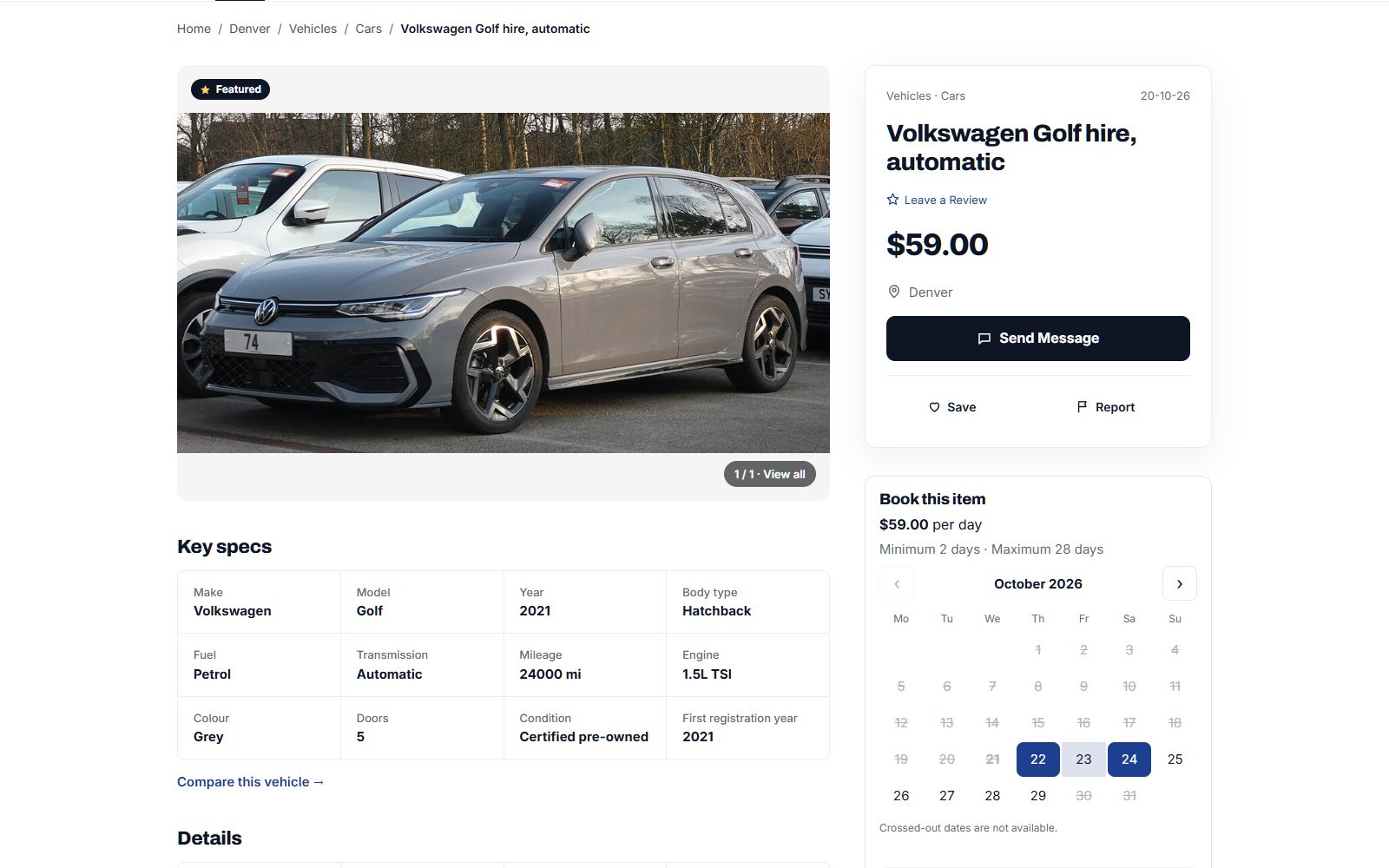
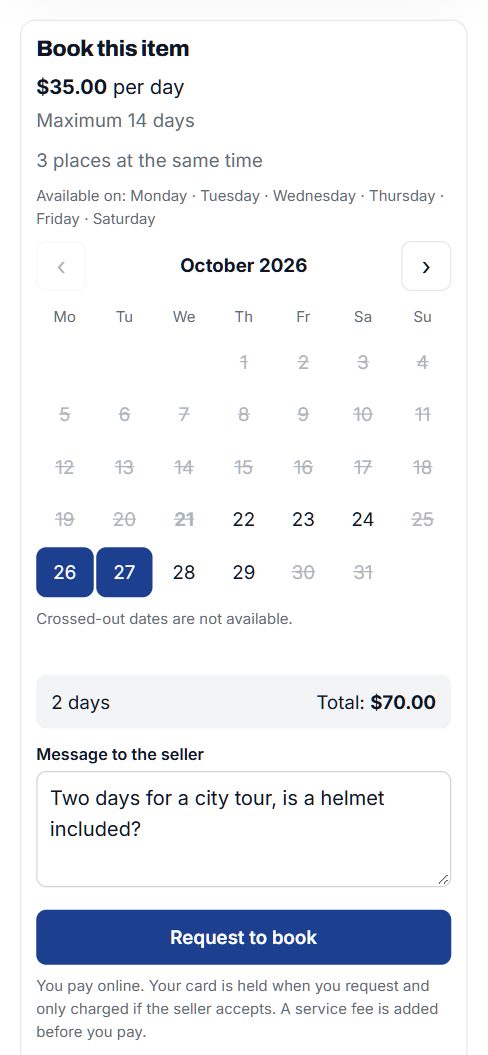
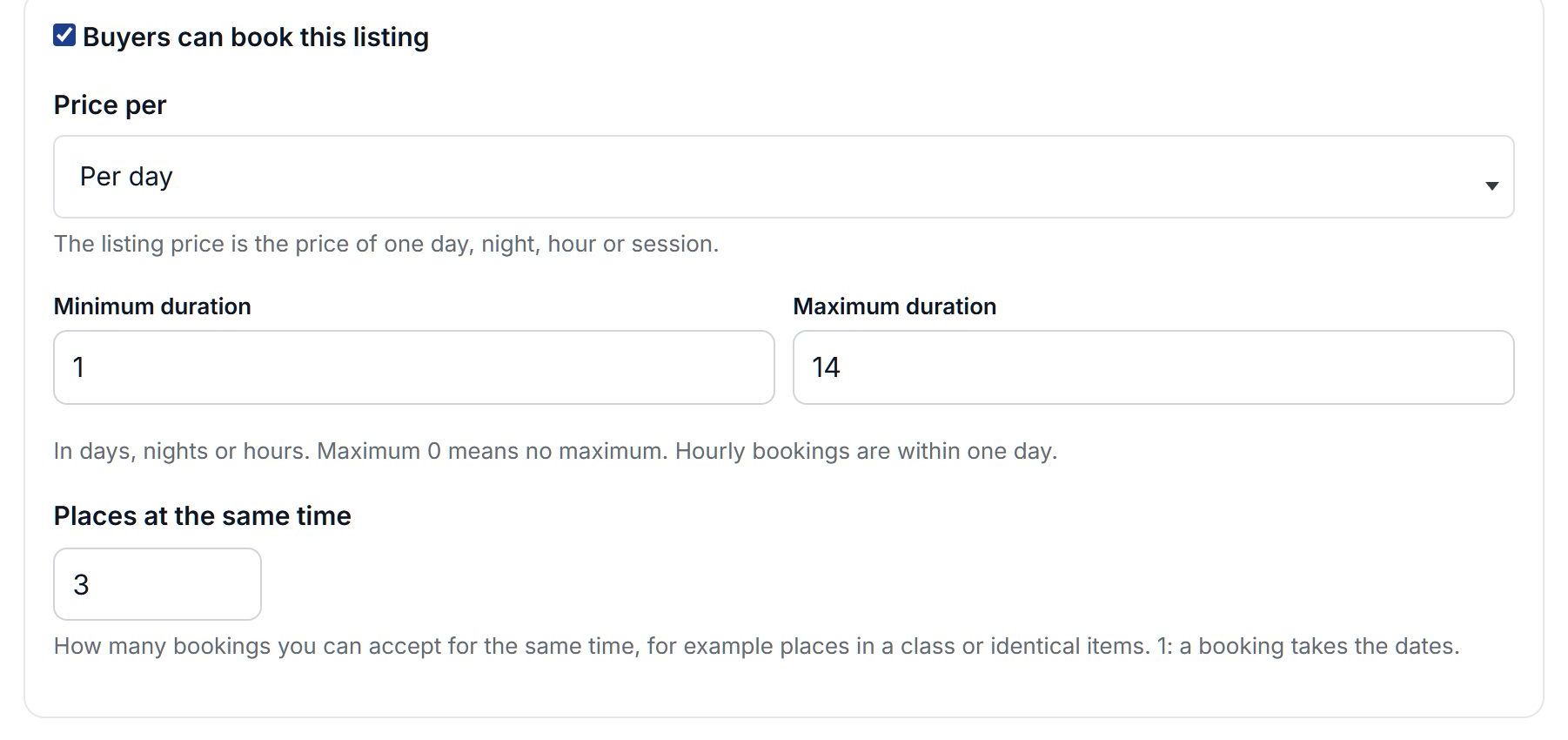
Storage is often thought of by the month. On the Marketplace plan rentals come with a booking calendar, prices per day or week and a deposit, so set a weekly price and let renters book a block of weeks. Ask hosts for photos of the empty space with something for scale, like a car or a tape measure on the floor.
| Category | Example listings | Fields renters filter on |
|---|---|---|
| Garages | Single garage, drive-up, side door | Square feet, door width, heated, access hours |
| Vehicle, boat and RV storage | Covered barn space for a 24 ft boat on trailer | Covered or open, max length, power for battery tender, gated |
| Parking and driveways | Off-street spot near the train station | Covered, overnight allowed, vehicle size |
| Sheds and outbuildings | 10 x 12 shed, dry floor | Lockable, floor type, distance from road |
| Basements and spare rooms | Dry basement corner for boxes | Climate controlled, stairs, access by appointment |
| Business and stock space | Back room behind a shop with shelving | Shelving included, deliveries accepted, loading door |
Make "max vehicle length" a number field. Boat and RV owners search by the length of what they own.
Earn a share of each booking, and keep hosts' prices their own.
Renters book and pay through the site, and you keep a commission on each booking. Hosts compare that share to earning nothing from the space, so a fair cut is easy to accept from homeowners. Farms and businesses with many spaces will look harder at the number, which is where featured placement or a membership helps.
Storage bookings run for many weeks, so commission adds up on a single booking. That also means renters notice a fee on top. A small buyer service fee works better on short parking bookings than on a three-month garage stay; test it on one category first.
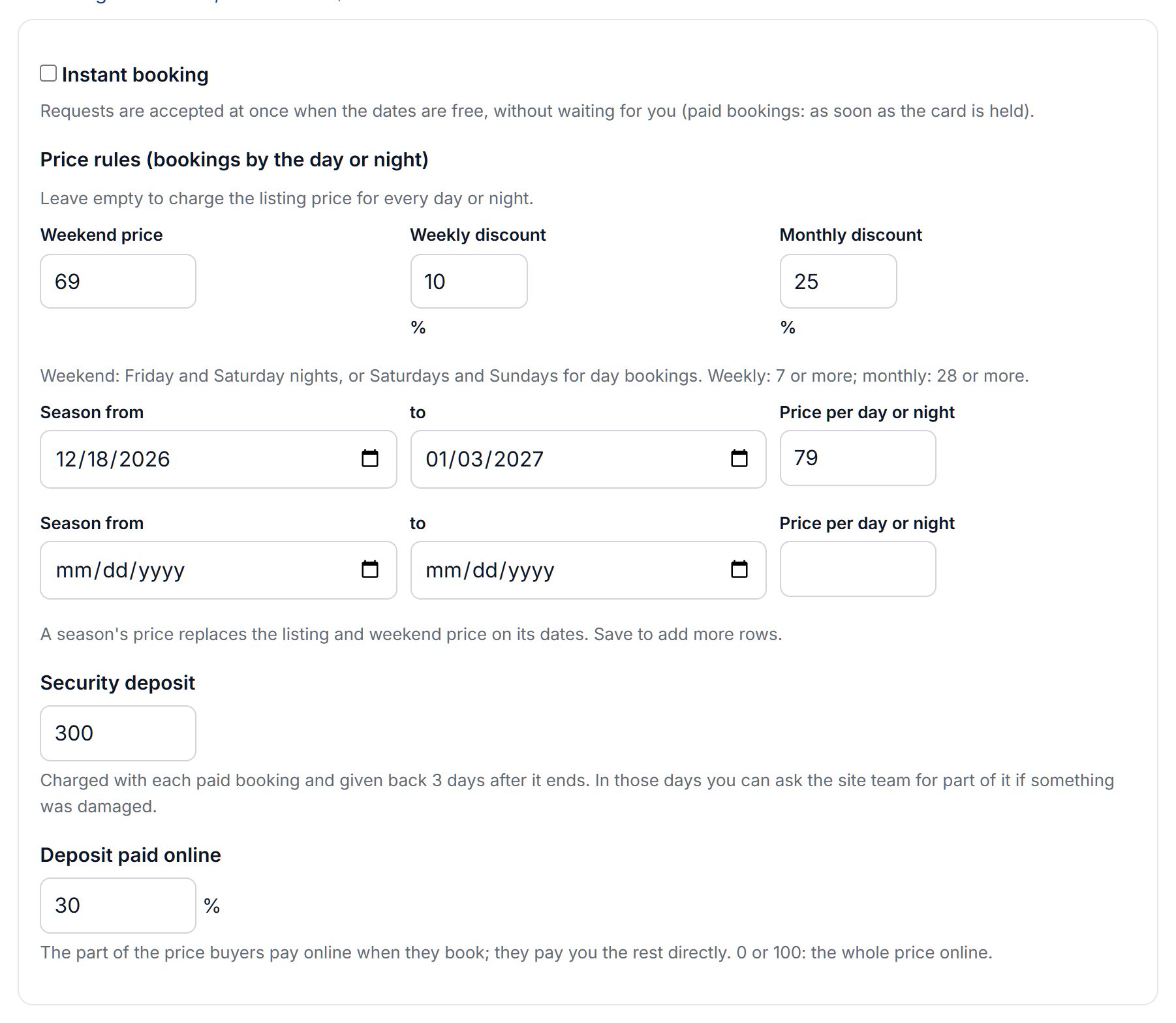
Deposits cover damage to the space, an oil stain on a garage floor, or a renter who leaves items behind at the end. Hosts set the amount; your rules explain what a deposit may be kept for. The deposit is between host and renter, so describe the rules clearly and do not promise to settle disagreements.
Listing should stay free for hosts until renters arrive. The hosts' only cost is your share of bookings they actually get, which makes the first conversations easy.
| Model | Works when | Switch it on |
|---|---|---|
| Commission per booking | Renters pay on the site | From the first booking |
| Renter service fee | Short parking and weekend bookings | Once bookings are steady |
| Featured listings | Several hosts compete in one area | Before spring moving season |
| Host memberships | Farms and businesses with many spaces | When a host lists five or more spaces |
| Banner spaces | Movers, truck rental, packing supply shops | When you can show local visitor numbers |
Find the first 50 hosts before you look for renters.
Supply comes first. A renter who searches once and finds nothing nearby will not come back, so build a cluster of spaces in one area before you advertise to renters at all. Fifty listings in one town beat two hundred scattered across a state.
Where hosts are today
- Existing garage-for-rent posts on Craigslist, Facebook Marketplace and neighborhood groups. These people already want to rent; offer them a calendar, a deposit and payment handled for them.
- Farms on the edge of town. Pole barns and machine sheds often hold boats and campers informally. Farm supply stores and local farm papers reach them.
- Landlords with garages attached to rental units that tenants do not use.
- Shops and small warehouses with spare back rooms, especially after the holiday stock clears.
- Empty nesters and retirees reached through community newsletters and neighborhood apps.
Make it easy: offer to write the listing and take the photos yourself for the first twenty hosts. Bring a tape measure, measure the door, and write down the access rules while you are there. Hosts who are nervous about strangers respond well to a plain explanation of what can and cannot be stored, and to the deposit.
Measure the door on every visit. It is the field renters care about most and the one hosts never know.
Set firm rules on what can be stored and who gets in.
Storage brings risks that other rentals do not: the host often cannot see what is inside, and the renter's things sit on someone else's property for months. Write the rules before the first booking.
Prohibited items
Ban flammable liquids and gas cans beyond a vehicle's own tank, hazardous chemicals, perishable food, live animals, weapons and anything illegal. Ban living or sleeping in a space. Put the list on every listing page and in the booking confirmation.
The usual problems
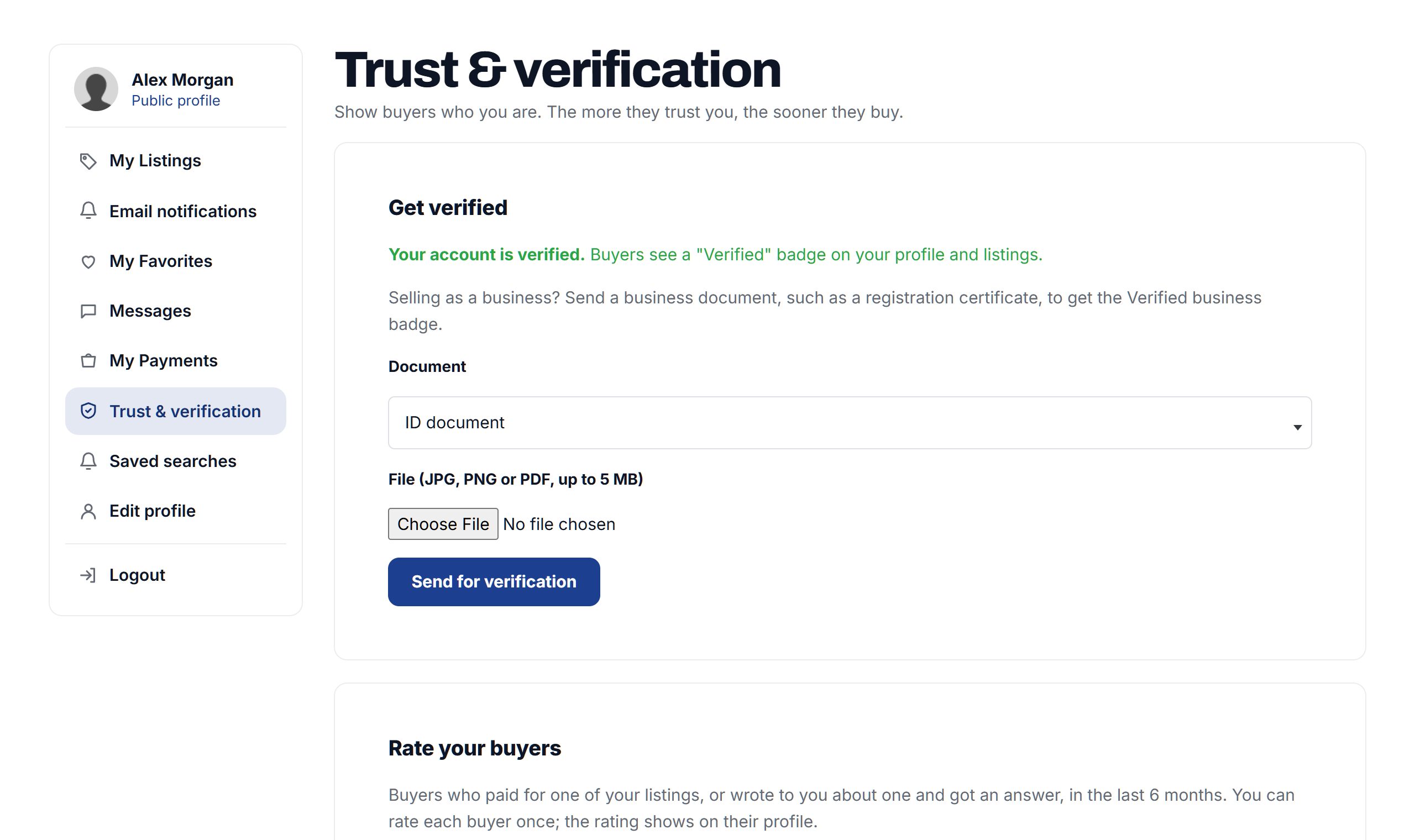
- Fake listings: someone posts a garage they do not own and asks for payment by transfer. Approve every new host listing by hand, ask for photos taken on the day, and give verified badges to hosts you have met.
- Off-site payment: tell renters never to pay a host outside the site, and remove hosts who ask.
- Damage and leaks: ask for move-in photos from both sides; vehicle storage should require a drip tray.
- Items left behind: what a host may do with abandoned goods depends on local rules, and storage facility rules may not apply to private hosts. Check the rules where you operate and state a clear process in your terms.
- Insurance and permission: a homeowner's or renter's policy may not cover stored goods or renting space, and a lease or homeowners' association may forbid it. Tell both sides to check their own coverage and permissions.
Ratings and reviews after each booking show which hosts give easy access and which renters leave the space clean.
Rank for storage searches by town, item and season.
Storage searches are local and specific to the thing being stored. People search for "garage for rent near me", "RV storage [town]", "boat storage near [lake]", "cheap storage [neighborhood]", "student summer storage [college]", "parking space for rent [area]" and "classic car storage heated". Each of those deserves its own page.
Pages to build
- Category and town pages: RV storage in each town, garages in each neighborhood, parking near each station or campus.
- Item guides: how to store a boat over winter, preparing a car for months in a garage, what fits in a single garage, packing for long-term storage.
- Price pages: what garage and barn storage costs in your area, built from the weekly prices on your own listings once you have enough of them.
- Host guides: how to rent out your garage, how to set a weekly price, what to put in your access rules.
Host guides do double duty: they rank for "rent out my garage" and "make money from my barn", and they bring in supply at the same time. Write one for each space type. Name the town and the item in listing titles, so a barn becomes "Covered boat and RV storage, 2 miles from the marina" rather than "Barn space".
Launch in one town just before people move or put things away.
Storage demand has clear peaks. Late spring brings students leaving campus and families moving before the school year. Early fall brings boat and RV owners looking for winter storage, and they book early because covered space runs out. Plan your launch so hosts are listed a month before the peak you choose.
Partners worth calling
- Moving companies and truck rental branches, whose customers need somewhere for the overflow.
- University housing offices and student groups near the end of the spring semester.
- Marinas, boat dealers and RV dealers whose own storage is full.
- Real estate agents with sellers who need to clear rooms before showings.
Checklist
- Pick one town and one space type, and write the prohibited items list.
- Sign up and photograph the first fifty hosts in that town, measuring every door.
- Set the weekly prices, deposits and minimum weeks with each host.
- Publish the town pages and two host guides.
- Leave flyers with movers, marinas and the campus housing office four weeks before the peak.
- After each booking, ask both sides for a review and fix any access problem the same week.
A worked example: Bay Country Space Share around Traverse City, Michigan.
Bay Country Space Share is a made-up site, described here to show how a storage marketplace hangs together in one real place. It covers Traverse City and the farm country around Grand Traverse Bay in northern Michigan, where summer means boats on the water and winter means every pontoon, camper and jet ski needs a roof for six months.
Categories
- Boat, RV and trailer storage
- Covered barn bays
- Outdoor gated spots
- Garages
- Heated garages
- Unheated garages
- Sheds and basements
- Parking spots in town
Who it serves
Renters are cottage owners who leave in October, year-round residents with a boat and no barn, snowmobile owners who need summer space, and students at the local college who go home for the summer with a dorm room's worth of boxes. Hosts are orchard and hay farmers with pole barns that emptied when they sold old equipment, retirees with a spare garage bay, and a few landlords with outbuildings behind rental homes.
How it started
The founder kept his own pontoon in a neighbor's barn for years on a handshake. When the neighbor asked whether anyone else needed space, he drove the peninsula roads one August with a tape measure, knocked on barn doors and wrote the first listings himself. He had 38 spaces live by mid-September, just as boat owners began to worry about winter. Every listing shows door height, bay length and whether a renter can reach the space in March to start spring prep.
How it makes money
Renters book a block of weeks and pay on the site, and the site keeps a commission on each booking. Hosts set their own weekly price and a deposit to cover oil drips, rodent damage from food left in a camper, or a boat that stays past the agreed date. In late summer, farms with several bays pay for featured placement at the top of the boat storage pages. A marine detailing shop and a shrink-wrap service rent the banner space, because their customers are the same people. In its second spring the site added a summer category for student boxes, so the same barns earn in both halves of the year.
The season decided everything here: hosts were signed in August so the site was full of options when boats came out of the water.
| Listing | Weekly price | Key details |
|---|---|---|
| Covered pole barn bay, Old Mission Peninsula | $28 | 14 ft door, fits a 26 ft pontoon on its trailer, minimum 26 weeks |
| Heated single garage, west side of town | $45 | Classic or collector car only, drip tray required, access by appointment |
| Gravel lot spot for an RV up to 35 ft | $15 | Gated, no power, minimum 20 weeks |
| Dry basement corner, about 80 sq ft | $12 | Boxes and furniture only, stairs, weekday access |
| Shed space for two snowmobiles | $10 | Summer only, lockable, renter brings own lock |
All five listings are invented for this example.
The first 90 days: from one tape measure to a town full of bookable space.
Storage has a slow start and a sticky middle. The first weeks are spent in driveways and farmyards, measuring doors and agreeing access rules, and nothing about that can be rushed. Once a booking runs, though, it runs for months, and a renter who is happy with a barn bay tends to come back the next season. The plan below spends the first half of the quarter almost entirely on hosts.
Count backward from the storage peak you chose. For winter boat and RV storage, week 1 should fall in early summer; for student storage, start around spring break so hosts are ready before finals. Keep a simple spreadsheet of every host you visit, including the ones who say no, with the reason. Those reasons, such as worries about strangers on the property or an insurance question, become the answers on your host guide. Track three numbers each week: spaces live, booking requests and finished bookings with reviews from both sides. If requests arrive for a space type you do not have, such as heated garages, that is where the next round of host visits should go.
| Weeks | Focus | Done when |
|---|---|---|
| 1-2 | Choose the town and space type, write the prohibited items list and the end-of-booking rules | A lawyer has read the terms and the prohibited list appears on every listing |
| 3-4 | Contact people already posting garages and barns, then farms and landlords on the edge of town | 25 hosts visited, every door measured and photographed with something for scale |
| 5-6 | Publish hosts with weekly prices, deposits and minimum weeks, and block weeks already taken | 40 spaces live, each with a working calendar |
| 7-8 | Write town pages, two item guides and a guide for hosts | Each space type has a page for the town, and the host guide is shared in local groups |
| 9 | Leave flyers with marinas, RV dealers, movers and the campus housing office | Every partner on the list has flyers and knows who to call with questions |
| 10-11 | Attend the first handovers in person, check move-in photos and answer host questions the same day | The first 10 bookings are paid on the site and each has move-in photos |
| 12 | Collect reviews, fix access complaints, test featured listings with busy hosts | Every finished booking has two reviews and at least one host has asked about a featured spot |
Ways to build a storage marketplace, and what storage asks of each.
A storage site needs a few things that a plain classifieds site does not. Renters book many weeks at once, so the calendar must handle long blocks and show which weeks are taken. Hosts need a deposit held with the booking. Size has to be stored as numbers, so a boat owner can filter by door height and bay length. And payment has to reach each host through the site, or the commission model falls apart.
Hiring developers
A custom build makes sense if your idea depends on something extra, such as smart locks that issue access codes per booking. Expect a long build before the first renter, and budget for keeping payments and calendars working afterward.
A script or WordPress plugin on your own server
Booking plugins are usually built for hotel nights or appointments. Joining one to a listings plugin and a payment split for many hosts can work, but test a 26-week booking with a deposit before you commit, and plan to own updates and security yourself.
A hosted builder
A hosted builder such as Yclas suits a founder who would rather spend the summer in farmyards than on servers. Rentals come with a booking calendar, prices per day or week and a deposit on the Marketplace plan, and number fields become search filters.
| Route | Fits when | Watch out for |
|---|---|---|
| Custom build with developers | You need access codes, smart locks or unusual pricing | Months before launch and ongoing costs for every change |
| Script or plugin on your own server | You have technical skill and time for upkeep | Calendars built for nights, not 26-week blocks, and split payments to hosts |
| Hosted builder | You want weekly rentals with deposits running quickly | Hosts who think in months need weekly prices explained once |
| General classifieds site plus a spreadsheet | You are testing demand in one town before building | No deposit, no payment on site and no commission to earn |
What a storage space marketplace costs to run.
The software is the smallest part of the bill. Most of the cost is your time in the first months: finding the first listings, answering questions and checking what gets posted.
Budget for a lawyer to review your terms on prohibited items, access and items left behind, since those are the disputes storage brings. Printed flyers and a tape measure for host visits cover the first town; hosts handle their own insurance and any landlord or association permission.
| Cost | Typical range | On Yclas |
|---|---|---|
| Domain | $10 to $20 a year | Your own, with SSL included |
| Software and hosting | $0 to $100+ a month, plus plugins and updates | Marketplace $149 a month for checkout and commission |
| Design | $0 to $100 for a theme, or a designer | 109 looks included |
| Payment fees | About 3% per payment | Your Stripe or PayPal fees; Yclas takes nothing |
| Your time | 5 to 10 hours a week at the start | Finding listings, moderation, support |
Mistakes that empty a storage marketplace.
- Covering a whole state from day one. Renters will drive ten minutes to a garage, not an hour. Two hundred listings spread across a state look full on paper and serve almost nobody. Fill one town until a renter anywhere in it has three choices, then grow into the next town along the same highway.
- Leaving out door and ceiling sizes. A barn listed as "room for a boat" leads to a renter arriving with a tower boat that does not clear the door. Make door height, door width and usable length required number fields, and measure them yourself for early hosts.
- Publishing without a prohibited items list. One gas can, or one bag of feed that draws rats, can end a host's goodwill toward the whole site. Write the list first, show it on every listing and repeat it in the booking confirmation.
- Taking one-week bookings for barn space. Each booking means a handover, photos and a key, so a host who earns one week's rent for that work will leave. Let hosts set a minimum number of weeks that matches the space: long for boats, short for parking.
- Promising that stored goods are covered. You are not an insurer, and a home policy may not cover a renter's belongings or the host's side income. Say plainly that both sides check their own coverage, and never call bookings "protected" or "insured".
- Skipping the photos at move-in. Without dated photos of the empty space and the stored items, every scratch and oil stain becomes one person's word against another's. Ask both sides to add photos to the booking messages on the first day. A phone photo posted in the thread, with the date the message was sent, is enough to settle most questions later.
- Having no rule for the last day. Renters overstay, stop paying or leave a trailer full of junk behind. Disposal rules for private hosts vary and may differ from storage facility rules, so write a process with a lawyer and check the rules where you operate.
- Leaving barns empty in the off-season. Winter boat storage hosts often sit idle from May to September. Help them list summer uses such as snowmobiles, sleds and trailers, or student storage, so they keep earning and stay active.
- Advertising to renters before the map fills. Paid ads that land on a town page with two garages teach local people that your site has nothing, and that impression is hard to undo. Spend the first month on hosts only, and promote to renters once each space type has several listings close to the center of town.
Storage terms to know before you knock on the first barn door.
Hosts, renters, marinas and RV owners use these words, and your fields and rules should use them too.
| Term | What it means |
|---|---|
| Drive-up access | The renter can park a vehicle or trailer right at the door of the space. |
| Clear height | The usable height inside, under beams, lights and door tracks, not the roof peak. |
| Door clearance | The width and height of the opening a vehicle or boat has to pass through. |
| Climate controlled | A space kept within a temperature and humidity range, not simply heated. |
| Covered storage | A roof overhead but open sides or a shared building, cheaper than an enclosed garage. |
| Pole barn | A farm building with posts set in the ground and wide doors, common for boat and RV storage. |
| Winterizing | Preparing a boat, RV or engine for months of cold storage, such as draining water lines. |
| Shrink wrap | Plastic film heat-sealed over a boat to keep out snow and moisture over winter. |
| Battery tender | A small charger that keeps a stored vehicle's battery topped up, which needs a power outlet. |
| Drip tray | A tray placed under a stored vehicle to catch oil or fluid leaks. |
| Minimum term | The shortest booking a host accepts, usually set in weeks. |
| Move-in photos | Dated photos of the empty space and the stored items taken on the first day of a booking. |
| Storage lien | A legal right some places give storage facilities over goods when rent goes unpaid, which may not apply to private hosts. |
The same steps for a storage space marketplace on Yclas.
- Describe your marketplaceThe setup wizard writes the categories, an About page and example listings from one sentence.
- Add fieldsThe details buyers filter on, as dropdowns, numbers or checkboxes.
- Bring sellersInvite them, import their stock from a spreadsheet, or post for them.
- Set the rulesChoose moderation, verified sellers, reviews and reports.
- Take paymentsOn Marketplace, buyers pay on the site and you keep a commission, with Stripe.
How much do I need to start a storage space marketplace?
Mostly time: visiting hosts, measuring spaces and writing listings in your first town. Add a legal review of your terms and some local flyers, and you can launch on a small budget.
Is renting out a garage legal for my hosts?
Usually, but leases, homeowners' associations and zoning can restrict it. Ask hosts to check their own situation, and check the rules where you operate before you publish your terms.
Who is responsible if stored items are stolen or damaged?
Set that out in your terms and tell both sides to check their own insurance, because a standard home policy may not cover it. Do not promise coverage you do not provide.
How do I compete with self-storage facilities?
Be closer, more flexible and better suited to odd items like boats, trailers and stock. Facilities sell fixed unit sizes; your hosts offer whatever space they have, often a few minutes from the renter's home.
How do I get the first hosts?
Start with people already posting garage and barn space on general sites, then farms, landlords and shops in one town. Offer to write their listings for them.
What should I charge hosts?
Nothing to list. Take a commission on each booking so hosts only pay when they earn, and add featured listings once several hosts compete in one area.
What happens when a renter stops paying or abandons items?
The rules on disposing of someone's belongings vary by place and may differ from storage facility rules. Write a clear process with a lawyer and check the rules where you operate.
Can storage be booked by the month?
The rental calendar works with prices per day or week. Set a weekly price and let renters book four weeks or more at a time; a minimum term keeps short bookings away from spaces that need long ones.
Should renters be able to reach their things at any hour?
Let each host decide and show it in an access hours field: anytime with own key, set hours, or by appointment. Renters storing tools or stock need frequent access, while boat owners may only visit twice a season.
What happens if a host needs the space back before the booking ends?
Put a notice rule in your terms, such as a set number of weeks, and ask hosts to state it on the listing. Check the rules where you operate before you write it, because ending a booking early may be treated differently in different places.
Can small businesses store stock and receive deliveries?
Yes, if the host allows it. Add fields for deliveries accepted and loading access, and remind hosts that zoning, leases or homeowners' associations may limit business use of a home garage.
Do I have to see every space before it goes live?
Not every one, but visit the first twenty and give those hosts a verified badge. For later hosts, approve each listing by hand and ask for photos taken that day with a tape measure across the door.
Related pages.
The parts of Yclas this leans on.
You have the plan. Now fill the first garage.
Describe your site in a sentence and the setup wizard writes the categories, example listings and a look. Free for 15 days, no credit card.
Start my marketplace