How to build a venue hire marketplace for the halls and rooms people can't find online.
This guide covers building a marketplace where community halls, function rooms, studios, barns and gardens are rented for parties, meetings and workshops: choosing a city and event type, the details planners filter on, day rates and damage deposits, a commission venues accept, signing the first venues, noise, capacity and alcohol rules, the searches to rank for, and a launch timed to party season.
Free for 15 days · No credit card · Plans from $19 a month
Bring hidden rooms and halls in front of the people planning events.
Most of the rooms a small event needs are invisible online. Church and community halls advertise on a notice board. A brewery's upstairs room, a dance studio on Sunday, a yoga space on weekday evenings, a family barn in the countryside: all of them would take a booking, but a planner only finds them by asking around. Meanwhile, hotels and dedicated event venues are priced for weddings and corporate budgets.
The two sides
- Venues: community and church halls, clubs and veterans' halls, studios, restaurants and breweries with private rooms, galleries, coworking spaces, farms and barns, and homeowners with large gardens.
- Planners: parents organizing a birthday, families hosting a baby shower or memorial, clubs, workshop and class teachers, small companies holding a team day, photographers needing a backdrop.
Pick the angle
- One city. Guests travel to a venue, so a metro area is the natural limit.
- One event type. Kids' parties, meetings and workshops, or small weddings and celebrations each need different rooms.
- One venue type. Halls and community spaces are plentiful, cheap and badly listed today, which makes them a good first focus.
The planner's question is always the same: is there a room near me, for this many people, on that date. Answer it in one search.
List each venue by capacity, setup and house rules.
Categories should follow the kind of space, because the kind of space decides the feel of the event. The detail that decides a booking goes in fields: how many people fit, what comes with the room, and what the venue allows.
- Capacity: seated and standing as separate number fields. A room for 60 seated may hold 100 standing.
- Setup: tables and chairs included, kitchen or kitchenette, stage, sound system, projector and screen, Wi-Fi.
- Access: step-free entrance, accessible restroom, parking spaces, distance to public transit.
- House rules: alcohol allowed, outside catering allowed, music end time, decorations allowed, kids' parties welcome.
- Terms: day price, deposit, cleaning included or not.
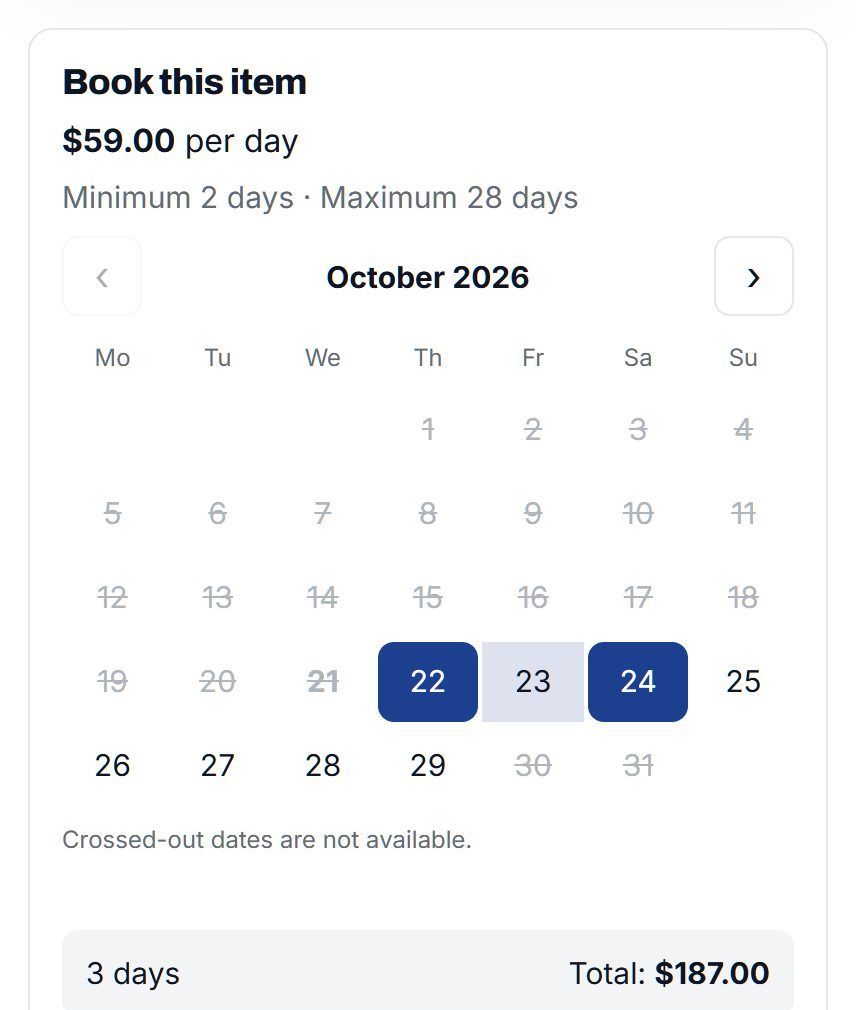
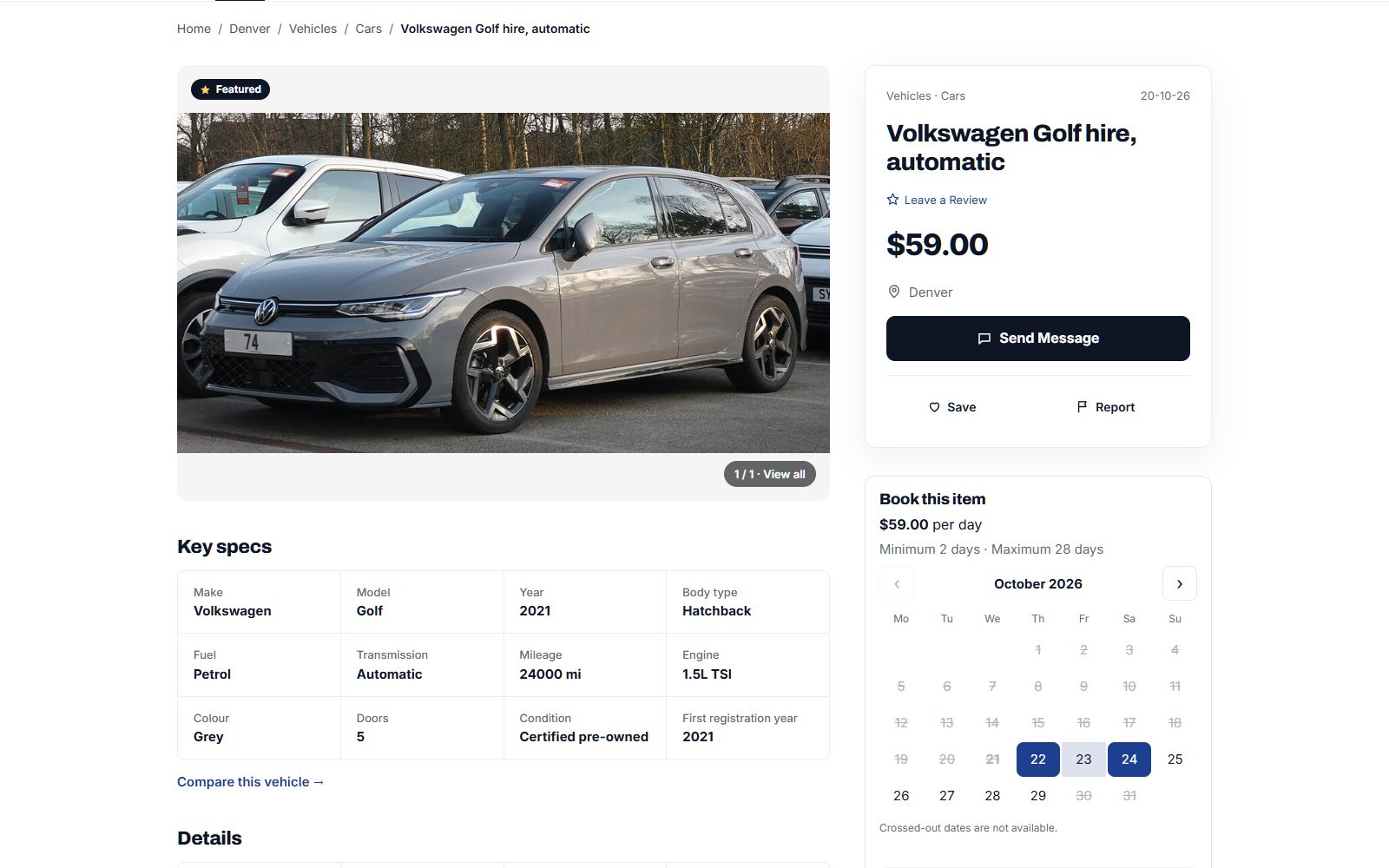
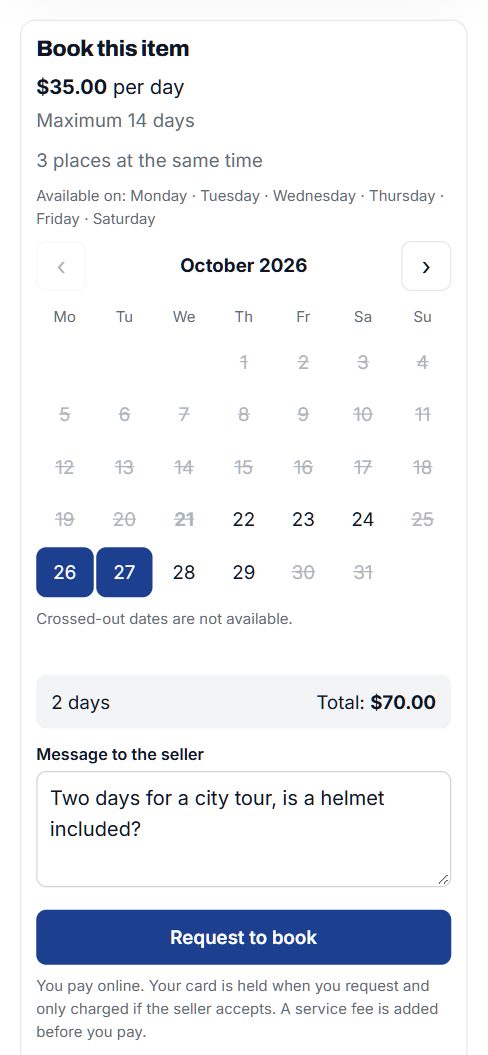
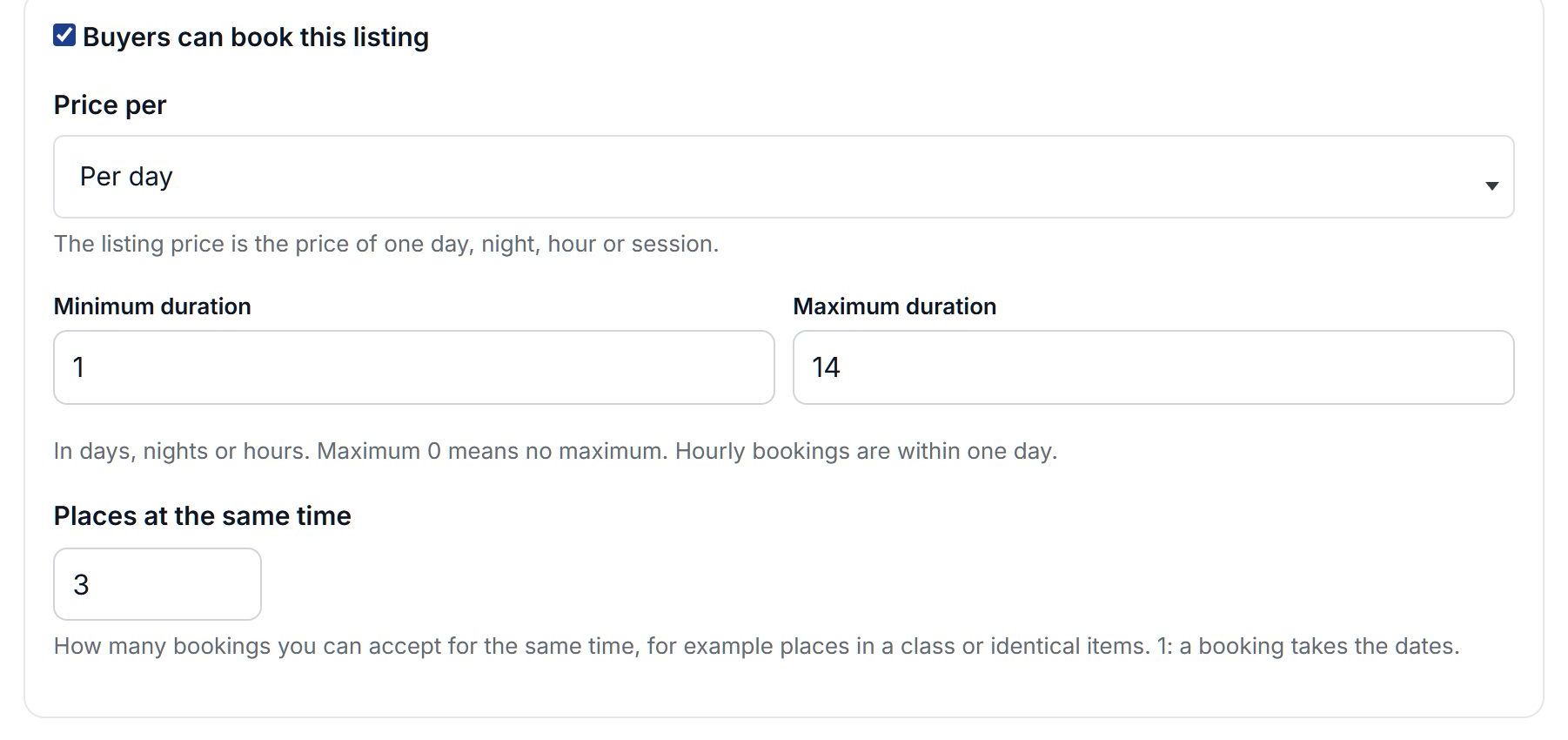
On the Marketplace plan, rentals come with a booking calendar, prices per day or week and a deposit, so planners see free dates before they ask. Many halls think in hours. Set a day price for the room, and let a venue agree a shorter slot or the exact start and end times with the planner in messages before the booking is confirmed. Add a required "music end time" field: it heads off most complaints before they start.
| Category | Example listings | Fields planners filter on |
|---|---|---|
| Community and church halls | Hall for 120 with kitchen and stage | Standing capacity, kitchen, alcohol allowed, parking |
| Private dining and party rooms | Brewery upstairs room for 40 | Seated capacity, outside catering allowed, minimum spend |
| Meeting and workshop rooms | Bright room for 15 with screen | Seated capacity, projector, Wi-Fi, step-free access |
| Studios | Dance studio with mirrors and sound | Floor area, sound system, natural light |
| Barns and farms | Restored barn with string lights | Capacity, restrooms on site, music end time |
| Gardens and outdoor spaces | Large garden with covered patio | Capacity, rain backup, tent allowed, power |
Charge a commission on bookings that venues would never have had.
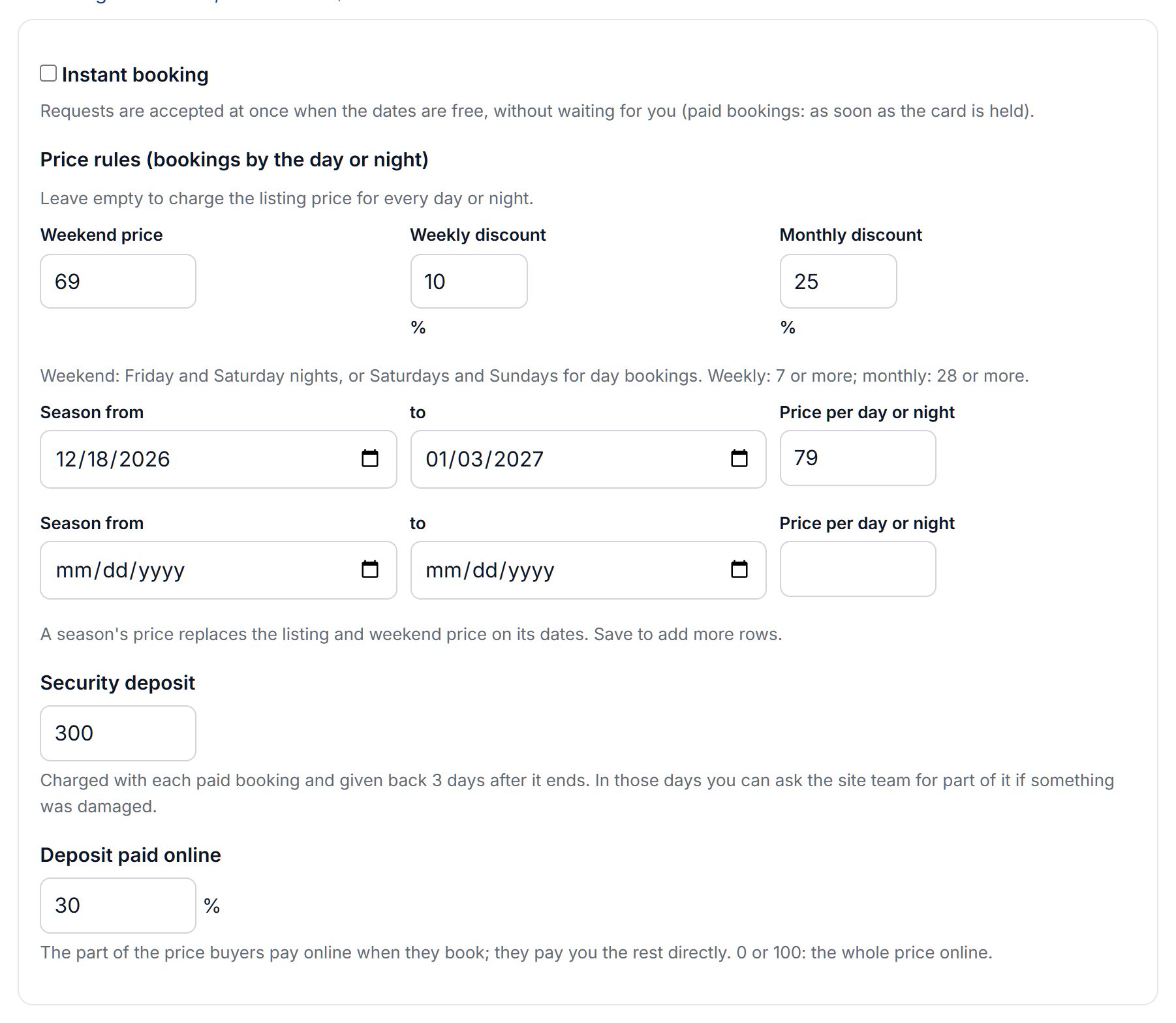
Planners pay on the site when they book, and you keep a commission on each booking. Halls run by volunteers often take bookings by phone and paper calendar; to them, a booking that arrives already paid is worth a share. Restaurants and breweries think differently: the room fee is small, and the money is in food and drink, so they will care more about being found than about the commission.
Deposits matter more here than in most rentals, because parties cause damage and mess. Let each venue set a deposit and state on the listing what it covers: damage, extra cleaning, overrunning the end time. The deposit is between the venue and the planner; your terms describe it, but you do not referee it.
Featured listings sell well before the busy months, when venues compete for the same Saturdays. Memberships suit organizations with several rooms, such as a church with a hall and two meeting rooms. Banner spaces fit caterers, party rental firms, bakeries, DJs and photographers, who all want the people booking rooms.
Keep listing free. A hall committee will not pay upfront to try something new, but it will accept a share of bookings it did not have.
| Model | Works when | Switch it on |
|---|---|---|
| Commission per booking | Planners pay on the site | From the first booking |
| Planner service fee | Small, cheap room bookings | Once bookings are regular |
| Featured listings | Venues compete for weekend dates | Six weeks before party season |
| Venue memberships | Organizations with several rooms | When a venue lists three or more rooms |
| Banner spaces | Caterers, DJs, party rentals, bakers | When you have steady planner traffic |
Sign the first venues one hall committee at a time.
Venues come first. A planner who searches for a party room and sees four results will go back to asking friends. Aim for thirty to fifty rooms in one city, across a few neighborhoods and sizes, before you promote the site to planners.
Where to find venues
- Community and church halls. Most already rent their space and list a phone number on a website or notice board. Call the office or the hall booking secretary.
- Clubs and associations: veterans' halls, lodges, sports clubhouses and union halls often rent rooms quietly.
- Restaurants and breweries with private rooms. Walk in on a slow afternoon and ask for the events manager.
- Studios and coworking spaces with empty evenings and weekends.
- Farms and barns that already host the odd family party.
- Venues already on Craigslist or Facebook groups, posting "hall available" every few weeks.
Visit each venue, photograph the empty room and the room set up for an event if they have pictures, and write the listing with them. Hall committees respond to a simple pitch: no fee to list, a calendar they can share, and bookings that arrive paid with a deposit. If the venue already has dates booked, block them on the calendar on the same visit, so no planner books a taken Saturday.
Protect venues from wild parties and planners from fake rooms.
Event bookings carry risks that a meeting room never does: too many guests, loud music late at night, alcohol, and damage. Planners face the opposite risk: a venue that does not exist, or one that cancels the week before.
Common problems and the answer
- Party house bookings: a quiet "birthday for 20" turns into a 200-person party advertised online. Ask the planner for the event type and guest count in the booking, and let venues approve requests from new accounts.
- Capacity and fire safety: a room's safe occupancy is set by local rules. Ask venues to list their permitted capacity, never more.
- Alcohol: whether a venue may allow alcohol, serve it, or needs a licensed bartender depends on where you are. Check the rules where you operate and make "alcohol allowed" the venue's own statement.
- Insurance: many halls ask planners for event liability insurance. Let venues say so on the listing.
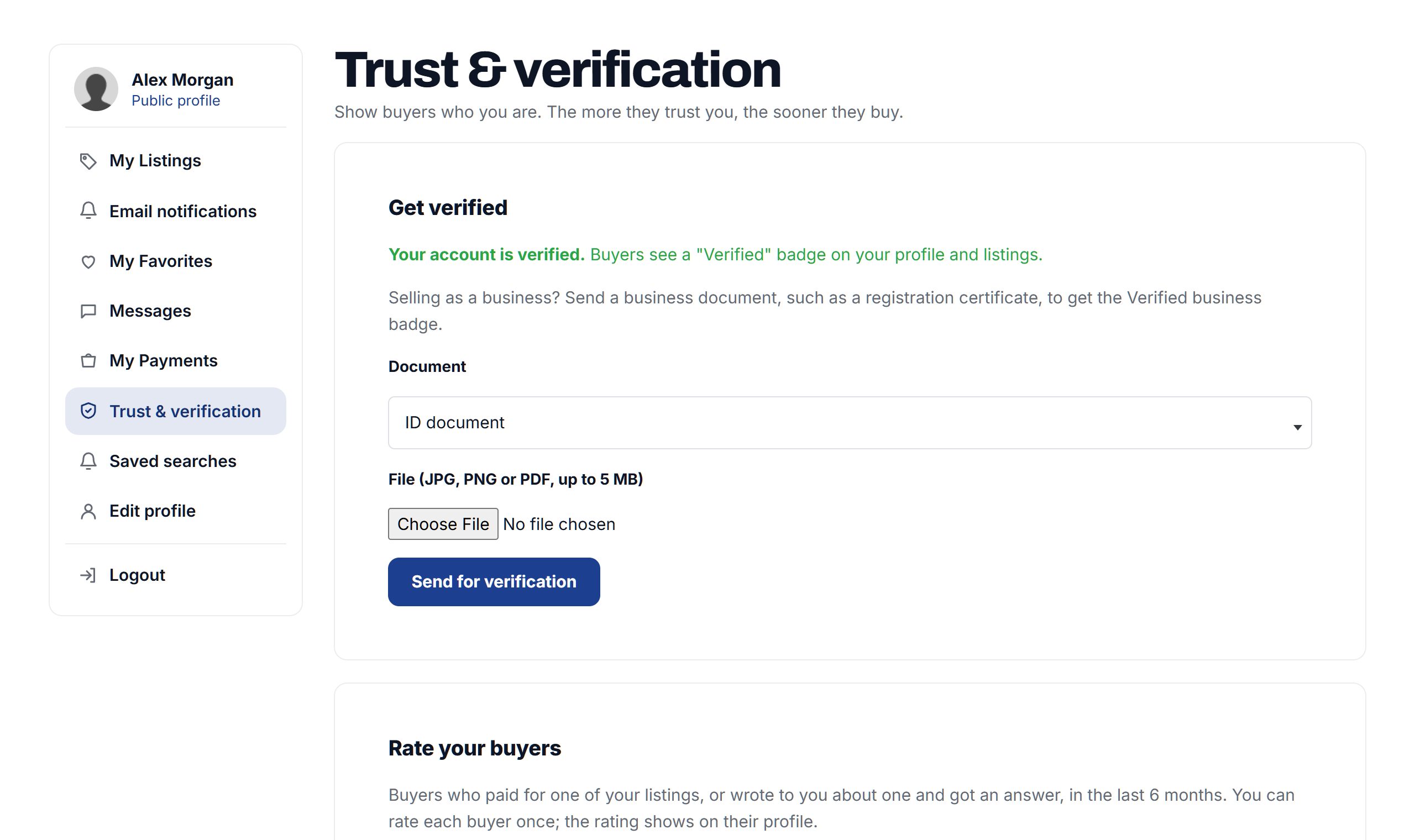
- Fake venues: scammers copy photos of real halls and ask for a deposit by transfer. Approve every listing, check the venue's address, and give verified badges to venues you have visited.
- Last-minute cancellations: ask each venue to state its cancellation terms on the listing.
Reviews after each event, and owner replies, show planners which venues are well run and show venues which planners leave the room as they found it.
Make guest count and end time part of every booking. Most venue disputes start with one or the other.
Rank for event searches by occasion, size and neighborhood.
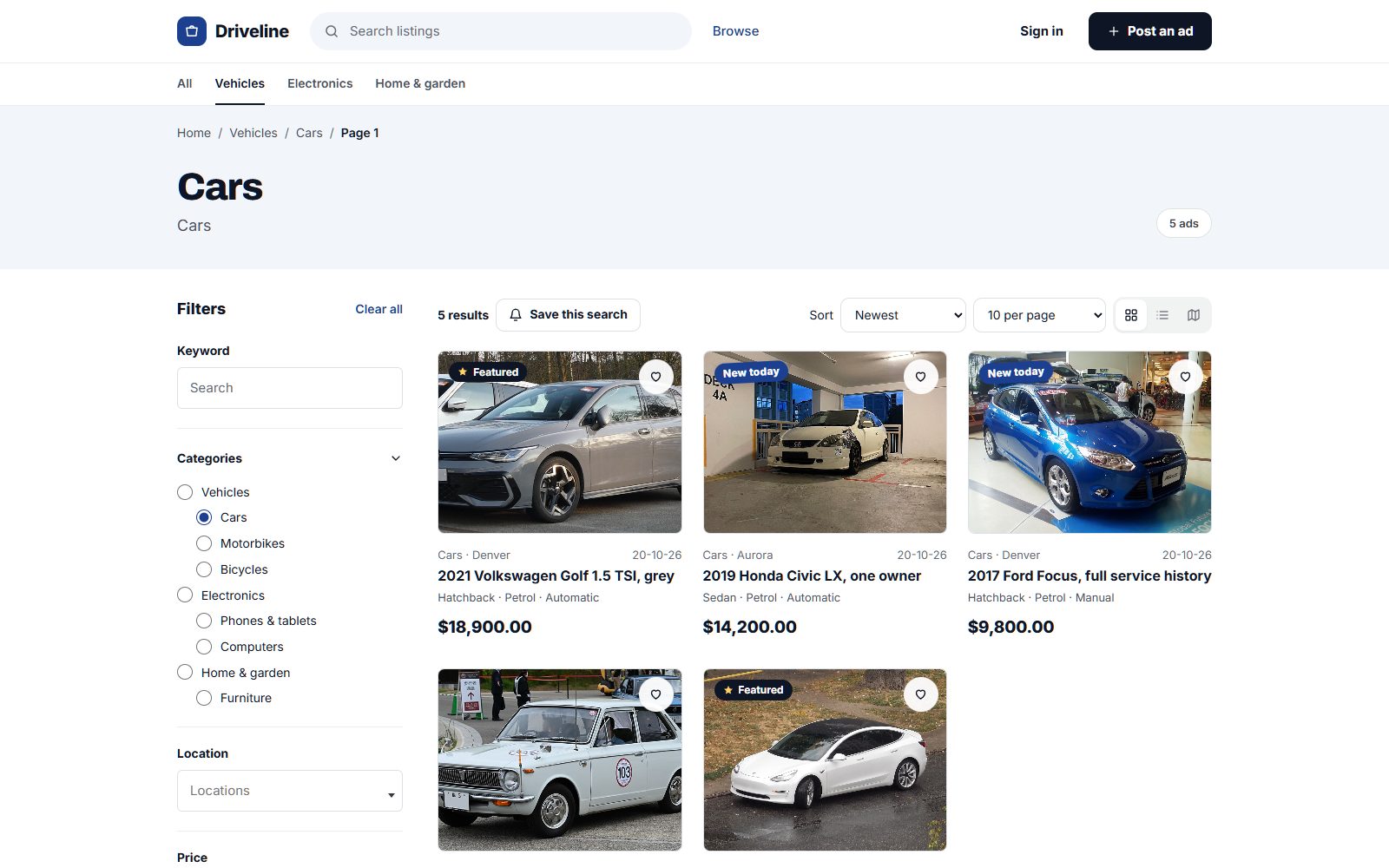
People searching for a venue type the occasion, the size and the place: "party venue for 50 people [city]", "community hall rental near me", "baby shower venue [neighborhood]", "kids birthday party room [city]", "meeting room for rent [city]", "cheap event space [city]" and "barn venue for small wedding". Each pattern maps to a page.
Pages to build
- Occasion pages: birthday party rooms, baby shower venues, workshop spaces, memorial reception rooms, each by city.
- Size pages: venues for 20, 50 and 100 guests in each city, filtered from your capacity fields.
- Neighborhood pages for the areas where most planners live.
- Planning guides: how much space per guest, a party timeline, what to ask a venue before booking, how to plan a kids' party in a hall.
- Price pages: what a hall or party room costs in your city, written from your own listings once there are enough.
Write venue titles with the occasion and capacity in them: "Bright hall for 80 with kitchen, near Main Street" ranks better than "St. Mark's Hall". Ask venues for photos of real events, because planners searching "party room" want to picture the party.
Launch two months before the holiday party season.
Venue demand follows the calendar. December brings office and family holiday parties, and planners start looking in October. Spring brings graduations, communions, showers and the start of small wedding season. Weekends with good weather fill gardens and barns first. Have your first venues listed six to eight weeks before the season you aim at.
Partners
- Caterers, cake makers and party rental companies, who get asked "do you know a room" every week.
- Event planners and DJs, who know which halls are good and which are not.
- Parent groups and school associations, the biggest source of kids' party bookings.
- Neighborhood associations and local news sites with event listings.
Checklist
- Choose one city and one main event type.
- Write house rules: guest count, end time, alcohol, deposit and cancellation.
- Sign and photograph thirty or more venues, and block their booked dates.
- Publish occasion, size and neighborhood pages.
- Give caterers and party rental firms a card to hand out.
- After every event, ask for a review on both sides and follow up on any complaint the next day.
A worked example: Valley Halls and Rooms in Fresno and Clovis, California.
Valley Halls and Rooms is an invented site, sketched here so you can see a venue marketplace working in a real city. It lists rooms for hire across Fresno and Clovis in California's Central Valley, where big family celebrations are a weekly event and the hotel ballrooms are booked, expensive or both.
Categories
- Halls
- Community and veterans' halls
- Church fellowship halls
- Party and private dining rooms
- Restaurant back rooms
- Brewery and taproom spaces
- Studios and meeting rooms
- Farms, gardens and barns
Who it serves
Planners are families organizing baptisms, quinceañeras, graduation parties and birthdays with seventy relatives on the guest list, along with youth sports teams holding end-of-season banquets and nonprofits running workshops. Venues are halls run by volunteer boards, churches that rent their fellowship hall to the neighborhood, a few restaurants with rooms that sit empty on Sunday afternoons, and farm families who already lend their barn to friends.
How it started
The founder ran a party rental business with tables, chairs and canopies. Every week a customer asked her the same question: do you know a hall that holds a hundred people and lets us bring our own food. She began keeping a notebook of halls, their phone numbers and their rules. When the notebook reached forty entries, she visited each one, photographed the rooms set up and empty, and turned the notebook into listings. Before launch she sat with each booking secretary for half an hour to block the dates already taken, so the calendar was honest from the first day.
How it makes money
Planners pay the day price and a damage deposit when they book, and the site keeps a commission on each booking. Halls set the deposit and state what it covers, usually extra cleaning, damage and overrunning the music end time. Before graduation season in May and the holiday party rush, venues with several rooms pay for featured spots. Caterers, cake makers, DJs and her own party rental company buy the banner spaces, since every planner on the site needs at least two of them. Within a year the busiest halls were asking to list their smaller meeting rooms as well, which brought weekday bookings from clubs and classes.
Blocking existing bookings before launch did more for trust than any badge: no planner ever booked a Saturday the hall had already promised to someone else.
| Listing | Day price | Key details |
|---|---|---|
| Veterans hall with full kitchen, Clovis | $450 | 150 standing, 110 seated, alcohol with a licensed bartender, music ends 11 p.m. |
| Taproom mezzanine for 40 | $200 | Seated 40, food from the taproom only, step-free entrance |
| Church fellowship hall, east Fresno | $300 | 120 seated, no alcohol, kitchen use, cleaning included |
| Dance studio, Sunday afternoons | $150 | Up to 30 children, mirrors and sound system, no food on the studio floor |
| Farm garden with covered patio | $600 | 80 guests, barn as rain backup, planner brings portable restrooms |
The site and all five listings are invented for this example.
The first 90 days: from a notebook of halls to booked Saturdays.
A venue site lives or dies on whether its calendars are true. The first quarter is mostly about sitting with booking secretaries and events managers, entering the dates they have already promised, and agreeing house rules you can show on each listing. Planners arrive quickly once a city page shows real rooms with real free dates, so the plan holds back promotion until that is the case.
Work backward from the season you chose. For the holiday party rush, start week 1 in August so venues are live by early October. For graduations and spring celebrations, start in January. Keep a log of every booking request you see, with guest count and occasion, because it shows which room sizes you are short of. Most new venue sites find they have too many large halls and too few rooms for 30 to 50 guests, which is what most family parties need. Check every calendar again in week 10: hall committees forget to block dates they take by phone. By week 12 you should know your average guest count, your busiest day of the week and the occasions planners name most, which tells you which pages to write next.
| Weeks | Focus | Done when |
|---|---|---|
| 1-2 | Pick the city and main event type, write house rules on guest count, end time, alcohol, deposits and cancellations | Booking terms reviewed by a lawyer and a required music end time field in place |
| 3-4 | Call hall booking secretaries, churches, clubs and restaurant events managers | 30 venues have agreed to list and booked a visit |
| 5-6 | Visit, photograph each room empty and set up, and enter dates already taken | 30 venues live with true calendars and permitted capacity stated |
| 7-8 | Publish occasion, size and neighborhood pages and a planning guide | Pages for birthdays, showers and meetings exist for each part of the city |
| 9 | Hand cards to caterers, DJs, bakers and party rental firms | At least ten partners mention the site to their customers |
| 10-11 | Watch the first bookings closely, confirm guest counts and end times by message | The first 10 events have taken place with no double bookings |
| 12 | Gather reviews from both sides and offer featured spots before the next season | Each finished event has two reviews and the featured spots for the next peak are offered |
Ways to build a venue hire marketplace, and the one feature that decides it.
Whatever you build on, the calendar decides whether the site works. Venues already take bookings by phone, email and a paper diary, and a planner who pays for a date the hall has already given away will never come back. You also need a deposit with each booking, number fields for seated and standing capacity, a way for a venue to read the guest count and occasion before accepting, and payment that reaches each venue through the site.
Developers and a custom build
Worth it if hourly slots, package pricing with catering or two-way sync with a venue's own booking software are central to your idea. Those are real projects, and they keep costing after launch.
A script or plugin you host yourself
Many booking plugins come from the hotel world and think in nights and rooms. Joined to a listings plugin they can serve halls, but test a Saturday booking with a deposit, a blocked date and a payout to the venue before choosing.
A hosted builder
A hosted builder such as Yclas gives rentals a booking calendar, day or week prices and a deposit on the Marketplace plan, with on-site messages for agreeing start and end times. It suits a founder whose weeks belong in hall kitchens and church offices. Whichever route you take, ask how a venue blocks a date it took by phone in under a minute, because that is the task volunteers will actually do.
| Route | Fits when | Watch out for |
|---|---|---|
| Custom build with developers | Hourly slots or catering packages are your whole idea | Long build and a payment system you must keep secure |
| Self-hosted script or WordPress plugin | You can maintain plugins and test them together | Hotel-style calendars and payouts to many venues |
| Hosted builder | Day bookings with deposits cover most of your venues | Hourly venues need start and end times agreed in messages |
| Directory of venues with no booking | You want to test demand before handling payments | No commission, and planners still have to phone every hall |
What a venue hire marketplace costs to run.
The software is the smallest part of the bill. Most of the cost is your time in the first months: finding the first listings, answering questions and checking what gets posted.
Expect to spend on a legal review of your booking terms, especially cancellations, deposits and guest limits, and on photos for venues whose pictures are poor. Event liability insurance, alcohol permits and occupancy limits are the venue's or the planner's responsibility, but your listing fields should ask about them.
| Cost | Typical range | On Yclas |
|---|---|---|
| Domain | $10 to $20 a year | Your own, with SSL included |
| Software and hosting | $0 to $100+ a month, plus plugins and updates | Marketplace $149 a month for checkout and commission |
| Design | $0 to $100 for a theme, or a designer | 109 looks included |
| Payment fees | About 3% per payment | Your Stripe or PayPal fees; Yclas takes nothing |
| Your time | 5 to 10 hours a week at the start | Finding listings, moderation, support |
Mistakes that sink a venue hire marketplace.
- Launching before calendars are true. A single double-booked Saturday becomes a story the whole parent group hears. Enter every date the venue has already promised before the listing goes live, and remind venues each month to block dates they take by phone. Where one volunteer keeps the paper diary, make that person your contact, not the board chair.
- Chasing wedding venues. They are expensive, already well listed and booked a year ahead. Halls, back rooms and studios for parties of 30 to 100 are where planners struggle and where your bookings will come from. Weddings can come later, as a category, once the everyday rooms are well covered.
- Printing the capacity a venue hopes for. If a listing says 150 and the fire code says 99, the venue risks a shutdown on the night and you share the blame. Ask for the permitted number and show seated and standing separately.
- Leaving the end time vague. "Evening events welcome" invites a party that runs to 2 a.m. and a neighbor who calls the police. Make music end time and building exit time required fields, and repeat them in the booking confirmation.
- Using the venue's old photos. A dim photo of stacked chairs sells nothing. Photograph each room empty and, if the venue has them, set for an event with tables and lights, because planners need to picture their own party.
- Treating restaurants like halls. A restaurant cares about food and drink, not the room fee, and may need a minimum spend or ban outside catering. Give those rules their own fields so planners do not book a room they cannot use. Agree with each restaurant whether the day price covers the room only or counts toward the minimum spend.
- Skipping cancellation terms. A planner who cancels two days before a Saturday costs the venue a whole day of income. Ask each venue to state its cancellation terms on the listing, and keep your own role to showing them.
- Letting first-time planners book without questions. Party house bookings start with an empty profile and a vague request. Ask for the occasion and guest count on every booking and let venues approve new accounts.
- Launching in a dead month. January and late summer are quiet for parties in many places. Time the launch six to eight weeks before a real peak, such as holiday parties or graduation season.
- Ignoring the people who set up the room. Planners ask whether tables come set, who stacks the chairs and when they can drop off the cake. A setup and cleanup field, plus load-in time, answers those before the message thread grows to twenty replies.
Venue terms to learn before your first hall committee meeting.
Venue managers, caterers and planners use these words daily, and your listing fields should speak the same language.
| Term | What it means |
|---|---|
| Seated capacity | How many guests fit at tables and chairs, always lower than standing capacity. |
| Standing capacity | How many guests fit for a reception or mingling event with few seats. |
| Occupancy limit | The maximum number of people the local authorities allow in a room at once. |
| Minimum spend | An amount a restaurant or bar requires the group to spend on food and drink for a private room. |
| Exclusive use | The planner has the whole venue, with no other group in the building. |
| Outside catering | Food brought in by the planner or a caterer of their choice rather than the venue's kitchen. |
| Corkage | A fee some venues charge per bottle when guests bring their own wine or alcohol. |
| Load-in and load-out | The time to bring in and remove decorations, food and equipment before and after the event. |
| Banquet rounds | A layout of round tables, usually seating eight to ten guests each. |
| Theater style | Rows of chairs facing a stage or screen, used for talks and ceremonies. |
| Tentative hold | A date set aside for a planner for a short time before they confirm and pay. |
| Damage deposit | Money paid with a booking and returned after the event if the room is left as agreed. |
| Event liability insurance | A short policy covering a single event, which some venues ask planners to carry. |
| Music end time | The time amplified music must stop, often set by the venue or by local noise rules. |
The same steps for a venue hire marketplace on Yclas.
- Describe your marketplaceThe setup wizard writes the categories, an About page and example listings from one sentence.
- Add fieldsThe details buyers filter on, as dropdowns, numbers or checkboxes.
- Bring sellersInvite them, import their stock from a spreadsheet, or post for them.
- Set the rulesChoose moderation, verified sellers, reviews and reports.
- Take paymentsOn Marketplace, buyers pay on the site and you keep a commission, with Stripe.
What does it take to launch a venue hire marketplace?
Thirty or more venues in one city, good photos, and clear booking terms. The main costs are your time visiting venues, a lawyer's review of your terms, and some local promotion.
Can venues still price by the hour?
The calendar works in days and weeks. Set a day price, and let the venue agree shorter slots or exact times with the planner in messages before the booking.
Do I need a license to run a venue marketplace?
Usually not to run the website, but venues may need permits for events, alcohol and occupancy. Check the rules where you operate and keep those points as the venue's own statements.
How do I stop venues from being used for out-of-control parties?
Ask for the event type, guest count and end time on every booking, let venues approve new planners, and remove accounts that break the rules.
How do I get halls run by volunteers to join?
Call the booking secretary, offer to write the listing and enter their booked dates for them, and explain that bookings arrive paid with a deposit.
How do I make money if room fees are small?
Take a commission on each booking, sell featured spots before the busy season, and sell banner space to caterers and party rental firms who want your planners.
Why would planners use my site instead of a big event platform?
Big platforms list the expensive venues. Your site lists the halls, studios and back rooms that ordinary parties actually use, filtered by size and house rules.
Should I list venues that already have their own booking website?
Yes, if they agree to keep your calendar up to date. Many halls with a website still take bookings by phone, so ask who manages dates and agree how often they check both.
Can a planner ask questions before paying?
Yes. Planners message the venue on the site to confirm the layout, kitchen use and exact times, then book the date with the deposit once both sides agree. Keeping that conversation on the site also keeps a record if the details are questioned later.
What should a venue listing show first?
The room set up for an event, the seated and standing capacity, the day price and the music end time. Those four things decide whether a planner reads further. Parking and step-free access come next, because older relatives are on most family guest lists.
How do I handle venues that cancel on planners?
Ask venues to state their cancellation terms and remove venues that cancel without a serious reason. Reviews make the pattern visible, and planners notice it quickly.
Can homeowners list their gardens or barns?
They can, but private events at home may be limited by zoning, noise rules or a homeowners' association, and parking can upset neighbors. Ask hosts to check the rules where they live and to state parking and restroom arrangements on the listing.
Related pages.
The parts of Yclas this leans on.
You have the plan. Now book the first room.
Describe your site in a sentence and the setup wizard writes the categories, example listings and a look. Free for 15 days, no credit card.
Start my marketplace