How to build a party rental marketplace for the tents, tables and bouncy castles every event needs.
This guide covers a marketplace where party rental companies and private owners rent out tents, tables, chairs, inflatables and decor: choosing an area and an event type, the details hosts filter on, daily and weekend prices with deposits, commission, the first suppliers, safety and damage rules for inflatables and tents, the searches to rank for, and a launch timed to graduation and wedding season.
Free for 15 days · No credit card · Plans from $19 a month
Give event hosts one place to find everything for the party.
Throwing a backyard party, a first birthday or a small wedding means renting from three or four places: a tent from one company, tables and chairs from another, a bounce house from a third, and maybe a popcorn machine from a neighbor. Hosts phone around, compare quotes by email and often find that the date is already taken. A marketplace that shows availability and prices for all of it in one area saves them days.
The two sides
- Suppliers: small party rental companies, inflatable and bounce house businesses, tent rental firms, wedding decor rental businesses, caterers with spare equipment, and private owners who bought tables, chairs or a canopy for one event.
- Hosts: parents planning birthdays, couples planning backyard and barn weddings, schools and churches running fairs, neighborhood associations, and small businesses hosting open days.
Pick the angle
- A delivery area. Most party rentals are delivered and set up, so one metro area or county keeps delivery practical.
- An event type. Kids' parties, weddings and showers, or community and school events each need different items.
- Supplier type. Professional companies with delivery crews, or private owners renting pickup-only items.
Today hosts search company websites one by one, ask in local parent groups, and book whoever answers first. Small companies depend on word of mouth and a busy phone line on Saturday mornings. A shared calendar on one site helps both.
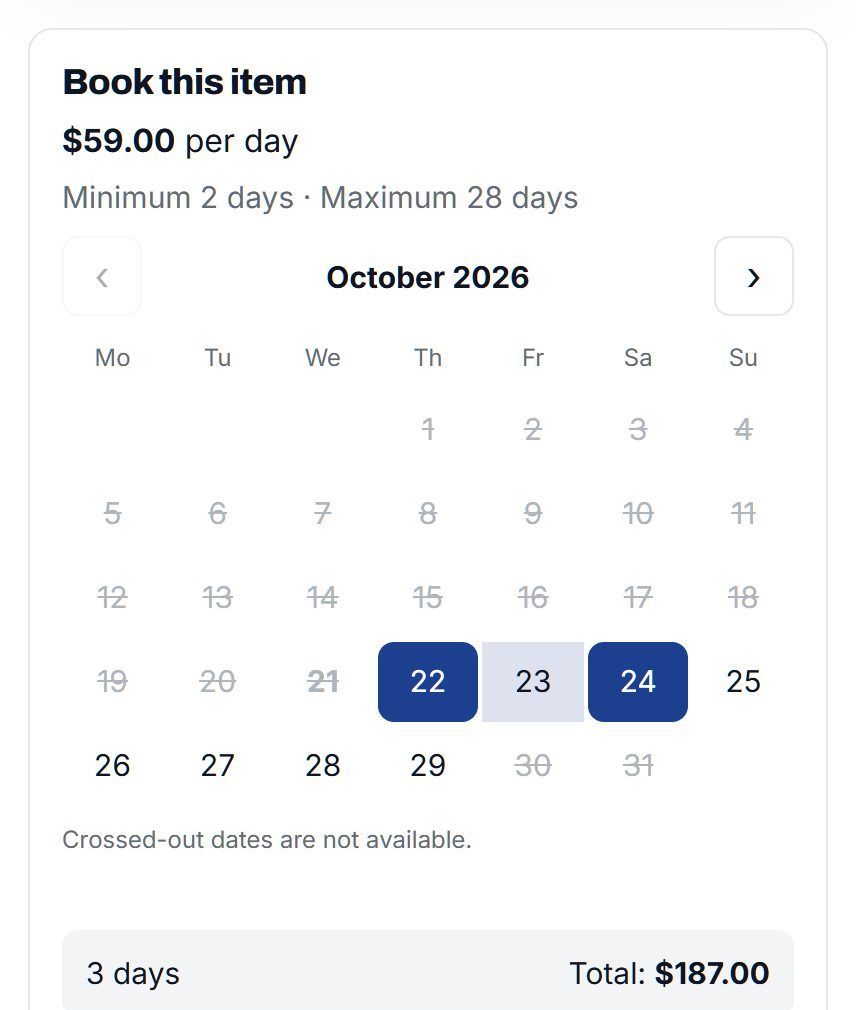
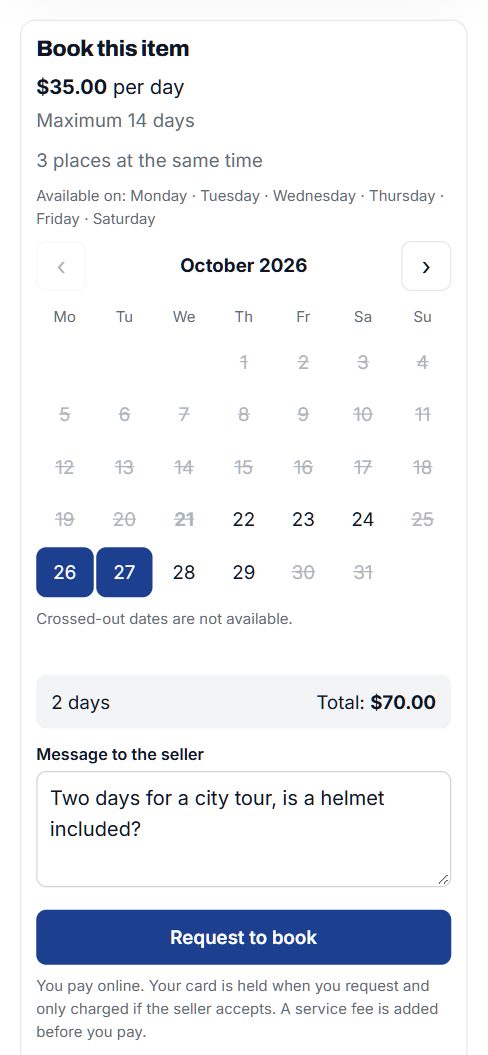
Hosts book a date first and items second. Show what is free on their date.
Describe each item by size, how many it serves and what setup it needs.
Party hosts think in guest counts and space: how many people, how big the yard, indoors or out. Keep categories shallow: tents and canopies, tables and chairs, inflatables and bounce houses, games and concessions, linens and decor, lighting and sound, dance floors and staging.
Fields should answer the questions every host asks on the phone. For tents: size, guest capacity seated and standing, sidewalls included, and whether it is staked or weighted, since that decides if it can go on a patio. For inflatables: dimensions, the space needed around it, age range, wet or dry use, and whether an attendant is included. For tables and chairs: quantity available, shape and seating per table.
Delivery and setup need their own fields: delivery included or priced separately, setup and takedown included, delivery radius, and the power the item needs. A bounce house needs an outlet within reach, and a host who learns that on the day is not happy.
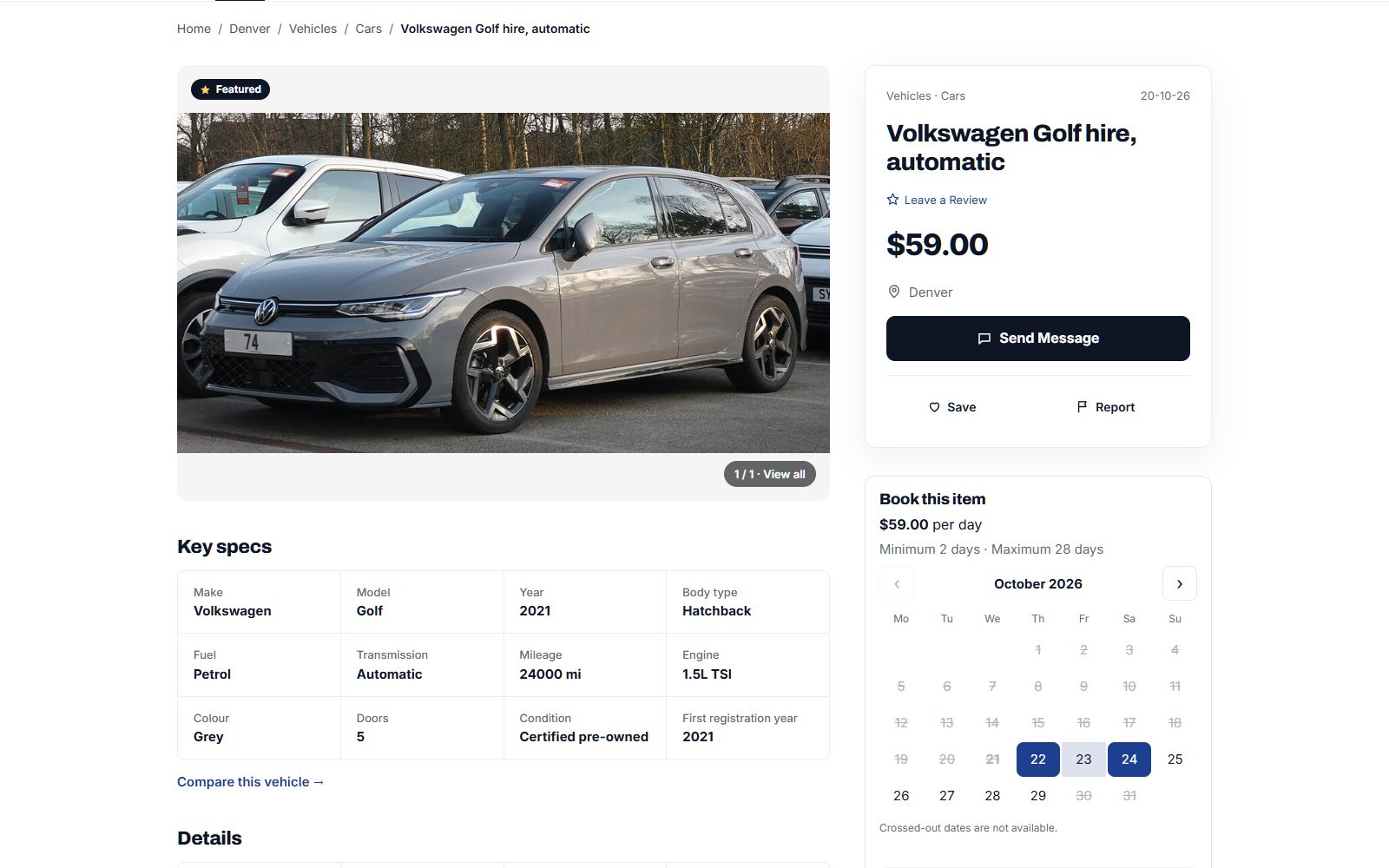
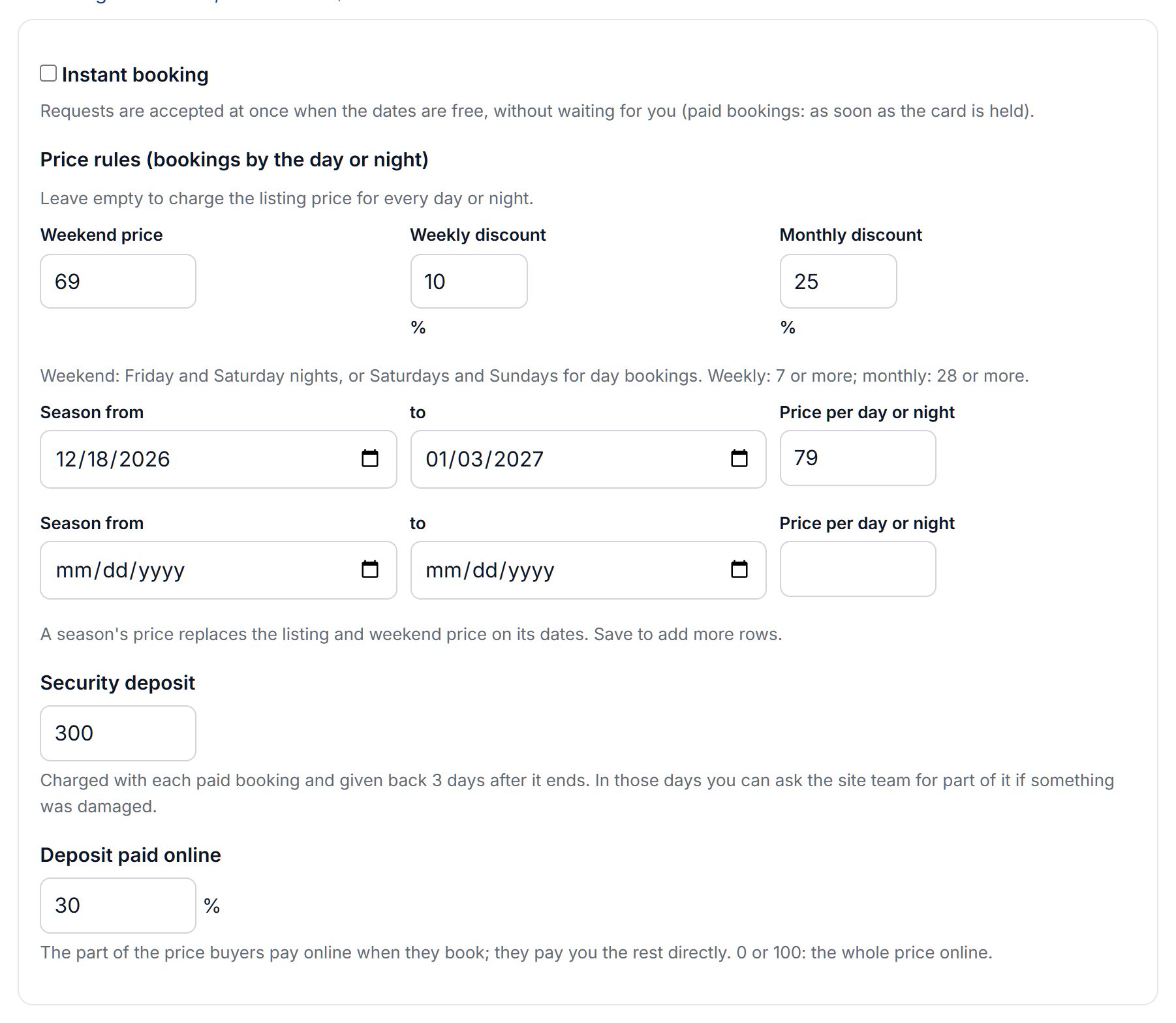
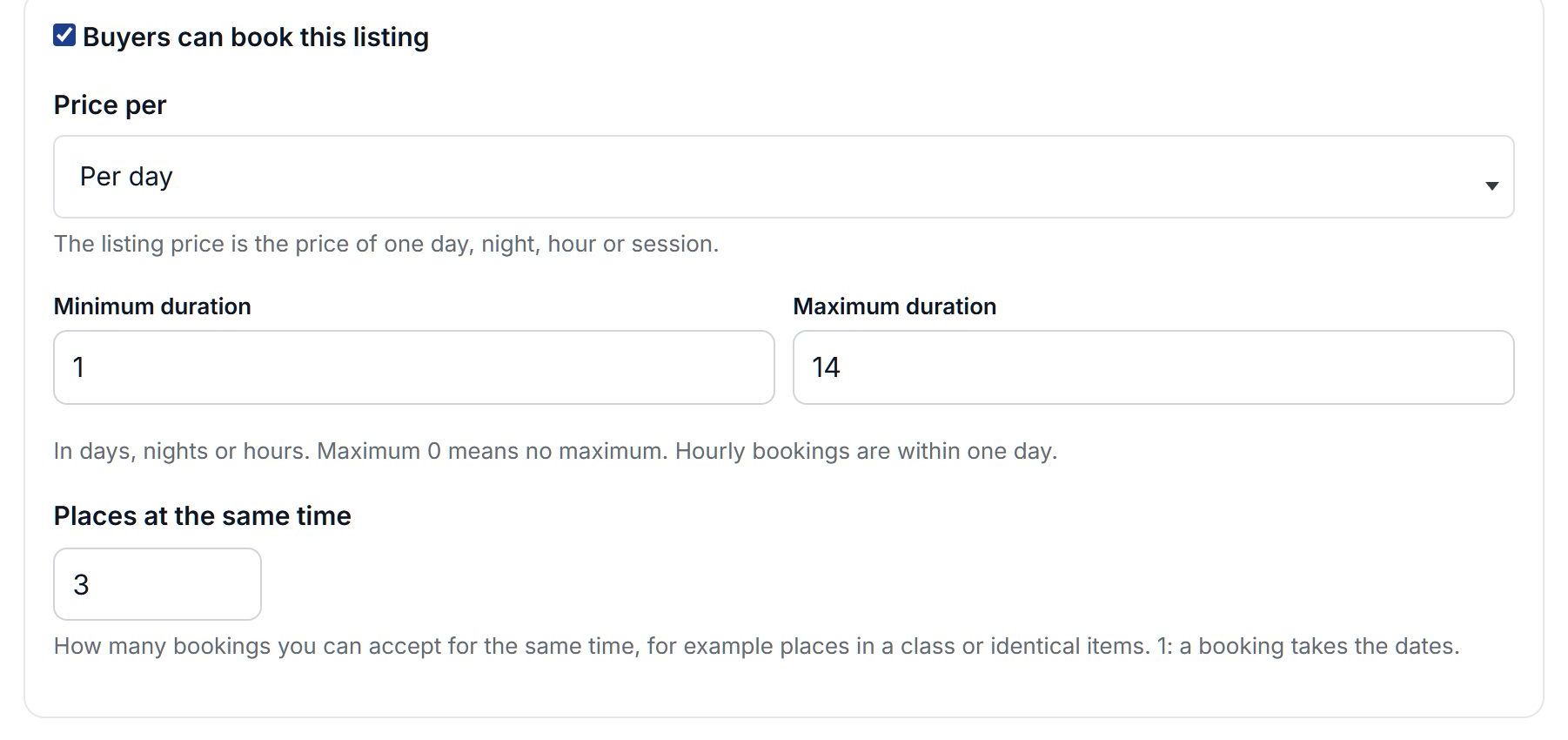
Every item also needs the rental basics: price per day, price for a weekend, deposit and the latest time it can be collected. The booking calendar shows which dates are already taken.
| Category | Example listings | Fields hosts filter on |
|---|---|---|
| Tents and canopies | 20x40 frame tent with sidewalls; 10x10 pop-up canopy | Size, guest capacity, staked or weighted, sidewalls, setup included |
| Tables and chairs | 60 in round tables; white folding chairs, set of 50 | Quantity, shape, seats per table, delivery |
| Inflatables | Castle bounce house; water slide; obstacle course | Footprint, space needed, wet or dry, age range, attendant included |
| Games and concessions | Popcorn machine; cotton candy machine; giant lawn games | Power needed, supplies included, indoor or outdoor |
| Linens and decor | Ivory tablecloths; backdrop stand; centerpieces | Color, quantity, size, cleaning fee |
| Lighting and sound | String lights for a tent; PA speaker with mic | Coverage, power needed, setup included |
Make guest capacity a number field on tents and seating so hosts can filter by the size of their party.
Earn a commission on bookings and sell visibility before the busy weekends.
Hosts book and pay on the site, suppliers are paid through Stripe, and you keep a commission per booking. Party orders often combine several items from several suppliers, such as a tent from one company and a bounce house from another, so the site's value is that hosts find and book all of it in one place, on one date.
Professional companies will compare your commission to what they pay for ads and lead sites. Keep it below that, and show them bookings on dates they would otherwise have missed. Private owners renting a few folding tables are usually happy with any income.
Deposits cover stained linens, torn tent walls and broken chairs. Ask suppliers to state the deposit and the cleaning rules on each listing, for example that linens come back shaken out but not washed, and what a late return costs.
Featured listings sell well before graduation, wedding and Fourth of July weekends when hosts compare options in a hurry. Supplier memberships suit companies listing a full catalog. Banner spaces fit caterers, cake makers, photographers, DJs and venues, who all want to reach hosts planning an event.
| Model | Works when | Switch it on |
|---|---|---|
| Commission per booking | Hosts book and pay on the site | From the first booking |
| Host service fee | Many small orders like a single canopy | After the first season |
| Featured listings | Hosts compare suppliers for busy weekends | A month before peak weekends |
| Supplier memberships | Companies list their whole inventory | When several companies are active |
| Banner spaces | Caterers, DJs, bakers and venues want event hosts | When traffic is steady in season |
Sign up the local party rental companies first, then fill gaps with private owners.
A host planning a party needs tents, tables and fun in one search, so start with suppliers who own a lot of inventory.
- Small party rental companies. Many run on a phone and a basic website. They can import their inventory from a spreadsheet as a CSV and get bookings on a calendar instead of by phone.
- Bounce house businesses. Often one or two people with a trailer of inflatables. They want weekend bookings and are easy to find through local parent groups and fair organizers.
- Tent rental firms. They serve weddings and fairs and often have weekday capacity.
- Wedding decor rentals. Small businesses and former brides renting arches, backdrops and centerpieces.
- Churches, schools and clubs. Many own folding tables, chairs and canopies used a few times a year.
- Private owners. Ask in neighborhood groups who bought tables, chairs or a canopy for a family event.
Visit the companies in their quiet season, which in many areas is winter. Photograph items set up, not folded, so hosts can picture them in a yard, and fill the calendars with the dates already booked by phone.
One party rental company with a full warehouse can stock your whole site in a week.
Write safety rules for inflatables and tents before anything goes up in a yard.
Party rentals put structures in backyards and children on inflatables, so safety comes before everything else.
- Inflatable safety. Bounce houses must be anchored and taken down in high wind; accidents with inflatables lifted by wind have been reported. Ask suppliers to state their anchoring method, wind limit and supervision rules on every listing. In some places inflatables are regulated like amusement rides and operators need inspections or permits, so check the rules where you operate.
- Tents. Large tents may need a permit, fire-rated fabric or an inspection, depending on the size and the place. Suppliers should know local rules; hosts should ask before booking.
- Insurance. Professional suppliers usually carry liability insurance, and many venues and schools ask to see it. Private owners should ask their own insurer whether renting out party items is covered. The site does not insure anyone; tell both sides it is their responsibility.
- Damage and cleaning. Stains, red wine on linens, tent stakes through a sprinkler line and broken chairs. Photos at delivery and pickup, and clear cleaning rules, settle most disputes.
- No-shows and late cancellations. A supplier who turns down other bookings for a Saturday loses that weekend. Ask suppliers to state their cancellation terms on the listing.
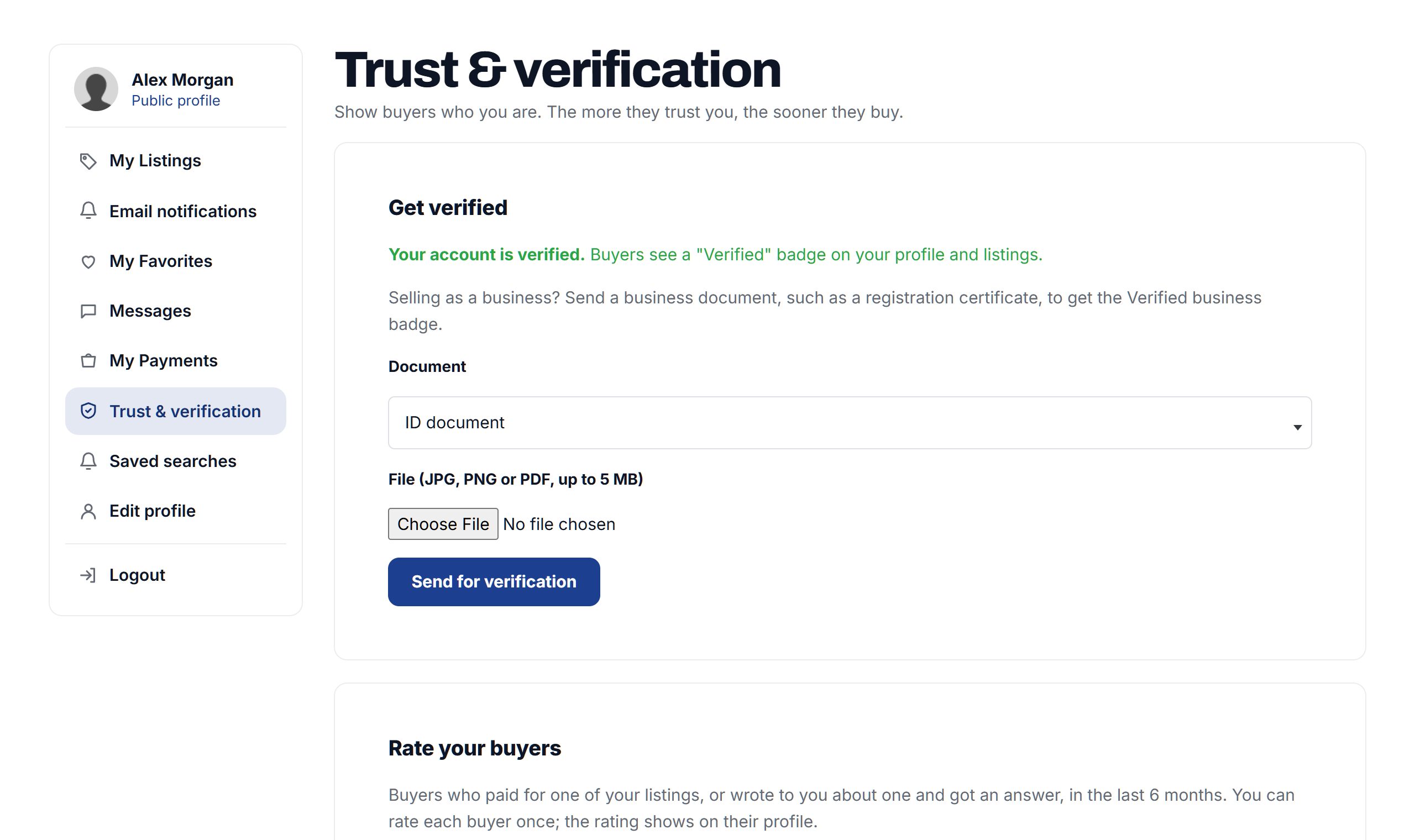
- Fake suppliers. Low prices with payment requested by bank transfer before peak weekends. Tell hosts to pay only through the site, and approve every new supplier's listings by hand.
Verified seller badges, reviews and supplier profiles help hosts choose companies they can trust with their children's party.
Rank for the party searches hosts make a few weeks before the date.
Party rental searches are local and often urgent: "bounce house rental near me", "tent rental for 100 guests", "table and chair rental Houston", "water slide rental this weekend", "backyard wedding rentals" and "popcorn machine rental price".
Pages to build
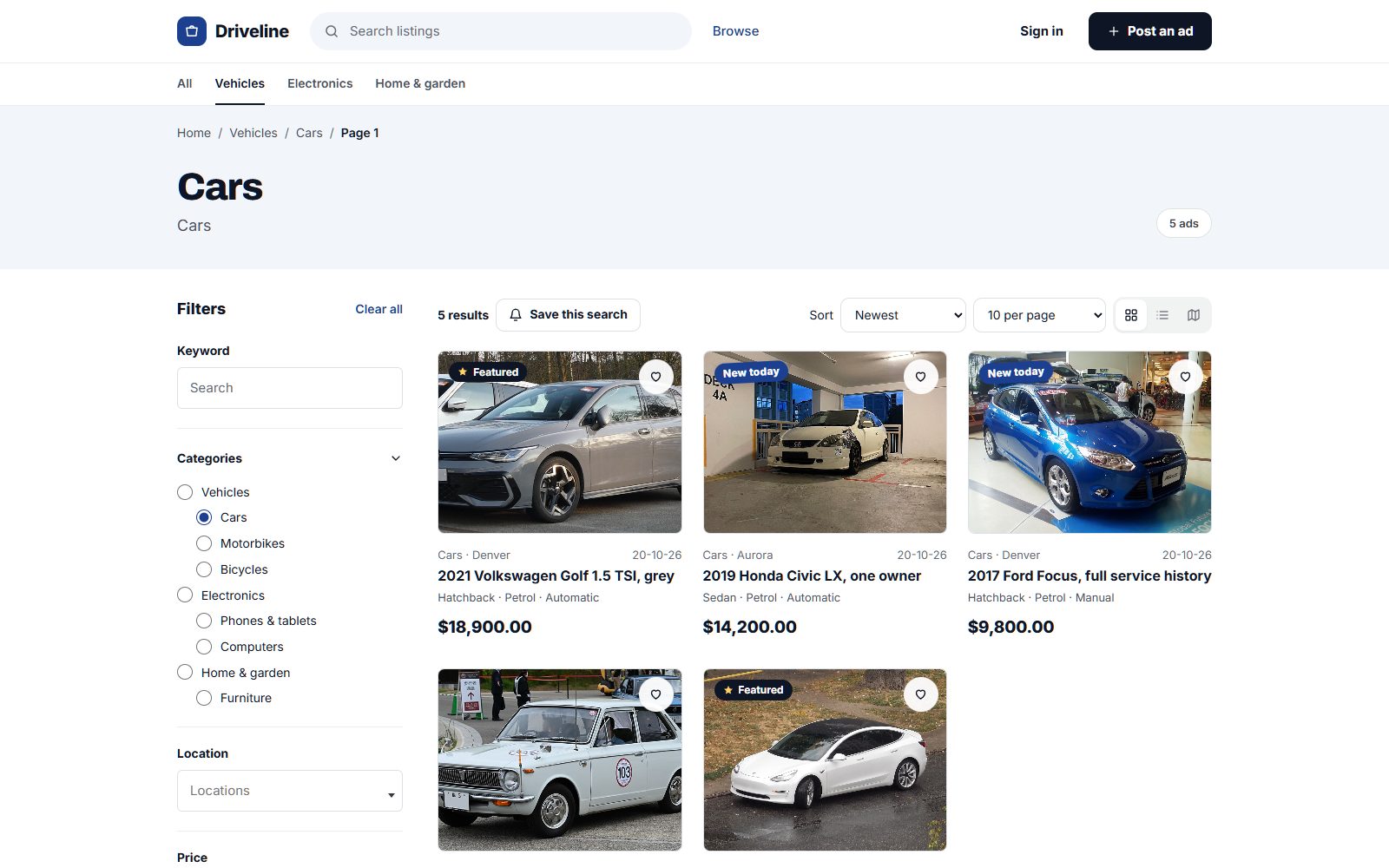
- Item and town pages: "Bounce house rental in Mesa", "Tent rental in Charlotte". Every item, category and town on the site has its own page, so these grow as suppliers list.
- Event checklists: what to rent for a backyard wedding of 80, a first birthday, a graduation party, a block party.
- Size guides: what tent size fits 50, 100 or 150 guests seated, how many tables for a given guest count, how much yard space a bounce house needs.
- Price guides: typical weekend prices for tents, inflatables and seating in your area, based on your listings.
Use the language hosts use, such as bounce house, moon bounce and bouncy castle, and the event names they search. Publish checklists for graduation and wedding season a couple of months ahead.
Launch in late winter, before graduation, wedding and summer party season.
Party rentals are seasonal. In many areas, spring brings first communions and showers, early summer brings graduations and weddings, and summer holidays bring block parties and backyard events. Fall has school fairs and harvest festivals. Launch in late winter so suppliers' calendars are on the site when hosts start planning.
First steps
- One metro area or county where suppliers already deliver.
- Three to five party rental or bounce house companies with full inventory.
- A partner venue, wedding planner or school fair organizer who sends hosts to you.
- A stand at a local bridal show or a spring family fair.
Launch checklist
- Price per day, weekend price, deposit, delivery and setup terms on every listing.
- Guest capacity on tents and seating, footprint on inflatables.
- Anchoring, wind and supervision rules on every inflatable.
- Cancellation terms stated by each supplier.
- Event checklists and size guides published before the season.
After the first summer, look at which weekends sold out and which items hosts could not find, and recruit suppliers for those.
A worked example: Triangle Tent and Table Exchange in central North Carolina.
Triangle Tent and Table Exchange is a fictional site, made up for this guide. It covers Raleigh, Durham, Chapel Hill and the growing suburbs between them, an area with three large universities, many young families, backyard weddings in converted barns, and a long outdoor season that runs from March into November. Graduation weekends in May and fall football tailgates bring short, intense spikes in demand.
Who it serves
Hosts are parents planning birthdays and graduation parties, couples planning small weddings on family land, churches and PTAs running fall festivals, and offices hosting summer cookouts. Suppliers are four party rental companies with delivery crews, three bounce house operators who each run a trailer and a dozen inflatables, a wedding decor business renting arches and farm tables, and a handful of churches and private owners renting folding tables, chairs and canopies for pickup.
Categories
- Tents
- Frame and pole tents
- Pop-up canopies
- Seating
- Tables
- Chairs
- Inflatables
- Bounce houses
- Water slides
- Games and concessions
- Decor and linens
- Lighting and sound
How it started
The founder planned her daughter's graduation party and spent two evenings calling companies, only to find the tent she wanted was gone and the bounce house operator did not answer on weekdays. In January she visited the same companies in their quiet season, helped two of them load their inventory from spreadsheets, and photographed tents set up in a customer's yard, since a folded tent on a warehouse shelf tells a host nothing. She wrote anchoring and wind rules for every inflatable, asked each supplier for their cancellation terms, and published size guides for tents by guest count before the first spring bookings came in.
How it makes money
Hosts pay on the site with a deposit, and the exchange keeps a commission on every booking. Two of the larger companies pay for supplier memberships to list their whole catalog. Featured spots on water slides and tents sell out in April, ahead of graduation weekends. A caterer, a barbecue truck and a wedding DJ share the banner spaces on the event checklist pages, where hosts are already planning the rest of the day.
The site's best pages turned out to be the tent size guides, not the listings.
| Listing | Price | Key details |
|---|---|---|
| 20x30 frame tent with sidewalls | $425 per day, $200 deposit | Seats 60, staked or weighted, delivery and setup included within 25 miles |
| Castle bounce house | $175 per day, $100 deposit | 15x15 footprint plus clearance, ages 3-10, dry use only, outlet within 50 ft |
| Dual-lane water slide | $325 per day, $150 deposit | Needs a garden hose and level grass, wind limit stated, adult supervision required |
| White folding chairs, set of 50 | $90 per day, $75 deposit | Delivered stacked, pickup option, returned wiped down |
| Popcorn machine with cart | $60 per day, $50 deposit | 8 oz kettle, supplies for 50 servings available, needs a standard outlet |
The first 90 days of a party rental marketplace.
Hosts book a date first, so a party rental site is only useful once suppliers' calendars are on it and accurate. The first ninety days are about getting a few full inventories online, with blocked dates for bookings already taken by phone, before hosts start searching for spring and summer events.
Work backward from your area's first big weekend. In many places that is graduation season in May, so start in late January or February, when party companies have time to talk and are planning their own year. In warmer regions where events run all year, start before the spring wedding rush.
Expect the early weeks to be spent in warehouses and yards, not online. Suppliers want to see how bookings, deposits and cancellations work before they trust you with a Saturday. Track how many weekends in the coming season each category could fill, and which items hosts searched for and could not find. A water slide that is booked solid by April tells you to recruit a second operator. A tent category with open dates in June tells you to spend more on event checklists and less on recruiting.
| Weeks | Focus | Done when |
|---|---|---|
| 1-2 | Set categories and fields: guest capacity, footprint, staked or weighted, power, delivery radius | A test tent listing filters by guest count and delivery area |
| 3-4 | Visit party rental companies and bounce house operators in their quiet season | Three suppliers signed, inventories imported and calendars showing booked dates |
| 5-6 | Write safety, cleaning and cancellation rules with suppliers | Every inflatable listing shows anchoring, wind limit and supervision rules |
| 7-8 | Publish event checklists and tent size guides | Guides for graduation, birthday and backyard wedding parties are live |
| 9-10 | Recruit churches, schools and private owners for tables, chairs and canopies | Seating for at least 300 guests is listed across the area |
| 11-12 | Take a stand at a bridal show or spring fair, partner with a venue or planner | First 20 bookings made and a partner sending hosts each week |
How to build a party rental marketplace: three routes compared.
A party rental site has to handle dates above everything else. Each tent, slide or set of chairs needs a calendar that shows which weekends are taken, a price per day or weekend, a deposit, and delivery terms. Hosts filter by guest count, footprint and delivery area, so number and dropdown fields must work as search filters. And because suppliers are a mix of crews with trucks and private owners with a few tables, the site needs to handle many sellers with very different catalogs.
Hiring developers pays off only if you want something specific, such as quotes that calculate delivery by distance, or packages that bundle a tent, tables and lights from one supplier with a combined price. Those can be built, but every rule on dates and delivery must be tested before peak weekends, when a bug means a family without a tent.
A rental script or WordPress plugin on your own server is a common choice for single party rental companies. For a marketplace you need many suppliers on top of that, each with their own calendar and payouts, which often means more plugins. Check how well they work together and who maintains them.
A hosted builder such as Yclas suits a founder who wants to spend the winter visiting suppliers instead of fixing code. It comes with rental calendars, prices per day or week, deposits, Stripe payments with a commission, spreadsheet imports for supplier inventories and reviews. Whatever you choose, test a full booking, from deposit to return, on a fictional Saturday before going live.
| Route | Fits when | Watch out for |
|---|---|---|
| Custom build | You want distance-based delivery pricing or bundled packages | Long build time and date bugs found on peak weekends |
| Rental plugin on your own server | You have run a single-company rental site before | Adding many suppliers, separate calendars and payouts on top |
| Hosted builder | You want to be live before graduation and wedding season | Check every delivery and deposit need against what is included |
| Directory of party companies only | You want leads, not bookings, at first | No calendars or deposits, so hosts still phone around |
What a party rental marketplace costs to run.
The software is the smallest part of the bill. Most of the cost is your time in the first months: finding the first listings, answering questions and checking what gets posted.
Party rentals add some niche costs: a stand at a bridal show or family fair, photos of items set up rather than folded, and advice from an insurance broker or local officials on what suppliers of inflatables and tents need. Delivery trucks and crews belong to the suppliers, not to you.
| Cost | Typical range | On Yclas |
|---|---|---|
| Domain | $10 to $20 a year | Your own, with SSL included |
| Software and hosting | $0 to $100+ a month, plus plugins and updates | Marketplace $149 a month for checkout and commission |
| Design | $0 to $100 for a theme, or a designer | 109 looks included |
| Payment fees | About 3% per payment | Your Stripe or PayPal fees; Yclas takes nothing |
| Your time | 5 to 10 hours a week at the start | Finding listings, moderation, support |
Mistakes that sink party rental marketplaces.
- Listing inflatables without anchoring and wind rules. A bounce house that lifts in a gust is the incident that ends a site. Make anchoring method, wind limit and supervision rules required on every inflatable, and remove listings that leave them blank. Hosts with small children read those rules before they read the price.
- Calendars that do not match the phone book. Party companies take most bookings by phone. If they forget to block those dates on your site, a host books a tent that is already promised to someone else. Ask suppliers to update calendars weekly in season, and drop those who double book twice.
- Ignoring the ground. A staked tent cannot go on a patio, a water slide needs level grass, and a bounce house needs clearance from fences and trees. Add fields for surface, footprint and space needed, so hosts stop booking items that will not fit their yard. A short guide with yard measurements for common inflatables saves suppliers a wasted trip.
- Vague delivery windows. Hosts plan a whole day around setup. A listing that says delivery on the day, without a window, leads to calls at 7 a.m. and arguments at noon. Ask suppliers to state delivery and pickup windows on each listing.
- Launching in June. By early summer, hosts have already booked graduation tents and summer slides. A site that opens then catches only leftovers. Sign suppliers in winter and be visible from early spring, when the first graduation invitations go out.
- Relying on private owners only. A neighbor's ten folding chairs help, but hosts planning for 80 guests need a company that delivers. Build the site on a few companies with crews and fill gaps with private owners.
- Unclear cleaning rules. Linens stained with wine, frosting on chairs and grass stains on tent walls are the everyday disputes. Ask suppliers to state what hosts must do before return, such as shaking out linens or wiping chairs, and what a cleaning fee covers.
- Letting suppliers move bookings off the site. Once a host pays a supplier directly, the deposit, the cancellation terms and the review are gone. Remind suppliers that repeat business they find through you should still be booked on the site.
- Selling chairs one at a time. Hosts think in guest counts, not single chairs, and fifty separate listings bury everything else. List seating in sets with the set size in the title, such as 50 chairs or 8 round tables, and let hosts book two sets if they need more.
Party rental terms every founder should know.
Suppliers and hosts use these words when they quote, book and set up.
| Term | What it means |
|---|---|
| Frame tent | A tent held up by a metal frame with no center poles, which can be weighted on hard surfaces. |
| Pole tent | A tent held up by center poles and tensioned with stakes, which needs soft ground. |
| Pop-up canopy | A small folding shade tent, often 10x10, that one or two people can set up. |
| Sidewalls | Removable fabric walls that close the sides of a tent against wind and rain. |
| Ballast | Weights such as water barrels or concrete blocks used to hold a tent where stakes cannot go. |
| Footprint | The ground area an item covers, plus the clearance it needs around it. |
| Blower | The electric fan that keeps an inflatable inflated during use. |
| Wet and dry units | Inflatables made for use with water, such as slides, versus ones that must stay dry. |
| Attendant | A supplier's staff member who stays on site to supervise an inflatable or machine. |
| Setup and strike | Putting an item up at the event, and taking it down and loading it afterward. |
| Delivery window | The span of hours in which a supplier promises to drop off or collect an item. |
| Chiavari chair | A light, decorative chair often rented for weddings and formal events. |
| Certificate of insurance | A document a supplier shows to prove liability cover, often required by venues and schools. |
The same steps for a party rental marketplace on Yclas.
- Describe your marketplaceThe setup wizard writes the categories, an About page and example listings from one sentence.
- Add fieldsThe details buyers filter on, as dropdowns, numbers or checkboxes.
- Bring sellersInvite them, import their stock from a spreadsheet, or post for them.
- Set the rulesChoose moderation, verified sellers, reviews and reports.
- Take paymentsOn Marketplace, buyers pay on the site and you keep a commission, with Stripe.
What is the cheapest way to start a party rental marketplace?
Start without inventory of your own: recruit local party rental and bounce house companies, and add private owners for tables and canopies. Your main spend is your time and a stand at a local event.
Are bounce houses regulated?
In some places inflatables are treated like amusement rides, with inspections, permits or operator rules; elsewhere there is little regulation. Check the rules where you operate and ask suppliers what they follow.
Do suppliers need insurance?
Professional suppliers usually carry liability cover, and venues often ask for proof. Private owners should ask their own insurer. The site does not provide insurance, so make it clear to both sides.
How do I get party companies to list with me?
Show them weekday and off-peak bookings they would otherwise miss, and save them phone time. Visit them in their quiet season and help them load their inventory.
How should cancellations work?
Let each supplier set terms on the listing, such as a full refund up to two weeks before and partial after. Suppliers who turn away other bookings for a date need some protection.
Can I make money in winter?
Less from outdoor items, but indoor events continue: holiday parties, corporate events and kids' birthdays need tables, linens, games and sound. Banner spaces for venues and caterers also run all year.
How do I compete with a big local party rental company?
List them. Large companies gain extra bookings from your site, and hosts get one place to compare. Your edge is choice across many suppliers in one search.
Can a host book items from several suppliers for one party?
Yes, each supplier's items are booked on their own listings, so a host may make two or three bookings for one event, such as a tent from one company and a bounce house from another. Event checklist pages that link to each category help hosts put the day together.
What should happen when rain is forecast?
Ask each supplier to state a weather policy: some move the date, some refund inflatables if storms are forecast, and tents usually go up regardless. Hosts should know the rule before they book, not on the morning of the party.
Who sets up the items, the supplier or the host?
It depends on the item. Large tents and inflatables are usually set up by the supplier's crew, while canopies, tables and chairs can be pickup only. Make setup included a field so hosts can filter for it.
Do venues and parks allow rented tents and bounce houses?
Many venues, parks and homeowners associations have their own rules on stakes, inflatables and power. Tell hosts to check with the venue first, and ask suppliers to mention common local restrictions on their listings.
How should suppliers charge for delivery?
Many charge by distance from their warehouse, with a free radius and a fee beyond it. State the radius and the fee on each listing so hosts see the full cost before booking, and use location pages so hosts find suppliers who already deliver to them.
Related pages.
The parts of Yclas this leans on.
You have the plan. Now get your area's party season booked.
Describe your site in a sentence and the setup wizard writes the categories, example listings and a look. Free for 15 days, no credit card.
Start my marketplace