How to build an RV rental marketplace where owners rent out the motorhome between their own trips.
This guide covers a marketplace where private owners and small fleets rent out motorhomes, campervans and travel trailers: choosing a region and a kind of traveler, the details renters filter on, nightly and weekly prices with deposits, commission, the first owners, the insurance, driving and damage questions that decide everything here, the searches to rank for, and a launch before road trip season.
Free for 15 days · No credit card · Plans from $19 a month
Rent out the motorhomes that sit in driveways most of the year.
An RV is one of the most expensive things a family owns, and most of them are used for a few trips a year. The rest of the time they sit in a driveway or a storage lot, losing value and costing storage fees. Meanwhile families, couples and international visitors want a road trip without buying a rig, and the large rental companies are expensive and short of stock in summer.
The two sides
- Owners: families with a motorhome or travel trailer, retirees who travel part of the year, campervan converters, and small RV rental businesses with a few units.
- Renters: families planning a summer road trip, couples visiting national parks, festival goers, international travelers flying in, people trying RV life before buying, and guests needing a trailer parked at a campground.
Pick the angle
- A region near a draw. Rentals start where travelers fly in or live: near a major airport, a cluster of national parks, or a coast road.
- A rig type. Drivable motorhomes, campervans for couples, or towable trailers delivered and set up at a campsite.
- A traveler type. Families, overseas visitors, festival crowds, or people testing RV life before they buy.
Today peer-to-peer RV rental runs mostly through a few large national sites, along with small rental companies and owners advertising in RV groups. A regional site with a strong local fleet, honest local advice and owners who meet renters in person can compete on service.
Every RV that rents three weeks a summer pays a large share of its own storage and upkeep. Lead with that.
List each RV by class, sleeping places, size and the rules that come with it.
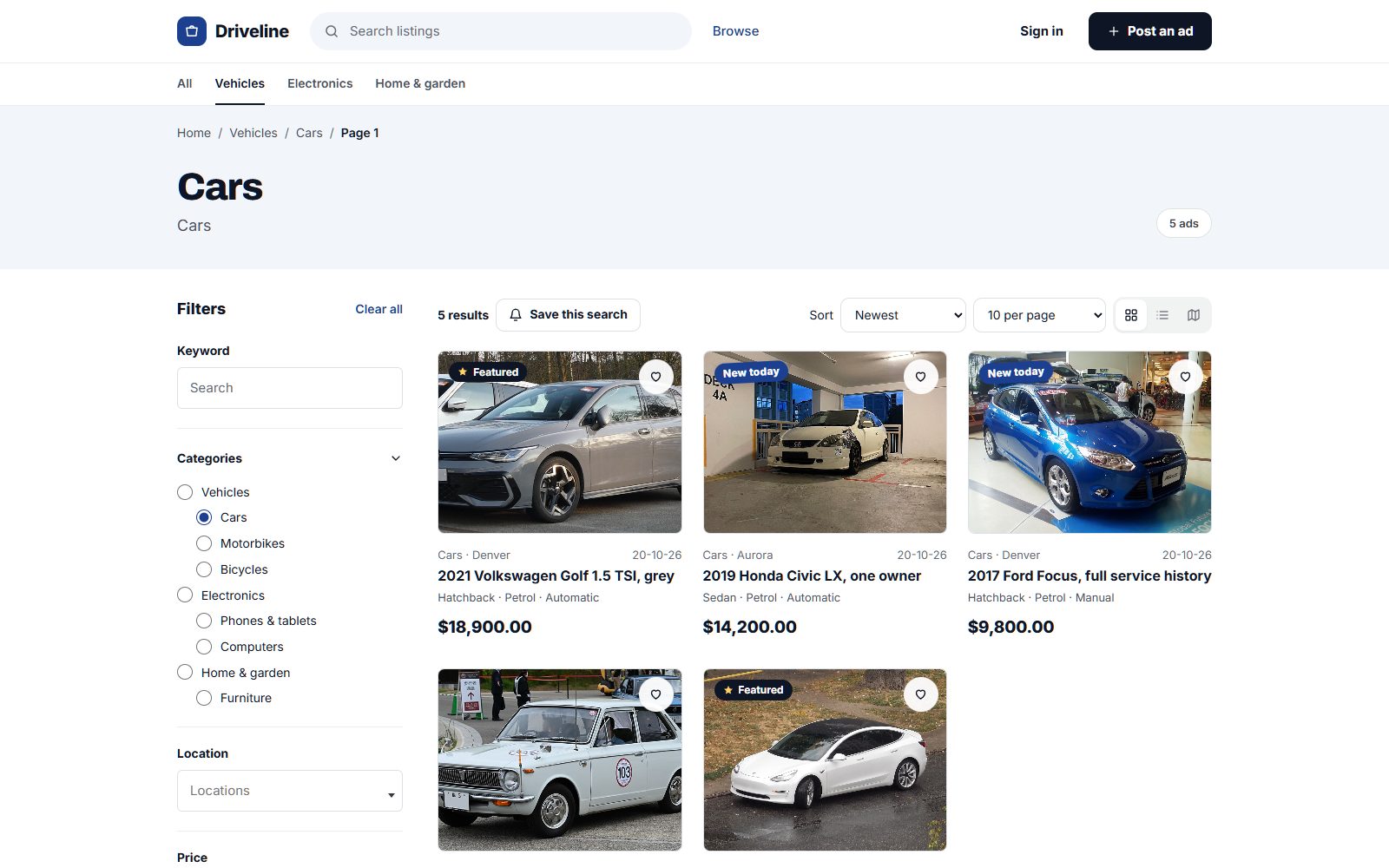
RV renters ask about sleeping places, size and what they are allowed to do. Keep categories by RV class: Class A motorhomes, Class B campervans, Class C motorhomes, travel trailers, fifth wheels, pop-up and teardrop campers, and truck campers.
Core fields: sleeps (a number), length in feet, year, fuel type, and for towables the dry weight and hitch type, since renters must know whether their vehicle can tow it. Add bathroom type (full, wet bath or none), generator, solar, slide-outs, and whether the unit is pet friendly or smoking allowed.
For towables, a delivery option matters: many owners deliver and set up the trailer at a campground, and renters filter for it. For drivables, list the mileage policy: miles included per night and the price per extra mile, plus generator hours included.
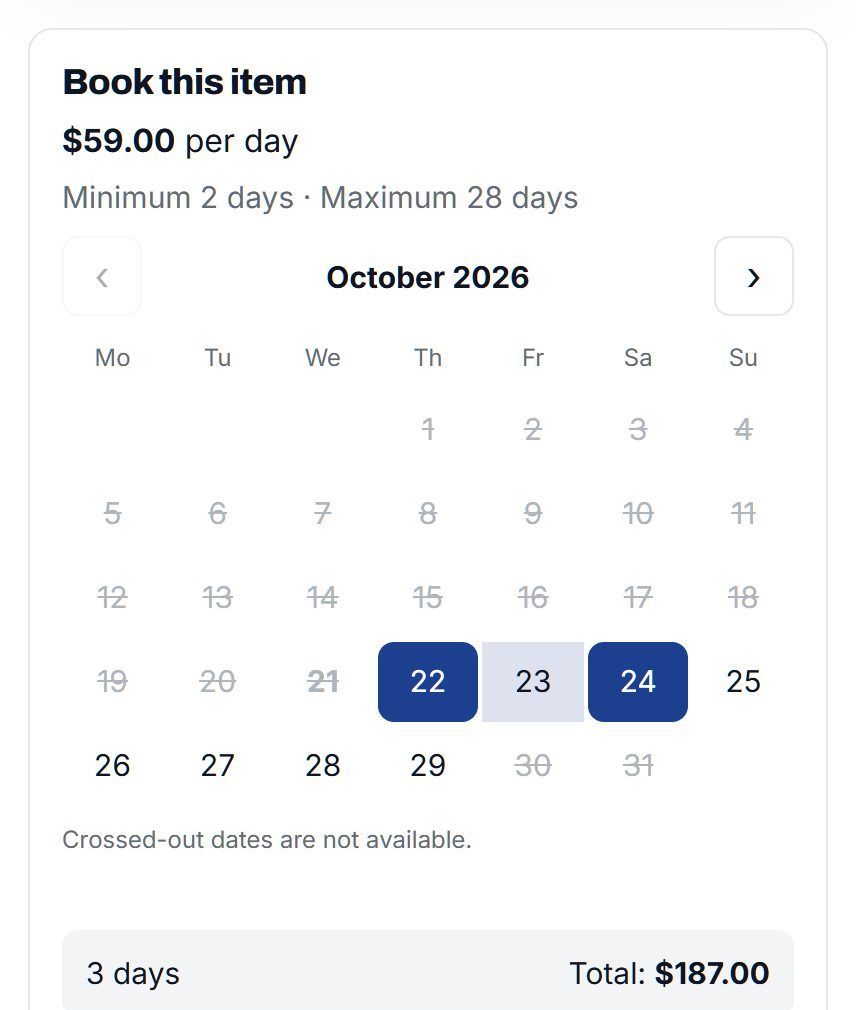
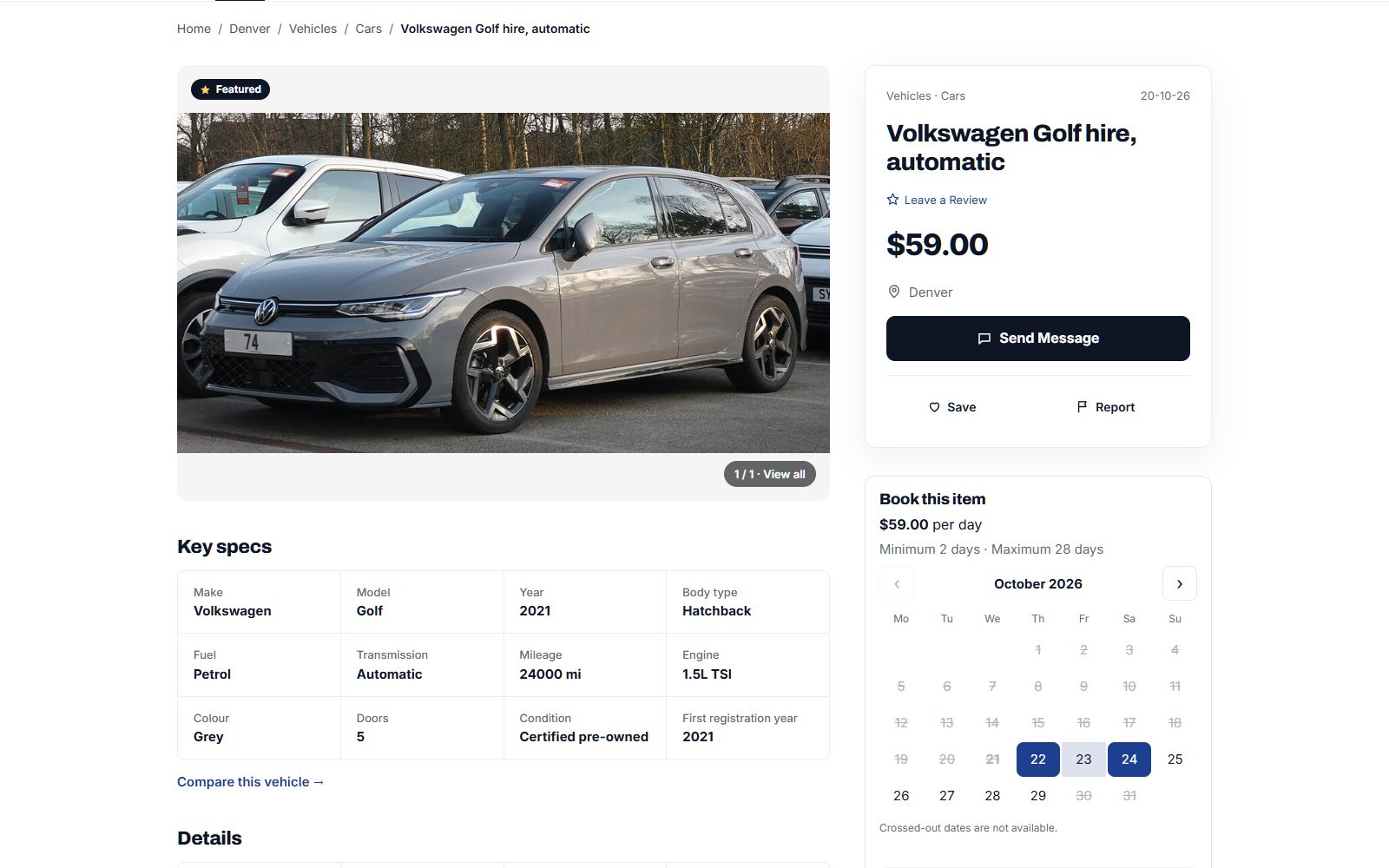
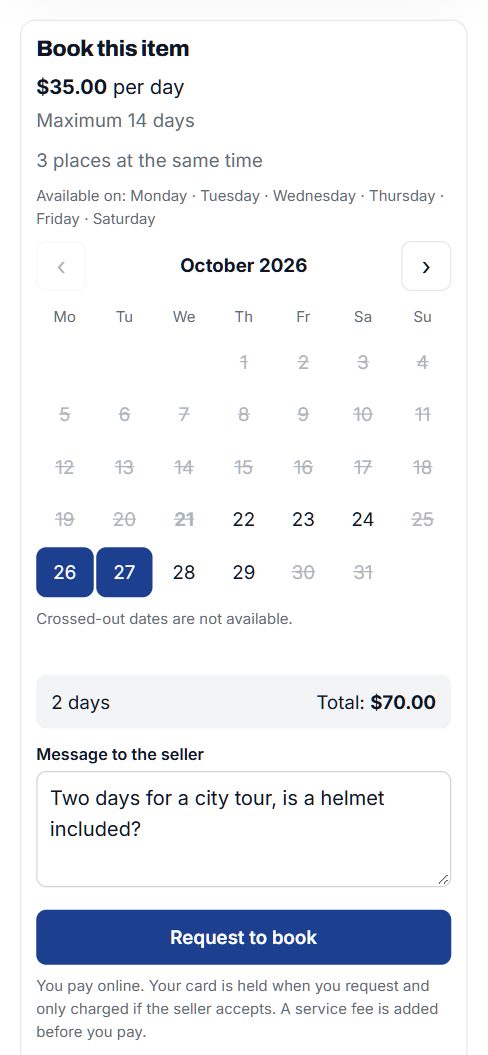
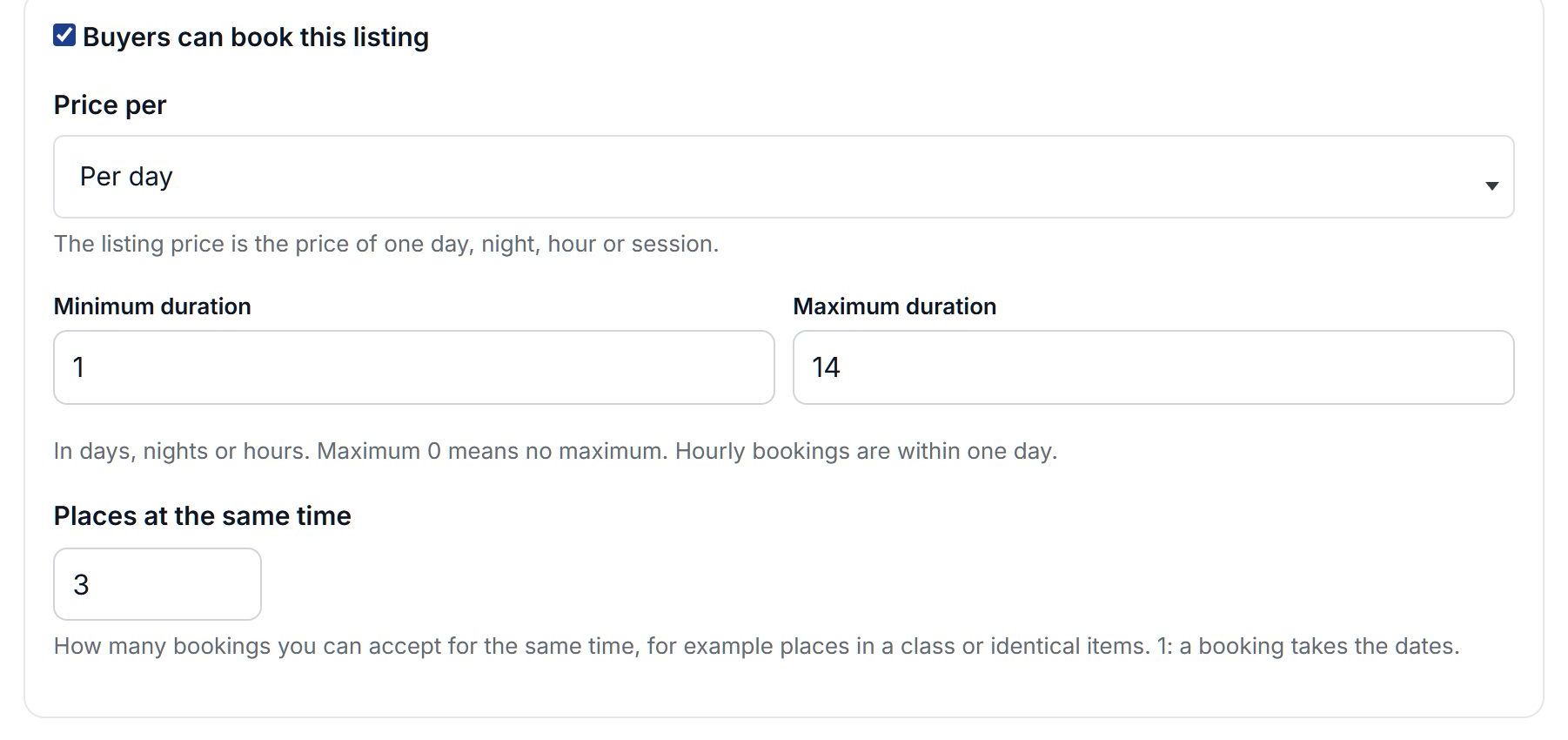
Rental terms need clear fields: price per day or week, deposit, minimum nights, minimum renter age, pickup location, and what is included such as kitchen kit, bedding, camp chairs and a sewer hose. With Yclas, a rental listing carries a booking calendar, prices per day or week and a deposit, and custom fields like these become search filters.
| Category | Example listings | Fields renters filter on |
|---|---|---|
| Class C motorhomes | 31 ft Class C, sleeps seven, bunk beds | Sleeps, length, miles included, pet friendly, daily price |
| Class B campervans | Campervan with wet bath and solar | Sleeps, bathroom type, fuel type, off-grid gear |
| Class A motorhomes | 36 ft diesel pusher with two slide-outs | Length, slide-outs, generator hours, minimum renter age |
| Travel trailers | 26 ft travel trailer, delivered to campsite | Dry weight, hitch type, delivery and setup, sleeps |
| Fifth wheels | Fifth wheel with outdoor kitchen | Hitch type, length, delivery only, weekly price |
| Pop-ups and teardrops | Teardrop camper for two, tows behind an SUV | Weight, towing vehicle needed, deposit |
Put the weight and hitch type on every towable. A renter who cannot legally or safely tow a trailer should know before booking.
Charge commission on long bookings that already carry a high total.
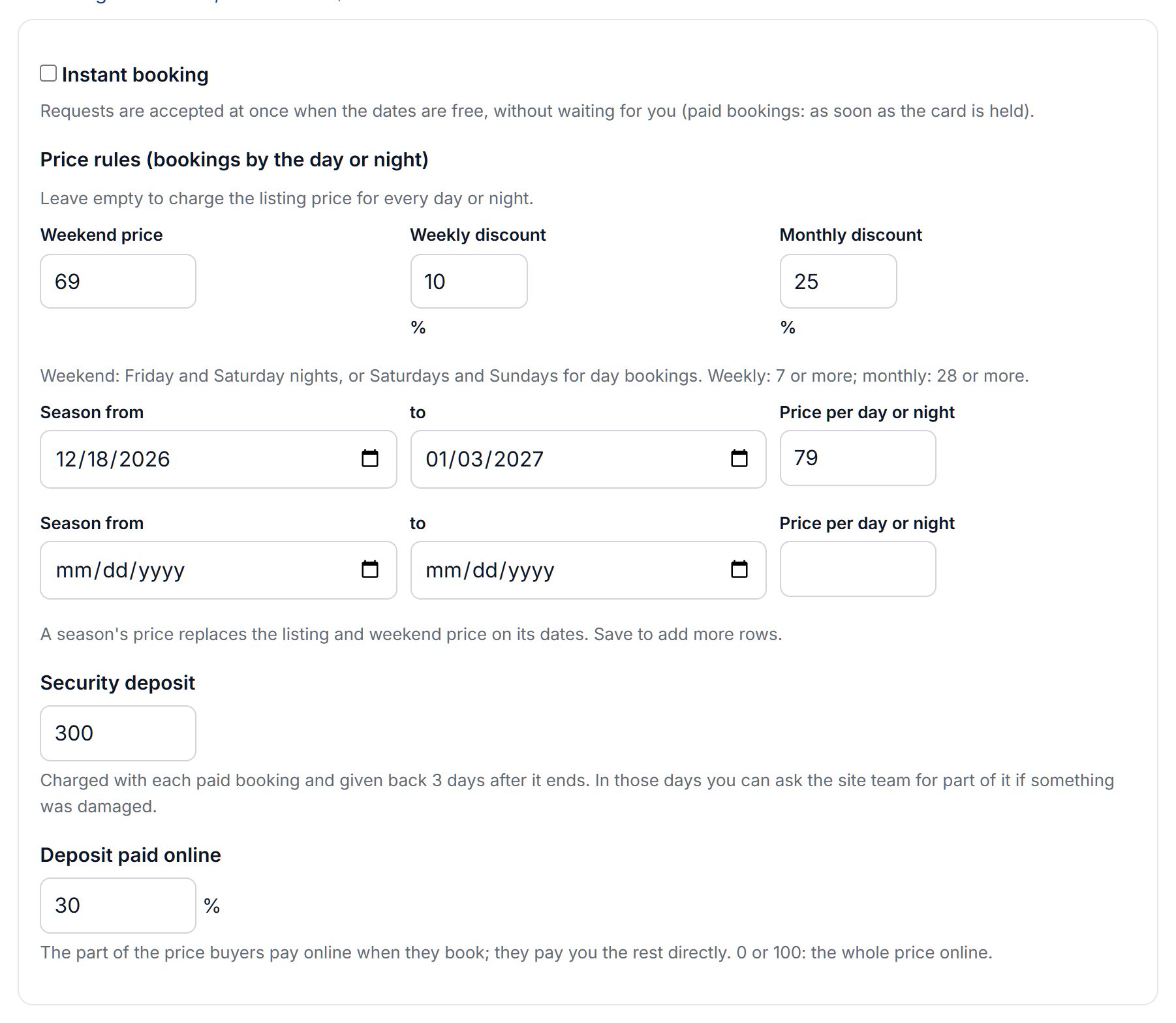
RV rentals are usually several nights long, so a single booking is a sizable sum and your commission on it is meaningful. Renters pay on the site, owners are paid through Stripe, and you keep a percentage. Owners compare your share with what the rig costs to keep: storage, insurance, maintenance and depreciation.
Deposits are large in this niche. Common claims are a scraped awning, a cracked step, a damaged slide-out, a blocked toilet, smoke smell, pet hair, and an empty propane tank. Ask owners to set a deposit that matches those risks and to list clearly what is deducted: cleaning, dumping fees, extra miles, generator hours and late return.
A renter service fee fits here because totals are high and renters compare against expensive rental companies. Featured listings sell well before summer and before big festivals. Owner memberships suit small rental fleets. Banner spaces fit campgrounds, RV parks, RV repair shops, dealers and storage lots.
| Model | Works when | Switch it on |
|---|---|---|
| Commission per booking | Renters book and pay on the site | From the first booking |
| Renter service fee | Multi-night bookings with high totals | Early, shown before checkout |
| Featured listings | More rigs than renters outside peak weeks | Before summer and festival dates |
| Owner memberships | Small rental fleets list several units | When a few fleets have joined |
| Banner spaces | Campgrounds, RV parks and repair shops want travelers | When traffic is steady |
Find owners who already use their RV a few weeks a year and pay to store it.
Renters book a specific week, so you need enough rigs to cover summer demand in one region. Start with owners who have thought about renting already.
- Small RV rental businesses. Owners of three to twenty units who take bookings by phone. They can import their fleet from a spreadsheet as a CSV and fill calendars online.
- RV storage lots. Every rig there costs its owner a monthly fee. Ask the lot manager to put up a notice or pass on your details.
- RV clubs and owners' groups. Brand clubs, rally groups and regional RV owner groups online.
- Campervan converters. Small workshops that build vans often keep one or two for rental.
- Campgrounds and RV parks. Some own trailers parked on site that can be listed as delivered and set up.
- RV dealers. Some rent out used units before selling them.
Meet owners at their rig, photograph the inside and outside in daylight, record the odometer, generator hours and condition, and agree on the mileage policy and deposit. Owners who have rented before through other sites already have photos and rules you can use.
Storage lots are full of owners paying every month for a rig that barely moves.
Settle insurance, driving and damage rules before the first rig leaves the driveway.
RV rental is high value and high risk, and the most important rules are about insurance and who drives.
- Insurance. Most personal RV policies do not cover renting the rig to others, and an uninsured accident could cost an owner far more than the RV. Owners must get cover meant for rental use from their own insurer or a specialist, and renters should understand what they are covered for. The site does not provide insurance; say so plainly on your owner pages, and check the rules where you operate.
- Driver requirements. Owners set a minimum renter age and check a valid driving license at pickup. Some large motorhomes or heavy combinations need a special license class in some places, so check the rules where you operate. These checks are done by the owner; the site does not verify identity or licenses.
- Handover walkthrough. A proper handover takes time: hookups, generator, slide-outs, leveling, propane, waste tanks. Ask owners to give one and to photograph the rig inside and out with the renter.
- Damage and wear. Awnings, roof damage from low branches, and slide-outs are common claims. Clear rules on what the deposit covers, with photos, settle most disputes.
- Roadside problems. Owners should state what happens when a rig breaks down far from home.
- Payment scams. Fake RV listings asking for a wire transfer deposit are a known scam. Tell renters to pay only through the site, and approve every new owner's listings before they go live.
Verified seller badges, ratings and reviews on both sides help owners pick careful renters and renters pick well-kept rigs.
Rank for road trip searches that start with a park, an airport or an event.
RV searches often name the trip, not just the vehicle: "RV rental near Denver airport", "campervan rental Yellowstone", "rent a travel trailer delivered to campsite", "Class C motorhome rental Phoenix", "pet friendly RV rental" and "one way RV rental". Many renters are new to RVs and search for help too.
Pages to build
- Rig type and city pages: "Campervan rental in Salt Lake City", "Travel trailer rental in Orlando". Each listing, category and location has its own page.
- Trip guides: a week in the Utah parks by motorhome, a coast road in a campervan, a festival weekend in a trailer.
- First-timer guides: how to dump tanks, how to level an RV, what size RV a family of five needs, what to pack.
- Campground guides: campgrounds near your area that take large rigs and which ones allow delivered trailers.
Set SEO title patterns once so every listing title carries rig type, sleeping places and pickup city. Trip guides are where international visitors start, months before they arrive.
Launch in winter so renters find the rigs when they plan summer trips.
Many families plan summer road trips in winter and early spring, and peak rental weeks in many regions run from early summer to the end of school holidays. Fall foliage, festivals and snowbird season matter in some areas. Launch in winter so owners' calendars are live when renters start planning.
First steps
- Pick a region near an airport and a popular park, coast or festival.
- Sign up one or two small rental fleets and ten private owners.
- Partner with a storage lot, a campground or an RV repair shop.
- Take a table at a winter RV show, where owners and future renters both go.
Launch checklist
- Sleeps, length, class, mileage policy, deposit and minimum nights on every listing.
- A plain statement that owners must arrange insurance for rental use themselves.
- Minimum renter age and driving license checks stated by each owner.
- A handover walkthrough checklist with photos.
- Breakdown and cancellation terms on every listing.
After the first summer, look at which weeks sold out and which rig types renters searched for most, and recruit those owners next.
A worked example: Wasatch Wander RV Share around Salt Lake City.
Wasatch Wander RV Share is a fictional site, invented for this guide. It serves Salt Lake City and the towns along the Wasatch Front in Utah, a region with a busy international airport, five national parks within a day's drive to the south, ski resorts close by, and a large number of families who own a trailer or motorhome they use a few weekends each summer.
Who it serves
Renters are families from out of state flying in for a week in the southern Utah parks, couples who want a campervan for a long weekend, overseas visitors on a once-in-a-lifetime road trip, and local families who want a trailer delivered to a state park campsite for a reunion. Owners include a small rental business with nine Class C motorhomes, a campervan converter who keeps two vans for rental, about thirty private owners with motorhomes and travel trailers in driveways and storage lots, and a campground that rents trailers set up on its own sites.
Categories
- Drivable
- Class C motorhomes
- Campervans
- Class A motorhomes
- Towable
- Travel trailers
- Teardrops and pop-ups
- Delivered to a campsite
How it started
The founder rented out her own Class C on a national site for two summers and noticed that most of her renters flew into Salt Lake City and asked the same questions about the parks, propane and dump stations. She started with her storage lot: a notice in the office and a morning spent talking to owners as they came for their rigs. Before the first booking she set the rules: owners must confirm rental-use insurance before listing, renters must meet each owner's minimum age and show a license at pickup, every listing states miles and generator hours included, and every handover includes a walkthrough with photos. A trip guide to the southern parks went up before the listings did.
How it makes money
Renters pay on the site with a deposit, and Wasatch Wander keeps a commission on each booking plus a renter fee shown before checkout. The rental business and the converter pay for owner memberships. A storage lot, an RV repair shop and a campground share the banner spaces, and featured spots on campervans sell out for the weeks around the summer holidays.
Pickup near the airport mattered more to renters than the price per night.
| Listing | Price | Key details |
|---|---|---|
| 30 ft Class C, sleeps six | $225 per night, $1,400 per week, $1,500 deposit | 100 miles per night included, generator, pet friendly, airport pickup |
| Campervan with wet bath and solar | $180 per night, $1,100 per week, $1,000 deposit | Sleeps two, minimum three nights, minimum renter age 25 |
| 24 ft travel trailer, delivered | $110 per night, $750 per week, $750 deposit | Delivered and set up within 60 miles, sleeps five, no tow vehicle needed |
| Teardrop camper | $70 per night, $400 per week, $400 deposit | Dry weight under 1,500 lb, two-inch ball hitch, outdoor galley |
| 36 ft Class A diesel | $350 per night, $2,200 per week, $2,500 deposit | Two slide-outs, 75 miles per night included, driving experience required |
The first 90 days of an RV rental marketplace.
RV renters book weeks and often months ahead, so your first ninety days should finish around the time families plan summer trips. In most of North America that means starting in the fall and launching in winter. In regions where winter is the high season, such as the southern deserts, shift the plan forward so it ends before the snowbird months.
The slow part is not the website. It is owners deciding to rent, finding insurance that covers rental use, and writing their own rules on mileage, pets and generators. Expect some owners to take weeks to come back with an insurance answer, and do not list a rig until they have one.
Measure the first ninety days by bookable weeks in the coming summer, not by visits. If you have twenty rigs with open calendars for June to August, a trip guide for your nearest parks and a partner sending you renters, you are ready for the season. Keep a list of what renters ask in messages, such as airport pickup, pets or one-way trips, and recruit owners who can offer those.
| Weeks | Focus | Done when |
|---|---|---|
| 1-2 | Pick the region, set RV classes as categories, and fields for sleeps, length, miles included, generator hours and tow details | A test Class C and a test trailer both filter correctly |
| 3-4 | Write owner rules: insurance for rental use, minimum age, license checks, walkthrough, cleaning and dumping | Owner guide published and reviewed by an insurance broker who knows RV rental |
| 5-6 | Recruit at storage lots, RV clubs and small rental fleets | Ten owners confirmed rental-use insurance and listed their rigs |
| 7-8 | Import fleets, photograph rigs, fill calendars for the season | At least 20 rigs with open summer weeks, photos inside and out |
| 9-10 | Publish trip guides and first-timer guides, add class and city pages | Guides for two nearby park trips and one first-timer guide are live |
| 11-12 | Partner with campgrounds and take a table at a winter RV show | One campground accepts delivered trailers and first bookings are in for summer |
How to build an RV rental marketplace: three routes compared.
An RV rental site has heavier needs than most rental sites. Bookings last days or weeks, so calendars must hold minimum stays and block whole weeks. Deposits are large and need clear rules. Listings need many fields: class, sleeps, length, miles and generator hours included, pets, delivery options and tow details for trailers. Renters, many of them first-timers or visitors from abroad, read the listing closely and message owners before booking, so on-site messages and reviews carry a lot of weight.
Building with developers fits when you need something specialized, such as automatic charges for extra miles and generator hours after return, or delivery prices worked out by distance. These are useful but take time, and charges added after a trip are where payment disputes start, so they must be exact.
A rental script or plugin on your own server costs less to start. Many are built for car or vacation home rentals and need adjusting for RV details, and multi-owner payouts may need extra plugins. Plan for updates, security and spam yourself.
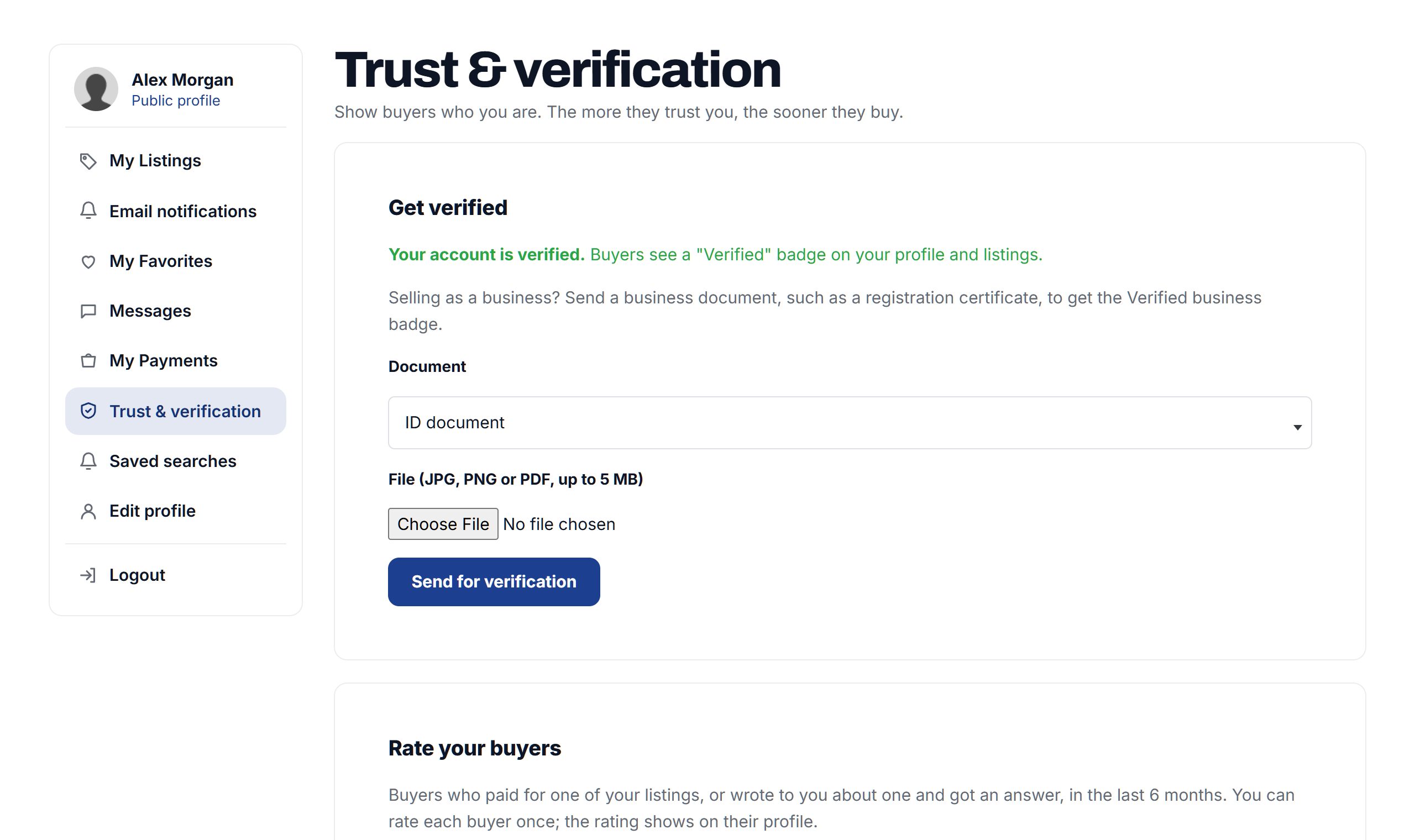
A hosted builder such as Yclas is the practical pick if your weekends belong to storage lots and RV shows. Rental calendars, daily or weekly prices with deposits, Stripe payments with a commission, custom fields as search filters, spreadsheet imports for fleets and reviews on both sides are ready. Extra miles and generator hours are usually settled from the deposit or as a separate charge, so decide how you will handle them before launch.
| Route | Fits when | Watch out for |
|---|---|---|
| Custom build | You want automatic mileage billing or distance-based delivery pricing | Time to build and payment disputes from charges added after trips |
| Rental script or plugin | You can adapt a car or vacation rental tool and maintain it | Missing RV fields, multi-owner payouts and security updates |
| Hosted builder | You want to launch before summer planning starts | Decide how extra miles, generator hours and cleaning are charged |
| Owner directory with contact forms | You want to test interest in one region first | No deposits or calendars, and owners exposed to payment scams |
What an RV rental marketplace costs to run.
The software is the smallest part of the bill. Most of the cost is your time in the first months: finding the first listings, answering questions and checking what gets posted.
RV rental adds niche costs: a meeting with an insurance broker who knows rental-use cover for RVs, a table at a winter RV show, and time visiting storage lots and owners to photograph rigs. You hold no rigs, so maintenance, storage and roadside cover stay with the owners.
| Cost | Typical range | On Yclas |
|---|---|---|
| Domain | $10 to $20 a year | Your own, with SSL included |
| Software and hosting | $0 to $100+ a month, plus plugins and updates | Marketplace $149 a month for checkout and commission |
| Design | $0 to $100 for a theme, or a designer | 109 looks included |
| Payment fees | About 3% per payment | Your Stripe or PayPal fees; Yclas takes nothing |
| Your time | 5 to 10 hours a week at the start | Finding listings, moderation, support |
Mistakes that sink RV rental marketplaces.
- Listing rigs before insurance is sorted. One accident in an RV covered only by a personal policy can ruin an owner and your reputation with it. Ask every owner to confirm rental-use cover before the listing goes live, and recheck each year. Keep a note of the insurer and renewal date so you know when to ask again.
- Renting trailers to the wrong tow vehicle. A renter with a small SUV and no brake controller should not tow a 7,000 lb trailer. Put dry weight, hitch type and brake requirements on every towable, ask renters to state their vehicle, and let owners decline. Offering delivery solves much of this, and delivered trailers are often the easiest bookings for first-time renters.
- Hiding the mileage and generator rules. Renters who discover an extra-mile charge after a long park loop leave angry reviews. Show miles and generator hours included, and the price beyond them, next to the nightly price. A short guide with typical distances from your city to the nearby parks helps renters estimate before they book.
- Skimping on the walkthrough. A first-time renter who does not know how to empty the black tank or retract a slide-out will damage something. Ask owners to plan at least half an hour for handover and to give a printed checklist. A short video of the owner's own rig, sent before pickup, cuts that time and the questions on the road.
- Ignoring where renters arrive. Many renters fly in. Rigs an hour from the airport with no pickup option lose to ones that do. Recruit owners near airports and let others offer airport delivery for a fee.
- No breakdown plan. A blown tire or a failed fridge two hundred miles from home needs an answer the same day. Ask owners to state what happens, who to call and what is refunded, before the first booking.
- Unclear rules on pets, smoking and festivals. Dog hair, smoke smell and dust from desert festivals cost owners days of cleaning. Make each a checkbox, and let owners set extra cleaning fees or refuse certain events.
- Launching in spring. By May, families have booked their summer trips. A site that launches then has open calendars and no renters. Launch in winter, when trips are being planned and RV shows fill convention halls.
- Accepting wire transfers. Fake RV listings that ask for a deposit by wire or gift card are a known scam. Keep every payment on the site, approve new owners by hand, and warn renters in plain words.
RV rental terms every founder should know.
These are the words owners and renters use when they book and hand over a rig.
| Term | What it means |
|---|---|
| Mileage allowance | The miles included in the rental price before an extra-mile charge applies. |
| Generator hours | The running time of the onboard generator, often included up to a limit per night. |
| Black and gray tanks | Holding tanks for toilet waste and for sink and shower water. |
| Dump station | A place where RVs empty their holding tanks, found at campgrounds and some fuel stops. |
| Full hookups | A campsite with water, power and sewer connections for the RV. |
| Dry camping | Staying without hookups, relying on the tanks, batteries, solar and generator. |
| Wet bath | A compact bathroom where the shower and toilet share one waterproof space. |
| GVWR | Gross vehicle weight rating, the most a vehicle or trailer may weigh fully loaded. |
| Tongue weight | The downward force a trailer puts on the tow vehicle's hitch ball. |
| Brake controller | A device in the tow vehicle that operates a trailer's electric brakes. |
| Walkthrough | The handover where the owner shows the renter how every system on the rig works. |
| Delivery and setup | An option where the owner tows a trailer to a campsite and levels and connects it. |
| One-way rental | A booking where the rig is picked up in one place and returned in another. |
The same steps for an RV rental marketplace on Yclas.
- Describe your marketplaceThe setup wizard writes the categories, an About page and example listings from one sentence.
- Add fieldsThe details buyers filter on, as dropdowns, numbers or checkboxes.
- Bring sellersInvite them, import their stock from a spreadsheet, or post for them.
- Set the rulesChoose moderation, verified sellers, reviews and reports.
- Take paymentsOn Marketplace, buyers pay on the site and you keep a commission, with Stripe.
How much money do I need to start an RV rental marketplace?
Far less than buying even one RV, since owners keep their rigs. Plan for the site, an RV show table, travel to meet owners and local promotion.
Does an owner's normal RV insurance cover renting it out?
Often it does not, because many personal policies exclude rental use. Owners should ask their insurer or a specialist for cover meant for renting, and check the rules where they operate.
Do renters need a special license to drive a motorhome?
For most rigs a normal driving license is enough, but some large motorhomes or heavy combinations need a special class in some places. Owners should check the rules and the renter's license at pickup.
Who pays for damage on a rented RV?
The renter, under the listing's terms, with the deposit covering common damage and insurance covering larger claims if the owner has rental cover. Photos at handover settle most disputes.
How do I compete with the big RV rental sites?
Focus on one region: more local rigs, delivered trailers at local campgrounds, trip guides for nearby parks, and owners who meet renters in person.
Should I allow one-way rentals?
Let owners decide. Most private owners want the rig back at home, but small fleets with locations in two cities may offer one-way trips for a fee.
What should the deposit cover?
Cleaning, dumping fees, extra miles, generator hours, late return and minor damage, each listed on the listing so renters know what is deducted.
Can RVs be rented in winter?
Some can, but water lines and tanks can freeze, so many owners winterize their rigs and rent them only for dry use or not at all. Let each owner state whether the rig is winterized and what that means for the renter.
Should owners allow pets?
Many renters travel with dogs, so pet friendly rigs book well. Owners who allow pets usually add a pet fee or a cleaning fee and limit the number and size, and they should state all of it on the listing.
Can visitors from abroad rent from owners on the site?
Often yes, but license and insurance rules for foreign drivers vary, and some insurers have conditions for them. Owners should check what their cover allows and ask to see the license and passport at pickup.
Who books the campground, the renter or the owner?
Usually the renter, except when the owner delivers a trailer to a site and coordinates with the campground. Trip guides that list campgrounds taking large rigs help renters book early, since popular park campgrounds fill months ahead.
How should owners handle festival bookings?
Some festivals are hard on rigs, with dust, crowds and long generator use. Owners can refuse them, ask a higher deposit, or add a cleaning fee, as long as it is stated on the listing before the renter books.
Related pages.
The parts of Yclas this leans on.
You have the plan. Now get your region's parked RVs on the road.
Describe your site in a sentence and the setup wizard writes the categories, example listings and a look. Free for 15 days, no credit card.
Start my marketplace