How to build a peer-to-peer car rental marketplace that owners and drivers both trust.
This guide covers a marketplace where private owners rent their cars to local drivers by the day or week: the insurance and legal questions to settle first, the details drivers filter on, daily rates with deposits, a commission owners accept, recruiting the first cars, handover and damage rules, the searches to rank for, and a launch in one city.
Free for 15 days · No credit card · Plans from $19 a month
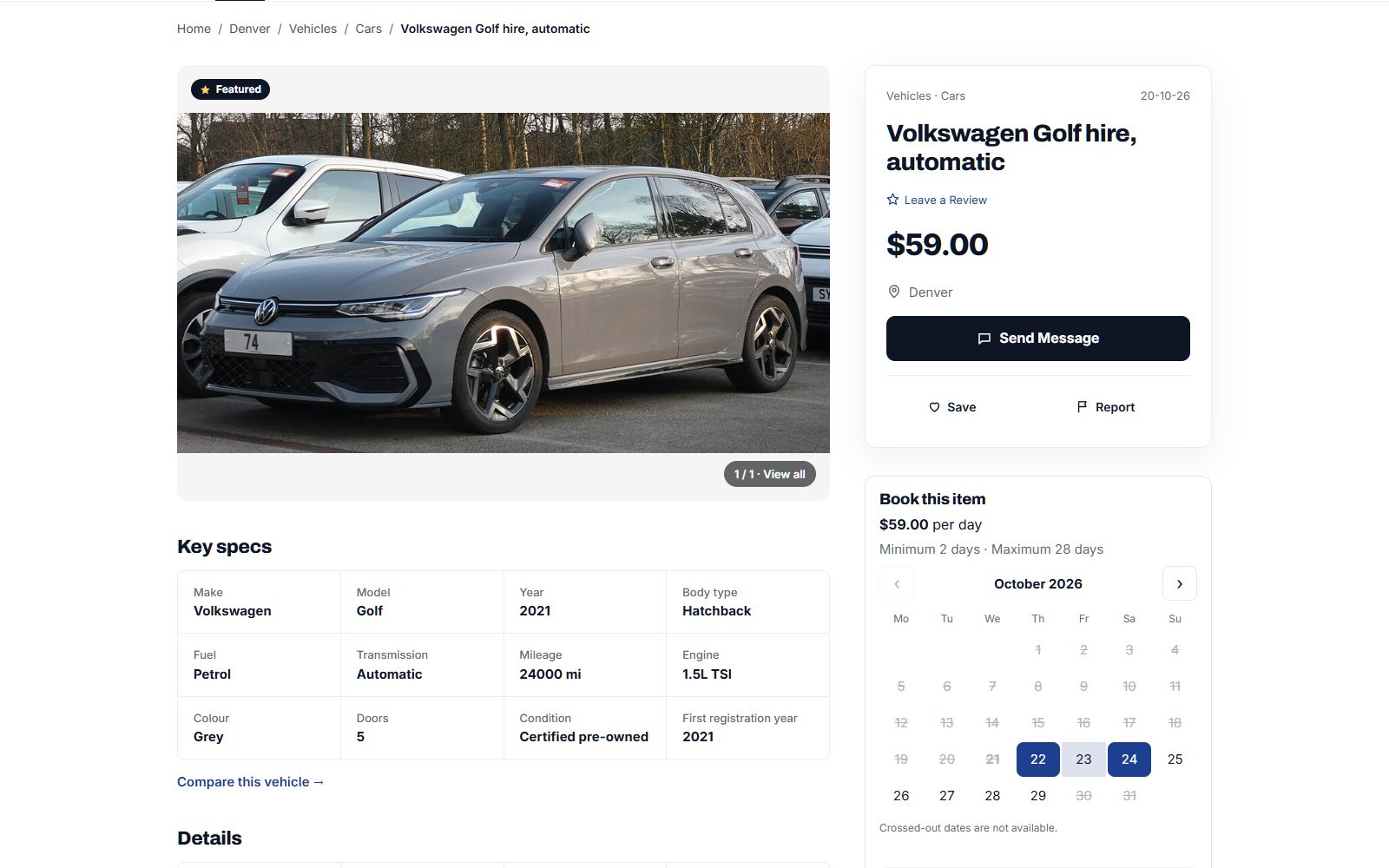
Connect cars parked most of the week with people who need one for a few days.
A private car spends most of its life parked. Some owners would happily earn from it on the days they work from home, travel or take the train. On the other side are people who need a car for a weekend away, a house move, a visiting relative, or the week their own car is in the shop. Airport rental counters serve them, but often far from where they live, with age surcharges, long lines and little choice of vehicle.
The two sides
- Owners: households with a second car, people who work remotely, small fleet owners with a few vehicles, and enthusiasts with a classic, a convertible or a pickup they want to share.
- Drivers: city residents without a car, visitors staying with family, people between cars, and anyone who needs a van or truck for a day.
Pick the angle carefully
Big peer-to-peer apps such as Turo and Getaround already exist in many cities. A smaller site wins by being narrower: one island or tourist town the big apps cover thinly, one vehicle type (pickups and vans for moving, classic cars for weddings and photo shoots, campervans), or one community such as a university town or a rural county.
Before anything else, find out how car sharing is treated where you operate. Personal auto policies often exclude renting a car to strangers, and some places have specific rules or taxes for car sharing platforms. This hurdle decides whether the site can run at all, so settle it first.
Insurance is the first question every owner will ask. Have a clear, honest answer before you recruit anyone.
List each car with the details drivers check before they book.
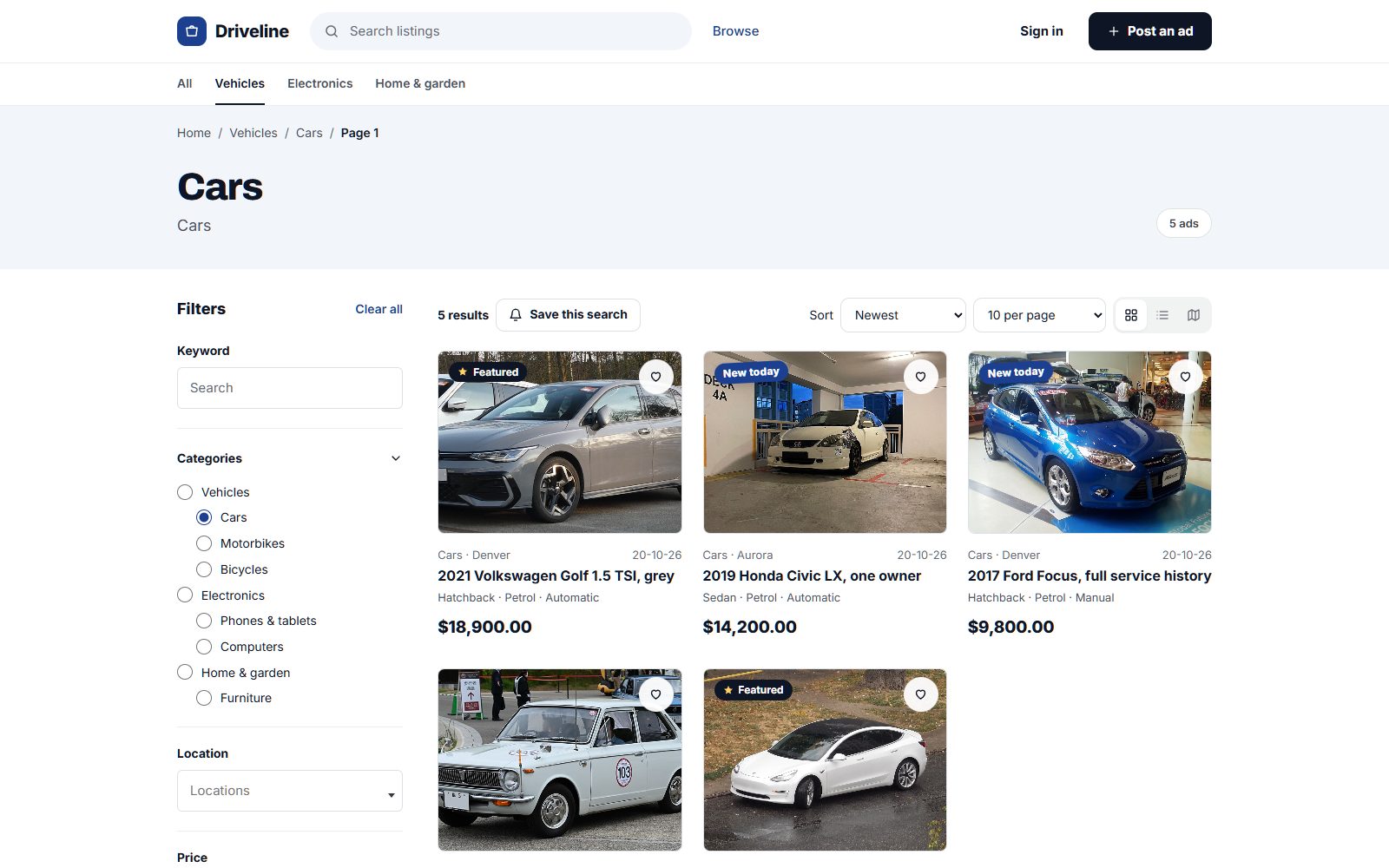
Keep the category tree shallow and based on what the trip needs: everyday cars, SUVs and 4x4s, vans and pickups, electric cars, convertibles and sports cars, classic and special occasion cars. Drivers then narrow the list with fields, so put the details they care about in fields and not buried in the description.
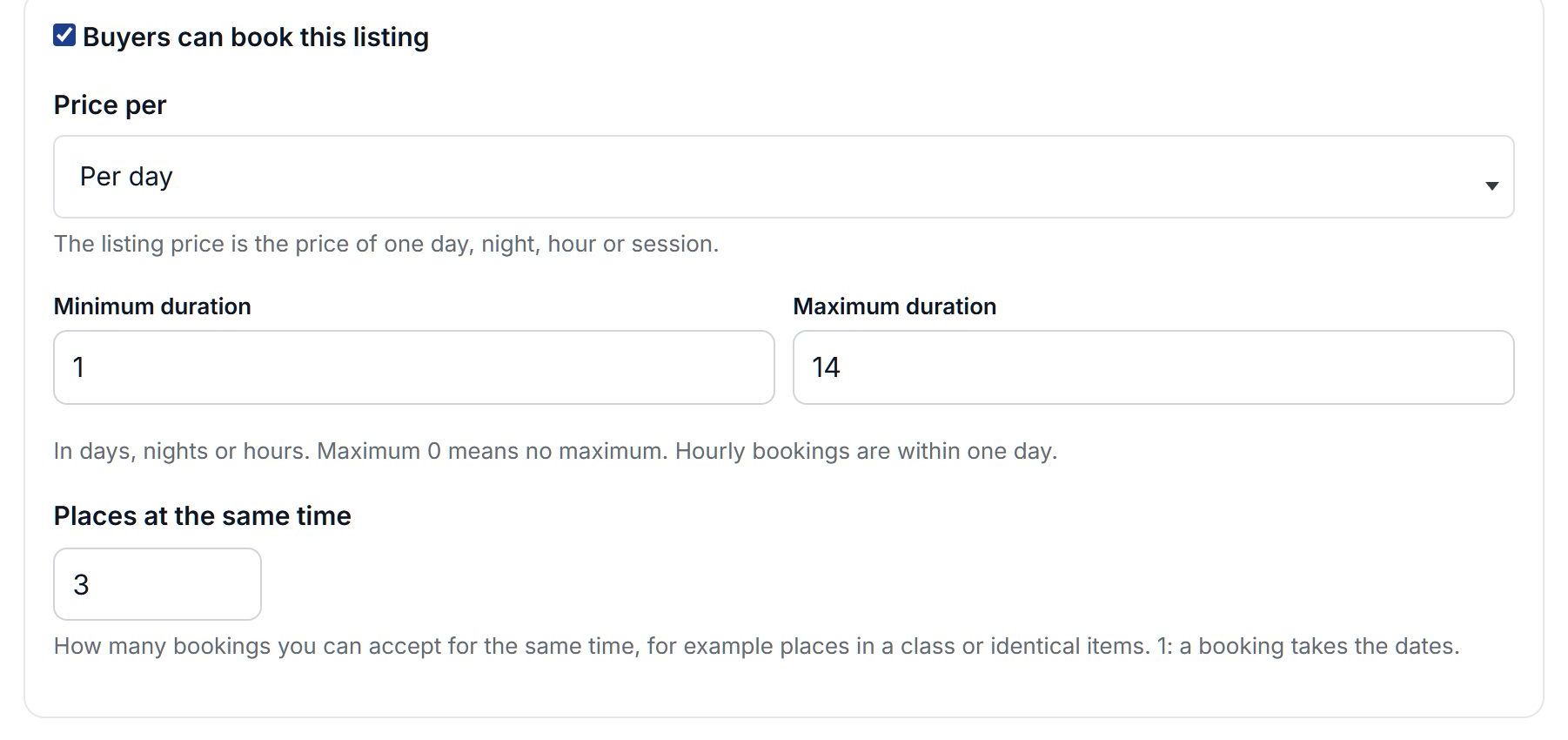
The basics are make, model and year, number of seats, transmission, fuel type and luggage space. Rental terms matter just as much: a daily rate, a weekly rate, the deposit, the daily mileage allowance and the charge per extra mile, the minimum driver age, how many years the driver must have held a license, and whether pets or smoking are allowed.
Electric cars need their own fields: range on a full charge, connector type and whether a charging cable comes with the car. For vans and pickups, add bed length or cargo volume and whether a tow hitch is fitted.
Yclas custom fields can be text, numbers, dropdowns, checkboxes or dates, and each one can show as a search filter, so a driver can narrow the list to automatic seven-seaters with unlimited mileage. Add pickup details too: the neighborhood (never the exact address in the public listing), whether the owner offers delivery, and the pickup and return time windows.
| Category | Example listings | Fields drivers filter on |
|---|---|---|
| Everyday cars | 2019 Honda Civic automatic, city pickup | Transmission, seats, daily rate, mileage allowance |
| SUVs and 4x4s | Toyota RAV4 AWD with roof box | Drive type, seats, luggage space, winter tires |
| Vans and pickups | Ford Transit cargo van; F-150 with tow hitch | Cargo volume, bed length, towing, minimum driver age |
| Electric cars | Tesla Model 3 Long Range | Range, connector type, charging cable included |
| Convertibles and sports cars | Mazda MX-5 for summer weekends | Seats, transmission, minimum age and years licensed |
| Classic and occasion cars | 1965 Mustang for weddings | Driver included, event use, mileage limit, deposit |
Make "delivery offered" and "unlimited mileage" checkboxes, because many drivers filter on them before anything else.
Earn a share of each booking, with deposits that protect owners.
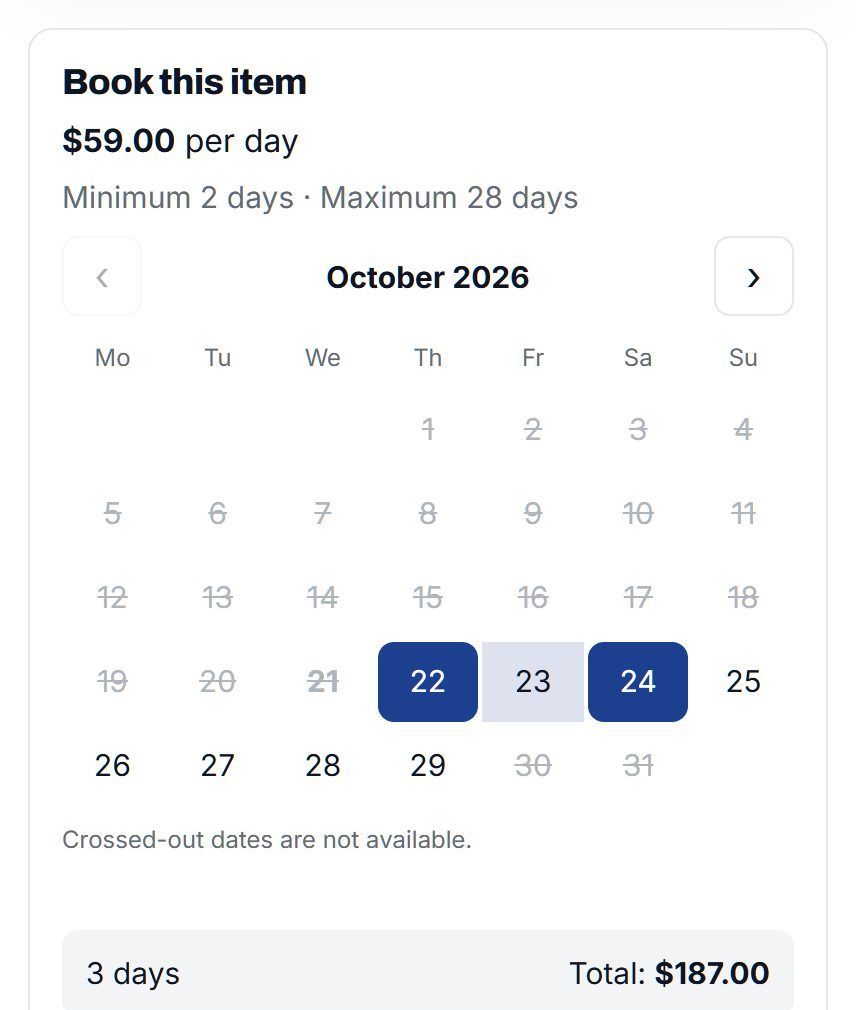
Drivers book and pay on the site through Stripe, and you keep a commission on every rental. Owners judge that commission against what the car earns sitting in the driveway, which is nothing, so a fair share is easy to accept for a second car. Small fleet owners with several cars will compare you to running their own rental business, so they may need a lower rate or extra visibility.
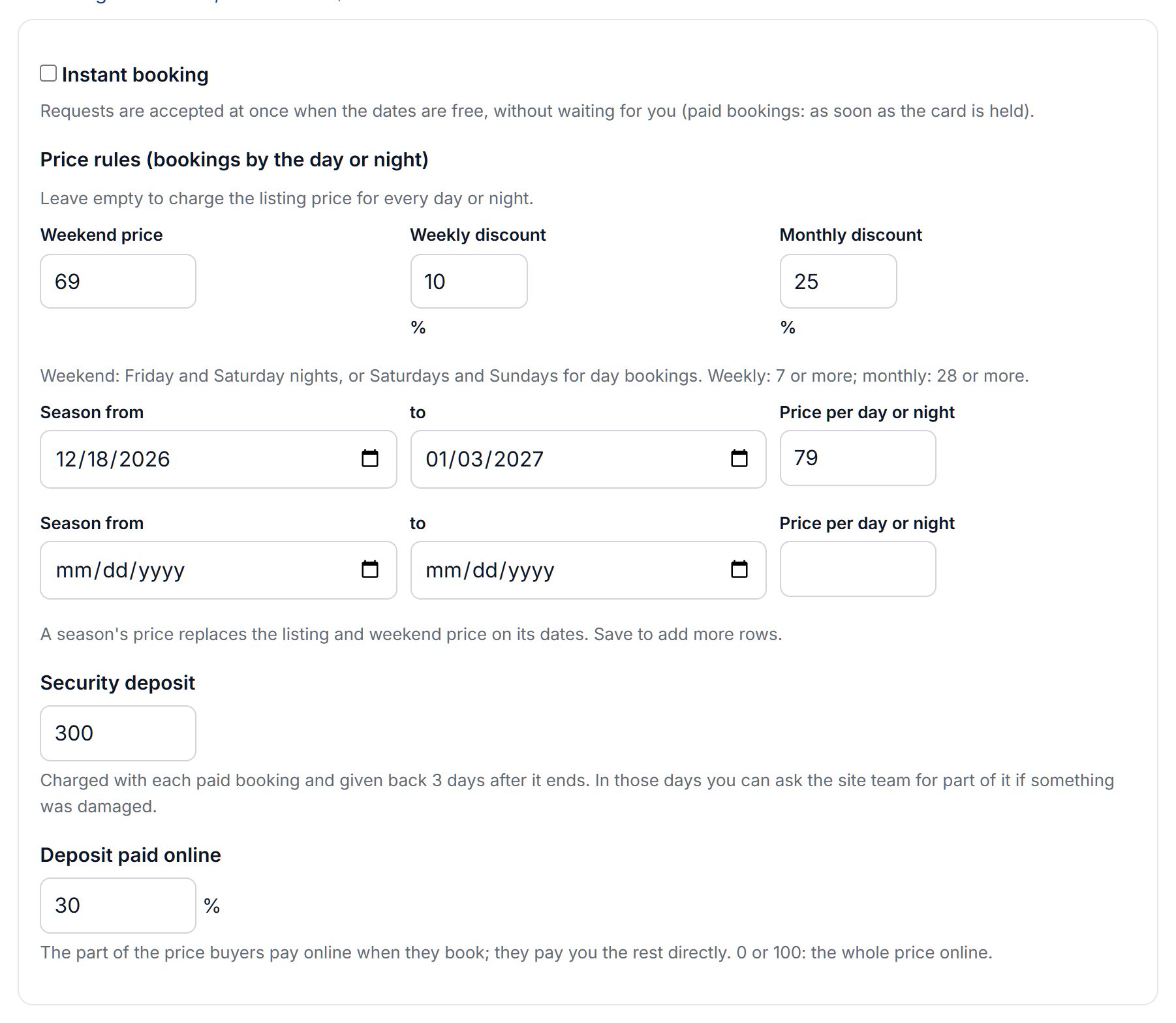
Deposits are central in car rental. They cover fuel or charge not returned, tolls and parking tickets that arrive weeks later, cleaning, and small damage. Ask owners to set a deposit that fits the car and state on the listing when part of it may be kept. The deposit is an arrangement between owner and driver under the listing terms: publish clear rules, but do not present the site as the judge of damage claims.
A driver service fee on each booking can cover your costs on short, cheap rentals. Featured listings help owners stand out in busy weekends and holiday periods. Owner memberships suit small fleets with many cars. Banner spaces fit local garages, car wash and detailing businesses, and EV charging providers.
Start with commission only. Add fees once drivers come back on their own and owners ask how to get more bookings.
| Model | Works when | Switch it on |
|---|---|---|
| Commission per booking | Drivers book and pay on the site | From the first rental |
| Driver service fee | Short one-day rentals at low rates | Once repeat drivers appear |
| Featured listings | Many similar cars compete on busy weekends | When a city has dozens of cars |
| Owner memberships | Small fleets list five or more cars | After a few fleet owners have joined |
| Banner spaces | Garages, detailers or charging networks want local drivers | When you can show visitor numbers |
Recruit the first fifty cars in one area before you advertise to drivers.
A driver who searches your town and finds three cars will not come back. Fill one city or tourist area first, with enough choice that most dates have something free.
- Small fleet owners. People who already rent a few cars on the big apps, or run a tiny local rental business, often want a second channel. They bring several cars at once and understand handovers.
- Second-car households. Find them through neighborhood groups, commuter forums and remote-work communities.
- Car clubs. Classic, convertible and off-road clubs have members whose cars sit idle for months; a few will rent for weddings, shoots or weekend trips with strict terms.
- Used car dealers. Some will rent out stock that is waiting to sell, if their own insurance allows it.
- Van and pickup owners. Tradespeople whose vans are idle on weekends are a strong fit for moving-day rentals.
Meet owners in person where you can. Photograph each car inside and out, record the mileage, agree the rates, deposit and rules, and fill in the calendar with real availability. Fleet owners can send their cars as a spreadsheet, and the listings can be imported from a CSV file.
Start with owners who have done rentals before. They know what can go wrong and set sensible rules.
Settle insurance, driver checks and handover rules before the first booking.
Car rental carries more risk than most marketplaces: an accident can mean injury, large repair bills and legal claims. Be careful and modest in what you promise.
- Insurance. This is the main hurdle. Many personal policies do not cover renting a car to someone else, and owners who rent anyway may be uninsured when something happens. Some insurers sell cover for car sharing, and requirements differ by country, state and insurer. Talk to a broker and a local lawyer, check the rules where you operate, and tell owners and drivers in plain words that arranging cover is their responsibility. Never suggest the site insures cars or drivers.
- Local rules. Some places regulate or tax car sharing, rental at airports, or require registration. Check before launch.
- Driver checks. Owners should see the driver's license in person at handover, check it matches the person and the booking, and apply their own minimum age and experience. The site does not verify identities.
- Handover evidence. Ask both sides to take dated photos of every panel, the odometer and the fuel or charge level at pickup and return.
- Tolls, tickets and impound. These arrive weeks later. Ask owners to state how they pass them on.
- Theft and fraud. Cars have been stolen by renters using false details. Owners can refuse first-time drivers for valuable cars. Fake listings asking for a deposit by wire transfer are common: tell drivers to pay only through the site.
Verified owner badges, ratings and reviews help both sides decide who to trust, and moderation can hold new listings for review.
Rank for local car hire searches by vehicle type and town.
Drivers search for a vehicle, a place and often a reason: "rent a car from a local owner in Maui", "cheap car rental near me for the weekend", "van rental for moving Saturday", "pickup truck rental by the day", "convertible rental Napa", "Tesla rental for a road trip", "classic car hire for a wedding". Visitors add the airport or ferry terminal, and young drivers search "car rental under 25".
Pages to build
- Vehicle and location pages: "SUV rental in Burlington", "Moving van rental in Denver". Every category and location has its own page, and the SEO title pattern is set once for all of them.
- Arrival guides: getting a car from the airport, the ferry or the train station in your area, with pickup and delivery options.
- Trip guides: the best road trips from your city and which car suits each one.
- Renter guides: what to check at pickup, how deposits and tolls work, driving an electric car for the first time.
- Owner guides: what renting your car involves, questions to ask your insurer, how to price weekdays and weekends.
Write the car model, the seats and the town in each listing title so searches for that exact car find it.
Launch in one city before its busy travel season.
Demand follows travel and moving seasons. Summer holidays, long weekends, college move-in and move-out weeks, Thanksgiving and the winter holidays fill calendars in most places. Ski towns peak in winter, beach towns in summer. Launch a month or two before your area's peak so cars are listed and calendars open when drivers start searching.
First steps
- Choose one city, island or college town, ideally where airport rental is expensive or scarce.
- Settle the insurance question with a broker and write the owner and driver terms with legal advice.
- Sign up five to ten experienced owners or small fleets, then neighbors with second cars.
- Partner with local hotels, vacation rental hosts, wedding planners and moving companies who get asked about cars.
Launch checklist
- Daily rate, weekly rate, deposit, mileage allowance and minimum driver age on every listing.
- Calendars filled for the next three months.
- Handover photo rules and license check published.
- Insurance responsibilities stated plainly on every listing and in the terms.
- Rules for tolls, tickets, fuel and cleaning written down.
After the first season, look at searches with no available car and recruit owners of those vehicles next.
A worked example: Salish Island Drive Share in the San Juan Islands.
Salish Island Drive Share is a made-up site, used here to show how the steps in this guide fit together. It covers the San Juan Islands in Washington State, where visitors arrive by ferry or small plane, rental counters are few, and car spaces on the summer ferries sell out weeks ahead. Many visitors would rather walk on the ferry and pick up a car on the island than wait in line for hours with their own.
Who it serves
Drivers are walk-on ferry passengers, wedding guests, families visiting island relatives, and residents whose own car is on the mainland for repairs. Owners are islanders with a second car, two retired couples who keep a spare pickup, a small garage that rents out four older sedans, and a summer resident who leaves a hybrid on the island for most of the year.
Categories
- Everyday cars
- Sedans and hatchbacks
- Hybrids and electric cars
- SUVs and AWD
- Pickups and vans
- Pickups for moving and dump runs
- Passenger vans for families
- Convertibles and Jeeps for summer
How it started
The founder had lent her own car to visiting friends for years, and strangers at the ferry landing kept asking whether she would rent it. Before taking a single booking she spent a month on the insurance question with a broker, then had a local lawyer write terms that put arranging cover clearly on owners and drivers. She signed up the garage first, because its four cars could fill most summer weekends, then posted in island community groups to find second cars. Every handover happens at the ferry terminal lot or the owner's home, with photos of each panel and the fuel gauge.
The fields that mattered most turned out to be island fields: whether the owner meets the ferry, whether the car may leave the island (most owners say no), and whether gravel roads to beaches and trailheads are allowed. Those three answers now sit near the top of every listing.
How it makes money
Drivers pay on the site, and the site keeps a commission on each booking. In the second summer it added a small driver service fee on one and two day rentals. The garage pays for an owner membership, and a kayak outfitter and a café at the ferry landing buy banner space for the summer months.
The niche was never cars in general. It was cars for people who arrive without one.
| Listing | Daily / weekly | Key details |
|---|---|---|
| 2017 Subaru Outback, Friday Harbor | $75 / $450 | AWD, 5 seats, owner meets the ferry, stays on the island |
| 2020 Toyota Prius, Eastsound | $60 / $360 | Hybrid, 150 miles a day included, pickup at the owner's home |
| 2012 Ford F-150, Lopez Village | $80 / $480 | 8 ft bed, tow hitch, drivers 25 or older, dump runs allowed |
| 2015 Jeep Wrangler, Friday Harbor | $110 / $660 | Soft top, June to September only, $500 deposit, no gravel roads |
| 2019 Honda Odyssey, Orcas ferry landing | $95 / $570 | 8 seats, car seat anchors, delivered to the landing |
The first 90 days of a car rental marketplace.
A car sharing site cannot take its first booking until two slow jobs are done: the insurance question and the terms. Put them at the front of the ninety days, not the end, because the answers decide which owners can join, what you tell drivers, and which cars you can accept at all.
After that, supply comes before demand. Recruit cars in one town or island until most weekends of the coming season have several options, and only then start telling drivers. From the first week, track three numbers: cars live with open calendars, searches for dates when no car was free, and booking requests owners declined. Declines show you which owners are too cautious and which drivers are a poor fit, and both deserve a conversation.
Time the ninety days to end two to four weeks before your area's busy season, whether that is summer, ski season or college move-in. A launch that misses the season waits months for real demand.
| Weeks | Focus | Done when |
|---|---|---|
| 1-2 | Insurance and legal: meet a broker and a local lawyer, learn the car sharing rules where you operate | You can explain in two sentences who arranges cover, and a lawyer has reviewed the owner and driver terms |
| 3-4 | Categories, fields and handover rules: rates, deposit, mileage allowance, minimum age, pickup method | A test listing shows every detail drivers ask about, and the handover photo checklist is published |
| 5-6 | Recruit experienced owners and small fleets | Ten cars are live with photos, rates and calendars filled for the next three months |
| 7-8 | Second-car households and idle vans from neighborhood groups | Twenty-five cars cover everyday, SUV and van categories, with a car free on most weekends |
| 9-10 | Partners: hotels, vacation rental hosts, moving companies, wedding planners | Three partners mention the site to guests or clients, and the first paid trips are complete |
| 11-12 | Vehicle and town pages, and a review of the first trips | Category and town pages are live, every finished trip has a review, and owners have said what to change |
Three ways to build a car sharing marketplace.
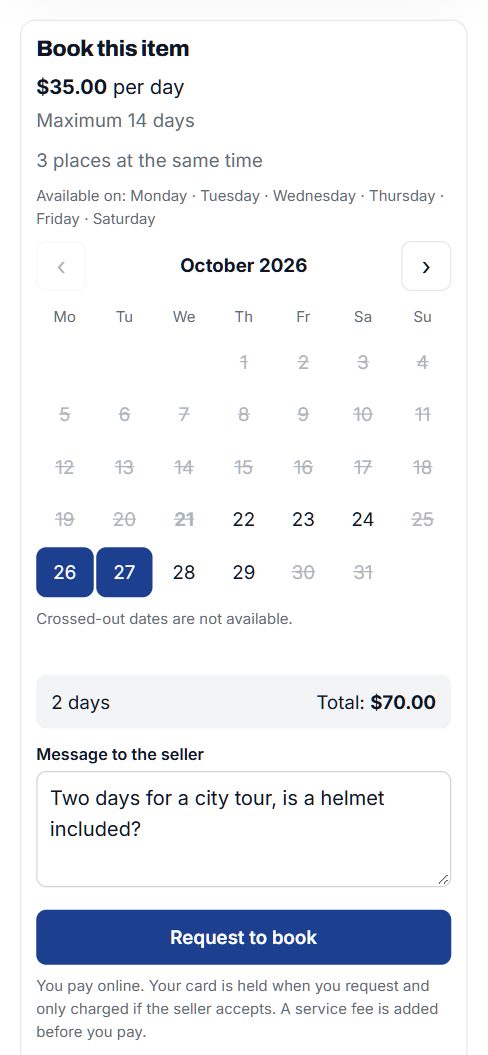
A car rental marketplace needs more than listings. Each car needs a calendar that blocks booked dates, daily and weekly prices, a deposit, payment at booking, and fields for mileage allowance, minimum driver age and pickup method. Drivers search by dates first, so a site without availability search shows them cars they cannot book.
Building it with developers fits if your idea depends on something unusual, such as keyless entry through a connected lock, telematics that read the odometer, or an insurer's system that prices cover per trip. Each of those integrations is a real project, and you will maintain it for as long as the site runs.
A marketplace or rental script on your own server costs less up front. Test its calendar hard before choosing: a car returned at 6 pm and booked again at 9 am the next morning, a weekly rate that starts on day seven, a deposit kept apart from the rental price. Payment handling, updates and security become your job.
A hosted builder such as Yclas fits a founder whose time is better spent with owners and brokers than with servers: rentals with a booking calendar, prices per day or week, deposits and payment through Stripe come set up. Check that your planned fields and rules fit before you recruit the first owner.
Whichever route you choose, the hard parts of this niche sit outside the software: insurance, terms and handovers.
| Route | Fits when | Watch out for |
|---|---|---|
| Developers build it | You need keyless entry, telematics or per-trip insurance inside the booking | Long build time and ongoing costs for every integration |
| Script or plugin on your server | You can code and want every part of the booking flow under your control | Calendar edge cases, payment security and updates are yours |
| Hosted builder | You want calendars, deposits and checkout working in the first week | Confirm each field and rental rule you need before signing up owners |
What a peer-to-peer car rental marketplace costs to run.
The software is the smallest part of the bill. Most of the cost is your time in the first months: finding the first listings, answering questions and checking what gets posted.
The largest costs here are advice: an insurance broker to explain what cover owners and drivers can get, and a local lawyer to review your terms and any car sharing rules. Budget too for printed handover checklists and time spent meeting owners to photograph cars.
| Cost | Typical range | On Yclas |
|---|---|---|
| Domain | $10 to $20 a year | Your own, with SSL included |
| Software and hosting | $0 to $100+ a month, plus plugins and updates | Marketplace $149 a month for checkout and commission |
| Design | $0 to $100 for a theme, or a designer | 109 looks included |
| Payment fees | About 3% per payment | Your Stripe or PayPal fees; Yclas takes nothing |
| Your time | 5 to 10 hours a week at the start | Finding listings, moderation, support |
Mistakes that stall a car rental marketplace.
- Recruiting owners before you have an insurance answer. The first owner you meet will ask what happens after a crash, and a vague reply ends the conversation. Worse, owners who rent while their personal policy excludes it may face a claim alone. Learn what cover exists where you operate first, then recruit.
- Implying the site covers damage. Words like "protected" or "covered" on your pages make both sides assume someone insures the trip. Say plainly who arranges cover, and repeat that wording on every listing and in the terms.
- Publishing exact addresses. A home address beside a photo of the car and its rental calendar tells a thief when the car is parked and the owner is away. Show the neighborhood publicly and share the pickup address only after a confirmed booking.
- Accepting any car. A car with a warning light, worn tires or an open recall will cause a breakdown, a bad review or something worse. Set a minimum standard: age and mileage limits, recent service, working lights, tires with good tread, and a recall check by the owner.
- Skipping handover photos. Without dated photos at pickup and return, every scratch becomes one word against another, and the deposit becomes a fight. Publish a photo checklist covering each panel, the wheels, the odometer and the fuel or charge level.
- Forgetting tolls and tickets. Toll bills and parking tickets reach the owner weeks after the trip, often after the deposit has gone back. Ask owners to state on the listing how they pass these on, and make sure drivers see it before they book.
- Spreading across a whole region. Twenty cars across five towns means no town has a free car on most dates. Fill one town or island first, then use searches that found no car to choose the next place.
- Tolerating late cancellations. An owner who accepts a booking and cancels the day before leaves a driver stranded at a ferry or an airport. Track cancellations, talk to owners who cancel often, and remove those who keep doing it.
- Leaving driver rules to chance. A sports car handed to a nineteen-year-old with a new license is a risk most owners would refuse if asked. Make minimum age and years licensed required fields, remind owners to check the license in person at handover, and let them decline requests that do not meet their rules.
- Pricing every day the same. A car that rents for one rate on a February Tuesday and the Fourth of July weekend leaves owners underpaid when demand peaks. Show owners how to set weekend, holiday and weekly rates.
Car sharing terms you will hear from owners and drivers.
Owners, brokers and drivers use these words from your first week.
| Term | What it means |
|---|---|
| Peer-to-peer car sharing | Private owners renting their own cars to other people, usually through a platform. |
| Host | The usual name for the car owner on car sharing platforms. |
| Mileage allowance | The miles included in the daily rate before a charge per extra mile applies. |
| Excess mileage fee | The charge for each mile driven beyond the allowance. |
| Security deposit | Money held at booking for fuel, tolls, cleaning or minor damage, returned after the trip under the listing terms. |
| Handover | The meeting at pickup or return where keys change hands and the car's condition is recorded. |
| Underage surcharge | An extra daily fee some owners and rental firms charge younger drivers, often those under 25. |
| Liability coverage | Insurance that pays for injury or damage a driver causes to other people or their property. |
| Collision damage waiver | An optional product that limits what a driver pays if the rental car itself is damaged, on terms that vary by provider. |
| Telematics | A device that reports a car's location, mileage and sometimes driving behavior to its owner. |
| Keyless entry | Unlocking a car with a phone or code instead of a key, which allows handovers without meeting. |
| Open recall | A safety recall issued by the maker that has not yet been repaired on a particular car. |
| Delivery fee | What an owner charges to bring the car to the driver, often at an airport, ferry or hotel. |
The same steps for a peer-to-peer car rental marketplace on Yclas.
- Describe your marketplaceThe setup wizard writes the categories, an About page and example listings from one sentence.
- Add fieldsThe details buyers filter on, as dropdowns, numbers or checkboxes.
- Bring sellersInvite them, import their stock from a spreadsheet, or post for them.
- Set the rulesChoose moderation, verified sellers, reviews and reports.
- Take paymentsOn Marketplace, buyers pay on the site and you keep a commission, with Stripe.
What do I need before launching a peer-to-peer car rental site?
Clear answers on insurance and local rules come first, then terms reviewed by a lawyer, then a group of owners in one city. You do not need cars of your own: owners keep their vehicles and handle handovers.
Who covers an accident during a rental?
That depends on the owner's and driver's insurance and the law where you operate, and many personal policies exclude renting to others. Get advice from a broker and a lawyer, and make it clear the site does not insure anyone.
Is peer-to-peer car rental legal where I live?
In many places it is allowed, but some regulate it, tax it or restrict it at airports. Check the rules where you operate with a local lawyer before you take bookings.
How do owners know a driver can be trusted?
Owners check the driver's license in person at handover and can set a minimum age and years licensed. Ratings, reviews and a history of past rentals help, and owners can decline bookings.
How do I compete with the big car sharing apps?
Go where they are thin: an island, a small tourist town, a college town or a vehicle type like moving vans or wedding cars. Local owners and personal handovers are your strength.
What commission should I take?
Enough to run the site while leaving owners clearly better off than leaving the car parked. Small fleets may need a lower rate or a membership to join.
How should deposits work?
Each owner sets a deposit that covers fuel, tolls, cleaning and minor damage, and states on the listing when part of it may be kept. Larger or rarer cars need larger deposits.
Can drivers take a car across state lines or onto a ferry?
Only if the owner allows it, so add a travel limits field and show it on every listing. Owners should also ask their insurer whether trips outside the area are covered.
How should owners handle electric cars and charging?
Ask owners to state the charge level at pickup, the level expected at return and the fee if it comes back low. A note on the nearest fast chargers helps drivers who have never driven an electric car.
Should I allow one-way rentals?
Rarely at the start. Owners need their car back near home, so one-way trips only work when the owner can collect it easily, for example from an airport they pass anyway, and the extra cost is shown up front.
What happens if a car breaks down during a rental?
Each listing should say who to call and whether the owner has roadside assistance, and the driver contacts the owner through on-site messages first. Agree in the terms who pays for towing and for lost rental days.
Can small rental companies list on the site?
Yes, local firms can fill gaps, especially on islands and in towns without airport counters. Mark them as businesses with a verified badge after you meet them, and hold them to the same handover rules as private owners.
Related pages.
The parts of Yclas this leans on.
You have the plan. Now get your city's parked cars back on the road.
Describe your site in a sentence and the setup wizard writes the categories, example listings and a look. Free for 15 days, no credit card.
Start my marketplace