How to build a parking space marketplace that turns empty driveways into income.
This guide covers a marketplace where homeowners, churches and businesses rent out driveways, garages and lots by the day, week or month: picking a neighborhood or event angle, the access and size details drivers filter on, prices and deposits, a commission hosts accept, the first spaces, permission and safety rules, the searches to rank for, and a launch around the busiest parking days.
Free for 15 days · No credit card · Plans from $19 a month
Match unused spaces with drivers who cannot find a place to park.
In dense neighborhoods, near stadiums, airports, hospitals and train stations, drivers circle for a space or pay high garage rates. A few streets away, driveways sit empty all day while their owners are at work, garages hold boxes instead of cars, and church lots stand empty from Monday to Saturday. A parking marketplace connects the two.
The two sides
- Hosts: homeowners with a driveway or garage, apartment residents with a spare assigned space (where their lease allows it), churches, schools and small businesses with lots that are empty at set times, and owners of storage yards.
- Drivers: commuters who need a monthly space near work or a station, fans going to a game or concert, travelers flying out for a week, hospital visitors, and owners of boats, trailers and RVs with nowhere to keep them.
Pick the angle
- Event parking. Spaces near one stadium, arena or fairground, booked for game days.
- Commuter parking. Monthly spaces near a downtown, a hospital, a university or a train station.
- Airport parking. Driveways near an airport for travelers away for a week.
- Vehicle storage. Long-term spots for boats, trailers, RVs and classic cars.
Today these spaces are rented with a cardboard sign on game day, a note on a community board, or a classified ad. A site with a map, a calendar and payment up front replaces cash on the curb.
Location is the whole product. Fill a few blocks around one place before thinking about a whole city.
Describe each space with access, size and the rules of the lot.
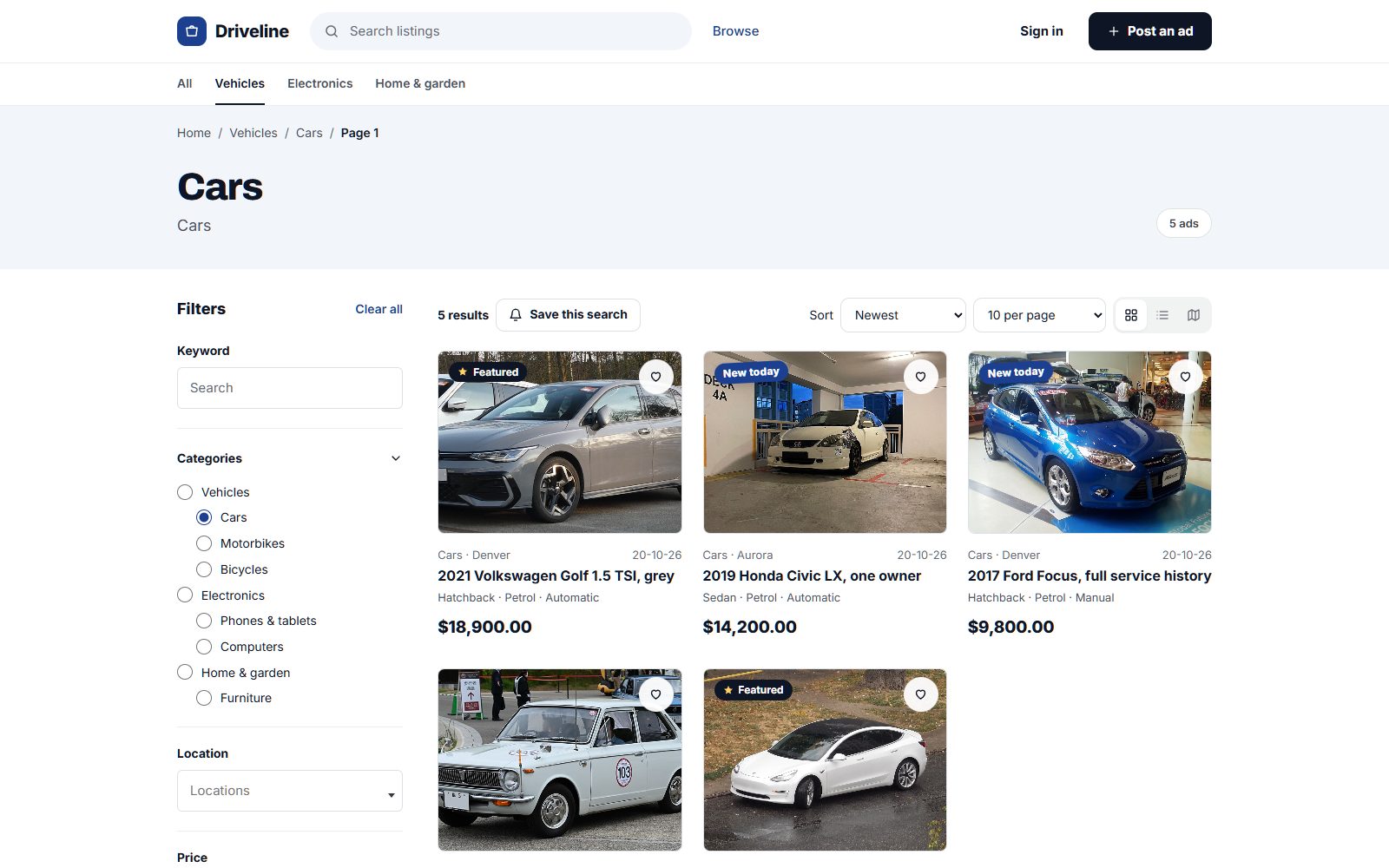
Keep categories to space types: driveways, garages, covered and carport spaces, parking lots, and outdoor storage for boats, trailers and RVs. Drivers mostly search on a map, so every listing needs an accurate location. Show the approximate spot publicly and share the exact address and access details once a booking is paid.
Size decides whether a vehicle fits. Ask hosts for the vehicle size the space suits (compact, sedan, SUV, pickup, van), the length and width, and for garages the door height. For storage, add the maximum length and whether there is room to turn a trailer.
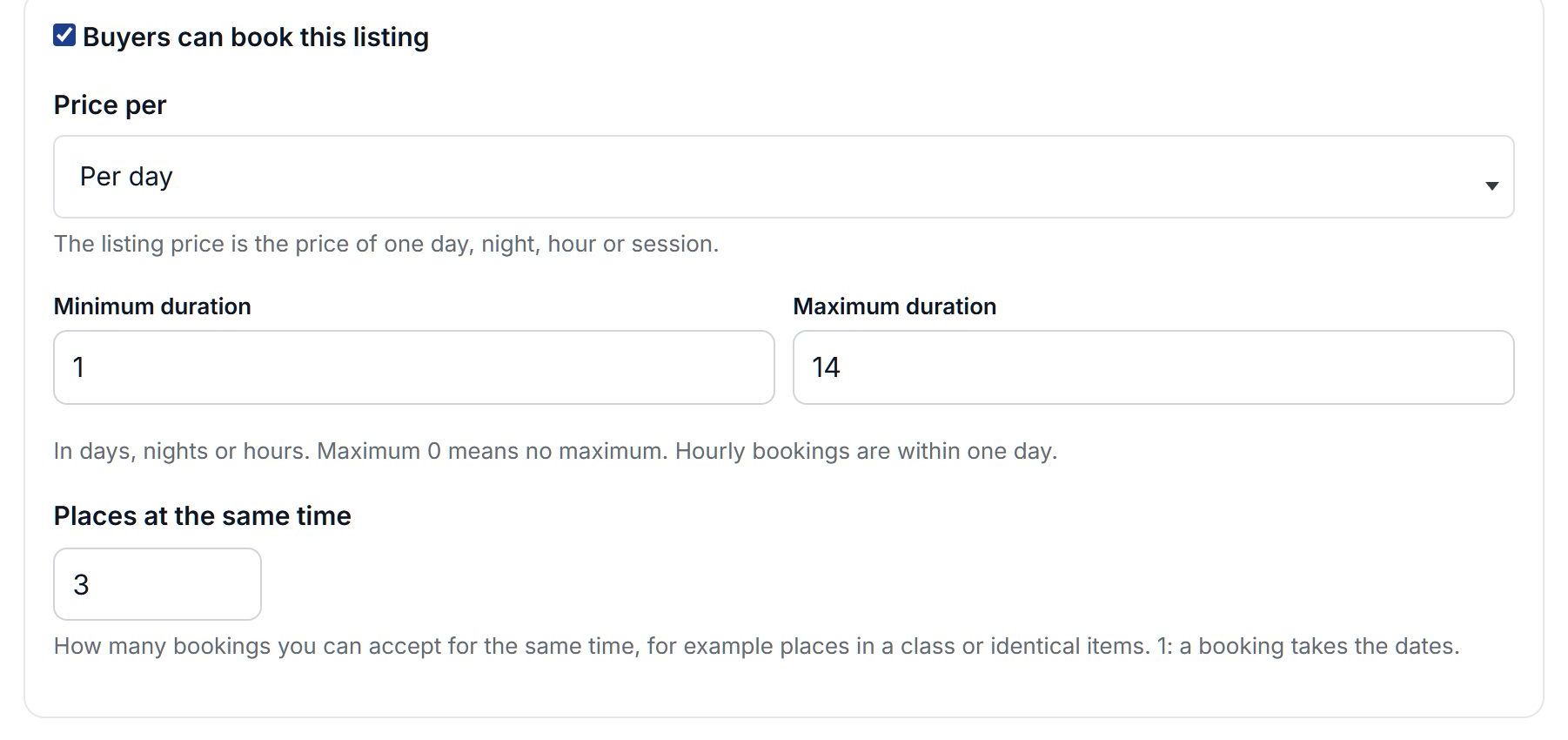
Access details come next: hours the space is available, whether drivers can come and go, gate code or key handover, covered or open, lighting, cameras, and whether there is an EV charger. Rental terms close the listing: price per day and per week (or month for commuters), deposit, and any rules such as no overnight or no commercial vehicles.
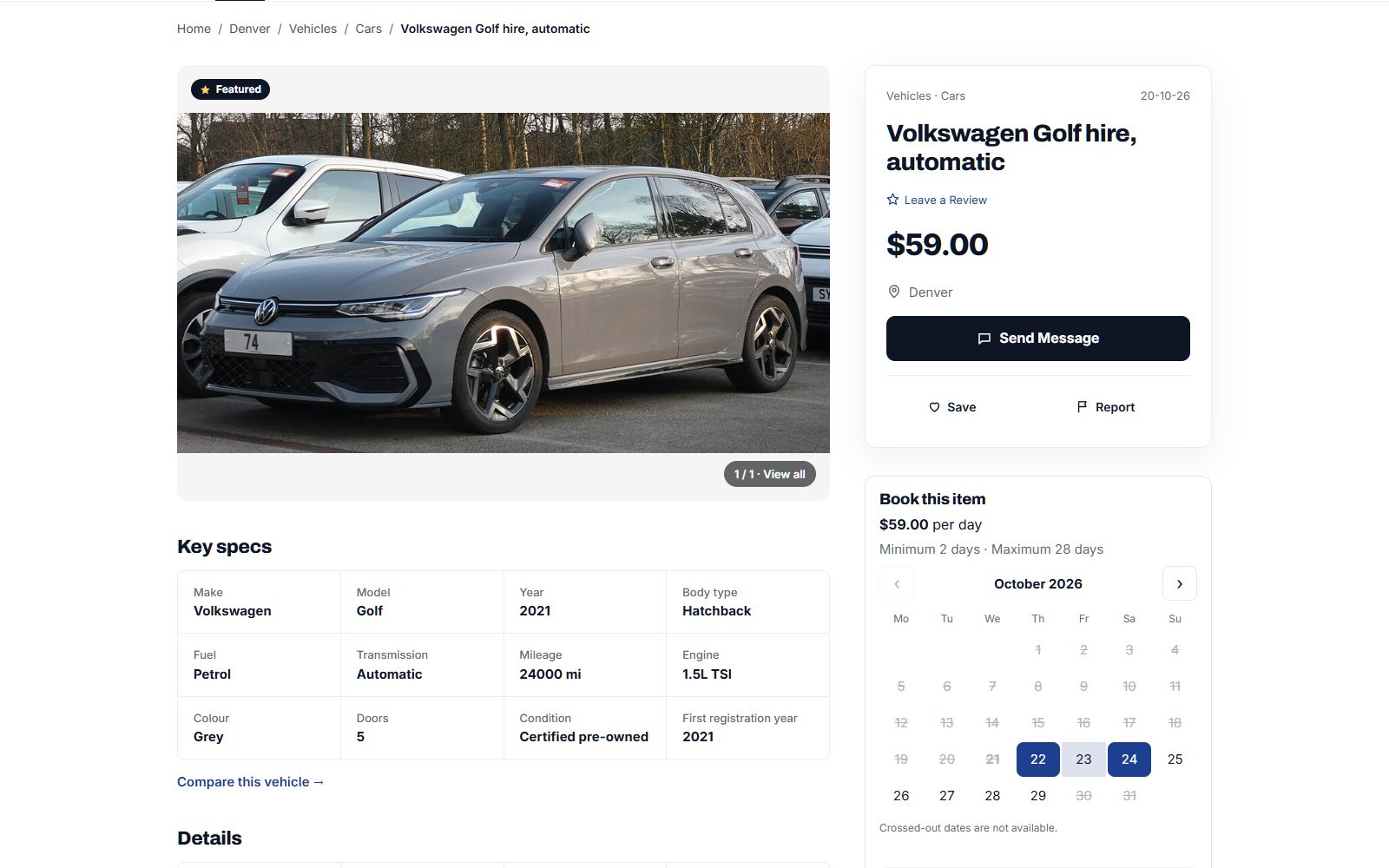
With Yclas maps, drivers see spaces near the place they are going, and saved searches with email alerts tell a commuter when a monthly space opens near their office. Custom fields as search filters let a driver ask only for covered spaces that fit a pickup.
| Category | Example listings | Fields drivers filter on |
|---|---|---|
| Driveways | Driveway two blocks from the stadium, game days | Vehicle size, distance to venue, available hours, price per day |
| Garages | Single garage for monthly storage of a classic car | Door height, length, secure, power outlet, monthly price |
| Covered and carport | Carport space near the hospital, weekdays | Covered, in and out allowed, lighting, weekly price |
| Parking lots | Church lot, 40 spaces for weekday commuters | Number of spaces, hours, gated, EV charging |
| Boat, trailer and RV storage | Gravel yard spot for a 30 ft RV | Maximum length, gated, power, water, monthly price |
Make "in and out allowed" a checkbox. Commuters and event-goers need very different answers to it.
Take a small share of every booking and grow on repeat parkers.
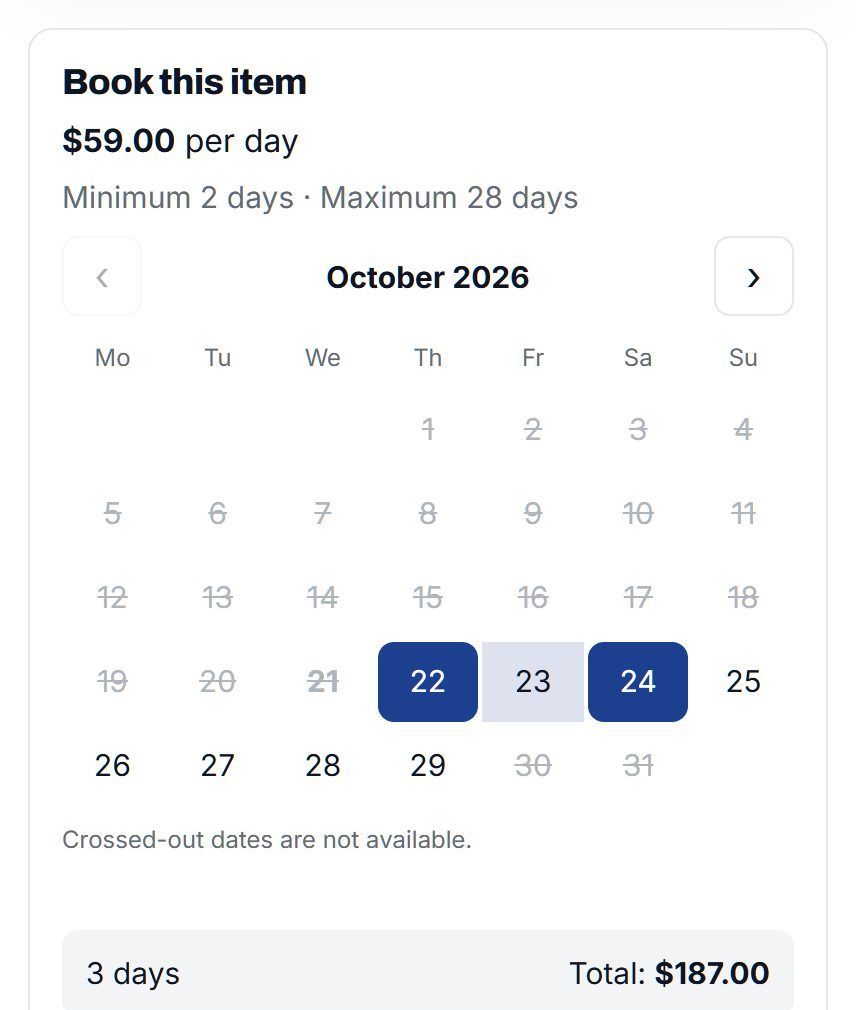
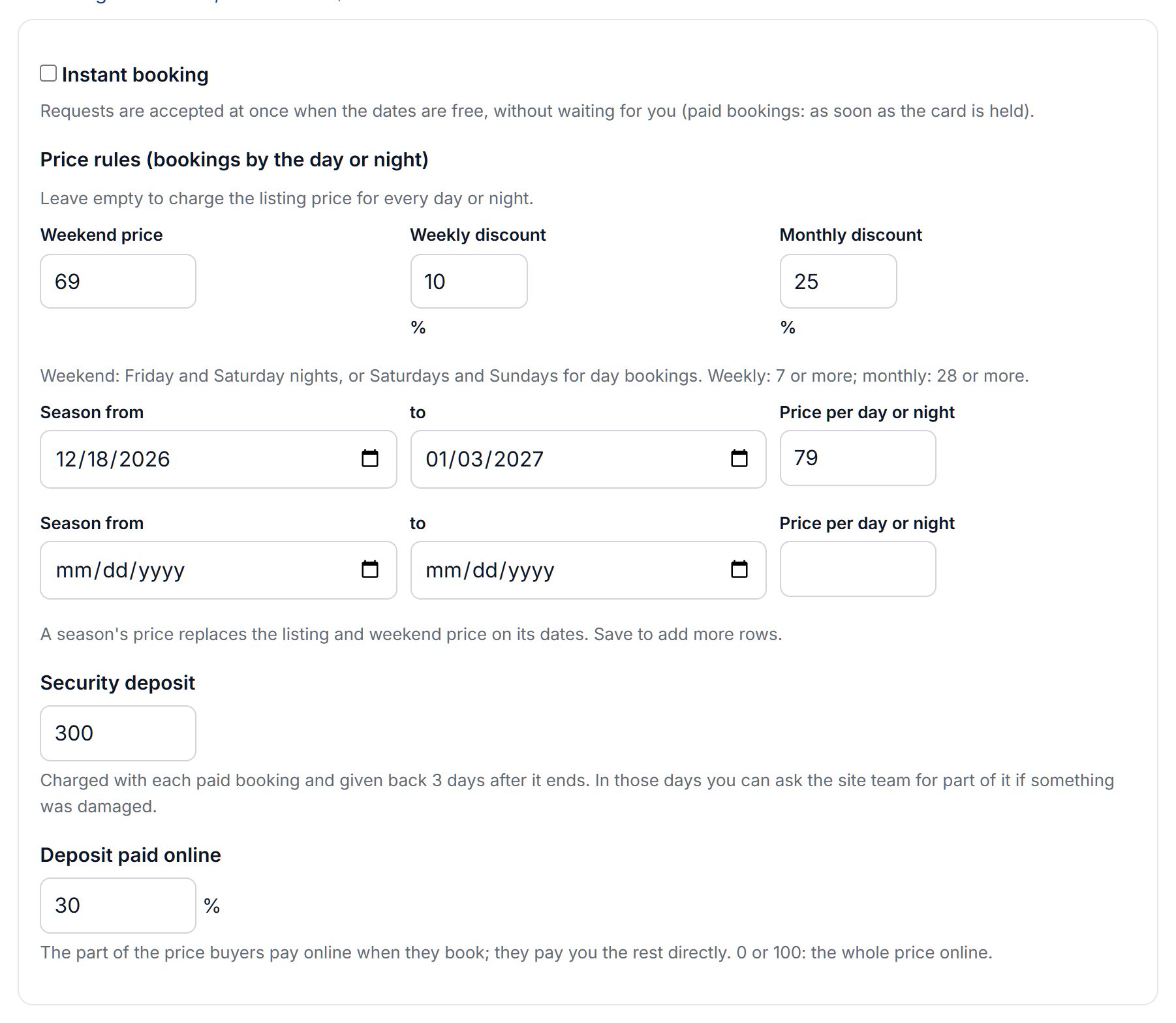
Drivers pay through the site when they book, and you keep a commission on each booking. Single event bookings are small, but they come in waves around every game or show, and monthly commuter spaces bring steady repeat income. Hosts are earning from space that brings in nothing today, so most accept a fair share.
Churches, schools and businesses with lots will look harder at the rate. They may prefer a lower commission in return for listing many spaces, or a membership that covers all of them.
Deposits are less important for ordinary parking but useful for long-term storage, garages and gated spaces with keys or remotes. Hosts state the deposit and when it may be kept, for example for a lost gate remote or oil left on a garage floor.
A driver service fee works well on event days, when drivers expect to pay for convenience. Featured listings help hosts closest to the venue get seen first. Host memberships suit lot owners. Banner spaces suit car washes, valet services, local restaurants and bars near venues.
Start free for hosts and charge only commission. Add the driver fee once event bookings are steady.
| Model | Works when | Switch it on |
|---|---|---|
| Commission per booking | Drivers book and pay on the site | From the first booking |
| Driver service fee | Event days with heavy demand | Once game-day bookings sell out |
| Featured listings | Many hosts near one venue compete | When a venue area has a few dozen spaces |
| Host memberships | Churches, schools and businesses list whole lots | After the first lot owners join |
| Banner spaces | Restaurants, bars and car washes near venues want drivers | When event traffic is predictable |
Sign up the spaces nearest your chosen venue or station first.
Drivers only care about the closest few blocks, so supply has to be dense. Walk the area and talk to hosts face to face.
- Homeowners near the venue. Many already rent their driveway on game days with a sign and a cash box. Knock on doors or leave a flyer explaining that bookings arrive paid in advance.
- Churches and schools. Their lots are often empty on weekdays or at night. A conversation with the facilities manager or board can add dozens of spaces at once.
- Small businesses. Offices closed on weekends, shops that close at six, and restaurants open only in the evening can rent spaces outside their hours.
- Neighborhood associations. They know which streets suffer from parking and which residents have space to spare.
- Storage yard and farm owners. For boat, trailer and RV storage, owners of yards, barns and rural land on the edge of town.
Photograph each space from the street and from inside, measure it, and agree the hours, prices and access method with the host. Lots with many spaces can be added from a spreadsheet.
Twenty spaces within a five-minute walk of one stadium beat two hundred spread across a city.
Check that hosts may rent the space and set clear rules for damage.
Parking looks simple, but it raises questions about permission, local rules and liability.
- Right to rent. Tenants may need their landlord's permission, condo owners may be bound by association rules, and some leases forbid subletting a space. Ask hosts to confirm they are allowed to rent it, and remove listings when a landlord or association objects.
- Local rules. Some cities restrict commercial parking in residential areas, charge event parking taxes, or require permits for lots. Zoning and permit rules vary widely: check the rules where you operate.
- Liability. If a car is damaged, or someone is hurt on a host's property, insurance questions follow. Hosts should check with their own insurer whether renting is covered. Say plainly that the site does not insure vehicles or property.
- Fake and double-sold spaces. Scammers list spaces they do not control, or a host sells a space twice on event day. Hold new listings for review, ask for photos taken on site, and use reports to remove bad hosts quickly.
- Blocked spaces and overstays. Set rules on what happens if a driver arrives to find the space taken, or stays past the booking.
- Payment scams. Drivers should pay only through the site, never cash or transfer to a stranger.
Ratings and reviews on both sides, plus verified host badges for churches and businesses, show drivers which spaces are reliable.
Rank for parking searches tied to a venue, station or airport.
Drivers search with a destination: "parking near Wrigley Field", "cheap parking near the Rose Bowl", "monthly parking downtown Seattle", "long-term parking near Newark airport", "driveway parking for rent near me", "RV storage near Boise", "garage for rent to store a car". Event parking searches spike in the days before each game or concert.
Pages to build
- Venue pages: one page per stadium, arena, hospital, station or airport you cover, with all spaces nearby and walking times.
- Neighborhood pages: monthly parking by neighborhood for commuters, using the page each location gets automatically.
- Event guides: how to get to the stadium, where to park on game day, how early to arrive, and road closures.
- Storage guides: storing a boat over winter, preparing an RV for storage, what to look for in a garage rental.
Venue pages are what event-goers search for, and they fill up quickly once a few hosts list nearby. Put the venue name and the walking time in every listing title.
Launch around one venue at the start of its season.
Parking demand follows calendars you can read in advance: football and baseball seasons, concert tours, college move-in and graduation weeks, holiday travel at airports, and fall and spring for boat and RV storage. Commuter demand returns after summer holidays. Launch a few weeks before the season at your chosen venue so spaces are listed when the schedule comes out.
First steps
- Pick one stadium, station, hospital or airport where parking is short and expensive.
- Sign up twenty or more spaces within a short walk, including at least one church or business lot.
- Tell local fan clubs, season ticket holder groups and commuter forums.
- Partner with bars and restaurants near the venue that drivers visit before the event.
Launch checklist
- Accurate map location and vehicle size on every listing.
- Exact address and access details shared only after booking.
- Hosts confirmed they are allowed to rent the space.
- Overstay, blocked space and damage rules published.
- Calendars filled with the season's event dates.
After the first season, look at the venues and neighborhoods drivers searched for and recruit hosts there next.
A worked example: Isthmus Park Share in Madison, Wisconsin.
Isthmus Park Share is a made-up site, outlined here to show how the steps in this guide work together. It covers the neighborhoods around the university stadium and the downtown isthmus in Madison, Wisconsin, where football Saturdays bring huge crowds, street parking near campus is scarce, and commuters to the hospitals and state offices compete for monthly spaces.
Who it serves
Drivers are fans on game days, concertgoers, commuters who want a monthly space within a walk of work, parents moving students in and out of dorms, and owners of boats and campers who need somewhere to keep them through the winter. Hosts are homeowners with driveways near the stadium, two churches with weekday lots, a dental office that is closed on weekends, and farmers at the edge of the county with barn and yard space.
Categories
- Event parking
- Stadium game days
- Concerts and arena events
- Monthly commuter spaces
- Garages
- Storage
- Boats and trailers
- RVs and campers
How it started
The founder lived four blocks from the stadium and had rented his own driveway on game days for years with a hand-painted sign and a coffee can. In August he walked the surrounding streets, talking to neighbors who did the same, and showed them that bookings would arrive paid before kickoff, with no cash to guard. Twenty-two driveways joined before the first home game. A church lot followed after he spoke at a council meeting, adding thirty spaces at once. The dental office came next, after its owner saw fans circling her empty lot on a Saturday.
Two fields mattered more than any other: walking time to the nearest stadium gate, and whether drivers could leave and come back. Exact addresses and access instructions were shared only after payment. In November, as boats came out of the lakes, storage listings began to fill the quiet months between football and spring.
How it makes money
Drivers pay when they book, and the site keeps a commission on each booking. A driver service fee on event bookings started in the second season, once the closest spaces sold out for every home game. The churches pay for a host membership, and a sports bar near the stadium buys banner space for the football season.
Storage turned a seasonal event site into a business with income all year.
| Listing | Price | Key details |
|---|---|---|
| Driveway, 6 minutes' walk to the stadium | $30 per game day | Fits an SUV, no in and out, available 7 am to 8 pm |
| Church lot space near the hospital | $95 per month | Weekdays 6 am to 7 pm, lit, gated at night, 30 spaces |
| Single garage for a classic car | $160 per month | Door height 7 ft, power outlet, locked, three-month minimum |
| Barn space for a pontoon on its trailer | $70 per month | Up to 26 ft, November to April, deposit for the key |
| Office lot space on concert nights | $20 per event | Open 5 pm to midnight, in and out allowed |
The first 90 days of a parking marketplace.
Parking demand is tied to dates printed in a schedule, so build the ninety days backward from one of them: the first home game, the first big concert, or the return of commuters after the summer. Hosts need to be signed up and calendars filled with event dates before fans start planning their day.
The work is local and on foot. You will spend more of these weeks walking streets, knocking on doors and sitting in church and neighborhood meetings than at a desk. Density is the goal, so measure progress by spaces within a ten-minute walk of your chosen venue, not by total listings. A map pinned on your wall, with every host marked, shows the gaps faster than any report.
Settle permission early. Before a space goes live its host should confirm they may rent it, and you should know the city's rules on event parking, lot permits and parking taxes.
Keep a log of every problem at the first events, such as a blocked driveway, a driver who could not find the space or a host who forgot a booking. Turn each one into a rule or a line on the listing before the next event, and tell hosts what changed.
| Weeks | Focus | Done when |
|---|---|---|
| 1-2 | Pick the venue or station, read local parking rules, set space types and access fields | You know which permit and tax rules apply, and a test listing shows walking time and vehicle size |
| 3-4 | Door-to-door with homeowners who already rent on event days | Fifteen driveways within a ten-minute walk are live with photos and measurements |
| 5-6 | Churches, schools and businesses with lots | At least one lot owner lists twenty or more spaces with hours set |
| 7-8 | Event dates loaded into calendars; access and overstay rules published | Every listing shows the season's event dates and exact addresses stay hidden until booking |
| 9-10 | Fan clubs, season ticket groups, commuter forums and bars near the venue | Three groups or businesses have shared the site and the closest spaces sell out for one event |
| 11-12 | Monthly commuter spaces and storage hosts for the off-season | Ten monthly or storage listings are live to carry income between events |
Three ways to build a parking marketplace.
A parking marketplace looks simple, but the details are particular. Every space needs a precise map location, a calendar that can sell a single event day or a whole month, and access details that stay hidden until payment. A lot sells many identical spaces while a driveway sells one, and drivers decide in seconds on walking time and price, often on a phone on the way to the game.
A build by developers fits plans that need hardware or live data: gate controllers that open for a booked driver, license plate cameras, or a feed of event schedules from venues. Those pieces are expensive and need upkeep for as long as the site runs.
A booking script or plugin on your own server can work for one lot or garage. For a marketplace, test the map search, how a lot with many spaces is listed, and whether the address can stay hidden until payment. Hosting, payment security and updates are then yours to run.
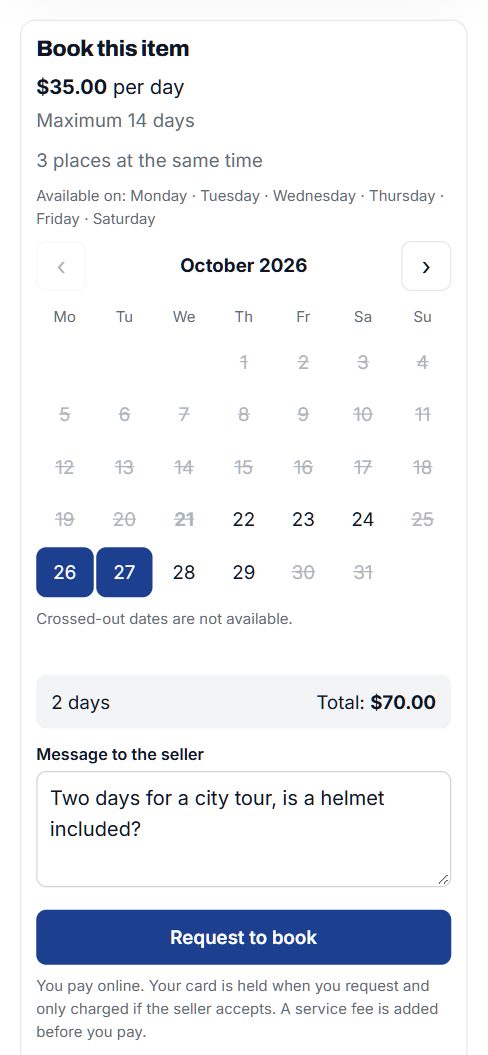
A hosted builder such as Yclas suits a founder whose real work is on the street: maps, rentals with a booking calendar and deposits, and payment through Stripe come ready. Build one driveway listing and one lot listing before you commit, and check that each behaves the way your hosts need on an event day.
No route will knock on doors for you. Density near the venue decides whether drivers come back. Software only has to make booking quick once they arrive.
| Route | Fits when | Watch out for |
|---|---|---|
| Developers build it | You need gate control, plate cameras or live venue schedules | High cost and hardware upkeep at every location |
| Script or plugin on your server | A single lot or garage renting its own spaces | Map search, many hosts and hidden addresses may need custom work |
| Hosted builder | Many hosts, maps, calendars and checkout from the first event | Lots with many spaces need the count and hours stated on the listing |
What a parking space marketplace costs to run.
The software is the smallest part of the bill. Most of the cost is your time in the first months: finding the first listings, answering questions and checking what gets posted.
Costs here are mostly on the ground: printed flyers and door-to-door time near your venue, perhaps simple signs hosts can put out on event days, and legal advice on local zoning, permit and parking tax rules. Some places charge permits for commercial lots, which hosts may expect you to explain.
| Cost | Typical range | On Yclas |
|---|---|---|
| Domain | $10 to $20 a year | Your own, with SSL included |
| Software and hosting | $0 to $100+ a month, plus plugins and updates | Marketplace $149 a month for checkout and commission |
| Design | $0 to $100 for a theme, or a designer | 109 looks included |
| Payment fees | About 3% per payment | Your Stripe or PayPal fees; Yclas takes nothing |
| Your time | 5 to 10 hours a week at the start | Finding listings, moderation, support |
Mistakes that leave a parking marketplace with empty spaces.
- Going citywide too soon. A driver heading to one stadium only cares about the few streets around it. Two hundred spaces spread across a city leave every venue thin. Fill the blocks around one venue, then move on to the next.
- Publishing the exact address. A public address next to a calendar of empty dates invites people to park without paying. Show the block on the map and share the address and access details only after the booking is paid.
- Skipping the permission check. Tenants and condo owners often need permission to rent a space, and an angry landlord or association can end a listing and your reputation on that street. Ask every host to confirm they may rent, and act at once on complaints.
- Vague size details. A pickup that does not fit a narrow driveway or under a low garage door spoils a game day for two people. Ask for length, width, door height and the largest vehicle that fits.
- No rule for a taken space. Sooner or later a driver arrives to find a car already parked there. Decide in advance what happens, whether the host finds another space, refunds the booking or both, and publish it.
- Ignoring overstays. A driver who leaves a car past the booking blocks the host's own car or the next driver. Set an overstay fee or rule on each listing, and say whether towing is allowed under local rules.
- Loading no event dates. Fans search for a specific game. If hosts have not opened their calendars for the season, the site looks empty on the day that matters. Load the schedule into every calendar as soon as it is announced.
- Living only on events. Game days are few, and the months between seasons are quiet. Monthly commuter spaces and boat, trailer and RV storage carry income through the year, so add them before the first off-season.
- Pricing far from the venue like next to it. A driveway twenty minutes away cannot charge what a spot by the gate charges, and drivers who overpay once do not return. Show hosts what nearby spaces charge and suggest prices that fall with walking time.
- Photos that show nothing. A photo of a garage door says little. Ask for one photo from the street showing how to find the space and one of the space itself, so a driver arriving in the dark knows where to turn.
- Forgetting the neighbors. Event parking brings noise, litter and blocked sidewalks to residential streets. Ask hosts to keep sidewalks and neighbors' driveways clear, and remind drivers on every booking that they are parking in someone's street.
Parking terms hosts and drivers will use.
Expect these in listings, city rules and questions from hosts.
| Term | What it means |
|---|---|
| In and out privileges | Permission for a driver to leave and come back during the booked time without paying again. |
| Event parking | Spaces sold for the hours around a game, concert or festival, usually at one price. |
| Monthly parking | A space held for one driver for a full month, common for commuters. |
| Reserved space | A space kept for one driver, as opposed to first-come parking in a lot. |
| Tandem parking | Two cars parked one behind the other, so the front car cannot leave until the back one moves. |
| Clearance height | The tallest vehicle that fits under a garage door, carport or roof. |
| Overstay | A driver staying past the end of the booked time. |
| Zoning | Local rules that set how land in an area may be used, including for paid parking. |
| Residential permit parking | A city scheme that limits street parking in a neighborhood to residents with permits. |
| Parking tax | A tax some cities charge on paid parking, which may apply to event or monthly bookings. |
| Covered parking | A space under a roof or carport, sheltered from sun, hail and snow. |
| Dry storage | Keeping a boat out of the water, on a trailer or a rack, often through the winter. |
| Lot attendant | A person who directs cars into spaces on busy days, which some lot hosts provide for large events. |
| Tailgating | Gathering around a parked car before a game to eat and socialize, which some hosts allow and others do not. |
The same steps for a parking space marketplace on Yclas.
- Describe your marketplaceThe setup wizard writes the categories, an About page and example listings from one sentence.
- Add fieldsThe details buyers filter on, as dropdowns, numbers or checkboxes.
- Bring sellersInvite them, import their stock from a spreadsheet, or post for them.
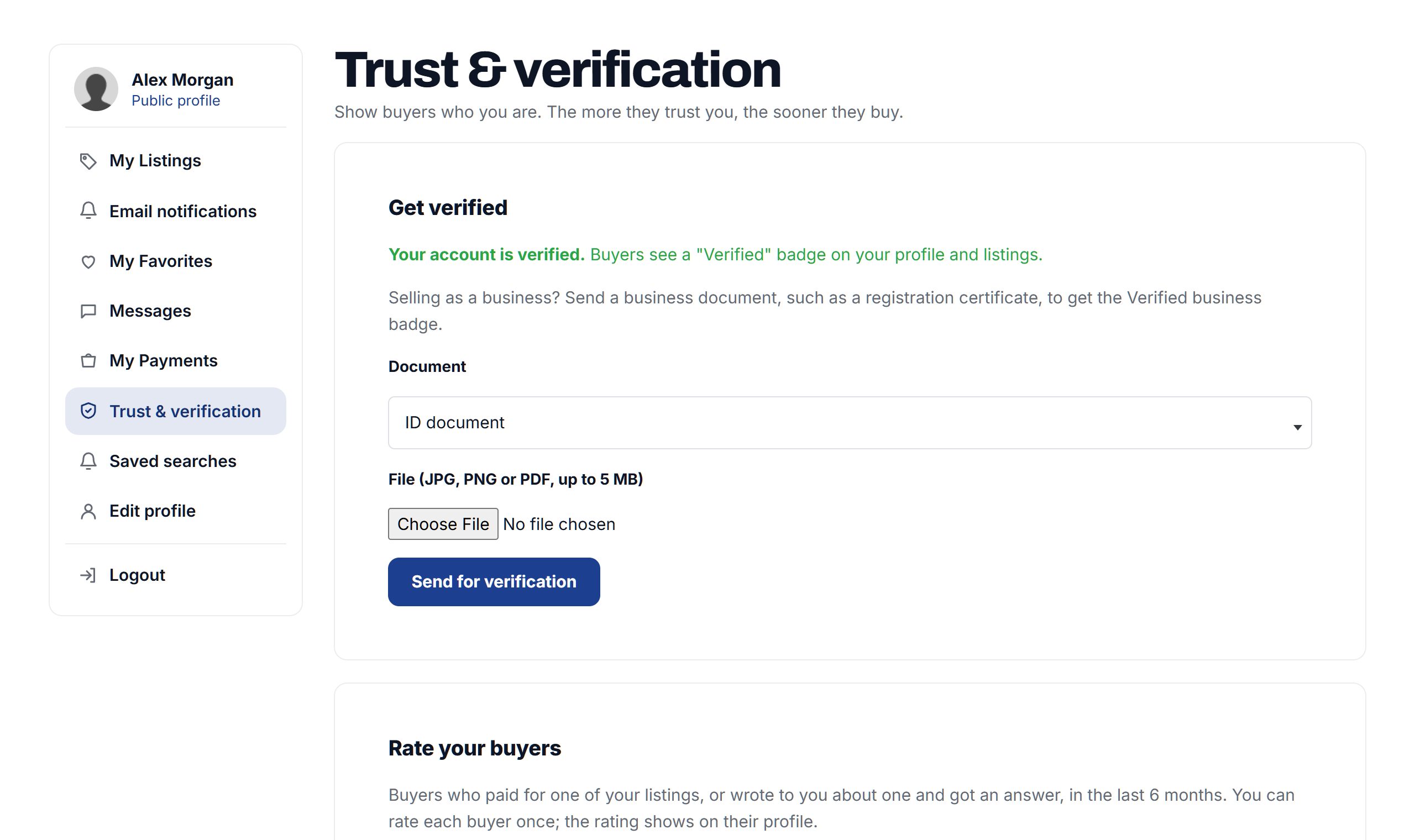
- Set the rulesChoose moderation, verified sellers, reviews and reports.
- Take paymentsOn Marketplace, buyers pay on the site and you keep a commission, with Stripe.
What does it cost to start a parking space marketplace?
Little beyond the site and your time: hosts already own the spaces. Budget for flyers, door knocking near your first venue, and legal advice on local parking rules.
Is it legal for homeowners to rent out their driveways?
In many places yes, but some cities restrict commercial parking in residential zones or tax event parking, and leases or associations may forbid it. Check the rules where you operate and ask hosts to confirm they may rent the space.
Who is responsible if a car is damaged in a rented space?
Usually the host's and driver's own insurance, depending on the circumstances and local law. Tell both sides to check their cover and make clear the site does not insure vehicles or property.
How do I get the first hosts?
Walk the streets around one venue and talk to homeowners who already rent on game days, then approach churches, schools and businesses with lots.
How do I make money if bookings are small?
Commission on every booking adds up on event days and with monthly commuter spaces. Add a driver fee for events and memberships for lot owners once demand is steady.
What stops a host renting the same space twice?
The booking calendar blocks a date once it is booked on the site. Ask hosts not to sell event spaces elsewhere, and remove hosts who double-book.
Should I include boat and RV storage?
Yes if your area has many boat or RV owners and few storage yards. Those are long rentals with steady income, and they suit rural hosts with land.
Can apartment residents rent out their assigned space?
Only if their lease and the building's rules allow it. Ask them to confirm with the landlord or association before listing, and remove the listing if the building objects.
How do drivers find the exact space?
After booking, the host sends the address, a photo of the space and any gate code through on-site messages. Ask hosts to mark the space with a cone or a small sign on event days, and to describe any landmark that helps in the dark.
Should I allow overnight parking?
Let hosts decide with a field on each listing. Overnight parking suits airport travelers and commuters, but some neighborhoods and associations restrict it, so hosts should check their local rules.
Can I list spaces for RVs and box trucks?
Yes, in their own category with length, height and turning room fields. Large vehicles suit rural yards and big lots far better than driveways on busy streets.
What happens when a game is canceled or moved?
Publish a rule before the season, such as a refund or a transfer to the new date, and apply it to every event booking. Fans will ask the moment a game is called off, so have the answer ready, and send it to every driver with a booking that day.
Related pages.
The parts of Yclas this leans on.
You have the plan. Now put your town's empty driveways to work.
Describe your site in a sentence and the setup wizard writes the categories, example listings and a look. Free for 15 days, no credit card.
Start my marketplace