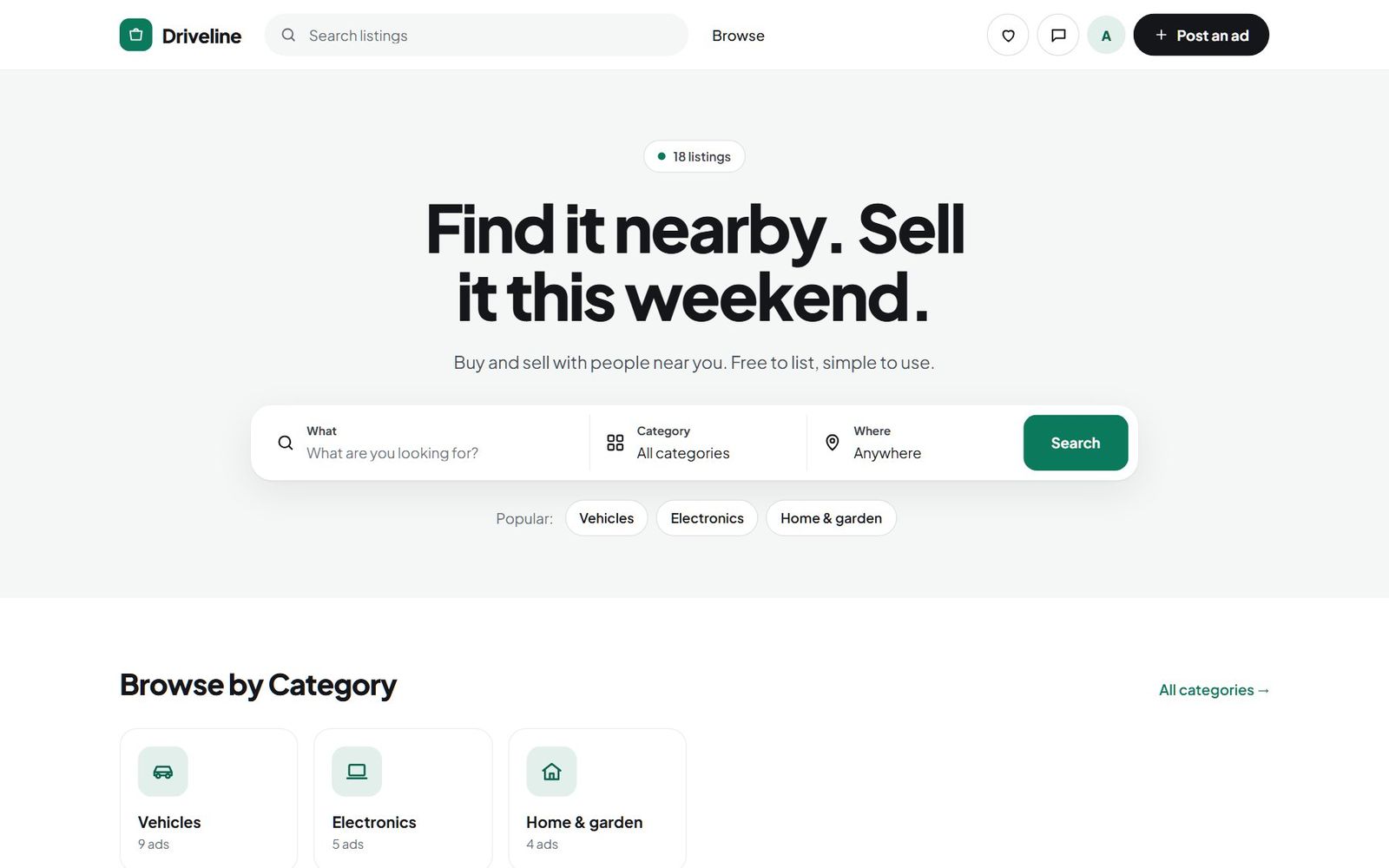
Most people who launch a classifieds site, a directory or a marketplace get their terms the same way: they open a big site's terms of use, copy them, and swap in their own name. The result describes somebody else's business, cites rules that have since changed, and leaves out what a site with user listings has to say in 2026, such as how people report an illegal listing, why you removed one, and how a seller can appeal.
So we built a free generator for the whole set. Answer a few questions about your site and it writes your Terms of use, Privacy policy, Listing policy, Reports and appeals procedure and Cookie notice, and, when you need them, Payments and refunds, Seller terms, a Legal notice and an Accessibility statement. You also get ready-to-send emails for reports, removals and appeals, and a to-do list of what you still have to do outside the documents. Everything happens in your browser: nothing you type is sent to us or stored on our side.
In short
- A site with user listings needs more than terms and a privacy policy: a listing policy, a way to report content and appeal decisions, and, if you take payments, refund and seller terms.
- The generator below writes all of them for a classifieds site, a directory or a marketplace, with the rules for the EU, the UK, the US, Canada and Australia, and nothing leaves your browser.
- Under the EU Digital Services Act even the smallest site must let people report illegal content and tell users why their content was removed, and those rules belong in your terms.
- Sites that take payments from EU consumers also need an online withdrawal button, since 19 June 2026.
- US sites should register a DMCA agent with the Copyright Office ($6 for 3 years); UK sites need a written illegal content risk assessment under the Online Safety Act.
- Read every document before you publish it, and ask a lawyer if you take payments for sellers, sell in several countries or allow regulated items.
Free generator
Make your legal pack
Answer the questions and your documents write themselves below. Everything stays in your browser: nothing you type is sent to us or saved on our side.
Rules checked on 1 November 2026 for the EU, the UK, the US, Canada and Australia.
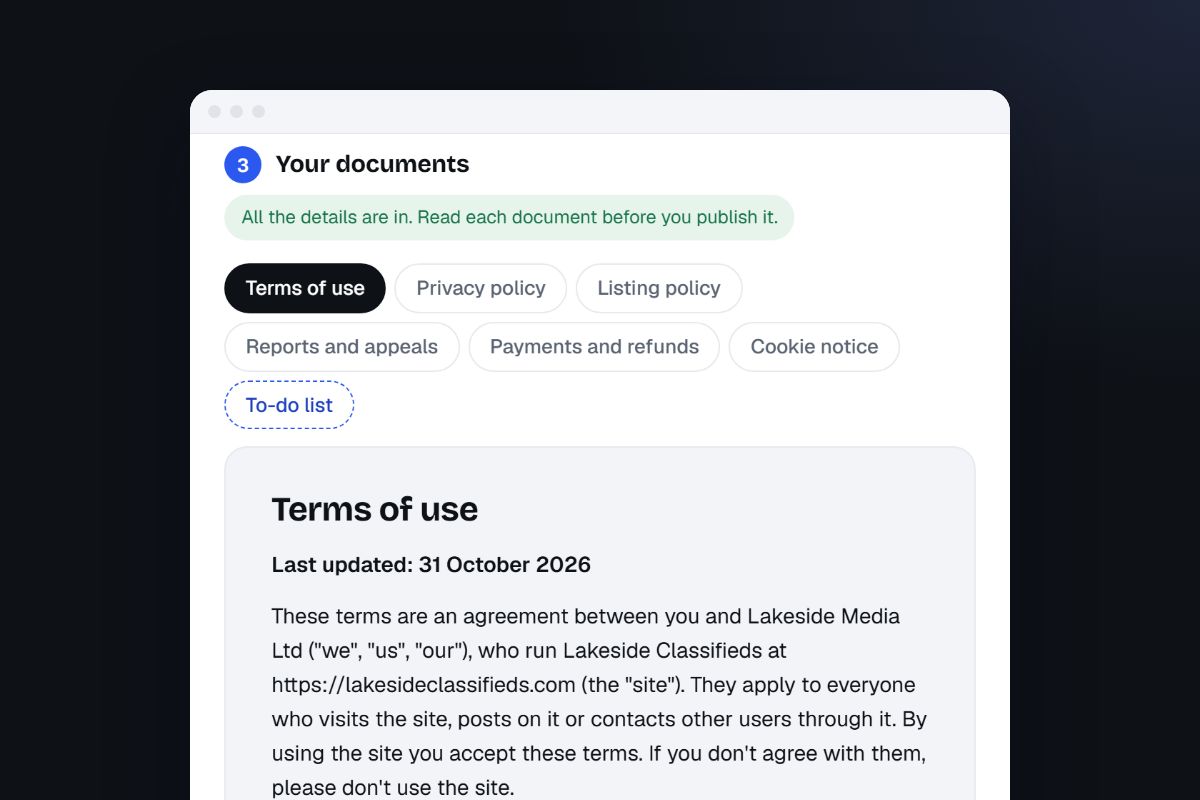
3 Your documents
A starting point written in plain English, not legal advice: Yclas isn't a law firm. Read every document before you publish it, change anything that doesn't match how your site works, and ask a lawyer if you take payments, sell to many countries or list anything regulated.
What is in the legal pack
Each document answers a different question that users, payment providers, app stores and regulators will ask. Here is what each one is for and which rules make it necessary.
| Document | What it covers | Why you need it |
|---|---|---|
| Terms of use | What your site is, who can use it, the rules, how you moderate, liability, changes and which law applies | Your contract with every user. The EU Digital Services Act (Article 14) says terms must explain your content rules and moderation, including automated tools and how complaints work. |
| Privacy policy | What you collect, why, who you share it with, how long you keep it and users' rights | Required by the GDPR (Articles 13 and 14), UK GDPR, California's CalOPPA for any commercial site with Californian visitors, PIPEDA in Canada and the Australian Privacy Principles. |
| Listing policy | What every listing must do, what is never allowed, and extra rules for vehicles, property, jobs, pets and other categories | The rules you point to when you remove a listing. Without them, a removal looks arbitrary and is hard to defend. |
| Reports and appeals | How to report content, what you do with a report, the reasons you give and how to appeal; copyright notices | Notice and action and statements of reasons (DSA Articles 16 and 17), complaint procedures and 48-hour removal of intimate images under the UK Online Safety Act, and in the US the DMCA notice and counter-notice process and the TAKE IT DOWN Act. |
| Payments and refunds | Prices and taxes, paid listings, subscriptions, the 14-day right to cancel and refunds; buying from sellers on a marketplace | Consumer law in every market, and the first thing payment providers and card disputes look at. |
| Seller terms | Business seller details, seller duties, fees and payouts, ranking, suspension and complaints | Trader rules (EU Omnibus Directive and DSA Article 30), the EU Platform-to-Business Regulation, US INFORM Consumers Act, and seller tax reporting. |
| Legal notice | Who runs the site: name, address, quick contact, company number, VAT number and who represents the business | The EU E-Commerce Directive (Article 5) requires these details on every business website; Germany and Austria call it the Impressum. UK companies must show their registered details on their website. |
| Accessibility statement | The standard you follow, what doesn't work yet and how to report a problem | The European Accessibility Act, which since 28 June 2025 covers services sold to EU consumers online and asks you to explain how you meet its requirements. Micro-businesses are exempt. |
| Cookie notice | Which cookies the site uses and how to change your choice | The ePrivacy rules in the EU and PECR in the UK, which require consent for analytics and ad cookies. |
| Email templates | Messages for a new report, a decision, a removal with its reasons, an appeal result, a business seller check and new terms | The DSA's statement of reasons (Article 17) must say what you did, the facts, the rule broken, whether automated tools were used and how to appeal. The templates have a place for each. |
| To-do list | What you still have to do outside the documents | Several duties are actions, not words: registering a DMCA agent, writing a risk assessment, adding a Report button. |
Payments and refunds only appears if you charge for something, Seller terms only if you run a marketplace or have business sellers, the Legal notice if you or your users are in the EU or UK, and the Accessibility statement if you take payments from EU consumers. A free classifieds site with no business sellers and no users in Europe gets five documents, plus the email templates and the to-do list.
Classifieds, directory or marketplace: what changes
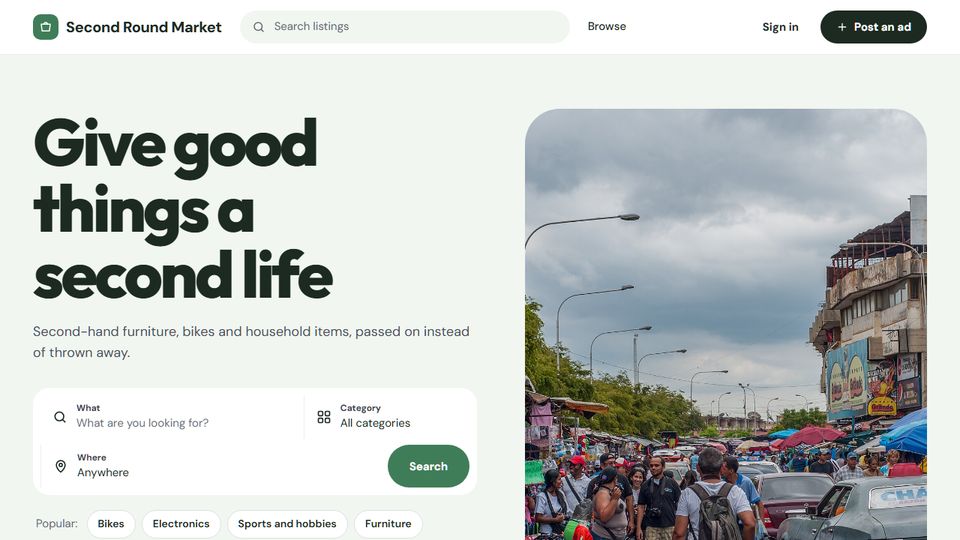
The three kinds of site look alike, but they make different promises, so their documents differ in a few important places. The generator changes these for you when you pick a type.
| Classifieds site | Directory | Marketplace | |
|---|---|---|---|
| Who makes the deal | Buyer and seller, off the site. You are not part of it. | The visitor and the business. You don't recommend or guarantee anyone. | Buyer and seller, but the payment goes through your site and you take a fee. |
| Main risk to cover | Scams and banned items | Wrong business details and unfair reviews | Items that don't arrive, refunds and chargebacks |
| Extra documents | Payments and refunds if you sell promotions or plans | Business terms for listed businesses | Payments and refunds, and Seller terms |
| Seller checks | Business sellers must say they are a business | Business details kept accurate | Identity, payout and tax details; INFORM and DAC7 thresholds |
| Ranking to explain | Date, relevance and paid promotions | Relevance, distance and reviews | Relevance, date and paid promotions |
The difference that matters most is the money. Once buyers pay through your site, you are no longer just a noticeboard: you handle refunds and disputes, you must check high-volume sellers in the US and report seller income to tax authorities in the EU and UK, and your payment provider will want to see your refund terms before it lets you take payments for others.
The rules behind each document in 2026
These are the rules the generator follows, region by region. Our guide to marketplace compliance explains each law in more depth.
European Union
- Digital Services Act. Every site that hosts user content needs a single point of contact for users and authorities (Articles 11 and 12), terms that explain its content rules and moderation (Article 14), an easy way to report illegal content (Article 16) and a statement of reasons each time it removes or limits content or an account (Article 17). If you learn of a crime that threatens someone's life or safety, you must tell the authorities (Article 18). A site based outside the EU must also appoint a legal representative in the EU (Article 13).
- Small sites are spared some duties. Micro and small enterprises, meaning fewer than 50 staff and no more than €10 million turnover or balance sheet, don't have to publish yearly transparency reports (Article 15), run the formal internal complaint system or publish their number of monthly active users (Article 19), or, for marketplaces, check every trader's identity before they can sell (Article 29). They still have to give users a way to report content and a reason for every removal. The generator includes appeals in every pack anyway, because they cost almost nothing and users expect them.
- GDPR. A privacy policy must say who you are and how to contact you, why you use each kind of data and on what legal basis, who receives it, whether it leaves the EU and how it is protected, how long you keep it, and which rights users have, including the right to complain to a data protection authority (Article 13). There is no size threshold.
- Consumer law for marketplaces. Since the Omnibus Directive, an online marketplace must tell buyers whether a seller is a trader (and that consumer rights don't apply to private sales), explain the main parameters that decide ranking, and say whether and how it checks that reviews come from real customers.
- Platform-to-Business Regulation. Business sellers must get at least 15 days' notice of changes to your terms, the reasons when you restrict or suspend them, and 30 days' notice before you end their account, except for serious breaches.
- Who you are. The E-Commerce Directive (Article 5) requires every business website to show its name, geographic address, email and another quick way to get in touch, its company register and number, its VAT number and, for licensed activities, its supervisory authority. That is what the Legal notice is for.
- The withdrawal button. Since 19 June 2026, a business that sells to EU consumers online, including paid listings and plans, must offer a clearly labelled "Withdraw from contract here" function (or similar wording) for the whole 14-day cancellation period, with a confirmation step, and send a confirmation of each cancellation straight away. It comes from Directive (EU) 2023/2673, which added Article 11a to the Consumer Rights Directive.
- Accessibility. Since 28 June 2025 the European Accessibility Act requires e-commerce services for consumers to be accessible, which in practice means WCAG 2.1 level AA, and to explain how they meet the requirements. Micro-businesses providing services, with fewer than 10 staff and no more than €2 million turnover or balance sheet, are exempt.
- Out-of-court dispute settlement. The EU's online dispute resolution (ODR) platform closed on 20 July 2025, and with it the duty to link to it, so a link in your terms is now out of date. For moderation decisions, users in the EU can go to a dispute settlement body certified under the DSA.
United Kingdom
- Online Safety Act. A site where users post listings or message each other, with a significant number of UK users or aimed at the UK, is a user-to-user service. It had to complete an illegal content risk assessment by 16 March 2025 and a children's access assessment by 16 April 2025, and its terms must explain how it protects users from illegal content, including any automated tools it uses, and how its reporting and complaints procedures work. Since 29 June 2026 it must also remove intimate images shared without consent within 48 hours of a report by the person shown. There is no size threshold, but Ofcom has free guidance and a step-by-step tool for small services.
- UK GDPR and PECR. The privacy policy rules are the same as in the EU, and cookies for analytics and ads need consent. Since 19 June 2026, organisations must also handle data protection complaints themselves: make it easy to complain, confirm each complaint within 30 days and report the outcome. On 30 September 2026 the Information Commission took over from the Information Commissioner, though it still calls itself the ICO; most organisations pay it a yearly data protection fee, from £52.
- Consumer law. Consumers have 14 days to cancel most online purchases from a business. Since 6 April 2025 the Digital Markets, Competition and Consumers Act bans fake reviews and hiding negative ones, and makes sites take reasonable steps to stop them.
- Company details. A UK company must show its registered name, company number, registered office address and the part of the UK where it is registered on its website. The Legal notice has a place for each.
United States
- Section 230 protects you from liability for most of what users post, which is why US terms can be shorter on moderation. It doesn't cover copyright.
- DMCA safe harbor. To be protected against copyright claims about user content, you need a designated agent registered with the US Copyright Office (online, $6, renewed every 3 years), a notice and counter-notice process, and a policy of closing repeat infringers' accounts. The generator writes the process; the registration is on your to-do list.
- Privacy. California's CalOPPA requires a privacy policy on any commercial site that collects personal information from Californians, including how it responds to Do Not Track signals. The CCPA and about 20 other state laws only apply above revenue or data-volume thresholds, but their rights (access, deletion, correction and opting out of targeted advertising) are cheap to offer to everyone. The CCPA starts at more than $26,625,000 in yearly revenue, 100,000 consumers whose data you buy, sell or share, or half your revenue from selling or sharing data; once it applies, ad cookies need a "Do Not Sell or Share My Personal Information" link. Sites that let children under 13 sign up fall under COPPA, which is why the generator sets a minimum age.
- INFORM Consumers Act. Marketplaces must collect and verify bank, tax and contact details from sellers with 200 or more sales and $5,000 or more in a year, have them recertify every year, and show buyers the details of sellers with $20,000 or more.
- TAKE IT DOWN Act. Since 19 May 2026, sites that mainly host user content must publish a clear way to request removal of intimate images shared without consent, open to people without an account, and remove them within 48 hours. The FTC enforces it.
- Fake reviews. The FTC's rule on consumer reviews, in force since October 2024, bans fake reviews and buying or suppressing reviews.
Canada and Australia
- Canada. PIPEDA requires an organisation to name someone accountable for personal information and explain its practices openly. In Quebec, Law 25 makes the person in charge of protecting personal information a legal role, with their title and contact details published on your site. CASL requires consent before you send commercial emails such as newsletters.
- Australia. The Privacy Act applies to most businesses with more than A$3 million in turnover and to some smaller ones; its Australian Privacy Principles set what a privacy policy must contain, including how to complain and whether data goes overseas. The consumer guarantees of the Australian Consumer Law can't be excluded, so the generator adds a sentence saying so to your terms.
Key dates for 2025 and 2026
Most templates online were written before these dates. If a change applies to your site and your documents are older, update them.
| Date | Where | What changed |
|---|---|---|
| 16 March 2025 | UK | Illegal content risk assessments due under the Online Safety Act |
| 6 April 2025 | UK | Fake reviews and hiding negative reviews banned (DMCC Act) |
| 28 June 2025 | EU | European Accessibility Act applies to e-commerce services |
| 20 July 2025 | EU | The ODR platform closed, and the duty to link to it ended |
| 19 May 2026 | US | TAKE IT DOWN Act: intimate images removed within 48 hours |
| 19 June 2026 | EU | Online "Withdraw from contract here" function required |
| 19 June 2026 | UK | Organisations must handle data protection complaints themselves |
| 29 June 2026 | UK | Intimate images removed within 48 hours under the Online Safety Act |
| 30 September 2026 | UK | The Information Commission replaces the Information Commissioner |
| 10 December 2026 | Australia | Privacy policies must describe automated decisions |
Eight mistakes in copied terms
Copied and template terms tend to fail in the same places. These are the most common problems, and what the generator does instead.
- Terms copied from a giant. A big site's terms describe its own payment protection, arbitration clauses and legal entities. On a small site they promise things you don't do and name courts you have never heard of. The generator only describes the features you ticked.
- "We are not responsible for anything." Consumer law in the EU, UK and Australia doesn't let you exclude liability for negligence that causes injury, for fraud or for consumer guarantees, and a court can strike out a clause that tries. A fair cap with the legal exceptions spelled out is more likely to hold.
- No way to report and no reasons. Many terms say "we may remove any listing at any time for any reason". Under the DSA you need a reporting route, a reason for every removal and a way to appeal, and the terms should say so.
- "We can change these terms at any time without notice." Business sellers in the EU are owed 15 days' notice, and consumers anywhere are unlikely to be bound by changes they never heard about. The generator promises 30 days' notice for changes that matter.
- A link to the EU's ODR platform. It closed on 20 July 2025. Many templates still include it.
- A privacy policy that doesn't match the site. Policies list tools the site doesn't use and miss the ones it does, such as analytics, the payment provider or an AI tool. The generator builds the list from your answers, so update the policy whenever you add a service.
- A banned-items list that contradicts your categories. A hunting marketplace whose rules ban all weapons, or a pet site whose rules ban live animals, gives every user a reason to ignore the rules. Tick the categories you allow and the generator moves them from the banned list to "allowed with extra rules".
- Promises you can't keep. "All sellers are verified" or "every review is genuine" invites complaints and, in the EU and UK, can be an unfair commercial practice. The generator says what you actually check.
The to-do list: what the documents can't do for you
Some duties are things you do, not things you write. The generator's To-do tab lists them for your site, based on your answers. The most common are:
- Add a Report link to every listing, profile and message, and keep a simple log of reports, decisions and appeals. If a regulator or a court ever asks, the log is your evidence.
- Send a reason every time you remove something. A short email saying what you did, why, which rule it broke and how to appeal is enough: the generator's Emails tab has one you can copy, plus messages for the person who reported it and for appeals. Our guide to moderation and marketplace policies explains how to decide.
- Register a DMCA agent if you have US users. It is done online on the Copyright Office's website and costs $6.
- Write your UK risk assessment if you have UK users. For a small classifieds site it is a few pages: which illegal harms could happen on your site (fraud, illegal items, harassment), how likely they are, and what you do about them.
- Add the withdrawal button if consumers in the EU pay you online: a "Withdraw from contract here" link, always visible during the 14 days, leading to a short form with a confirmation step.
- Ask for cookie consent before loading analytics or ad code for visitors from the EU and UK, with a "Reject" button as easy to use as "Accept".
- Appoint representatives if you have no office in the EU or UK but serve users there: an EU legal representative under the DSA, and GDPR and UK GDPR representatives.
How to publish your pack
- Fill every gap. Highlighted text in the documents means a detail is missing. Fill it in the form, or edit the document after you paste it.
- Read each document as a user would. Remove anything that isn't true for your site, and change any time limit or promise you can't keep. A shorter document that is true is better than a long one that isn't.
- Publish each one as its own page, with a clear address such as /terms or /privacy, and link all of them in your site footer.
- Ask users to accept the Terms when they sign up or post a listing, and keep a record of which version they accepted.
- Keep the files. Download the .zip and keep it with the date, so you can show what your terms said at any time.
If your site runs on Yclas, tick "My site runs on Yclas" and the to-do list names the exact settings. In short: in your admin panel, add each document under Content > Pages; in Listings > Settings choose your Terms of use under "Terms of service", so sellers accept it before posting, and your Privacy policy under "Privacy policy"; then in Settings > General > Access & privacy switch on "Report this listing", "Ask for cookie consent" and "Privacy & data for users". The Report button gives every listing DSA reporting reasons, and when you act on a report the seller gets the reason by email. Users can download their data and delete their account themselves.
When to pay a lawyer
A generator gets you a solid, honest set of documents for an ordinary site. Get legal advice before you launch, or before you add a feature, if you:
- take payments for sellers, hold buyers' money or pay sellers out (you may need your payment provider's marketplace product and terms reviewed);
- sell to consumers in several countries with different languages, where each country's consumer law applies;
- allow regulated categories such as weapons, alcohol, medicines, financial products or property in some countries;
- are growing past 50 staff or €10 million turnover, where the DSA's extra platform duties start;
- collect sensitive data, use AI to make decisions about users, or run a service likely to be used by children.
Bring the pack with you. A lawyer who starts from a complete draft that already matches your site needs fewer hours than one who starts from nothing.
Frequently asked questions
Is the generator really free?
Yes. There is no sign-up, no watermark and no limit. Copy the documents, download them as .html or .md files or all together in a .zip, or print them or save them as PDFs, and use them on any site, on any platform.
Do you see what I type?
No. The documents are written by code running in your browser. Your answers are kept only in your own browser, so they are still there if you come back, and "Start over" deletes them.
Can I use the same terms for a classifieds site and a marketplace?
Not well. A marketplace handles payments, refunds and seller payouts, and in many countries it has duties a classifieds site doesn't, such as checking high-volume sellers and reporting seller income. Pick the type that matches how money moves on your site.
Do I need a privacy policy if I don't collect much data?
Yes. Even a site without accounts records IP addresses in its logs and usually uses cookies. The GDPR, California's CalOPPA and the Australian Privacy Principles all require a privacy policy when you collect personal information, and app stores and payment providers ask for one too.
My site is tiny. Does the Digital Services Act apply?
Yes, if people in the EU use it. The basic duties apply to every hosting service, however small: a contact point, terms that explain moderation, a way to report illegal content and a reason for each removal. The heavier duties, such as trader identity checks and transparency reports, only start at 50 staff or €10 million turnover.
Do I need a legal notice or Impressum?
Yes, if you run the site as a business in the EU. It must show your name, address, quick contact details and, if you have them, your company and VAT numbers. Germany and Austria expect a separate page one click from every page, usually called the Impressum, and UK companies must show their registered details. The generator writes the page.
What is the EU withdrawal button?
A clearly labelled link, such as "Withdraw from contract here", that lets EU consumers cancel something they bought from you online, like a featured listing or a plan, during the 14-day cancellation period. It leads to a short confirmation step, and you confirm each cancellation by email straight away. It has been required since 19 June 2026; the generator's Payments terms describe it.
Which law should my terms use?
Usually the law of the country, or US state, where you or your company are based. Consumers in the EU and UK keep the protection of their own country's mandatory laws whatever your terms say, and the generator adds a sentence saying so.
How often should I update the documents?
At least once a year, and every time you add a feature such as payments, reviews or a new country. Come back to this page when you do: your answers are still saved in your browser.
Is this legal advice?
No. Yclas is a software company, not a law firm. The generator follows the rules described on this page as they stood when we last checked them, on 1 November 2026, but we don't know your business. Read every document before you publish it, and ask a lawyer when the stakes are high.
Sources
- Digital Services Act, Regulation (EU) 2022/2065, EUR-Lex
- General Data Protection Regulation, Regulation (EU) 2016/679, EUR-Lex
- Platform-to-Business Regulation, Regulation (EU) 2019/1150, EUR-Lex
- E-Commerce Directive, Directive 2000/31/EC, EUR-Lex
- Directive (EU) 2023/2673, which adds the withdrawal function to the Consumer Rights Directive, EUR-Lex
- European Accessibility Act, Directive (EU) 2019/882, EUR-Lex
- Online Safety Act 2023, legislation.gov.uk, and Ofcom's online safety guidance
- Data (Use and Access) Act 2025, legislation.gov.uk, and the government's commencement plan
- DMCA designated agent directory, US Copyright Office
- California Consumer Privacy Act, California Attorney General
- INFORM Consumers Act, FTC
- Complying with the TAKE IT DOWN Act, FTC business guidance
- PIPEDA fair information principles, Office of the Privacy Commissioner of Canada
- APP 1, open and transparent management of personal information, OAIC