How to build a plant marketplace where plants arrive alive.
This guide covers building a marketplace for houseplants, cuttings and seeds where buyers pay on the site: choosing a plant group and a shipping area, the details plant buyers filter on, commission and fees, where the first growers come from, shipping rules for live plants, pests and fake seeds, the searches to target and a launch planned around the growing seasons.
Free for 15 days · No credit card · Plans from $19 a month
Serve plant people who know the botanical name they want.
Plant buyers are specific. A beginner wants a pothos that is hard to kill; a collector wants one particular variegated cultivar, rooted, with at least three leaves. Garden centers carry the common plants, and general sites list them next to furniture and pots. A plant marketplace earns its place by gathering small growers and collectors who sell plants you cannot find in a shop, and by letting buyers search by botanical name, size and how the plant ships.
The sellers are hobby growers who propagate cuttings, small nurseries, specialist growers of cacti, carnivorous plants, orchids or aroids, seed savers, and collectors thinning their collection. The buyers are houseplant beginners, collectors hunting rare cultivars, people who want seeds of heirloom vegetables, and gardeners looking for local stock.
Choose an angle
- A plant group: aroids, hoyas, succulents and cacti, carnivorous plants, orchids, bonsai.
- A format: cuttings and starter plants only, which ship more easily than large plants.
- Seeds: heirloom vegetables, native wildflowers, rare species.
- A shipping area: one country or one region, because shipping live plants across borders is restricted.
The trade today happens in Facebook plant groups, on Instagram, on Etsy and eBay, at plant swaps, society shows and farmers markets. Those groups are busy but full of payment risk and lost parcels, which is where a marketplace can help.
Pick a plant group and a shipping area together. Both decide who can sell on your site.
List plants by botanical name, size and how they ship.
Use shallow categories by plant group, plus separate ones for cuttings and seeds. Then add the fields plant buyers actually filter on. Custom fields can be text, numbers, dropdowns, checkboxes or dates, required or optional, and each appears as a filter on the search page.
The botanical name should be a required text field, with the cultivar in its own field. Common names are confusing: several unrelated plants share the same nickname, and collectors search by the Latin. Pot size and plant height as numbers let buyers compare value. A rooted status dropdown (unrooted cutting, rooted in water, rooted in soil, established plant) matters a lot for cuttings, because an unrooted node can fail.
For variegated plants, ask for a photo of the actual plant and a field for variegation stability, since some plants revert to plain green. A ships as dropdown (in pot, bare root, in moss) tells the buyer what to expect. A pet safe checkbox helps buyers with cats and dogs, but tell sellers to tick it only when they are sure.
Seeds need their own fields: packed for year, number of seeds, open pollinated or hybrid, and germination notes.
| Category | Example listings | Fields buyers filter on |
|---|---|---|
| Houseplants | Monsteras, philodendrons, calatheas | Botanical name, cultivar, pot size, height, light needs |
| Cuttings and starters | Rooted hoya cuttings, pothos nodes | Rooted status, number of leaves, ships as |
| Succulents and cacti | Echeverias, rare cacti, haworthias | Species, pot size, grafted or own root, cold hardy |
| Carnivorous plants | Sundews, pitcher plants, butterworts | Species, dormancy needs, growing medium |
| Seeds | Heirloom tomatoes, native wildflowers | Packed for year, seed count, open pollinated or hybrid |
| Local pickup | Large floor plants, outdoor shrubs | Pickup area, height, pot size |
Require the botanical name; common names are shared by unrelated plants and confuse buyers.
Charge a commission that still works on a cheap cutting.
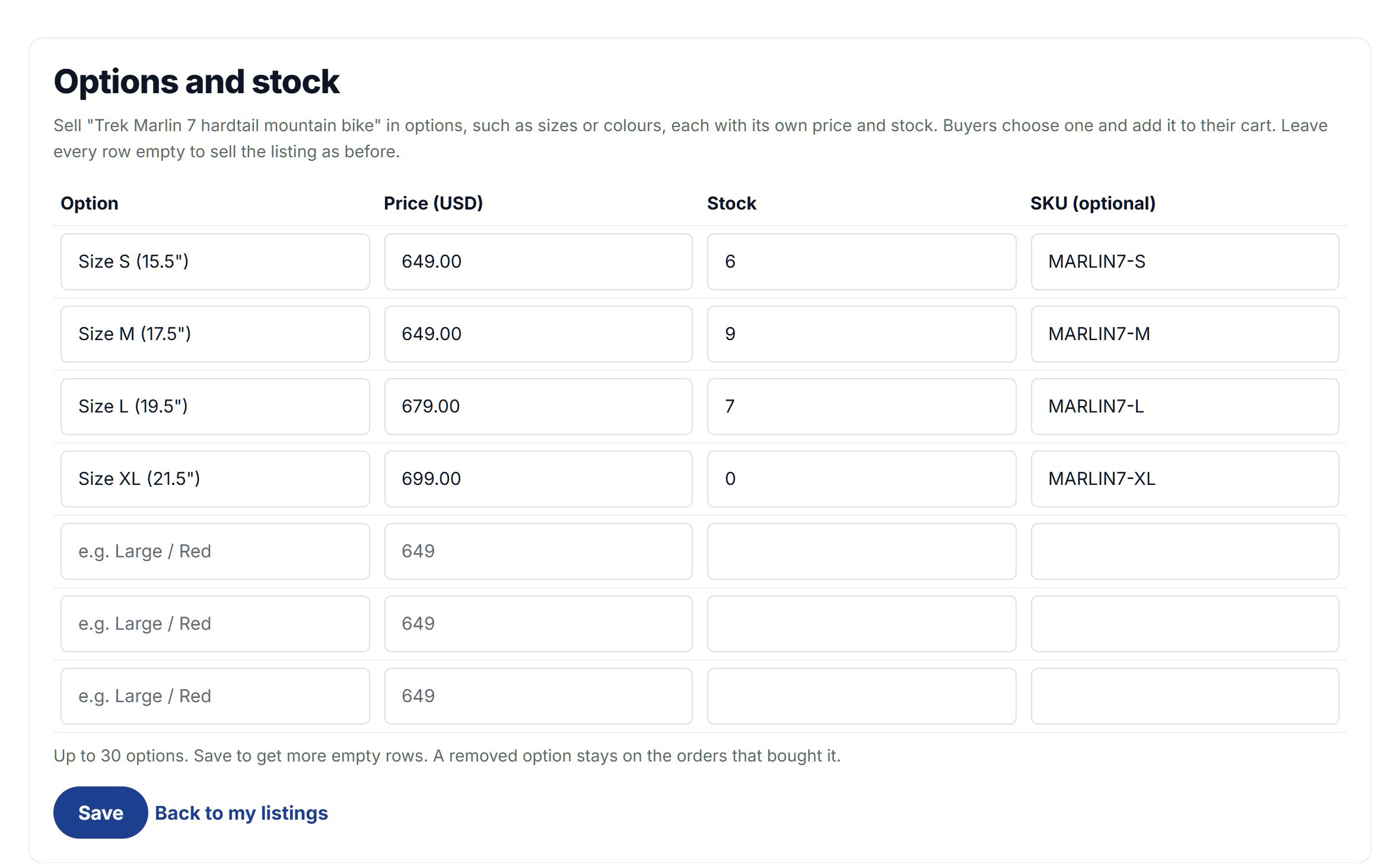
Buyers pay on the site with Stripe, growers ship, and you keep a commission per sale. Plant orders vary from a cutting worth a few dollars to a rare collector plant worth hundreds, so think about both ends. A percentage cut works for rare plants but earns very little on a small order, while shipping can cost more than the plant itself.
The cart helps here. Buyers can add plants from several growers, and shipping is set per seller, so a grower can charge one shipping amount for several cuttings in the same box. Encourage that, because plant buyers rarely buy just one.
Start with a modest commission and no buyer fee. An optional buyer service fee can come later, once buyers trust that growers on your site pack well and stand behind dead on arrival claims.
Paid extras work well in this niche. Growers with a new release of a rare cultivar will pay for featured listings, and nurseries with weekly restocks buy bumps. Seller memberships suit small nurseries that list dozens of plants a week. Auctions with bidding and Buy now are popular for rare cuttings in collector circles. Banner spaces can go to plant shows, soil mix makers and pot makers.
| Model | Works when | Switch it on |
|---|---|---|
| Commission per sale | Growers sell and ship through the site | At launch, low enough for small orders |
| Buyer service fee | Buyers trust the packing and arrival rules | After a season of orders with few complaints |
| Featured listings and bumps | Growers compete in spring and autumn peaks | When each plant group gets daily visitors |
| Seller memberships | Nurseries restock every week | When several nurseries list in bulk |
| Auctions | Rare cuttings with uncertain prices | When collectors visit often enough to bid |
Recruit growers who already propagate more than they can sell.
Every serious plant hobbyist ends up with too many cuttings. That surplus is your first supply, along with small growers who sell at markets and need a place online.
- Plant swaps and meetups. Local swaps gather the people with the most cuttings to spare. Bring cards and ask who would sell their extras.
- Plant societies. Cactus and succulent societies, orchid societies, aroid groups and carnivorous plant clubs hold shows and sales tables. Their members include growers who propagate seriously.
- Small nurseries and market growers. Growers at farmers markets and plant fairs often have no online shop, or one that gets little traffic.
- Instagram and Facebook sellers. Sellers who run sales in comments and take payment by transfer want a safer, simpler way to sell. Offer them checkout and a storefront.
- Seed savers. Seed libraries and seed swap groups know the people who save heirloom seeds.
Nurseries often keep a stock list in a spreadsheet, and listings can be imported from a CSV file. Hobby sellers with a few cuttings can use AI listing from a photo: they photograph the plant, and AI fills in the title, description, category and price for them to check, before they add the botanical name and rooted status.
Win one plant society or swap group first. Its members know every other grower worth knowing.
Plan for shipping rules, pests, dead plants and fake seeds.
Live plants are regulated goods in many places. Moving plants, soil and seeds across borders often needs a phytosanitary certificate, and some countries ban certain plants entirely. Within a country, some states or regions restrict plants coming in to protect local farming, and a few plants are listed as invasive or protected species. Some cacti, orchids and carnivorous plants fall under international trade rules for endangered species. Check the rules where you operate, start with one shipping area, and require sellers to follow the rules of the destination.
Problems specific to plants
- Pests. Thrips, mealybugs, spider mites and fungus gnats travel with plants. Ask sellers to inspect and treat plants before shipping and to say so in the listing.
- Dead on arrival. Set a clear policy: the buyer reports within a short window with photos on arrival, and the seller refunds or replaces.
- Weather. Plants die in freezing or very hot parcels. Tell sellers to use heat or cold packs, ship early in the week and hold orders in extreme weather.
- Fake seeds. Rainbow roses, blue strawberries and other impossible seeds are a classic scam. Ban listings for plants that do not exist and ask for real photos.
- Wrong plants. A cheap lookalike sold as a rare cultivar is common. Require a photo of the actual plant for anything rare.
Approve every listing at first, add banned words for impossible seeds, and let AI hold suspicious listings for review. Keep payments on the site.

Rank for botanical names, rare cultivars and care questions.
Plant buyers search with precise names and with questions. Expect searches such as "monstera thai constellation for sale", "rooted hoya cuttings", "buy rare philodendron", "heirloom tomato seeds", "pet safe houseplants" and "how to ship plants in winter". Listings named with the botanical name and cultivar first can rank for the exact plant.
Pages to build
- Plant group pages for aroids, hoyas, succulents, carnivorous plants and the rest, each with a short care summary.
- Genus pages for the most searched genera, listing every cultivar for sale.
- Care guides for popular plants, with live listings at the bottom. Care content brings beginners who later buy.
- A rooting and repotting guide for buyers of cuttings.
- Shipping guides for sellers: packing, weather, heat packs.
Seasonal content matters. Seed searches rise in late winter as gardeners plan, houseplant buying peaks in spring, and questions about winter care rise in autumn. Plan articles a month ahead of each.
Every listing, category and location has its own page, and the SEO title pattern can put the botanical name, cultivar and size first. For local pickup categories, location pages help people find large plants nearby.

Open in spring, inside one shipping area, with one plant group.
The plant year has clear peaks. Spring is the strongest season for houseplants, cuttings and seeds. Late winter is seed planning time. Early autumn brings a second wave, and the coldest and hottest weeks are slow because shipping is risky. Plant shows and society sales cluster in spring and autumn.
Launch checklist
- Choose one plant group and one shipping area, and check the rules for moving plants within it.
- Write your dead on arrival policy, packing rules and weather rules.
- Sign up ten growers or nurseries and help them list at least twenty plants each.
- Publish care guides for the five plants your sellers list most.
- Ban impossible seeds and protected species in your rules.
- Print cards for the next plant swap and society show.
After launch
Plan the opening for late winter, so sellers are listed before the spring rush. Attend a swap or society sale every month in the first season. Ask growers to post their storefront in their own social accounts and groups. Run a seasonal restock day, where several nurseries list new plants on the same morning, and tell buyers in advance.
Saved searches with email alerts suit collectors: a buyer waiting for one rare cultivar can be told the moment a grower lists it.
The best plant marketplaces are known for plants that arrive healthy. Build that reputation in one area first.
A worked example: Willamette Leaf Exchange, western Oregon.
Willamette Leaf Exchange is a fictional marketplace, invented for this guide, that connects houseplant growers and buyers across the Willamette Valley, from Portland down through Salem to Eugene. It ships only within Oregon, which keeps parcels to a day or two in transit and avoids the extra paperwork of sending plants across state lines. Large plants are sold for pickup, arranged through on-site messages, so buyers can see a tall plant before carrying it home.
The founder sold hoya cuttings at a weekend market and in a Facebook group, taking payment by app transfer. The group worked until it did not: buyers who never paid, sellers who never shipped, and long comment threads arguing over who claimed a cutting first. Several growers in the group said they would happily pay a small commission for checkout, a proper storefront and rules that everyone had to follow.
Categories
- Aroids
- Philodendron
- Anthurium
- Monstera and Rhaphidophora
- Hoyas
- Cuttings and starters (unrooted and rooted)
- Succulents and cacti
- Big plants (pickup only)
The buyers are collectors hunting particular cultivars, newer plant owners who want healthy starter plants, and people furnishing a home who want a large floor plant without a trip to a garden center. Sellers are hobby growers with a spare shelf of cuttings, two small greenhouses and a plant shop in Portland with more stock than its floor can hold.
How it started
The founder asked twelve growers from the market and the group to list before launch, each with at least fifteen plants, a photo of the actual plant and its rooted status. A plant swap in a brewery hall in late February was the first public outing: a table, printed cards and a sign-up sheet. The site opened to buyers the second week of March with around 400 listings.
How it makes money
The site keeps a commission on each sale, low enough that a cutting priced at a few dollars still makes sense for the grower. From the first spring it offered featured listings for new cultivar releases, and by summer the two greenhouses had taken seller memberships because they list fresh stock every week. Weekday evening auctions for rare variegated cuttings became a small but steady extra.
| Listing | Price | Key details |
|---|---|---|
| Hoya cutting, two nodes, rooted in water | $12 | Rooted status: rooted in water, ships bare root wrapped in moss |
| Philodendron in a 4 inch pot | $34 | Established plant, five leaves, checked for pests before shipping |
| Variegated monstera cutting, one node with aerial root | $95 | Unrooted, photo of the actual cutting, auction with Buy now |
| Fiddle leaf fig, about 5 feet tall | $70 | Pickup only in Salem, 12 inch nursery pot |
| Echeveria starter tray, six plants | $28 | Own root, 2 inch pots, ships in pot with soil secured |
The first 90 days, timed to the growing season.
Plants are seasonal and alive, which changes how you plan a launch. Stock on the site is not a box in a warehouse; it is a cutting that needs to root, a seedling that grows out of its pot, or a plant that cannot ship in a cold snap. The first quarter should end just as demand rises, which for most houseplant and seed sites means planning the twelve weeks to finish in early spring.
Spend the first weeks on the parts that are hardest to change later: the shipping area, the rules for moving plants within it, and the dead on arrival policy. Then recruit growers while they are planning their spring propagation, so the cuttings they take in winter are ready to sell when the site opens. Keep a running list of which genera and cultivars you have and which buyers keep asking for, because plant buyers are precise and will notice gaps.
If you are starting in autumn instead, shift the plan so buyers arrive in September, before shipping weather turns cold.
| Weeks | Focus | Done when |
|---|---|---|
| 1 to 2 | Pick the plant group and shipping area, and read the rules for moving plants within it | A short shipping rules page names the area and what sellers may not send |
| 3 to 4 | Set categories and required fields for botanical name, rooted status and ships as | A test listing cannot be saved without those three fields |
| 5 to 6 | Recruit growers at swaps, society meetings and markets | Twelve growers have agreed and named the plants they will list |
| 7 to 8 | Help growers list with real photos and write the dead on arrival policy | At least 300 plants are live and the policy is linked from each listing |
| 9 | Test packing and weather rules with a few real shipments | Five test parcels arrive healthy in the coldest or hottest part of your area |
| 10 to 11 | Open to buyers and publish care guides for the most listed plants | The first 30 orders have arrived and five care guides are live |
| 12 | Review dead on arrival claims, empty searches and grower feedback | Claims are rare and you know which cultivars to recruit for next |
How to build the site itself.
The software for a plant marketplace has to cope with things most shop software does not expect. Many listings are one of a kind, a single cutting or a single plant photographed as it is, so stock is usually one. Shipping is set by each grower and depends on season, packaging and whether a heat pack is needed. A pickup option matters for large plants. And because buyers search by botanical name and cultivar, the site needs custom fields that behave as filters, not just a free text description.
A custom build could add things like a plant database with care data or automatic weather holds by delivery area. Those are attractive ideas, but they take a development team, a long build and ongoing maintenance, and you will be responsible for payment security.
A marketplace script or WordPress plugin installed on your own server is a middle path for founders who are technical. Make sure it handles many sellers in one cart, per seller shipping and custom filters before you commit, and budget time for updates.
A hosted builder such as Yclas covers the essentials: custom fields as search filters, AI listing from a photo for hobby growers, a cart across growers with shipping per seller, and a commission on each sale. It will not invent plant specific features for you, but it lets you open before the spring rush instead of after it.
| Route | Fits when | Watch out for |
|---|---|---|
| Custom build | You want a plant database or weather holds built into the site | Cost, time to launch and missing a whole growing season |
| Self hosted script or plugin | You are comfortable with hosting and want to spend little at first | Multi-seller carts and filters may need add-ons, plus updates and backups |
| Hosted builder | You want growers selling by spring with your effort on recruiting | You work within the features the platform has |
| Starting in an existing group | You want to test demand among growers you know | No checkout, no rules you control, and payment risk for buyers |
What a plant marketplace costs to run.
The software is the smallest part of the bill. Most of the cost is your time in the first months: finding the first listings, answering questions and checking what gets posted.
Budget for heat packs, cold packs and boxes to test your packing rules, any permits or inspection fees if you plan to ship across borders, and a table at a plant swap or society show. Stripe takes its processing fee from each payment, so count it in your commission math.
| Cost | Typical range | On Yclas |
|---|---|---|
| Domain | $10 to $20 a year | Your own, with SSL included |
| Software and hosting | $0 to $100+ a month, plus plugins and updates | Marketplace $149 a month for checkout and commission |
| Design | $0 to $100 for a theme, or a designer | 109 looks included |
| Payment fees | About 3% per payment | Your Stripe or PayPal fees; Yclas takes nothing |
| Your time | 5 to 10 hours a week at the start | Finding listings, moderation, support |
Mistakes that kill plant marketplaces.
- Opening in the middle of winter or a heat wave. The first orders on a new site set its reputation, and plants shipped in freezing or scorching weather often arrive damaged. Open when shipping weather is mild and let growers hold orders when it is not. A week of delay with a clear message to the buyer beats a dead plant and a refund.
- Allowing common names only. "Pink princess" or "string of hearts" can mean different plants to different sellers, and buyers who receive the wrong one feel cheated. Require the botanical name and keep the common name as an extra. Collectors also expect the cultivar in its own field, so they can tell two similar philodendrons apart at a glance.
- Shipping everywhere from day one. Moving plants across borders, and sometimes between states or regions, can require certificates or be banned. Start in one area, learn its rules, and widen it only when you understand the next one.
- Using stock photos for rare plants. Variegation differs from plant to plant, and a buyer paying a high price for a variegated cutting wants to see that exact cutting. Make a photo of the actual plant a rule for anything above a modest price, taken in daylight and showing the leaves that carry the pattern.
- No dead on arrival policy. Without one, every loss turns into an argument in messages and a bad review. Publish a clear reporting window and the evidence you need, and let growers who pack well show their low claim rate.
- Ignoring pests. A buyer whose collection gets thrips from a new plant will not buy from your site again. Ask growers to inspect and treat before shipping, and remove those with repeat pest complaints. Advise buyers to keep new plants apart from their collection for a couple of weeks, which protects them and your growers.
- Letting impossible seeds in. Rainbow roses and blue strawberries undermine trust in every seed listing on the site. Use banned words and approve new seed sellers by hand.
- Setting the commission for rare plants only. A percentage that works on a high priced cutting can still make a three dollar cutting worthless to list. Check your fee against the cheapest common listings too.
- Forgetting protected species. Some cacti, orchids and carnivorous plants are covered by trade rules for endangered species. Ask sellers to confirm their plants are nursery propagated and legal to sell, and check the rules where you operate.
Plant trade terms every founder should know.
Growers and collectors will expect you to know these words, in listings, questions and complaints.
| Term | What it means |
|---|---|
| Cultivar | A named plant variety selected and kept by growers, written in single quotes after the botanical name. |
| Node | The point on a stem where leaves and roots grow, which a cutting needs in order to root. |
| Wet stick | An unrooted cutting, sold cheaper because it may fail to root. |
| Variegation | Patches of white, cream or yellow in the leaves, which makes many plants far more valuable. |
| Reversion | When a variegated plant grows plain green leaves and loses the pattern buyers paid for. |
| Bare root | A plant shipped with the soil removed and the roots wrapped, which saves weight and limits pest risk. |
| Phytosanitary certificate | An official document confirming plants have been inspected and meet import rules. |
| Tissue culture | Plants grown from a few cells in a lab, often used to produce rare cultivars in large numbers. |
| DOA | Dead on arrival: a plant that arrives dead or badly damaged, the basis of most plant disputes. |
| Heat pack | A pouch that gives off warmth for a day or more, packed with plants shipped in cold weather. |
| Aroid | A plant in the arum family, which includes philodendrons, monsteras and anthuriums. |
| Open pollinated | Seeds from plants pollinated naturally, which grow true to the parent plant if saved. |
| Hardening off | Getting a plant used to outdoor conditions gradually, which buyers of garden plants need to know. |
The same steps for a plant marketplace on Yclas.
- Describe your marketplaceThe setup wizard writes the categories, an About page and example listings from one sentence.
- Add fieldsThe details buyers filter on, as dropdowns, numbers or checkboxes.
- Bring sellersInvite them, import their stock from a spreadsheet, or post for them.
- Set the rulesChoose moderation, verified sellers, reviews and reports.
- Take paymentsOn Marketplace, buyers pay on the site and you keep a commission, with Stripe.
What will it cost me to open a plant marketplace?
Plan for a domain, packing tests and a table at a swap or show, which together come to a few hundred dollars. If you want to ship across borders, permits and certificates add to that.
Can sellers ship plants to other countries?
Often only with a phytosanitary certificate, and some plants are banned in some countries. Start inside one country and check the rules where you operate before allowing international shipping.
What about shipping plants between states or regions?
Some states and regions restrict plants and soil coming in, to protect local crops. Check the rules for your area and make sellers responsible for following the destination's rules.
How do I handle plants that arrive dead?
Write a dead on arrival policy before launch: a short reporting window, photos on arrival, and a refund or replacement from the seller. Sellers who pack well will rarely need it.
How do I find my first growers?
Go to plant swaps, society shows and farmers markets, and approach sellers who run sales on Instagram and Facebook. Hobby growers with surplus cuttings are often the first to join.
How do I stop fake seed listings?
Ban impossible plants such as rainbow roses in your rules and banned words, require real photos, and remove sellers who list them.
How does a plant marketplace make money?
A commission on each sale, then featured listings, bumps and memberships for nurseries once traffic is steady. Auctions for rare cuttings can add more in collector groups.
Should I allow pre-orders for cuttings that are still rooting?
Pre-orders help growers plan, but they lead to disputes when roots fail or take longer than promised. If you allow them, require an expected ship date and a refund if the grower cannot deliver by then.
How do I deal with sellers who mark their plants as pet safe by mistake?
Ask sellers to tick the pet safe box only when they are sure, and correct listings that buyers report. Your care guides can say which common houseplants are often listed as toxic to cats and dogs, with a note to check with a vet.
Can I sell plants grown from tissue culture?
Yes, many rare cultivars reach the market this way. Ask sellers to say so in the listing, since some collectors prefer plants grown from cuttings and others are happy to pay less for tissue culture plants.
Is it worth running plant swaps alongside the site?
Swaps cost little to run and bring growers who have surplus plants into one room. They are also the best place to sign up sellers and to show buyers that the people behind the site know plants.
How should growers price cuttings against established plants?
Most price by risk and time: an unrooted cutting costs least, a rooted cutting more, and an established plant in a pot the most. Encourage sellers to show the rooted status in the title so buyers can compare.
Related pages.
The parts of Yclas this leans on.
You have the plan. Now grow the plant marketplace your local growers need.
Describe your site in a sentence and the setup wizard writes the categories, example listings and a look. Free for 15 days, no credit card.
Start my marketplace